
World News – 2024 – Video Playlist | Video Playlists | Sites: | newsandtimes.org | links-newsandtimes.com | worldwebtimes.com | southcaucasusnews.com | russianworld.net | jossica.com | octobersurprise2016.org | bklyntimes.com | oceanavenuenews.com | fbireform.com | bloggersunite.net | octobersurprise-2024.org | Trump-News.org | Audio-Posts.com | Bklyn-NY.com | Posts Review – newsandtimes.org | Capitol-Riot.com |
The News And Times Review – NewsAndTimes.org
#FBI
THE CASE OF WILLFUL BLINDNESS?
With regard to:
x.com/mikenov/status/2028100…
Almost anything, including the complex realms of the social phenomena, can and should be quantified, in addition to the Qualitative (e.g. case studies) Analysis.
It looks like we simply do not want to know the answer, it is too uncomfortable to think that anyone or anything is capable of changing the course and outcomes of the U.S. Elections, and especially the “foreign influences”, and “decisively”.Gemini said: Determining whether any foreign influence was definitively “decisive” in altering the final outcome of a U.S. election is highly debated and virtually impossible to quantify. The U.S. Intelligence Community (IC) and bipartisan congressional committees rigorously track the intent and activities of foreign actors, but they explicitly do not assess whether those campaigns successfully changed the final vote counts or decisively swung an election. However, extensive investigations have clearly identified which foreign powers conducted the most aggressive and far-reaching operations to influence American voters.
Foreign Influence in U.S. Elections gemini.google.com/share/6bc9… Which Foreign Influence was decisive in contributing to the outcomes of the U.S. #Elections2016 and #Elections2024: Russia, Israel, UAE, Iran, or others.?
google.com/search?num=10&new…Michael Novakhov (@mikenov) #FBI
Foreign Influence in U.S. Elections
gemini.google.com/share/6bc9…Which Foreign Influence was decisive in contributing to the outcomes of the U.S. #Elections2016 and #Elections2024: Russia, Israel, UAE, Iran, or others.?
Gemini said:
Determining whether any foreign influence was definitively “decisive” in altering the final outcome of a U.S. election is highly debated and virtually impossible to quantify. The U.S. Intelligence Community (IC) and bipartisan congressional committees rigorously track the intent and activities of foreign actors, but they explicitly do not assess whether those campaigns successfully changed the final vote counts or decisively swung an election.
However, extensive investigations have clearly identified which foreign powers conducted the most aggressive and far-reaching operations to influence American voters.
The 2016 U.S. Election
In 2016, Russia was universally identified by the U.S. Intelligence Community and the bipartisan Senate Intelligence Committee as the primary and most aggressive state actor attempting to influence the election.
Russian Operations: The Russian government directed a sophisticated, multi-pronged campaign. This included the GRU (Russian military intelligence) hacking into Democratic National Committee servers and leaking emails, as well as the Internet Research Agency (IRA) executing a massive, coordinated social media manipulation campaign designed to sow societal discord, suppress certain voter demographics, and influence voter preferences.+1
Other Actors (Israel and the UAE): The official U.S. government consensus isolates Russia as the overarching state-level threat in 2016. While investigations briefly scrutinized private individuals and intelligence firms connected to the UAE and Israel (such as the private Israeli firm Psy-Group) for pitching social media manipulation or back-channel services to campaign officials, the U.S. government has never formally assessed the governments of the UAE or Israel as having conducted systemic election interference campaigns.The 2024 U.S. Election
During the 2024 election cycle, which resulted in Donald Trump’s return to the presidency, the Office of the Director of National Intelligence (ODNI) tracked an evolving threat landscape. While election infrastructure remained secure from direct tampering, foreign adversaries heavily utilized information warfare.
Russia: Russia remained the most active and prolific foreign influence threat. Russian-aligned actors utilized sophisticated methods—including AI-generated text, audio, and video deepfakes—to undermine the Democratic campaign, support the Republican ticket, and amplify divisive domestic issues like immigration.
Iran: Iran adopted a significantly more aggressive posture than in previous cycles. Iranian operatives conducted a hack-and-leak operation targeting the Trump campaign, sought cyber access to political figures, and used inauthentic news sites to stoke discord among American voters regarding polarizing issues like the Israel-Gaza conflict.
China: China engaged in broader influence operations aimed at shaping global views and amplifying U.S. political divisions. However, the IC assessed that China was largely focused on down-ballot races involving candidates it viewed as threatening to its core security interests, rather than intervening directly in the presidential outcome.Ultimately, while Iran and China have expanded their capabilities and willingness to interfere, Russia stands out as the most historically pervasive and dedicated foreign actor operating in both the 2016 and 2024 U.S. presidential elections.
Would you like to explore the specific cyber tactics or social media strategies these countries used to disseminate their messaging?
google.com/search?num=10&new…— https://x.com/mikenov/status/2028100748014166123
— Michael Novakhov (@mikenov) Mar 1, 2026
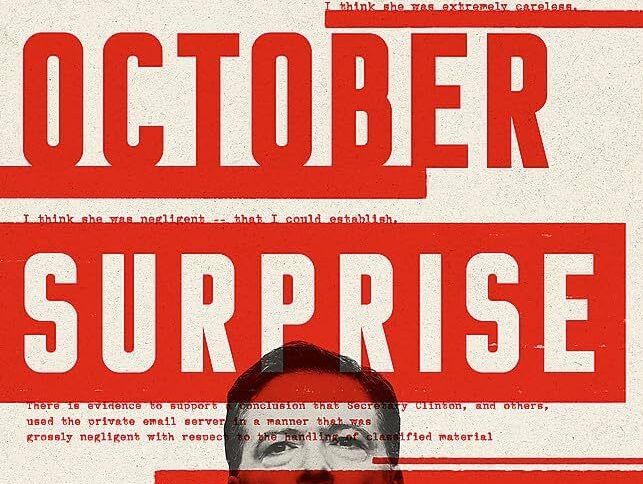 October Surprise 2016