
World News – 2024 – Video Playlist | Video Playlists | Sites: | newsandtimes.org | links-newsandtimes.com | worldwebtimes.com | southcaucasusnews.com | russianworld.net | jossica.com | octobersurprise2016.org | bklyntimes.com | oceanavenuenews.com | fbireform.com | bloggersunite.net | octobersurprise-2024.org | Trump-News.org | Audio-Posts.com | Bklyn-NY.com | Posts Review – newsandtimes.org | Capitol-Riot.com |
The News And Times Review – NewsAndTimes.org

Key Stories
-
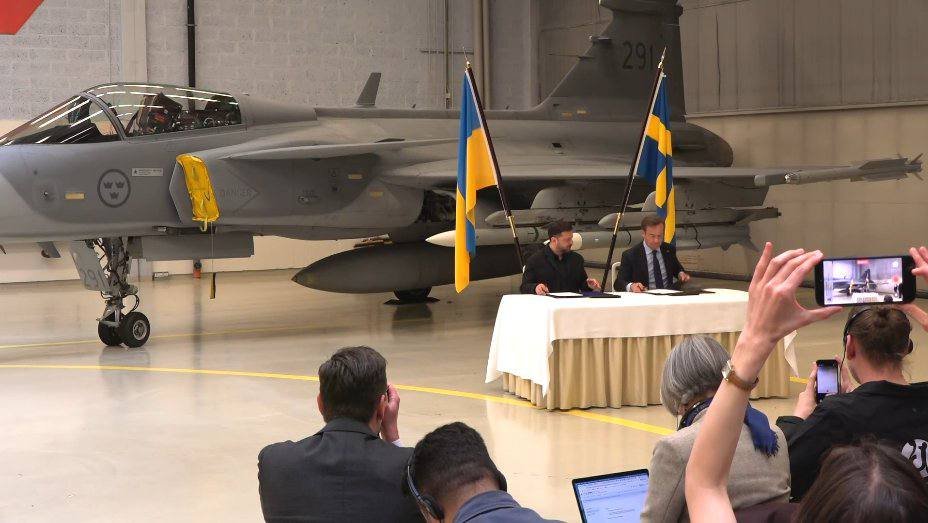
Sweden Boosts Ukraine Air Power — Sweden is stepping up in a big way by donating 16 Gripen fighter jets to Ukraine, with plans for the country to buy 20 more advanced models later on.
-
Internal Struggles Grip the Kremlin — Reports suggest Russian leadership is debating a forced reserve call-up as they face high losses and Ukrainian drone superiority that is neutralizing their numbers advantage.
-
IDF Targets Hamas Leadership — The Israeli military confirmed they eliminated a major Hamas financial facilitator and a weapons official during a recent strike in Khan Yunis.
-
Dire Health Crisis in Congo — Aid workers report that people fighting Ebola in Congolese displacement camps are so short on water they have to use sand or oatmeal to wash their hands.
-
California Solar Goals Fall Short — A decade-long plan to bring solar panels to one million low-income residents in California has hit a major snag, missing the target by over 900,000 homes.
Summary
From new fighter jets for Ukraine to health crises in the Congo, today’s news is heavy on international shifts. While Russia faces internal struggles over military recruitment, the tech war is heating up on multiple fronts.
Key Stories
-
The H-1B visa program sparks controversy — A new report highlights the ongoing battle between Big Tech and U.S. workers over the H-1B visa program, which critics say is displacing local talent.
-
Europe weighs new defense strategies — Experts are calling for Europe to take more responsibility for its own defense through new coalition formats as American focus shifts elsewhere.
-
Digital disinformation targets election trust — Russian-linked disinformation campaigns are being flagged for using fake videos to try and convince Americans that their democratic systems are broken.
-
A look back at a Polish resistance rescue — History buffs are remembering the day in 1945 when the Polish Home Army successfully freed prisoners from a Soviet NKVD camp near Warsaw.
Summary
This week’s roundup covers a heated domestic debate over tech visas in the U.S. and growing concerns about European defense strategies. We also look at the lasting impact of digital disinformation and a somber anniversary from World War II history.
Good morning. Here is your 7 AM global security and intelligence briefing for Thursday, May 28, 2026.
Global Conflict: U.S.-Iran Standoff
-
Strait of Hormuz “Arrangements”: Diplomatic friction continues to intensify over the operational control of the Strait of Hormuz.
Senior Iranian officials are insisting that any reopening of the strait to civilian shipping will occur exclusively under “Iranian arrangements”—a framework the U.S. has forcefully rejected as a violation of freedom of navigation. Concurrently, new satellite intelligence indicates Iran is exploiting the fragile ceasefire period to reconstitute military capabilities, most notably at the Yazd Missile Base. -
Iranian Counterintelligence Claims: The Iranian Intelligence Ministry has issued a formal statement outlining what it perceives as an ongoing U.S.-Israeli “hybrid warfare” campaign.
The ministry alleges coordinated sabotage, weapons smuggling, and border incursions by foreign-backed armed groups designed to exploit the domestic strain caused by the ongoing naval blockades.
Unmanned Systems & The Ukraine Front
-
Oreshnik’s 25% Failure Rate: Following Russia’s massive, $411 million combined strike package against Ukraine earlier this week, military analysts are scrutinizing a significant technical malfunction.
Open-source intelligence indicates that one of the two $50 million Oreshnik hypersonic intermediate-range ballistic missiles launched fell well short of its target, crashing into Russian-occupied territory near Avdiivka. With four combat launches to date and one known failure, the system’s 25% failure rate severely undermines Moscow’s framing of the Oreshnik as a highly reliable, next-generation delivery vehicle.
Geopolitics & Institutional Strategy
-
China’s UN Maneuver: Holding the rotating presidency of the UN Security Council for May, China initiated a high-level multilateral meeting in New York.
Foreign Minister Wang Yi presented a “five reinvigorations” proposal aimed at reforming the UN Charter and Security Council authority, while simultaneously holding closed-door talks with U.S. strategic and business representatives. Analysts view this diplomatic offensive as Beijing aggressively positioning itself as the stabilizing guarantor of the international system, capitalizing directly on the recent collapse in UN peacekeeping deployments noted earlier this week.
Note: There are no major new developments regarding the Aur0ra ransomware framework, the U.S. indictment of Raúl Castro, or the Pentagon’s DAWG drone procurement initiative since previous digests. I will continue to monitor those specific files.
–
Here is your Scheduled Action daily strategic briefing for Thursday, May 28, 2026.
Today’s intelligence picture reveals the friction between diplomatic posturing and kinetic reality in the Middle East, a severe escalation in biodefense containment protocols, and a catastrophic industrial failure in the U.S. Pacific Northwest.
Geopolitics & Global Security
-
Iran Negotiations “On Fumes”: During a Cabinet meeting yesterday, President Trump stated that Iran is “negotiating on fumes,” asserting that the impending November midterm elections will not pressure his administration into a rushed deal.
The core epistemological gap between the two sides remains the disposition of Iran’s highly enriched uranium (HEU). While an emerging framework involves exchanging HEU for sanctions relief, the U.S. has signaled discomfort with allowing geopolitical rivals like Russia or China to take custody of the material. -
Kinetic Strikes Resume: Highlighting the fragility of the current diplomatic back-channeling, the U.S. military conducted another round of strikes against targets in southern Iran earlier this week, which the Pentagon has characterized strictly as self-defense operations.
-
Zelenskyy’s Air Defense Appeal: In the wake of the recent Russian Oreshnik hypersonic strike and coordinated drone swarms we monitored over the weekend, Ukrainian President Volodymyr Zelenskyy has issued an urgent, direct appeal to the Trump administration for enhanced U.S. air defense systems to protect Kyiv’s deep-rear infrastructure.
Intelligence & Asymmetric Threats
-
Hamas Decapitation Confirmation: Expanding on yesterday’s initial assessments, the IDF has confirmed the details surrounding the elimination of Hamas military chief Mohammed Odeh.
Odeh, a former Hamas intelligence chief and a central architect of the October 7 attacks, is the fourth military leader killed by Israeli forces since the conflict began. The speed of his localization—just 11 days after his predecessor was eliminated—underscores a highly lethal, localized fusion of signals intelligence (SIGINT) and on-the-ground human networks. -
Starship Grounded: Following the Starship flight we tracked earlier this week, federal regulators have officially grounded SpaceX’s Starship rockets pending a formal investigation into the test flight, temporarily pausing the advancement of this critical heavy-lift and rapid-deployment architecture.
Domestic Crises & Infrastructure
-
Washington State Industrial Disaster: A catastrophic structural failure is currently unfolding at a paper mill in Longview, Washington. A 900,000-gallon tank containing “white liquor”—a highly caustic chemical mixture used in manufacturing—imploded.
Currently, one person is confirmed dead, nine are injured, and nine workers remain missing. Recovery operations are paralyzed because the remaining tank structure is critically unstable, preventing specialized teams from safely accessing the blast radius.
Global Health & Biodefense
-
Ugandan Border Closure: The containment strategy for the rare Bundibugyo Ebola strain has escalated rapidly from localized travel restrictions to hard geographic quarantine. Uganda has officially closed its border with the Democratic Republic of Congo as suspected cases continue to surge in the region.
This marks a dramatic intensification of the international biodefense posture, shifting from screening protocols to absolute area denial.
Given the complexities of the HEU stockpile transfer, would you like to pivot tomorrow’s assessment to focus on the intelligence and verification mechanisms required for that phase of the Iran negotiations?





 Audio Posts