
Putin, Homoeroticism, and Russian Culture – Search https://t.co/TsuaezVyny
— Michael Novakhov (@mikenov) May 26, 2025
Day: May 26, 2025
Images may be subject to copyright. Learn More
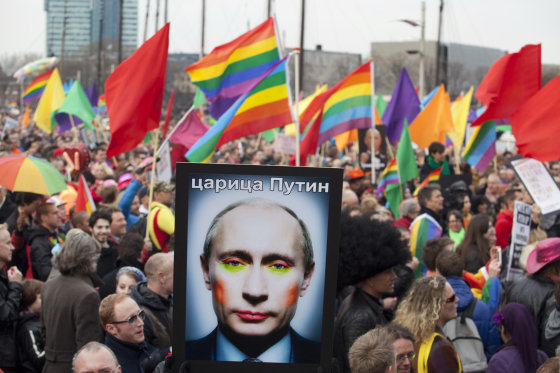
Putin, Homoeroticism, and Russian Culture: A Complex Intersection
The relationship between Vladimir Putin, homoeroticism, and Russian culture is a multifaceted and often contentious subject. It sits at the crossroads of a carefully cultivated political image, artistic interpretations, and a societal landscape marked by increasingly conservative stances on sexuality and gender identity.
At the forefront is Vladimir Putin’s public persona, meticulously crafted to project strength, virility, and traditional masculinity.
Homoeroticism itself has a complex and often unacknowledged history within Russian art and culture. From the subtle undertones in some Socialist Realist art, with its focus on idealized male bodies and camaraderie, to more overt explorations in the Russian avant-garde period, same-sex desire and non-normative gender expressions have been present, albeit often suppressed or coded. However, official Russian cultural narratives today tend to deny or ignore these queer interpretations, emphasizing “traditional values” that align with the conservative stance of the Russian Orthodox Church.
Under Putin’s leadership, Russia has seen a significant crackdown on LGBTQ+ rights.
Public opinion in Russia on homosexuality remains largely negative, with significant support for discriminatory laws.
The controversy surrounding the 2014 Sochi Winter Olympics brought international attention to Russia’s anti-LGBTQ+ policies. Activists used the global platform to protest the “gay propaganda” law, leading to debates about human rights and the image Russia was projecting to the world.
In conclusion, the intersection of Putin, homoeroticism, and Russian culture is characterized by a stark contrast:
- A political leader who projects an image of hypermasculinity, which can be (and has been) subversively reinterpreted through a homoerotic lens, particularly by those critical of his regime.
11 - A rich, yet often suppressed, history of homoerotic themes in Russian art and culture.
- A contemporary socio-political environment where “traditional values” are aggressively promoted, leading to the legal and social marginalization of LGBTQ+ individuals and the denouncement of non-normative sexualities.
12
The perceived threat of homoeroticism to the official narrative of a strong, traditional Russia is evident in the state’s repressive measures, highlighting how anxieties around gender and sexuality are intertwined with national identity and political power in contemporary Russia.
–

–
The Reading Listhttps://t.co/CItawlaKLi#NewsAndTimes #NT #TNT #News #Times #World #USA #POTUS #DOJ #FBI #CIA #DIA #DOD #ODNI #Trump #TrumpNews #TRUMPISTAN #Israel #Mossad #Netanyahu #Ukraine #NewAbwehr #OSINT #Putin #Russia #GRU #Путин #Россия #Bloggers #Opinions #SouthCaucasus…
— Michael Novakhov (@mikenov) May 26, 2025
The Reading List for Putin:
Homoeroticism in Russian Literature.
I explored briefly two examples: “Eugene Onegin”https://t.co/rqMk0Df8hS
and the short story by Tolstoy “The Raid” https://t.co/zkRs9aQI7X
And there are many more examples.
To deny these subjects is to deny the… https://t.co/UYHtys46V0 pic.twitter.com/LDcD3JI08z— Michael Novakhov (@mikenov) May 26, 2025
Gay Raid
Analysis of Tolstoy’s short story “the Raid” – “Набег”: homoeroticism and the threats of physical and social death – GS https://t.co/bKXewB4Qbo
AI Modehttps://t.co/bKXewB4Qbo
Analysis of Tolstoy’s short story “the Raid” – “Набег”: homoeroticism and the threats of… pic.twitter.com/aDrQcrT185— Michael Novakhov (@mikenov) May 26, 2025
https://t.co/rqMk0Df8hS
Gay Onegin#NewsAndTimes #NT #TNT #News #Times #World #USA #POTUS #DOJ #FBI #CIA #DIA #DOD #ODNI #Trump #TrumpNews #TRUMPISTAN #Israel #Mossad #Netanyahu #Ukraine #NewAbwehr #OSINT #Putin #Russia #GRU #Путин #Россия #Bloggers #Opinions #SouthCaucasus
-… pic.twitter.com/8vLZ0H3jZQ— Michael Novakhov (@mikenov) May 26, 2025
Gay interpretation of Eugene Onegin – GS https://t.co/y3pN5NDWZA
I see this poem and opera as the depiction of the relationship between two gay lovers, Onegin and Lensky, socially unacceptable and bisexually intertwined; which turned tragic when Lensky threatened or hinted the…— Michael Novakhov (@mikenov) May 26, 2025
“An opera for Putin: Eugene Onegin comes out queer.” Gay interpretation of Eugene Onegin: I see this poem and opera as the depiction of the relationship between two gay lovers, Onegin and Lensky, socially unacceptable and bisexually intertwined; which turned tragic when Lensky… pic.twitter.com/lMJ0q38AWE
— Michael Novakhov (@mikenov) May 26, 2025
Onegin: A Queer Literary Reinterpretation
https://t.co/gH0YXtFmGz— Michael Novakhov (@mikenov) May 26, 2025
Images may be subject to copyright. Learn More
Interpretations of
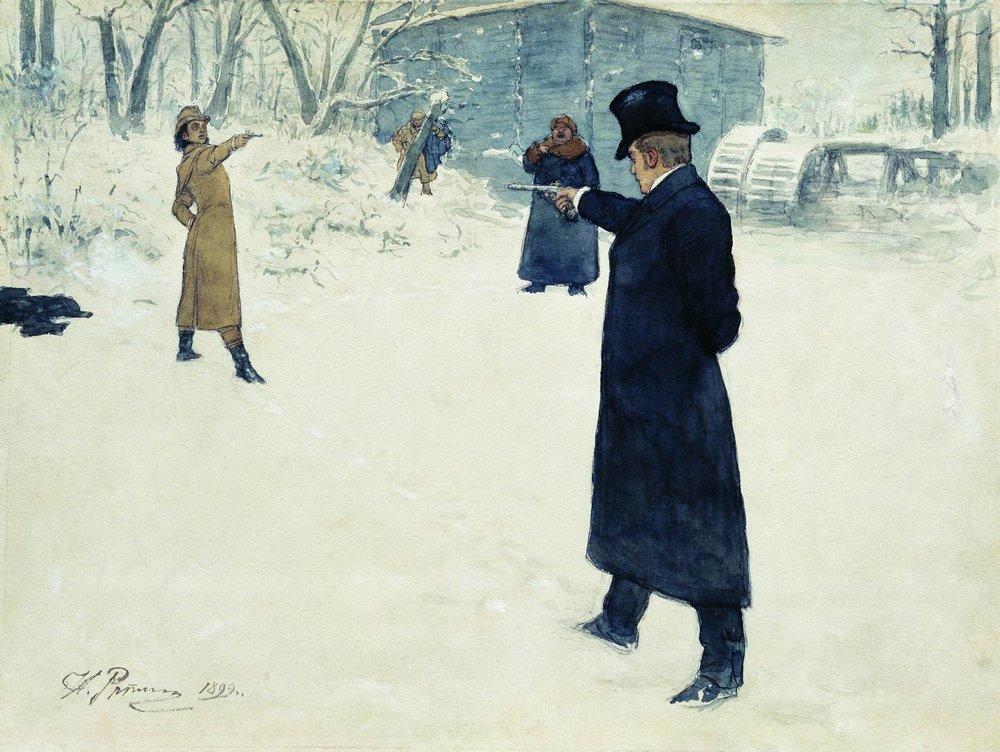
Eugene Onegin with a focus on gay or homoerotic themes often center around the potential for a concealed relationship or repressed desires between the main characters, Onegin and Lensky, and also touch upon the personal life of the composer, Pyotr Tchaikovsky.
Key Points of Gay Interpretations:
- Onegin and Lensky’s Relationship: Some interpretations suggest a hidden sexual relationship between Onegin and Lensky, citing moments of intense emotional connection and the context of their duel as potentially stemming from more than just heterosexual rivalry. For instance, some productions interpret Lensky’s love paean in Act 1 as directed towards Onegin, rather than Olga. Some see the duel itself as a metaphor for hidden desires or conflict related to their unspoken connection.
- Echoes of Tchaikovsky’s Life: Tchaikovsky’s own struggles with his homosexuality are seen as reflected in the opera. His failed marriage, entered into as an attempt to suppress his sexual orientation, is viewed as mirroring the themes of unrequited love and the inability to express true feelings found in the opera. Some even consider Tatyana’s passionate letter-writing scene as a potential expression of a hidden gay heart, or a metaphorical coming out for Tchaikovsky.
- The Duel’s Interpretation: The dramatic duel between Onegin and Lensky, culminating in Lensky’s death, has been analyzed through a queer lens. Some interpretations see it as a tragic consequence of societal pressures and the impossibility of their potentially homosexual desires, given the social context of the time.
- Queer Readings in Modern Productions: Some contemporary opera productions and adaptations have explicitly incorporated a gay interpretation of Eugene Onegin. Heartbeat Opera’s production, for instance, emphasizes the homoerotic subtext, featuring moments that highlight a sexual connection between Onegin and Lensky.
It is important to note that these interpretations are not universally accepted and Eugene Onegin is traditionally understood as a heterosexual love story. However, the emotional depth of the opera, coupled with Tchaikovsky’s personal history, has allowed for such interpretations to emerge and resonate with some audiences. These interpretations also speak to the broader context of LGBTQ+ history in Russia and the social pressures faced by homosexual individuals in the 19th and early 20th centuries.
AI responses may include mistakes. Learn more
–
–