Categories
The News and Times Blogs

Sino-Bromance – AI Review

Articles, Blogs, and Tweets

| Post Link

Pope Leo criticizes political nationalism and prays for reconciliation and dialogue  ABC News
RT by @mikenov: ❗️Although 🇷🇺Putin calls 🇨🇳China an “unlimited partner,” leaked FSB documents call it an “enemy.” The Russian FSB accuses China of recruiting officials, stealing military technology, taking an interest in the Russian Far East, and studying Wagner for its own PMCs. Behind closed…
❗️Although 🇷🇺Putin calls 🇨🇳China an “unlimited partner,” leaked FSB documents call it an “enemy.” The Russian FSB accuses China of recruiting officials, stealing military technology, taking an interest in the Russian Far East, and studying Wagner for its own PMCs. Behind closed…
Russia shoots down 10 Ukrainian drones targeting Moscow aljazeera.com/news/2025/6/8/…
China - Russia Rivalry and "brotherly love"  See also: Bing Copilot Gemini Grok AI Mode China - Russia Rivalry and "brotherly love" "no-limits partnership" but also facing certain limitations.The current relationship between China and…
China – Russia Rivalry and “brotherly love” – Google Search google.com/search?num=10&… See also: Bing Copilot Gemini Grok AI Mode China – Russia Rivalry and “brotherly love” “no-limits partnership” but also facing certain limitations.The current relationship between China and…
RT by @mikenov: Есть ли казахстанский след в операции "Паутина"? Согласно публикации 6 июня местного издания Ulys-Media, 37-летний Артем Тимофеев выехал из РФ в Казахстан. По более ранним сообщениям Telegram-каналов, именно он арендовал склад в Челябинске, откуда отправились пять фур с…
Есть ли казахстанский след в операции “Паутина”? Согласно публикации 6 июня местного издания Ulys-Media, 37-летний Артем Тимофеев выехал из РФ в Казахстан. По более ранним сообщениям Telegram-каналов, именно он арендовал склад в Челябинске, откуда отправились пять фур с…
Categories
The News and Times Blogs

Sino-Bromance

Categories
Michael Novakhov (@mikenov) / Twitter

Sino-Bromance x.com/mikenov/status… – #NewsAndTimes #NT #TNT #News #Times #World #USA #POTUS #DOJ #FBI #CIA #DIA #DOD #ODNI #Trump #TrumpNews #TrumpISTAN #Israel #Mossad #Netanyahu #Ukraine #NewAbwehr #OSINT #Putin #Russia #GRU #Путин #Россия #Bloggers #Opinions #SouthCaucasus…

Categories
The News and Times Blogs

A tale of two giants and their complicated “brotherly love” – AI Review

China – Russia Rivalry and “brotherly love” – GS

AI Mode (See also: Bing Copilot Gemini Grok):

China – Russia Rivalry and “brotherly love”
“no-limits partnership” but also facing certain limitations.
The current relationship between China and Russia is a complex mix of cooperation and potential rivalry, often described as a
“Brotherly love” and alignment:
Surveys indicate favorable views of Russia among many mainland Chinese, citing factors like strong leadership and trustworthiness.
Some Chinese express a sense of “brotherly love” and the idea that “an enemy of an enemy is our friend” between China and Russia.
China and Russia have deepened their relationship across various domains since 2014, when sanctions against Russia over its initial invasion of Ukraine led Moscow to seek stronger ties with China.
They share a common goal of opposing what they perceive as a U.S.-led international order and work together to reshape global governance in their favor.
This alignment is evident in their voting patterns in international organizations like the UN Security Council, where they often align their positions.
Their strategic objectives include challenging U.S. influence, weakening alliances, shifting regional power balances, and promoting their own models of governance.
China and Russia actively cooperate in military exercises and patrols to enhance their military interoperability and demonstrate their combined strength.
Areas of potential rivalry and limitations:
Despite the rhetoric, the “no-limits partnership” has limitations.
Beijing maintains a distinct stance on certain issues, suggesting that shared antipathy towards the West leads to alignment, not a formal alliance.
China values international stability more than Russia, which has shown a greater tolerance for risk.
Lingering territorial disputes along their shared border, though downplayed by both sides, remain a potential point of tension.
China is concerned about Russia’s nuclear threats and has privately cautioned Moscow against using nuclear weapons.
The growing power disparity between China and Russia, with a rapidly growing Chinese economy and a struggling Russian one, could transform their partnership into a less balanced one.
They also compete for influence in Central Asia and the Arctic.
In summary:
While the “brotherly love” narrative reflects some positive sentiment, particularly in China, the relationship is fundamentally a strategic partnership based on shared interests in challenging the existing international order and minimizing Western influence. This partnership, though strong, faces inherent limitations arising from differing interests and strategic perspectives, suggesting a complex dynamic of cooperation and potential rivalry.

See also: Bing:

Copilot:

The relationship between China and Russia is a fascinating mix of strategic cooperation and underlying tensions. While they present themselves as close partners, particularly in opposition to Western influence, their alliance is shaped by pragmatic interests rather than deep-rooted trust.

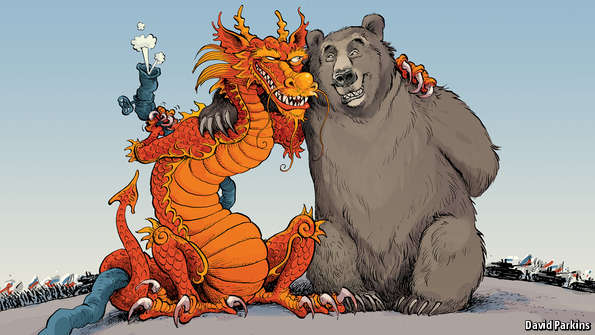
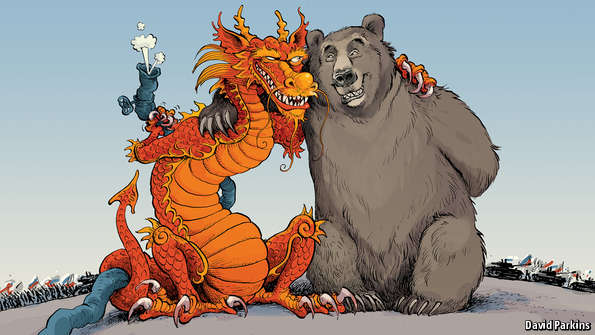
China and Russia have strengthened their military, economic, and diplomatic ties over the past two decades, often framing their partnership as having “no limits”. However, this rhetoric masks historical animosities, power asymmetry, and competition in overlapping spheres of influence. Their cooperation is largely driven by shared grievances against the U.S.-led global order, but their national interests do not always align perfectly.

For instance, Russia’s economic dependence on China has grown significantly since the war in Ukraine, increasing Beijing’s leverage over Moscow. While China benefits from discounted access to Russian commodities, its close association with Russia has strained its relations with Europe and deepened tensions with the United States. Despite their alignment, both nations are fiercely independent and unwilling to compromise their strategic autonomy, which limits the depth of their partnership.

Their relationship is best understood as a calculated balancing act—neither full-fledged allies nor outright rivals. They cooperate where it benefits them but remain wary of each other’s long-term ambitions. What do you think? Does this dynamic suggest a temporary convenience or a lasting geopolitical shift?

Gemini:


A Tale of Two Giants: The Uneasy Dance of China-Russia “Brotherly Love” and Rivalry

The relationship between China and Russia is a complex tapestry woven with threads of deep-seated historical camaraderie and burgeoning strategic rivalry.1 While both nations project an image of a steadfast “no-limits” partnership, a closer examination reveals a nuanced dynamic, a geopolitical dance dictated by mutual interests against the West, yet underscored by a quiet competition for regional and global influence. The narrative of their “brotherly love” is not a fabrication, but a historical artifact now repurposed to serve a pragmatic, and at times, tense, modern alliance.

The era of “brotherly love” reached its zenith in the 1950s, following the establishment of the People’s Republic of China. The Soviet Union, as the leader of the communist bloc, provided extensive economic, military, and technical support to its nascent Chinese counterpart.2 This period saw the signing of the Sino-Soviet Treaty of Friendship, Alliance and Mutual Assistance, a cornerstone of their ideological alignment against the capitalist West.3 The sentiment was genuine, with Mao Zedong famously declaring that the Chinese people would “lean to one side” – the side of socialism led by the Soviet Union.

However, this fraternal bond was short-lived. Ideological fissures, personality clashes between leaders, and diverging national interests led to the bitter Sino-Soviet split of the 1960s.4 A period of intense hostility, marked by border clashes and a vitriolic propaganda war, replaced the rhetoric of brotherhood.5 This historical rupture left a lasting scar, instilling a deep-seated mistrust that, while often unspoken, continues to subtly influence their interactions.6

A Modern Partnership Forged in Pragmatism

The end of the Cold War and the rise of a unipolar world dominated by the United States prompted a strategic recalibration in both Moscow and Beijing. Faced with a common adversary, the old rivals found new ground for cooperation. This modern partnership is not ideological but deeply pragmatic, centered on a shared desire to counterbalance American power and reshape the global order.7

This alignment is most visible in their coordinated diplomatic efforts at the United Nations Security Council, their joint military exercises that have grown in scale and sophistication, and their expanding economic ties.8 Russia, rich in natural resources, has become a crucial energy supplier for China’s booming economy, a relationship further solidified by Western sanctions against Moscow. In return, China provides Russia with much-needed capital and technology.9

The Undercurrents of Rivalry

Despite the public pronouncements of unity, several areas of friction and potential conflict lie beneath the surface.10

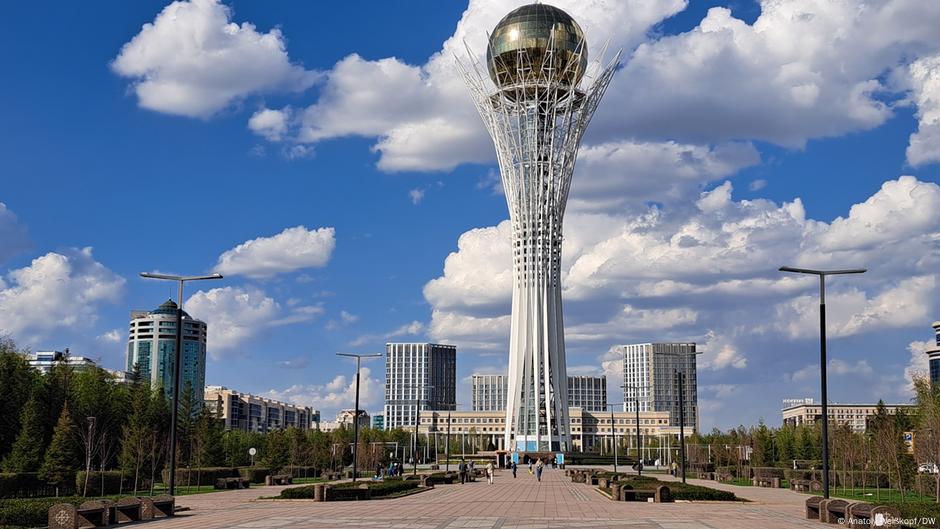
Central Asia: A Contested Backyard: Historically, Russia has considered Central Asia its sphere of influence. However, China’s ambitious Belt and Road Initiative (BRI) has made significant inroads in the region, offering massive infrastructure investments that eclipse Russia’s economic capabilities.11 While both countries publicly frame their initiatives as complementary, there is an undeniable, albeit managed, competition for influence over the region’s resources and strategic geography.

The Russian Far East: A Demographic and Economic Imbalance: The sparsely populated but resource-rich Russian Far East shares a long border with China’s densely populated and economically vibrant northeastern provinces.12 This demographic and economic asymmetry has fueled anxieties in Russia about Chinese encroachment, both through migration and economic dominance.

The Arctic: A New Frontier of Competition: As melting ice opens up new shipping routes and access to resources in the Arctic, both nations have staked their claims. While Russia, as an Arctic coastal state, sees itself as the primary regional power, China has declared itself a “near-Arctic state” and is keen to secure its interests, setting the stage for potential future disagreements.13

An Asymmetrical Relationship: Perhaps the most significant long-term challenge is the growing power imbalance. China’s economy is now roughly ten times the size of Russia’s, and its technological and military capabilities are rapidly catching up and, in some areas, surpassing Russia’s.14 This has led to a dynamic where Russia is increasingly seen as the junior partner in the relationship, a role that sits uncomfortably with its historical self-perception as a great power.

In conclusion, the China-Russia relationship is a duality of convenience and competition. The “brotherly love” of a bygone era has been replaced by a strategic partnership driven by a shared opposition to the West.15 Yet, the undercurrents of rivalry, fueled by historical mistrust and diverging long-term interests in their shared neighborhood and beyond, create a complex and evolving dynamic.16 Theirs is a relationship of calculated cooperation, a carefully choreographed dance where both partners are acutely aware that today’s ally could be tomorrow’s rival.
The Fragile Bromance: Deconstructing the “Brotherly Love” and Enduring Rivalry Between China and Russia

Beijing, China & Moscow, Russia – In an era of shifting global power dynamics, the relationship between China and Russia presents a compelling paradox. Officially, it is a “comprehensive strategic partnership of coordination for a new era,” a bond often romanticized with rhetoric of “brotherly love” and a “friendship with no limits.”17 Yet, beneath this carefully curated image of unwavering solidarity lies a complex and often fraught history, marked by deep-seated rivalry and strategic calculus that tempers their contemporary alliance.18

The current bonhomie is undeniable, fueled by a shared antipathy towards a US-led global order, burgeoning economic ties, and extensive military cooperation. Bilateral trade has soared, reaching a record $240.1 billion in 2023, a significant leap from previous years.19 This economic synergy is largely complementary: Russia, a vast reservoir of natural resources, has become a crucial energy supplier to China’s industrial behemoth, particularly in the face of Western sanctions against Moscow.20 In return, Russia provides a ready market for Chinese technology and manufactured goods.21

Militarily, their alignment is showcased through increasingly sophisticated joint exercises.22 From the “Vostok” (East) and “Tsentr” (Center) drills to joint naval patrols in the Pacific, these maneuvers signal a united front and enhance interoperability between their armed forces.23 This partnership extends to the diplomatic arena, where they often present a unified stance at the United Nations Security Council, acting as a bulwark against Western-led initiatives.24

However, to view this partnership as a revival of the mid-20th century’s Sino-Soviet “brotherly love” is to ignore the profound historical ruptures and the inherent asymmetries of their current relationship. The original “brotherly love” was forged in the crucible of a shared communist ideology following the Chinese Communist Party’s victory in 1949. The Soviet Union, as the elder “big brother,” provided extensive economic and technical aid, playing a pivotal role in China’s early industrialization.25

This fraternal bond, however, proved to be short-lived. The 1960s witnessed the bitter Sino-Soviet split, a chasm that opened over ideological disputes, leadership of the communist world, and border tensions that culminated in the 1969 Zhenbao (Damansky) Island conflict.26 This period of intense hostility left a legacy of deep-seated mistrust that, while publicly downplayed, continues to inform their strategic thinking.

Today, the power dynamic has dramatically inverted. China’s economic and technological prowess far outstrips that of Russia, creating a palpable asymmetry in the relationship. While Moscow may possess a formidable nuclear arsenal and advanced military technology, its economy is now roughly one-tenth the size of China’s. This has led to a growing, albeit unspoken, Russian dependence on its eastern neighbor, a reality that chafes against Russia’s historical self-perception as a great power.

This underlying tension manifests in several key areas of friction.27 Central Asia, a region Russia has long considered its “near abroad,” is now a prime arena for China’s burgeoning influence through its ambitious Belt and Road Initiative (BRI). While both nations publicly espouse cooperation between the BRI and the Russia-led Eurasian Economic Union, the reality on the ground is one of quiet competition for economic and political dominance.28

The Russian Far East presents another potential flashpoint. This vast, resource-rich, and sparsely populated region borders China’s densely populated and economically vibrant northeastern provinces. While Chinese investment is officially welcomed, there are underlying anxieties in Russia about demographic shifts and the potential for Chinese economic colonization of the region.29 Historical grievances, including what some Chinese nationalists term “unequal treaties” that ceded territory to Russia in the 19th century, occasionally resurface, adding another layer of complexity.30

Furthermore, their long-term strategic goals are not entirely congruent. While both seek to curtail American influence, China’s vision for a “community with a shared future for mankind” is one where it sits at the center, a vision that may not fully accommodate a co-equal Russia in the long run.

In conclusion, the China-Russia relationship is best understood as a pragmatic alliance of convenience, born of shared immediate interests rather than a deep-seated ideological or historical kinship. The “brotherly love” of the present is a strategic performance, a necessary facade in their collective challenge to the West. However, the historical baggage of rivalry, the stark power imbalance, and the potential for future competition in their shared neighborhood suggest that this is a fragile bromance, one where national interests will ultimately trump any notions of eternal friendship. The future of this pivotal relationship will depend on a delicate and ongoing recalibration of cooperation and competition, a dance between two powers navigating a world in flux.

Grok:


The relationship between China and Russia is a complex mix of strategic partnership, mutual convenience, and underlying tensions, often framed as “brotherly love” in public rhetoric but marked by rivalry in practice. Here’s a breakdown:
“Brotherly Love” Narrative
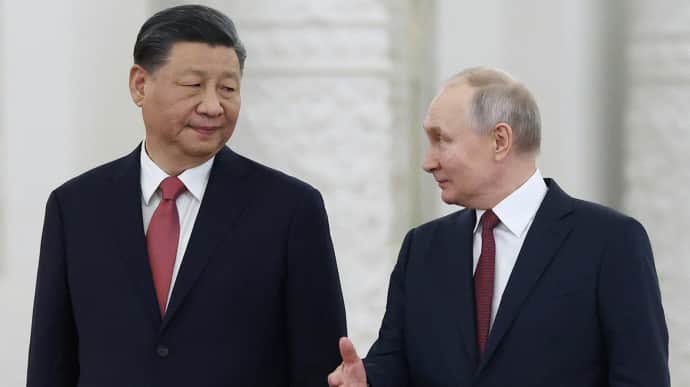
Public Messaging: Both nations emphasize a strong, cooperative bond, often described as a “friendship without limits” or “brotherly love.” This is evident in statements from leaders like Xi Jinping and Vladimir Putin, who highlight unprecedented levels of partnership, especially in the face of Western sanctions and global challenges. For instance, Xi has noted the relationship reaching an “unprecedented level,” and Putin has referenced cultural ties, like the “Russians and Chinese are brothers forever” sentiment from a song.
Shared Interests: The narrative is bolstered by shared geopolitical goals, such as countering U.S. hegemony, resisting Western sanctions, and promoting a multipolar world. Many Chinese view Russia as a trustworthy ally, with sentiments like “enemy of an enemy is our friend” resonating among some groups.
Symbolic Gestures: High-profile acts, like Xi hugging Putin during a 2024 visit, signal closeness to the West, though such gestures are culturally unusual for Chinese leaders and likely calculated for diplomatic impact.
Underlying Rivalry
Despite the rhetoric, competition exists in several areas:
Geopolitical Influence: China and Russia vie for dominance in regions like Eastern Europe, Africa, and Central Asia. For example, in Eastern Europe, China’s economic investments often overshadow Russia’s “brotherly love” rhetoric, which lacks the financial backing China provides.
Economic Dynamics: China holds the upper hand economically, with Russia increasingly reliant on Chinese trade and investment, especially post-Ukraine invasion. This dependency creates an imbalance, as Russia becomes a junior partner, which some analysts argue undermines the “brotherhood” narrative.
Historical Tensions: Past grievances, like territorial disputes in the Far East, linger in Chinese nationalist circles, though rarely acknowledged officially. Some Western narratives exaggerate these to suggest potential conflict, but both nations currently prioritize cooperation over confrontation.
Strategic Misalignments: While aligned against the West, their long-term goals differ. China seeks global economic dominance, while Russia focuses on regional security and influence. This leads to subtle competition, such as China’s growing presence in Russia’s traditional spheres like the Balkans or Africa.
Critical Perspective
The “brotherly love” rhetoric serves both nations’ propaganda needs, projecting unity to deter Western pressure. However, it masks a pragmatic partnership driven by mutual benefit rather than genuine ideological alignment. Historical analogies, like Nixon’s triangulation in the 1970s, suggest the West could exploit these tensions, but current global dynamics make a significant rift unlikely in the near term.
In summary, China and Russia maintain a strong strategic alliance framed as “brotherly love,” but it’s underpinned by calculated interests and tempered by rivalry in influence and economics. The partnership is robust yet not without friction, and the “brotherhood” is more about optics than unconditional loyalty.


Pic


Categories
Michael Novakhov (@mikenov) / Twitter

China – Russia Rivalry and “brotherly love” – GS google.com/search?num=10&… AI Mode (See also: Bing Copilot Gemini Grok): China – Russia Rivalry and “brotherly love” “no-limits partnership” but also facing certain limitations. The current relationship between China and Russia…

Categories
Michael Novakhov (@mikenov) / Twitter

China – Russia Rivalry and “brotherly love” See also: Bing Copilot Gemini Grok AI Mode China – Russia Rivalry and “brotherly love” “no-limits partnership” but also facing certain limitations.The current relationship between China and…

China – Russia Rivalry and “brotherly love” – Google Search google.com/search?num=10&… See also: Bing Copilot Gemini Grok AI Mode China – Russia Rivalry and “brotherly love” “no-limits partnership” but also facing certain limitations.The current relationship between China and…
Categories
Michael Novakhov (@mikenov) / Twitter

China – Russia Rivalry and “brotherly love”

Categories
The News and Times Blogs

Recent Posts – 6.8.25

Recent Posts – 6.8.25

The News And Times

2 hrs ago

Although Putin calls China an “unlimited partner,” leaked FSB documents call it an “enemy.” The Russian FSB accuses China of recruiting officials, stealing military

Post LinkAlthough 🇷🇺Putin calls 🇨🇳China an “unlimited partner,” leaked FSB documents call it an “enemy.” The Russian FSB accuses China of recruiting officials, stealing militar…

The News And Times

17 hrs ago

The role of Starlink in the Russo-Ukrainian war

The role of Starlink in the Russo-Ukrainian warStarlink has played a critical and complex role in the Russo-Ukrainian war since the invasion began.  Positive Impacts for Ukraine:Ma…

The News And Times

19 hrs ago

Elon Musk and Electronic Warfare

Articles, Blogs, and Tweetsx.com/i/grok/share/2…x.com/i/grok/share/2…x.com8mWhat is the significance of the Merz visit and Trump – Musk opensplitoccurring at the same time: June 5,…

Get updates to your inbox

The News And Times

21 hrs ago

Trump-Musk Political Fallout Explored

 Articles, Blogs, and TweetsTrump-Musk Political Fallout Explored google.com/search?q=The+p… bing.com/search?q=The+p… g.co/gemini/share/7… x.com/i/grok/share/W…Trump-Musk Political…

The News And Times

1 day ago

The political potential of Elon Musk – predictive analysis – AI Review

– The political potential of Elon Musk – predictive analysis – AI Reviewhttps://t.co/6ESS6ZiBG4… https://t.co/jGipOvi9oc https://t.co/bSK9bXuGUK https://t.co/KJSdaZ9ldK- pic.twitte…

The News And Times

1 day ago

THE AMERICA PARTY: ELON’S VISION TO DISMANTLE THE ESTABLISHMENT When 5.6 million people tell you they’re politically homeless, perhaps it’s time to bulldoze the entire neighborhood. Elon’s proposed “America Party” resonated with 80.4% of respondents who are tired of the…

Post Link THE AMERICA PARTY: ELON’S VISION AI Review: Google   Bing   Gemini   GrokElon Musk’s Centrist Party Vision – News ReviewTO DISMANTLE THE ESTABLISHMENT When 5.6 million pe…

The News And Times

1 day ago

Russia offers Elon Musk political asylum after his falling out with Donald Trump

 Russia offers Elon Musk political asylum after his falling out with Donald Trumpmsn.comRussia offers Elon Musk political asylum after his falling out with Donald Trump12:53 PM · J…

The News And Times

1 day ago

Kyiv Under Putin’s Revenge Attack – AI Review

Post LinkKyiv Endures Hours of ‘Putin’s Revenge’ in Massive Overnight Attack – GeminiKyiv, Ukraine – June 6, 2025 – The Ukrainian capital was subjected to a harrowing night of aeri…

The News And Times

2 days ago

Russia and Ukraine escalate the attacks. What will happen next? Predictive Analysis: Further Escalation Predicted – AI Review

Post LinkRussia-Ukraine War: Escalation Predicted – GSThere are strong indicators and analyses suggesting that the Russia-Ukraine war could see further escalation in 2025. Several …

The News And Times

2 days ago

Elon Musk calls for US President Trump to be impeached and replaced by JD Vance.

Elon Musk Calls for Trump’s Impeachment, Taps JD Vance as Successor Amid Widening FeudIn a striking political maneuver, Elon Musk has publicly advocated for the impeachment of US P…

The News And Times

2 days ago

Trump and Merz, Trump and Musk – Mobile Post

Trump and Merz, Trump and MuskPost LinkArticles and TweetsTrump and Merzx.com6mElon Musk says that without him Trump would have lost the election. thenewsandtimes.blogspot.com/2025…

The News And Times

2 days ago

Elon Musk says that without him Trump would have lost the election.

Elon Musk says that without him Trump would have lost the election.Articles and TweetsRT by @mikenov: Elon Musk says that without him Trump would have lost the election.x.com1hRT b…

The News And Times

3 days ago

Ukraine hit fewer Russian planes than it estimated

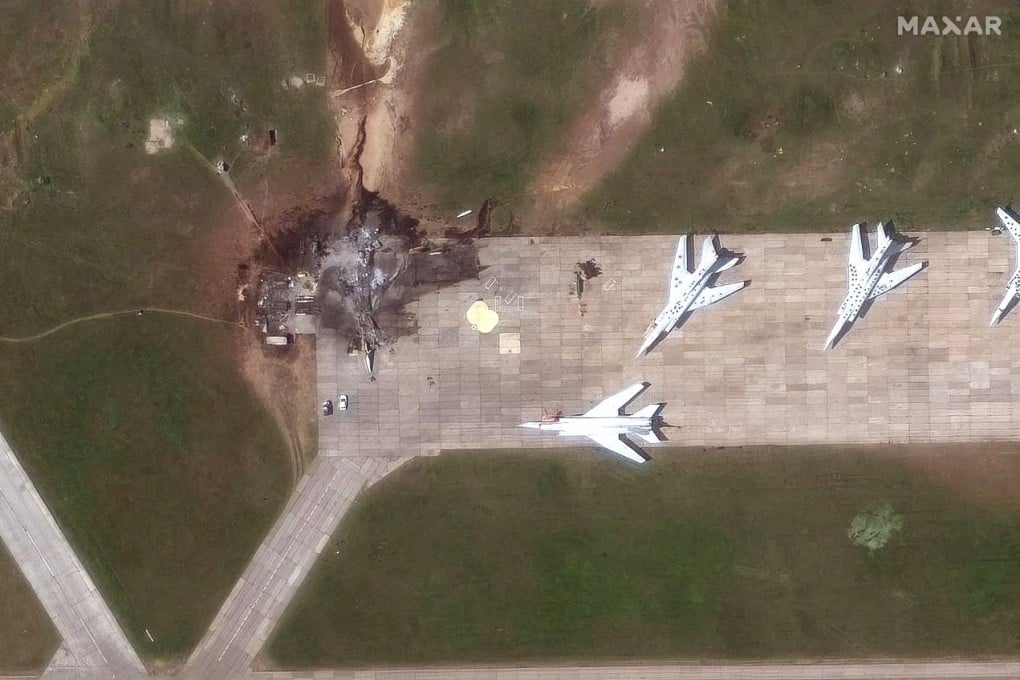
Search inside imageUkraine damaged fewer Russian warplanes in drone attack than claimed, US officials say | South China Morning PostVisitImages may be subject to copyright. Learn M…

The News And Times

3 days ago

The Abuses Of Freedoms And The Dedicated Pursuits of the Personal Gains – Recent Posts – 6.4.25

Recent Posts – 6.4.25The News And Times2 hrs agoAbuses Of Freedoms And The Dedicated Pursuits of the Personal Gains From The Positions Of Power – This Is The Universal Feature Of T…

The News And Times

3 days ago

Abuses Of Freedoms And The Dedicated Pursuits of the Personal Gains From The Positions Of Power – This Is The Universal Feature Of The Security – Intelligence Services Globally – AI Review

Search inside imageLaw-Following AI: designing AI agents to obey human laws – Institute for Law & AIVisitImages may be subject to copyright. Learn MorePost LinkAbuses Of Freedoms A…

Categories
Michael Novakhov (@mikenov) / Twitter

Russia says pushing offensive into Ukraine’s Dnipropetrovsk region economictimes.indiatimes.com/news/defence/r…

Categories
Michael Novakhov (@mikenov) / Twitter

RT by @mikenov: 😡🇺🇦🇺🇸 Zelensky: “We agreed with the previous US presidential administration to transfer 20,000 missiles to Ukraine to fight Shaheds. It was an inexpensive and special technology. We were counting on them. But the US now decided to transfer these missiles to the Middle East.”