
Рабочая встреча с губернатором Саратовской области Романом Бусаргиным • Президент России https://t.co/3BPW7ijuHh pic.twitter.com/C479xvnAeF
— Michael Novakhov (@mikenov) August 28, 2025
Month: August 2025
https://t.co/9Yzq39nRh2
PUTIN AND THE SHOOTINGS#NewsAndTimes #NT #TNT #News #Times #World #USA #POTUS #DOJ #FBI #CIA #DIA #DOD #ODNI #Trump #TrumpNews #TRUMPISTAN #Israel #Mossad #Netanyahu #Ukraine #NewAbwehr #OSINT #Putin #Russia #GRU #Путин #Россия #Bloggers #Opinions… https://t.co/KWvrMjm2XA pic.twitter.com/AG9Yo18Az8— Michael Novakhov (@mikenov) August 28, 2025
PUTIN AND THE SHOOTINGS https://t.co/BaxZeJZ7Y4 pic.twitter.com/HA5KROSwk4
— Michael Novakhov (@mikenov) August 28, 2025
Categories
PUTIN AND THE SHOOTINGS
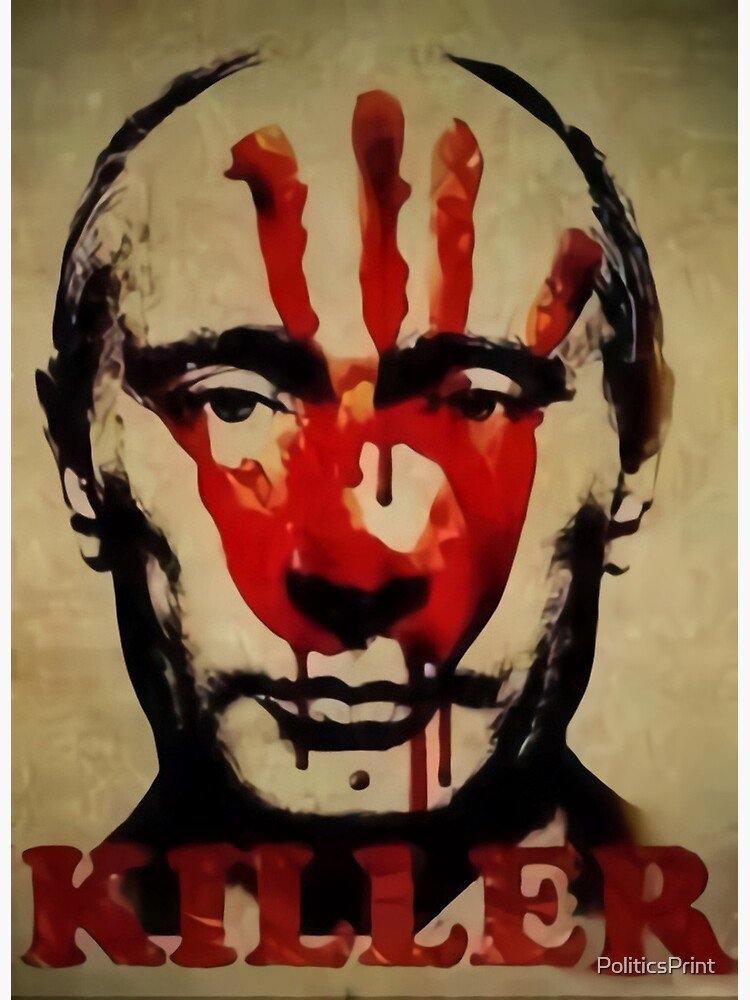
These are not just the individual, sporadic, and spontaneous acts. These are the Russian “Active Measures Operations”, in response to Beslan school massacre which was blamed on the West, and which Putin swore to revenge in his pledge to victims’ mothers. These operations run for 20 years now. The frequency and viciousness of these attacks correlate with the degree of tensions in the US – Russia relations. The ironic, mocking, and hateful messages of each occurrence are often conveyed by the Telling Names which are the tools of the “secret” and yet open and public communications and the distinct criminal signatures. The mass recruitment on line, especially in video games related forums plays a significant role. The general message is: “we can weaponize practically anyone with our methods and techniques”. In reality, the most vulnerable, due to various reasons, are zombified and weaponized. These operations are performed for the purposes of “punishment”, retaliation, and intimidation of the American Public.
The correct reconceptualization and the deeper understanding of these incidents might have the greater chance of successful intervention.
Also, and importantly, Trump should say to Putin, in no uncertain terms: “This madness has to stop!”
The exact mechanisms of recruitment, conversion, and weaponization have to be carefully investigated.
The FBI has to dive deeper for answers, just like in everything else. Superficiality and the tunnel vision are general obstacles which relate to the FBI mentality.
The investigation, when done properly, is the highly intellectual activity and process.
These issues are very important, and they deserve the public discussion.
Links
– Beslan school massacre
– school and mass shootings in US
– the FBI does not understand the phenomenon of school and mass shootings
Are the school shooters directed and manipulated by the Foreign (Russian) Intelligence Services? Putin and mass school shootings
Mr. Putin: History is not your WHORE that can be positioned any which way you wish. History is a Science, it searches for the Truth, which should come out eventually, and this is what you are afraid of. Are you the “Tsar Herod” of School Killings?!
Are the school shooters directed and manipulated by the Foreign (Russian) Intelligence Services? Search.
Are the susceptible due to mental illness or similar problems school shooters directed and manipulated (including on-line) by the Foreign (Russia is the prime suspect) Intelligence Services (allied with the Russian Mob, their foot soldiers)?!
The “Uvalde Robb Elementary” is probably a telling phrase:
“The elementary ROBBERY (reference to the anti-Russian sanctions and the Ukraine – West financial and other arrangements) school”.
Uvalde – W: “On May 24, 2022, 19 children and three adults were killed in a school shooting at Robb Elementary School.”
The statistical connection between the frequency of shooting episodes and the international events has to be explored further, but it appears to be present on the first (unarmed eye) glance.
There is no use of denying and avoiding this issue, it has to be dealt with.
To me, it seems very likely that Putin himself might be behind this and other activities of this type. It is quite possible that this was a retaliation for the Beslan School incident at first, and then it acquired the momentum of its own.
With regard to the most recent, the Minneapolis Annunciation school shooting:
Note that Robin Westman was a boy who wanted to be a girl, and changed his name from Robert.
The Bible story and quote about the Annunciation affirm the general common and the religious principle: “You will conceive in your womb.”
It can be viewed as the rejection of the modern permissive theories and experimentations with the gender identities.
This might indicate the hypothetical organizers and orchestrators of this crime as the religiously conservative, possibly the Orthodox Judaism or the Russian Orthodox faiths adherents. In this sense this crime is indeed “Anti-Catholic”.
Read more about this:
The Annunciation: Angel Gabriel Visits Mary – Bible Stories | Bible Study Tools
Bible Meaning of the Annunciation
Putin would fit into this category of the ultra conservative political – religious leader, and he has all the powers to arrange these crimes, via the Russian Mafia, his foot soldiers and allies.
“Why? What is the motivation for all of this?
My Guess: Rage and the need to express it; to punish, to intimidate, to warn, etc., etc., to play a toughie in the fight.”
And of course the revenge, in this instance as the response to the criticism of killings of the Ukrainian children i the Russian air strikes.
FBI and other Counterintelligence Services: you have to act now or it will be no end to this; the attempts to terrorize and to intimidate America and other countries will continue and intensify.
Putin is the criminal terrorist, indeed!
Search: Michael Novakhov on school shootings, Putin, and Russian Intelligence Services.
Michael Novakhov | 8.28.25
Канцлер ФРГ осудил российский удар по Киеву 28 августа. “То, что теперь и представительство ЕС оказалось под прицелом, свидетельствует о растущей беспринципности российского режима”, – подчеркнул Фридрих Мерц.
РФ всю ночь атаковала столицу Украины ракетами и беспилотниками.… pic.twitter.com/nCKKRd6tTn
— DW на русском (@dw_russian) August 28, 2025
According to the report, Azerbaijan 🇦🇿 offers the clearest example of consolidated state capture, with political and economic power concentrated among a small elite. https://t.co/hKPdeFjO8a pic.twitter.com/UlmXHl6TGc
— Emin Bred (@emin_bred) August 28, 2025
PUTIN AND SCHOOL SHOOTINGShttps://t.co/H0aMwG2iAa
Audio: https://t.co/6TiaBguXMo
–#NewsAndTimes #NT #TNT #News #Times #World #USA #POTUS #DOJ #FBI #CIA #DIA #DOD #ODNI #Trump #TrumpNews #TRUMPISTAN #Israel #Mossad #Netanyahu #Ukraine #NewAbwehr #OSINT #Putin #Russia #GRU #Путин… https://t.co/I2UiP39F9F— Michael Novakhov (@mikenov) August 28, 2025
The FBI does not understand the phenomenon of school and mass shootings.
Audio: https://t.co/RXKrZpEFtY
These are not just the individual, sporadic, and spontaneous acts. These are the Russian “Active Measures Operations”, in response to Beslan school massacre which was blamed… pic.twitter.com/alAZyD0Bhw— Michael Novakhov (@mikenov) August 28, 2025
Another academic year will bring a lot of debate about the nature of debate on college campuses. It is tempting to say that if the First Amendment is the gold standard of public debate, why not import it wholesale into the university, even if the institution is private and beyond the Amendment’s formal reach? In fact, enthusiasm for applying the modern First Amendment in full to the campus is the position of much of the classical liberal right, because they see it as the way to protect conservative dissenters from left-wing university bureaucrats. Yet the fit between the modern First Amendment and the university as originally conceived by classical liberals is far from perfect. A university is an institution for finding truth by reason. But modern First Amendment doctrine is a charter for expression, protecting speech and even conduct with little, if any, rational content.
Moreover, the First Amendment protects not only speech but also assembly. That guarantee is aimed less at truth-seeking than at collective action. It empowers citizens peacefully to organize and press their government to change policy. The ideal university, by contrast, should resist any pressure unrelated to truth. An idea does not become truer because many people gather to demand its adoption. Moreover, given their role as facilitators of reasoned discourse, universities should not be adopting political or cultural positions as institutions.
Thus, even if public universities are bound by modern First Amendment case law, private universities should not sign on. Of course, they should model an epistemic openness in which all reasoned arguments are welcome and encouraged. They may also need to impose institutional constraints on themselves to make sure that the unsettling ideas are heard, mandating neutral and unbiased tribunals to protect speech and inquiry. Judicial review thus is a legal idea that may have some lessons even outside the public university context. Building on that old idea rather than on the modern First Amendment may be the better way to protect dissenters while still upholding the classical ideal of the university.
The focus of the university on discovering truth through reason links the institution from its growth as a medieval foundation for disciplined disputation to the modern research center of today. At Bologna and Paris, the first universities, theses were stated, critiqued, and then defended by reasons. The Enlightenment sometimes redirected that method toward empirical inquiry but preserved the same architecture of truth-seeking. Conclusions were based on evidence and could be disputed based on better evidence. Modern research institutions continued this tradition and added new safeguards such as academic freedom and tenure that are designed to secure independence from faction and fashion.
The university ideal thus has remained that of a social technology for the discovery of knowledge. Sadly, the ideal is not always honored. Ideological monocultures can dull reason’s blade. But when challenged politically, at least, universities never tire of aligning themselves with their proud tradition of preserving epistemic openness bound by reason. It remains their best argument for independence from the threats of politics.
The free speech regime at the time of the Framing likely better comports with that university ideal because speech had to be an exercise in reasoned persuasion to gain protection. The point appears beneath the surface of state charters: Pennsylvania in 1790 guaranteed “the free communication of thoughts and opinions” and allowed citizens to “freely speak, write and print on any subject,” while making them “responsible for the abuse of that liberty.” That text both ties speech to the exchange of reasons and appears to draw a line at non-communicative abuse. Johnson’s influential eighteenth-century dictionary defined “speech” as “the power of expressing thoughts by vocal words,” thus framing it as an instrument of rational expression. Jefferson stated in the Virginia Statute for Religious Freedom that citizens are “free to profess, and by argument to maintain, their opinion in matters of religion”—again, the vocabulary of argument and persuasion rather than brute verbal force. Consistent with this view, states maintained and enacted laws punishing profane cursing, blasphemy, and kindred offenses in the 1790s and early republic—Massachusetts’s “Act to Prevent Profane Cursing and Swearing” in 1798 is one example. Thus, at the time of the Framing speech was prized, but as an instrument in the service of reason. When speech departed from reasoned persuasion, it lost its protection.
Universities would have spared themselves a great deal of grief with a simple rule against political assemblies and demonstrations so long as it was rigorously enforced against everyone.
Modern doctrine, however, has entirely pivoted from “reasoned persuasion” to a broader ideal of expressive autonomy. One inflection point was Justice John Marshall Harlan’s opinion in Cohen v. California. Paul Cohen had been convicted for wearing a jacket reading “F__- the Draft” in a courthouse corridor. But Harlan refused to let the state regulate speech on the basis of its vulgarity. He emphasized that expression carries both a “cognitive” and an “emotive” message and that the Constitution protects the latter as part of how citizens communicate meaning. Because Cohen’s expletive was not obscene, not directed at a particular person, and not likely to provoke a fight, the state’s interest in decorum yielded to a principle of tolerating offense in the name of free expression. In short, Cohen decoupled protection from the provision of reasons and anchored it instead in a robust commitment to expressive freedom, even when the mode of expression may even retard rational argument.
After Cohen, the Court moved further from reason as the touchstone of free speech. First, “fighting words” category shrank. Second, incitement was narrowed to advocacy intended and likely to produce imminent lawless action. Third, offense to sensibilities, however profound, did not suffice to suppress speech (Hustler Magazine, Inc. v. Falwell, Snyder v. Phelps). The Court also protected symbolic acts like flag burning (Texas v. Johnson). The governing tests for free speech now turn on such matters as content and viewpoint neutrality and imminence of violence, not on whether speech is connected to public reason. That shift has yielded a First Amendment regime that is capacious, but indifferent to a speech’s rational quality. It gives the widest berth to expression, including that made solely for shock value, but at the cost of abandoning the requirement that the speech display even a modicum of reason.
Public universities are thus probably stuck with having to accept expressive self-fulfillment as the mandate they need to follow. Even public universities, however, can use time, place and manner regulations to make sure that this kind of expression does not obstruct their core business, whether conducted by their own teachers or outside speakers. But private universities need not accept the modern view. They should instead use the older First Amendment paradigm because it better roots the right to speech in the right to reason to gain the truth. Thus, universities should provide protection for any speech that attempts to reason under a broad definition of what reason is. Reasoned persuasion can take the form of dissent against the vast weight of opinion and authority. But reasoned persuasion does not consist in insults, fighting words, and personal invective.
To be sure, as in any free speech regime, there may be reason to distrust the administration in making ideologically neutral decisions about what speech is protected under the rules employed. But this is an institutional problem, not a conceptual one. Universities should create tribunals on the model of judicial review to resolve disputes about the boundaries of their rules that are composed of neutral arbiters. Distinguished alumni, particularly lawyers, of diverse viewpoints might be appointed arbiters. And here one should be relatively sanguine about their decisions. For instance, whatever one thinks of the current Supreme Court’s First Amendment doctrine, its application to parties of widely varying ideologies seems eminently fair.
Universities, unlike the government, also possess an obligation to facilitate debate and conversations between different reasoned positions. The First Amendment protects negative rights, preventing the government from interfering with speech, but not requiring it to aid in building knowledge. But the truth-seeking function of the university requires it to facilitate and encourage debate aimed at discovering reality. Sadly, because of their ideological monoculture many universities fail to do so. My own law school even took money from a well-meaning donor who wanted the expression of the diversity of views but created forums that lacked them.
Providing students a fundamental right to assemble or demonstrate, by contrast, discourages the kind of reasoned speech essential to free inquiry. The right of assembly in our Constitution was not about reasoned persuasion but instead protected the right of the people to peacefully assemble to press for the redress of their grievances. Founding-era texts treat assembly as the people’s right to gather in order to act politically—to consult, instruct representatives, and petition. Massachusetts’s 1780 constitution provides an example: citizens may “assemble to consult upon the common good; give instructions to their representatives; and … request … redress” by address, petition, or remonstrance. Pennsylvania’s 1776 declaration uses the same similar terms such as “assemble,” “consult,” “instruct,” and “apply,” making clear that the right protects coordinated political pressure in a lawful, orderly form.
The university, however, is not a political institution, and neither its students nor its faculty are its citizens. Both have freely chosen any particular university in a market of higher education and, if unhappy, can go elsewhere to one of its many competitors. Reason, not pressure, should govern the relations of all members of the university, whether the issue is a political or moral one outside the university or one of governance within.
Thus, universities should not permit demonstrations for or against speakers or causes on university campuses. They should certainly not allow, as my university did, the erection of structures to make some political point. Building improvised structures may be a useful skill but it is unrelated to the university’s business and may obstruct it. Universities would have spared themselves a great deal of grief with a simple rule against political assemblies and demonstrations so long as it was rigorously enforced against everyone.
The university secures its authority not by importing the First Amendment’s modern, autonomy-maximizing sweep, but by reclaiming the older freedom that privileges reasoned persuasion. Its charter is to find truth through reason, not protect expression as a means of personal fulfilment. Its objective requires safeguards for any good-faith attempt at reasoning but excludes individual insults and mob pressure. Protect reasons, not rage. The university can then enjoy the freedom calibrated to its mission.
The guilty secret among students of American politics is that many of them—perhaps most—have not read The Federalist in its entirety. They may have been introduced to “Publius,” the nom de plume of Alexander Hamilton, James Madison, and John Jay, early in their studies, as undergraduates or even in high school. But the demands on the time and attention of both teachers and students to “cover” many things typically meant that only the “greatest hits” of the eighty-five essays were assigned and discussed. Sometimes the authors of introductory textbooks on American government will include pivotal essays such as No. 10 and No. 51 in an appendix, and editors of anthologies of primary sources may include as many as eight or ten numbers of The Federalist. The work is sampled more often than read as a coherent unity.
Even the editors of complete editions recognize that many of the essays will go unread. Clinton Rossiter, the editor of an inexpensive and popular 1961 edition under the inaccurate (but evidently unkillable) title The Federalist Papers—an edition refreshed, reissued, and (annoyingly) repaginated under the editorship of Charles Kesler a quarter century ago—had this to say in a “Note on Text”:
Those readers who do not have the energy and fixed purpose to make their way through the whole of The Federalist may wish to know that, by common consent of learned opinion, the following numbers are the cream of the eighty-five papers: 1, 2, 6, 9, 10, 14, 15, 16, 23, 37, 39, 47, 48, 49, 51, 62, 63, 70, 78, 84, 85 (ten by Hamilton, ten by Madison, one by Jay).
Those twenty-one essays, with perhaps a half dozen more besides, constituted my own introduction to Publius as a freshman in the 1970s. And when I began to teach American politics in the 1980s, this “cream” of The Federalist made up the essays I assigned—fewer in introductory courses, these and more in upper-level American political thought. In advanced courses also on Congress, the presidency, or the courts, I might home in on just a handful of essays, adding several more to the relevant few on Rossiter’s list.
True confession: I had been teaching for more than twenty-five years before I assigned The Federalist in its entirety to any class I taught—and it was only then that I finally read each and every one of them myself! That was in spring 2007, and concurrently with my class at Radford University, I blogged my way through all the essays for National Review’s Bench Memos page, with a short entry on each one. A decade later, at Princeton University, I teamed up with a visiting fellow to lead a noncredit weekly reading group through all the essays over the whole 2017–18 academic year.
Everyone who assigns even selections from The Federalist should have this book, and using it will be a spur to teach the work in its entirety, which would be all to the good.
I strongly recommend making the time to do this, and I wish I’d done it years earlier. For teacher and student alike, nothing beats reading the whole of The Federalist. In descending into its granular detail, one begins to see why these essays, written on the fly from October 1787 to May 1788 to urge first New Yorkers but ultimately Americans everywhere to ratify the new Constitution, have had unique staying power among all the contributions to the ratification debate. And with the work involved in grasping the nuances of Publius’s supple arguments, one also begins to ascend again to a bird’s-eye view of the whole series. Close study of this kind will lead you to see why Thomas Jefferson told his son-in-law in 1790, “Descending from theory to practice there is no better book than the Federalist.”
And now has come into my hands a little book I wish I’d had many years ago, one that should quickly find a place in the library of all those who teach and study The Federalist. It is The Framework of the Federalist: Visualizing the Structure of the Argumentation, just out from St. Augustine’s Press. The author, Harvey Flaumenhaft, has been teaching for more than fifty years at St. John’s College, Annapolis, where The Federalist is part of the “great books” curriculum. Whether one calls his book a guide, a synopsis, or an analysis—each description would be accurate—The Framework of the Federalist is plainly the fruit of long and close study of all the essays. Eschewing the formal divisions of an outline into numbered and lettered parts and levels, Flaumenhaft moves back and forth from a high-level overview of the series and its major headings to finely detailed breakdowns of the structures of individual essays. The cycle of ascents and descents is not at all disorienting. Quite the opposite: frequent recurrence from detail to overview and back again keeps the reader oriented, as one would turn from compass and nearby visual landmark to a map one carries to be sure of one’s progress over a whole journey.
Instead of formal outline divisions, Flaumenhaft employs the visual technique of indenting successive levels of the argument, making sure as well that each page of the book is a self-contained unit of The Federalist as a whole. This requires him frequently to interject a signpost that “expanded detail on” some feature of the present page will be found on the next, with that descent followed by a renewed ascent after the detailed analysis has been unpacked. But Flaumenhaft’s strategy of making each page of his book a coherent unit has a remarkable synoptic effect. It provides, as his subtitle puts it, a visualization of the argument’s structure, and it is hard to convey its effectiveness without a visible sample. Here, for example, is how Flaumenhaft begins to break down Federalist #45, answering the concern that the new Constitution grants such a great mass of power that the sovereignty of states is in jeopardy:

And so on. Although Publius’s elegant prose is stripped away, and with it the full rhetorical richness of The Federalist’s case for the Constitution, it is fair to say that the entire argument of the series is present here in skeletal form, in a mere fifty pages. (Two appendices, a page tabulating the authorship of The Federalist and fourteen pages analytically formatting the Articles of Confederation, conclude the book. I should like to have seen a similar formatting of the unamended Constitution as well, and wonder why the author did not provide it.)
The publisher’s website tells us that this book is eighty pages in length, and measures eight and a half inches by eleven. That size may have been originally intended, but Flaumenhaft’s unique approach to visualizing the text’s structure required the enlargement of the pages and a consequent reduction of their number. The work’s 66 pages measure a full twelve inches a side in order to achieve the author’s intent. And still, in order to pack into each page every structural feature that belongs to it as a unit of the whole, the printers were obliged to employ 8-point type, which is a bit taxing for aging eyes like mine. The desired effect has been accomplished, however: Flaumenhaft has both distilled the essence of Publius’s argument and presented it in a series of text-images that can be grasped by the mind.
One perhaps unintended effect of this book is that it may give some readers the impression that Alexander Hamilton and his co-authors—but chiefly Hamilton, who conceived the series and wrote the majority—gave The Federalist an exact and predetermined design, in structure and in substance, that was carried out with precision and polish. But these eighty-five newspaper essays are not a Platonic dialogue, a treatise in analytical philosophy, or a leisurely legal commentary. They were furiously written exercises in advocacy in a newly independent country going through a political crisis. It is well known that Hamilton sketched, in the first essay, a six-part outline of the coming series; then, when he wrote the concluding essay some seven months later, he noted that only the first four parts had been systematically finished—but begged the reader to recognize that the final two parts had been miscellaneously accounted for along the way! All that being noted, however, Flaumenhaft’s analysis brings to light the care taken by Hamilton, Madison, and (yes, even) Jay to fashion rigorous arguments with moving parts that incline the reader strongly toward embracing the Constitution.
Aside from judicial precedents, nothing is more often cited than The Federalist in opinions of the Supreme Court, not to mention the lower federal courts. Unfortunately, the isolated sentences and phrases of Publius that wind up in judicial opinions are usually so abstracted from their context that the point-scoring achieved by them cannot always be trusted. Copies of The Framework of the Federalist should be on the shelves in every justice’s chambers to help guard against this failing. It is not only judges who forage for authority in The Federalist, of course; scholars frequently offer a specious reliance on Publius for their own agendas, sometimes quite innocently, thanks to their unfamiliarity with the whole.
But the primary beneficiaries of Flaumenhaft’s painstaking work will be teachers. Everyone who assigns even selections from The Federalist should have this book, and using it will be a spur to teach the work in its entirety, which would be all to the good. Teachers should want their students to have The Framework as well, though I can imagine some of them holding it close as their pedagogical secret weapon.
As I turned Flaumenhaft’s meticulously crafted pages, one more thought occurred and recurred to me: that at a time when we hear much about the power of “artificial intelligence” to do analytical work for us, and even to write for us, here is a book that only a human intelligence could have produced. Only, that is, a real mind, dwelling with a work like The Federalist over a period of years, talking it over with students, and determined to learn not just about it but from it, could possibly have made such a thing as this. Students of our country’s Constitution, and the thought of its makers, are in Harvey Flaumenhaft’s debt.