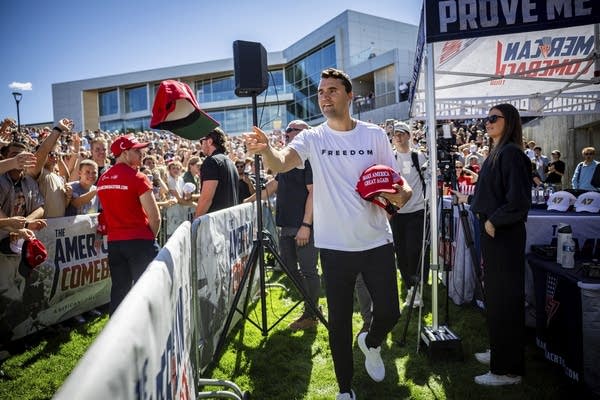
Is the Charlie Kirk’s assassination, possibly with the specialized mini-drone, a MADURO REVENGE AND WARNING, in response to the unsuccessful assassination attempt on Maduro in 2018? – Google Search google.com/search?num=10&new…
No Evidence Links Charlie Kirk’s Assassination to Venezuelan RetaliationThere is no credible evidence to support the claim that the assassination of conservative activist Charlie Kirk was an act of revenge or a warning from Venezuelan President Nicolás Maduro in response to the 2018 assassination attempt against him. Investigations into Kirk’s death have pointed to a lone suspect with motivations appearing to stem from domestic political and ideological grievances.1
Charlie Kirk, the founder of Turning Point USA, was fatally shot by a sniper on September 10, 2025, while speaking at an event at Utah Valley University.2 A suspect, identified as Tyler Robinson, was arrested shortly after the incident.3 While the investigation into the motive is ongoing, initial reports suggest the suspect’s actions were influenced by leftist ideology and Kirk’s outspoken views on social and political issues, particularly gender identity.4
The user’s query suggests a connection to the August 4, 2018, incident in Caracas, where two drones armed with explosives detonated while President Maduro was delivering a speech at a military parade.5 Maduro was unharmed in the attack, which the Venezuelan government labeled a failed assassination attempt.6 At the time, Maduro’s government accused political opponents within Venezuela and the government of neighboring Colombia of being behind the plot.7
There are no reports from law enforcement agencies, government officials, or reputable news organizations that suggest any link between the government of Venezuela or President Maduro and the assassination of Charlie Kirk. Furthermore, the method of Kirk’s assassination—a sniper attack—differs from the drone-based attack on Maduro. The assertion of a “specialized mini-drone” being involved in Kirk’s death is not supported by any factual reporting on the incident.
Tensions between the United States and Venezuela have been high, with recent incidents in the Caribbean involving the U.S. military and Venezuelan vessels.8 However, these events are separate from and unrelated to the assassination of Charlie Kirk. The investigation into his death has remained focused on the domestic suspect and his potential motives.
— Michael Novakhov (@mikenov) Sep 14, 2025
Day: September 14, 2025
No Link: Kirk Assassination and Maduro g.co/gemini/share/b31d451512…
— Michael Novakhov (@mikenov) Sep 14, 2025
Charlie Kirk and Nicolas Maduro – Google Search google.com/search?q=Charlie+…
military.com/daily-news/head…— Michael Novakhov (@mikenov) Sep 14, 2025
The use of the specialized smart mini-drones in political assassinations thenewsandtimes.blogspot.com…
— Michael Novakhov (@mikenov) Sep 14, 2025
share.google/aimode/j5ql8N7v…
The use of the specialized smart mini-drones in political assassinations
. The proliferation of inexpensive, off-the-shelf drones, combined with advancements in autonomous technology, has created a foreseeable new threat landscape for political figures.While mini-drones have not been used in a successful political assassination, the technology is advancing rapidly, and several near-miss attempts have been recorded
Noteworthy assassination attempts using mini-drones
Nicolás Maduro (2018): Opponents of the Venezuelan president attempted to assassinate him with two DJI Matrice 600 drones armed with explosives while he was giving a speech. The attempt was unsuccessful as the explosives detonated prematurely, injuring several soldiers but leaving Maduro unharmed.
Donald Trump (2024): In an attempted assassination involving a sniper, a drone was used to scout the area where the former U.S. president was scheduled to speak. This case demonstrated the potential for drones to be integrated into more complex attack plots.
Factors increasing the threat level
Weaponization of consumer drones: Easily available commercial quadcopters can be modified with explosive payloads, turning a hobbyist’s tool into a lethal weapon.
Miniaturization and stealth: “Insect-like” micro-drones represent a massive threat for their potential to be stealthy, low-collateral-damage weapons that could infiltrate traditionally secure areas.
Autonomous capabilities: Lethal autonomous weapons (LAWs), also known as “killer robots,” use artificial intelligence and facial recognition to find and eliminate specific targets without human control. This capability significantly lowers the risk for the perpetrator and makes these attacks more difficult to trace.
Swarm attacks: AI can coordinate swarms of drones to act in concert, overwhelming security defenses. A 2021 report from the UN indicates that such autonomous drone swarms may have already been used in combat.
Widespread availability of skilled pilots: The conflict in Ukraine has created a large pool of skilled operators of First-Person-View (FPV) drones, increasing the probability that these skills could be repurposed for assassinations.
Potential defensive measures
In response to this emerging threat, security protocols for protecting public figures are evolving. Some counter-drone technologies currently in use or development include:
Detection systems: Radars, cameras, microphones, and radio frequency (RF) analyzers can detect and classify airborne threats.
RF jammers: These disrupt the communication between a drone and its controller, forcing it to land, return home, or crash.
Cyber takeover systems: These can hijack a drone’s signal to take control and safely redirect it away from the target.
Kinetic countermeasures: Devices like net guns or larger interceptor drones can physically capture or destroy a hostile drone.
High-energy lasers: These are being developed to destroy drones at a distance.
Ethical and regulatory concerns
The use of armed, autonomous drones raises significant ethical questions regarding accountability and the morality of having machines decide who to kill. Experts and international bodies have called for a ban on these lethal autonomous weapon systems, citing concerns over flawed technology and the devastating implications for human security and freedom.— Michael Novakhov (@mikenov) Sep 14, 2025
Drones: A New Political Assassination Tool g.co/gemini/share/797c82faf0…
— Michael Novakhov (@mikenov) Sep 14, 2025
The use of the specialized smart mini-drones in political assassinations thenewsandtimes.blogspot.com…
— Michael Novakhov (@mikenov) Sep 14, 2025

Mini-drones have been used in documented attempted political assassinations, most notably against Venezuelan President Nicolás Maduro in 2018. The increasing miniaturization of drone technology, combined with advanced artificial intelligence and affordability, presents a growing threat for future political assassinations. [1, 2]
Documented attempts and capabilities
Attempted assassination of Nicolás Maduro (2018)
On August 4, 2018, attackers attempted to assassinate Venezuelan President Nicolás Maduro using two DJI Matrice 600 drones, reportedly laden with C4 plastic explosive. The attack failed when the drones detonated prematurely, injuring seven members of the National Guard instead of the target. [1]
Swarm attacks and AI
The advancement of technology suggests that future political assassinations could involve autonomous, AI-guided “slaughterbots” or drone swarms.
- The Future of Life Institute released a viral video in 2017 to demonstrate the threat of fictionalized microdrones that use facial recognition to assassinate political opponents.
- The US Department of Defense acknowledges the potential for AI-controlled killer drones and has issued recommendations for ethical use.
- Miniaturization and advanced payloads will make future drones more difficult to detect and defend against. [2, 5, 6, 7]
Challenges for would-be assassins
While drone technology is more accessible than ever, there are still significant barriers for those planning a political assassination. The greatest hurdle is often acquiring and handling a suitable explosive payload, which requires technical expertise and presents safety risks to the attacker. [1, 8]
Protection and defense measures
In response to the growing threat of weaponized drones, security experts are developing and implementing countermeasures:
- Counter-sniper spotters: Teams trained to scan for threats from elevated positions are still a crucial part of an overall security plan.
- Anti-drone systems: Defense systems are being developed to counter the threat posed by weaponized commercial drones.
- Secure communications: Security professionals emphasize that drone defense must be part of a comprehensive communications plan for timely threat notifications. [9, 10, 11]
AI responses may include mistakes.
–

AI Mode
While mini-drones have not been used in a successful political assassination, the technology is advancing rapidly, and several near-miss attempts have been recorded
. The proliferation of inexpensive, off-the-shelf drones, combined with advancements in autonomous technology, has created a foreseeable new threat landscape for political figures.
Noteworthy assassination attempts using mini-drones
- Nicolás Maduro (2018): Opponents of the Venezuelan president attempted to assassinate him with two DJI Matrice 600 drones armed with explosives while he was giving a speech. The attempt was unsuccessful as the explosives detonated prematurely, injuring several soldiers but leaving Maduro unharmed.
- Donald Trump (2024): In an attempted assassination involving a sniper, a drone was used to scout the area where the former U.S. president was scheduled to speak. This case demonstrated the potential for drones to be integrated into more complex attack plots.
Factors increasing the threat level
- Weaponization of consumer drones: Easily available commercial quadcopters can be modified with explosive payloads, turning a hobbyist’s tool into a lethal weapon.
- Miniaturization and stealth: “Insect-like” micro-drones represent a massive threat for their potential to be stealthy, low-collateral-damage weapons that could infiltrate traditionally secure areas.
- Autonomous capabilities: Lethal autonomous weapons (LAWs), also known as “killer robots,” use artificial intelligence and facial recognition to find and eliminate specific targets without human control. This capability significantly lowers the risk for the perpetrator and makes these attacks more difficult to trace.
- Swarm attacks: AI can coordinate swarms of drones to act in concert, overwhelming security defenses. A 2021 report from the UN indicates that such autonomous drone swarms may have already been used in combat.
- Widespread availability of skilled pilots: The conflict in Ukraine has created a large pool of skilled operators of First-Person-View (FPV) drones, increasing the probability that these skills could be repurposed for assassinations.
Potential defensive measures
In response to this emerging threat, security protocols for protecting public figures are evolving. Some counter-drone technologies currently in use or development include:
- Detection systems: Radars, cameras, microphones, and radio frequency (RF) analyzers can detect and classify airborne threats.
- RF jammers: These disrupt the communication between a drone and its controller, forcing it to land, return home, or crash.
- Cyber takeover systems: These can hijack a drone’s signal to take control and safely redirect it away from the target.
- Kinetic countermeasures: Devices like net guns or larger interceptor drones can physically capture or destroy a hostile drone.
- High-energy lasers: These are being developed to destroy drones at a distance.
Ethical and regulatory concerns
The use of armed, autonomous drones raises significant ethical questions regarding accountability and the morality of having machines decide who to kill. Experts and international bodies have called for a ban on these lethal autonomous weapon systems, citing concerns over flawed technology and the devastating implications for human security and freedom.
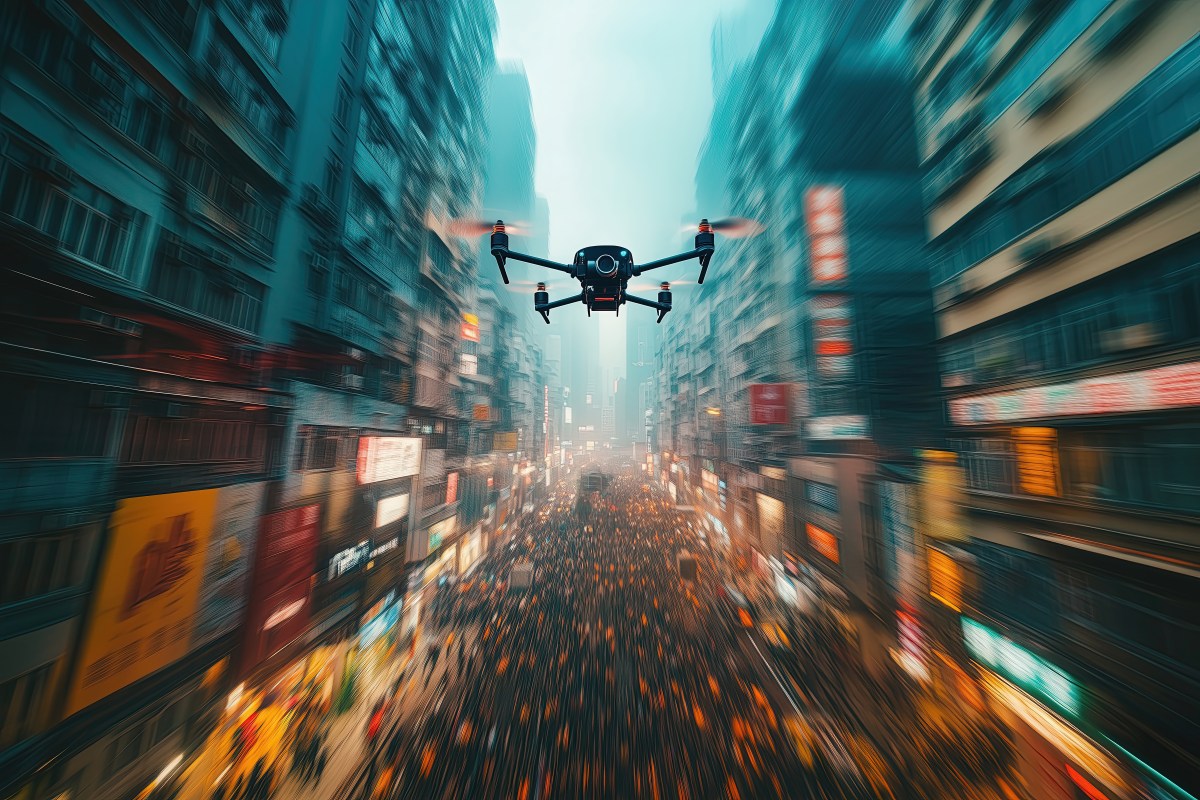
The Specter of the “Slaughterbot”: Assassination Drones Emerge from Science Fiction into a Tangible Threat
The use of specialized smart mini-drones in political assassinations, a concept once relegated to the realm of science fiction, has now become a stark and documented reality. While the chilling vision of autonomous “slaughterbots” hunting down individuals based on pre-programmed criteria has not yet fully materialized, the foundational elements of such attacks are not only feasible but have already been deployed in attempts to eliminate political leaders.
The most prominent real-world example of this emerging threat was the August 2018 assassination attempt against Venezuelan President Nicolás Maduro.
This incident underscored a critical shift in the landscape of political assassinations. No longer is such a threat confined to the capabilities of nation-states with advanced military drone programs.
The Evolving Capabilities of Mini-Drones
Modern mini-drones, typically defined as unmanned aerial vehicles (UAVs) small enough to be carried by an individual, possess a suite of features that make them alarmingly suitable for assassination plots:
-
Precision and Maneuverability: Equipped with GPS and other advanced navigation systems, these drones can be guided to precise locations with a high degree of accuracy. Their small size and agility allow them to navigate complex urban environments, potentially reaching targets in locations that would be difficult to access through traditional means.
-
Payload Capacity: While small, many commercially available drones can carry payloads sufficient to deliver a lethal dose of explosives or other harmful agents.
The Maduro attempt demonstrated that even a few pounds of C4 could be effectively deployed. -
Remote Operation and Anonymity: Drones can be operated from a significant distance, providing a degree of anonymity and safety to the perpetrator.
This standoff capability makes it more challenging for security forces to identify and apprehend the attacker. -
Increasing Autonomy: The “smart” aspect of these drones is rapidly evolving. While the Maduro attack likely involved direct remote control, the integration of artificial intelligence is paving the way for more autonomous capabilities. This includes features like object tracking, facial recognition, and autonomous navigation, which could reduce the cognitive load on the operator and increase the chances of a successful attack.
The “Slaughterbots” Scenario and the Future of Autonomous Attacks
The 2017 short film “Slaughterbots,” produced by the Future of Life Institute, depicted a dystopian near-future where swarms of autonomous micro-drones carry out mass assassinations based on predefined characteristics.
Experts in artificial intelligence and security have warned that the building blocks for such technology are already in place.
The Broader Context: A Tool for Terror and Insurgency
Beyond high-profile political assassinations, smaller, weaponized drones are increasingly being used by terrorist and insurgent groups in conflict zones around the world.
Countermeasures and the Arms Race
The rise of the assassination drone has spurred a parallel development in counter-drone technologies. These countermeasures range from electronic warfare systems that can jam or hijack a drone’s control signals to kinetic solutions that can physically disable or destroy the aircraft. However, the rapid pace of drone innovation presents a significant challenge for defensive strategies.
In conclusion, the use of specialized smart mini-drones in political assassinations has transitioned from a hypothetical threat to a tangible and evolving danger. The Maduro attempt served as a watershed moment, proving that commercially available technology can be readily adapted for lethal purposes.
–
https://g.co/gemini/share/d90601aa0c1d
Opens in a new window