
The oily hypocrisy of Ilham Aliyev: Mixing of Azeri and Russian oil to avoid sanctions was done under the personal agreement between Putin and Aliyev, Adnan Ahmadzada is a designated fall guy, arrested just before Aliyev visit to New York – Google Search google.com/search?q=The+oily…
— Michael Novakhov (@mikenov) Sep 23, 2025
Day: September 23, 2025
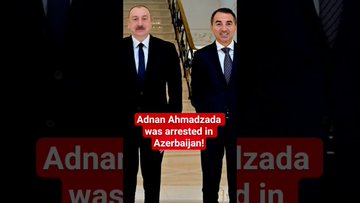
#Azerbaijan‘s #Oil Sanctions Evasion Scheme and the oily #hypocrisy of Ilham Aliyev: Mixing of Azeri and Russian oil to avoid sanctions was done under the personal agreement between Putin and Aliyev, Adnan Ahmadzada is a designated fall guy, arrested just before Aliyev visit to New York. thenewsandtimes.blogspot.com…
— Michael Novakhov (@mikenov) Sep 23, 2025





President Trump begins his remarks in front of the United Nations General Assembly with a joke, saying “I don’t mind making this speech without a teleprompter, because the teleprompter is not working. I feel very happy to be up here with you nevertheless — that way you speak more… pic.twitter.com/drnu3a4PNM
— OSINTdefender (@sentdefender) September 23, 2025
#CIA #StateDept #Potus #Azerbaijan #IlhamAliyev
Azerbaijan’s Oil Sanctions Evasion Scheme g.co/gemini/share/85eb1281dd…
The oily hypocrisy of Ilham Aliyev: Mixing of Azeri and Russian oil to avoid sanctions was done under the personal agreement between Putin and Aliyev, Adnan Ahmadzada is a designated fall guy, arrested just before Aliyev visit to New York.
GS:
google.com/search?q=The+oily…
Gemini
Baku, Azerbaijan – Allegations of a clandestine agreement between Azerbaijani President Ilham Aliyev and Russian President Vladimir Putin to circumvent international sanctions by mixing Russian and Azeri oil have surfaced, casting a shadow over Azerbaijan’s role as a key energy partner to the West. The recent arrest of a high-ranking official from the state oil company, SOCAR, just days before Aliyev’s visit to New York, has fueled speculation that a “fall guy” has been designated to quell international scrutiny.Adnan Ahmadzada, the former deputy head of the investment department at SOCAR, was taken into custody in Baku around September 20, 2025, on charges of sabotage against economic security and large-scale embezzlement.1 His arrest has been linked to allegations of “oil fraud,” specifically the mixing of Azerbaijani ‘light’ crude with other petroleum products.2
This development comes amid mounting evidence and reports from various international sources suggesting that Azerbaijan has been instrumental in helping Russia evade sanctions imposed following the invasion of Ukraine. Investigations have pointed to a “shadow trade” where Russian oil is transported to Azerbaijani ports, mixed with local crude, and then exported as Azerbaijani oil, effectively obscuring its origin.3 This practice allows Russia to continue selling its oil on the global market, undermining the impact of Western sanctions.
The United Kingdom has already taken action, sanctioning several Azerbaijani individuals and companies for their alleged involvement in this illicit trade.4 These entities are accused of being part of a network that facilitates the transportation, refining, and exportation of Russian crude oil.5
While there is no direct public evidence of a “personal agreement” between Aliyev and Putin on this matter, the close and strategic partnership between the two leaders, particularly in the energy and transportation sectors, has been well-documented. Their frequent meetings and joint statements emphasize a deepening of ties, which critics argue has created an environment conducive to such covert operations.
The timing of Ahmadzada’s arrest, immediately preceding President Aliyev’s arrival in New York on September 22, 2025, for the UN General Assembly, has been viewed by many as a calculated move. Observers suggest that by sacrificing a high-level executive, the Aliyev government may be attempting to demonstrate a commitment to cracking down on corruption and illegal activities within its energy sector, thereby deflecting direct responsibility and appeasing international partners.
Official statements from Baku have framed Ahmadzada’s arrest as part of a broader anti-corruption campaign.6 However, given the significant body of evidence pointing to state-level complicity in the circumvention of sanctions, this narrative is being met with skepticism from international watchdogs and foreign governments. The case of Adnan Ahmadzada is now at the center of a geopolitical firestorm, highlighting the “oily hypocrisy” of a nation that presents itself as a reliable energy alternative to Russia while allegedly enabling its sanctions evasion.
— Michael Novakhov (@mikenov) Sep 23, 2025
#CIA #StateDept #Potus #Azerbaijan #IlhamAliyev
Azerbaijan’s Oil Sanctions Evasion Scheme g.co/gemini/share/85eb1281dd…
Prompt:
The oily hypocrisy of Ilham Aliyev: Mixing of Azeri and Russian oil to avoid sanctions was done under the personal agreement between Putin and Aliyev, Adnan Ahmadzada is a designated fall guy, arrested just before Aliyev visit to New York.
GS:
google.com/search?q=The+oily…
Gemini
Baku, Azerbaijan – Allegations of a clandestine agreement between Azerbaijani President Ilham Aliyev and Russian President Vladimir Putin to circumvent international sanctions by mixing Russian and Azeri oil have surfaced, casting a shadow over Azerbaijan’s role as a key energy partner to the West. The recent arrest of a high-ranking official from the state oil company, SOCAR, just days before Aliyev’s visit to New York, has fueled speculation that a “fall guy” has been designated to quell international scrutiny.Adnan Ahmadzada, the former deputy head of the investment department at SOCAR, was taken into custody in Baku around September 20, 2025, on charges of sabotage against economic security and large-scale embezzlement.1 His arrest has been linked to allegations of “oil fraud,” specifically the mixing of Azerbaijani ‘light’ crude with other petroleum products.2
This development comes amid mounting evidence and reports from various international sources suggesting that Azerbaijan has been instrumental in helping Russia evade sanctions imposed following the invasion of Ukraine. Investigations have pointed to a “shadow trade” where Russian oil is transported to Azerbaijani ports, mixed with local crude, and then exported as Azerbaijani oil, effectively obscuring its origin.3 This practice allows Russia to continue selling its oil on the global market, undermining the impact of Western sanctions.
The United Kingdom has already taken action, sanctioning several Azerbaijani individuals and companies for their alleged involvement in this illicit trade.4 These entities are accused of being part of a network that facilitates the transportation, refining, and exportation of Russian crude oil.5
While there is no direct public evidence of a “personal agreement” between Aliyev and Putin on this matter, the close and strategic partnership between the two leaders, particularly in the energy and transportation sectors, has been well-documented. Their frequent meetings and joint statements emphasize a deepening of ties, which critics argue has created an environment conducive to such covert operations.
The timing of Ahmadzada’s arrest, immediately preceding President Aliyev’s arrival in New York on September 22, 2025, for the UN General Assembly, has been viewed by many as a calculated move. Observers suggest that by sacrificing a high-level executive, the Aliyev government may be attempting to demonstrate a commitment to cracking down on corruption and illegal activities within its energy sector, thereby deflecting direct responsibility and appeasing international partners.
Official statements from Baku have framed Ahmadzada’s arrest as part of a broader anti-corruption campaign.6 However, given the significant body of evidence pointing to state-level complicity in the circumvention of sanctions, this narrative is being met with skepticism from international watchdogs and foreign governments. The case of Adnan Ahmadzada is now at the center of a geopolitical firestorm, highlighting the “oily hypocrisy” of a nation that presents itself as a reliable energy alternative to Russia while allegedly enabling its sanctions evasion.
— Michael Novakhov (@mikenov) Sep 23, 2025
Russia vs NATO: Who is testing whom? – Experts weigh risks of direct confrontation caliber.az/en/post/russia-vs…
— Michael Novakhov (@mikenov) Sep 23, 2025
The oily hypocrisy of Ilham Aliyev – Google Search google.com/search?q=The+oily…
The South Caucasus News Review
feeder.co/out/folder/c6e89e0…
SouthCaucasusNews.com
#SouthCaucasus #SouthCaucasusNews
#Armenia #Azerbaijan #Georgia
Armenia Azerbaijan Georgia
–
thenewsandtimes.com
newsandtimes.org
–
News Review – Comprehensive, Balanced, Timely
Feeds
All News – rss.app/feeds/_26YATRQjU2csD…
Articles and Tweets – rss.app/feeds/_4kgC7OjY0IZpH…
Audio – rss.app/feeds/_ejd5Z2ZaIcyu7…
Video and Audio News Review – rss.app/feeds/_05FZ8t8ffFv7F…
Brooklyn – rss.app/feeds/_LGHJz4kwWEXvm…
–
The “oily hypocrisy” of Ilham Aliyev refers to the widespread criticism that his oil and gas-fueled government engages in corruption and human rights abuses while projecting a public image of progress and hosting major international events. Critics point to specific examples, including his controversial comments at the COP29 climate summit and the use of oil wealth to silence dissent. [1, 2, 3, 4, 5]
“Oily” connections to fossil fuels and wealthControversial COP29 speech: While hosting the COP29 climate conference in November 2024, Aliyev declared oil and gas a “gift from God,” defending fossil fuels and accusing Western nations of hypocrisy for their dependency on his country’s energy while criticizing its environmental record. His remarks drew strong condemnation from climate advocates and contrasted sharply with the conference’s official goals.
Corruption and personal enrichment: Investigations like the Pandora Papers and the Organized Crime and Corruption Reporting Project (OCCRP) have revealed that Aliyev’s family and associates have secretly amassed vast wealth through offshore networks and control over lucrative industries, including the country’s oil and gas sectors. These schemes have allegedly siphoned billions from state coffers for personal gain.
Influence peddling (“Caviar diplomacy”): The Azerbaijani government has used its oil wealth for extensive lobbying, including a scheme known as “caviar diplomacy.” This involved using slush funds to pay off European politicians and deflect international criticism of human rights abuses.
Use of energy as a geopolitical tool: Azerbaijan’s role as a major gas supplier to Europe has strengthened its geopolitical position, allowing the Aliyev regime to leverage its energy resources while facing limited consequences for its authoritarian practices. [1, 3, 6, 7, 8, 9, 10, 11, 12, 13]“Hypocrisy” in governance and human rights
Stifling dissent: The Aliyev regime is widely criticized for suppressing free speech and silencing critics, including journalists, activists, and opposition figures.
Independent journalists, such as those from Abzas Media who investigated corruption, have faced arrest and politically motivated charges.
.Amnesty International has highlighted an escalating crackdown on freedom of expression ahead of recent elections, with the government harassing the families of state critics
Rigged elections: Aliyev’s rise to power in 2003 was marred by irregularities, and a 2009 referendum eliminated presidential term limits, effectively allowing him to rule indefinitely. His wife was appointed Vice President, consolidating power within the family..Ethnic cleansing of Nagorno-Karabakh:Following Azerbaijan’s offensive to retake the Nagorno-Karabakh region in 2023, more than 100,000 ethnic Armenians fled their homes. Human Rights Watch characterized the displacement as ethnic cleansing, which occurred despite international warnings
Response to international criticism: Aliyev has rejected international criticism of his human rights record as a form of “political hypocrisy.” When U.S. lawmakers called for the release of political prisoners, Aliyev called their appeal “disgusting”. [2, 4, 7, 10, 14, 15, 16, 17]
AI responses may include mistakes.
[1] aljazeera.com/news/2024/11/1…[2] rferl.org/a/azerbaijan-us-ri…
[3] en.wikipedia.org/wiki/Ilham_…
[4] hrf.org/latest/azerbaijans-a…
[5] en.apa.az/official-news/pres…
[6] asbarez.com/at-cop29-aliyev-…
[7] en.wikipedia.org/wiki/Ilham_…
[8] bbc.com/news/articles/cpqd1r…
[9] thecaliforniacourier.com/ali…
[10] en.wikipedia.org/wiki/Corrup…
[11] occrp.org/en/investigation/b…
[12] en.wikipedia.org/wiki/Corrup…
[13] icij.org/investigations/pana…
[14] hrw.org/world-report/2024/co…
[15] humanrightsnetwork.org/blog/…
[16] amnesty.org/en/latest/news/2…
[17] rferl.org/a/azerbaijan-us-ri…
–
See Tweets – AI
–
x.com/mikenov/status/1970414…
–
x.com/mikenov/status/1970413…
–
x.com/mikenov/status/1970412…
–— Michael Novakhov (@mikenov) Sep 23, 2025
Mixing of Azeri and Russian oil to avoid sanctions – Google Search google.com/search?q=Mixing+o…
Pic:
“Sanctions hypocrisy: G7+ imports EUR 1.8 bn of Turkish oil products made from Russian crude – …”
–
Reports suggest that Russian crude oil is being transported, processed, and exported via Azerbaijan to circumvent international sanctions. European countries have purchased fuel products from Azerbaijani refineries, though the raw material was primarily Russian crude. [1, 2, 3, 4, 5]
The process of Russian oil blending and rebrandingRussian oil imports to Azerbaijan: Since Western nations, including the UK and EU, imposed sanctions on Russia in response to its invasion of Ukraine, Azerbaijan has significantly increased its import of Russian crude oil.
Refining in Turkey: The State Oil Company of Azerbaijan (SOCAR) refines Russian crude at its STAR refinery in Turkey. The refinery was built with the capacity to process different types of oil, including Russia’s Urals crude.
Mixing and rebranding: Once refined, the oil products are mixed with Azerbaijani crude. By transforming Russian crude into new products, its origin is obscured. The refined fuel is then exported from Turkey to international markets, including the European Union.
Tanker transport: The Azerbaijan Caspian Shipping Company (ASCO) is reportedly involved in transporting Russian crude via its tankers to the STAR refinery. The UK sanctioned an ASCO-owned tanker, the Zangezur, in May 2025 for its role in the “shadow” delivery of Russian oil. [1, 3, 4, 5, 6, 7, 8, 9]International response and ongoing challenges
UK and EU sanctions: In September 2025, the EU confirmed that the STAR refinery would be subject to sanctions under its 18th sanctions package. The UK has also targeted Azerbaijani entities, including the oil trading company Coral Energy Group, over ties to Russia’s oil trade. In June 2025, the EU announced a proposal to ban imports of refined products made from Russian crude in third countries, which is intended to close this specific sanctions loophole.
Market impact: Despite these measures, enforcement has been challenging. The use of a “shadow fleet” of tankers operating outside of normal regulations continues to facilitate the trade.
Azerbaijan’s position: Critics accuse Azerbaijan of conducting a geopolitical “balancing act”—maintaining its status as a Western energy partner while enabling Russia’s shadow oil trade for profit. European countries that rely on Azerbaijani oil are placed in a complex and diplomatically delicate position. [2, 4, 5, 6, 10, 11, 12]AI responses may include mistakes.
[1] oc-media.org/eu-sanctions-qu…
[2] armenianweekly.com/2024/10/0…
[3] business-humanrights.org/my/…
[4] crudeaccountability.org/bala…
[5] jam-news.net/shadow-russian-…
[6] facebook.com/armeniannationa…
[7] report.az/en/energy/azerbaij…
[8] interfax.com/newsroom/top-st…
[9] eurasianet.org/azerbaijans-s…
[10] reuters.com/sustainability/c…
[11] bloomberg.com/news/articles/…
[12] spglobal.com/commodity-insig…— Michael Novakhov (@mikenov) Sep 23, 2025
Mixing of Azeri and Russian oil to avoid sanctions was done under the personal agreement between Putin and Aliyev – Google Search google.com/search?q=Mixing+o…
There is no publicly available evidence to confirm a personal agreement between Vladimir Putin and Ilham Aliyev to mix oil for sanctions evasion. However, reports have detailed how Azerbaijan’s energy infrastructure and state-owned companies have been used to help Russia circumvent Western sanctions on oil exports. [1, 2, 3]
Allegations of Azerbaijan’s role in sanctions evasion“Invisible hand” accusations: Multiple reports have described Azerbaijan as an “invisible hand” behind Russian oil exports to Europe. By routing Russian oil through its territory, Azerbaijan has been accused of providing a lifeline for Russia to continue profiting from its oil exports, while allowing Europe to maintain its energy supply.
Shipments through Azerbaijan: Analysis published in October 2022 by the analytics firm Petrostrategies highlighted a significant increase in crude oil exports via the Baku-Tbilisi-Ceyhan (BTC) pipeline, even as Azerbaijan’s domestic production was in decline. This suggested that Russian oil was being shipped as Azeri Light, a higher-priced crude.
Refining and rebranding: The EU has confirmed that the Azerbaijani state-owned STAR refinery in Turkey is subject to sanctions for processing Russian crude oil. Reports indicate that over 90% of the refinery’s crude imports in early 2024 originated from Russia. The EU’s 18th sanctions package, adopted in July 2025, specifically bans imports of refined products made from Russian oil in third countries as an anti-circumvention measure.
Tanker activity: In 2025, the UK and EU sanctioned several Azerbaijani state-owned tankers for their role in transporting Russian-origin oil using “irregular and high-risk” shipping practices. These tankers, affiliated with the Azerbaijan Caspian Shipping Company (ASCO) and SOCAR, were reportedly involved in transporting oil between Russian and Turkish ports.
Lukoil deal: In October 2023, Russian energy giant Lukoil provided a $1.5 billion loan to SOCAR and agreed to supply Russian crude to SOCAR’s STAR refinery. This was viewed by some as a workaround to avoid sanctions on direct purchases of Russian crude. [2, 3, 4, 5, 6, 7, 8, 9, 10]The political context
No proof of a personal deal: While Aliyev and Putin have met on multiple occasions and affirmed their close ties, no evidence of a personal agreement to coordinate sanctions evasion has been revealed in public reports.
Strategic balancing act: Azerbaijan has performed a delicate balancing act, presenting itself as a strategic energy partner to Western countries while allegedly enabling Russia’s “shadow” oil trade. Western sanctions on Azerbaijani entities have been described by analysts as a “warning shot” to signal that its role in sanctions circumvention carries risks to its diplomatic and economic standing.
Recent conflicts: In 2025, Russia has repeatedly attacked Azerbaijani energy facilities in Ukraine, signaling that the relationship is complex and not always cooperative. Romanian authorities also investigated a potential Russian sabotage effort that involved contaminating a shipment of Azerbaijani oil. [3, 11, 12, 13, 14, 15]AI responses may include mistakes.
[1] armenianweekly.com/2024/10/0…
[2] armenianweekly.com/2024/10/0…
[3] crudeaccountability.org/bala…
[4] civilnet.am/en/news/680193/r…
[5] eurasianet.org/azerbaijans-s…
[6] facebook.com/armeniannationa…
[7] facebook.com/ocmediaorg/post…
[8] news.am/eng/news/902900.html
[9] hetq.am/en/article/175817
[10] eurasian-research.org/public…
[11] neweasterneurope.eu/2025/07/…
[12] rferl.org/a/azerbaijan-russi…
[13] usnews.com/news/world/articl…
[14] euromaidanpress.com/2025/08/…
[15] caspianpost.com/analytics/ru…— Michael Novakhov (@mikenov) Sep 23, 2025