
The neo-imperialist post-Soviet Russian Mafia State under the cover of Putinism is one and the latest of the historical waves of the Mongol-Tatar system of governing and its patterns of the social, political, and economic relations
–
GS – AI Overview
The idea that modern Russian politics, particularly “Putinism,” is a continuation of the Mongol-Tatar system of governing is a highly debated historical and political thesis. While some scholars and political commentators draw comparisons between specific patterns of centralized power, corruption, and the use of violence, others reject this theory as a problematic oversimplification of history. [1, 2]
Arguments supporting the comparison • Centralized, autocratic rule: Some historians, like Nikolai Karamzin, have argued that Mongol rule helped unify the fragmented Russian principalities under a single, autocratic Moscow-based authority. This historical trajectory established a precedent for a powerful, centralized state, a pattern seen today in the concentration of power around Vladimir Putin.
• A historical view of the state: The Eurasian school of thought, which gained traction among some Russian emigres, argues that the Russian state is the heir and successor of the Mongol Empire. This view frames Russia as a unique Eurasian civilization, distinct from the West, and sees its autocratic traditions as a continuation of its imperial, Eastern heritage.
• Political culture: Proponents of the theory point to similarities in political practices, such as the use of fear and intimidation to maintain control. The Mongols demanded absolute submission from Russian princes, who in turn learned to use similar tactics to enforce compliance and collect tribute.
• Economic extraction: The Mongol system of extracting tribute through local intermediaries who were rewarded for their loyalty created a dynamic of corrupt, personalized relationships rather than a rules-based system. Critics of Putinism argue that it reflects a modern version of this system, with a ruling elite enriching itself through the state’s resources.
• Historical rhetoric: The narrative has been deployed politically within Russia as well. In a 2023 speech, Putin himself controversially framed submission to the Golden Horde as a choice that preserved the Russian people from Western invasion, a message with clear contemporary political overtones. [1, 2, 3, 4, 5, 6, 7, 8]Counterarguments and criticisms • Remote vs. direct rule: The Golden Horde did not directly occupy the Russian lands, but instead ruled from a distance, relying on Russian princes to collect taxes. This differed significantly from the Mongol approach in other regions, such as Persia and China. The Putinist “mafia state” involves a more direct, systemic integration of criminal and state interests, which is not an equivalent model.
• Overlooking other historical influences: The Mongol-Tatar yoke was just one of many formative periods in Russian history. Russian political traditions also draw heavily from Byzantine statecraft, Orthodox Christianity, and later, Western European imperial models. Focusing solely on the Mongol influence is a simplification that ignores these other complex historical sources.
• Anachronistic comparisons: Critics warn against drawing direct lines from medieval Mongol-Tatar rule to modern-day politics, pointing out that such comparisons are often used for political rhetoric rather than historical accuracy. Comparing Putin to a medieval ruler like Genghis Khan, for example, is seen by some as a crude analogy rather than a serious historical analysis.
• Exaggerated impact of the “yoke”: Some historians, particularly Soviet-era and post-Soviet Russian scholars, argued that the Mongol impact was minimal or even beneficial, emphasizing Russian heroism and self-preservation during the period. This view is contrasted with the “Westernizer” school of thought, which blames the Mongol period for Russia’s divergence from European modernity. [1, 2, 9, 10, 11]A complex historical legacy Ultimately, the thesis is not a straightforward factual claim but a framework for historical interpretation. The comparison is a controversial way of understanding the origins and characteristics of Russian authoritarianism. It highlights certain aspects of centralized power and political culture while downplaying the multitude of other factors that have shaped the Russian state over the centuries. [1]
AI responses may include mistakes.
[1] ijors.net/issue5_2_2016/arti…
[2] scholarworks.iu.edu/journals…
[3] egrove.olemiss.edu/hon_thesi…
[4] encyclopedia.com/history/enc…
[5] en.wikipedia.org/wiki/Putini…
[6] study.com/academy/lesson/how…
[7] ijors.net/issue5_2_2016/pdf/…
[8] fiveable.me/key-terms/ap-wor…
[9] lowyinstitute.org/the-interp…
[10] dergipark.org.tr/en/download…
[11] fiveable.me/early-world-civi…
–Gemini
g.co/gemini/share/2d5702eb91…
The assertion that the “neo-imperialist post-Soviet Russian Mafia State under the cover of Putinism is one and the latest of the historical waves of the Mongol-Tatar system of governing” is a complex thesis that draws parallels between contemporary Russia and the historical period of Mongol rule over the Rus’ principalities. While not a direct continuation, scholars and analysts have noted certain structural and political similarities that suggest a lasting influence of the Mongol-Tatar yoke on Russian political culture and statecraft.1At the heart of this argument lie several key perceived parallels: the centralization of power, the nature of the state’s relationship with society and the economy, and an expansionist foreign policy.
The Specter of the Golden Horde: Centralization and Autocracy
The Mongol Empire, and its successor, the Golden Horde, governed the Rus’ principalities through a system of tribute and vassalage.2 Russian princes were required to obtain a yarlyk, or charter, from the Khan to legitimize their rule. This fostered a political environment where power was concentrated in the hands of a single, autocratic ruler who acted as an intermediary.
Similarly, “Putinism” is characterized by a “power vertical,” a highly centralized political structure where regional leaders and institutions are beholden to the Kremlin.3 This system, much like the Mongol model, prioritizes the stability and authority of the central state above all else. The selective application of law and the suppression of dissent to maintain this order are also cited as echoes of the Horde’s methods of control.
Economic Relations: From Tribute to State Capitalism
The economic model of the Golden Horde was largely extractive.4 The primary goal was the collection of tribute from the subject principalities.5 This created a system where economic activity was heavily influenced and often controlled by the ruling power for its own enrichment.
Critics of the modern Russian state describe it as a “mafia state” or a kleptocracy, where a small elite of government officials, oligarchs, and security service members (the siloviki) are bound together to control and exploit the nation’s wealth.6 In this view, economic power is not independent but rather fused with political power, and state resources are used for personal enrichment and to maintain the loyalty of key figures, a dynamic that bears resemblance to a system of tribute and patronage.
A Neo-Imperial Foreign Policy?
The Mongol Empire was built on conquest and the subjugation of neighboring territories. The Golden Horde maintained its dominance through military might and by playing rival principalities against each other.
Contemporary Russian foreign policy under Putin has been described as “neo-imperialist,” characterized by a desire to reassert influence in the “near abroad”—the former republics of the Soviet Union.7 Actions in Chechnya, Georgia, and Ukraine are often cited as evidence of a willingness to use military force to achieve geopolitical objectives and maintain a sphere of influence, a strategy that some analysts connect to a long-standing Russian imperial tradition that was arguably shaped during the Mongol period.
Divergences and Historical Debate
It is crucial to note that this thesis is a matter of historical and political interpretation and not without its critics. Many historians argue that the influence of the Mongol-Tatar yoke is overstated and that Russian political development was also heavily influenced by Byzantine traditions, Orthodox Christianity, and its interactions with European powers.
Furthermore, the modern Russian state operates within a globalized and technologically advanced world that is vastly different from the medieval period of Mongol rule. The ideologies and justifications for power have also evolved significantly.
In conclusion, while contemporary Russia under Putin is not a direct replica of the Mongol-Tatar system, the argument that it exhibits certain enduring patterns of governance—such as a strong, centralized autocracy, the fusion of political and economic power, and an assertive foreign policy—is a compelling one. These parallels suggest that the historical experience of the Mongol yoke may have left a lasting imprint on Russia’s political DNA, an imprint that some see re-emerging in the 21st century.
–— Michael Novakhov (@mikenov) Sep 27, 2025
Day: September 27, 2025
Russia’s Mongol-Tatar Echoes g.co/gemini/share/2d5702eb91…
— Michael Novakhov (@mikenov) Sep 27, 2025
The neo-imperialist post-Soviet RussianMafia State under the cover of Putinism is one and the latest of the historical waves of the Mongol-Tatar system of governing and the pattern of the social, political, and economic relations – Google Search google.com/search?q=The+neo-…
There is no scholarly consensus on whether the post-Soviet Russian state under Putinism is a direct continuation of the Mongol-Tatar system of governance. This idea is a historical interpretation, largely influenced by the Eurasianist school of thought, that has been challenged by others who emphasize different factors in Russia’s development. However, some commentators and historians argue that modern Russia’s political structure exhibits parallels to certain aspects of the Mongol rule, such as centralized authority and autocratic tendencies. [1, 2, 3, 4, 5]
Arguments supporting the comparison • Centralized authority and autocracy: After the Mongol invasion of the 13th century, local Russian princes had to pay tribute and operate under Mongol oversight. Moscow’s rise to prominence came partly from its cooperation with the Golden Horde to collect taxes and its eventual adoption of a more centralized, autocratic system influenced by Mongol rule. Some modern observers see a revival of this centralized power dynamic under Putin.
• Expansionist tendencies: The Russian state, as the successor to the Mongol empire’s western realm, continued the Mongol legacy of territorial expansion and ambition. This concept of Russia as a successor to Genghis Khan’s empire is a core idea of the Eurasianist view.
• Instrumentalization of history: Putin and his regime have strategically used historical narratives to justify current actions and national identity. In 2023, Putin explicitly praised Alexander Nevsky for submitting to the Golden Horde to better resist the West, framing submission to Tatar khans as a way to “preserve the Russian people”. This suggests a deliberate re-engagement with Russia’s Mongol past to serve modern political goals.
• Elitist and oppressive governance: Some commentators draw parallels between the Mongol tribute system—which subjugated the peasantry for the benefit of the elite—and Russia’s enduring societal divide. The Mongol rule is also argued to have contributed to the rise of serfdom in Russia. [4, 5, 6, 7, 8, 9, 10]Arguments challenging the comparison • Diverse influences on Russian governance: Critics of the Mongol-influence theory argue that Russian autocracy was more heavily influenced by Byzantine traditions than Mongol ones. After shedding Mongol rule, Russian leaders consciously adopted Byzantine ideologies to establish Moscow as the “Third Rome,” a successor to the Eastern Roman Empire.
• Soviet-era distortions: Soviet historiography, in contrast to Eurasianist thought, portrayed Mongol rule as a “Tatar yoke” that was disastrous for Russia’s development and culturally isolating. This narrative emphasized Russian resistance against foreign invaders, a theme later revived by Stalin and echoed by Putin to inspire patriotism against perceived enemies.
• Ideology and nationalism: The ideology of “Putinism” is based on a complex fusion of Russian and Soviet nationalism, Orthodoxy, and conservatism, rather than a single historical parallel. It employs Soviet tactics, nostalgic narratives, and anti-Western sentiment to promote a collective identity and justify expansionism.
• Westernization vs. Mongol past: Some historians, like Dmitry Likhachev and Sergei Soloviev, have long minimized or denied the significance of Mongol influence on Russian history, politics, and culture. They argue Russia received little of substance from the Mongols beyond a “Dark Age,” and later Russian rulers, particularly Peter the Great, intentionally sought to Westernize the country. [4, 6, 11, 12, 13]Summary The assertion that Putin’s Russia is a modern iteration of a Mongol-Tatar governing system is a specific interpretation with historical roots in Eurasianist ideology. While historical parallels can be drawn regarding centralized power and expansionism, many historians and analysts argue that it is an oversimplification. Modern Russia’s political system is shaped by a complex mix of Tsarist, Soviet, and contemporary influences, which Putin selectively uses to build a nationalist, imperialist narrative. [6, 9, 14, 15, 16]
AI responses may include mistakes.
[1] iai.it/en/pubblicazioni/c05/…
[2] academia.edu/82282351/The_Mo…
[3] ja-ms.org/bullten/JAMS(49)20…
[4] ijors.net/issue5_2_2016/arti…
[5] reddit.com/r/europe/comments…
[6] en.wikipedia.org/wiki/Putini…
[7] fiveable.me/key-terms/ap-wor…
[8] scholarworks.iu.edu/journals…
[9] en.wikipedia.org/wiki/Putini…
[10] gisreportsonline.com/r/putin…
[11] open.clemson.edu/all_theses/…
[12] csis.org/analysis/ideology-p…
[13] reddit.com/r/europe/comments…
[14] youtube.com/watch?v=KXIpLYJq…
[15] daviscenter.fas.harvard.edu/…
[16] muse.jhu.edu/book/51255/— Michael Novakhov (@mikenov) Sep 27, 2025
#Ukraine #Nato #Intel
Putin And The War x.com/mikenov/status/1971920814405763297— Michael Novakhov (@mikenov) Sep 27, 2025
#Russia #Putin #War
Putin’s High-Stakes Gamble: The Art of Brinkmanship in His Confrontation with the West thenewsandtimes.blogspot.com…— Michael Novakhov (@mikenov) Sep 27, 2025
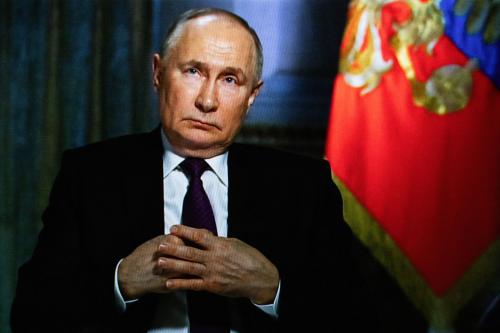
Putin’s High-Stakes Gamble: The Art of Brinkmanship in His Confrontation with the West
Moscow, Russia – In what can be described as a generation-defining geopolitical struggle, Russian President Vladimir Putin is engaged in a high-stakes “big war” with the West, not necessarily of open, direct conflict, but one of relentless pressure, calculated escalation, and the masterful use of brinkmanship. His overarching goal is audacious: to dismantle the U.S.-led global order and carve out a new multipolar world where Russia reclaims its status as a primary global power.
At the heart of Putin’s strategy lies a profound belief that the post-Cold War settlement was a historical injustice that relegated Russia to a subordinate position.
The Calculated Madness: Putin’s Brand of Brinkmanship
Brinkmanship, the art of pursuing a dangerous policy to the limits of safety before stopping, is a cornerstone of Putin’s foreign policy. It is a calculated strategy designed to sow division, test the resolve of his adversaries, and force concessions without triggering a full-scale, direct military confrontation with NATO.
-
Nuclear Saber-Rattling: The most potent and dangerous tool in Putin’s arsenal is the repeated and often veiled threat of using nuclear weapons.
5 From placing nuclear forces on high alert at the outset of the Ukraine invasion to ambiguous statements about defending Russian territory with “all available means,” these pronouncements are designed to instill fear and deter greater Western involvement in the conflict.6 While the actual use of such weapons remains a low probability, the mere suggestion serves to paralyze Western decision-making and create a constant sense of anxiety. -
“Gray Zone” Warfare: Putin has demonstrated a mastery of operating in the ambiguous space between peace and war. This includes a range of hostile activities that fall below the threshold of a conventional military attack, such as cyberattacks on critical infrastructure, disinformation campaigns to sow social and political discord, and provocative military maneuvers.
7 Recent examples include repeated drone incursions and violations of NATO airspace, meticulously calibrated to test response times and sow doubt about the alliance’s collective security commitments without triggering an immediate armed response.8 -
Weaponization of Resources: Russia has long used its vast energy reserves as a tool of coercion.
9 By manipulating the flow of natural gas and oil, Moscow has sought to create economic pressure on European nations, hoping to fracture their unity and undermine their support for Ukraine. While this leverage has diminished as Europe diversifies its energy sources, it remains a potent symbol of Russia’s willingness to use all instruments of national power in its confrontation with the West. -
The “Red Line” Gambit: Throughout the Ukraine conflict, the Kremlin has repeatedly issued “red lines” – actions by the West that it claims would provoke a severe Russian response.
10 These have included the provision of certain types of advanced weaponry to Ukraine and direct NATO intervention. However, as the West has cautiously and incrementally crossed many of these self-declared lines without triggering a catastrophic escalation, the credibility of these threats has been tested. This tactic, while potentially risky, allows Putin to control the narrative of escalation and portray any Western assistance to Ukraine as a provocative act.
The Endgame: A New World Order
Putin’s brinkmanship is not an end in itself but a means to a much larger strategic objective. He envisions a world where the unipolar moment of American dominance is over, replaced by a system where major powers like Russia, China, and others have their own spheres of influence and a greater say in global affairs.
By challenging the existing order through a sustained campaign of pressure and calculated risks, Putin aims to demonstrate the West’s perceived weakness and lack of resolve.
The effectiveness and ultimate outcome of this high-stakes gamble remain uncertain. While Putin’s tactics have at times appeared to yield short-term gains, they have also led to Russia’s increased international isolation, severe economic sanctions, and a revitalized and more unified NATO.
–
Putin’s Brinkmanship: War with the West
Recent analysis indicates that while Russian President Vladimir Putin’s brinkmanship tactics have escalated tensions, particularly through the use of nuclear threats and hybrid warfare, Russia has neither the capability nor the appetite for direct conventional military conflict with NATO. These actions are designed to weaken Western support for Ukraine, test alliance resolve, and interfere in rivals’ domestic politics. [1, 2, 3, 4, 5]
The elements of brinkmanship
Nuclear threatsSince the 2022 invasion of Ukraine, Russia has repeatedly engaged in nuclear saber-rattling to deter the West from increasing support for Ukraine.
- This has included placing nuclear forces on high alert, deploying tactical nuclear weapons to Belarus, and testing new capabilities.
- Some experts argue this is largely a bluff, as a nuclear attack against a NATO state would likely result in a retaliatory nuclear strike.
- However, Western powers still take these threats seriously and plan for potential escalations. [3, 6, 8, 9, 10]
Hybrid warfareRussia has intensified its use of hybrid warfare tactics to destabilize the West without triggering a direct war. Recent examples include:
- Airspace incursions: In September 2025, Russia flew drones into Polish and Romanian airspace and sent fighter jets into Estonian airspace over the Baltic Sea. These were perceived as tests of NATO’s air defenses and resolve.
- Sabotage: In March 2025, a report documented numerous Russian sabotage attacks against Western infrastructure, including transportation, government, and critical infrastructure targets.
- Disinformation and propaganda: Russia continues to wage disinformation campaigns to sow division within the West, frame Russia as a victim, and garner support from populist and anti-establishment groups.
- Cyberattacks: Russia has long used cyberattacks to disrupt Western governments and infrastructure. [2, 11, 12, 13, 14, 15, 16]
Exploiting Western divisionsA key part of Putin’s strategy is to exploit existing disagreements and political shifts within the West.
- US elections: Russia’s hybrid warfare and nuclear threats are amplified to test the incoming US administration and exploit uncertainty regarding American commitment to European security.
- European cohesion: Russia attempts to create daylight between the US and its European allies and stoke anti-war sentiments, as seen with the recent airspace incursions over Poland and Romania. [3, 17, 18, 19, 20]
Why a conventional war with NATO is unlikely
Experts generally agree that despite the rhetoric and provocations, Russia is not seeking a direct conventional war with NATO.
- NATO’s strength: NATO’s conventional military capability far outmatches Russia’s, especially given the significant losses sustained in the ongoing war against Ukraine.
- Nuclear parity: While Russia holds an advantage in tactical nuclear weapons, both Russia and the US maintain strategic parity under arms control agreements (including the recently extended New START treaty), meaning a nuclear conflict would lead to Mutually Assured Destruction.
- Diversionary tactics: The brinkmanship serves to distract from Russia’s struggles in Ukraine, project strength, and force the West to over-prioritize defensive measures. [1, 3, 8, 21, 22]
AI responses may include mistakes.
[7] https://united24media.com/war-in-ukraine/a-timeline-of-russias-nuclear-threats-against-the-west-947
–
#Putin #War #CIA
Putin’s Brinkmanship: War with West g.co/gemini/share/89f83df67c…
Putin’s High-Stakes Gamble: The Art of Brinkmanship in His Confrontation with the West
g.co/gemini/share/a2e28cc3e6…
Moscow, Russia – In what can be described as a generation-defining geopolitical struggle, Russian President Vladimir Putin is engaged in a high-stakes “big war” with the West, not necessarily of open, direct conflict, but one of relentless pressure, calculated escalation, and the masterful use of brinkmanship. His overarching goal is audacious: to dismantle the U.S.-led global order and carve out a new multipolar world where Russia reclaims its status as a primary global power.1 The war in Ukraine serves as the most visible and brutal front of this broader conflict, but the tactics of brinkmanship are deployed across a spectrum of domains, from nuclear posturing to the weaponization of energy and information.At the heart of Putin’s strategy lies a profound belief that the post-Cold War settlement was a historical injustice that relegated Russia to a subordinate position.2 His actions are driven by a desire to revise this outcome, pushing back against what he perceives as Western encroachment in Russia’s traditional spheres of influence and challenging the very foundations of the international security architecture.3
The Calculated Madness: Putin’s Brand of Brinkmanship
Brinkmanship, the art of pursuing a dangerous policy to the limits of safety before stopping, is a cornerstone of Putin’s foreign policy. It is a calculated strategy designed to sow division, test the resolve of his adversaries, and force concessions without triggering a full-scale, direct military confrontation with NATO.4 Key elements of his approach include:
Nuclear Saber-Rattling: The most potent and dangerous tool in Putin’s arsenal is the repeated and often veiled threat of using nuclear weapons.5 From placing nuclear forces on high alert at the outset of the Ukraine invasion to ambiguous statements about defending Russian territory with “all available means,” these pronouncements are designed to instill fear and deter greater Western involvement in the conflict.6 While the actual use of such weapons remains a low probability, the mere suggestion serves to paralyze Western decision-making and create a constant sense of anxiety.
“Gray Zone” Warfare: Putin has demonstrated a mastery of operating in the ambiguous space between peace and war. This includes a range of hostile activities that fall below the threshold of a conventional military attack, such as cyberattacks on critical infrastructure, disinformation campaigns to sow social and political discord, and provocative military maneuvers.7 Recent examples include repeated drone incursions and violations of NATO airspace, meticulously calibrated to test response times and sow doubt about the alliance’s collective security commitments without triggering an immediate armed response.8
Weaponization of Resources: Russia has long used its vast energy reserves as a tool of coercion.9 By manipulating the flow of natural gas and oil, Moscow has sought to create economic pressure on European nations, hoping to fracture their unity and undermine their support for Ukraine. While this leverage has diminished as Europe diversifies its energy sources, it remains a potent symbol of Russia’s willingness to use all instruments of national power in its confrontation with the West.
The “Red Line” Gambit: Throughout the Ukraine conflict, the Kremlin has repeatedly issued “red lines” – actions by the West that it claims would provoke a severe Russian response.10 These have included the provision of certain types of advanced weaponry to Ukraine and direct NATO intervention. However, as the West has cautiously and incrementally crossed many of these self-declared lines without triggering a catastrophic escalation, the credibility of these threats has been tested. This tactic, while potentially risky, allows Putin to control the narrative of escalation and portray any Western assistance to Ukraine as a provocative act.
The Endgame: A New World Order
Putin’s brinkmanship is not an end in itself but a means to a much larger strategic objective. He envisions a world where the unipolar moment of American dominance is over, replaced by a system where major powers like Russia, China, and others have their own spheres of influence and a greater say in global affairs.11
By challenging the existing order through a sustained campaign of pressure and calculated risks, Putin aims to demonstrate the West’s perceived weakness and lack of resolve.12 He seeks to expose the fissures within NATO and the European Union, betting that over time, the economic and social costs of confronting Russia will lead to a fracturing of the Western coalition.13
The effectiveness and ultimate outcome of this high-stakes gamble remain uncertain. While Putin’s tactics have at times appeared to yield short-term gains, they have also led to Russia’s increased international isolation, severe economic sanctions, and a revitalized and more unified NATO.14 The “big war” with the West is a protracted struggle, and the art of brinkmanship, as practiced by Vladimir Putin, will continue to define the perilous landscape of 21st-century geopolitics.
–
Putin’s Brinkmanship: War with West – GS
google.com/search?q=Putin%27…
AI Overview
Vladimir Putin’s brinkmanship has escalated tensions with the West throughout 2025, but it has not resulted in an all-out war. Instead, Russia’s actions are part of a broader “hybrid war” strategy involving military provocations, nuclear saber-rattling, arms control maneuvering, and disinformation campaigns designed to test NATO’s resolve and exploit internal divisions. [1, 2, 3, 4, 5]
Military provocations and hybrid tactics Recent provocations have been met with a strong, coordinated response from NATO, which remains a key factor in preventing a wider conflict.• Airspace violations: In September 2025, Russia deliberately flew drones into the airspace of NATO members Poland and Denmark. Analysts viewed these incursions as tests of NATO’s reaction.
• NATO response: Following the violations, NATO allies, backed by U.S. President Trump, issued a strong warning to the Kremlin that future incursions could result in Russian aircraft being shot down. NATO also launched “Eastern Sentry,” a multi-domain mission to increase air defense along its eastern flank.
• Shadow war: Russia’s ongoing hybrid war against NATO includes cyberattacks, disinformation, and sabotage. The European Council on Foreign Relations notes that Russia’s use of cheaper drones to probe NATO’s expensive air defenses is a way to gain an advantage and exhaust its opponents.
• Zapad-2025 exercises: Joint Russian-Belarusian military exercises were conducted in September 2025. While some initial fears of nuclear saber-rattling did not materialize, the exercises still involved simulated large-scale military aggression against NATO forces. [4, 6, 7, 8, 9, 10, 11, 12, 13, 14]Nuclear signaling and arms control Russia continues to use nuclear posturing to intimidate the West while simultaneously maneuvering for arms control negotiations to gain concessions.
• Temporary arms control extension: In September 2025, Putin offered to abide by the limits of the New START nuclear treaty for one year after its February 2026 expiration, provided the U.S. does the same. Analysts viewed this as an attempt to compel the Trump administration into broader talks for Russia’s benefit.
• Increased nuclear brinkmanship: In May 2024, Putin ordered exercises for tactical nuclear weapons. The Brookings Institution viewed this as a new phase of brinkmanship that demands an upgraded Western deterrence posture
. The American Enterprise Institute also noted in August 2023 that the Ukraine war is the start of a “new era of nuclear brinkmanship” involving Russia and other major powers.Justification for aggression and disinformation Since 2022, Putin has worked to shape the information environment to justify the invasion and destabilize Western countries.
• Blaming the West: In September 2025, Russian Foreign Minister Sergey Lavrov claimed Moscow was in a “real war” with NATO and the EU, repeating the Kremlin’s long-standing narrative that the West provoked the conflict.
• Targeting Western values: Putin frames Russia as an upholder of “traditional values,” demonizing the West’s more liberal social views. This is designed to appeal to populist movements in Europe and the U.S. and drive internal division. [5, 20, 21, 22]Risks of miscalculation Several analysts have pointed out the increased danger of miscalculation and accidental escalation.
• Trump’s unpredictability: Some experts, including analysts at the European Council on Foreign Relations and CNN, cite the unpredictable nature of U.S. President Donald Trump’s potential reactions as a significant risk factor for miscalculation.
• Escalation ladder: The possibility of Article 4 consultations—emergency discussions within NATO—has increased in 2025, reminding observers of the alliance’s Article 5 mutual defense clause. While invoking Article 5 is a major step, the current tensions raise the risk of triggering the alliance’s collective defense mechanisms. [11, 23, 25, 26, 27]AI responses may include mistakes.
[1] europeanleadershipnetwork.or…
[2] bloomberg.com/news/articles/…
[3] understandingwar.org/researc…
[4] nato-pa.int/document/2025-01…
[5] politico.com/news/2025/09/25…
[6] foxnews.com/politics/putin-p…
[7] nato.int/cps/en/natohq/offic…
[8] youtube.com/watch?v=A6f8qHLd…
[9] newsweek.com/russia-ukraine-…
[10] newsweek.com/russia-nato-lav…
[11] ecfr.eu/article/flaunting-mi…
[12] understandingwar.org/researc…
[13] reuters.com/business/aerospa…
[14] ecfr.eu/article/flaunting-mi…
[15] atlanticcouncil.org/blogs/uk…
[16] aei.org/op-eds/welcome-to-th…
[17] brookings.edu/articles/nucle…
[18] latimes.com/world-nation/sto…
[19] graphicnews.com/en/pages/473…
[20] understandingwar.org/researc…
[21] brookings.edu/articles/how-t…
[22] cqpress.sagepub.com/cqresear…
[23] usnews.com/news/u-s-news-dec…
[24] cnn.com/2025/09/27/europe/pu…
[25] cnn.com/2025/09/27/europe/pu…
[26] russiamatters.org/news/russi…
[27] facebook.com/groups/51935517…
–
Putin’s Brinkmanship: War with the WestRecent analysis indicates that while Russian President Vladimir Putin’s brinkmanship tactics have escalated tensions, particularly through the use of nuclear threats and hybrid warfare, Russia has neither the capability nor the appetite for direct conventional military conflict with NATO. These actions are designed to weaken Western support for Ukraine, test alliance resolve, and interfere in rivals’ domestic politics. [1, 2, 3, 4, 5]
The elements of brinkmanship Nuclear threatsSince the 2022 invasion of Ukraine, Russia has repeatedly engaged in nuclear saber-rattling to deter the West from increasing support for Ukraine.• This has included placing nuclear forces on high alert, deploying tactical nuclear weapons to Belarus, and testing new capabilities.
• Some experts argue this is largely a bluff, as a nuclear attack against a NATO state would likely result in a retaliatory nuclear strike.
• However, Western powers still take these threats seriously and plan for potential escalations. [3, 6, 8, 9, 10]Hybrid warfareRussia has intensified its use of hybrid warfare tactics to destabilize the West without triggering a direct war. Recent examples include:
• Airspace incursions: In September 2025, Russia flew drones into Polish and Romanian airspace and sent fighter jets into Estonian airspace over the Baltic Sea. These were perceived as tests of NATO’s air defenses and resolve.
• Sabotage: In March 2025, a report documented numerous Russian sabotage attacks against Western infrastructure, including transportation, government, and critical infrastructure targets.
• Disinformation and propaganda: Russia continues to wage disinformation campaigns to sow division within the West, frame Russia as a victim, and garner support from populist and anti-establishment groups.
• Cyberattacks: Russia has long used cyberattacks to disrupt Western governments and infrastructure. [2, 11, 12, 13, 14, 15, 16]Exploiting Western divisionsA key part of Putin’s strategy is to exploit existing disagreements and political shifts within the West.
• US elections: Russia’s hybrid warfare and nuclear threats are amplified to test the incoming US administration and exploit uncertainty regarding American commitment to European security.
• European cohesion: Russia attempts to create daylight between the US and its European allies and stoke anti-war sentiments, as seen with the recent airspace incursions over Poland and Romania. [3, 17, 18, 19, 20]Why a conventional war with NATO is unlikely Experts generally agree that despite the rhetoric and provocations, Russia is not seeking a direct conventional war with NATO.
• NATO’s strength: NATO’s conventional military capability far outmatches Russia’s, especially given the significant losses sustained in the ongoing war against Ukraine.
• Nuclear parity: While Russia holds an advantage in tactical nuclear weapons, both Russia and the US maintain strategic parity under arms control agreements (including the recently extended New START treaty), meaning a nuclear conflict would lead to Mutually Assured Destruction.
• Diversionary tactics: The brinkmanship serves to distract from Russia’s struggles in Ukraine, project strength, and force the West to over-prioritize defensive measures. [1, 3, 8, 21, 22]
–— Michael Novakhov (@mikenov) Sep 27, 2025
#Putin #War #CIA
Putin’s Brinkmanship: War with West g.co/gemini/share/89f83df67c…
Putin’s High-Stakes Gamble: The Art of Brinkmanship in His Confrontation with the WestMoscow, Russia – In what can be described as a generation-defining geopolitical struggle, Russian President Vladimir Putin is engaged in a high-stakes “big war” with the West, not necessarily of open, direct conflict, but one of relentless pressure, calculated escalation, and the masterful use of brinkmanship. His overarching goal is audacious: to dismantle the U.S.-led global order and carve out a new multipolar world where Russia reclaims its status as a primary global power.1 The war in Ukraine serves as the most visible and brutal front of this broader conflict, but the tactics of brinkmanship are deployed across a spectrum of domains, from nuclear posturing to the weaponization of energy and information.
At the heart of Putin’s strategy lies a profound belief that the post-Cold War settlement was a historical injustice that relegated Russia to a subordinate position.2 His actions are driven by a desire to revise this outcome, pushing back against what he perceives as Western encroachment in Russia’s traditional spheres of influence and challenging the very foundations of the international security architecture.3
The Calculated Madness: Putin’s Brand of Brinkmanship
Brinkmanship, the art of pursuing a dangerous policy to the limits of safety before stopping, is a cornerstone of Putin’s foreign policy. It is a calculated strategy designed to sow division, test the resolve of his adversaries, and force concessions without triggering a full-scale, direct military confrontation with NATO.4 Key elements of his approach include:
Nuclear Saber-Rattling: The most potent and dangerous tool in Putin’s arsenal is the repeated and often veiled threat of using nuclear weapons.5 From placing nuclear forces on high alert at the outset of the Ukraine invasion to ambiguous statements about defending Russian territory with “all available means,” these pronouncements are designed to instill fear and deter greater Western involvement in the conflict.6 While the actual use of such weapons remains a low probability, the mere suggestion serves to paralyze Western decision-making and create a constant sense of anxiety.
“Gray Zone” Warfare: Putin has demonstrated a mastery of operating in the ambiguous space between peace and war. This includes a range of hostile activities that fall below the threshold of a conventional military attack, such as cyberattacks on critical infrastructure, disinformation campaigns to sow social and political discord, and provocative military maneuvers.7 Recent examples include repeated drone incursions and violations of NATO airspace, meticulously calibrated to test response times and sow doubt about the alliance’s collective security commitments without triggering an immediate armed response.8
Weaponization of Resources: Russia has long used its vast energy reserves as a tool of coercion.9 By manipulating the flow of natural gas and oil, Moscow has sought to create economic pressure on European nations, hoping to fracture their unity and undermine their support for Ukraine. While this leverage has diminished as Europe diversifies its energy sources, it remains a potent symbol of Russia’s willingness to use all instruments of national power in its confrontation with the West.
The “Red Line” Gambit: Throughout the Ukraine conflict, the Kremlin has repeatedly issued “red lines” – actions by the West that it claims would provoke a severe Russian response.10 These have included the provision of certain types of advanced weaponry to Ukraine and direct NATO intervention. However, as the West has cautiously and incrementally crossed many of these self-declared lines without triggering a catastrophic escalation, the credibility of these threats has been tested. This tactic, while potentially risky, allows Putin to control the narrative of escalation and portray any Western assistance to Ukraine as a provocative act.
The Endgame: A New World Order
Putin’s brinkmanship is not an end in itself but a means to a much larger strategic objective. He envisions a world where the unipolar moment of American dominance is over, replaced by a system where major powers like Russia, China, and others have their own spheres of influence and a greater say in global affairs.11
By challenging the existing order through a sustained campaign of pressure and calculated risks, Putin aims to demonstrate the West’s perceived weakness and lack of resolve.12 He seeks to expose the fissures within NATO and the European Union, betting that over time, the economic and social costs of confronting Russia will lead to a fracturing of the Western coalition.13
The effectiveness and ultimate outcome of this high-stakes gamble remain uncertain. While Putin’s tactics have at times appeared to yield short-term gains, they have also led to Russia’s increased international isolation, severe economic sanctions, and a revitalized and more unified NATO.14 The “big war” with the West is a protracted struggle, and the art of brinkmanship, as practiced by Vladimir Putin, will continue to define the perilous landscape of 21st-century geopolitics.
–
Putin’s Brinkmanship: War with West – GS
google.com/search?q=Putin%27…
AI Overview
Vladimir Putin’s brinkmanship has escalated tensions with the West throughout 2025, but it has not resulted in an all-out war. Instead, Russia’s actions are part of a broader “hybrid war” strategy involving military provocations, nuclear saber-rattling, arms control maneuvering, and disinformation campaigns designed to test NATO’s resolve and exploit internal divisions. [1, 2, 3, 4, 5]
Military provocations and hybrid tactics Recent provocations have been met with a strong, coordinated response from NATO, which remains a key factor in preventing a wider conflict.• Airspace violations: In September 2025, Russia deliberately flew drones into the airspace of NATO members Poland and Denmark. Analysts viewed these incursions as tests of NATO’s reaction.
• NATO response: Following the violations, NATO allies, backed by U.S. President Trump, issued a strong warning to the Kremlin that future incursions could result in Russian aircraft being shot down. NATO also launched “Eastern Sentry,” a multi-domain mission to increase air defense along its eastern flank.
• Shadow war: Russia’s ongoing hybrid war against NATO includes cyberattacks, disinformation, and sabotage. The European Council on Foreign Relations notes that Russia’s use of cheaper drones to probe NATO’s expensive air defenses is a way to gain an advantage and exhaust its opponents.
• Zapad-2025 exercises: Joint Russian-Belarusian military exercises were conducted in September 2025. While some initial fears of nuclear saber-rattling did not materialize, the exercises still involved simulated large-scale military aggression against NATO forces. [4, 6, 7, 8, 9, 10, 11, 12, 13, 14]Nuclear signaling and arms control Russia continues to use nuclear posturing to intimidate the West while simultaneously maneuvering for arms control negotiations to gain concessions.
• Temporary arms control extension: In September 2025, Putin offered to abide by the limits of the New START nuclear treaty for one year after its February 2026 expiration, provided the U.S. does the same. Analysts viewed this as an attempt to compel the Trump administration into broader talks for Russia’s benefit.
• Increased nuclear brinkmanship: In May 2024, Putin ordered exercises for tactical nuclear weapons. The Brookings Institution viewed this as a new phase of brinkmanship that demands an upgraded Western deterrence posture
. The American Enterprise Institute also noted in August 2023 that the Ukraine war is the start of a “new era of nuclear brinkmanship” involving Russia and other major powers.Justification for aggression and disinformation Since 2022, Putin has worked to shape the information environment to justify the invasion and destabilize Western countries.
• Blaming the West: In September 2025, Russian Foreign Minister Sergey Lavrov claimed Moscow was in a “real war” with NATO and the EU, repeating the Kremlin’s long-standing narrative that the West provoked the conflict.
• Targeting Western values: Putin frames Russia as an upholder of “traditional values,” demonizing the West’s more liberal social views. This is designed to appeal to populist movements in Europe and the U.S. and drive internal division. [5, 20, 21, 22]Risks of miscalculation Several analysts have pointed out the increased danger of miscalculation and accidental escalation.
• Trump’s unpredictability: Some experts, including analysts at the European Council on Foreign Relations and CNN, cite the unpredictable nature of U.S. President Donald Trump’s potential reactions as a significant risk factor for miscalculation.
• Escalation ladder: The possibility of Article 4 consultations—emergency discussions within NATO—has increased in 2025, reminding observers of the alliance’s Article 5 mutual defense clause. While invoking Article 5 is a major step, the current tensions raise the risk of triggering the alliance’s collective defense mechanisms. [11, 23, 25, 26, 27]AI responses may include mistakes.
[1] europeanleadershipnetwork.or…
[2] bloomberg.com/news/articles/…
[3] understandingwar.org/researc…
[4] nato-pa.int/document/2025-01…
[5] politico.com/news/2025/09/25…
[6] foxnews.com/politics/putin-p…
[7] nato.int/cps/en/natohq/offic…
[8] youtube.com/watch?v=A6f8qHLd…
[9] newsweek.com/russia-ukraine-…
[10] newsweek.com/russia-nato-lav…
[11] ecfr.eu/article/flaunting-mi…
[12] understandingwar.org/researc…
[13] reuters.com/business/aerospa…
[14] ecfr.eu/article/flaunting-mi…
[15] atlanticcouncil.org/blogs/uk…
[16] aei.org/op-eds/welcome-to-th…
[17] brookings.edu/articles/nucle…
[18] latimes.com/world-nation/sto…
[19] graphicnews.com/en/pages/473…
[20] understandingwar.org/researc…
[21] brookings.edu/articles/how-t…
[22] cqpress.sagepub.com/cqresear…
[23] usnews.com/news/u-s-news-dec…
[24] cnn.com/2025/09/27/europe/pu…
[25] cnn.com/2025/09/27/europe/pu…
[26] russiamatters.org/news/russi…
[27] facebook.com/groups/51935517…
–
Putin’s Brinkmanship: War with the WestRecent analysis indicates that while Russian President Vladimir Putin’s brinkmanship tactics have escalated tensions, particularly through the use of nuclear threats and hybrid warfare, Russia has neither the capability nor the appetite for direct conventional military conflict with NATO. These actions are designed to weaken Western support for Ukraine, test alliance resolve, and interfere in rivals’ domestic politics. [1, 2, 3, 4, 5]
The elements of brinkmanship Nuclear threatsSince the 2022 invasion of Ukraine, Russia has repeatedly engaged in nuclear saber-rattling to deter the West from increasing support for Ukraine.• This has included placing nuclear forces on high alert, deploying tactical nuclear weapons to Belarus, and testing new capabilities.
• Some experts argue this is largely a bluff, as a nuclear attack against a NATO state would likely result in a retaliatory nuclear strike.
• However, Western powers still take these threats seriously and plan for potential escalations. [3, 6, 8, 9, 10]Hybrid warfareRussia has intensified its use of hybrid warfare tactics to destabilize the West without triggering a direct war. Recent examples include:
• Airspace incursions: In September 2025, Russia flew drones into Polish and Romanian airspace and sent fighter jets into Estonian airspace over the Baltic Sea. These were perceived as tests of NATO’s air defenses and resolve.
• Sabotage: In March 2025, a report documented numerous Russian sabotage attacks against Western infrastructure, including transportation, government, and critical infrastructure targets.
• Disinformation and propaganda: Russia continues to wage disinformation campaigns to sow division within the West, frame Russia as a victim, and garner support from populist and anti-establishment groups.
• Cyberattacks: Russia has long used cyberattacks to disrupt Western governments and infrastructure. [2, 11, 12, 13, 14, 15, 16]Exploiting Western divisionsA key part of Putin’s strategy is to exploit existing disagreements and political shifts within the West.
• US elections: Russia’s hybrid warfare and nuclear threats are amplified to test the incoming US administration and exploit uncertainty regarding American commitment to European security.
• European cohesion: Russia attempts to create daylight between the US and its European allies and stoke anti-war sentiments, as seen with the recent airspace incursions over Poland and Romania. [3, 17, 18, 19, 20]Why a conventional war with NATO is unlikely Experts generally agree that despite the rhetoric and provocations, Russia is not seeking a direct conventional war with NATO.
• NATO’s strength: NATO’s conventional military capability far outmatches Russia’s, especially given the significant losses sustained in the ongoing war against Ukraine.
• Nuclear parity: While Russia holds an advantage in tactical nuclear weapons, both Russia and the US maintain strategic parity under arms control agreements (including the recently extended New START treaty), meaning a nuclear conflict would lead to Mutually Assured Destruction.
• Diversionary tactics: The brinkmanship serves to distract from Russia’s struggles in Ukraine, project strength, and force the West to over-prioritize defensive measures. [1, 3, 8, 21, 22]
–— Michael Novakhov (@mikenov) Sep 27, 2025
#Putin #War #CIA
Putin’s Brinkmanship: War with West g.co/gemini/share/89f83df67c…
Putin’s High-Stakes Gamble: The Art of Brinkmanship in His Confrontation with the WestMoscow, Russia – In what can be described as a generation-defining geopolitical struggle, Russian President Vladimir Putin is engaged in a high-stakes “big war” with the West, not necessarily of open, direct conflict, but one of relentless pressure, calculated escalation, and the masterful use of brinkmanship. His overarching goal is audacious: to dismantle the U.S.-led global order and carve out a new multipolar world where Russia reclaims its status as a primary global power.1 The war in Ukraine serves as the most visible and brutal front of this broader conflict, but the tactics of brinkmanship are deployed across a spectrum of domains, from nuclear posturing to the weaponization of energy and information.
At the heart of Putin’s strategy lies a profound belief that the post-Cold War settlement was a historical injustice that relegated Russia to a subordinate position.2 His actions are driven by a desire to revise this outcome, pushing back against what he perceives as Western encroachment in Russia’s traditional spheres of influence and challenging the very foundations of the international security architecture.3
The Calculated Madness: Putin’s Brand of Brinkmanship
Brinkmanship, the art of pursuing a dangerous policy to the limits of safety before stopping, is a cornerstone of Putin’s foreign policy. It is a calculated strategy designed to sow division, test the resolve of his adversaries, and force concessions without triggering a full-scale, direct military confrontation with NATO.4 Key elements of his approach include:
Nuclear Saber-Rattling: The most potent and dangerous tool in Putin’s arsenal is the repeated and often veiled threat of using nuclear weapons.5 From placing nuclear forces on high alert at the outset of the Ukraine invasion to ambiguous statements about defending Russian territory with “all available means,” these pronouncements are designed to instill fear and deter greater Western involvement in the conflict.6 While the actual use of such weapons remains a low probability, the mere suggestion serves to paralyze Western decision-making and create a constant sense of anxiety.
“Gray Zone” Warfare: Putin has demonstrated a mastery of operating in the ambiguous space between peace and war. This includes a range of hostile activities that fall below the threshold of a conventional military attack, such as cyberattacks on critical infrastructure, disinformation campaigns to sow social and political discord, and provocative military maneuvers.7 Recent examples include repeated drone incursions and violations of NATO airspace, meticulously calibrated to test response times and sow doubt about the alliance’s collective security commitments without triggering an immediate armed response.8
Weaponization of Resources: Russia has long used its vast energy reserves as a tool of coercion.9 By manipulating the flow of natural gas and oil, Moscow has sought to create economic pressure on European nations, hoping to fracture their unity and undermine their support for Ukraine. While this leverage has diminished as Europe diversifies its energy sources, it remains a potent symbol of Russia’s willingness to use all instruments of national power in its confrontation with the West.
The “Red Line” Gambit: Throughout the Ukraine conflict, the Kremlin has repeatedly issued “red lines” – actions by the West that it claims would provoke a severe Russian response.10 These have included the provision of certain types of advanced weaponry to Ukraine and direct NATO intervention. However, as the West has cautiously and incrementally crossed many of these self-declared lines without triggering a catastrophic escalation, the credibility of these threats has been tested. This tactic, while potentially risky, allows Putin to control the narrative of escalation and portray any Western assistance to Ukraine as a provocative act.
The Endgame: A New World Order
Putin’s brinkmanship is not an end in itself but a means to a much larger strategic objective. He envisions a world where the unipolar moment of American dominance is over, replaced by a system where major powers like Russia, China, and others have their own spheres of influence and a greater say in global affairs.11
By challenging the existing order through a sustained campaign of pressure and calculated risks, Putin aims to demonstrate the West’s perceived weakness and lack of resolve.12 He seeks to expose the fissures within NATO and the European Union, betting that over time, the economic and social costs of confronting Russia will lead to a fracturing of the Western coalition.13
The effectiveness and ultimate outcome of this high-stakes gamble remain uncertain. While Putin’s tactics have at times appeared to yield short-term gains, they have also led to Russia’s increased international isolation, severe economic sanctions, and a revitalized and more unified NATO.14 The “big war” with the West is a protracted struggle, and the art of brinkmanship, as practiced by Vladimir Putin, will continue to define the perilous landscape of 21st-century geopolitics.
–
Putin’s Brinkmanship: War with West – GS
google.com/search?q=Putin%27…
AI Overview
Vladimir Putin’s brinkmanship has escalated tensions with the West throughout 2025, but it has not resulted in an all-out war. Instead, Russia’s actions are part of a broader “hybrid war” strategy involving military provocations, nuclear saber-rattling, arms control maneuvering, and disinformation campaigns designed to test NATO’s resolve and exploit internal divisions. [1, 2, 3, 4, 5]
Military provocations and hybrid tactics Recent provocations have been met with a strong, coordinated response from NATO, which remains a key factor in preventing a wider conflict.• Airspace violations: In September 2025, Russia deliberately flew drones into the airspace of NATO members Poland and Denmark. Analysts viewed these incursions as tests of NATO’s reaction.
• NATO response: Following the violations, NATO allies, backed by U.S. President Trump, issued a strong warning to the Kremlin that future incursions could result in Russian aircraft being shot down. NATO also launched “Eastern Sentry,” a multi-domain mission to increase air defense along its eastern flank.
• Shadow war: Russia’s ongoing hybrid war against NATO includes cyberattacks, disinformation, and sabotage. The European Council on Foreign Relations notes that Russia’s use of cheaper drones to probe NATO’s expensive air defenses is a way to gain an advantage and exhaust its opponents.
• Zapad-2025 exercises: Joint Russian-Belarusian military exercises were conducted in September 2025. While some initial fears of nuclear saber-rattling did not materialize, the exercises still involved simulated large-scale military aggression against NATO forces. [4, 6, 7, 8, 9, 10, 11, 12, 13, 14]Nuclear signaling and arms control Russia continues to use nuclear posturing to intimidate the West while simultaneously maneuvering for arms control negotiations to gain concessions.
• Temporary arms control extension: In September 2025, Putin offered to abide by the limits of the New START nuclear treaty for one year after its February 2026 expiration, provided the U.S. does the same. Analysts viewed this as an attempt to compel the Trump administration into broader talks for Russia’s benefit.
• Increased nuclear brinkmanship: In May 2024, Putin ordered exercises for tactical nuclear weapons. The Brookings Institution viewed this as a new phase of brinkmanship that demands an upgraded Western deterrence posture
. The American Enterprise Institute also noted in August 2023 that the Ukraine war is the start of a “new era of nuclear brinkmanship” involving Russia and other major powers.Justification for aggression and disinformation Since 2022, Putin has worked to shape the information environment to justify the invasion and destabilize Western countries.
• Blaming the West: In September 2025, Russian Foreign Minister Sergey Lavrov claimed Moscow was in a “real war” with NATO and the EU, repeating the Kremlin’s long-standing narrative that the West provoked the conflict.
• Targeting Western values: Putin frames Russia as an upholder of “traditional values,” demonizing the West’s more liberal social views. This is designed to appeal to populist movements in Europe and the U.S. and drive internal division. [5, 20, 21, 22]Risks of miscalculation Several analysts have pointed out the increased danger of miscalculation and accidental escalation.
• Trump’s unpredictability: Some experts, including analysts at the European Council on Foreign Relations and CNN, cite the unpredictable nature of U.S. President Donald Trump’s potential reactions as a significant risk factor for miscalculation.
• Escalation ladder: The possibility of Article 4 consultations—emergency discussions within NATO—has increased in 2025, reminding observers of the alliance’s Article 5 mutual defense clause. While invoking Article 5 is a major step, the current tensions raise the risk of triggering the alliance’s collective defense mechanisms. [11, 23, 25, 26, 27]AI responses may include mistakes.
[1] europeanleadershipnetwork.or…
[2] bloomberg.com/news/articles/…
[3] understandingwar.org/researc…
[4] nato-pa.int/document/2025-01…
[5] politico.com/news/2025/09/25…
[6] foxnews.com/politics/putin-p…
[7] nato.int/cps/en/natohq/offic…
[8] youtube.com/watch?v=A6f8qHLd…
[9] newsweek.com/russia-ukraine-…
[10] newsweek.com/russia-nato-lav…
[11] ecfr.eu/article/flaunting-mi…
[12] understandingwar.org/researc…
[13] reuters.com/business/aerospa…
[14] ecfr.eu/article/flaunting-mi…
[15] atlanticcouncil.org/blogs/uk…
[16] aei.org/op-eds/welcome-to-th…
[17] brookings.edu/articles/nucle…
[18] latimes.com/world-nation/sto…
[19] graphicnews.com/en/pages/473…
[20] understandingwar.org/researc…
[21] brookings.edu/articles/how-t…
[22] cqpress.sagepub.com/cqresear…
[23] usnews.com/news/u-s-news-dec…
[24] cnn.com/2025/09/27/europe/pu…
[25] cnn.com/2025/09/27/europe/pu…
[26] russiamatters.org/news/russi…
[27] facebook.com/groups/51935517…
–— Michael Novakhov (@mikenov) Sep 27, 2025
Gemini app updates 2.5 Flash with better response formatting 9to5google.com/2025/09/25/ge…
— Michael Novakhov (@mikenov) Sep 27, 2025