
russia threats – Google Search google.com/search?q=russia+t…
— Michael Novakhov (@mikenov) Oct 8, 2025
Day: October 8, 2025
The #politicization of the #FBI – #Conversations – Posts Review x.com/mikenov/status/1975989057160151462
— Michael Novakhov (@mikenov) Oct 8, 2025


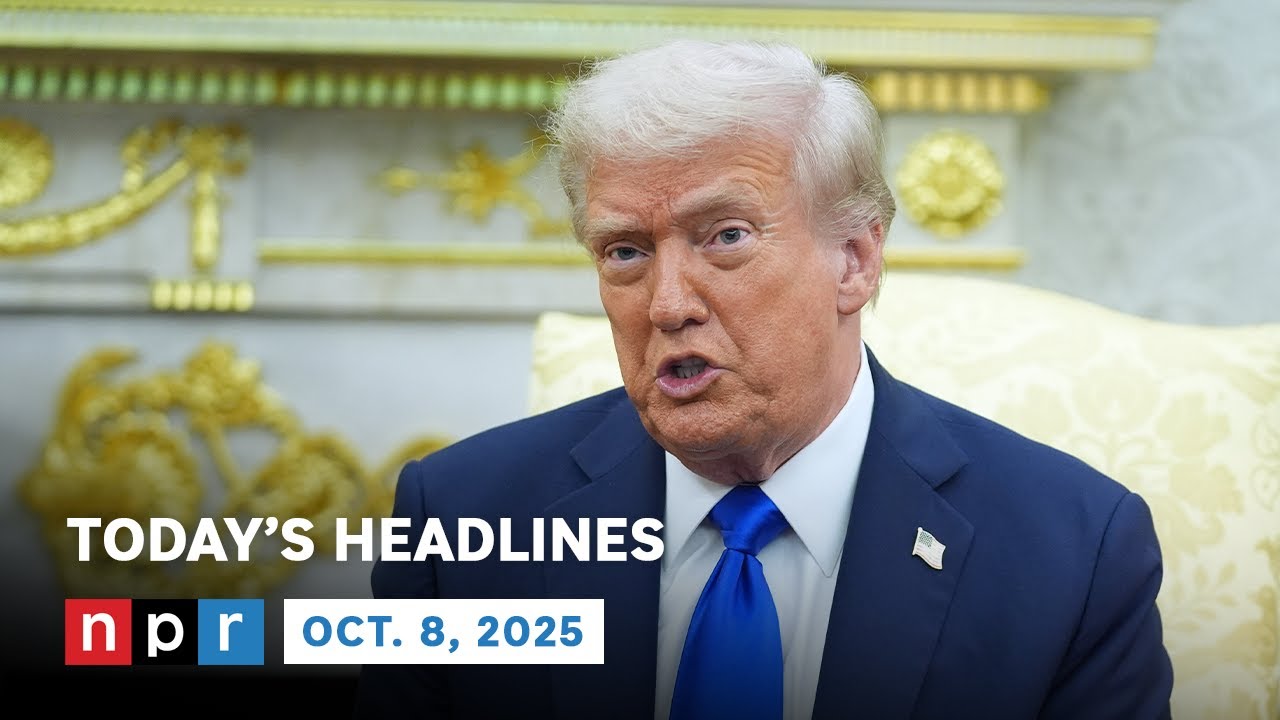


Politicization of the FBI refers to the use or perceived use of the agency’s vast investigative powers … thenewsandtimes.blogspot.com…
— Michael Novakhov (@mikenov) Oct 8, 2025
#FBI
Politicization of the FBI refers to the use or perceived use of the agency’s vast investigative powers for political gain rather than for impartial law enforcement. It occurs when an administration, an FBI director, or other high-ranking officials direct the Bureau’s activities based on partisan agendas instead of the rule of law. [1, 2, 3, 4, 5]
The issue erodes public confidence in the fairness of the justice system and jeopardizes the FBI’s ability to operate as an independent and effective law enforcement body. [2, 6]
Types of FBI politicization Politicization can be categorized in several ways, often overlapping in practice:• Investigative bias: Targeting political opponents or protecting political allies by altering evidence, mischaracterizing findings, or opening politically motivated investigations. For example, the House Judiciary Committee has cited allegations that FBI leadership pressured agents to reclassify cases as domestic violent extremism to fit a particular narrative.
• Selective enforcement: Ignoring certain crimes to serve political interests while aggressively pursuing others. For instance, a 2022 report alleged that the FBI downplayed accusations against Hunter Biden.
• Mission redirection: Shifting the Bureau’s focus away from its core law enforcement responsibilities to prioritize political goals. After 9/11, the FBI shifted from a law enforcement to an intelligence-driven body, a change some critics argue led to the centralization of power in Washington, D.C., away from the needs of the country.
• Purging non-compliant employees: Removing or intimidating employees who do not align with the leadership’s political ideology.
• Public relations manipulation: Using the authority of the FBI to promote a political narrative, such as artificially inflating crime statistics for political purposes. [1, 3, 7, 8, 9]Origins and historical instances The FBI’s entanglement with politics dates back to its early days and its first long-serving director, J. Edgar Hoover.
• Hoover’s tenure: For decades, Hoover used the Bureau’s power to target political enemies and surveil elected officials. He amassed secret “raw files” on political figures, which he could use for blackmail.
• COINTELPRO: Under Hoover, the FBI implemented the Counterintelligence Program (COINTELPRO), which was used to disrupt and discredit organizations and leaders, including civil rights activists like Martin Luther King Jr., by using wiretaps and smear campaigns.
• Watergate: Revelations from the Watergate scandal exposed how President Richard Nixon attempted to use the FBI to investigate political opponents, ultimately leading to his resignation and efforts to rein in the Bureau’s power.
• Recent allegations (2016–present): The last decade has been marked by renewed partisan concerns over the FBI.• Hillary Clinton email investigation: In 2016, then-Director James Comey’s handling of the investigation into Hillary Clinton’s private email server drew criticism from both parties.
• Trump-Russia investigations: The FBI’s probes into alleged collusion between the 2016 Trump campaign and Russia became a focal point of intense political controversy. Some accused the Bureau of being biased against Trump, while others raised concerns about potential abuses of surveillance authorities.
• Hunter Biden investigation: Allegations from whistleblowers claim the FBI showed political bias by downplaying negative information related to Hunter Biden. [1, 10, 11, 12, 13, 14, 15]Causes The causes of FBI politicization are multi-faceted:
• Structural incentives: The concentration of power in the FBI’s Washington D.C. headquarters gives a small group of officials significant control over sensitive investigations, making them susceptible to political pressure.
• Political pressure: FBI leadership is appointed by the president and confirmed by the Senate, making it susceptible to pressure from the executive and legislative branches. Political leaders can push for investigations into opponents or for the termination of investigations into allies.
• Revolving door culture: The potential for future employment in politically connected fields can influence the decision-making of high-ranking FBI and Department of Justice officials.
• Media and public scrutiny: Intense public and media focus on high-profile investigations can pressure the FBI to act, even when it is not legally appropriate.
• Polarized environment: The current hyper-partisan political climate can make it difficult for the FBI to operate without being viewed with suspicion by one side or the other, regardless of its actions. [3, 15, 16, 17, 18]Prevention and remediation Multiple reforms have been proposed to prevent and address the politicization of the FBI, though there is no consensus on the best approach:
• Increased congressional oversight: Congress has a constitutional role in overseeing the FBI. Critics argue that aggressive and impartial oversight is needed to hold the Bureau accountable and prevent abuses.
• Whistleblower protection: Empowering and protecting FBI whistleblowers who expose misconduct can help expose political bias and corruption.
• Structural reforms:• Shift from intelligence to law enforcement: Some have argued that a greater emphasis on traditional law enforcement and less on intelligence gathering would reduce opportunities for political abuse.
• Decentralization of power: Reversing the concentration of power in Washington, D.C., and giving more autonomy to field offices could make the Bureau less susceptible to national political pressure.• Leadership accountability: Establishing and enforcing strict protocols to ensure FBI leadership and agents maintain neutrality and avoid expressing personal political biases is crucial for restoring public trust.
• Internal policy changes: Implementing stronger safeguards and review mechanisms for politically sensitive investigations can help ensure they are conducted impartially and without undue influence. [2, 3, 6, 7, 9, 19, 20, 21]AI responses may include mistakes.
[1] judiciary.house.gov/media/pr…
[2] judiciary.house.gov/sites/ev…
[3] judiciary.house.gov/sites/ev…
[4] theusconstitution.org/news/p…
[5] compass.rauias.com/current-a…
[6] americafirstpolicy.com/issue…
[7] hageman.house.gov/media/vide…
[8] judiciary.house.gov/media/pr…
[9] americafirstpolicy.com/issue…
[10] npr.org/2018/01/26/580677742…
[11] imprimis.hillsdale.edu/the-p…
[12] congress.gov/118/meeting/hou…
[13] judiciary.house.gov/sites/ev…
[14] theconversation.com/history-…
[15] imprimis.hillsdale.edu/the-p…
[16] youtube.com/watch?v=rx3yIihQ…
[17] congress.gov/118/meeting/hou…
[18] youtube.com/watch?v=rx3yIihQ…
[19] heritage.org/the-constitutio…
[20] americafirstpolicy.com/issue…
[21] judiciary.house.gov/sites/ev…The Fbi politicization: meanings, types, origins, causes, prevention, remediation – Google Search google.com/search?q=The+Fbi+…
— Michael Novakhov (@mikenov) Oct 8, 2025
#FBI
Politicization has been a persistent concern throughout the history of the FBI, stemming from the tension between its law enforcement role and its place within the political landscape of the U.S.. Examples range from targeting political dissidents to controversy over investigations into high-profile political figures. [1, 2, 3]
Early examples of political influence (1919–1970s) • First Red Scare and Palmer Raids (1919–1920): During this period of anti-communist fervor, the Bureau of Investigation (the FBI’s predecessor) orchestrated large-scale raids on suspected radicals and anarchists. These operations, conducted under Attorney General A. Mitchell Palmer, were politically motivated and resulted in the arrest of thousands, with little regard for civil liberties.
• Hoover’s surveillance and abuse of power (1924–1972): Under the long tenure of Director J. Edgar Hoover, the FBI amassed power and used it for political purposes.• COINTELPRO: The FBI’s Counterintelligence Program was used to disrupt and discredit domestic political groups, including civil rights organizations, anti-Vietnam War activists, and Black nationalist groups.
• Martin Luther King Jr.: Hoover’s FBI conducted an intense campaign to discredit civil rights leader Martin Luther King Jr., using surveillance, wiretaps, and leaking information to the press.
• Political rivals: Hoover secretly gathered and shared damaging information on political rivals and figures with the eight presidents he served, including both Democrats and Republicans, to protect his own position and power.• Watergate and the Huston Plan (1970s): The Watergate scandal revealed the Nixon administration’s use of the FBI and CIA for political ends. As part of this, the “Huston Plan” proposed using illegal methods, such as break-ins and surveillance, against domestic dissidents. L. Patrick Gray, the acting director at the time, was forced to resign after admitting he had destroyed files related to the Watergate investigation. [2, 4, 5, 6, 7, 8, 9, 10]
Politicization concerns since the 2010s • Hillary Clinton email server investigation (2016): Then-FBI Director James Comey faced criticism for his public statements about the investigation into Hillary Clinton’s use of a private email server. Many, including some FBI employees, questioned why Comey made public pronouncements on the case, as the FBI’s role is to gather evidence for the Department of Justice, not to announce prosecutorial decisions.
• Investigations into Donald Trump (2016–present): The FBI’s probes into Trump’s 2016 campaign and subsequent administration have generated intense political debate and accusations of bias from his supporters.• Steele Dossier and FISA court: The FBI’s use of the Steele Dossier, an opposition research document, to secure wiretap warrants for a Trump campaign aide was a major point of contention.
• Firing of James Comey (2017): President Trump fired James Comey, which he later admitted was influenced by Comey’s handling of the Russia investigation.
• Search of Mar-a-Lago (2022): The FBI’s execution of a search warrant at former President Trump’s Mar-a-Lago residence, to recover classified documents, was viewed by some as a politically motivated action.• House Judiciary Committee Report (2022): A report from the House Judiciary Committee, based on whistleblower accounts, alleged that the FBI manipulated domestic violent extremism cases for political purposes and assisted social media companies in suppressing political speech.
• Modern political environment: The highly polarized political climate has amplified criticism of the FBI, with accusations that it targets one party while protecting the other. This has led to heightened distrust and a demand for more transparency and reform. [2, 3, 5, 11, 12, 13, 14]AI responses may include mistakes.
[1] vox.com/the-big-idea/2016/11…
[2] nbcnews.com/politics/bitter-…
[3] scrippsnews.com/us-news/why-…
[4] judiciary.house.gov/sites/ev…
[5] homelandsecuritynewswire.com…
[6] fbi.gov/history/directors
[7] fbi.gov/history/brief-histor…
[8] newsweek.com/frank-figliuzzi…
[9] npr.org/2018/01/26/580677742…
[10] newyorker.com/news/the-lede/…
[11] congress.gov/118/meeting/hou…
[12] theconversation.com/history-…
[13] americafirstpolicy.com/issue…
[14] imprimis.hillsdale.edu/the-p…Examples of politicization throughout the history of the FBI – Google Search google.com/search?q=Examples…
— Michael Novakhov (@mikenov) Oct 8, 2025
What is the present state of the Lawsuit by fired FBI officials: In September 2025, former acting FBI Director Brian Driscoll Jr. and other fired leaders sued the governm – Google Search google.com/search?q=What+is+…
— Michael Novakhov (@mikenov) Oct 8, 2025
Lawsuit by fired FBI officials: In September 2025, former acting FBI Director Brian Driscoll Jr. and other fired leaders sued the government – Google Search google.com/search?q=Lawsuit+…
— Michael Novakhov (@mikenov) Oct 8, 2025
Arctic Frost Revelation
#FBI #2020Election #CapitolRiot
Recent revelations regarding “Arctic Frost,” an FBI investigation that predated Special Counsel Jack Smith’s probe into the 2020 election and the January 6, 2021, Capitol riot, have emerged from documents released by Senate Judiciary Chairman Chuck Grassley. It was revealed in early October 2025 that the FBI obtained call detail records from congressional Republicans in 2023 as part of the investigation. [1, 2, 3]
The “Arctic Frost” investigation and the revelations • The FBI investigation: The FBI opened its “Arctic Frost” investigation in April 2022 to investigate election-related matters. It later formed the basis for Special Counsel Jack Smith’s inquiry, which led to a now-dropped indictment against Donald Trump in 2023.
• Discovery of phone data collection: On October 6, 2025, Senator Grassley released documents showing the FBI’s Cellular Analysis Survey Team (CAST) conducted a “toll analysis” on the cell phone records of eight Republican senators and one Republican representative. The analysis focused on data from January 4–7, 2021.
• Data collected: The phone records included metadata such as the date, time, duration, and general location of calls, but not the content of conversations.
• Lawmakers affected: The Republicans whose phone data was analyzed included Senators Lindsey Graham, Ron Johnson, Josh Hawley, Ted Cruz, Bill Hagerty, Dan Sullivan, Tommy Tuberville, and Cynthia Lummis, as well as Representative Mike Kelly.
• Response from officials:• Republicans have reacted with outrage. Grassley called the investigation an act of “weaponization” and “arguably worse than Watergate”. Donald Trump called Jack Smith a “sleazebag” on Truth Social.
• FBI Director Kash Patel stated that those involved in “unethical” conduct were fired, and the special corruption squad responsible for the probe, known as CR-15, was dismantled.
• Democrats have defended Smith, with some accusing Republicans of acting in bad faith. [1, 2, 4, 5, 6, 7, 8, 9, 10, 11]Potential connection to “Arctic Awakening” For context, it is possible the search query was a mishearing or misunderstanding of Arctic Awakening, a narrative-driven survival video game that was released in 2024 and is available on Steam. Some of the results retrieved by the search engine are related to this video game. [12, 13, 14, 15, 16]
AI responses may include mistakes.
[1] wpr.org/news/fbi-us-sen-ron-…
[2] nbcnews.com/politics/congres…
[3] wpr.org/news/fbi-us-sen-ron-…
[4] newsweek.com/arctic-frost-re…
[5] judiciary.senate.gov/press/r…
[6] foxnews.com/politics/dem-rep…
[7] newsweek.com/donald-trump-ja…
[8] wsj.com/opinion/jack-smiths-…
[9] newsweek.com/full-list-repub…
[10] thehill.com/homenews/senate/…
[11] foxnews.com/politics/jack-sm…
[12] youtube.com/watch?v=VXYvJcXF…
[13] foxnews.com/politics/dem-rep…
[14] store.steampowered.com/app/2…
[15] store.steampowered.com/app/1…
[16] moneycontrol.com/technology/…arctic frost revelation – Google Search google.com/search?q=arctic+f…
— Michael Novakhov (@mikenov) Oct 8, 2025