
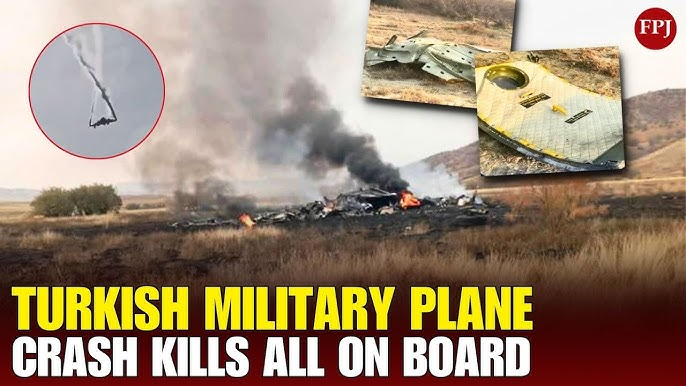
The Turkish military cargo plane crash of the 11.11.25: does the specific cork-screw spinning pattern of the vertical fall, suggest the possible causes?
Yes, the “cork-screw spinning pattern,” technically known as an aircraft spin, is a critical aerodynamic indicator suggesting a loss of control that likely points to an aggravated stall as the primary cause. [1, 2]
Aerodynamic Significance of a Spin A spin is a specific type of stall that results in autorotation (uncommanded rolling) and a steep, corkscrew-like, downward path. Key aerodynamic conditions associated with this pattern include:• Stall condition: Both wings are in a stalled state, meaning the angle of attack has increased beyond the critical angle, leading to a loss of lift.
• Unbalanced lift and drag: One wing is in a deeper stall than the other, creating unbalanced aerodynamic forces. The wing with greater drag drops, causing the aircraft to yaw (rotate) towards it, which sustains the autorotation.
• High rate of descent: The aircraft falls rapidly, rotating around a vertical axis. [1, 2, 3, 4, 5]Possible Causes Indicated by the Spin The fact that the aircraft entered a spin suggests several possible scenarios that the ongoing investigation will examine:
• Aerodynamic failure/structural failure: Initial reports and videos suggest the tail section might have separated in flight. A major in-flight structural failure (such as the loss of a control surface or part of the fuselage) can immediately lead to an unrecoverable loss of control and an aggravated stall/spin.
• Cargo shift: One preliminary version being investigated is that the cargo, which consisted of F-16 spare parts (not explosives), was not properly secured and shifted in flight, damaging the internal structure or compromising stability and control.
• Pilot disorientation/error: While less likely for a multi-crew military plane in good weather, spatial disorientation, especially in turbulent conditions or during an emergency, can lead to a pilot failing to execute proper stall recovery procedures, resulting in a spin.
• System malfunction: A failure in the hydraulic system or flight control systems could prevent the pilots from correcting the aircraft’s attitude, leading to the uncontrolled spin.
• Maintenance issues: The C-130 involved was reportedly 57 years old. Long-term corrosion or inadequate maintenance (e.g., improper repairs on a corroded part) could lead to component failure during flight, as has happened in other C-130 accidents. [1, 6, 7, 8, 9, 10, 11, 12, 13]The aircraft’s black box has been recovered, and the data will be crucial in determining the exact sequence of events that led to the spin and subsequent crash. [8, 9, 14, 15]
AI responses may include mistakes.
[1] skybrary.aero/articles/spin
[2] youtube.com/watch?v=4LX2amQ7…
[3] cfi.treklog.com/CFI_PTS_ASEL…
[4] youtube.com/watch?v=xOeSQaAg…
[5] youtube.com/watch?v=-Fz_N9iJ…
[6] yahoo.com/news/articles/turk…
[7] report.az/en/domestic-politi…
[8] reuters.com/world/europe/tur…
[9] uk.news.yahoo.com/turkey-pro…
[10] dw.com/en/lithuania-suspects…
[11] yahoo.com/news/articles/20-p…
[12] youtube.com/watch?v=yYWThUkk…
[13] reddit.com/r/explainlikeimfi…
[14] reuters.com/world/europe/tur…
[15] theblackbox.co.ke/the-blackb…– Google Search google.com/search?q=The+Turk…
— Michael Novakhov (@mikenov) Nov 13, 2025
Month: November 2025
The Turkish military cargo plane crash of the 11.11.25: does the specific cork-screw spinning pattern of the vertical fall, with the burning fuel streaming from the tips of the wings, suggest the possible causes?
Yes, the specific visual evidence from the November 11, 2025, Turkish military C-130 cargo plane crash suggests certain aerodynamic conditions, which can help investigators narrow down the possible causes.
Aviation experts have indicated that the footage, which shows:A corkscrew/spiraling fall: This is consistent with a spin. A spin occurs when an aircraft stalls (loses lift) in an uncoordinated manner, causing one wing to drop and the aircraft to rotate rapidly toward the ground.
Vertical descent: This rapid descent (recorded vertical speeds exceeded 19,000 feet per minute in the final seconds) is a characteristic of an unrecoverable stall/spin, especially at lower altitudes.
Fuel streaming from the wingtips: One expert suggested this might indicate the crew was attempting to dump fuel for an emergency landing. This action would be part of standard emergency procedures if the crew had some control but were dealing with a major issue. [1, 2, 3, 4, 5]More critically, unconfirmed videos and expert analysis of the wreckage suggest that the tail section and possibly the cockpit/front section may have separated from the main body in mid-air. This mid-air breakup is a significant piece of evidence pointing to a catastrophic structural failure, possibly initiated by:
A major technical failure: Given the C-130 is an older model (the crashed plane was reportedly 57 years old), material fatigue or improper maintenance could lead to a structural failure, though the plane had undergone recent maintenance.
An onboard explosion/sabotage: The abrupt separation of major sections of the aircraft has led some observers to speculate about external factors, although initial evidence suggests an accident. [1, 6, 9, 10, 11]Turkish and Georgian authorities have recovered the black box and are conducting a meticulous investigation to clarify the exact cause, which is not yet definitively known. Turkey has temporarily grounded its C-130 fleet pending inspections. [9, 10, 12, 13]
AI responses may include mistakes.
[1] flightradar24.com/blog/fligh…
[2] reuters.com/world/europe/tur…
[3] youtube.com/watch?v=R2y6aRyY…
[4] tc.canada.ca/en/aviation/pub…
[5] asn.flightsafety.org/wikibas…
[6] reuters.com/world/europe/tur…
[7] en.wikipedia.org/wiki/In-fli…
[8] nytimes.com/1974/03/05/archi…
[9] aljazeera.com/news/2025/11/1…
[10] reuters.com/world/middle-eas…
[11] wsj.com/articles/SB100557567…
[12] euronews.com/2025/11/13/turk…
[13] abcnews.go.com/International…– Google Search google.com/search?q=The+Turk…
— Michael Novakhov (@mikenov) Nov 13, 2025
The Turkish military cargo plane crash of the 11.11.25: does the specific cork-screw spinning pattern of the vertical fall, suggest the possible causes?
Yes, the “cork-screw spinning pattern,” technically known as an aircraft spin, is a critical aerodynamic indicator suggesting a loss of control that likely points to an aggravated stall as the primary cause. [1, 2]
Aerodynamic Significance of a Spin A spin is a specific type of stall that results in autorotation (uncommanded rolling) and a steep, corkscrew-like, downward path. Key aerodynamic conditions associated with this pattern include:• Stall condition: Both wings are in a stalled state, meaning the angle of attack has increased beyond the critical angle, leading to a loss of lift.
• Unbalanced lift and drag: One wing is in a deeper stall than the other, creating unbalanced aerodynamic forces. The wing with greater drag drops, causing the aircraft to yaw (rotate) towards it, which sustains the autorotation.
• High rate of descent: The aircraft falls rapidly, rotating around a vertical axis. [1, 2, 3, 4, 5]Possible Causes Indicated by the Spin The fact that the aircraft entered a spin suggests several possible scenarios that the ongoing investigation will examine:
• Aerodynamic failure/structural failure: Initial reports and videos suggest the tail section might have separated in flight. A major in-flight structural failure (such as the loss of a control surface or part of the fuselage) can immediately lead to an unrecoverable loss of control and an aggravated stall/spin.
• Cargo shift: One preliminary version being investigated is that the cargo, which consisted of F-16 spare parts (not explosives), was not properly secured and shifted in flight, damaging the internal structure or compromising stability and control.
• Pilot disorientation/error: While less likely for a multi-crew military plane in good weather, spatial disorientation, especially in turbulent conditions or during an emergency, can lead to a pilot failing to execute proper stall recovery procedures, resulting in a spin.
• System malfunction: A failure in the hydraulic system or flight control systems could prevent the pilots from correcting the aircraft’s attitude, leading to the uncontrolled spin.
• Maintenance issues: The C-130 involved was reportedly 57 years old. Long-term corrosion or inadequate maintenance (e.g., improper repairs on a corroded part) could lead to component failure during flight, as has happened in other C-130 accidents. [1, 6, 7, 8, 9, 10, 11, 12, 13]The aircraft’s black box has been recovered, and the data will be crucial in determining the exact sequence of events that led to the spin and subsequent crash. [8, 9, 14, 15]
AI responses may include mistakes.
[1] skybrary.aero/articles/spin
[2] youtube.com/watch?v=4LX2amQ7…
[3] cfi.treklog.com/CFI_PTS_ASEL…
[4] youtube.com/watch?v=xOeSQaAg…
[5] youtube.com/watch?v=-Fz_N9iJ…
[6] yahoo.com/news/articles/turk…
[7] report.az/en/domestic-politi…
[8] reuters.com/world/europe/tur…
[9] uk.news.yahoo.com/turkey-pro…
[10] dw.com/en/lithuania-suspects…
[11] yahoo.com/news/articles/20-p…
[12] youtube.com/watch?v=yYWThUkk…
[13] reddit.com/r/explainlikeimfi…
[14] reuters.com/world/europe/tur…
[15] theblackbox.co.ke/the-blackb…– Google Search google.com/search?q=The+Turk…
— Michael Novakhov (@mikenov) Nov 13, 2025
Spinning pattern: The aircraft was seen “corkscrewing” or spiraling toward the earth. – Google Search google.com/search?q=Spinning…
— Michael Novakhov (@mikenov) Nov 13, 2025
Michael Novakhov on X: “The Turkish military cargo plane crash of the 11.11.25: does the specific spinning pattern of the fall, with the door separated (and spinning nearby) suggest the possible causes? Yes, aviation experts suggest that the footage showing the Turkish C-130 military cargo plane x.com/mikenov/status/1…” / X x.com/mikenov/status/1988980…
— Michael Novakhov (@mikenov) Nov 13, 2025
The Turkish military cargo plane crash of the 11.11.25: does the specific spinning pattern of the fall, with the door separated (and spinning nearby) suggest the possible causes?
Yes, aviation experts suggest that the footage showing the Turkish C-130 military cargo plane spinning and breaking apart in mid-air, with the tail section separating, points towards a possible in-flight structural breakup. This specific pattern strongly suggests a catastrophic structural failure rather than a simple engine or system malfunction. [1, 2, 3, 4]
Key observations from the available footage and expert commentary include:In-flight breakup: The most significant indicator of the cause is that the plane appears to have broken apart mid-flight, with debris, including the tail section, falling separately.
Spinning pattern: The aircraft was seen “corkscrewing” or spiraling toward the earth. A plane entering a spin often indicates a complete loss of control, which aligns with a major structural failure or the failure of critical flight control systems.
Fuel streaming: One former U.S. Air Force C-130 specialist noted that fuel appeared to be streaming from the wingtip valves, which could suggest the crew was attempting to dump fuel for an emergency landing, but this was likely after the initial catastrophic event had already occurred.
No distress signal: Georgian air traffic control reported that the aircraft disappeared from radar without issuing a distress signal, which is common in sudden, catastrophic events that give the crew no time to react. [2, 3, 5, 6, 7, 8, 9]Investigators are exploring potential causes, with some experts noting similarities to a 2017 U.S. KC-130T crash where a corroded propeller blade led to a failure and an in-flight breakup. The age of the crashed Turkish C-130, which was 57 years old, is also a factor being considered in the ongoing investigation. [1, 2]
The official investigation is underway, with Turkish authorities having recovered the aircraft’s flight data recorder and cockpit voice recorder (black box) for analysis. The Turkish Defence Ministry has temporarily grounded all C-130s in its fleet pending inspections. [2, 10, 11, 12]AI responses may include mistakes.
[1] youtube.com/watch?v=FfyTeda0…
[2] reuters.com/world/europe/tur…
[3] en.wikipedia.org/wiki/2025_T…
[4] instagram.com/reel/DIT2vL3qs…
[5] reuters.com/world/middle-eas…
[6] dw.com/en/turkey-all-20-onbo…
[7] independent.co.uk/news/world…
[8] flightradar24.com/blog/fligh…
[9] washingtonpost.com/world/202…
[10] youtube.com/watch?v=l8bLy0Fj…
[11] euronews.com/2025/11/13/turk…
[12] expressnews.com/news/world/a…– Google Search google.com/search?q=The+Turk…
— Michael Novakhov (@mikenov) Nov 13, 2025
|
||||||||||||||||||||||||||||||||||||||||||||||||||||||||||||||||||||||||||||||||||||||||||||||||||||||||||||||||||||||||||||||||||||||||||||||||
|



|
|||||||||||||||||||||||||||||||||||||||||||||||||||
|












The FBI Sense of Humor and other stories
#News Review
Ex- #FBI Agent Says He Was Joking When He Called #FBI Director’s Girlfriend a Former ‘ #Mossad #AGENT
x.com/HeadlineUSA/status/198…
–
#CIA whistleblower #John_Kiriakou reveals 187 Mossad agents spread all across America & WHO they spy on
x.com/ferozwala/status/19800… x.com/HeadlineUSA/status/1988607716646916553— Michael Novakhov (@mikenov) Nov 13, 2025
#SouthCaucasus #Mossad #GRU
Turkish plane crash of 11.11.25 (note the 11 – 11): the #RussianJob, the #IsraeliJob, or both?
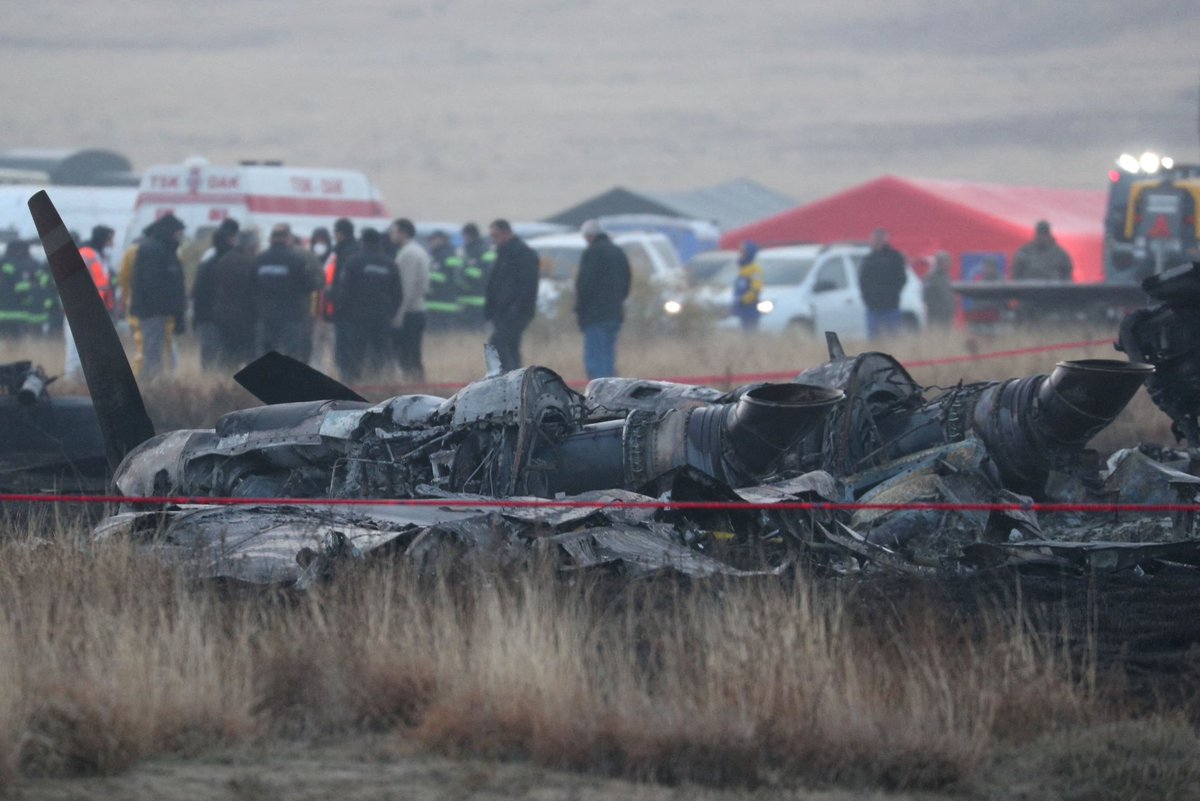
I think, BOTH: Russian and Israeli #IntelServices cooperate with each other when they want to.Turkish Air Force C-130 military cargo plane crashed in Georgia on November 11, 2025, killing all 20 personnel on board. The crash is under investigation, with officials attributing the incident to an in-flight breakup and an aging aircraft. There is no evidence suggesting Russian or Israeli involvement.A
Details of the Incident
Date and Location: The crash occurred on November 11, 2025, near the Georgia-Azerbaijan border in Georgia’s Sighnaghi municipality.
Aircraft: The plane was a 57-year-old Lockheed C-130EM Hercules that entered Turkish service in 2010.
Flight Path: It was returning to Turkey from Ganja International Airport in Azerbaijan when it disappeared from radar shortly after entering Georgian airspace, without issuing a distress signal.
Casualties: All 20 Turkish military personnel on board were killed.
Investigation: The cause is under investigation, and the aircraft’s black box has been recovered. Initial evidence and video footage suggest the aircraft experienced an in-flight breakup, with its tail section separating and fuel streaming from the wings before impact. The Turkish defense ministry temporarily grounded all C-130s for technical inspections after the crash.
External Involvement
Official reports and news sources indicate the investigation is focused on flight safety regulations and the condition of the aircraft, which some analysts noted was old. There have been no credible reports from official sources or news organizations suggesting that Russia or Israel was involved in the crash.
share.google/aimode/I7FSHuGU…— Michael Novakhov (@mikenov) Nov 13, 2025