German security chiefs are consulting widely across Europe on a number of intelligence-related initiatives, including restructuring the BND, creating a National Security Council, and changing intelligence coordination.
➡️ https://t.co/BEpLpYvCkz pic.twitter.com/ERwwEmtCIP— Intelligence Online (@Intel_Online) April 8, 2026
Day: April 8, 2026
#KGB Counterintelligence Lexicon from 1972 digitized by the Latvian National Archives includes more & longer entries than the available English translation edited by KGB defector Vasili Mitrokhin & published in 2002.
The link: https://t.co/sBCCK9oKxJ pic.twitter.com/9WkjzhSfjF
— Filip Kovacevic (@ChekistMonitor) April 8, 2026
#FBI #Counterintelligence #AIReview
share.google/aimode/MziwVtvu…The US Counterintelligence is dysfunctional and inefficient. How the Secure Act intends to address it?
AI Mode
The U.S. counterintelligence (CI) system is widely analyzed as dysfunctional and inefficient due to a reactive, fragmented structure that struggles to address modern, globalized threats from state actors. Experts warn that without significant reform, the nation faces the risk of a “9/11-scale intelligence failure”. [1, 2, 3]
The SECURE Act (part of the FY2026 Intelligence Authorization Act) intends to address these issues by fundamentally reorienting the community from a purely defensive posture to a proactive, unified, and offensive one. [1, 2, 4]
Problems in U.S. CounterintelligenceFragmented and “Siloed” Structure: The CI community is often described as a “loose confederation” of independent organizations with narrow jurisdictions. This lack of unity allows adversaries to exploit “seams” between different agencies.
Reactive Law Enforcement Focus: Historically, U.S. CI has relied on a “law enforcement-centric” model that reacts to individual cases rather than proactively disrupting global state-sponsored networks.
Inefficient Decision-Making: Cumbersome procedures, such as multi-level reviews for information sharing and “turf battles” over roles and resources, have historically led to debilitating stalemates.
Critical Coverage Gaps: Current services provide coverage against less than 10% of high-priority foreign intelligence personnel in or transiting the U.S..
Information Overload and Secrecy: Analysts are often inundated with data, leading to “cognitive overload” that hampers effective analysis. Simultaneously, overclassification of documents prevents vital internal information sharing. [2, 5, 6, 7, 8, 9, 10, 11]How the SECURE Act Intends to Address These Problems
The SECURE Act seeks to “reset” U.S. counterintelligence through the following reforms: [1, 12]Centralized Authority: It establishes a Director of Counterintelligence with the power to direct rather than just recommend actions. This role serves as the principal advisor to the President on foreign spying threats.
Shift to Offensive Operations: The Act updates the legal definition of counterintelligence to include “deter, disrupt, investigate, and exploit”. This shift allows CI to use deception and proactive measures to neutralize foreign spies.
Closing Jurisdictional Seams: By giving a single director the ability to compel cooperation between various services, the Act intends to eliminate the gaps that foreign intelligence services currently exploit.
Operational Modernization: It mandates more vigorous operations, specifically targeting great power adversaries, and aims to move beyond the traditional “watch and wait” approach.
Addressing Emerging Vulnerabilities: Provisions include assessing vulnerabilities in critical areas like the commercial space sector (NASA and spaceports) and countering artificial intelligence (AI) threats. [1, 4, 5, 13, 14, 15, 16, 17, 18]Summary of Legislative Intent
Problem [1, 4, 5, 13, 14, 16, 17] SECURE Act SolutionReactive PostureRedefines mission to include offensive deterrence and disruption.Disjointed LeadershipEmpowers a single Director of Counterintelligence with directive authority.Permissive LandscapeIncreases proactive operations against high-priority foreign targets.Modern ThreatsMandates specific CI assessments for Space and AI sectors.
[1] intelligence.house.gov
[2] intelligence.house.gov
[3] intelligence.house.gov
[4] intelligence.house.gov
[5] thehill.com
[6] dni.gov
[7] oig.justice.gov
[8] georgewbush-whitehouse.archi…
[9] intelligence.house.gov
[10] intelligence.house.gov
[11] hir.harvard.edu[12] thehill.com
[13] thehill.com
[14] intelligence.house.gov
[15] aol.com
[16] cornyn.senate.gov
[17] congress.gov
[18] congress.gov— Michael Novakhov (@mikenov) Apr 8, 2026
#CIA
Exclusive | ‘Ghost Murmur,’ a never-used secret tool, deployed to find lost airman in Iran in daring mission nypost.com/2026/04/07/us-new…— Michael Novakhov (@mikenov) Apr 8, 2026
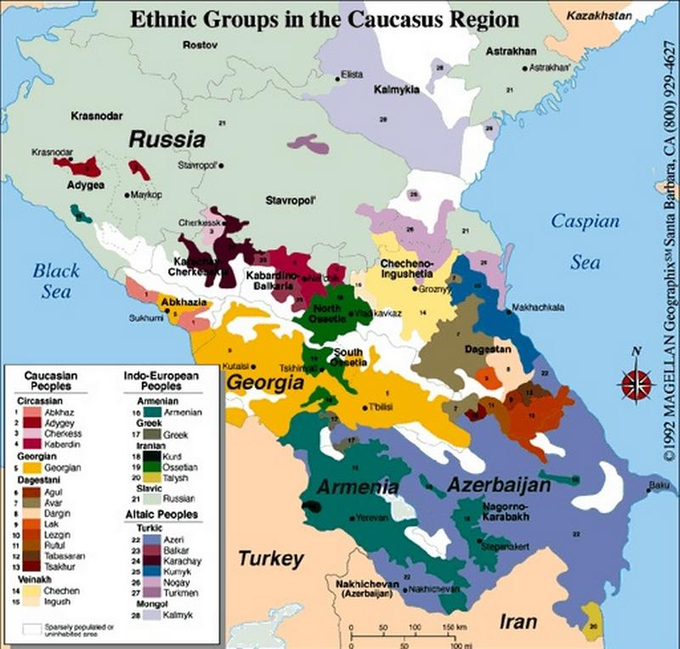
While the US’s role in the South Caucasus is expanding, significant political and economic factors argue against a full partnership reset.https://t.co/ovzUdkyvGX
— OC Media (@OCMediaorg) April 8, 2026
Categories
Russia and Ukraine
|
||||||||||||||||||||||||||||||||||||||||||||||||||||||||||||||||||||
|






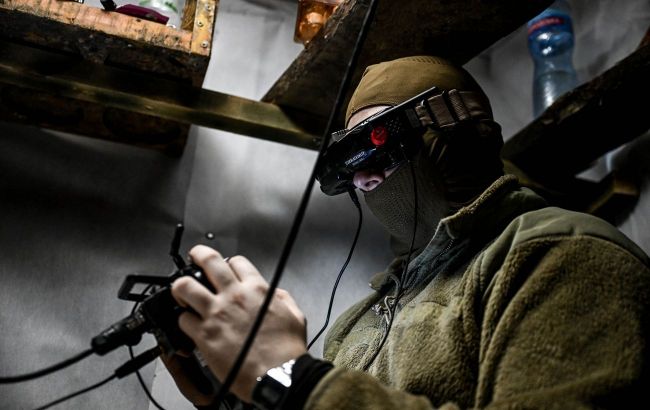

Actori cibernetici ai Direcției Principale de Informații a Statului Major General rus (GRU) exploatează routere vulnerabile din întreaga lume pentru a intercepta și a fura informații sensibile. Citește mai mult: https://t.co/4if45KnSV2 #Russia #GRU #FBI #SRI pic.twitter.com/k5WPbkPPzE
— Romanian Tribune News – Chicago (@TribunaUs) April 8, 2026
Categories
#Armenia
#Armenia
x.com/mikenov/status/2041846…Michael Novakhov (@mikenov) #SouthCaucasus #Azerbaijan #Georgia #Armenia“South Caucasus House” is in other words a Confederation.
“In such a situation, the “South Caucasus House” is no longer just an idea of solidarity within the region; it becomes a means of survival. An entity acting like a single organism, which can share transport networks, have diversified sources of energy, and keep corridors open, is much better positioned to handle the waves of disturbance coming from its southern neighbours than three nations, with conflicting agendas, sitting right across the border from a war.”
In shadow of regional war, South Caucasus turns to cooperation azernews.az/analysis/256570.…— https://x.com/mikenov/status/2041846700805890515
— Michael Novakhov (@mikenov) Apr 8, 2026
#SouthCaucasus #Azerbaijan #Georgia #Armenia
“South Caucasus House” is in other words a Confederation.
“In such a situation, the “South Caucasus House” is no longer just an idea of solidarity within the region; it becomes a means of survival. An entity acting like a single organism, which can share transport networks, have diversified sources of energy, and keep corridors open, is much better positioned to handle the waves of disturbance coming from its southern neighbours than three nations, with conflicting agendas, sitting right across the border from a war.”
In shadow of regional war, South Caucasus turns to cooperation azernews.az/analysis/256570.…
— Michael Novakhov (@mikenov) Apr 8, 2026
Categories
Headline News
|
|||||||||||||||||||||||||||||||||||||||||||||||||||||||||||||||||||
|