8:56 AM 3/19/2024
Category: The News And Times Blog
Category Added in a WPeMatico Campaign
7:51 AM 3/17/2024
@mikenov: RT @GolosAmeriki: Министр обороны Италии: Европе нужна четкая и единая стратегия против России https://t.co/76JxcBW3mh
@mikenov: RT @TimesofIsrael: Israel said to complain of slowdown in US arms deliveries amid growing rift https://t.co/vg9LCe4P6z
@mikenov: Putin and October 7 attack on Israel from Michael Novakhov on Inoreader https://t.co/X33FtXNBrg
@mikenov: RT @HillaryClinton: It’s becoming clearer every day: A vote for Trump is a vote for Team Putin. https://t.co/3ZlkpzuAGW
@mikenov: RT @igorsushko: Russian peasants under Czar moving a casket of war dead in 1865 vs 2024. https://t.co/nc5cF9fX60
@mikenov: RT @Newsweek: Joe Biden’s approval rating falls to all-time low after SOTU https://t.co/BXMaNLgls6 https://t.co/asMpthNwUW
@mikenov: RT @JewishPress: Israeli Official: Biden Seeking to Oust Netanyahu – @JewishPress
Putin reiterates nuclear threat as Ukraine launches drone strikes on Russian oil refineries
Ukraine launched a sweeping drone attack on Russian regions on Wednesday, causing a fire at Rosneft’s biggest oil refinery in what President Vladimir Putin said was an attempt to disrupt Russia’s presidential election.
Russia and Ukraine have both used drones to strike critical infrastructure, military installations and troop concentrations in their more than two-year war, with Kyiv hitting Russian refineries and energy facilities in recent months.
Russian authorities reported another major attack by Ukrainian drones a day after a Ukrainian attack damaging Lukoil’s NORSI refinery in Russian territory.
Saved Web Pages Review – The News And Times – TheNewsAndTimes.com
On February 25, the floodgates opened.
Ben Caspit of Maariv finally got a variety of IDF intelligence personnel to open up about their Oct. 7 failures. These presumably include Y, head of Unit 8200 (Israel’s NSA) or his supporters. Caspit significantly revealed that an internal Unit 8200 report has mostly cleared Y from special blame for missing the signs of Hamas’s invasion and placed the blame on a decade of problematic processes in Unit 8200 and IDF intelligence more broadly.
But what was most significant about Caspit’s article was that it has led to a much wider number of top former Unit 8200 officials being ready to step forward, including several who spoke to the Magazine.
On the one hand, their views are fresh and enlightening, requiring a radical rethink of the performance of the roles of the IDF Military Intelligence Directorate and Unit 8200; as well as how the IDF Southern Command should perform its defense roles.
On the other hand, the views of these top intelligence sources are humbling, with some acknowledgments that the failures which led to the catastrophe of Oct. 7 may be incredibly difficult to fix, no matter how much time and energy are invested.
IDF soldiers take part in a night-time drill (credit: REUTERS)
Can the IDF intelligence failures be fixed?
Just firing a few top people will certainly come nowhere near fixing the root problems.
Virtually all the former intelligence officials believed that top heads would roll both in the intelligence and political establishment as a prerequisite to progress but that it was nowhere near sufficient. A major IDF probe is slated to be published in June. This does not mean there is no hope. Most sources have significant hope for the future.
But their views are not as simple as saying: “If only Unit 8200 or IDF intelligence analysis had properly understood the invasion threat presented by the activating of dozens to hundreds of Israeli sim cards shooting in Hamas territory on the eve of the attack, Oct. 7 would have been avoided.”
Rather, the top intelligence sources say that the problems are much more fundamental to our cyclical faults as human beings, to our unique faults in the modern social media cyber age, and to changes which could take years or longer to make, such as changing what kinds of people join IDF intelligence, what training they have, and who does what within the clandestine world.
Due to the ultra-sensitivity of the issues, like with Caspit, these top intelligence sources spoke to the Magazine under condition of anonymity – at least everyone except former IDF Maj.-Gen. Yitzhak Ben-Israel.
Ben-Israel is not only viewed as one of the father’s of Israel’s defense establishment cyber revolution, but also of the body that eventually became the Israel National Cyber Directorate , umbrella to a plethora of cyber programs at Tel Aviv University.
He also once headed Israel’s space program and has been at the forefront of pushing forward quantum computing national initiatives.
With his resume and at his point in his career, Ben-Israel is one of the few who is willing to let loose without worrying about his future career consequences.
Discussing both Caspit’s article and the criticism shared with the Magazine by former senior Unit 8200 officials, Ben-Israel said that the criticism of Unit 8200 was exaggerated. He explained that every sub-unit within the large IDF intelligence branch has a specific role.
“There is a separation between collection units and those which analyze and do research for us, performing assessments and giving estimates,” he said.
Ben-Israel said that critics “forgot that Unit 8200 is a collection agency.”
He explained that Unit 8200 did its job because it collected the key intelligence points about Hamas’s plans and passed them on to the relevant IDF intelligence analysts.
The question some former top intelligence officials have asked is: Should Unit 8200 have protested more loudly that the intelligence they were passing on about the Hamas threat, be taken seriously?
Ben-Israel brushed this off with a metaphor. The bottom-line of the metaphor was that often, when outsiders try to second-guess experts in a particular field, whatever impact the outsiders actually have if they replace those they are criticizing, can turn out to be worse.
Another way of describing Ben-Israel’s view is that there can be unintended consequences when you try to have a collection unit, such as Unit 8200, take on analysis responsibilities.
They may not carry out the analysis the way that role requires, he said.
Read the full article in this week’s issue of The Jerusalem Post Magazine and online over the weekend.
Armenia is considering applying for membership in the European Union, aiming to strengthen ties with Western countries amid growing tensions with Russia, Armenia’s Foreign Minister Ararat Mirzoyan revealed in an interview on March 9.
“Many new opportunities are largely being discussed in Armenia nowadays and that will not be a secret if I say that includes membership in the European Union,” Mirzoyan said in an interview with Turkish TV channel TRT World.
Traditionally aligned with Russia in its regional conflict against Azerbaijan, Armenia has experienced heightened tensions with Russia after Russian “peacekeepers” did nothing to prevent Azerbaijan’s September 2023 offensive into Nagorno-Karabakh.
Armenian Prime Minister Pashinyan said in February that Armenia had “frozen” its participation in the Russian-led Collective Security Treaty Organization (CSTO) because it failed to uphold its objectives regarding Armenia.
The CSTO did not intervene during Azerbaijan’s offensive in September 2023.
Since coming to power in a 2018 revolution, the government of Armenian Prime Minister Nikol Pashinyan has steadily deepened the country’s ties with the West while drawing condemnation from Russia.
Pashinyan and other Armenian officials have repeatedly accused Moscow of being an unreliable partner and sought to foster security ties with other countries, such as France, the U.S., or India.
In January 2023, Armenia joined the International Criminal Court becoming one of 124 countries obliged to arrest Russian President Vladimir Putin if he steps foot in national territory. The Kremlin decried the move as an “unfriendly step” and “the wrong decision.”
Earlier this week, Armenia asked Russian “peacekeepers” who have been stationed at Yerevan’s international airport since the country’s independence to leave.
Read also: Armenia asks Russian ‘peacekeepers’ stationed at Yerevan’s airport to leave
We’ve been working hard to bring you independent, locally-sourced news from Ukraine. Consider supporting the Kyiv Independent.

The Roman god Janus was possessed of two faces, one pointing toward the future and one looking backward into the past, and it is tempting to imagine that these faces must also have worn contrasting expressions, one brighter and hopeful, the other rueful or even aghast. Supposing you knew such a person, how would you go about introducing him? Which of the two faces—enthusiastic or downcast—should be presented first? The problem poses itself immediately when it comes to “Chevengur,” Andrei Platonov’s strange tale of a Communist peasant utopia. Written in 1927 and 1928, when Platonov was in his late twenties, it both represents his high-spirited début as a socialist novelist and reads like a dissident’s political suicide note. And, in the split perspective afforded by the book’s contradictory point of view, it’s possible to see both the initial construction and the ultimate collapse of the Soviet project as overlapping features of the same landscape, in “the deserted shelterlessness of the steppe.”
The novel’s (very few) first readers were understandably perplexed. On the one hand, here was “an honest attempt to portray the beginning of a communist society,” as Platonov described his efforts in a letter to his powerful colleague Maxim Gorky, in 1929, in a bid to secure official approval for the book’s publication. Platonov seems to have sincerely thought that his novel depicted the advent of Soviet socialism in a favorable enough light. What authority could take offense at his depiction of a group of peasant citizens invoking collectivization as their salvation from the hunger and toil that constitute the only life they or their forebears have known? On the other hand, here was a work in which the regime’s newfangled jargon (“communism,” “the proletariat”), however gamely deployed by the unlettered tenants of the open steppe, betrays a welter of confusion, privation, and violence that rivals anything in the bad old pre-Bolshevik days. “Whatever you may have wished,” Gorky replied to Platonov, “you have portrayed reality in a lyrico-satirical light that is, of course, unacceptable to our censorship.” Gorky was right. Platonov’s novel was set up in type, but, at the last minute, the publisher scuttled the project.
The Best Books of 2024
Read our reviews of the year’s notable new fiction and nonfiction.

Selected Articles – Michael Novakhov’s favorite articles on Inoreader – The News And Times
@mikenov: RT @haaretzcom: Chief Sephardic Rabbi: If they force us to go to the army, we’ll leave Israel https://t.co/yBdwXBlaGE
@mikenov: Does Yahya Sinwar control the hostages? – Google Search https://t.co/Qel8s1ELSg
@mikenov: RT @politico: Pope Francis says Ukraine should consider negotiated end to war https://t.co/5vvXrmsge0
@mikenov: RT @BBCWorld: US military ship heading to Gaza to build port https://t.co/h6MLPAouYm
@mikenov: RT @TOIAlerts: Live update: White House exploring how to force Netanyahu out
Gaza War: What Does Russia Want? | ISPI
The MED This Week newsletter provides informed insights on the most significant developments in the MENA region, bringing together unique opinions and reliable foresight on future scenarios. Today, we shed light on the intra-Palestinian meeting that Moscow will host from February 29th to March 1st-2nd.
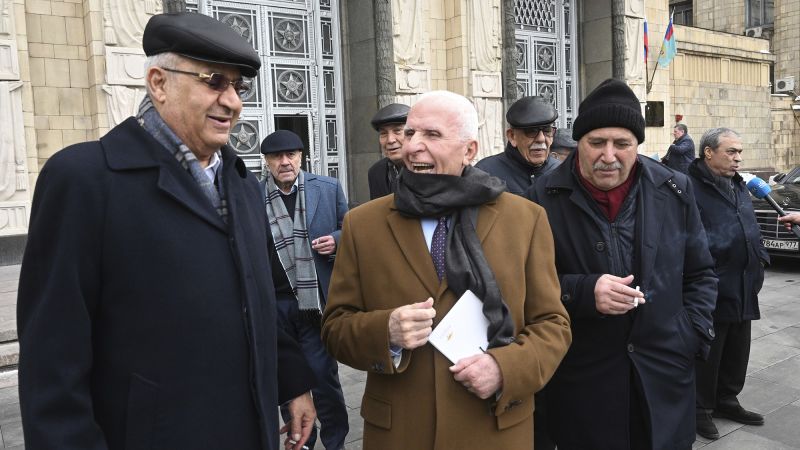
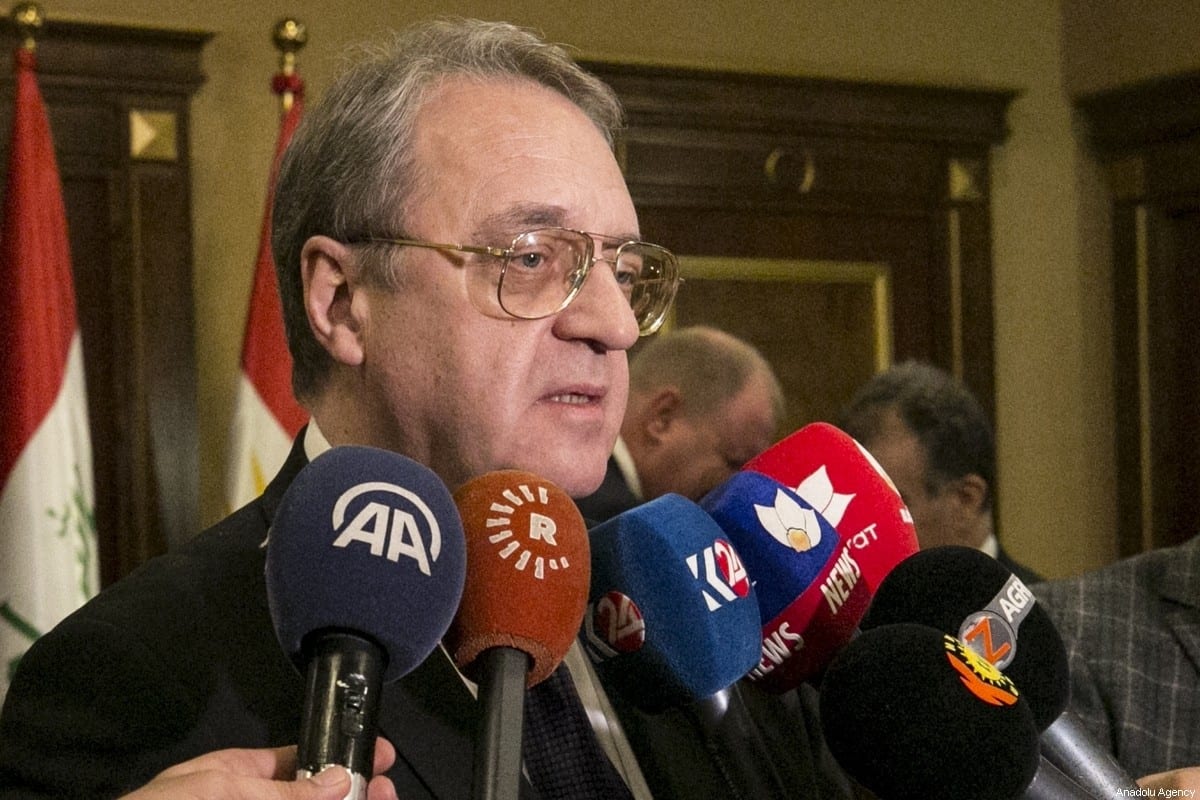
From February 29th to March 1st-2nd, Russia invited 14 organisations to an intra-Palestinian meeting in Moscow. Among the attendees will be representatives of Hamas, Fatah and the Palestinian Islamic Jihad (PIJ), alongside various Palestinian political forces operating in different Middle Eastern countries of the region, primarily Syria and Lebanon. Moscow’s motivation for hosting such a meeting, as Russia’s envoy for the Middle East and Africa Mikhail Bogdanov explained, is to help Palestinian forces agree to unite politically. The rationale behind this effort is that such unity is essential for navigating the current crisis and exploring governance options for Palestine in the post-war phase. As a matter of fact, the Palestinian issue is at the core of Russia’s Middle East policy, and this is not the first time that the Kremlin’s authorities convene leading Palestinian forces for dialogue: similar meetings have been held in Moscow quite regularly starting from 2011 (2017, 2018 and 2019). However, Thursday’s meeting stands out in several ways. It does not simply come at a time when the Palestinian population is living the worst deflagration of the conflict in decades, and the Palestinian leaderships seems increasingly disoriented, it also occurs in a significantly different international context and domestic situation for Moscow. Internationally, Russia is utterly marginalised by the West and its allies (including Israel). In response, Moscow appears to be seeking a constructive role and build trust among Middle Eastern countries and those not aligned with Western views. Domestically, what Putin may be interest in staging is a positive narrative for his internal audience to ‘spice-up’ his upcoming re-election. All this considered, despite the meeting’s potential to stimulate an intra-Palestinian reflection, it seems unlikely that the key for Palestinian unity, let alone a solution to the war in Israel-Palestine, will be found in Moscow.
Experts from the ISPI network discuss the intra-Palestinian meeting held in Moscow from February 29th to March 1st-2nd.
“The Palestinian struggle for independence is one focal element of Russia’s Middle East policy, since the creation of the Jewish state. Back in those times, in Moscow’s political thinking, it was pretty much associated with the anti-colonial movements advocating for freedom and greater liberty from European powers. As such, it deserved the whole support of the Russians in their anti-imperialist struggle by the side of all the oppressed population on earth. Considering its historical relevance and the extent of engagement that the Russian leadership commits to even today, there is little doubt that Moscow still supports that struggle truly. However (as much as in the second half of the past century), there is no doubt that Moscow is also aware of its limited means. February 29th is not the first Russia-sponsored meeting among Palestinian factions to help them agree over much needed unity. All previous attempts have brought very little results (N.B.: neither this means that Russian authorities were discredited by this; on the contrary, Moscow’s efforts – although non-determinant – have been highly appreciated by the Palestinian leadership and Palestinian groups). Given the unprecedented context of war in Israel-Palestine, the upcoming meeting may be a good thing: but it is unlikely that a solution to Palestinian disunity will be found this week in Moscow. And this is well accepted by everyone, including the Russians.”
Chiara Lovotti, Research Fellow and Rome MED-Mediterranean Dialogues Scientific Coordinator, ISPI
“By holding the intra-Palestinian negotiations, Russia pursues several goals at a time. First, this meeting serves Moscow’s propaganda needs. The Kremlin shows that even during the war in Ukraine and the maximum concentration of Moscow’s attention and resources on the confrontation with the West, it can pursue an active foreign policy in different directions. For Russia’s domestic audience, this visit should also demonstrate that Moscow is far from being in international isolation and, at its call, representatives of various international forces (including those that Russia itself considers terrorists) are visiting it. This meeting is also a message to Middle Eastern partners that while the US and Europe have taken the path of supporting Israel, Russia stands with the Arab world by trying to unite the Palestinians and strengthening their position in the international arena. Finally, this meeting is also a signal to Israel and the West who obviously excluded Russia from the conflict settlement processes they launched: “if you don’t want to talk to us, then we will play our own games that can create problems for you”. However, Moscow’s chances of creating an effective unified Palestinian bloc are not high. Moreover, the question remains open whether Russia has the resource/leverage to help the Palestinians put the negotiated decisions into practice. At the same time, we must also recognize that the future of intra-Palestinian relations in the post-war period is already being actively discussed by various international and regional players. Russia clearly wants to propose and formulate its own structure of Palestinian relations, which will exist after the end of the Gaza conflict and ensure Moscow’s future stand in Palestine.”
Nikolay Kozhanov, Research Associate Professor, Gulf Studies Center, Qatar University
“The “Moscow route” delivered very little over the past decade as far as intra-Palestinian political reconciliation is concerned. The keys for a Palestinian unity are not in Moscow. However, as the current political moment differs, if the announced meeting succeeds in bringing together high-level influential representatives of Fatah and Hamas to engage in a serious conversation about the Palestinian political system, national program, PLO institutions, unified leadership, and come up with a Palestinian road map and vision for the “day after” in Gaza, that would be a critical breakthrough. Yet, the fact that both factions did not engage in any serious conversation since October (although a number of opportunities were present), does not bode well for a fruitful meeting in Moscow that tackles the root causes of the Palestinian schism.”
Alaa Tartir, Director and Senior Researcher, Middle East and North Africa Programme, SIPRI
“International mediation efforts related to the war in Gaza are mostly carried out by Western and Arab countries, while Russia is on the sidelines. As it already did in the past, Russia seeks to compensate for such a situation by convening different Palestinian factions on its soil. While Israel opposes this line of action, it will probably not react harshly to it, as intra-Palestinian agreements – should such be reached – are likely to be brokered by Arab countries, not by Russia. Israel is more concerned with Russia’s overall position towards the war in Gaza and its attitude towards Hamas and has recently made this clear via statements by its new ambassador to Russia, Simona Halperin, which are likely to continue.”
Nimrod Goren, President, The Mitvim Institute; Senior Fellow, Middle East Institute; Co-Founder, Diplomeds
“This and the past meetings with the Palestinians resonate perfectly with Moscow’s projected image of a country that can speak with all stakeholders in the Middle East. Contrary to the US, which is disproportionally on Israel’s side and is somewhat held responsible for the current situation in Gaza, and contrary to Türkiye, – with Erdogan siding blatantly with Palestinians – Russia wants to be seen as a true mediator, even if the chances of success are rather slim and its relation with Tel Aviv is suffering since October 7th. But this meeting also responds to Russia’s objective to “keep Israel at bay”, using its relationship with the Palestinians as a political lever in its complex relationship with Israel. A similar strategy that Moscow used in the past with Türkiye, instrumentalising its ties with Armenia or the Kurds to gain more weight in the bilateral relation with Ankara.”
Eleonora Tafuro Ambrosetti, Senior Research Fellow, Russia, Caucasus and Central Asia Centre, ISPI
“Most experts would have argued 24 years ago that as a KGB operative, reliability (towards the West) is simply not a job requirement for Vladimir Putin. The early evidence was the ruthless handling of Chechen uprisings and the aftermath of the sinking of the Kursk either side of the millennium. But most Western leaders ignored expert advice and were desperate to maintain the illusion that a normal relationship with Russia was possible right up until the second invasion of Ukraine in 2022. The non-western world is a different story. This is fertile ground for Russia considering the West’s unreliability there. The war in Gaza provides a particular opportunity for Russia considering the pro-Israeli straitjacket that the US in particular is confined in. Simply put, in the Middle East, Russia acts shamelessly, but also more deftly.”
James Nixey, Director, Russia and Eurasia Programme, Chatham House

Palestinian factions, some of whom have been at odds for almost two decades, are meeting in Moscow to discuss forming a new government just days after the Palestinian Authority government resigned.
The objective of the two-day talks is to unite the factions under the Palestine Liberation Organization (PLO), a coalition of parties that signed a peace treaty with Israel in 1993, and form a new government in the Palestinian Authority (PA), Hussein Hamayel, spokesperson for the Fatah political party, told CNN on Wednesday.
Hamas, which is fighting a war with Israel in Gaza that has killed more than 30,000 people in the enclave, is attending the talks, according to Russian media. It is not part of the PLO and does not recognize Israel.
“The incorporation of Hamas, along with other factions that are outside the PLO, is an essential step for the reform and revival of the PLO,” said Khaled Elgindy, senior fellow at the Middle East Institute in Washington DC. “Otherwise, the PLO cannot legitimately claim to be truly representative.”
Fatah dominates both the PLO and the PA, the interim Palestinian government that was established in the Israeli-occupied West Bank after the 1993 agreement known as the Oslo Accords was signed.
The PA has however become deeply unpopular among Palestinians, and is seen as corrupt and unable to provide security in the face of regular Israeli military incursions. It is also under intense pressure from the United States to reform.
The PA held administrative control over Gaza until 2007, after Hamas won the 2006 legislative elections in the occupied territories and expelled it from the strip. Since then, Hamas has ruled Gaza and the PA governs parts of the West Bank.
PA Foreign Minister Riyad al-Maliki was cited by Reuters as saying that while he hoped there would be an understanding about the need to support a technocratic government, he wasn’t expecting “miracles.”
“I believe that the meeting in Moscow should be followed by other meetings in the region soon,” he said.
Analysts say that Hamas joining the PLO would be a significant development, given that it could potentially unify the Palestinian factions and create a consensus cabinet. “The goal is to establish a technocratic government that does not include members of any political faction but that operates with the approval of all of them,” said Elgindy.
Despite the PLO’s recognition of Israel, Hamas joining the bloc wouldn’t mean that it would automatically acknowledge it, he added. “Hamas joining the PLO would not in of itself amount to a recognition of Israel, though it could – and likely would – constrain the kinds of concessions that the PLO might make in any future diplomatic process with Israel.”
Hamas has said in the past that it is willing to accept a Palestinian state on the territories Israel captured in the 1967 war, but has ruled out recognition of Israel.
Israel has rejected the prospect of the PA returning to Gaza after the war there ends, a position that is at odds with the US, which is pushing for a reformed PA that can rule both territories.
The main hurdles to Hamas joining the PLO, said Elgindy, would be how much power it would get in the grouping, and how to deal with its weapons and fighters. “These will be extremely difficult to negotiate since they require the two dominant factions, Fatah and Hamas, each to relinquish a measure of power in the interest of national unity,” he said.
The talks have also highlighted Russia’s attempts to play a bigger role in the conflict. Moscow had offered to mediate between Hamas and Israel soon after the war started, touting its ties to all regional stakeholders.
Russia has refrained from directly condemning the October 7 attack on Israel, despite 16 of its citizens being killed on the day by Hamas-led militants. That was “a cardinal break from a longstanding public relations strategy in the region of a peacemaker who could talk to all sides,” according to Anna Borshchevskaya, an expert on Russia’s Middle East policy at the Washington Institute for Near East Policy.
Moscow has also lashed out at those who’ve accused it of supporting terrorism for its continued ties with Hamas. Unlike most Western nations, it has not designated the militant group as a terrorist organization and has invited high-level Hamas delegations to Moscow for meetings with top Russian officials over the years, but it has also exerted pressure on the group in the past to change its ways.
By hosting the talks, Russia’s may be trying to take control of the narrative in a conflict where its Western rivals also have a stake, said Borshchevskaya.
“What is standing in the backdrop of these discussions is a battle for global narratives,” she said, adding that it may be having some success in that arena. Russia is hosting the dialogue “for dialogue’s sake,” she said.
Russian President Vladimir Putin “is furthering the chaos in the region with the aim of weakening the West and pro-Western forces,” she said. “We (the West) are now losing (against Russia in) both the military battlespace and one of narratives.”
For Moscow, involvement in the war is a way to project power and expand its influence in the Middle East at the US’ expense, said Elgindy. Russia is nevertheless well placed to play such a role, he added.
“It is one of the few major powers that has ability to talk to all Palestinian factions, including Hamas, which is not something the US could do or that many Arab states are interested in doing,” he said.
CNN’s Matog Saleh and Celine Alkhaldi contributed to this report.

The Hamas delegation on Saturday discussed with Russia’s special envoy for the Middle East and North Africa, Mikhail Bogdanov, the latest developments in the Gaza Strip, Anadolu Agency reports.
“On the sidelines of the Palestinian meetings held in Moscow, the delegation of the Islamic Resistance Movement Hamas met with the Special Envoy of the Russian President to the Middle East and Africa, Deputy Foreign Minister, Mr. Mikhail Bogdanov, at the headquarters of the Russian Foreign Ministry this Friday evening,” the Palestinian group said in a statement.
The delegation from the resistance movement expressed gratitude to the Russian Federation for “their position in support of the Palestinian people, and for hosting the Palestinian meetings.”
It also reviewed “the course of the meetings and the positive results they achieved in uniting the Palestinian ranks, responding to aggression, providing relief to our people, supporting the valiant Palestinian resistance, and emphasizing the continuity of the meetings.”
READ: Hamas: ‘International community failing to protect Gaza’s children from starvation’
Representatives from Palestinian political forces have gathered in the Russian capital, and talks are expected to last until the evening.
Israel started its war on Gaza after the Oct. 7, 2023, cross-border incursion by Hamas. It has since killed more than 30,300 Palestinians and pushed the territory to the brink of famine.
Hamas, which controls the Gaza Strip, and Fatah, the party that dominates the Palestinian Authority, which in part administers the occupied West Bank, are the two largest Palestinian factions.
Some states have floated the idea of a technocratic government for Palestinians, a step in efforts to make progress towards talks on a two-state solution to the Israeli-Palestinian conflict. But it is unclear how things could move forward until Hamas and Fatah work out their long-running differences.
It has also been suggested that the Palestinian Authority govern Gaza after the war ends.
READ: Israel’s prisons overflowing with Palestine prisoners, hindering new arrests