
#Potus
#Trump and #Insanity thenewsandtimes.blogspot.com…— Michael Novakhov (@mikenov) Oct 4, 2025
Day: October 4, 2025
Categories
Trump and Insanity
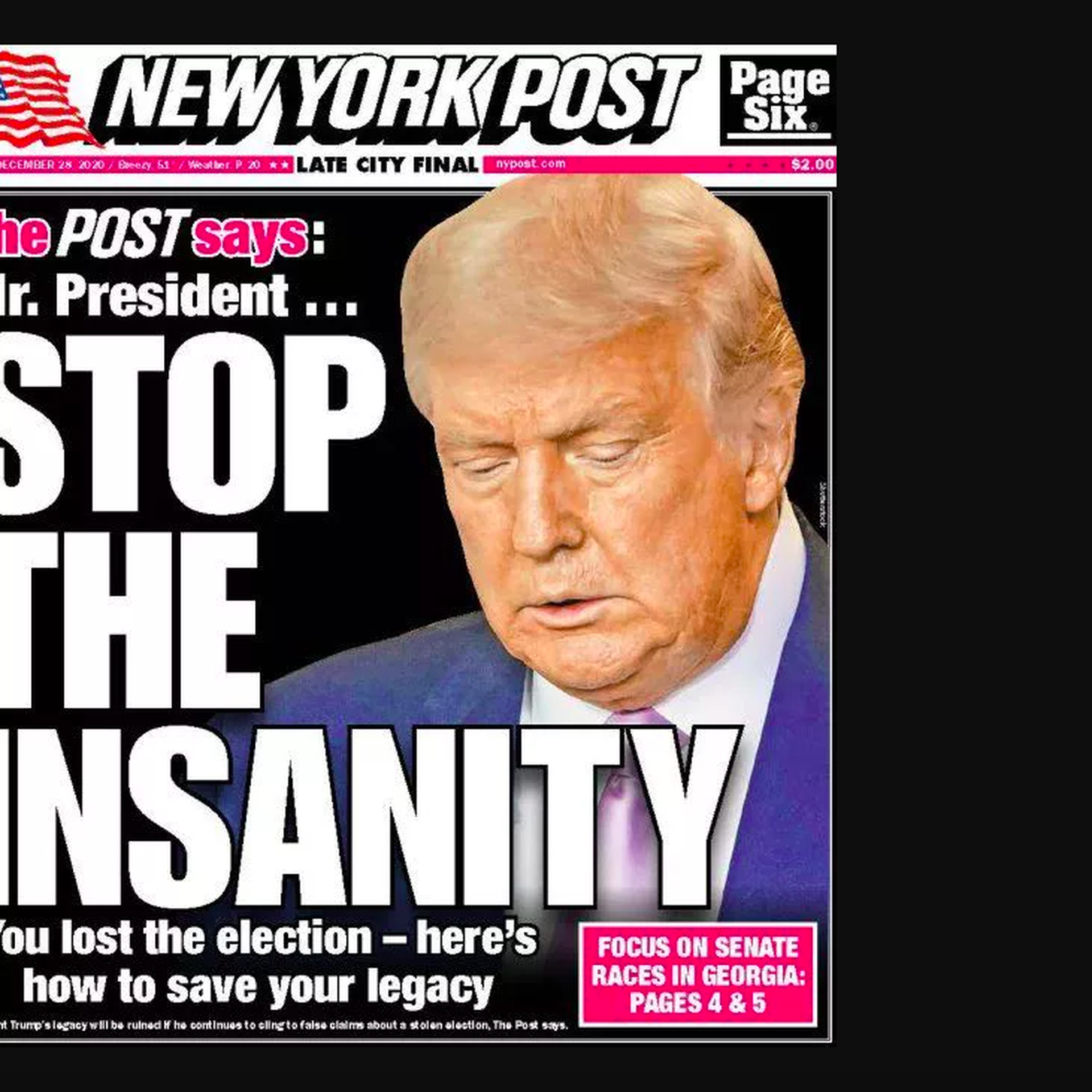
Trump and Insanity
Discussions surrounding the mental state of Donald Trump have been a prominent feature of his political career, encompassing a range of perspectives from mental health professionals, political commentators, and the public.
Claims and Counterclaims
Concerns about Cognitive Health: A number of neuropsychologists and psychologists have publicly voiced concerns about what they perceive as a decline in Trump’s cognitive abilities.
In his defense, Donald Trump has consistently asserted his mental acuity, famously describing himself as a “very stable genius.” Official reports from his White House physician have stated that he exhibits no signs of memory loss, neurological abnormality, or cognitive impairment. During his presidency, it was reported that Trump took the Montreal Cognitive Assessment (MoCA), a screening tool for cognitive function, and scored a perfect 30/30.
Psychological Assessments from a Distance: Beyond cognitive decline, some mental health professionals have suggested that Trump’s behavior aligns with certain personality disorders.
The Goldwater Rule and Ethical Debates
Public commentary on the mental health of political figures is a contentious issue within the psychiatric community, largely due to the “Goldwater Rule.”
The rule emerged after the 1964 presidential election when a magazine published a survey of psychiatrists on whether Barry Goldwater was psychologically fit to be president, to which he successfully sued for libel.
Political and Public Discourse
The debate over Trump’s mental state has also been a significant element of political and public discourse. Critics have pointed to his often-unconventional communication style, use of hyperbole, and challenges to established facts as evidence of a concerning psychological profile. His political opponents and some media outlets have frequently highlighted instances of apparent confusion or verbal missteps.
Conversely, his supporters often view his communication style as authentic and a rejection of political correctness. They may attribute criticisms of his mental state to political animosity and an attempt to pathologize a disruptive political figure.
It is important to note that without a formal clinical evaluation, any public discussion of a political figure’s mental health remains in the realm of observation and speculation. The complexities of personality, political strategy, and potential underlying health issues are difficult to disentangle from a distance, making definitive conclusions challenging.
–
The Question of “Insanity” and the 25th Amendment
The question of whether a president is “insane” and if the 25th Amendment could be invoked involves navigating complex medical, legal, and political territory. The term “insane” itself carries different meanings in each of these contexts, and any discussion of a president’s fitness for office necessitates a clear understanding of these distinctions.
Defining “Insanity”: A Multifaceted Term
Medically, the term “insane” is largely obsolete.
Legally, “insanity” is a specific concept used in criminal defense.
Politically, the term “insane” is often used rhetorically to criticize a political figure’s decisions, statements, or behavior.
Discussions Surrounding Donald Trump’s Mental State
Throughout his political career, Donald Trump’s mental state has been the subject of public discussion and speculation from various quarters, including mental health professionals, political commentators, and the media.
Some mental health professionals have publicly expressed concerns, often pointing to behaviors they view as indicative of certain personality traits or potential cognitive issues.
Conversely, supporters and allies of Donald Trump have dismissed these concerns as politically motivated attacks. They often point to his accomplishments and his self-described status as a “very stable genius.” Official White House physicians during his presidency stated that he was in excellent health, and he has touted his performance on a cognitive screening test.
These differing views highlight the challenge of assessing a public figure’s mental fitness from a distance and the politicization of such discussions.
The 25th Amendment: A High Constitutional Bar
The 25th Amendment to the U.S. Constitution provides a mechanism for the transfer of presidential power in cases of death, resignation, removal, or disability.
Legal and Procedural Aspects of Invoking Section 4:
The process for involuntarily removing a president from power is intentionally rigorous:
-
Initiation: The Vice President and a majority of the principal officers of the executive departments (the Cabinet) must declare in writing to the President pro tempore of the Senate and the Speaker of the House of Representatives that the President is unable to discharge the powers and duties of their office.
13 -
Immediate Transfer of Power: Upon this declaration, the Vice President immediately assumes the powers and duties of the office as Acting President.
14 -
Presidential Contest: The President can then submit a written declaration to the congressional leaders stating that no inability exists.
15 If they do so, they would resume the powers and duties of the presidency. -
Congressional Decision: If the Vice President and a majority of the Cabinet submit another written declaration within four days that the President remains unable to serve, the matter is then decided by Congress.
-
Supermajority Vote: Congress must assemble within 48 hours and has 21 days to vote.
16 A two-thirds vote in both the House of Representatives and the Senate is required to declare the President unable to serve, in which case the Vice President would continue as Acting President.17 If this two-thirds majority is not reached, the President would regain their powers.
Basis for Invocation:
The basis for invoking the 25th Amendment is a president’s “inability to discharge the powers and duties of his office.”
The threshold for invoking the 25th Amendment is exceptionally high, designed to prevent its use for political purposes.
–
The Evolving Concept of “Political Insanity”: From Medicalized Dissent to Modern Metaphor
The term “political insanity” is not a clinical diagnosis but a powerful and often contentious label used to describe a range of political phenomena, from individual actions to the behavior of entire societies. Its meaning has evolved significantly, originating as a medical concept to suppress dissent and now serving as a colloquial descriptor for political behavior that is perceived as irrational, counterproductive, or dangerously detached from reality.
A Controversial Medical Past
Historically, the concept of “political insanity” was wielded as a tool of political repression. In various regimes, individuals who expressed views contrary to the ruling ideology were diagnosed with forms of mental illness.
The Psychology of Political Irrationality
In a more modern and metaphorical sense, “political insanity” is often used to describe political behavior that appears to defy logic and self-interest. Political psychology offers several lenses through which to understand this perceived irrationality:
-
Cognitive Biases: Individuals are prone to a variety of cognitive shortcuts and biases that can lead to flawed political reasoning. Confirmation bias, for example, is the tendency to favor information that confirms pre-existing beliefs while ignoring contradictory evidence.
4 This can lead to political positions that are resistant to facts and logical persuasion. -
Motivated Reasoning: This is the tendency to process information in a way that is emotionally biased, aiming to arrive at a particular and preferred conclusion. In the political realm, this can manifest as voters or politicians clinging to beliefs that are emotionally satisfying, even when evidence suggests they are misguided.
-
Groupthink and Polarization: The dynamics of political tribes and polarization can foster an environment where extreme or irrational ideas are normalized and amplified. Within an insular group, dissenting opinions may be suppressed, leading to a collective conviction in ideas that appear “insane” to outsiders. As political polarization intensifies, the “other side” is often viewed not just as wrong, but as fundamentally irrational.
5
“Political Insanity” in Contemporary Discourse
In today’s political commentary, “political insanity” is a frequently used pejorative. It is employed to criticize a wide array of political actions and figures:
-
Policy Decisions: Policies that are seen as economically disastrous, socially divisive, or based on flawed premises are often labeled as “political insanity.” This rhetoric is used by commentators and political opponents to galvanize public opinion against a particular course of action.
-
Political Candidates and Leaders: The behavior and statements of political figures are sometimes characterized as “insane” to question their fitness for office or to highlight what is perceived as a departure from normal political conduct.
-
The Political Climate: The term is also used more broadly to describe a general sense of political chaos, dysfunction, and a breakdown of rational discourse. In this context, “political insanity” refers to a perceived societal condition where political processes seem to be driven by emotion, misinformation, and partisan fervor rather than reasoned debate and compromise.
Critiques of Using Mental Health Language in Politics
While the term “political insanity” can be a potent rhetorical device, its use is not without criticism. Invoking the language of mental illness to describe political opponents can be stigmatizing to individuals who experience actual mental health conditions. Critics argue that this practice can trivialize the complexities of both mental illness and political disagreement. Furthermore, labeling political adversaries as “insane” can shut down productive dialogue and contribute to the very political polarization it often seeks to condemn.
In conclusion, “political insanity” is a multifaceted term with a dark history and a complex present. While it lacks a formal definition, its usage points to a deep-seated concern with the role of reason, logic, and stability in the political sphere. Whether used to describe the calculated repression of dissent, the psychological quirks that drive political behavior, or the chaotic nature of modern politics, the concept of “political insanity” serves as a powerful, if controversial, lens through which to view and critique the world of politics.
–
Legal Insanity and the Presidency: An Examination of the Standard and Public Discourse
The question of whether a president can be deemed “legally insane” involves a complex intersection of legal standards and political realities. Legally, the term “insanity” has a specific definition within the criminal justice system that is not synonymous with a medical diagnosis of mental illness. There has been no formal legal proceeding in which Donald Trump’s sanity has been adjudicated, and therefore, he has never been found to be legally insane.
The concept of legal insanity is primarily used as a defense in criminal prosecutions.
-
The M’Naghten Rule: This is the most common standard in the United States.
2 To be found not guilty by reason of insanity under M’Naghten, a defendant must prove that, at the time of the offense, they were suffering from a “disease of the mind” to the extent that they did not know the nature and quality of the act they were doing, or if they did know it, they did not know that it was wrong.3 -
The Model Penal Code (MPC) Test: This standard, adopted by a number of states, holds that a person is not responsible for criminal conduct if, as a result of a mental disease or defect, they lack the “substantial capacity” to either appreciate the criminality of their conduct or to conform their conduct to the requirements of the law.
4 -
The Irresistible Impulse Test: Used in some states, often in conjunction with the M’Naghten rule, this test absolves a defendant of criminal responsibility if they were driven by an “irresistible impulse” to commit the crime, even if they knew it was wrong.
5
It is crucial to understand that these standards are applied in a courtroom setting, with extensive psychiatric evaluations and expert testimony. They are not metrics for casual or political assessment.
Public discourse surrounding Donald Trump’s mental state has been extensive, with a wide range of opinions expressed by mental health professionals, political commentators, and the general public.
During his presidency, Donald Trump’s physician stated he was in “excellent health” and that he “aced” a cognitive screening test known as the Montreal Cognitive Assessment (MoCA).
In summary, while there has been significant public and professional debate about Donald Trump’s mental fitness, the question of his legal sanity has never been formally addressed in a court of law. The standards for legal insanity are specific to criminal defense and have not been applied to him. Therefore, there is no legal basis to declare him “legally insane.”
–
Links
Trump’s Mental State: #Debate and Ethics
Discussions surrounding the mental state of Donald Trump have been a prominent feature of his political career, encompassing a range of perspectives from mental health professionals, political commentators, and the public.1 While the term “insanity” is a legal and social concept rather than a clinical diagnosis, concerns about Trump’s fitness for office have been articulated through various psychological and neurological frameworks.2Claims and Counterclaims
Concerns about Cognitive Health: A number of neuropsychologists and psychologists have publicly voiced concerns about what they perceive as a decline in Trump’s cognitive abilities.3 These concerns are often based on observations of his public statements, speech patterns, and behavior. For instance, Dr. Narinder Kapur, a senior neuropsychologist, suggested Trump undergo cognitive testing, including for Alzheimer’s disease, citing what he described as “odd and strange” public statements and behaviors.4 Similarly, psychologist Dr. John Gartner has pointed to a perceived deterioration in Trump’s motor skills and language as potential signs of early-stage dementia.5
In his defense, Donald Trump has consistently asserted his mental acuity, famously describing himself as a “very stable genius.” Official reports from his White House physician have stated that he exhibits no signs of memory loss, neurological abnormality, or cognitive impairment. During his presidency, it was reported that Trump took the Montreal Cognitive Assessment (MoCA), a screening tool for cognitive function, and scored a perfect 30/30.6 The White House released a statement in April 2025 affirming he was in “excellent health” and “fully fit” to serve as commander-in-chief.7
Psychological Assessments from a Distance: Beyond cognitive decline, some mental health professionals have suggested that Trump’s behavior aligns with certain personality disorders.8 A notable publication, “The Dangerous Case of Donald Trump,” featured essays from 27 psychiatrists, psychologists, and other mental health professionals arguing that Trump’s mental health posed a “clear and present danger” to the nation.9 Common assertions in the public discourse have included suggestions of narcissistic personality disorder, characterized by grandiosity, a need for admiration, and a lack of empathy.10
The Goldwater Rule and Ethical Debates
Public commentary on the mental health of political figures is a contentious issue within the psychiatric community, largely due to the “Goldwater Rule.”11 This ethical guideline from the American Psychiatric Association (APA) states that it is unethical for psychiatrists to offer a professional opinion on a public figure without conducting an examination and being granted proper authorization for such a statement.12
The rule emerged after the 1964 presidential election when a magazine published a survey of psychiatrists on whether Barry Goldwater was psychologically fit to be president, to which he successfully sued for libel.13 During Trump’s presidency, the Goldwater Rule became a subject of intense debate. Some mental health professionals argued that the potential danger posed by a president’s mental state constituted an exception, invoking a “duty to warn.” Others maintained that diagnosing from a distance is irresponsible and often influenced by political bias, undermining the credibility of the psychiatric profession. The APA has consistently upheld the Goldwater Rule, cautioning its members against speculating on the mental health of public figures.
Political and Public Discourse
The debate over Trump’s mental state has also been a significant element of political and public discourse. Critics have pointed to his often-unconventional communication style, use of hyperbole, and challenges to established facts as evidence of a concerning psychological profile. His political opponents and some media outlets have frequently highlighted instances of apparent confusion or verbal missteps.14
Conversely, his supporters often view his communication style as authentic and a rejection of political correctness. They may attribute criticisms of his mental state to political animosity and an attempt to pathologize a disruptive political figure.
It is important to note that without a formal clinical evaluation, any public discussion of a political figure’s mental health remains in the realm of observation and speculation. The complexities of personality, political strategy, and potential underlying health issues are difficult to disentangle from a distance, making definitive conclusions challenging.
— Michael Novakhov (@mikenov) Oct 4, 2025
Trump and Insanity – Google Search google.com/search?q=Trump+an…
youtube.com/watch?v=PGIxLFGU…— Michael Novakhov (@mikenov) Oct 4, 2025
Заседание дискуссионного клуба «Валдай» • Президент России kremlin.ru/events/president/…
— Michael Novakhov (@mikenov) Oct 4, 2025
Putin news today
The top news concerning Russian President Vladimir Putin includes his response to comments made by U.S. President Donald Trump and his recent address at the Valdai Discussion Club
Response to Trump and Ukraine
“Paper Tiger” Remark: At the Valdai conference on Thursday, October 2, Putin responded to Trump’s earlier description of Russia as a “paper tiger”. Putin retorted by asking “what is NATO?” if Russia is a paper tiger. He added, “Go and deal with this paper tiger then”.
Tomahawk Missile Threat: Putin warned that a potential U.S. supply of long-range Tomahawk missiles to Ukraine would mark a “completely new stage of escalation.” He noted that their use would require direct American military involvement. His comments came after reports indicated the U.S. might provide Ukraine with intelligence for targeting energy infrastructure deep inside Russia.
Praise for Trump: Despite the verbal jabs, Putin praised Trump’s attempts to mediate an end to the Russia-Ukraine war and described their August summit in Alaska as productive.
Frozen Russian Assets: During his address, Putin warned European nations against seizing Russian assets to fund Ukraine. He characterized such an act as piracy and said it could trigger a powerful response from Russia, potentially destabilizing the global oil market.
Other recent activities
Comments on Charles Kirk: At the Valdai conference, Putin also commented on the assassination of conservative commentator Charlie Kirk, calling it a “disgusting atrocity”.
“Russian threat” dismissed: Putin lashed out at “European elites” for “whipping up the hysteria” over a “Russian threat.” This follows recent Russian drone incursions over Europe.
Militarized economy: Russia’s defense spending has increasingly reshaped the economy, with some analysts noting the country is now locked in a state of militarization.
Satellite image analysis: New satellite imagery has shown the scale of a Russian test complex, reportedly for a failed nuclear-powered missile nicknamed a “flying Chernobyl”.
Kremlin schedule: According to the official Kremlin website, Putin’s official events on Friday, October 3, included a gala concert and presenting state awards to teachers and mentors involved in the war in Ukraine.
share.google/aimode/636vDg1O…— Michael Novakhov (@mikenov) Oct 4, 2025
The ABCs of AI-Enabled Intelligence Analysis warontherocks.com/2020/02/th…
— Michael Novakhov (@mikenov) Oct 4, 2025
AI in Intelligence Analysis
augmenting human capabilities, streamlining workflows, and managing the deluge of data from diverse sources. While AI offers significant advantages in enhancing speed and predictive power, its integration presents profound ethical, operational, and technical challenges. The central theme in AI-powered intelligence analysis is not replacement but augmentation, with human analysts retaining the vital role of critical thinking, contextual understanding, and final judgment.AI plays an increasingly critical role in intelligence analysis by
Applications in the intelligence cycle
AI’s influence is felt across every stage of the intelligence cycle:
Collection and processing: AI and machine learning algorithms can rapidly process and synthesize massive, multi-dimensional datasets from sources that would overwhelm human analysts. This includes text reports, signals intelligence (SIGINT), and geospatial intelligence (GEOINT) like satellite imagery.
Automated target recognition: Computer vision systems use machine learning to detect and classify objects of interest in satellite imagery and drone footage, such as identifying surface-to-air missile batteries.
Predictive and trend analysis: AI can identify subtle patterns and trends in historical and current data that human analysts might miss. It can flag suspicious financial transactions, detect emerging threats, or forecast geopolitical shifts by analyzing economic and social indicators.
Natural Language Processing (NLP): NLP is used to process vast amounts of unstructured text from open-source intelligence (OSINT), transcripts, and other documents. It can rapidly translate foreign languages, perform sentiment analysis, and identify key entities and relationships.
Automated reporting: Generative AI can assist in drafting routine situation reports (SITREPs) and standardized briefings by gathering relevant information and structuring it according to the required format and style. This frees up analysts to perform higher-level synthesis and customization.
Benefits of using AI in analysis
Enhanced efficiency: AI automates repetitive, time-consuming tasks like data sorting, freeing up analysts to focus on complex analysis, critical thinking, and advising decision-makers.
Superior data analysis: AI can uncover patterns and connections across multiple, complex datasets that are too large and complicated for humans to analyze manually. This enhances all-source assessments and can surface overlooked data.
Improved performance: Case studies have shown that AI can outperform human-only analysis. For example, the Defense Intelligence Agency’s Project SABLE SPEAR used AI to identify significantly more illicit activities in a case involving global fentanyl trafficking than traditional methods.
Real-time insights: Adaptive AI systems can continuously monitor dynamic data streams to provide real-time situational awareness and rapid insight into evolving threats.
Key challenges and risks
Ethical concerns and bias: AI models can inherit biases from their training data, leading to biased or discriminatory outcomes. There are risks related to privacy, data misuse, and human rights violations if systems are deployed without ethical safeguards.
Lack of transparency and explainability: Complex AI models, particularly deep neural networks, can operate as “black boxes,” making it difficult for human analysts to understand how conclusions were reached. This opacity can hinder accountability and reduce trust in the AI’s output, especially in high-stakes environments.
Data quality and security: AI is highly dependent on high-quality data. If data is flawed, inaccurate, or vulnerable to manipulation, it can lead to unreliable or exploitable systems. Additionally, concentrating data for AI analysis increases the risk of cyberattacks.
Over-reliance and accountability: Analysts may become overly dependent on AI, leading to automation bias where they uncritically accept a system’s output. Clear governance is needed to establish accountability when AI-driven decisions go wrong.
Technological and talent gaps: Integrating AI requires significant infrastructure investment and a workforce with advanced skills. Many organizations face a shortage of professionals with the expertise to develop, deploy, and interpret AI systems effectively.
The future of AI in intelligence
Human-machine teaming: The future points towards a synergistic collaboration where AI handles data-intensive tasks and provides sophisticated insights, while human analysts provide critical judgment, cultural understanding, and expertise.
Increasing autonomy: Future AI agents will likely become more autonomous, monitoring sales patterns, or optimizing supply chains. In an intelligence context, this could mean AI agents that can monitor multiple indicators and provide autonomous, real-time decision support.
Predictive capabilities: Advances in AI suggest future predictive analytics platforms that can synthesize vast datasets of economic, social, and political indicators to anticipate and mitigate threats before they fully materialize.
Global race for AI advantage: Major nations are investing heavily in AI for national security and defense, intensifying strategic competition. Governments are actively developing AI regulations and frameworks to guide responsible and ethical deployment.— Michael Novakhov (@mikenov) Oct 4, 2025
Notable Opinions Today: editorials, op-eds, columns, articles
AI Overview
Artificial intelligence: The New York Times Magazine published several pieces related to AI, discussing its effect on careers, the prevalence of its use, and its impact on historical research and storytelling.
Major themes in opinion pieces for Saturday, October 4, 2025, include the ongoing government shutdown, increasing concerns over democratic norms in the United States, and international developments in the Middle East and Asia. [1, 2, 3, 4]
The ongoing U.S. government shutdown The government shutdown that began on October 1 continues, and many editorials and columns focus on its causes, effects, and the political rhetoric surrounding it.• Economic anxiety: The Kansas Reflector warns that a prolonged shutdown could send the U.S. economy, already in a precarious state, into a “tailspin”.
• Calls for unity: Letters to the editor published in outlets like the News-Press lament the “partisan division” and call for a focus on “We the people” rather than political infighting. A column in The Republic emphasizes that the American people are the ultimate losers in this political showdown.
• Political messaging: The New York Times opinion section ran a piece titled “‘If You Don’t Want This Consequence, Don’t Vote for Republicans’,” discussing the political consequences of the shutdown.
• Centrist warnings: According to U.S. News & World Report, centrist Republicans like Senator Lisa Murkowski have warned against using the shutdown for partisan attacks, which further divides the country. [1, 2, 5, 6, 7]Concerns about American democracy Multiple opinion pieces reflect growing fears about the erosion of democratic norms in the U.S., citing actions taken by the Trump administration.
• The New Republic op-ed: A piece in The New Republic argues that President Trump’s second term, marked by the use of power to attack perceived enemies and reward allies, represents a “methodical unraveling of American democracy”.
• First Amendment issues: In a column for the New York Times, Andrew Marantz addresses new threats to free speech, while Judge Andrew P. Napolitano writes in The Mining Gazette about the expansion of federal power infringing upon constitutional principles.
• Deployment of the military: The Davis Vanguard published an op-ed criticizing the deployment of military forces into U.S. cities, calling it an abuse of power intended to intimidate dissent. [8, 9, 10, 11, 12]International developments Amid domestic issues, commentators are also weighing in on foreign policy and international news.
• Middle East: The New York Times and U.S. News & World Report report on the latest developments regarding Hamas and the Israeli government’s response to President Trump’s proposed Gaza peace plan.
• India-Pakistan relations: An analysis from Vajiram & Ravi dissects the recent maritime activity between India and Pakistan, warning that the enduring rivalry is becoming more prevalent in the Indian Ocean.
• India’s clean energy: The same analysis also covers the financial challenges India faces in meeting its ambitious climate goals, despite its growth in renewable energy. [3, 4, 13, 14]Social commentary Other notable opinion articles cover a variety of cultural and societal issues.
• Artificial intelligence: The New York Times Magazine published several pieces related to AI, discussing its effect on careers, the prevalence of its use, and its impact on historical research and storytelling.
• Role of local journalism: An op-ed in the Herald-Star emphasizes the importance of supporting local newspapers to foster healthy and informed communities.
• Community and kindness: A guest column in the Intelligencer and a column in the Delaware Gazette discuss the importance of kindness, tolerance, and finding common ground in a turbulent world. [15, 16, 17, 18, 19]AI responses may include mistakes.
[1] nytimes.com/2025/10/04/opini…
[2] usnews.com/news/world/articl…
[3] vajiramandravi.com/current-a…
[4] nytimes.com/2025/10/04/brief…
[5] kansasreflector.com/2025/10/…
[6] therepublic.com/2025/10/04/c…
[7] news-press.com/story/opinion…
[8] newrepublic.com/article/2013…
[9] mininggazette.com/opinion/co…
[10] davisvanguard.org/2025/10/re…
[11] nytimes.com/2025/10/04/opini…
[12] allsides.com/news/2024-07-04…
[13] usnews.com/news/world/articl…
[14] npr.org/2024/03/06/123613060…
[15] nytimes.com/2025/10/04/magaz…
[16] nytimes.com/2025/10/04/magaz…
[17] theintelligencer.net/opinion…
[18] delgazette.com/2025/10/04/ev…
[19] heraldstaronline.com/opinion…Notable Opinions Today: editorials, op-eds, columns, articles – Google Search google.com/search?q=Notable+…
— Michael Novakhov (@mikenov) Oct 4, 2025
AI Mode
Artificial intelligence: The New York Times Magazine published several pieces related to AI, discussing its effect on careers, the prevalence of its use, and its impact on historical research and storytelling.
The New York Times Magazine covered its effects on careers, widespread use, and impact on historical research and storytelling.In its special June 2025 issue on artificial intelligence,
AI and careers
A.I. Might Take Your Job. Here Are 22 New Ones It Could Give You (June 17, 2025): The magazine explored how AI will disrupt the job market, displacing nine million jobs over the next five years but creating an estimated 11 million new jobs by 2030. The new roles are predicted to bridge the gap between AI capabilities and human needs in areas like integration, trust, and taste.
For Some Recent Graduates, the A.I. Job Apocalypse May Have Already Arrived (May 30, 2025): This article examined the particular challenges facing recent college graduates, whose entry-level positions in technical fields like computer science and finance are often the most exposed to automation. The piece cited data from the Federal Reserve Bank of New York showing a “noticeably” deteriorating job market for new graduates.
21 Ways People Are Using A.I. at Work (August 11, 2025): The Times published an interactive feature detailing how AI is being used in various jobs, from improving government call center efficiency to inspiring visual artists by training models on their past work.
The prevalence of AI
Everyone Is Using A.I. for Everything. Is That Bad? (June 16, 2025): This piece featured hosts of the Times podcast Hard Fork discussing the rapid adoption of AI tools. They noted that AI companies’ revenues were doubling year over year, showing that the technology is moving out of the experimental stage and into practical application.
A.I. May Be Just Kind of Ordinary (August 20, 2025): The magazine reported that AI use has seen “remarkable uptake,” citing surveys showing that over half of Americans have already used an AI tool. This is a level of adoption that took the internet years to reach.
Companies Are Pouring Billions Into A.I. It Has Yet to Pay Off (August 13, 2025): Despite the high adoption and investment, this article discussed the slow commercial return on investment for businesses. According to research from McKinsey, nearly eight in ten companies use generative AI, but just as many report no significant bottom-line impact yet.
AI and historical research and storytelling
A.I. Is Poised to Rewrite History. Literally (June 16, 2025): This article explored AI’s potential to transform how historians conduct research by analyzing and summarizing vast quantities of text and data. It raised questions about how this could reshape the stories and narratives historians tell about the past.
A.I. May Be the Future, but First It Has to Study Ancient Roman Inscriptions (July 23, 2025): Highlighting a specific use case, this piece detailed how Google’s DeepMind used an AI model called Aeneas to analyze ancient Latin inscriptions. By identifying the social context of these texts, the AI is helping historians solve complex “jigsaw puzzles” of past information.
I’m a Screenwriter. Is It All Right if I Use A.I.? (October 4, 2025): In this piece, a screenwriter considers the ethical use of AI as a creative tool. The author argues that AI is a helpful assistant but not a replacement, particularly when it comes to creating suspense and constructing emotionally complex story arcs.
He Has Months Left. His Son Hopes an A.I. Version of Him Can Live On (June 17, 2025): This personal story chronicled a family’s decision to create a virtual avatar of a dying father. It explored the new, intimate forms of storytelling that AI allows, blurring the lines between memory, technology, and legacy.— Michael Novakhov (@mikenov) Oct 4, 2025