
The Anatomy of a #PoliticalDeception: #GeorgeSantos‘s #RiseandFall
Former New York Congressman George Santos’s brief but tumultuous political career serves as a stark case study in political fraud, marked by a web of fabricated personal and professional histories.1 His story highlights the vulnerabilities in the political system and raises critical questions about how to detect and prevent such deception.
Personality and Political Profile: A Charade of Accomplishment
Santos projected an image of a successful, self-made businessman and a trailblazing Republican.2 He identified with the “America First” wing of the party, appealing to conservative voters with a compelling, albeit entirely fabricated, life story.3 His public persona was often described as charismatic and ambitious, yet also brazen and attention-seeking.4 This combination allowed him to confidently present his fictional narrative and initially deflect scrutiny.
A Litany of Lies: The Scope of the Fraud
The fraudulent activities perpetrated by Santos were extensive and multifaceted, encompassing nearly every aspect of the biography he presented to voters.5 Key fabrications included:
Educational and Professional Background: Santos falsely claimed to have graduated from Baruch College and New York University and to have worked for high-profile financial institutions like Citigroup and Goldman Sachs.6 These claims were central to his image as a qualified financial expert.
Family Heritage: He fabricated a dramatic family history, falsely claiming his maternal grandparents were Jewish refugees who fled the Holocaust and that his mother died in the 9/11 attacks.7
Financial Deception: Santos faced federal charges related to wire fraud, money laundering, theft of public funds, and making materially false statements to the House of Representatives.8 These charges stemmed from allegations of misusing campaign funds for personal expenses, including luxury goods and rent, and fraudulently receiving unemployment benefits.9 He was also accused of orchestrating a fraudulent political contribution scheme.10
Identity Theft: He was charged with aggravated identity theft, accused of using the personal information of others without their consent.11Unmasking the Deception: The Telltale Signs
Analysis of Santos’s case reveals several red flags and signs that, if scrutinized earlier and more thoroughly, might have exposed the fraud.12 These include:
Inconsistencies and Lack of Detail: His public statements and campaign materials often contained vague or contradictory information about his past.13 When pressed for specifics, his accounts frequently shifted.14
Unverified Claims: Many of his most impressive biographical details were not independently verified by news media or opposition researchers during his campaign. A deeper dive into public records and outreach to the institutions he claimed affiliation with would have quickly unraveled his stories.
Atypical Financial Trajectory: The sudden and largely unexplained increase in his reported wealth and ability to loan his campaign substantial sums of money were significant red flags that warranted closer examination of his financial disclosures.
Brazenness in the Face of Scrutiny: Even as allegations mounted, Santos continued to deny, deflect, and even double down on his fabrications, a tactic often employed by those engaged in significant deception.Detecting and Preventing Political Fraud: Lessons from the Santos Saga
The case of George Santos underscores the importance of robust vetting and verification processes for political candidates.15 Here are key strategies for detection and prevention:
For Voters and the Media:
Critical Scrutiny of Candidate Biographies: Voters and journalists should approach candidate narratives with a healthy dose of skepticism and seek independent verification of key claims, especially those that seem extraordinary.
Utilize Fact-Checking Organizations: Resources like FactCheck.org, PolitiFact, and local news outlets’ fact-checking departments are invaluable for vetting candidate statements and backgrounds.
Examine Financial Disclosures: Campaign finance reports and personal financial disclosures can offer crucial insights into a candidate’s financial situation and potential conflicts of interest.16 Discrepancies or sudden changes in wealth should be questioned.
Demand Transparency: Voters should demand that candidates provide detailed and verifiable information about their history and be wary of those who are evasive or refuse to answer specific questions.For Political Parties and Institutions:
Thorough Vetting Processes: Political parties have a responsibility to conduct in-depth background checks on their candidates before they receive official support and resources. This should go beyond basic opposition research and include verification of educational and employment histories.
Internal Accountability: There should be clear mechanisms within political parties for addressing concerns about a candidate’s integrity. Red flags should be taken seriously and investigated thoroughly.
Strengthened Campaign Finance Oversight: Regulatory bodies like the Federal Election Commission (FEC) play a crucial role in monitoring campaign finances.17 Adequate funding and authority for these bodies are essential for identifying and prosecuting financial fraud.The saga of George Santos serves as a cautionary tale. While it exposed significant vulnerabilities, it also highlighted the power of investigative journalism and the importance of an engaged and critical electorate in upholding the integrity of the democratic process.
This video provides a summary of the fabrications and falsehoods that characterized George Santos’s public life.
George Santos: The Man, the Myths, the LessonsGeorge Santos: Deception, Detection, Prevention gemini.google.com/share/e601…
— Michael Novakhov (@mikenov) Oct 19, 2025
Day: October 19, 2025
George Santos: personality, politics, and fraud: signs, analysis, detection, and prevention
The rise and fall of former U.S. Representative George Santos offers a comprehensive case study in political fraud, characterized by an elaborate pattern of deception regarding his personal, professional, and financial background. His brief political career ended in expulsion from Congress and a federal prison sentence, which was recently commuted. [1, 2, 3, 4]
Personality Psychological experts have analyzed Santos’s behavior, with many pointing to traits associated with the “Dark Triad” of personality: narcissism, Machiavellianism, and psychopathy.• Charisma and manipulation: Santos was described as a charismatic and persuasive liar who used manipulation to achieve his goals.
• Pathological lying: Experts noted that he was not just lying, but engaging in a pattern of deceit to maliciously manipulate others and live a fabricated life.
• Lack of remorse: Santos displayed a lack of empathy and remorse, which are common traits in individuals with antisocial personality disorder.
• Entitlement: As his cons continued, he appeared to become more entitled, even coming to believe some of his own lies.
• Attention-seeking: A fellow Republican congressman described Santos as a “sociopath” who thrives on negative attention, seeing it as a source of energy. [5, 7, 8, 9, 10]Politics Santos built his political persona on a foundation of falsehoods, presenting a fabricated life story to appeal to voters.
• Fabricated biography: He invented or exaggerated key details of his life, including:
• Education: Falsely claiming to have graduated from Baruch College and been a volleyball star.
• Professional history: Pretending to have worked for prominent Wall Street firms like Goldman Sachs and Citigroup.
• Heritage: Claiming to be “Jew-ish” after earlier claiming Jewish ancestry linked to the Holocaust.
• Financial status: Inflating his income and assets in financial disclosures to Congress.• Swift political downfall: After being elected in 2022, his house of cards began to collapse as numerous media outlets exposed his lies.
• Ethics investigation: A House Ethics Committee report found “substantial evidence” of misconduct, including the misuse of campaign funds for personal luxury items.
• Expulsion from Congress: In December 2023, the House of Representatives voted to expel him, a rare action not seen in over two decades.• Commutation: In October 2025, after serving less than three months of a seven-year sentence for wire fraud and identity theft, his sentence was commuted by President Donald Trump. The decision drew wide criticism. [1, 2, 3, 4, 12, 13, 14, 15]
Fraud: Signs, analysis, detection, and prevention Santos’s criminal activities, for which he eventually pleaded guilty, involved multiple financial fraud schemes. [2]
Signs of fraud • Inconsistent financial disclosures: Drastic and unsupported shifts in reported income and assets on public financial forms are a major red flag.
• Use of falsified campaign data: Fabricating fundraising numbers to qualify for campaign support or mislead the public is a sign of deliberate deception.
• Lavish spending with unexplained income: Using campaign funds for personal luxuries, such as designer clothes or spa visits, points to potential misuse of funds.
• Pattern of exaggerated life story: A biography filled with unverifiable or wildly inflated credentials should be scrutinized. [3, 4, 12, 16, 17, 18, 19]Detection and analysis • Investigative journalism: Independent reporting by outlets like The New York Times was crucial in exposing Santos’s lies, even when initial reports from smaller papers were overlooked.
• Governmental oversight: The Federal Election Commission (FEC) detected irregularities in his campaign finance reports, though the full extent was uncovered later.
• Official ethics investigations: The House Ethics Committee conducted a thorough investigation, providing substantial evidence that led to his expulsion.
• Vulnerability reports: Internal reports, like the one from CBS News, showed that even people within his party were suspicious of Santos and aware of potential weaknesses in his background. [4, 13, 16, 17, 20]Prevention • Robust vetting processes: Political parties and media organizations should implement more rigorous vetting for all candidates, including fact-checking biographical claims and financial statements.
• Enhanced campaign finance enforcement: Stricter rules and more aggressive enforcement from agencies like the FEC are needed to ensure the integrity of campaign donations.
• Transparency and accountability: The public must demand greater transparency from candidates, with mechanisms in place to hold them accountable for misrepresentations.
• Legislative reform: Congress could enact new rules to make it easier to expel members who commit serious ethical and legal violations, though Santos’s removal was historically rare. [14, 17, 20, 21]AI responses may include mistakes.
[1] washingtonpost.com/politics/…
[2] npr.org/2025/10/17/nx-s1-557…
[3] pbs.org/newshour/politics/tr…
[4] nbcnewyork.com/news/politics…
[5] businessinsider.com/george-s…
[6] bozemandailychronicle.com/op…
[7] psychologicalscience.org/new…
[8] theatlantic.com/ideas/archiv…
[9] theguardian.com/us-news/2023…
[10] youtube.com/watch?v=iv0T32GJ…
[11] nytimes.com/2025/04/25/nyreg…
[12] justice.gov/usao-edny/pr/ex-…
[13] msnbc.com/top-stories/latest…
[14] yahoo.com/news/articles/trum…
[15] cbsnews.com/newyork/news/geo…
[16] washingtonpost.com/politics/…
[17] irs.gov/compliance/criminal-…
[18] justice.gov/usao-edny/pr/con…
[19] justice.gov/usao-edny/pr/ex-…
[20] cbsnews.com/news/george-sant…
[21] abcnews.go.com/Politics/new-…– Google Search google.com/search?q=George+S…
— Michael Novakhov (@mikenov) Oct 19, 2025
No, Russian soldiers in Ukraine are not being forced to fight against their will kyivindependent.com/russia-h…
— Michael Novakhov (@mikenov) Oct 19, 2025
Putin’s strategy is to drive the wedge between Trump and Europe.
AI Overview
Multiple analysts and reports indicate that a core part of Russian President Vladimir Putin’s strategy is to exploit and widen the divide between President Donald Trump and European allies. This strategy is pursued through various diplomatic and hybrid warfare tactics. [1, 2, 3, 4, 5]
Russia’s strategic goals • Weaken NATO: By fostering division, Putin aims to undermine the unity and effectiveness of NATO, which he perceives as a strategic threat. Russian leaders recognize that a fragmented alliance is less capable of responding decisively to Russian aggression.
• Reduce support for Ukraine: Russia’s goal is to diminish military and financial support for Ukraine from the US and Europe. Tactics include exploiting political disagreements over funding and military aid to pressure Ukraine into a settlement on Moscow’s terms.
• Restore “great power” status: By pushing back against the Western-led order and re-establishing a sphere of influence in its neighborhood, Russia hopes to regain geopolitical influence lost after the Cold War. [2, 3, 5, 6, 7, 8]Tactics to create division • Hybrid warfare: Russia’s tactics include sabotage, cyber-attacks, GPS jamming, and disinformation campaigns to foster insecurity and exploit vulnerabilities in Europe.
• Diplomatic maneuvering: Russia has used diplomatic efforts, such as the 2025 summits with Trump, to project an image of Russia and the US bypassing European partners in peace negotiations. Hosting a meeting with Trump in Budapest, a location favored by a pro-Kremlin leader, is viewed as a strategic move to undercut Europe’s influence.
• Friendly relations with Trump: Putin cultivates a friendly relationship with Trump, who has a history of criticizing European allies and NATO. During his previous term, Trump openly embraced Putin and questioned the need for alliances, which aligned with Russian interests. During the Alaska and Budapest summits in 2025, Putin and Trump have discussed Russian proposals for a peace deal in Ukraine.
• Encouraging pro-Russian figures: The Kremlin has aligned with far-right parties and leaders in Europe who share its anti-democratic and anti-EU views. This provides a mechanism for destabilizing the EU from within. [1, 4, 6, 9, 10, 11, 12, 13, 14, 15, 16]Trump’s impact on US-Europe relations • “America First” policy: Trump’s focus on “America First” and a transactional view of foreign policy has strained the transatlantic relationship. European leaders and publics have expressed dismay over US policy shifts and a perceived indifference or hostility toward their interests.
• Skepticism of European allies: Trump’s rhetoric has challenged foundational European institutions and alliances, including criticizing the EU as an economic foe and questioning NATO’s purpose.
• Undermining Ukraine support: Trump’s questioning of US aid to Ukraine and willingness to engage in separate talks with Putin have created anxiety among European allies about the future of a united front against Russian aggression. [1, 16, 17, 18, 19, 20, 21]European response • Adapting to US shifts: Faced with a less reliable US, European leaders are increasingly considering how to achieve greater strategic independence. Some countries are taking steps to build up their own defense capabilities.
• Continuing support for Ukraine: Despite concerns over waning US commitment, many European countries have reaffirmed their support for Ukraine.
• Resilience against Russian influence: European leaders are taking steps to counter Russian hybrid attacks and strengthen security, though the challenges persist. [4, 6, 8, 16, 22, 23]AI responses may include mistakes.
[1] bloomberg.com/news/articles/…
[2] carnegieendowment.org/emissa…
[3] atlanticcouncil.org/in-depth…
[4] csis.org/analysis/russias-sh…
[5] understandingwar.org/researc…
[6] atlanticcouncil.org/blogs/uk…
[7] sciencespo.fr/ceri/en/conten…
[8] bbc.com/news/articles/c4gz2p…
[9] bloomberg.com/news/newslette…
[10] atlanticcouncil.org/blogs/uk…
[11] theguardian.com/commentisfre…
[12] apnews.com/article/trump-put…
[13] en.wikipedia.org/wiki/2025_R…
[14] axios.com/2025/10/16/trump-p…
[15] washingtonpost.com/politics/…
[16] nytimes.com/2025/02/27/world…
[17] features.csis.org/responses-…
[18] csis.org/analysis/transatlan…
[19] reuters.com/world/europe/tru…
[20] government.cornell.edu/news/…
[21] politico.eu/article/donald-t…
[22] theatlantic.com/national-sec…
[23] aljazeera.com/news/2025/10/1…Putin’s strategy is to drive the wedge between Trump and Europe. – Google Search google.com/search?q=Putin%27…
— Michael Novakhov (@mikenov) Oct 19, 2025
#Trump and #Zelensky: #Vindictevness x.com/mikenov/status/1979916386840260985
— Michael Novakhov (@mikenov) Oct 19, 2025
Trump and Zelensky x.com/mikenov/status/1979916386840260985
— Michael Novakhov (@mikenov) Oct 19, 2025
Trump and Zelensky: The analysis of the political relationship – Conversations with AI
The political relationship between Donald Trump and Volodymyr Zelensky has seen significant shifts and is characterized by friction, public disagreements, and recent attempts at diplomacy. Following Trump’s return to the presidency in 2025, their dynamic has been shaped by the ongoing war in Ukraine and Trump’s stated goal of ending the conflict quickly.
thenewsandtimes.blogspot.com…— Michael Novakhov (@mikenov) Oct 19, 2025
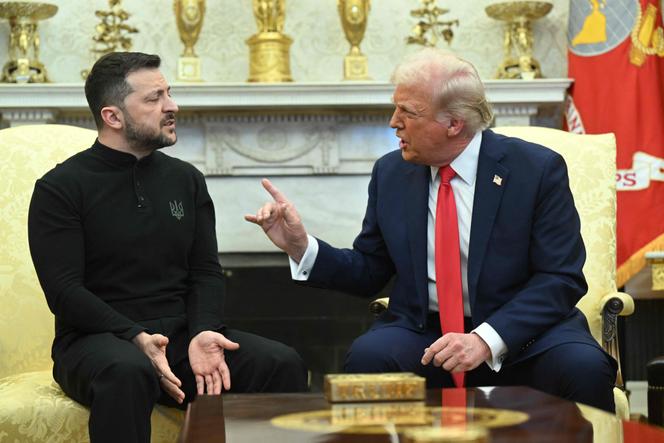
The political relationship between Donald Trump and Volodymyr Zelensky has seen significant shifts and is characterized by friction, public disagreements, and recent attempts at diplomacy. Following Trump’s return to the presidency in 2025, their dynamic has been shaped by the ongoing war in Ukraine and Trump’s stated goal of ending the conflict quickly. [1, 2, 3, 4, 5]
Key moments in 2025
February: Relations hit a low point after a tense Oval Office meeting.
- The meeting reportedly devolved into a shouting match, with Trump calling Zelensky “disrespectful” and accusing him of “gambling with World War Three”.
- Trump also called Zelensky a “dictator,” and Zelensky accused Trump of being in a Russian “disinformation space”.
- Following the heated exchange, the U.S. “paused and reviewed” military aid to Ukraine. [1, 6]
March–September: A period of rebuilding followed the February confrontation.
- The initial fallout prompted Zelensky to issue a statement calling the incident “regrettable” and acknowledging Trump’s “strong leadership”.
- In October, the relationship appeared to have “taken a U-turn” toward a more cordial but still complex dynamic. Zelensky has publicly praised Trump’s diplomatic abilities, drawing a parallel to a ceasefire he brokered in the Middle East. [1, 2, 7, 8]
October: A White House meeting on October 17, 2025, showed a warmer tone but highlighted policy divisions.
- During the meeting, Zelensky sought long-range Tomahawk cruise missiles from the U.S. to strike deeper into Russia.
- Trump, however, denied the request for now, citing concerns about escalation.
- Instead of escalating the military aid, Trump advocated for a ceasefire along the current battle lines, leaving final victory to be decided by “History”.
- Zelensky publicly agreed that a ceasefire was necessary before further talks, but he has not dropped his demands for long-range missiles.
- The meeting took place just one day after a phone call between Trump and Russian President Vladimir Putin, during which Putin warned against supplying Ukraine with Tomahawks. [8, 9, 10, 11]
Policy differences and diplomatic goals
Despite recent improvements in the personal rapport between the two leaders, there are clear differences in their diplomatic goals.
- Trump’s “peace plan”: Trump has long maintained he could end the war “very quickly,” a sentiment he reiterated during his 2024 campaign and in recent meetings. His current strategy appears to be a rapid ceasefire along the existing front lines to bring both parties to the negotiating table, mirroring his recent approach in the Middle East.
- Zelensky’s objectives: Zelensky’s primary goal remains securing Ukraine’s territorial integrity. While acknowledging the need for negotiations, he is pushing for greater military aid, including advanced missiles, to strengthen Ukraine’s position. Ukraine’s acceptance of the ceasefire is likely tactical, aimed at maintaining a working relationship with the U.S. while seeking security guarantees and long-term aid.
- The path forward: Following the October meeting, Trump plans to meet separately with Putin and Zelensky in Budapest to facilitate peace talks. This signals an ongoing, yet uncertain, diplomatic process rather than a clear resolution. [1, 8, 11, 12, 13]
AI responses may include mistakes.
[2] https://www.theatlantic.com/national-security/archive/2025/10/trump-deal-ukraine-zelensky/684609/
–
Read also or listen to these AI Conversations:
- Zelensky was kicked out of the White House. Again
- Zelenskyy at a “tense” meeting in Washington
- Does Trump’s “special fondness” for Putin get in the way of his peacemaking?
- Putin’s spokespeople are threatening Trump’s Mar-a-Lago with missiles from Cuba
- Ukraine and the political vindictiveness of Donald Trump
- The political vindictiveness of Donald Trump
- Trump and the art of the political betrayals
- No Tomahawks for Ukraine
- Putin Offers Ceasefire Deal for Ukraine
- Putin’s strategy is to drive the wedge between Trump and Europe
_____________________________________________________________
Articles and Tweets

“No Kings” Protests in USA
share.google/aimode/B7N8bdGk…
Organized by a coalition of progressive groups, the demonstrations targeted what participants described as President Donald Trump’s “authoritarian” actions during his second administration. Rallies were held in over 2,700 locations, with organizers estimating the turnout at nearly 7 million people. A wave of “No Kings” protests took place across the United States on Saturday, October 18, 2025.
Background and context
Response to a second Trump presidency: The rallies were the second major “No Kings” demonstration of the year. The first was in June, timed to coincide with a military parade and Trump’s birthday, and reportedly drew 5 million people. Following that, organizers cited new concerns, including increased Immigration and Customs Enforcement (ICE) activity, federal employee layoffs, and the deployment of federal troops to cities.
Symbolic message: The “No Kings” slogan references America’s founding rejection of monarchy. Protesters used the phrase to condemn what they see as Trump’s efforts to expand presidential power and undermine democratic norms.
Triggering incidents: The movement gained momentum following social media posts from the Trump administration that depicted the president with monarchical imagery.
Event details
Scale and participation: Protests occurred in major cities like New York City, Los Angeles, and Washington, D.C., as well as in smaller communities across all 50 states.
Atmosphere: Despite political tensions and counter-messaging from Trump allies, most demonstrations were peaceful and often had a festive, family-friendly tone.
Key issues: Protesters gathered to voice opposition to a wide range of issues, including:Immigration policies and raids
Threats to democratic institutions and accountability
Federal government policies regarding civil rights, healthcare, and education
Deployment of federal troops in cities
Concerns over the concentration of power in the presidencyReactions and outcomes
Trump administration response: The administration downplayed the size and significance of the protests. Some officials posted mocking images of opposition leaders, and President Trump posted an AI-generated video of himself as a king.
Republican and Democratic reactions: Republicans criticized the protests, with some calling them “hate America” rallies. Democrats, including former Vice President Kamala Harris and Senate Minority Leader Chuck Schumer, publicly supported the demonstrators.
Peaceful demonstrations: Many large cities, including New York City and Austin, Texas, reported no arrests related to the protests, and police departments thanked participants for remaining peaceful.
share.google/aimode/B7N8bdGk…— Michael Novakhov (@mikenov) Oct 19, 2025
“No Kings” Protests in USA – Google Search google.com/search?q=%22No+Ki…
— Michael Novakhov (@mikenov) Oct 19, 2025