|
|||||||||||||||||||||||||||||||||||||||||||||||||||||||||||||||||||||||||||||||
|




















 The News And Times Review - NewsAndTimes.org
|
|||||||||||||||||||||||||||||||||||||||||||||||||||||||||||||||||||||||||||||||
|
|
||||||||||||||||||||||||||
|
|
|||||||||||||||||||||||||||||||||||||||||||||||||||||||||||||||||||||||||||||||||||||
|
|
|||||||||||||||||||||||
|
|
||||||||||||||||||||||||||||||||||||||||||||||||||||||||||||||
|
#Counterintelligence #CIA #FBI
share.google/aimode/rpNbcqYs…
Quote from the Google AI Mode:
“Current services are only able to cover roughly 10% of high-priority foreign intelligence personnel operating in the country.”Current headlines involving the CIA, FBI, and counterintelligence reflect a period of significant structural shifts and high-stakes operations. [1, 2, 3]
CIA News Highlights
Tactical Deception: The CIA recently revealed details of a “deception campaign” that successfully bought critical time for the rescue of a downed American airman.
End of an Era for Factbook: The agency has officially ended the publication of the World Factbook, long considered the global standard for open-source world facts.
Middle East Gaps: Tensions remain as the agency acknowledges gaps in strategic objectives between the U.S. and Israel regarding Iran.
Scientific transparency: A 1951 report on Soviet research into parasites and tumors was recently declassified, sparking public debate over long-term classification standards. [4, 5]FBI and Counterintelligence Developments
Leadership and Oversight:FBI Director Kash Patel and Director of National Intelligence Tulsi Gabbard recently testified before Congress.
There is ongoing friction regarding a House proposal to grant DNI Gabbard a leading role in counterintelligence, which the FBI has formally opposed.Domestic Surveillance: Director Patel has increased monitoring of potential domestic sleeper cells linked to Hezbollah following recent offensive operations in the Middle East.
Internal Personnel Changes: Reports indicate a significant number of FBI agents working in counterintelligence, specifically those focusing on Iran, have been fired under current leadership.
High-Profile Cases:AI Theft: Three individuals were charged in March 2026 for conspiring to divert cutting-edge U.S. AI technology to China.
Espionage Sentencing: A former U.S. Navy sailor was sentenced to 200 months in prison for spying for China.
Transnational Repression: The FBI Philadelphia Field Office has pioneered a new task force model to combat foreign government efforts to harass or silence individuals within the U.S.. [6, 7, 8, 9, 10, 11, 12]Counterintelligence Reform
Experts and lawmakers are currently debating the SECURE Act, a reform effort intended to move U.S. counterintelligence from a reactive “law enforcement-centric” model to a more proactive, unified posture. Critics warn that current services are only able to cover roughly 10% of high-priority foreign intelligence personnel operating in the country. [13, 14]
Would you like more details on the specific counterintelligence reforms being debated in Congress?
[1] 9-11commission.gov
[2] cnn.com[3] cnn.com
[4] politico.com
[5] instagram.com[6] fbi.gov
[7] youtube.com
[8] nbcnews.com
[9] nytimes.com
[10] facebook.com
[11] cbsnews.com
[12] fbi.gov
[13] intelligence.house.gov
[14] intelligence.house.gov
–
F.B.I. Opposes Push for Gabbard to Take Lead on Counterintelligence – The New York Times— Michael Novakhov (@mikenov) Apr 8, 2026
#FBI
Home and office routers across US were targets of Russian hackers
bostonglobe.com/2026/04/07/m…— Michael Novakhov (@mikenov) Apr 8, 2026
#SouthCaucasus #Azerbaijan #Georgia
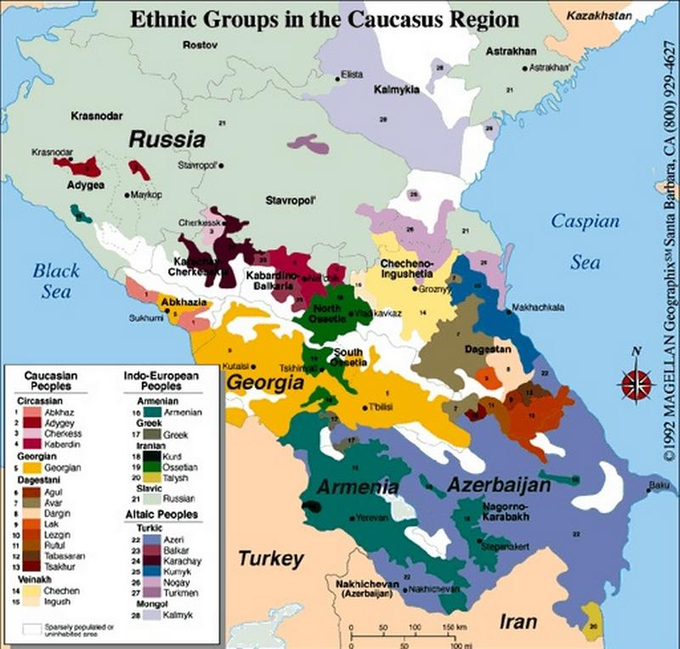
South Caucasus Confederation: Potential and Hurdles – AI Review gemini.google.com/share/c2a3… Prompt: “The idea of the Confederation of the South Caucasus States, with the coordination of the foreign and the domestic policies within the Western – Middle Eastern cultures, to which they belong.” The idea of a Confederation of the South Caucasus—uniting Armenia, Azerbaijan, and Georgia into a single geopolitical and economic bloc—is a fascinating thought experiment. It envisions transforming a historically fragmented, conflict-prone region into a unified bridge connecting Western and Middle Eastern spheres.
x.com/mikenov/status/2041503…
x.com/mikenov/status/2041492…— Michael Novakhov (@mikenov) Apr 8, 2026
#CIA #SouthCaucasus #WesternCulture
South Caucasus Confederation: Potential and Hurdles – AI Review gemini.google.com/share/c2a3…
Prompt: “The idea of the Confederation of the South Caucasus States, with the coordination of the foreign and the domestic policies within the Western – Middle Eastern cultures, to which they belong.”
The idea of a Confederation of the South Caucasus—uniting Armenia, Azerbaijan, and Georgia into a single geopolitical and economic bloc—is a fascinating thought experiment. It envisions transforming a historically fragmented, conflict-prone region into a unified bridge connecting Western and Middle Eastern spheres.While the concept holds immense theoretical promise, grounding it in current geopolitical reality reveals significant, arguably insurmountable, hurdles in the near term. Here is a breakdown of what that confederation would look like, the cultural dynamics at play, and the realities of coordinating such an alliance.
The Cultural Matrix: West Meets Middle East
The South Caucasus is one of the few places on Earth where Eastern European, Russian, Persian, Turkic, and broader Middle Eastern influences genuinely intersect. A confederation would have to manage and synthesize these identities:Georgia: Predominantly Orthodox Christian, Georgia heavily identifies with Western culture and has enshrined Euro-Atlantic integration (EU and NATO) into its constitution. Yet, its geography, cuisine, and history are deeply intertwined with the broader Middle East and Eurasia.
Armenia: An ancient Christian civilization with deep historical and diaspora ties to both the West (Europe/US) and the Middle East (Lebanon, Syria, Iran). It occupies a unique cultural space, maintaining close historical ties to its southern neighbor, Iran, while culturally identifying with European democratic ideals.
Azerbaijan: A secular, Shia Muslim, Turkic nation. It serves as a direct cultural, linguistic, and political bridge to Turkey and the broader Islamic world. It interacts with the West primarily through a pragmatic, transactional lens, driven by energy exports.The Theoretical Blueprint: Coordinating Policies
If a confederation were to exist, coordinating foreign and domestic policies would be its primary function.1. Unified Foreign Policy
A confederated South Caucasus would carry significantly more weight on the global stage. Instead of Russia, Iran, or Turkey playing the three nations against one another, a unified bloc could:
Control the “Middle Corridor” (the crucial trade route connecting Europe to Asia, bypassing Russia).
Dictate terms for energy transit (Caspian oil and gas to Europe).
Form a neutral buffer zone, explicitly rejecting foreign military bases to maintain sovereignty.2. Domestic Policy & Economic Integration
Domestically, the confederation would function similarly to the early European Union or the Gulf Cooperation Council:
Open Borders: Free movement of people, goods, and capital, supercharging regional GDP.
Resource Sharing: Combining Azerbaijan’s energy wealth, Georgia’s transit infrastructure and tourism, and Armenia’s tech sector and human capital.The Reality Check: Why It Remains a Distant Dream
While the idea is strategically sound on paper, any attempt at a confederation today collides with rigid realities. In fact, history shows us this: the Transcaucasian Democratic Federative Republic existed briefly in 1918 but collapsed in just over a month due to the exact same divergent interests we see today.1. Divergent Geopolitical Vectors
The three states are currently pulling in entirely different directions:
Georgia is pursuing Western integration (though currently experiencing intense domestic friction over its democratic trajectory).
Azerbaijan is strictly non-aligned, relying heavily on its “Shusha Declaration” alliance with Turkey and balancing relations with Russia.
Armenia is historically tied to Russia’s security umbrella (CSTO) but is actively trying to freeze those ties and pivot West, while simultaneously relying on Iran for a secure southern border. Coordinating a single foreign policy out of these conflicting survival strategies is currently impossible.
2. Incompatible Domestic SystemsA confederation requires a baseline of shared political values to function. Currently, there is a fundamental mismatch in governance. Georgia and Armenia operate as democracies (albeit flawed and volatile ones) with active opposition parties and civil societies. Azerbaijan operates under a heavily consolidated, dynastic authoritarian system. Integrating these domestic policies would require one side to completely change its system of government.
3. Unresolved Trauma and ConflictThe legacy of the Nagorno-Karabakh conflict, the displacement of populations, and the resulting deep-seated animosity between Armenia and Azerbaijan create a trust deficit that will take generations to heal. A confederation requires immense mutual trust, which simply does not exist right now.
Ultimately, while a full confederation is unfeasible today, a more grounded reality might be “sectoral cooperation”—starting with shared water management, unified railway networks, or energy grids.Given the complexity of this region, which aspect of a hypothetical confederation interests you most—the economic potential, the cultural integration, or the security implications?
Ai Overview
A Confederation of South Caucasus States (Armenia, Azerbaijan, Georgia) is a theoretical model for regional integration that aims to align foreign and domestic policies. This concept seeks to bridge Western democratic principles with the regional proximity and security concerns of the Middle East, though it faces severe geopolitical obstacles. [1, 2, 3, 4, 5]
Key Aspects of the Concept:Purpose: Proponents historically, such as during the early 1990s or occasionally in rhetoric, view this as a way to create stability, reduce influence from outside powers (particularly Russia), and create a unified entity that bridges East and West.
Cultural & Geopolitical Blend: The South Caucasus is increasingly linked to the Middle East, with energy security and geopolitical issues causing the two regions to operate more as a single strategic space.
Confederal Structure: This generally implies a voluntary association of sovereign states that creates a common, voluntary political framework to coordinate foreign policy, defense, and economic integration.
Challenges: The idea is currently considered unrealistic due to frozen conflicts (e.g., Nagorno-Karabakh), conflicting foreign policy orientations (e.g., Armenia with Russia/Iran vs. Georgia/Azerbaijan and West/Turkey), and the strengthening of competing regional initiatives, such as the 3+3 format. [1, 2, 6, 7, 8, 9, 10]Contextual Factors:
West-Middle East Positioning: The region is historically part of the Soviet sphere and currently serves as a conduit between European interests (democracy, energy) and Middle Eastern dynamics.
Alternative Regionalism: Rather than a unified confederation, the current trend is toward “multilateralism” via platforms like the 3+3 (Russia, Turkey, Iran, Armenia, Azerbaijan, Georgia) which often sidelines Western influence.
Past Initiatives: The concept shares some similarities with historic proposals for a Caucasian Confederation that sought to maintain independent, non-aligned regional stability. [3, 4, 5, 6, 7]A confederation would imply a significantly enhanced, formalized relationship far beyond current interactions. [2, 5]
AI responses may include mistakes.
[1] mei.edu/publication/ties-bin…
[2] rferl.org/a/What_Does_Confed…
[3] tandfonline.com/doi/full/10.…
[4] minorityrights.org/app/uploa…
[5] mei.edu/ar/publication/ties-…
[6] politicsgeo.com/south-caucas…
[7] visions.az/en/news/825/8a2ff…
[8] oaresource.library.carleton.…
[9] en.wikipedia.org/wiki/Confed…
[10] international-alert.org/app/…AI Mode
A Confederation of South Caucasus States (Armenia, Azerbaijan, Georgia) is a theoretical model for regional integration that aims to align foreign and domestic policies. This concept seeks to bridge Western democratic principles with the regional proximity and security concerns of the Middle East, though it faces severe geopolitical obstacles. [1, 2, 3, 4, 5]
Key Aspects of the Concept:Purpose: Proponents historically, such as during the early 1990s or occasionally in rhetoric, view this as a way to create stability, reduce influence from outside powers (particularly Russia), and create a unified entity that bridges East and West.
Cultural & Geopolitical Blend: The South Caucasus is increasingly linked to the Middle East, with energy security and geopolitical issues causing the two regions to operate more as a single strategic space.
Confederal Structure: This generally implies a voluntary association of sovereign states that creates a common, voluntary political framework to coordinate foreign policy, defense, and economic integration.
Challenges: The idea is currently considered unrealistic due to frozen conflicts (e.g., Nagorno-Karabakh), conflicting foreign policy orientations (e.g., Armenia with Russia/Iran vs. Georgia/Azerbaijan and West/Turkey), and the strengthening of competing regional initiatives, such as the 3+3 format. [1, 2, 6, 7, 8, 9, 10]Contextual Factors:
West-Middle East Positioning: The region is historically part of the Soviet sphere and currently serves as a conduit between European interests (democracy, energy) and Middle Eastern dynamics.
Alternative Regionalism: Rather than a unified confederation, the current trend is toward “multilateralism” via platforms like the 3+3 (Russia, Turkey, Iran, Armenia, Azerbaijan, Georgia) which often sidelines Western influence.
Past Initiatives: The concept shares some similarities with historic proposals for a Caucasian Confederation that sought to maintain independent, non-aligned regional stability. [3, 4, 5, 6, 7]A confederation would imply a significantly enhanced, formalized relationship far beyond current interactions. [2, 5]
AI responses may include mistakes.
[1] mei.edu/publication/ties-bin…
[2] rferl.org/a/What_Does_Confed…
[3] tandfonline.com/doi/full/10.…
[4] minorityrights.org/app/uploa…
[5] mei.edu/ar/publication/ties-…
[6] politicsgeo.com/south-caucas…
[7] visions.az/en/news/825/8a2ff…
[8] oaresource.library.carleton.…
[9] en.wikipedia.org/wiki/Confed…
[10] international-alert.org/app/…Pic.:
cmi.no/publications/8911-cha…— Michael Novakhov (@mikenov) Apr 7, 2026
#CIA #SouthCaucasus #WesternCulture
South Caucasus Confederation: Potential and Hurdles gemini.google.com/share/c2a3…
Prompt: “The idea of the Confederation of the South Caucasus States, with the coordination of the foreign and the domestic policies within the Western – Middle Eastern cultures, to which they belong.”
The idea of a Confederation of the South Caucasus—uniting Armenia, Azerbaijan, and Georgia into a single geopolitical and economic bloc—is a fascinating thought experiment. It envisions transforming a historically fragmented, conflict-prone region into a unified bridge connecting Western and Middle Eastern spheres.While the concept holds immense theoretical promise, grounding it in current geopolitical reality reveals significant, arguably insurmountable, hurdles in the near term. Here is a breakdown of what that confederation would look like, the cultural dynamics at play, and the realities of coordinating such an alliance.
The Cultural Matrix: West Meets Middle East
The South Caucasus is one of the few places on Earth where Eastern European, Russian, Persian, Turkic, and broader Middle Eastern influences genuinely intersect. A confederation would have to manage and synthesize these identities:Georgia: Predominantly Orthodox Christian, Georgia heavily identifies with Western culture and has enshrined Euro-Atlantic integration (EU and NATO) into its constitution. Yet, its geography, cuisine, and history are deeply intertwined with the broader Middle East and Eurasia.
Armenia: An ancient Christian civilization with deep historical and diaspora ties to both the West (Europe/US) and the Middle East (Lebanon, Syria, Iran). It occupies a unique cultural space, maintaining close historical ties to its southern neighbor, Iran, while culturally identifying with European democratic ideals.
Azerbaijan: A secular, Shia Muslim, Turkic nation. It serves as a direct cultural, linguistic, and political bridge to Turkey and the broader Islamic world. It interacts with the West primarily through a pragmatic, transactional lens, driven by energy exports.The Theoretical Blueprint: Coordinating Policies
If a confederation were to exist, coordinating foreign and domestic policies would be its primary function.1. Unified Foreign Policy
A confederated South Caucasus would carry significantly more weight on the global stage. Instead of Russia, Iran, or Turkey playing the three nations against one another, a unified bloc could:
Control the “Middle Corridor” (the crucial trade route connecting Europe to Asia, bypassing Russia).
Dictate terms for energy transit (Caspian oil and gas to Europe).
Form a neutral buffer zone, explicitly rejecting foreign military bases to maintain sovereignty.2. Domestic Policy & Economic Integration
Domestically, the confederation would function similarly to the early European Union or the Gulf Cooperation Council:
Open Borders: Free movement of people, goods, and capital, supercharging regional GDP.
Resource Sharing: Combining Azerbaijan’s energy wealth, Georgia’s transit infrastructure and tourism, and Armenia’s tech sector and human capital.The Reality Check: Why It Remains a Distant Dream
While the idea is strategically sound on paper, any attempt at a confederation today collides with rigid realities. In fact, history shows us this: the Transcaucasian Democratic Federative Republic existed briefly in 1918 but collapsed in just over a month due to the exact same divergent interests we see today.1. Divergent Geopolitical Vectors
The three states are currently pulling in entirely different directions:
Georgia is pursuing Western integration (though currently experiencing intense domestic friction over its democratic trajectory).
Azerbaijan is strictly non-aligned, relying heavily on its “Shusha Declaration” alliance with Turkey and balancing relations with Russia.
Armenia is historically tied to Russia’s security umbrella (CSTO) but is actively trying to freeze those ties and pivot West, while simultaneously relying on Iran for a secure southern border. Coordinating a single foreign policy out of these conflicting survival strategies is currently impossible.
2. Incompatible Domestic SystemsA confederation requires a baseline of shared political values to function. Currently, there is a fundamental mismatch in governance. Georgia and Armenia operate as democracies (albeit flawed and volatile ones) with active opposition parties and civil societies. Azerbaijan operates under a heavily consolidated, dynastic authoritarian system. Integrating these domestic policies would require one side to completely change its system of government.
3. Unresolved Trauma and ConflictThe legacy of the Nagorno-Karabakh conflict, the displacement of populations, and the resulting deep-seated animosity between Armenia and Azerbaijan create a trust deficit that will take generations to heal. A confederation requires immense mutual trust, which simply does not exist right now.
Ultimately, while a full confederation is unfeasible today, a more grounded reality might be “sectoral cooperation”—starting with shared water management, unified railway networks, or energy grids.Given the complexity of this region, which aspect of a hypothetical confederation interests you most—the economic potential, the cultural integration, or the security implications?
Ai Overview
A Confederation of South Caucasus States (Armenia, Azerbaijan, Georgia) is a theoretical model for regional integration that aims to align foreign and domestic policies. This concept seeks to bridge Western democratic principles with the regional proximity and security concerns of the Middle East, though it faces severe geopolitical obstacles. [1, 2, 3, 4, 5]
Key Aspects of the Concept:Purpose: Proponents historically, such as during the early 1990s or occasionally in rhetoric, view this as a way to create stability, reduce influence from outside powers (particularly Russia), and create a unified entity that bridges East and West.
Cultural & Geopolitical Blend: The South Caucasus is increasingly linked to the Middle East, with energy security and geopolitical issues causing the two regions to operate more as a single strategic space.
Confederal Structure: This generally implies a voluntary association of sovereign states that creates a common, voluntary political framework to coordinate foreign policy, defense, and economic integration.
Challenges: The idea is currently considered unrealistic due to frozen conflicts (e.g., Nagorno-Karabakh), conflicting foreign policy orientations (e.g., Armenia with Russia/Iran vs. Georgia/Azerbaijan and West/Turkey), and the strengthening of competing regional initiatives, such as the 3+3 format. [1, 2, 6, 7, 8, 9, 10]Contextual Factors:
West-Middle East Positioning: The region is historically part of the Soviet sphere and currently serves as a conduit between European interests (democracy, energy) and Middle Eastern dynamics.
Alternative Regionalism: Rather than a unified confederation, the current trend is toward “multilateralism” via platforms like the 3+3 (Russia, Turkey, Iran, Armenia, Azerbaijan, Georgia) which often sidelines Western influence.
Past Initiatives: The concept shares some similarities with historic proposals for a Caucasian Confederation that sought to maintain independent, non-aligned regional stability. [3, 4, 5, 6, 7]A confederation would imply a significantly enhanced, formalized relationship far beyond current interactions. [2, 5]
AI responses may include mistakes.
[1] mei.edu/publication/ties-bin…
[2] rferl.org/a/What_Does_Confed…
[3] tandfonline.com/doi/full/10.…
[4] minorityrights.org/app/uploa…
[5] mei.edu/ar/publication/ties-…
[6] politicsgeo.com/south-caucas…
[7] visions.az/en/news/825/8a2ff…
[8] oaresource.library.carleton.…
[9] en.wikipedia.org/wiki/Confed…
[10] international-alert.org/app/…AI Mode
A Confederation of South Caucasus States (Armenia, Azerbaijan, Georgia) is a theoretical model for regional integration that aims to align foreign and domestic policies. This concept seeks to bridge Western democratic principles with the regional proximity and security concerns of the Middle East, though it faces severe geopolitical obstacles. [1, 2, 3, 4, 5]
Key Aspects of the Concept:Purpose: Proponents historically, such as during the early 1990s or occasionally in rhetoric, view this as a way to create stability, reduce influence from outside powers (particularly Russia), and create a unified entity that bridges East and West.
Cultural & Geopolitical Blend: The South Caucasus is increasingly linked to the Middle East, with energy security and geopolitical issues causing the two regions to operate more as a single strategic space.
Confederal Structure: This generally implies a voluntary association of sovereign states that creates a common, voluntary political framework to coordinate foreign policy, defense, and economic integration.
Challenges: The idea is currently considered unrealistic due to frozen conflicts (e.g., Nagorno-Karabakh), conflicting foreign policy orientations (e.g., Armenia with Russia/Iran vs. Georgia/Azerbaijan and West/Turkey), and the strengthening of competing regional initiatives, such as the 3+3 format. [1, 2, 6, 7, 8, 9, 10]Contextual Factors:
West-Middle East Positioning: The region is historically part of the Soviet sphere and currently serves as a conduit between European interests (democracy, energy) and Middle Eastern dynamics.
Alternative Regionalism: Rather than a unified confederation, the current trend is toward “multilateralism” via platforms like the 3+3 (Russia, Turkey, Iran, Armenia, Azerbaijan, Georgia) which often sidelines Western influence.
Past Initiatives: The concept shares some similarities with historic proposals for a Caucasian Confederation that sought to maintain independent, non-aligned regional stability. [3, 4, 5, 6, 7]A confederation would imply a significantly enhanced, formalized relationship far beyond current interactions. [2, 5]
AI responses may include mistakes.
[1] mei.edu/publication/ties-bin…
[2] rferl.org/a/What_Does_Confed…
[3] tandfonline.com/doi/full/10.…
[4] minorityrights.org/app/uploa…
[5] mei.edu/ar/publication/ties-…
[6] politicsgeo.com/south-caucas…
[7] visions.az/en/news/825/8a2ff…
[8] oaresource.library.carleton.…
[9] en.wikipedia.org/wiki/Confed…
[10] international-alert.org/app/…Pic.:
cmi.no/publications/8911-cha…— Michael Novakhov (@mikenov) Apr 7, 2026
World News – 2024 – Video Playlist | Video Playlists | Sites: | newsandtimes.org | links-newsandtimes.com | worldwebtimes.com | southcaucasusnews.com | russianworld.net | jossica.com | octobersurprise2016.org | bklyntimes.com | oceanavenuenews.com | fbireform.com | bloggersunite.net | octobersurprise-2024.org | Trump-News.org | Audio-Posts.com | Bklyn-NY.com | Posts Review – newsandtimes.org | Capitol-Riot.com |
The News And Times Review – NewsAndTimes.org