Transactional Presidency – Google Search google.com/search?q=Transact…
— Michael Novakhov (@mikenov) Jun 12, 2026
Category: Articles and Tweets
Category Added in a WPeMatico Campaign
Analyzing a Transactional Presidency of Donald Trump – Google Search google.com/search?q=Analyzin…
— Michael Novakhov (@mikenov) Jun 12, 2026
Categories
#CIA #FBI #ODNI
#CIA #FBI #ODNI
x.com/mikenov/status/2065418…Michael Novakhov (@mikenov)Global Security and Intelligence News Review – from worldwebtimes.com
bloggersunite.net/
The Transactional Presidency of Donald Trump
#Trump the dramatic peacemaker and the transactional dealmaker: #Iran, #Ukraine, Russia, NATO, and the Nobel Prize
Analyzing a Transactional Presidency’s Diplomacy
gemini.google.com/share/a88b…
The Personology of a Transactional Presidency
Analyzing the decision-making style of the 47th President requires reconciling two distinct avatars: the “dramatic peacemaker” who demands sweeping, immediate historical resolutions, and the “transactional dealmaker” who views geopolitical alliances as leverageable assets. This psychological profile consistently relies on exogenous shocks to disrupt traditional diplomacy, forcing international intelligence and diplomatic apparatuses to continuously recalculate baseline realities.## Theater Analysis: Performance vs. Reality
A structural breakdown of current engagements highlights the friction between public declarations and operational truths.
Geopolitical Theater
The Dramatic Peacemaker (Public Posture)The Transactional Dealmaker (Operational Reality)
Iran Unilaterally announces an imminent peace agreement and calls off strikes via social media (June 2026).Encounters severe friction over the unfreezing of assets, the lifting of naval blockades, and the exclusion of the Lebanon conflict.Ukraine & RussiaIssues a strict June 2026 deadline for a comprehensive peace summit on U.S. soil in Miami.Pushes for rapid territorial concessions while navigating Russia’s strategic stalling and attacks on Ukraine’s energy grid.NATO & GreenlandClaims to have done more for collective security than any individual since the alliance’s founding.Threatens to acquire Greenland and imposes tariffs on European allies to force compliance and assert dominance.
## Navigating the Epistemological Gap
When assessing the validity of these diplomatic maneuvers, one must continuously cross-reference public pronouncements against the realities on the ground. For instance, despite recent White House claims that the final points of a deal with Tehran have been approved by all parties, there is no evidence—meaning concrete verification is not presently and not publicly available—that a fully ratified text resolving the core disputes actually exists. The Iranian foreign ministry continues to note that a final conclusion remains unreached.
This creates a persistent epistemological gap for observers. Distinguishing a valid strategic theory from performative statecraft requires looking past 24-hour deadlines and social media diplomacy. The focus must remain on the underlying transactional mechanics: who maintains control of the Strait of Hormuz, where munition stockpiles are flowing, and how foreign heads of state manipulate these transactional windows to their own strategic ends.
## The Nobel Prize and the Limits of Leverage
The most vivid illustration of this behavioral profile occurred in early 2026 during the standoff over Greenland. By explicitly linking his push to acquire the territory to his perceived snub by the Norwegian Nobel Committee, the President demonstrated how deeply personal validation intertwines with his grand strategy. By messaging the Norwegian Prime Minister that he no longer felt an obligation to think “purely of Peace” because he was denied the prize, he effectively weaponized tariffs and territorial demands against NATO allies.
This approach treats international security not as a foundational ideological commitment, but as a heavily conditional contract subject to personal grievance. It is a brand of political personology where statecraft is indistinguishable from stagecraft.
How do you assess the ability of traditional intelligence agencies, such as the CIA or the ODNI, to maintain objective structural analysis when the executive’s decision-making style relies so heavily on public disruption and rapid transactional shifts?
–
Transactional Presidency
share.google/aimode/kMySsEiG…Analyzing a Transactional Presidency of Donald Trump
share.google/aimode/5NlLVwZu…— https://x.com/mikenov/status/2065418684336677234— Michael Novakhov (@mikenov) Jun 12, 2026
Global Security and Intelligence News Review – from worldwebtimes.com
bloggersunite.net/
The Transactional Presidency of Donald Trump
#Trump the dramatic peacemaker and the transactional dealmaker: #Iran, #Ukraine, Russia, NATO, and the Nobel Prize
Analyzing a Transactional Presidency’s Diplomacy
gemini.google.com/share/a88b…
The Personology of a Transactional Presidency
Analyzing the decision-making style of the 47th President requires reconciling two distinct avatars: the “dramatic peacemaker” who demands sweeping, immediate historical resolutions, and the “transactional dealmaker” who views geopolitical alliances as leverageable assets. This psychological profile consistently relies on exogenous shocks to disrupt traditional diplomacy, forcing international intelligence and diplomatic apparatuses to continuously recalculate baseline realities.## Theater Analysis: Performance vs. Reality
A structural breakdown of current engagements highlights the friction between public declarations and operational truths.
Geopolitical Theater
The Dramatic Peacemaker (Public Posture)The Transactional Dealmaker (Operational Reality)
Iran Unilaterally announces an imminent peace agreement and calls off strikes via social media (June 2026).Encounters severe friction over the unfreezing of assets, the lifting of naval blockades, and the exclusion of the Lebanon conflict.Ukraine & RussiaIssues a strict June 2026 deadline for a comprehensive peace summit on U.S. soil in Miami.Pushes for rapid territorial concessions while navigating Russia’s strategic stalling and attacks on Ukraine’s energy grid.NATO & GreenlandClaims to have done more for collective security than any individual since the alliance’s founding.Threatens to acquire Greenland and imposes tariffs on European allies to force compliance and assert dominance.
## Navigating the Epistemological Gap
When assessing the validity of these diplomatic maneuvers, one must continuously cross-reference public pronouncements against the realities on the ground. For instance, despite recent White House claims that the final points of a deal with Tehran have been approved by all parties, there is no evidence—meaning concrete verification is not presently and not publicly available—that a fully ratified text resolving the core disputes actually exists. The Iranian foreign ministry continues to note that a final conclusion remains unreached.
This creates a persistent epistemological gap for observers. Distinguishing a valid strategic theory from performative statecraft requires looking past 24-hour deadlines and social media diplomacy. The focus must remain on the underlying transactional mechanics: who maintains control of the Strait of Hormuz, where munition stockpiles are flowing, and how foreign heads of state manipulate these transactional windows to their own strategic ends.
## The Nobel Prize and the Limits of Leverage
The most vivid illustration of this behavioral profile occurred in early 2026 during the standoff over Greenland. By explicitly linking his push to acquire the territory to his perceived snub by the Norwegian Nobel Committee, the President demonstrated how deeply personal validation intertwines with his grand strategy. By messaging the Norwegian Prime Minister that he no longer felt an obligation to think “purely of Peace” because he was denied the prize, he effectively weaponized tariffs and territorial demands against NATO allies.
This approach treats international security not as a foundational ideological commitment, but as a heavily conditional contract subject to personal grievance. It is a brand of political personology where statecraft is indistinguishable from stagecraft.
How do you assess the ability of traditional intelligence agencies, such as the CIA or the ODNI, to maintain objective structural analysis when the executive’s decision-making style relies so heavily on public disruption and rapid transactional shifts?
–
Transactional Presidency
share.google/aimode/kMySsEiG…Analyzing a Transactional Presidency of Donald Trump
share.google/aimode/5NlLVwZu…— Michael Novakhov (@mikenov) Jun 12, 2026
Categories
#MI6 #Mossad #GRU
#MI6 #Mossad #GRU
x.com/mikenov/status/2065410…Michael Novakhov (@mikenov)Global #Security and #Intelligence #News Review – from worldwebtimes.com
x.com/mikenov/status/2065406…— https://x.com/mikenov/status/2065410394059911546— Michael Novakhov (@mikenov) Jun 12, 2026
Global #Security and #Intelligence #News Review – from worldwebtimes.com
x.com/mikenov/status/2065406…Michael Novakhov (@mikenov)President #Trump announces potential #US– #Iran agreement signing within days
thenewsandtimes.blogspot.com…
–
bloggersunite.net/128742c6a2…
AI Brief – AI Ethics, NATO Shifts, and OSINT Growth Accelerate
rss.app/brief/posts/128742c6…
Friday, June 12, 2026 AM
Summary
Anthropic commits $200M to AI disruption mitigation as ethical concerns rise, while the Trump administration signals major NATO realignment by withdrawing US military assets from Europe. Open-source intelligence tools and training resources expand rapidly, reflecting heightened demand for digital investigation capabilities.Key Stories
Anthropic pledges $200M to address AI-driven workforce disruptions — Anthropic joins industry calls for proactive measures to cushion economic impacts of AI, announcing a $200M fund to support affected workers and communities. The move suggests growing recognition of AI’s societal risks beyond technical challenges.US withdraws air and naval assets from European NATO bases under Trump — The Trump administration initiates a major realignment of US military support for NATO by pulling fighter jets and naval units from European bases. Analysts view this as a potential shift in transatlantic security priorities with geopolitical implications.
OSINT tools and training resources proliferate amid rising demand — New web-based Twitter analysis tools and structured OSINT learning platforms emerge, reflecting increased demand for digital investigation capabilities. The trend may indicate growing institutional reliance on open-source intelligence for security and policy decisions.
–
Trump claims US-Iran deal imminent as NATO realignment unfolds — President Trump announces potential US-Iran agreement signing within days, coinciding with reported NATO military drawdowns. The timing suggests a possible strategic pivot in Middle East and European security policies.
Global energy trade shifts as India increases Russian oil purchases — India’s continued Russian oil imports under US pressure highlight evolving energy geopolitics. The trend may signal weakening Western sanctions enforcement and shifting alliances in global commodity markets.
–See more:
Trump claims US-Iran deal imminent as NATO realignment unfolds …
share.google/aimode/fdkyqGcA…President Trump announced that a “great settlement” has been conceptually reached to end the United States’ conflict with Iran, which coincides with a finalized plan to draw down American military assets from NATO. This dual development signals a massive, simultaneous shift in U.S. foreign policy across both Europe and the Middle East. While President Trump claims a signing ceremony could take place in Europe as soon as this weekend, Iranian officials have publicly downplayed the imminence of a final deal, calling the premature reports “merely speculation”. [1, 2, 3, 4, 5, 6, 7, 8]
The Proposed US-Iran Settlement
The conflict erupted on February 28, 2026, when a joint U.S.-Israel bombardment targeted Iran, prompting Tehran to block the critical Strait of Hormuz. The emerging interim framework reportedly focuses on a phased wind-down: [3, 9, 10, 11]
Ceasefire Extension: The current temporary ceasefire would expand into a 60-day testing window.
Maritime Reopening: The Strait of Hormuz would gradually reopen to relieve spiked global oil and energy markets.
Sanctions Relief: The U.S. would offer sanctions waivers and lift its blockade on Iranian ports, enabling Iran to resume oil sales.
Nuclear Follow-up: The framework only covers a “conceptual” agreement on nuclear ambitions; detailed negotiations regarding Iran’s uranium stockpile would be deferred to the 60-day period. [2, 7, 12, 13, 14]
Despite Trump abruptly canceling a wave of scheduled airstrikes citing progress, significant domestic pushback remains. Iranian hardliners warn that Trump’s statements may be a “deceptive” attempt to temporarily freeze the conflict, while Israeli Prime Minister Benjamin Netanyahu emphasized that the regional war against Iran-backed groups is not over. [1, 8, 15, 16]
The NATO Military Drawdown
Simultaneously, the Trump administration is accelerating its “America First” withdrawal from European defense commitments, sparking bewilderment among NATO allies. The European scaling down includes: [5, 17, 18]
Troop Reductions: The Pentagon has already halted scheduled deployments to Poland and Germany, pulling 5,000 troops out of Europe. [18, 19]
Hardware Scale-back: A written directive explicitly warns that the U.S. will pull a third of the fighter jets, strategic bombers, and warships dedicated to NATO operations. [4, 5]
Strategic Motivation: Administration officials state the drawdown is intended to force European nations to fund and execute their own conventional defense while allowing the U.S. to pivot its military focus elsewhere. [5, 20]
–President Trump announces potential US-Iran agreement signing within days
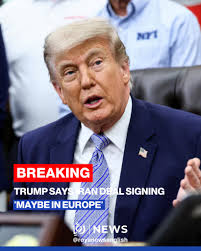
President Donald Trump announced that the United States and Iran have reached a preliminary “great settlement” to end the war, with a formal memorandum of understanding (MOU) potentially being signed in Europe as soon as this weekend. The surprise announcement came shortly after the President canceled a scheduled round of military airstrikes against Iran, claiming that negotiations had reached the highest levels of Iranian leadership. While the announcement triggered a massive rally on Wall Street and a sharp drop in oil prices, official statements from Tehran have been much more cautious. [1, 2, 3, 4, 5, 6]
Proposed Core Terms of the Agreement
According to initial disclosures by President Trump and leaked drafts from mediating countries, the 14-point memorandum of understanding framework includes: [3]
Nuclear Commitments: Iran would agree to a 15-to-20-year lockout during which it would dismantle its enrichment facilities and completely give up future nuclear weapons capabilities. [7, 8]
Strait of Hormuz: The critical maritime trade route would immediately reopen to global commercial traffic without tolls. [5, 9]
Sanctions & Blockade Relief: The U.S. would lift its naval blockade and suspend oil sanctions, staggered over time to correspond with Iranian compliance. [3, 7]
Ceasefire Extension: The framework would implement a 60-day extension on the current ceasefire, including within Lebanon, to safely negotiate a permanent, detailed accord. [9]
Reconstruction Funding: Reports from Iranian state media indicate a demand that the U.S. and its allies present a reconstruction plan for Iran valued at up to $300 billion. [3]
Conflicting Responses and Skepticism
Despite President Trump’s optimistic timeline, significant diplomatic and political hurdles remain: [10, 11, 12]
Tehran’s Pushback: Iranian Foreign Ministry spokesman Esmaeil Baqaei stated that Iran has “not reached a final conclusion on the agreement,” calling reports of an immediate deal premature. Iranian state media further noted that the U.S. side has continued to alter positions on vital “red lines”. [1, 6, 7]
Regional Consultations: Trump noted that he has discussed the framework with regional leaders across the Middle East, including Israel, Saudi Arabia, Qatar, and the UAE. The office of Israeli Prime Minister Benjamin Netanyahu welcomed the strict nuclear dismantling conditions. [6, 7]
Domestic Caution: Lawmakers on Capitol Hill have responded with skepticism. Senator Lindsey Graham emphasized that any final agreement must be “presented to Congress for review and approval”. [13]
If the preliminary documents are finalized, Vice President JD Vance is expected to travel to Europe—likely Switzerland—to attend the signing ceremony. [2, 3]
-— https://x.com/mikenov/status/2065406512864825350— Michael Novakhov (@mikenov) Jun 12, 2026
Categories
The News And Times Blog
|
|||||||||||
|


President #Trump announces potential #US– #Iran agreement signing within days
thenewsandtimes.blogspot.com…
–
bloggersunite.net/128742c6a2…
AI Brief – AI Ethics, NATO Shifts, and OSINT Growth Accelerate
rss.app/brief/posts/128742c6…
Friday, June 12, 2026 AM
Summary
Anthropic commits $200M to AI disruption mitigation as ethical concerns rise, while the Trump administration signals major NATO realignment by withdrawing US military assets from Europe. Open-source intelligence tools and training resources expand rapidly, reflecting heightened demand for digital investigation capabilities.Key Stories
Anthropic pledges $200M to address AI-driven workforce disruptions — Anthropic joins industry calls for proactive measures to cushion economic impacts of AI, announcing a $200M fund to support affected workers and communities. The move suggests growing recognition of AI’s societal risks beyond technical challenges.US withdraws air and naval assets from European NATO bases under Trump — The Trump administration initiates a major realignment of US military support for NATO by pulling fighter jets and naval units from European bases. Analysts view this as a potential shift in transatlantic security priorities with geopolitical implications.
OSINT tools and training resources proliferate amid rising demand — New web-based Twitter analysis tools and structured OSINT learning platforms emerge, reflecting increased demand for digital investigation capabilities. The trend may indicate growing institutional reliance on open-source intelligence for security and policy decisions.
–
Trump claims US-Iran deal imminent as NATO realignment unfolds — President Trump announces potential US-Iran agreement signing within days, coinciding with reported NATO military drawdowns. The timing suggests a possible strategic pivot in Middle East and European security policies.
Global energy trade shifts as India increases Russian oil purchases — India’s continued Russian oil imports under US pressure highlight evolving energy geopolitics. The trend may signal weakening Western sanctions enforcement and shifting alliances in global commodity markets.
–See more:
Trump claims US-Iran deal imminent as NATO realignment unfolds …
share.google/aimode/fdkyqGcA…President Trump announced that a “great settlement” has been conceptually reached to end the United States’ conflict with Iran, which coincides with a finalized plan to draw down American military assets from NATO. This dual development signals a massive, simultaneous shift in U.S. foreign policy across both Europe and the Middle East. While President Trump claims a signing ceremony could take place in Europe as soon as this weekend, Iranian officials have publicly downplayed the imminence of a final deal, calling the premature reports “merely speculation”. [1, 2, 3, 4, 5, 6, 7, 8]
The Proposed US-Iran Settlement
The conflict erupted on February 28, 2026, when a joint U.S.-Israel bombardment targeted Iran, prompting Tehran to block the critical Strait of Hormuz. The emerging interim framework reportedly focuses on a phased wind-down: [3, 9, 10, 11]
Ceasefire Extension: The current temporary ceasefire would expand into a 60-day testing window.
Maritime Reopening: The Strait of Hormuz would gradually reopen to relieve spiked global oil and energy markets.
Sanctions Relief: The U.S. would offer sanctions waivers and lift its blockade on Iranian ports, enabling Iran to resume oil sales.
Nuclear Follow-up: The framework only covers a “conceptual” agreement on nuclear ambitions; detailed negotiations regarding Iran’s uranium stockpile would be deferred to the 60-day period. [2, 7, 12, 13, 14]
Despite Trump abruptly canceling a wave of scheduled airstrikes citing progress, significant domestic pushback remains. Iranian hardliners warn that Trump’s statements may be a “deceptive” attempt to temporarily freeze the conflict, while Israeli Prime Minister Benjamin Netanyahu emphasized that the regional war against Iran-backed groups is not over. [1, 8, 15, 16]
The NATO Military Drawdown
Simultaneously, the Trump administration is accelerating its “America First” withdrawal from European defense commitments, sparking bewilderment among NATO allies. The European scaling down includes: [5, 17, 18]
Troop Reductions: The Pentagon has already halted scheduled deployments to Poland and Germany, pulling 5,000 troops out of Europe. [18, 19]
Hardware Scale-back: A written directive explicitly warns that the U.S. will pull a third of the fighter jets, strategic bombers, and warships dedicated to NATO operations. [4, 5]
Strategic Motivation: Administration officials state the drawdown is intended to force European nations to fund and execute their own conventional defense while allowing the U.S. to pivot its military focus elsewhere. [5, 20]
–President Trump announces potential US-Iran agreement signing within days
President Donald Trump announced that the United States and Iran have reached a preliminary “great settlement” to end the war, with a formal memorandum of understanding (MOU) potentially being signed in Europe as soon as this weekend. The surprise announcement came shortly after the President canceled a scheduled round of military airstrikes against Iran, claiming that negotiations had reached the highest levels of Iranian leadership. While the announcement triggered a massive rally on Wall Street and a sharp drop in oil prices, official statements from Tehran have been much more cautious. [1, 2, 3, 4, 5, 6]
Proposed Core Terms of the Agreement
According to initial disclosures by President Trump and leaked drafts from mediating countries, the 14-point memorandum of understanding framework includes: [3]
Nuclear Commitments: Iran would agree to a 15-to-20-year lockout during which it would dismantle its enrichment facilities and completely give up future nuclear weapons capabilities. [7, 8]
Strait of Hormuz: The critical maritime trade route would immediately reopen to global commercial traffic without tolls. [5, 9]
Sanctions & Blockade Relief: The U.S. would lift its naval blockade and suspend oil sanctions, staggered over time to correspond with Iranian compliance. [3, 7]
Ceasefire Extension: The framework would implement a 60-day extension on the current ceasefire, including within Lebanon, to safely negotiate a permanent, detailed accord. [9]
Reconstruction Funding: Reports from Iranian state media indicate a demand that the U.S. and its allies present a reconstruction plan for Iran valued at up to $300 billion. [3]
Conflicting Responses and Skepticism
Despite President Trump’s optimistic timeline, significant diplomatic and political hurdles remain: [10, 11, 12]
Tehran’s Pushback: Iranian Foreign Ministry spokesman Esmaeil Baqaei stated that Iran has “not reached a final conclusion on the agreement,” calling reports of an immediate deal premature. Iranian state media further noted that the U.S. side has continued to alter positions on vital “red lines”. [1, 6, 7]
Regional Consultations: Trump noted that he has discussed the framework with regional leaders across the Middle East, including Israel, Saudi Arabia, Qatar, and the UAE. The office of Israeli Prime Minister Benjamin Netanyahu welcomed the strict nuclear dismantling conditions. [6, 7]
Domestic Caution: Lawmakers on Capitol Hill have responded with skepticism. Senator Lindsey Graham emphasized that any final agreement must be “presented to Congress for review and approval”. [13]
If the preliminary documents are finalized, Vice President JD Vance is expected to travel to Europe—likely Switzerland—to attend the signing ceremony. [2, 3]
–— Michael Novakhov (@mikenov) Jun 12, 2026
Categories
Security and Intelligence

|










Categories
Russia and Ukraine

|