
Category: Michael Novakhov – SharedNewsLinks℠
Category Added in a WPeMatico Campaign
 |
Michael_Novakhov shared this story from  The Times of Israel. The Times of Israel.
|
A key Israel Defense Forces officer raised concerns and opposition to approving the Supernova music festival, which he saw as a “needless security risk,” but was told to authorize it, according to a new report.
Some 360 people were killed by Hamas terrorists at the rave on October 7, and dozens more were assaulted and taken hostage. Some 3,000 terrorists burst across the border from the Gaza Strip by land, air and sea that day, killing around 1,200 people and seizing over 240 hostages of all ages under the cover of a deluge of thousands of rockets fired at Israeli towns and cities.
Haaretz reported Monday that the Gaza Division’s operations officer, Lt. Col. Sahar Fogel, was unhappy about the event being held so close to the Strip, and his concerns were supported by other officers. The worries reportedly did not stem from fears of a terrorist incursion, but rather the threat of rocket and mortar fire from Gaza.
There have been multiple reports that warnings from surveillance and intelligence sources of a potential attack were ignored ahead of October 7. The report said it was unclear if Fogel knew of the other warnings.
Despite his objections, Fogel was told to approve the Nova festival, the report said, detailing concerns of legal difficulties if the festival were not approved, as well as a request to combine the authorization with that of another festival, held at the same venue on October 5-6.
Get The Times of Israel’s Daily Edition
by email and never miss our top stories
By signing up, you agree to the terms
The report said that a special alert area was established in the Iron Dome system, known as a “polygon,” to give extra protection to the festival venue. However, it said, security forces were aware that safe spaces could not be provided for the thousands of partygoers.
The Eshkol Regional Council also opposed the rave, believing that it would be a public nuisance.
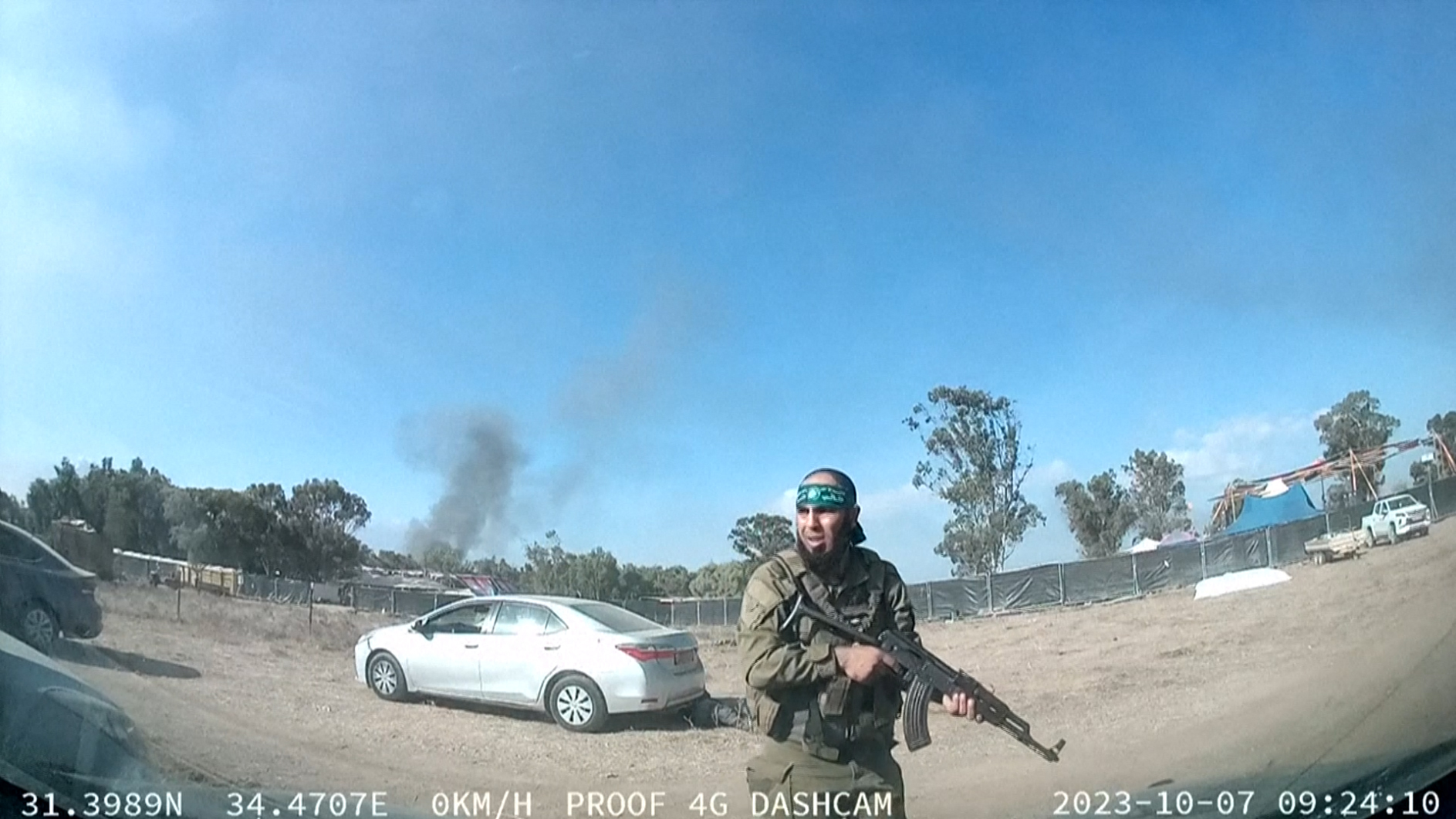
FILE – An armed Hamas terrorist walking around the Supernova music festival, near Kibbutz Re’im in the Negev desert in southern Israel on October 7, where terrorists from Gaza massacred hundreds of people. (South First Responders / AFP)
Responding to the report, the IDF said that the army would “conduct a detailed and in-depth investigation into the matter once the operational situation allows, and will make its findings public.”
Last week, State Comptroller Matanyahu Englman leveled harsh criticism over the breakdown of Israel’s defenses on October 7, promising that “the massive failure” of that day would eventually reviewed by his office.
“On October 7, the borders of the State of Israel were breached, and cursed Hamas terrorists did whatever they liked in towns of this country. Thousands of Israeli citizens were slaughtered, raped and kidnapped, and were left to their fate on Simchat Torah,” Englman told the Knesset Finance Committee, pointing to a report his office released the previous day about the government’s failure to address civilians needs on the home front.
Englman said his review of the functioning of the security services surrounding the events of October 7 would begin when developments in the ongoing war with Hamas in Gaza allow it, stating that it would be impossible to conduct this probe while the IDF is carrying out intense military operations.
Earlier in December, relatives of those murdered by Hamas terrorists at two raves on October 7 — the Supernova festival and the smaller, nearby Psyduck festival — announced that they had formed a lobby to address their grievances with the government.

FILE – Erez Zarfati, whose daughter Ron Zarfati was murdered at the Nova music festival, speaks in Tel Aviv on December 11, 2023, at a launch event for a group bringing together families of partygoers killed or kidnapped on October 7. (Avshalom Sassoni/Flash90)
Representatives of some 200 families that lost loved ones at the parties met at the David Intercontinental Hotel in Tel Aviv, launching a joint effort to advocate for recognition of their unique plight amid alleged governmental negligence.
The forum calls for the immediate establishment of an independent committee of inquiry to investigate negligence leading up to the massacre, claiming security forces failed to consider all potential dangers when allowing the raves to take place a mere five kilometers from the Gaza Strip.
Jeremy Sharon contributed to this report.
You’re a dedicated reader

We’re really pleased that you’ve read 4 Times of Israel articles in the past month.
That’s why we started the Times of Israel eleven years ago – to provide discerning readers like you with must-read coverage of Israel and the Jewish world.
So now we have a request. Unlike other news outlets, we haven’t put up a paywall. But as the journalism we do is costly, we invite readers for whom The Times of Israel has become important to help support our work by joining The Times of Israel Community.
For as little as $6 a month you can help support our quality journalism while enjoying The Times of Israel AD-FREE, as well as accessing exclusive content available only to Times of Israel Community members.
Thank you,
David Horovitz, Founding Editor of The Times of Israel
Join Our Community
Join Our Community
Already a member? Sign in to stop seeing this
|
Michael_Novakhov shared this story from  The Times of Israel. The Times of Israel.
|
This Editor’s Note was sent out earlier Wednesday in ToI’s weekly update email to members of the Times of Israel Community. To receive these Editor’s Notes as they’re released, join the ToI Community here.
Maj. Gen. (res) Tamir Hayman spent 34 years in the IDF, culminating in more than three years as head of Military Intelligence in 2018-21. He is now the head of the Institute for National Security Studies at Tel Aviv University, a leading think tank, and has been a prominent, no-nonsense Hebrew media analyst of the cataclysmic events of October 7 and the progress of Israel’s military campaign, since that darkest of days, to dismantle Hamas in Gaza.
In columns these past two months, I have tried to convey a sense of how Israel is grappling militarily, politically, socially, and psychologically with the repercussions of the savage Hamas-led slaughter of so many of our people — the gravest event our modern state has had to deal with. On the military front, I have been to various briefings, seen a little for myself, and been helped especially by The Times of Israel’s indefatigable military reporter Emanuel Fabian. But I thought Hayman might be able to fill in some gaps on key questions.
What follows is an edited transcript, translated from the Hebrew.
1. We’ve heard dark, vague talk of still greater ambitions that Hamas had for October 7. What else did Hamas plan that day?
Get The Times of Israel’s Daily Edition
by email and never miss our top stories
By signing up, you agree to the terms
It’s hard to imagine a graver event than what happened. It’s astonishingly terrible, the worst thing that has happened. Beyond that? Well, if they hadn’t been stopped at several key junctions in Israel, they would have gone deeper and wider.
Also, if they had managed to capture the headquarters of the Gaza Division, at the Re’im base, our security situation would have been even more complex than it was. But they didn’t get into the HQ, mainly thanks to the heroism of the Bedouin trackers who were there. And there were other sensitive areas that they were not able to get to.
2. We’ve also heard that Hamas did not directly coordinate, at least on the timing, with Iran and Hezbollah. What would Iran and Hezbollah have done if Hamas had told them ahead of time?
If there had been wider coordination, we might have caught onto it. We didn’t because they kept the secret to a very centralized, limited group.
If they had done that coordination, there’s a big question as to whether Iran and Hezbollah would have agreed to participate. I don’t know.
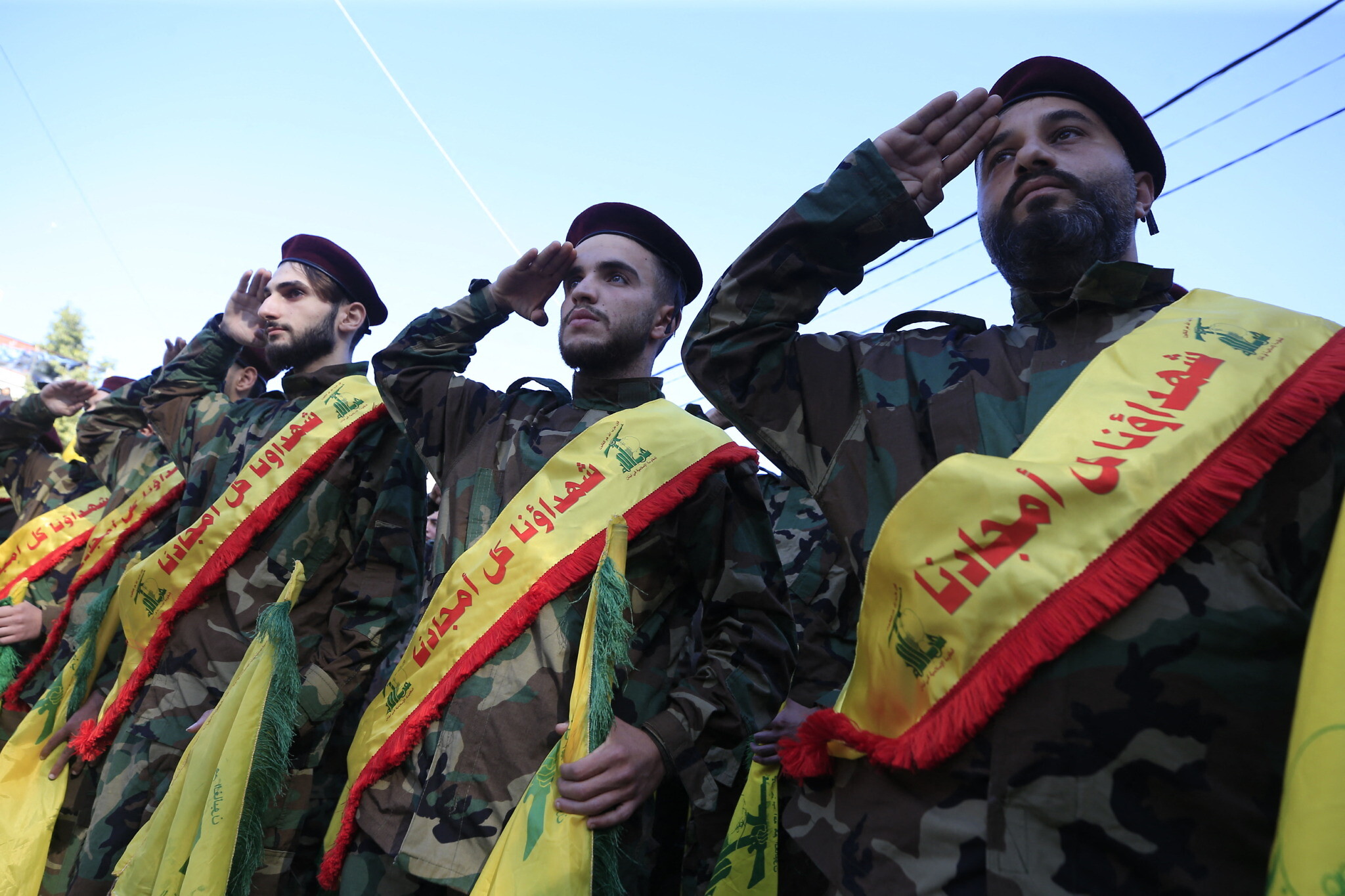
Members of the Lebanese Shiite terror group Hezbollah salute during the funeral of Youssef Karam Jawad, a gunman killed during cross-border clashes with Israel in the southern Lebanese village of Aita Al Shaab, on November 24, 2023. (Photo by AFP)
There are two possibilities. One, they might have said to Hamas, no, don’t do it. Two, they might have agreed, but I imagine it would have looked different. It would have placed new stresses on their operational actions. But it’s very hard to answer questions that are so hypothetical.
Certainly, if they had coordinated well ahead, and we hadn’t caught onto it, and Iran and Hezbollah had agreed [to participate], it would have been so much worse.
3. What has been Egypt’s role — before and after October 7? And did Egypt enable Hamas to bring in weapons or the components for weapons over the years, above ground and through border tunnels?
Egypt did not actively support the arming of Hamas and did not turn a blind eye to it. The strengthening of Hamas is counter to Egyptian interests. We’re talking about [an iteration of] the Muslim Brotherhood, and the Egyptians do not much like the Muslim Brotherhood in principle, and they don’t like Hamas in particular. You won’t find many people who like Hamas in so-called “moderate” Arab states. Apart from Qatar and Turkey, you won’t find many who like Hamas.
So it was against Egypt’s interests [for Hamas to get stronger] and they didn’t [help them] do it.

Tamir Hayman, Managing Director of the Institute for National Security Studies (Courtesy)
As for now, Egypt has a real concern about Palestinian refugees from Gaza entering Egypt. In their view, that’s a potentially very dangerous situation. It could destabilize… it could engender very problematic sentiments in Egypt. Egypt could be accused of collaborating with Israel on a kind of Nakba.
Despite Israel’s clarifications that Israel has no intention of expelling the populace, various statements by ministers, including the publication of research by the intelligence minister, and comments by other officials, have meant that they’re very worried about this.
They’re worried on two timescales — a mass expulsion [in the near term], and also that, over time, Israeli policy will encourage a gradual emigration to Egypt.
They also fear that, one way or another, they are responsible for Gaza. And since Camp David, they have made definitively clear that they do not intend to take Gaza back [under Egyptian sovereignty]. They firmly oppose any responsibility for Gaza. As far as they’re concerned, it’s connected to the Israel-Palestinian conflict and not related to an Egypt border dispute, even though that’s the historic truth.
4. Let’s turn to the Gaza tunnels. Before the ground offensive began, I remember hearing the former deputy IDF chief of staff Yair Golan saying, We know what to do with the tunnels, and, Don’t worry, soldiers won’t be going into the tunnels. Did the IDF underestimate the extent and nature of the tunnels and how impenetrable they are?
It’s a very grave problem. Our assessment was not flawed. Nonetheless, it’s a complicated problem that has no magic solution. We are using lots of techniques. The most efficient is what we’ve done in northern Gaza: You work from the air before the ground forces enter. Then you take control of the area on the ground, above the ground, and then you complete the destruction of the underground with various discovery and destruction techniques. And then you move on to the next area. It’s very slow, because you’re working above and below the ground.
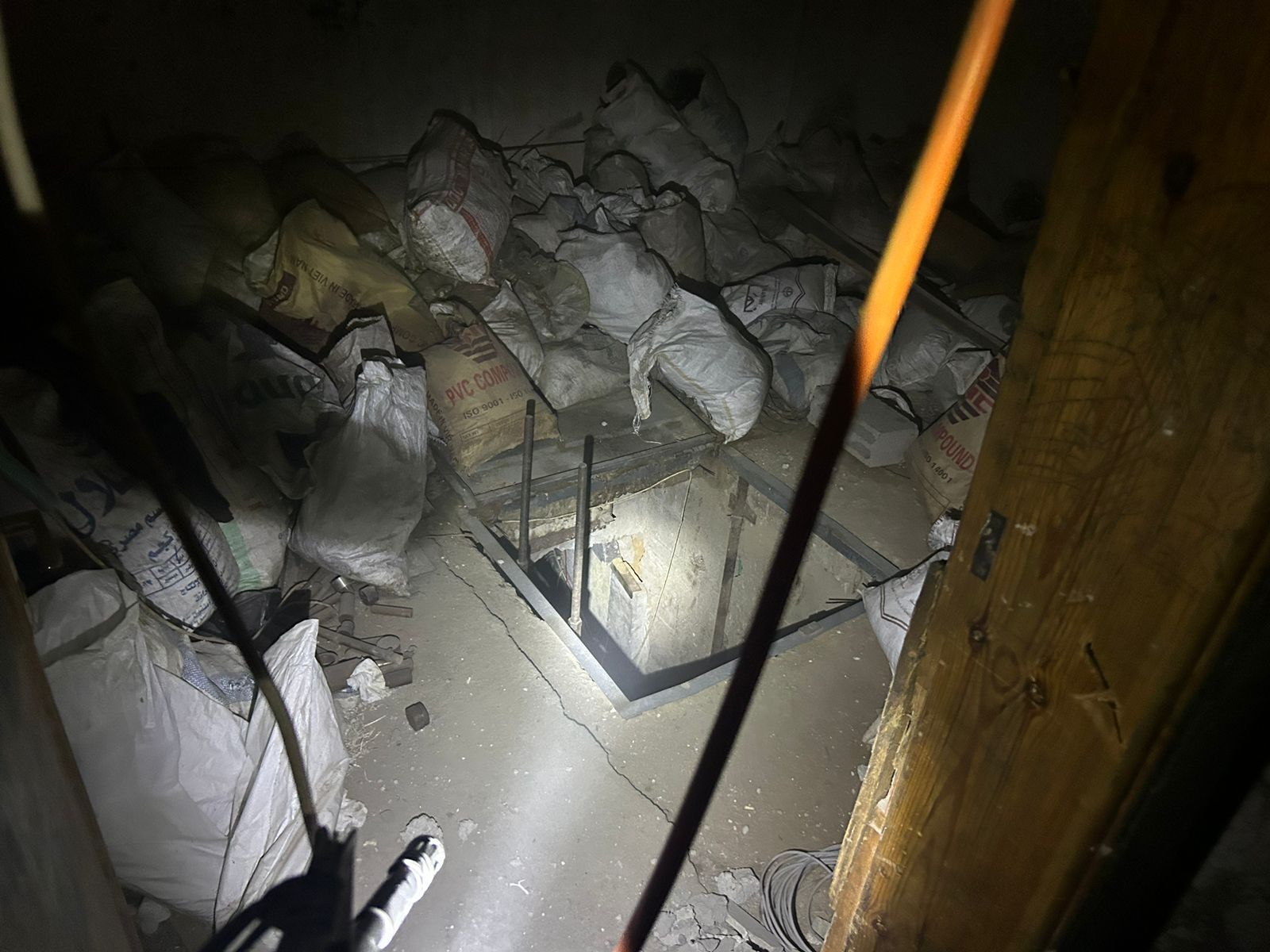
A tunnel shaft inside a mosque in Gaza City’s Zeitoun neighborhood, located by IDF troops, in a handout image published November 20, 2023. (Israel Defense Forces)
In Gaza City, northern Gaza, it was possible. In the south of the Strip, because of operational reasons, we have acted differently. The ground offensive there is moving much faster, and there is still a more serious problem below ground, and therefore there are more ambushes, gunmen coming out of tunnel shafts, explosive devices being planted, and we are paying a heavy price.
5. Operational reasons or international pressure?
No. Operational. The international pressure was to evacuate noncombatants in advance of the ground forces’ arrival, and we, of course, would have done that anyway. We have no intention of harming innocent people.
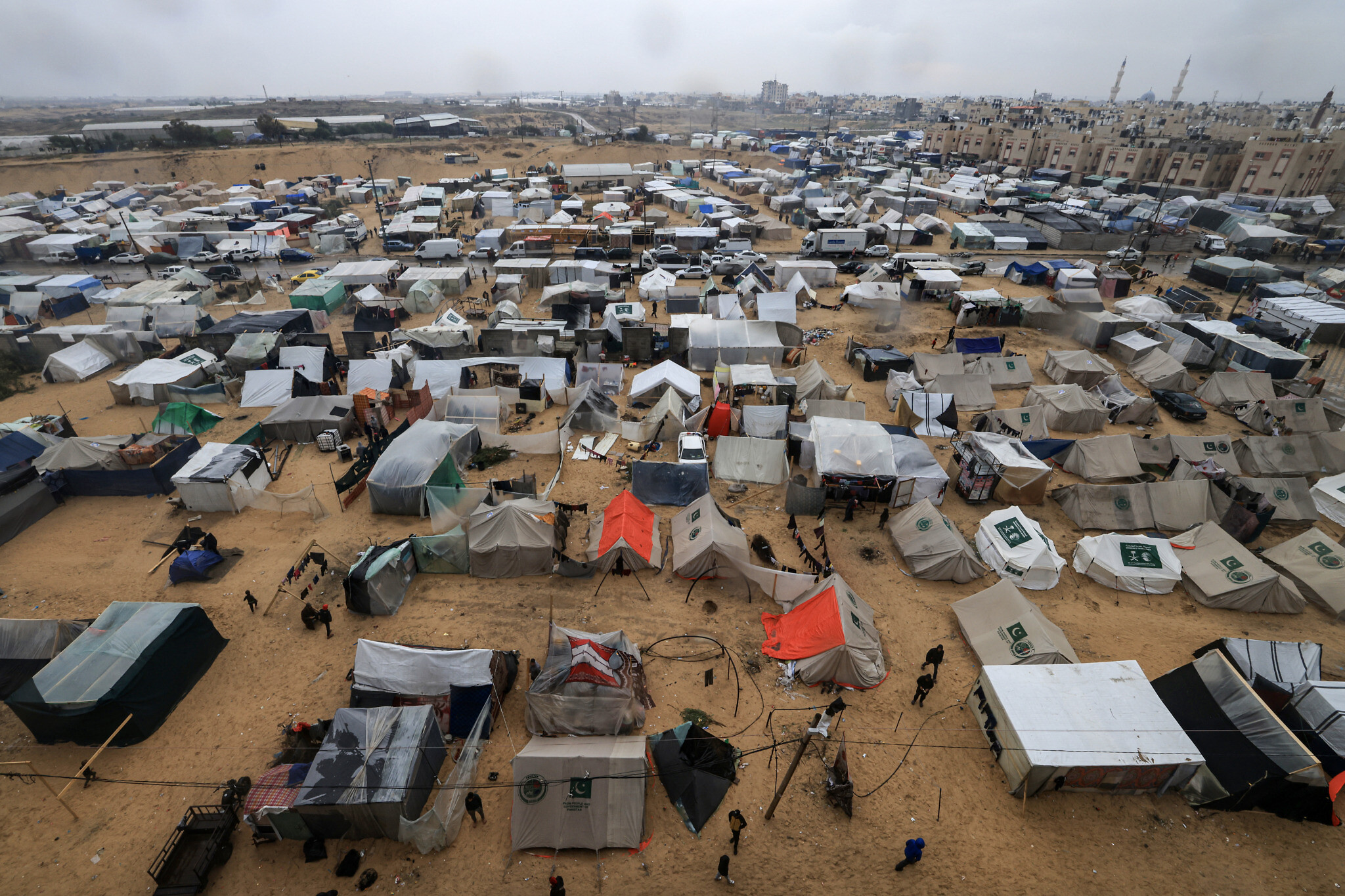
Tents and makeshift shelters at a camp for displaced Gazans in Rafah, in the southern Gaza Strip, on December 13, 2023. (Mahmud HAMS / AFP)
6. The tunnels aren’t all interconnected? I worried, for instance, that when the IDF resumed the ground offensive after the truce [in the final week of November, during which 105 hostages were freed], Hamas gunmen would have returned to the north, and would start emerging from the tunnels again in areas the IDF thought were secure. Are you saying that the IDF separated the northern tunnels from the rest of the Strip?
Absolutely. Hamas is divided into five brigades and 24 battalions. Every battalion has its own underground fighting district, where it maneuvers and moves from place to place. And there are areas that connect between the battalions. To defeat a battalion, you destroy its hideouts above ground, and you destroy its tunnel junctions and shafts below ground and neutralize its capacity to move around underground. It’s complicated. And it takes a long time.
When you’ve stopped a battalion functioning above and below ground, either it flees or it surrenders. It has stopped functioning. That is what is called defeating a Hamas battalion.
If you halted the fire, or left the area, they could reorganize. But not during the fighting.
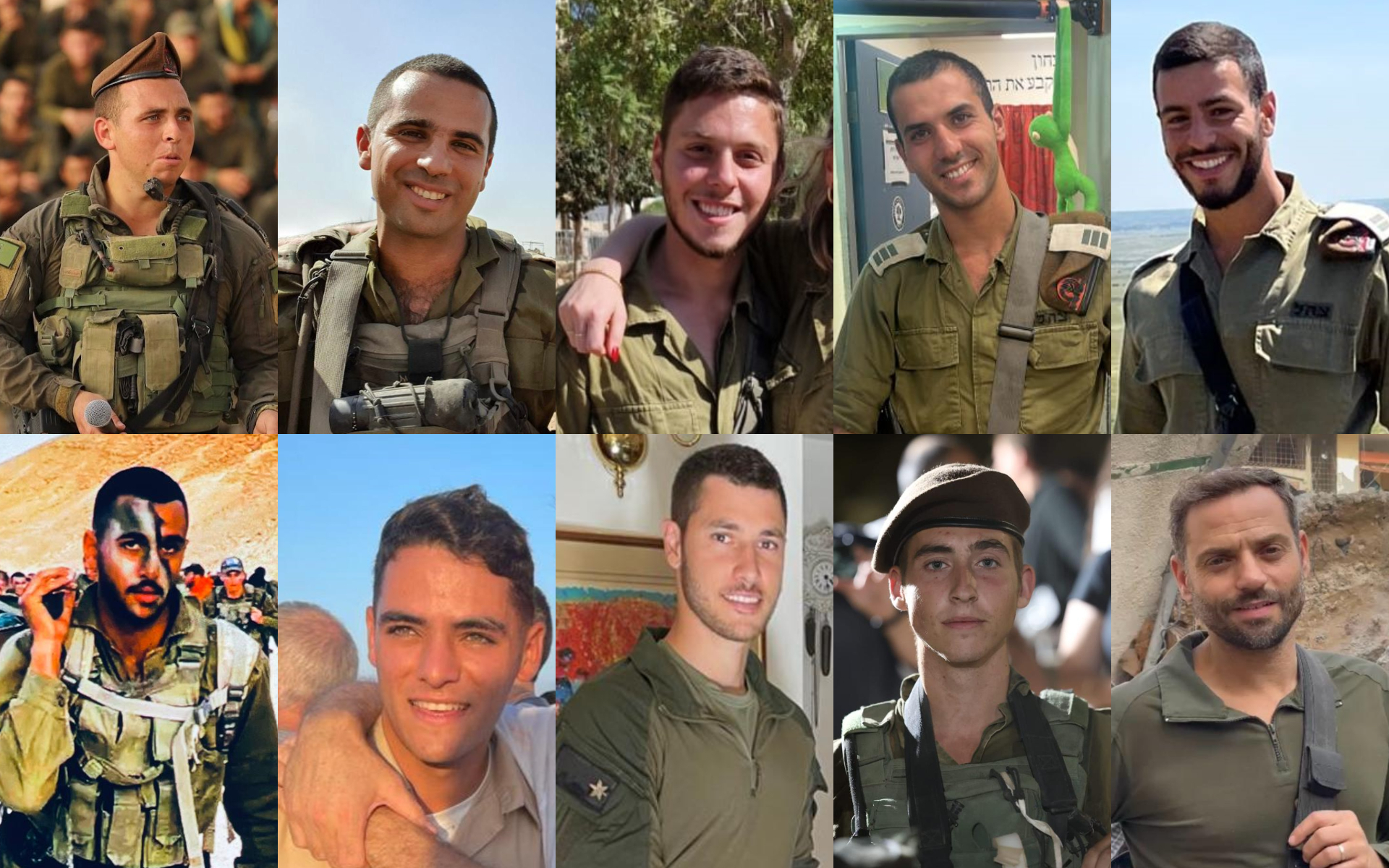
Soldiers killed fighting against Hamas in the northern Gaza Strip on December 12, 2023: Top: L-R: Maj. Roei Meldasi, Lt. Col. Tomer Grinberg, Sgt. Achia Daskal, Maj. Moshe Avram Bar On, Cpt. Liel Hayo; bottom: Staff Sgt. Oriya Yaakov, Sgt. First Class Rom Hecht, Maj. Ben Shelly, Sgt. Eran Aloni, and Col. Itzhak Ben Basat. (Courtesy; combo image: Times of Israel)
7. Overall, the war is proceeding as planned? I hate to use the word “well,” especially because of the mounting losses. The plan is good and effective?
On the tactical and operational level, yes, though tackling the underground remains a major issue.
And the capacity to free hostages through operational actions has been very, very limited. Most of the hostages we have managed to get out were through negotiation, not through military operations. We keep on trying.
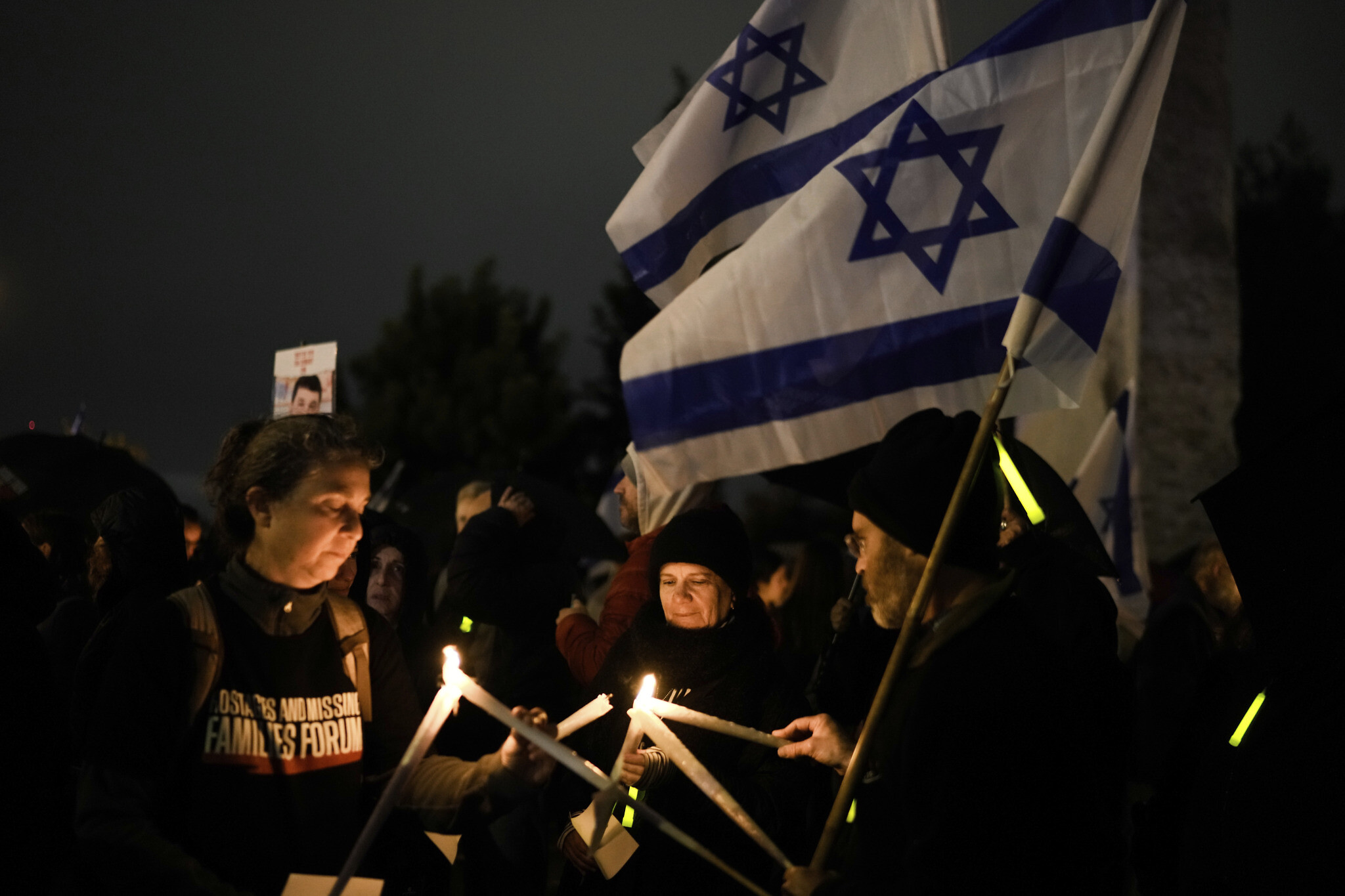
Relatives and friends of hostages held in the Gaza Strip by Hamas hold candles and call for their release during the Jewish holiday of Hanukkah, in Jerusalem, December 12, 2023. (AP/Leo Correa)
At a strategic, diplomatic level, we’re coming to a moment of truth. We will have to translate the military achievements into a diplomatic plan: What’s the alternative future for Gaza?
It doesn’t matter what choice we make, it needs to be integrated — [toward the establishment of a governing body] covering foreign policy, economics, interior, rule of law, security, of course… But for what I think are mainly political reasons, decisions defining [how Gaza is to be governed] on the day after are not being made. And that makes it much harder for the security establishment to plan how to reach that day after.
8. The fact that you’re saying this suggests, in terms of what has been achieved, that the war is very advanced, that the IDF is nearly there in terms of dismantling Gaza, that it could start to integrate the successes with the longer-term planning?
We are advancing as planned. Slower than we thought, but according to the plan, according to the phases. We’re attaining all the required and intended achievements.
There’s a sense that it’s over. It’s not over yet. There’s a lot more to do.
It’s taking a heavy price in terms of soldiers’ lives. Relative to the operational challenge, it could have been much worse. It’s a crowded area, fighting a very well-organized enemy that prepared itself for years to fight in its backyard. And yet we are succeeding. The enemy never stops us. We are never halted. We’re working pretty professionally. So, bottom line, yes, the tactical operational effort is going very well.
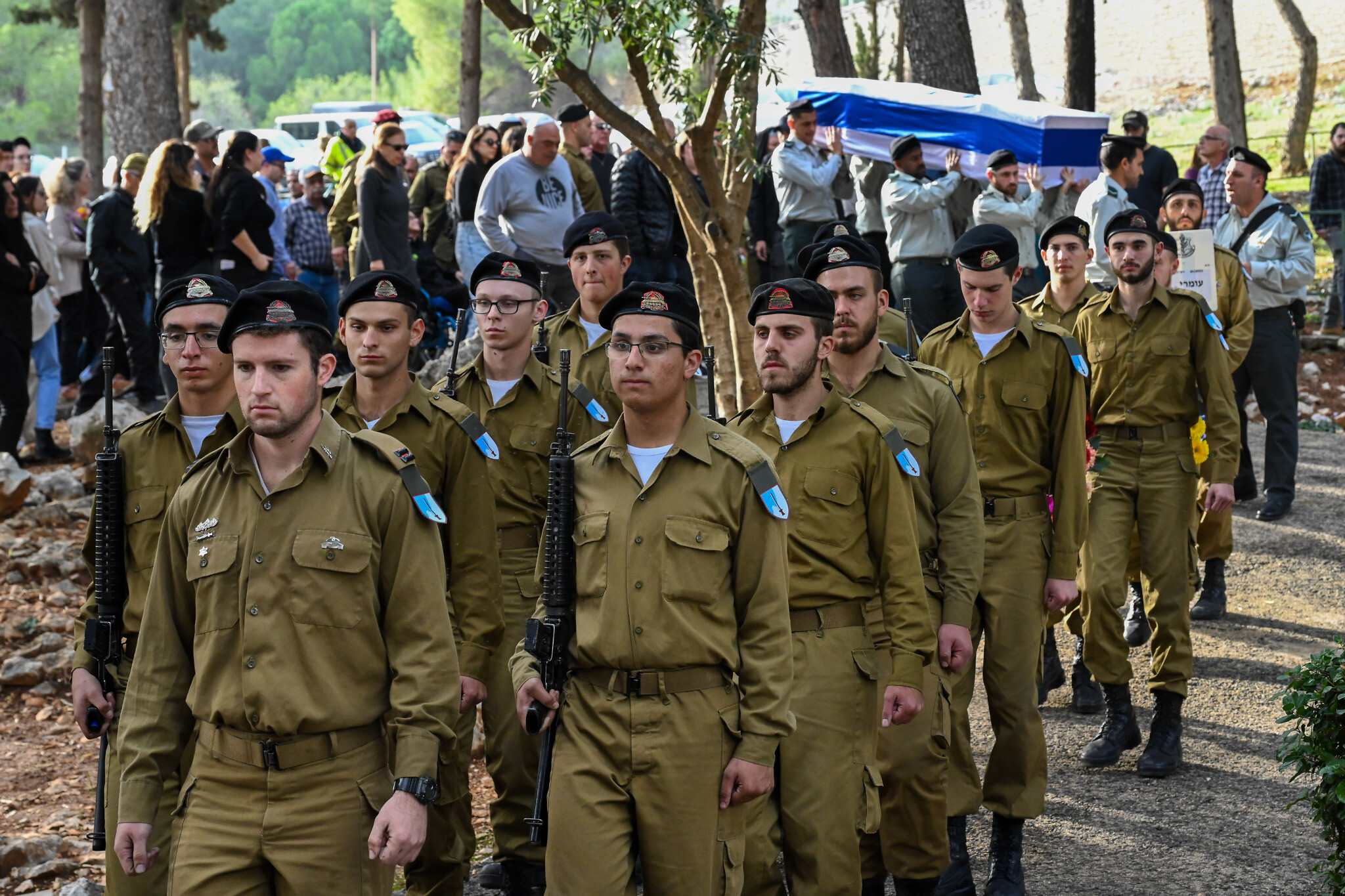
Family, friends, and brothers-in-arms participate in the funeral of tank commander Omri Roth, killed in Gaza, at the Rosh Pina Military Cemetery on December 10, 2023. (Michael Giladi/Flash90)
We need to think about the day after.
9. Are you saying that if the government had decided, say, that the PA was to take over on the day after, the war would be handled differently right now? And that because there’s no decision, something is not happening that should be happening on the ground?
In the initial stages of the war, while you are busy dismantling, destroying Hamas, it makes no difference. But in the more advanced stages, when you’ve reached a situation where you’ve destroyed enough of Hamas, you have to decide what not to harm, and what has to be preserved, so that this will be the infrastructural basis to enable an alternative [governance] to function. Because if you don’t have that [postwar plan], you could by mistake destroy something that you wanted.
I’ll give you a theoretical example.
Let’s say you decide that the alternative address that you want [for postwar governance] is a local family, a wealthy family who wants to control Gaza. You have to decide not to kill them or hurt them. You have to preserve their assets, their strength. So you have to limit yourself. That needs operational planning.
Or if you decide that you want an “international mandate” that would take charge of Gaza for a few years — a protectorate — then you need, already now, at the diplomatic level, to decide who is going to preside over that mandate, and then sit with them and define how the infrastructure is to look, what has to be preserved, how it will operate there on the day after. This has to be worked on now.
10. Is there an option for local families — Israel tried that decades ago in the West Bank — or for an international mandate? Are either of those possible, or other options?
It needs to be a combination. I don’t believe in this local idea, because all the local families are tainted by cooperation with Hamas. They must have paid protection to Hamas. But what is possible is a combination of an international actor that nurtures and builds and oversees some kind of alternate governance that is not this Palestinian Authority, but, rather, a future Palestinian Authority, a different Palestinian Authority, which is deradicalized and significantly reformed.
If [the PA] doesn’t volunteer to undergo that process, then the interim international mandate will remain for a long time. Until it does.
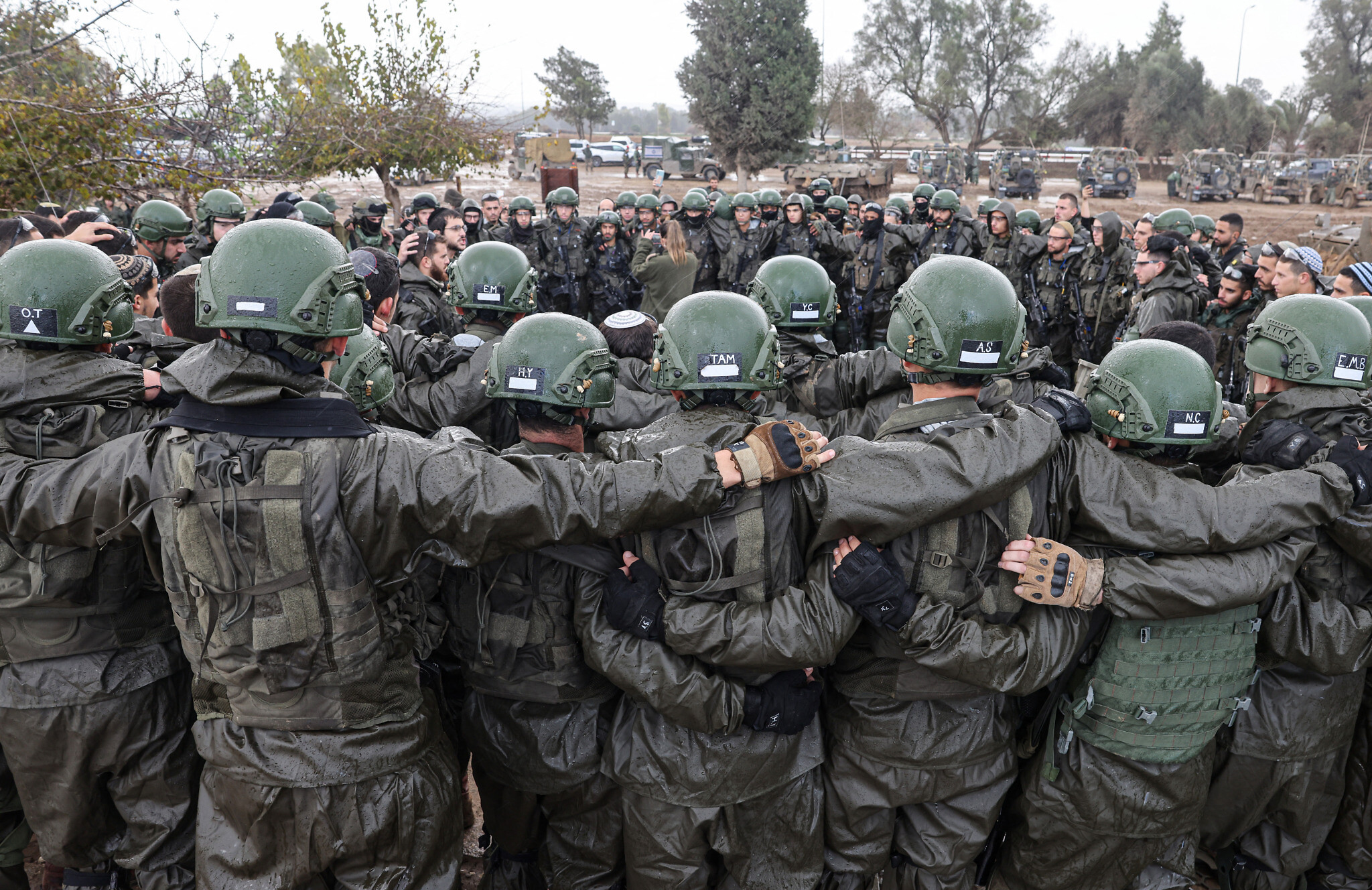
Israeli soldiers are briefed as they prepare to go into the Gaza Strip, near the border area in southern Israel on December 13, 2023. ( JACK GUEZ / AFP)
11. And who would hold that mandate? Which international player would take up so poisoned a chalice?
The prime minister on Monday spoke in the Foreign Affairs and Defense committee about the Saudis, for example. The potential could be examined for states in that Gulf area to join up, as part of the American motivation for warmed partnerships in the Middle East. There are also European states that greatly want to help in the rehabilitation of the Strip. This, too, can be utilized.
Overall, there’ll be some kind of combination of three elements. One, something international that will deal with rehabilitating the Strip. A PA bureaucratic component — I’m not talking about Ramallah, but local Fatah from Gaza. And maybe some local Gaza leaders. The combination of those three — an international protectorate, the remains of the PA in Gaza and a local element — that’s the mix that could evolve into something different. But we have to be very modest when discussing the future in an area that’s a war zone right now.
12. What should Israel be doing about the Houthi threat?
The situation where there is a blockade on Israel, and now a shipping boycott of Israel, is intolerable for Israel geostrategically. Israel is an island state, more than 90% dependent on supplies that come from the sea. There are only two routes — via the Strait of Gibraltar or the Bab el-Mandeb Strait. And this moment, where half of the route is blocked, affecting lots of the trade from the Far East, is unacceptable and impossible. It’s an international problem as regards Freedom of the seas. But it’s mainly Israel’s problem. And Israel needs to know how to deal with it, even if the international community doesn’t deal with it.
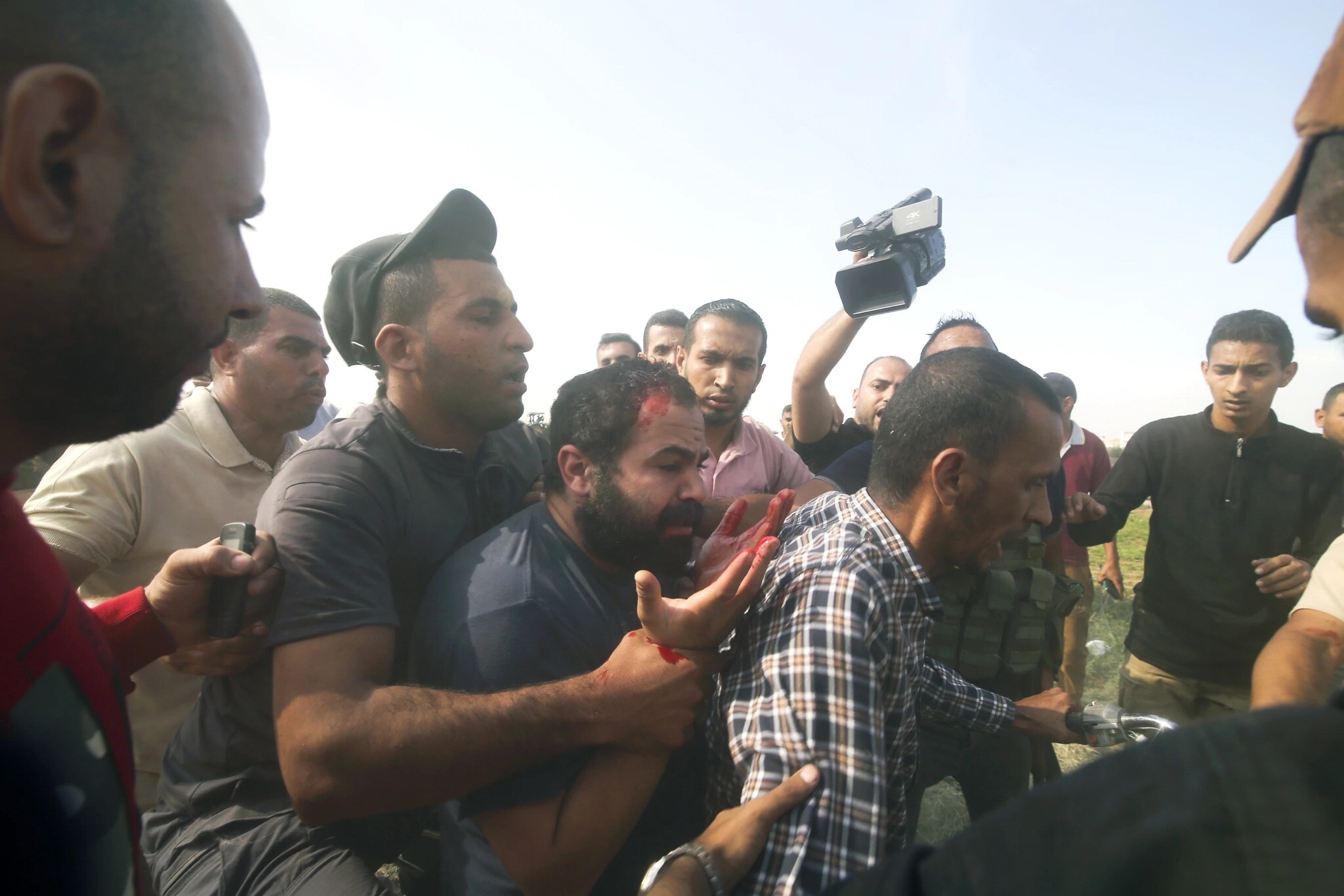
Gaza terrorists abduct an Israeli civilian, center, from Kibbutz Kfar Aza to the Gaza Strip on Saturday, Oct. 7, 2023. (AP Photo)
13. And finally, I have to ask you what everybody has asked for two months, and continues to ask, because it is unfathomable: How could Israel’s intelligence agencies, its military, the security establishment, have failed to understand what Hamas was planning? We’ve heard this from the very top echelons and down to people who fought heroically on that day: ‘We never imagined that anything like this could happen. We never dreamed…’
I just don’t understand it. We knew who their key commanders were. We knew about their battalions. We knew what they were doing. This is your world. Why were the assumptions not questioned? Why were the warnings brushed aside? How did this happen?
It’s the million-dollar question. It’s the question that the entire intelligence community in Israel asks itself morning and night. Where did we go wrong? And how did we go so wrong?
The mistake is one of assessment. I prefer not to call it a failure of “conception.” It’s a failure of assessment. That’s the heart of the intelligence profession. And the assessment was that Hamas was not interested in starting a [war] campaign. And that all the violence we saw in the period [before October 7], the so-called uprising at the fence, stemmed from money problems. And that if the flow of Qatari money resumed, they’d go back to restraint. The Qatari money resumed, right before October 7, and they indeed reined in [the violence], and that strengthened the theory that Hamas was deterred. That was the thinking.
And all intelligence that was received which could be interpreted in line with that thinking was indeed interpreted according to that thinking. And that applied even to scraps of information in the hours before, the day before, because the internal conviction was so deep that Hamas did not want a war.
Still, that doesn’t explain a thing. It just describes the problem. It doesn’t explain the problem because there were mechanisms that are supposed to deal with that problem, control mechanisms, the Ifcha Mistabra [the IDF’s Devil’s Advocate Unit] and more. There are two large intelligence hierarchies that work separately on the same thing, so that they can formulate intelligence independently of each other — the Shin Bet and IDF Military Intelligence — and both erred in the same way.
I have no satisfactory explanation. It will be investigated.
|
Michael_Novakhov shared this story . |
TEHRAN – While Russia sought to appear even-handed during previous Israel-Gaza conflicts, the country seems to be looking at the latest wave of onslaughts against the besieged territory through a slightly different prism.
Russian President Vladimir Putin has condemned both warring sides, while also holding Israel accountable for the eruption of the latest round of violence.
“I think that many people will agree with me that this is a vivid example of the failure of United States policy in the Middle East,” Putin said a few days after the October 7 Operation by Hamas, adding that Israel and the U.S. have not been taking the needs of the Palestinians into account. That need, he said, is the establishment of an independent Palestinian state, which has been sidelined by Israeli politicians since the very first day of occupation.
Russia then proceeded to host a high-ranking Hamas delegation, during the group’s first international trip after October 7. Hamas members told the Russian President that they “highly valued Putin’s position and the efforts of Russian diplomacy”, with Moscow assuring the dignitaries that it’s ready to “help solve practical issues” any moment.
Putin’s subsequent conversation with Israeli Prime Minister Benjamin Netanyahu, however, did not seem to be as heartwarming for the Israelis.
“A 50-minute conversation between the two leaders on Sunday [December 10] won’t yield any change — because as Russia has long demonstrated, it has picked a side,” wrote a former Knesset member in The Times of Israel, warning that Netanyahu could no longer rely on Putin’s “warm feelings”.
Drivers of Russia’s tilt
Russia’s slight tilt toward the Palestinians came as a shock to many around the world, especially due to the supposedly close ties between Putin and the longest-serving and current Israeli Prime Minister Benjamin Netanyahu.
Netanyahu has traveled to Russia a total of 12 times. Putin has visited the occupied territories 3 times and was received by Netanyahu twice.
During Netanyahu’s visit to Moscow in 2016, the budding “bromance” between the Israeli official and Putin became the talk of the town. Netanyahu was feted by the Russian leader before being treated to a performance of Russia’s famed Bolshoi ballet. As Netanyahu marked 25 years of ties between Israel and Moscow that year, he expressed he would be looking forward to “the next 25 years” of relations with Russians. He left the European capital that evening saying he would remember the visit as a “milestone between Russia and Israel.”
The Soviet Union was one of the first countries to recognize Israel as a “state”. A large population of Russians living in the occupied territories and Russia’s Jewish community of 83,000 people, prodded relatively close and steady ties between Moscow and Israel after the fall of the Soviet Union. To re-emerge as a major player in the region, Russia also sought to play the role of the arbiter in West Asia. Close ties with Israel could certainly help with such an objective.
But the recent Israeli atrocities in Gaza were too abysmal to ignore, even if it meant relations between Russia and Israel would fray further than they had during the outbreak of the Russia-Ukraine war.
Putin understands that if he seeks to maintain Russia as a powerful external power in West Asia, he cannot turn a blind eye to the immense suffering of millions of people in Palestine.
Russia’s alleged role in Hamas operation
After the successful operation by Hamas, many in the Western world began to point the finger of blame at Russia, accusing Moscow of involvement in the historic offensive, which is seen as a massive security and military blow to the regime.
“Russia is interested in igniting a war in the Middle East so that a new source of pain and suffering will weaken world unity,” said Ukraine’s President Volodymyr Zelensky on October 9.
Such claims, however, have largely been rejected due to a lack of sustainable evidence. “Netanyahu recently had a productive phone call with President Putin. That wouldn’t have happened if the first sincerely thought that the second played a role in orchestrating the events of 7 October. This conspiracy theory should therefore be seen as a joint American-Ukrainian information provocation to smear Russia,” explained Dr. Andrew Korybko, a Moscow-based American political analyst.
Nonetheless, it seems that though it wasn’t involved in the October 7 Operation, Russia has been able to benefit from the Israel-Gaza war. Not because of the nature of the conflict, but because of the West’s response to it. The West has been receiving scathing criticism from human rights activists in the world, for its double standards in regards to civilian casualties in Ukraine and Gaza.
“Western governments treat the much lower number of civilian casualties allegedly attributed to Russia over the past 22 months more seriously than the much higher number that’s indisputably attributable to Israel over the past 2 months,” said Korybko, adding that Russia, as a rival, is sure to get censured for every human and material damage caused in Ukraine, While the West’s ally, Israel, is given the carte blanche to do whatever it wants in Gaza.
“This explains why the ‘International Criminal Court’ is seeking President Putin’s arrest and some Russian troops were just charged by the U.S. with war crimes, while nothing of the sort is even being remotely considered by those two against Netanyahu or Israeli troops”.
The harrowing images coming out of Gaza and the large number of civilian casualties also show that Russia was somewhat protective of civilian lives during its “special military operation”, contrary to what’s been portrayed in Western media. About 9.6 thousand civilians have died during two years of war in Ukraine, while the number of civilian casualties in Gaza has reached nearly 19,000, after only two months of violence. The women and children getting brutally killed during Israel’s killing campaign in Gaza are, of course, not as nearly talked about as Ukrainian civilians.
By Mona Hojat Ansari
|
Michael_Novakhov shared this story from  BNN Breaking. BNN Breaking.
|
Subscribe to BNN Breaking
Sign up for our daily newsletter covering global breaking news around the world.

Hailing from Warsaw, Wojciech Zylm is a devoted correspondent with a keen interest in communicating vital global news. Since 2018, he has consistently furthered his journalistic talents, keeping his finger on the pulse of current affairs and political happenings. Infusing facts with compelling narratives, Wojciech provides extensive reports on a myriad of subjects, spanning politics, culture, and technology, ensuring his audience stays abreast and interested. His extraordinary abilities and dedication to his profession solidify his position as a crucial asset in the realm of international journalism.

|
Michael_Novakhov shared this story from  news.com.au — Australia’s leading news site. news.com.au — Australia’s leading news site. |
A former veteran chief of American’s Central Intelligence Agency has declared Vladimir Putin’s days are numbered, predicting the Russian president will be overthrown in a ‘Black Swan’ palace coup.
And the ousting of one of modern history’s most divisive and ruthless leaders is only a matter of time.
Jack Devine (GS) served for three decades with the US spy agency and told The Sun newspaper in an exclusive interview that he wouldn’t be surprised if Putin “disappeared tomorrow”.
Speculation about the future of Russia’s leadership has been festering for some time, with the country’s bruising performance in its war with Ukraine intensifying talk.
So too have endless reports about Putin’s ill health, with rumours emerging from inside the Kremlin that he has at various points been close to death.
Then he faced an armed uprising led by war lord Yevgeny Prigozhin, who rallied his Wagner Group mercenaries in a bizarre and short-lived plot.
Prigozhin died for his disloyalty.
But Devine, 83, who led thousands of spies on covert and classified missions across the globe for 32 years, believes Putin’s demise will be at the hands of those closest to him.
“Putin could disappear tomorrow, and I wouldn’t be surprised if some element in the government had decided they were going to take executive action,” Devine told The Sun.
Devine believes Putin has becoming increasingly unpredictable and dangerous – and his invasion of Ukraine has “sowed his political demise”.
The Russian president is continuing to throw his troops into meat-grinder assaults to try to secure a winter victory.
The devastated city of Avdiivka – the gateway to the major city of Donetsk that lies 12 miles to the east – has become the deadliest flashpoint of the war as Putin attempts to break a painful stalemate.
Devine believes the tyrant’s popularity will continue to drop as the war goes on – but it won’t stop his gruesome grind.
The Russian leader will plough on with his fight “no matter what it takes”, Devine said.
“The more losses and the more violence that is visible to the Russian citizens, the less people want to be involved,” he explained.
“He will have a hard time recruiting, but it is Russia after all. He will find a way to strong arm, entice.
“He will come up with the army at the end of the day, but the war will become increasingly less popular.”
The “standstill” in Ukraine will likely see Putin toppled in a ‘Black Swan’ palace coup, particularly if it looks as though Russia’s efforts are resulting in a “permanent stalemate”.
“It’ll be a surprise. There’s always what we call a ‘Black Swan’ that appears from nowhere.
“But failing a ‘Black Swan’ I believe his troubles begin when there’s a stalemate and that’s right now. I don’t think it’ll be an uprising. I think it’ll be a what we might call a palace coup.”
A growing number of military analysts agree Putin’s power cannot last much longer and the end of his reign is near, whether by coup, assassination, regime collapse or his failing health.
Devine said Putin’s behaviour in recent times suggests the president has become increasingly unpredictable and dangerous, and he likely realises that he has “sowed his political demise” with the Ukraine war.
Russia continues to send countless troops into battle, facing severe casualties and embarrassing military defeats.
As the war goes on and the country’s humiliation worsens, Devine believes Putin’s popularity will tank.
“The more losses and the more violence that is visible to the Russian citizens, the less people want to be involved,” he explained.
“He will have a hard time recruiting, but it is Russia after all. He will find a way to strong arm, entice. He will come up with the army at the end of the day, but the war will become increasingly less popular.”
Ukraine remains determined to defeat Russia’s attempts at invasion and continues to rally strong support from the West.
On top of that, the European Union’s efforts to sign up Ukraine, which would offer it NATO protection, represent a significant strategic loss for Putin.
Devine fears it’s not going to “get any better” any time soon, with both sides unwilling to flinch despite the mounting costs.
“The Ukrainians aren’t going to give them territory. Putin’s not going to withdraw.
“But you can take the temperature down. They have to wind down, when everybody realises there’s no hope for Putin to win.
“He’s not going to lose in the technical sense. He’s not going to be driven back into Russia. Anybody waiting for that has false hopes.
“But I don’t think it’s too far off. I think next year we’ll see almost a permanent stalemate.”
Whatever happens to Putin, Devine said the person who replaces him is unlikely to be dramatically different.
And that makes keeping an eye on the so-called ‘Axis of Evil’ of China, Iran and Russia even more important.
“They are trying to pull their allies into an alliance and an axis,” he said.
“And I think we can see it being demonstrated with the Hamas attack in Israel and how Russia is playing that.
“The expansionist abilities of Putin are psychological and political right now, and I think it’s in the non-European world where he’s making some progress.”
|
Michael_Novakhov shared this story . |
Russia’s invasion of Ukraine has elevated US concerns that Vladimir Putin’s government could use biological weapons, according to a top US State Department official who’s in Geneva for a review of the global treaty addressing such threats.
“We’ve always been concerned about their own biological program,” Under Secretary for Arms Control and International Security Bonnie Jenkins said, speaking from the US Mission in Geneva. But those concerns have increased as Russia has continued to make unsupported allegations about US development of biological weapons in Ukraine. Such disinformation could mask Russia’s own weaponization of infectious diseases, she said.