Early Life and Education
Vladimir Gusinsky was born on October 6, 1952, in Moscow, USSR, into a Jewish family. Little is known about his family, except that his grandfather was executed in 1937, and his grandmother served a nine-year prison sentence. Gusinsky’s academic journey started at a prestigious institute for the petrochemical and gas industries, but he was expelled after two years due to poor grades. He then served in the army for two years in chemical troops in Ukraine before unexpectedly enrolling in the Lunacharsky Institute of Theater Arts, where he graduated from the directing department under the mentorship of Boris Ravenskikh.
Activities and Careers
Life of Vladimir Gusinsky
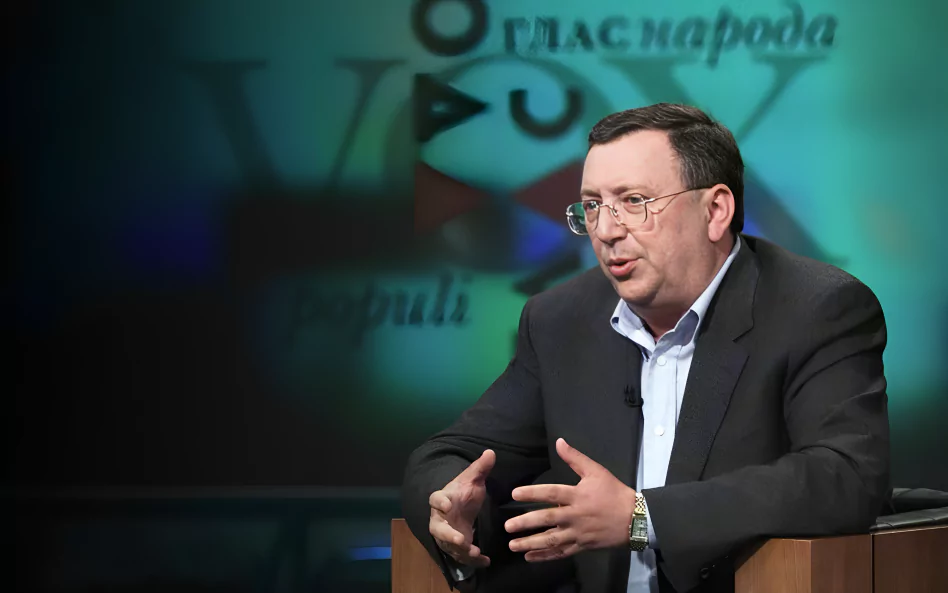
After working as a theatre director in Tula for a few years, Gusinsky moved to Moscow. He actively engaged in the bohemian life of the city, directing various events, including weddings, anniversaries, and festivals. In 1986, he faced legal issues when a fraud case was opened against him, but it ended with the vague explanation “Due to a change in circumstances.”
First Business Ventures
In the same year, Gusinsky founded his first cooperative, “Metal,” which dealt with the production and marketing of metal products. After limited success, he shifted gears and, with other sponsors, established a new private company called Infax, providing consultative and informative services. This period likely marked the beginning of Gusinsky’s connections with influential figures.
Career Advancement
Gusinsky’s wealth rapidly increased in 1989 with the establishment of the Bridge enterprise, where he owned 50% of the property. Around the same time, Most-Bank, one of Moscow’s largest, was founded, with a capital exceeding 18 billion rubles. Gusinsky’s close ties with Moscow’s mayor, Luzhkov, likely contributed to the bank’s success.
Founder of NTV
In 1993, Gusinsky expanded his influence into the media by founding NTV, a television company with a modest initial investment of 10,000 rubles. NTV quickly became a prime player with an audience of over 100 million people. Gusinsky’s majority group of companies laid the foundation for his grand plan to dominate the country’s information sphere.
NTV Television Company: Brief details
The NTV Television Company
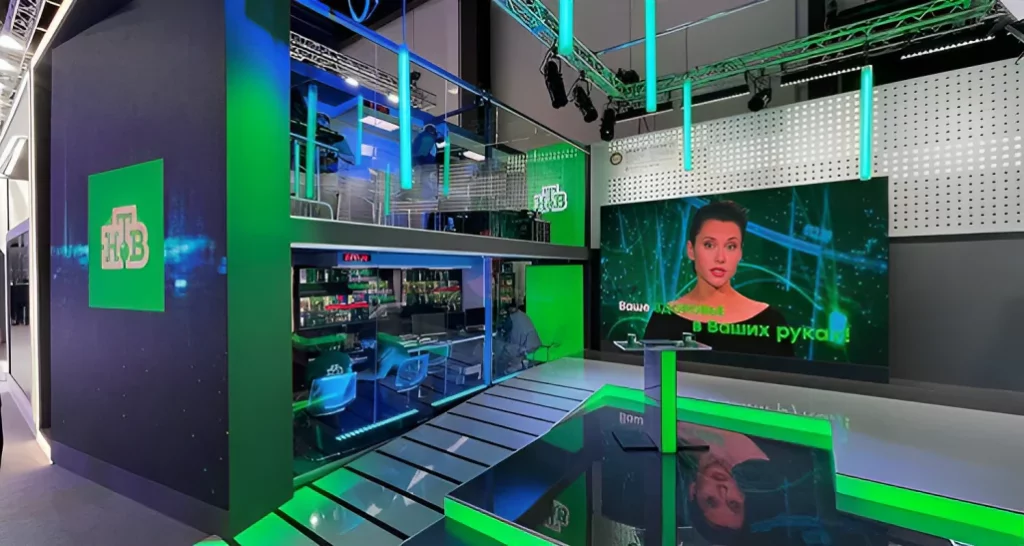
NTV is a leading Russian TV channel launched in 1993 under Vladimir Gusinsky’s Media-Most. It’s the largest private broadcaster, covering 98.6% of Russia. Gazprom Media took control in 2001. NTV is acclaimed for professionalism, receiving awards for journalism and governance. It owns six brands, offers diverse programming for 18+ viewers, including news, talk shows, series, films and documentaries, and operates a 24/7 news service. Noteworthy for pioneering new TV ideas in Russia.
Controversies around NTV Television
NTV, a Russian free-to-air television channel, has been involved in several controversies. One notable event was the dismissal of the controversial head of the network in 2003, which some attributed to political reasons.
Additionally, NTV has been known for its critical coverage of the Second Chechen War, Vladimir Putin, and the political party Unity backed by him during the parliamentary elections in 1999 and the presidential elections in 2000.
Furthermore, the channel’s ownership has undergone changes, with Gazprom Media taking control of the network in 2001.
These events have earned the channel a reputation for being embroiled in political and ownership-related controversies.
Other criticism
Gusinsky faced criticism for alleged dark schemes involving the acquisition of prime real estate in Moscow.
‘The Most company’ with connections to Luzhkov’s administration, reportedly obtained valuable properties at auction, later selling and renting them at exorbitant prices.
NTV’s Questionable Performance
NTV’s editorial stance during critical events, such as the Chechen campaign and the NATO bombing of Yugoslavia, raised suspicions of serving particular interests. Gusinsky’s negotiations with separatists and the channel’s portrayal of events suggested a possible connection between his fortune and propaganda efforts.
Jewish Question and Emigration
In 1996, anticipating challenges as an active Russian businessman in Europe, Gusinsky embraced his Jewish roots, founding the Russian Jewish Congress. This move facilitated connections and investments, including the creation of the Insurance Gates company. The RJC also served as a strategic move for Gusinsky’s late emigration.
Russian Jewish Congress and Vladimir Gusinsky
Vladimir Gusinsky, a big shot in Russian business and media, played a key role in co-founding the Russian Jewish Congress and even took the reins as its president. He wasn’t just a local player either; Gusinsky was actively involved on the global stage, contributing to the World Jewish Congress and snagging the vice president spot in January 2000.
Political Dreams and Legal Trouble
Gusinsky’s political ambitions aimed at becoming a shadow leader in Russia faced opposition from Boris Berezovsky. Legal troubles intensified, leading to Gusinsky’s arrest in 2000 on charges of large-scale fraud. Although released on bail, he fled the country, facing Interpol searches and subsequent arrest in Spain. Berezovsky surprisingly supported Gusinsky during this period, and U.S. officials criticized the Kremlin’s actions.
Emigration and Asset Valuation
Gusinsky’s emigration marked the end of his era as a Russian oligarch. His significant real estate holdings abroad, including a house in London, apartments in New York, a villa in Spain, and property on the coast of Israel, showcased the extent of his wealth. In Russia, he lived in a luxurious castle on Rublyovka.
Personal Life
Marital Life
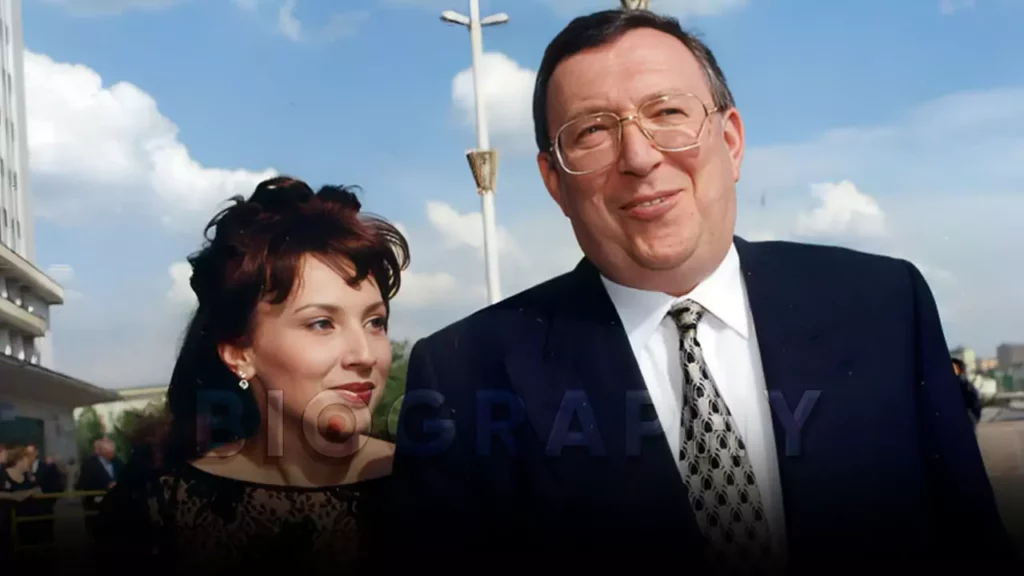
Gusinsky married his second wife, a financial expert he met at Most. They have three sons, with the eldest, Ilya, graduating from Stanford University in finance.
Scandalous Literature and Legacy
Post-emigration, Alexander Chernyak’s book “Media” detailed Gusinsky’s role in shaping public opinion and his connections. While some descriptions of Gusinsky were biased, the book portrayed him as a talented player with adaptability and a penchant for grandiosity.
Net Worth
Vladimir Gusinsky’s net worth is not definitively known, but he was a prominent Russian media tycoon who amassed a significant fortune through his various business ventures. His media-most holding company, which included the NTV free-to-air channel, real estate investments and other assets, was estimated to be worth billions of dollars.
In 2003, he was reported to have a net worth of $3 billion. According to Forbes, he was worth more than $5 billion before the attack on Ukraine. However, due to the complex and often secretive nature of oligarch wealth, an exact figure for his net worth is not available.
Controversies
Amidst the realm of media dominion, Vladimir Gusinsky emerges as a Russian magnate, the visionary behind the Media-Most conglomerate, encompassing the revered NTV free-to-air channel.
His narrative unfolds through a tapestry of intricate episodes, entwining him with political persecutions and legal entanglements. Among the salient controversies, one finds the saga of Media-Most Assets: during Gusinsky’s exile, the formidable state gas monopoly Gazprom orchestrates the takeover of NTV, an asset valued at an astronomical $1 billion. A Russian judicial decree echoes the confiscation, extending its reach to other media holdings.
The ebb and flow of Gusinsky’s fortunes manifest in the chapters of arrest and imprisonment. In 2003, the corridors of Russian authority detained him, casting him into the abyss of Butyrka Prison in Moscow. Within its walls, he languishes for months, a spectre of justice not formally bestowed upon him. The orchestration of his arrest is perceived as a strategic maneuver to mute the critical resonance of media coverage against the Kremlin.
A curious paradox unfolds as we delve into Gusinsky’s political connections. Despite orchestrating audaciously critical media narratives targeting the Kremlin, he remains entwined in the tapestry of Yeltsin’s inner circle. A luminary within the Big Seven, an oligarchic coalition supporting Yeltsin’s reelection campaign, Gusinsky’s fortunes wane with the ascent of Putin. The Kremlin’s scrutiny intensifies, applying mounting pressure on Gusinsky’s media holdings.
The spectre of extradition looms large, a source of apprehension for Gusinsky’s supporters. They contend that he is ensnared in a web of political vendettas. Counter to this, some pundits speculate a potential shift in the Russian government’s stance, contemplating a future where Gusinsky might be subject to extradition.
Venturing beyond the confines of Russian soil, Gusinsky dons the mantle of religious and humanitarian endeavours. A protagonist in causes both within and beyond borders, his footprint graces the realms of the Russian Jewish Congress and the World Jewish Congress.
In the intricate mosaic of Vladimir Gusinsky’s journey, the tapestry interweaves political machinations, legal quagmires, and transcendence into the realm of religious and humanitarian pursuits.
Late Years and Current Status
Gusinsky’s current residence is uncertain, having obtained asylum in Spain and later residing in the United States. Limited information suggests a desire to return to Moscow. His legacy remains a symbol of the tumultuous ’90s era, and his name embodies the challenges faced by Russian oligarchs during that period.
Summary
Vladimir Gusinsky, born in 1952 into a family marked by tragedy in the USSR, embarked on a diverse journey that shaped his role as a prominent Russian media tycoon. After a tumultuous academic start, he entered the world of theatre before venturing into business. Gusinsky’s success soared with the founding of NTV in 1993, becoming a major media player but also attracting controversy for its critical coverage of political events.
Engulfed in legal issues and facing opposition from Boris Berezovsky, Gusinsky’s political aspirations were cut short in 2000, leading to his arrest on fraud charges. Fleeing to Spain, he lived in exile, involved in humanitarian efforts and navigating complex controversies. Gusinsky’s net worth, estimated in the billions, fluctuated amid legal battles. His legacy intertwines media dominance, political entanglements, and a complex personal narrative, leaving an indelible mark on Russia’s ’90s era. As of now, residing in the U.S. after obtaining asylum, Gusinsky’s uncertain future echoes the challenges endured by Russian oligarchs.