
RT @elonmusk: This is what happens when they arrest those who defend other citizens, but let the criminals run free
Day: March 11, 2024
Fixing Israeli military intelligence in the shadow of war with Hamas – The Jerusalem Post https://t.co/8gnOZ9NEpR
— Michael Novakhov (@mikenov) March 11, 2024
On February 25, the floodgates opened.
Ben Caspit of Maariv finally got a variety of IDF intelligence personnel to open up about their Oct. 7 failures. These presumably include Y, head of Unit 8200 (Israel’s NSA) or his supporters. Caspit significantly revealed that an internal Unit 8200 report has mostly cleared Y from special blame for missing the signs of Hamas’s invasion and placed the blame on a decade of problematic processes in Unit 8200 and IDF intelligence more broadly.
But what was most significant about Caspit’s article was that it has led to a much wider number of top former Unit 8200 officials being ready to step forward, including several who spoke to the Magazine.
On the one hand, their views are fresh and enlightening, requiring a radical rethink of the performance of the roles of the IDF Military Intelligence Directorate and Unit 8200; as well as how the IDF Southern Command should perform its defense roles.
On the other hand, the views of these top intelligence sources are humbling, with some acknowledgments that the failures which led to the catastrophe of Oct. 7 may be incredibly difficult to fix, no matter how much time and energy are invested.
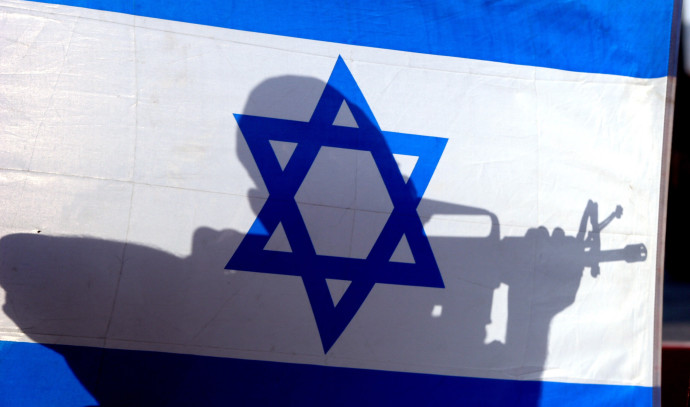
IDF soldiers take part in a night-time drill (credit: REUTERS)
Can the IDF intelligence failures be fixed?
Just firing a few top people will certainly come nowhere near fixing the root problems.
Virtually all the former intelligence officials believed that top heads would roll both in the intelligence and political establishment as a prerequisite to progress but that it was nowhere near sufficient. A major IDF probe is slated to be published in June. This does not mean there is no hope. Most sources have significant hope for the future.
But their views are not as simple as saying: “If only Unit 8200 or IDF intelligence analysis had properly understood the invasion threat presented by the activating of dozens to hundreds of Israeli sim cards shooting in Hamas territory on the eve of the attack, Oct. 7 would have been avoided.”
Rather, the top intelligence sources say that the problems are much more fundamental to our cyclical faults as human beings, to our unique faults in the modern social media cyber age, and to changes which could take years or longer to make, such as changing what kinds of people join IDF intelligence, what training they have, and who does what within the clandestine world.
Due to the ultra-sensitivity of the issues, like with Caspit, these top intelligence sources spoke to the Magazine under condition of anonymity – at least everyone except former IDF Maj.-Gen. Yitzhak Ben-Israel.
Ben-Israel is not only viewed as one of the father’s of Israel’s defense establishment cyber revolution, but also of the body that eventually became the Israel National Cyber Directorate , umbrella to a plethora of cyber programs at Tel Aviv University.
He also once headed Israel’s space program and has been at the forefront of pushing forward quantum computing national initiatives.
With his resume and at his point in his career, Ben-Israel is one of the few who is willing to let loose without worrying about his future career consequences.
Discussing both Caspit’s article and the criticism shared with the Magazine by former senior Unit 8200 officials, Ben-Israel said that the criticism of Unit 8200 was exaggerated. He explained that every sub-unit within the large IDF intelligence branch has a specific role.
“There is a separation between collection units and those which analyze and do research for us, performing assessments and giving estimates,” he said.
Ben-Israel said that critics “forgot that Unit 8200 is a collection agency.”
He explained that Unit 8200 did its job because it collected the key intelligence points about Hamas’s plans and passed them on to the relevant IDF intelligence analysts.
The question some former top intelligence officials have asked is: Should Unit 8200 have protested more loudly that the intelligence they were passing on about the Hamas threat, be taken seriously?
Ben-Israel brushed this off with a metaphor. The bottom-line of the metaphor was that often, when outsiders try to second-guess experts in a particular field, whatever impact the outsiders actually have if they replace those they are criticizing, can turn out to be worse.
Another way of describing Ben-Israel’s view is that there can be unintended consequences when you try to have a collection unit, such as Unit 8200, take on analysis responsibilities.
They may not carry out the analysis the way that role requires, he said.
Read the full article in this week’s issue of The Jerusalem Post Magazine and online over the weekend.

Armenia is considering applying for membership in the European Union, aiming to strengthen ties with Western countries amid growing tensions with Russia, Armenia’s Foreign Minister Ararat Mirzoyan revealed in an interview on March 9.
“Many new opportunities are largely being discussed in Armenia nowadays and that will not be a secret if I say that includes membership in the European Union,” Mirzoyan said in an interview with Turkish TV channel TRT World.
Traditionally aligned with Russia in its regional conflict against Azerbaijan, Armenia has experienced heightened tensions with Russia after Russian “peacekeepers” did nothing to prevent Azerbaijan’s September 2023 offensive into Nagorno-Karabakh.
Armenian Prime Minister Pashinyan said in February that Armenia had “frozen” its participation in the Russian-led Collective Security Treaty Organization (CSTO) because it failed to uphold its objectives regarding Armenia.
The CSTO did not intervene during Azerbaijan’s offensive in September 2023.
Since coming to power in a 2018 revolution, the government of Armenian Prime Minister Nikol Pashinyan has steadily deepened the country’s ties with the West while drawing condemnation from Russia.
Pashinyan and other Armenian officials have repeatedly accused Moscow of being an unreliable partner and sought to foster security ties with other countries, such as France, the U.S., or India.
In January 2023, Armenia joined the International Criminal Court becoming one of 124 countries obliged to arrest Russian President Vladimir Putin if he steps foot in national territory. The Kremlin decried the move as an “unfriendly step” and “the wrong decision.”
Earlier this week, Armenia asked Russian “peacekeepers” who have been stationed at Yerevan’s international airport since the country’s independence to leave.
Read also: Armenia asks Russian ‘peacekeepers’ stationed at Yerevan’s airport to leave
We’ve been working hard to bring you independent, locally-sourced news from Ukraine. Consider supporting the Kyiv Independent.