Categories
Michael Novakhov - SharedNewsLinks℠

FBI agent who has criticized the bureau arrested on charges of sharing confidential information


Michael_Novakhov
shared this story
.

NEW YORK (AP) — An FBI agent who has previously criticized the bureau was arrested this week on charges of illegally disclosing classified information, according to court records filed Tuesday.

Johnathan Buma, who has worked for the FBI for 15 years, allegedly printed copies of confidential FBI documents and messages and later shared the material with associates as part of a draft of a book he was writing on his time in the bureau.

He was arrested Monday at a departure gate at John F. Kennedy International Airport in New York as he was waiting to board an international flight, court records said.

An attorney representing Buma did not immediately return an emailed request for comment.

Buma has raised issues with how the FBI was handling certain investigations through statements to news media, various government agencies and Congress, according to the filing.

Categories
Michael Novakhov - SharedNewsLinks℠

Trump holds ‘very good’ call with Zelenskyy following deal with Putin


Michael_Novakhov
shared this story
.

Ukrainian President Volodymyr Zelenskyy and President Donald Trump held a “very good” phone call on Wednesday, during which the pair discussed the preliminary agreement reached with Russian President Vladimir Putin one day prior.

“Just completed a very good telephone call with President Zelenskyy of Ukraine,” Trump announced on his social media platform Truth Social just moments after the hourlong call wrapped. “Much of the discussion was based on the call made yesterday with President Putin in order to align both Russia and Ukraine in terms of their requests and needs. 

“We are very much on track,” Trump added. 

WHAT’S NEXT IN THE RUSSIA, UKRAINE CEASEFIRE TALKS?

President Donald Trump, left, gestures as Ukrainian President Volodymyr Zelenskiy looks on the day they meet at the White House in Washington, D.C., Feb. 28, 2025. (REUTERS/Nathan Howard)

Putin on Tuesday agreed to stop hitting Ukraine’s energy infrastructure for 30 days, though the ceasefire did not extend to the frontlines or civilian populations as the Trump administration had originally hoped. 

Despite skepticism from Ukraine and European leaders, special envoy Steve Witkoff on Wednesday said he believes a full ceasefire can be achieved in a couple of weeks. 

He also said an official meeting between Trump and Putin is “likely to happen,” as Secretary of State Marco Rubio and national security advisor Mike Waltz plan to return to Saudi Arabia on Sunday to discuss the details of the Tuesday agreement. 

It is unclear at this time if a Ukrainian delegation will also be returning to Saudi Arabia to begin discussions with Russian counterparts. 

EVEN IF TRUMP SECURES UKRAINE-RUSSIA PEACE DEAL, CAN PUTIN BE TRUSTED?

Ukrainian President Volodymyr Zelenskyy said 175 Ukrainian soldiers were released in a prisoner swap with Russia. (Volodymyr Zelenskyy / X)

Putin also agreed to exchange 175 prisoners as well as the return of 23 “seriously wounded” Ukrainians as a “gesture of goodwill.”

Just moments after his call with Trump was intended to take place, Zelenskyy said in a post on X that “one of the largest POW exchanges” had taken place and showed a picture of men with Ukrainian flags draped over them returning from Russian captivity. 

Zelenskyy confirmed that 175 soldiers and 22 “defenders” had been released. 

“We are also grateful to all our partners, especially the United Arab Emirates, for making today’s exchange possible,” he added, though he did not mention U.S. efforts in the negotiations. 

International leaders voiced frustration that the deal Ukraine agreed to last week was not accepted by Putin during Trump’s discussions with him, though Trump on Tuesday told Fox News’ Laura Ingraham on the “Ingraham Angle” that pushing Putin further into a ceasefire would have been tough. “Russia has the advantage.”

Zelenskyy’s office did not respond to Fox News Digital’s questions following the Trump-Putin call, but in a message posted to X, the Ukrainian president argued that “Putin effectively rejected the proposal for a full ceasefire.”

President Donald Trump, right, is shown meeting with Russian President Vladimir Putin on the first day of the G20 summit in Osaka, Japan, on June 28, 2019. (Kremlin Press Office / Handout/Anadolu Agency/Getty Images)

CLICK HERE TO GET THE FOX NEWS APP

“It would be right for the world to respond by rejecting any attempts by Putin to prolong the war,” he continued, highlighting Russia’s continued attacks on Ukrainian civilians, including a Tuesday night Shahed drone strike on a hospital in Ukraine’s Sumy region.

placeholder

“Sanctions against Russia. Assistance to Ukraine. Strengthening allies in the free world and working toward security guarantees,” Zelenskyy listed as steps the Western world should take to counter Putin. “Only a real cessation of strikes on civilian infrastructure by Russia, as proof of its willingness to end this war, can bring peace closer.”

Caitlin McFall is a Reporter at Fox News Digital covering Politics, U.S. and World news.

Categories
Michael Novakhov - SharedNewsLinks℠

Trump and Putin begin laying groundwork for a ceasefire in Ukraine as Russia agrees not to attack energy targets


Michael_Novakhov
shared this story
.

Zelenskyy has warned that he doesn’t trust Putin to stick to a ceasefire because Russia hasn’t abided by previous agreements with Ukraine.

The White House also signaled that the Trump administration wants to improve relations between the U.S. and Russia, saying in the statement: “The two leaders agreed that a future with an improved bilateral relationship between the United States and Russia has huge upside. This includes enormous economic deals and geopolitical stability when peace has been achieved.”

The call began around 10 a.m. ET and lasted at least an hour and a half.

A Kremlin aide later wrote in a post on X that it was “a PERFECT call.” He may have been referring to the infamous phone conversation Trump held with Zelenskyy in 2019 in which Trump asked the Ukrainian president to investigate Hunter Biden and suggested that the U.S. would withhold aid if Zelenskyy didn’t cooperate. Trump later said it was a “perfect call,” though the House, then controlled by Democrats, impeached the president for the first time later that year.

Trump said late Monday that he looked forward to the call with Putin in a post on Truth Social, adding that “many elements of a Final Agreement have been agreed to, but much remains.”

While the White House readout didn’t include specific details of what a permanent ceasefire would entail, the call most likely involved a discussion of what Ukraine will have to give up to achieve a pause after three years of fighting since Putin ordered his troops to invade Russia’s neighbor.

Trump, who has been trying to win Putin’s support for a 30-day ceasefire proposal that Ukraine accepted last week, said late Sunday that discussions with Putin would involve “dividing up certain assets” that included land and power plants.

The president has intimated that the Zaporizhzhia power plant, Europe’s biggest nuclear facility, as well as land — Ukraine controls part of the Russian region of Kursk, while Russia holds several regions of Ukraine — will be up for discussion.

He told reporters in Washington on Monday that Ukrainian soldiers in the Kursk region were “in deep trouble,” according to Reuters, adding that his administration’s temporary suspension of military and intelligence assistance to Kyiv was an attempt to “get Ukraine to do the right thing.”

Putin has repeatedly indicated that Russia wants to cement his country’s land grabs during the war and stop Kyiv from ever joining NATO. Trump’s national security adviser, Mike Waltz, told ABC News on Sunday that the prospect of a pathway into NATO for Ukraine was “incredibly unlikely.”

Zelenskyy has previously stated that he would be willing to resign in exchange for peace or NATO membership, which he sees as imperative for Ukrainian security.

U.S. Special Envoy for the Middle East Steve Witkoff, who met with Putin in Moscow last week, on Sunday suggested that the ceasefire discussions would likely involve territorial concessions from Kyiv over Kursk — the western Russian region where Ukraine has a foothold and where Kremlin troops have recently moved closer to ejecting Kyiv’s forces.

Referring to the Zaporizhzhia nuclear power plant — Europe’s largest such facility in southeastern Ukraine — Witkoff said that the “nuclear reactor that supplies quite a bit of electricity to the country of Ukraine” has “got to be dealt with.”

He added that implementing a ceasefire would involve access to ports and a potential agreement over the Black Sea.

The apparent territorial ambitions of Putin have upended the security landscape in Eastern Europe, with Ukraine’s neighbors upping their defense budgets and beginning to remilitarize in recent years.

In that vein, Poland, Estonia, Latvia and Lithuania said Tuesday that they were withdrawing from the Ottawa Treaty, an international agreement banning antipersonnel mines.

“The U.S. is negotiating with Russia about other people’s territory, which is precisely the nightmare scenario that not just Ukraine, but other countries in the east of Europe had feared,” Keir Giles, a fellow with the London-based think tank Chatham House, told NBC News before the call.

Giles added that the impact was limited not just to Europe, but also to other U.S. allies “watching this process with horror because they know … that they could be next.”

Astha Rajvanshi

Astha Rajvanshi is a reporter for NBC News Digital, based in London. Previously, she worked as a staff writer covering international news for TIME.

Rebecca Shabad

Rebecca Shabad is a politics reporter for NBC News based in Washington.

Categories
Michael Novakhov - SharedNewsLinks℠

Телефонный разговор с Президентом США Дональдом Трампом


Michael_Novakhov
shared this story
from Сайт Президента России: Деятельность Президента: Новости.

Лидеры
продолжили подробный и откровенный обмен мнениями по ситуации вокруг Украины.
Владимир Путин выразил признательность Дональду Трампу за стремление
способствовать достижению благородной цели прекращения боевых действий и человеческих потерь.

Подтвердив
принципиальную приверженность мирному разрешению конфликта, Президент России
заявил о готовности к совместной с американскими партнёрами тщательной
проработке возможных путей урегулирования, которое должно носить комплексный,
устойчивый и долгосрочный характер. И конечно, учитывать безусловную
необходимость устранения первопричин кризиса, законные интересы России в области безопасности.

В контексте
инициативы Президента США о введении 30-дневного перемирия – с российской
стороны обозначен ряд существенных моментов, касающихся обеспечения
действенного контроля за возможным прекращением огня по всей линии боевого
соприкосновения, необходимости остановки принудительной мобилизации на Украине
и перевооружения ВСУ. Отмечены также серьёзные риски, связанные с недоговороспособностью киевского режима, который уже неоднократно саботировал и нарушал достигнутые договорённости. Обращено внимание на варварские
преступления террористического характера, совершённые украинскими боевиками
против гражданского населения Курской области.

Подчёркнуто,
что ключевым условием для недопущения эскалации конфликта и работы в направлении его разрешения политико-дипломатическим путём – должны стать полное
прекращение иностранной военной помощи и предоставления разведывательной
информации Киеву.

В связи с недавним обращением Дональда Трампа сохранить жизни окружённым в Курской
области украинским военнослужащим Владимир Путин подтвердил, что российская
сторона готова руководствоваться соображениями гуманитарного характера и в случае сдачи в плен гарантирует солдатам ВСУ жизнь и достойное обращение
согласно российским законам и нормам международного права.

В ходе
беседы Дональд Трамп выдвинул предложение о взаимном отказе сторон конфликта от ударов на 30 дней по объектам энергетической инфраструктуры. Владимир Путин
положительно откликнулся на эту инициативу и сразу дал российским военным
соответствующую команду.

Также
конструктивно Президент России отреагировал на высказанную Дональдом Трампом идею
реализации известной инициативы, касающейся безопасности судоходства в акватории Чёрного моря. Условлено начать переговоры для дополнительной
проработки конкретных деталей такой договорённости.

Владимир
Путин проинформировал, что 19 марта между российской и украинской сторонами
будет осуществлён обмен пленными – 175 на 175 человек. Кроме того, в качестве
жеста доброй воли будут переданы 23 тяжело раненых украинских военнослужащих,
находящихся на излечении в российских медицинских учреждениях.

Лидеры подтвердили
намерение продолжить усилия по достижению украинского урегулирования в двустороннем режиме, в том числе с учётом вышеупомянутых предложений Президента
США. С этой целью создаются российская и американская экспертные группы.

Владимир
Путин и Дональд Трамп затронули и другие вопросы международной повестки,
включая ситуацию на Ближнем Востоке и в регионе Красного моря. Будут
предприняты совместные усилия в целях стабилизации обстановки в кризисных
точках, налаживания взаимодействия в вопросах ядерного нераспространения и глобальной безопасности. Это, в свою очередь, будет способствовать оздоровлению
общей атмосферы российско-американских отношений. Один из позитивных примеров –
солидарное голосование в ООН по резолюции в отношении украинского конфликта.

Выражена
обоюдная заинтересованность в нормализации двусторонних отношений в свете
особой ответственности России и США за обеспечение безопасности и стабильности
в мире. В таком контексте рассматривался широкий спектр направлений, по которым
наши страны могли бы наладить взаимодействие. Обсуждён ряд идей, идущих в направлении развития в перспективе взаимовыгодного сотрудничества в экономике и энергетике.

Дональд
Трамп поддержал идею Владимира Путина организовать хоккейные матчи в США и России между российскими и американскими игроками, выступающими в НХЛ и КХЛ.

Президенты
договорились оставаться в контакте по всем затронутым вопросам.

Categories
Michael Novakhov - SharedNewsLinks℠

Netanyahu moves to oust domestic security chief amid tensions over Oct.7 attacks


Michael_Novakhov
shared this story
.

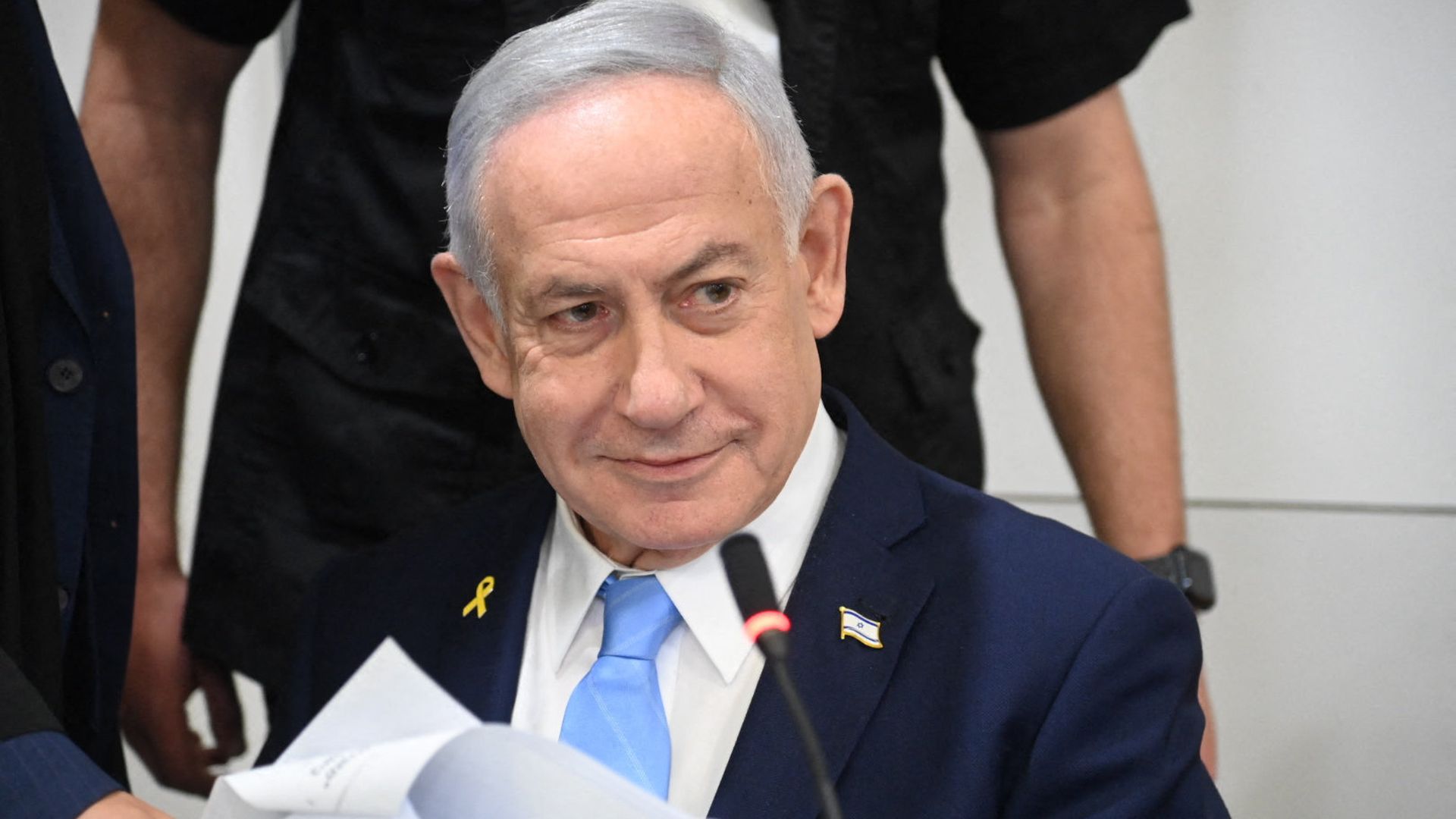
Israeli Prime Minister Benjamin Netanyahu on Sunday informed the head of the Shin Bet, the country’s internal security agency, that he will ask the government to dismiss him.

Netanyahu and Shin Bet agency chief Ronen Bar have been engaged in a public spat in recent weeks over reforms to the agency, which has been accused of failing to prevent the October 7, 2023 Hamas attack.

“Due to ongoing lack of trust, I have decided to bring a proposal to the government to end the tenure of the Shin Bet chief Ronen Bar,” the prime minister said in a video statement.

However, Bar released a statement soon after the prime minister’s announcement saying his dismissal was unrelated to the Hamas attack.

Tension has been building between Israel’s political leadership headed by Netanyahu and the country’s security and military apparatus over who is to blame for failing to prevent Hamas’s unprecedented attack. 

Read moreIsrael’s new army chief says mission against Hamas ‘not accomplished’

“We are in the midst of a war for our very existence… during such an existential war, there must be complete trust between the prime minister and the head of the Shin Bet,” Netanyahu said.

“I have had a persistent lack of confidence in the head of the Shin Bet, a distrust that has only grown over time.”

He said Bar’s dismissal “is necessary to restore the organisation, achieve all our war objectives, and prevent the next disaster.”

Bar’s term is due to expire in October 2026.

Netanyahu has accused him of being behind what he called “part of an ongoing campaign of threats and media leaks” aimed at preventing him “from making the necessary decisions to restore the Shin Bet after its devastating failure on October 7”.

On March 4, the Shin Bet acknowledged its failure in preventing the Hamas attack, saying that if it had acted differently the deadliest day in Israel’s history could have been averted.

The attack resulted in 1,218 deaths on the Israeli side, mostly civilians. Israel’s retaliatory response in Gaza has killed at least 48,572 people, also mostly civilians, according to data from both sides.

In a statement admitting responsibility for failures, Bar said, however, that in order to truly understand how the attack was not stopped, there needed to be a broader probe into the role of Israel‘s security and political elements — and the cooperation between them.

Bar has led the Shin Bet since 2021, but his relations with Netanyahu were strained even before the Hamas attack, notably over proposed judicial reforms that had split the country.

Relations became even more strained after the March 4 release of the internal Shin Bet report on the attack.

The report said that “a policy of quiet had enabled Hamas to undergo massive military buildup”.

Bar’s responsibilities appear to have been curtailed already.

Media reports say he was excluded from a recent security cabinet meeting and also the Israeli negotiating delegation, which is being led by Bar’s deputy, known only as ‘M’.

Bar had been involved in previous sessions of indirect negotiations with Hamas, including those that led to the current fragile ceasefire in the Gaza Strip.

(FRANCE 24 with AFP)

Categories
Michael Novakhov - SharedNewsLinks℠

Netanyahu’s push to fire Israel’s domestic security chief sparks an uproar


Michael_Novakhov
shared this story
.

TEL AVIV, Israel (AP) — Prime Minister Benjamin Netanyahu’s has fired or forced out a string of top officials since the deadly Hamas attack on Israel in 2023 that triggered the war in Gaza. The country’s domestic security chief is the newest target.

Netanyahu says he is motivated by a crisis of confidence and a need to get rid of officials who failed to prevent the Oct. 7, 2023, disaster.

But Netanyahu’s many critics say the dismissals are part of a broader campaign aimed at undermining independent government institutions. They say he is doing that to boost his reputation and maintain power while on trial for alleged corruption and facing public pressure to accept his own responsibility for policy failures in the lead-up to Oct. 7.

The announcement by Netanyahu on Sunday that he would seek to fire the director of the Shin Bet, Ronen Bar, came as the security service investigates ties between Netanyahu advisers and the Gulf state of Qatar.

Israel’s attorney general said Sunday that Netanyahu needed to clarify the legal basis for his decision before taking any action, noting that “the role of the Shin Bet is not to serve the personal trust of the prime minister.”

On Monday, Netanyahu shot back with a warning letter to Attorney General Gali Baharav-Miara, saying she has no authority to intervene in the matter. The dispute adds to growing concerns about the balance of powers in Israel’s government.

Months of tensions preceded Bar’s firing

Tensions between Netanyahu and Bar had been building for months.

Bar, who was appointed to lead the Shin Bet in 2021 by a previous prime minister, accepted responsibility for his agency’s failure to halt the Oct. 7 attack ahead of time. He already has said he planned to step down before the end of his term in late 2026.

But the Shin Bet investigation into its Oct. 7 failures also pointed blame at Netanyahu for formulating a policy that focused on containing Hamas, while ignoring a growing threat.

Bar had been a key player in negotiations to free Israeli hostages held by Hamas. But he and Netanyahu differed on how to proceed. That led Netanyahu to replace him with Cabinet minister Ron Dermer, a Netanyahu confidant. Critics of Netanyahu said the move highlighted a growing tendency by Netanyahu to surround himself with loyalists.

A pair of Shin Bet investigations recently launched against advisers of Netanyahu appeared to be a tipping point.

One is examining a Netanyahu spokesperson who allegedly leaked to a German news outlet classified documents that appeared to give the prime minister political cover in ceasefire negotiations. The other is looking into claims that Qatar reportedly hired close Netanyahu aides to launch a public relations campaign in Israel.

Qatar, a key mediator between Israel and Hamas, was also the source of millions of dollars in cash sent to Gaza, with Netanyahu’s approval. The money, ostensibly meant for poor families, is seen as having helped Hamas bolster its military capabilities ahead of Oct. 7.

The Movement for Quality Government in Israel, a good governance group, said Bar’s dismissal while the probes are ongoing raises concerns that the move was made out of “political considerations.”

The blame game over Oct. 7 has begun

If Bar’s dismissal is approved by the government, he will become the first Shin Bet chief in Israeli history to be fired. But he will also be just the latest in a series of defense officials to exit under pressure from Netanyahu during the war.

In November, Netanyahu fired his defense minister, Yoav Gallant, saying he had lost trust in him. Gallant had repeatedly prodded Netanyahu to set out a postwar plan for Gaza.

Gallant, a former top general, was replaced by Israel Katz, a longtime Netanyahu backer with little military experience who then pressured the military chief, Lt. Gen. Herzi Halevi, to step down earlier this month. Halevi’s replacement then sacked the military’s spokesman, Rear Adm. Daniel Hagari, a popular figure with the public who was rebuked by Israeli leaders for commenting on the leaked documents case.

With many top defense officials linked to the Oct. 7 failures out of office, the blame game over the deadliest attack in Israel’s history begins in earnest.

Netanyahu has repeatedly tried to pin responsibility on his security chiefs, saying he was never warned about Hamas’ intentions and was guided by their advice that Hamas was deterred.

Netanyahu has resisted growing calls for a state commission of inquiry that would examine the government policies that led to Hamas’ attacks. Such a commission could directly implicate Netanyahu.

Commentator Nadav Eyal wrote in the Yediot Ahronot daily that Netanyahu is “firing the witnesses to his failures leading up to Oct. 7 and, by so doing, is creating for himself a perfect alibi. Anything they say from now on will be because they were fired.”

Netanyahu has been challenging state institutions for years

Bar’s dismissal comes against the backdrop of a yearslong fight by Netanyahu against Israel’s state institutions, which he believes are out to get him.

Since he was indicted for corruption charges in 2019, Netanyahu has lashed out against the police, the judiciary and the media, denying any wrongdoing and accusing them of conspiring in a politically motivated witch hunt.

He took that battle a step further in early 2023. That’s when Netanyahu launched a sweeping overhaul of Israel’s justice system that he said was meant to weaken the courts and restore power to elected officials. The overhaul sparked mass protests, strikes and threats by military reservists not to serve a country whose democratic fundamentals were being eroded.

Israeli media have reported that many top security officials, including Bar, warned that the internal strife sent a message of weakness to Israel’s enemies. Many critics believe it was a factor in the timing of the Hamas attack.

Another Netanyahu target is Baharav-Miara, the country’s attorney general. The dispute over her objections to Netanyahu’s effort to fire Bar is likely to end up in the Supreme Court. With the stage set for a showdown between the judiciary and Netanyahu, his allies have already begun planning for Baharav-Miara’s removal.

In his letter to the attorney general on Monday, Netanyahu accused Baharav-Miara of abusing her authority by approving the investigations into members of his staff.

Netanyahu is surrounding himself with loyalists

The next election is scheduled for late 2026, but Netanyahu’s coalition, propped up by ultranationalist and ultra-religious parties, could collapse prematurely. They face a raft of hurdles — including over the future of the war in Gaza, the court-mandated draft of ultra-Orthodox men and the state budget.

With his political fortunes stagnating and many Israelis saying he should resign, the longtime Israeli leader — similar to his ally President Donald Trump — is looking to place loyalists in key positions.

That might make implementing his wishes easier, but it will likely deepen opposition to him and complicate his legacy.

Bar, in his response to being dismissed, said his loyalty was to the people of Israel.

“The prime minister’s expectation of a duty of personal loyalty,” he wrote, “is a fundamentally wrong expectation.”

Categories
Michael Novakhov - SharedNewsLinks℠

Netanyahu moves to fire intel chief who is investigating his aides


Michael_Novakhov
shared this story
.

Netanyahu

Israeli Prime Minister Benjamin Netanyahu has decided to remove Ronen Bar as head of the Shin Bet domestic security agency and will seek cabinet approval for the move this week, the Prime Minister’s Office said in a statement.

Why it matters: No government has ever fired the head of the Shin Bet, Israel’s most powerful security agency. Netanyahu’s decision comes as the agency is investigating two of his advisers for allegedly receiving payments from Qatar during the Israel-Hamas war.

  • Netanyahu’s long-expected move has raised concerns among his political foes that he will replace Bar with a loyalist, politicize the organization, and potentially weaponize it against his political opponents and critics, or to crack down on the protest movement against him.
  • Bar responded to the news by denouncing Netanyahu’s “expectation for personal loyalty to him” which he said violated both the public interest and the laws and values under which his agency operates.

The big picture: While the prime minister appoints the Shin Bet chief, and the cabinet approves the pick, the agency has long been seen as apolitical. Its mandate includes safeguarding Israel’s democratic institutions.

  • Netanyahu is on trial in three cases of bribery, fraud and breach of trust.
  • He has also started taking steps to fire the attorney general tasked with prosecuting those cases.
  • Netanyahu’s aides have said he was inspired by President Trump’s purging of “the deep state” and his decision to appoint loyalists to all key posts.

Behind the scenes: Netanyahu has been pressing Bar for several weeks to resign. Bar refused and told Netanyahu he can fire him if he wants to, an Israeli official tells Axios.

  • Netanyahu’s loyalists in the Israeli press and on social media have been publicly attacking Bar, who spent two decades in the Shin Bet before being appointed director in 2021.
  • Netanyahu’s allies have claimed the intel chief is working to undermine the PM for political reasons.
  • In his statement, Bar said he’d told Netanyahu he had “several sensitive investigations” to complete, as well as getting Israel’s remaining hostages out, before offering the prime minister his resignation and offering two internal candidates to succeed him. He said he still intends to complete those tasks before stepping down.

Driving the news: Several weeks ago, with the approval of the attorney general, the Shin Bet opened an investigation into three of Netanyahu’s advisers for their alleged contacts with Qatar.

  • The investigation, dubbed “Qatar-Gate” in the Israeli press, focused on alleged payments Netanyahu’s advisers facilitated and received from Qatar in return for working on improving the image of the country in Israel.
  • Qatar is one of the key mediators in the Gaza hostage and ceasefire deal. But Netanyahu’s decision in 2018 to ask Qatar to transfer money to Hamas in Gaza for humanitarian purposes became one of the main points of criticism against him after the Oct. 7 attack.
  • The Shin Bet determined a portion of that money went to Hamas’ military build-up.

Between the lines: Bar and Netanyahu both came under criticism for the intelligence failures that allowed the Oct. 7 attack to take place.

  • Bar has taken responsibility in public and private for the failures and called for a national commission of inquiry.
  • Netanyahu has blocked the formation of such a commission, arguing it would be “politically slanted,” and has refused to take any responsibility.
  • Bar had indicated that he would resign once all of Israel’s hostages were returned from Gaza, and had played a key role in hostage negotiations until last month, when Netanyahu froze him out of the talks.

What they’re saying: In a statement on Sunday, Netanyahu claimed he is moving to dismiss the Shin Bet director because of “ongoing and growing lack of trust.”

  • “I believe this step is critical for rehabilitating the organization, achieving the objectives of the war and preventing the next catastrophe,” Netanyahu said.

The latest: Israel’s attorney general advised Netanyahu in a letter on Sunday that he can’t fire Bar because “there is a concern this decision is illegal and suffers from a conflict of interests.”

  • Netanyahu and his cabinet are likely to disregard that objection, though the decision could ultimately come before the Supreme Court.

Flashback: While Bar would be the first Shin Bet chief to be fired, two previous leaders resigned, including the agency’s chief at the time of Prime Minister Yitzhak Rabin’s assassination in 1995.

Categories
Michael Novakhov - SharedNewsLinks℠

Netanyahu dismisses Shin Bet chief over ‘lack of trust’


Michael_Novakhov
shared this story
from Comments for Middle East Monitor.

Israeli Prime Minister Benjamin Netanyahu announced on Sunday his decision to dismiss Shin Bet chief Ronen Bar, citing a lack of trust between them, Anadolu has reported.

“At all times, and especially during an existential war like this, there must be complete trust between the prime minister and the head of Shin Bet,” said Netanyahu. “Unfortunately, the opposite is true; I no longer have that trust.”

Tensions between Netanyahu and the domestic security service escalated in recent days following Shin Bet’s internal investigation into the 7 October 2023 Hamas cross-border incursion. Netanyahu dismissed the report’s findings, saying that they failed to answer key questions.

The findings prompted opposition leaders Yair Lapid and Benny Gantz to demand an apology from Netanyahu. They accused him of deflecting blame.

READ: Conflict escalates between Netanyahu, Shin Bet chief due to 7 October defeat

Shin Bet acknowledged its failure to assess Hamas’ capabilities before the attack, but said that Netanyahu’s policies were also among the underlying causes.

The prime minister argued that Bar’s sacking was critical to achieving “war goals and total victory” in Gaza. The government will review the proposal on Wednesday, according to Israel’s Channel 12.

While several military and intelligence officials have resigned, taking partial responsibility for the failures of 7 October, Netanyahu has refused to accept any responsibility and has dismissed opposition calls for his government’s resignation and an early election.

Earlier on Sunday, police summoned former Shin Bet head Nadav Argaman for questioning after Netanyahu filed a complaint against him, reported Yedioth Ahronoth newspaper.

In an interview on Thursday, Argaman threatened to reveal sensitive information from his meetings with Netanyahu if the prime minister acted unlawfully. “We must end the war in Gaza immediately and bring back all the prisoners,” he said. “There is nothing in Gaza that justifies staying there.”

The next day, Netanyahu filed a complaint with Police Commissioner Daniel Levy. “I am asking you to open an immediate investigation, as all red lines have been crossed,” said the Israeli leader. “The former head of the Shin Bet chose to threaten and blackmail a sitting prime minister, using the methods of organised crime gangs, as if he were a mafia leader rather than a former Israeli security official.”

According to Netanyahu, “This crime is part of a broader campaign of blackmail and threats led by the current head of the Shin Bet [Ronen Bar], whose goal is to prevent me from making the necessary decisions to reform the Shin Bet after its disastrous failure on 7 October, 2023.”

In its response, Shin Bet called Netanyahu’s accusations “serious” and stressed that, “Ronen Bar dedicated all his time and efforts to safeguarding national security, working to bring back Israeli captives, and defending democracy.” The security service added that any other claims were baseless.

READ: Hamas deceived us, ex-Israel chief of staff says

Categories
Michael Novakhov - SharedNewsLinks℠

With Arrival of Bongino, Trump Loyalists Take Command of the F.B.I.


Michael_Novakhov
shared this story
.

Categories
Michael Novakhov - SharedNewsLinks℠

Voice of America goes silent as Trump signs executive order gutting network’s parent agency


Michael_Novakhov
shared this story
from [Untitled].

President Trump signed an executive order over the weekend gutting the federal agency that oversees the Voice of America, the news outlet that for more than 80 years broadcast news and information into countries where independent reporting is restricted or censored.

Hours after Trump signed an executive order Friday directing the elimination of the US Agency for Global Media, numerous journalists, executives and staff at the organization’s Washington headquarters were notified that they were being placed on paid leave, according to National Public Radio.

The White House on Saturday put out a press release titled “The Voice of Radical America,” which cited several claims accusing VOA of displaying “a leftist bias aligned with partisan national media.”

Staff members reported promptly losing access to their work emails and internal communication systems.

Over 1,000 full-time employees from Voice of America and the Office for Cuba Broadcasting, which operates Radio and Television Martí, were impacted.

As of Saturday, VOA radio broadcasts heard in Asia and the Middle East either went silent or aired just music, according to the New York Times.

The White House defended the decision by pointing to past criticisms of VOA’s reporting, which had been described as propaganda, arguing that government-funded media organizations like VOA are no longer relevant.

Echoing this viewpoint, Elon Musk, the Tesla chief who runs the Department of Government Efficiency, said of VOA: “Nobody listens to them anymore.”

A White House “rapid response” account on X cited two stories as justification for why “US taxpayers shouldn’t be funding” the VOA, including one with a headline detailing how VOA told its reporters not to refer to Hamas as “terrorists.”

The other story was a headline from a VOA article titled: “What is ‘White Privilege’ and Whom Does it Help?”

Kari Lake, the former newscaster-turned-politician who twice ran unsuccessfully for office in Arizona as a Republican, was appointed by Trump to oversee VOA. She recently described its parent organization, USAGM, as beyond reform.

VOA, which is based in Washington, DC, traditionally produces news programs that reach millions globally via a network of affiliates.

Furthermore, many international stations that previously relied on VOA content will continue airing without any input from US-based journalists.

Some of these networks began carrying news from state-controlled media from countries such as Russia and China — nations whose narratives VOA had historically counterbalanced.

“They have pulled the plug operationally,” David Z. Seide, an attorney with the Government Accountability Project who represents several VOA journalists, told the Times.

Seide is weighing potential legal action to restore the affected employees.

Echoing this sentiment, the American Foreign Service Association pledged “a vigorous defense” of its VOA members.

VOA began broadcasting in 1942 to counter Nazi propaganda and continued through the Cold War as a vital tool against Soviet disinformation.

Until this abrupt interruption, VOA reached hundreds of millions of listeners worldwide, including in repressive regimes such as Iran and China.

VOA’s charter explicitly protects its editorial independence, mandating balanced reporting free from political interference.

“To effectively shutter the Voice of America is to dim a beacon that burned bright during some of the darkest hours since 1942,” VOA correspondent Steven Herman, who was placed on administrative leave earlier this month over an X post deemed to be critical of Trump, wrote on social media.

The shutdown also affects sister networks such as Radio Free Europe/Radio Liberty, Radio Free Asia, and others serving over 420 million people weekly.

Steve Capus, president of Radio Free Europe/Radio Liberty, said ending their grants would be “a massive gift to America’s enemies.”

This move has drawn criticism from Trump’s own party.

Rep. Michael McCaul (R-Texas), former Republican chairman of the House Foreign Affairs Committee, emphasized the networks’ critical role in countering foreign propaganda, especially in authoritarian regimes.

“That’s why I strongly support many of its programs,” McCaul told NPR.

“Programs like [Radio Free Asia] provide day-to-day updates on far-off regions, uphold a free press even in authoritarian countries, and ensure Americans — and people everywhere — are not subject to our adversaries’ propaganda.”