Categories
Saved Web Pages - Audio Posts

Mossad Officials Look Forward to Chief Cohen’s Exit. Here’s What They Want Next – Israel News – Haaretz.com

3807732366.jpg?precrop=1372,798,x463,y9&

Haaretz | Israel News

The high expectations in the agency over Cohen’s imminent departure are not due to any operational failures, but reflect the disgust at his behavior and fears that he was politically motivated

Get email notification for articles from Yossi Melman Follow

May 4, 2021

Get email notification for articles from Yossi Melman Follow

Many of the Mossad’s 7,000 employees – certainly the senior ones at the highest level – are eagerly awaiting the retirement of their commander and chief, Yossi Cohen, in a month’s time.

Paid by Attorney Rakefet Shfaim
Categories
Saved Web Pages - Audio Posts

What Mossad Chief Cohen Was Really Doing in D.C. Last Week – Israel News – Haaretz.com

425528.jpg?precrop=1746,1013,x293,y100&h

Haaretz | Israel News

Netanyahu needs an experienced Iran hand on American soil at this time, and at least, unlike Ron Dermer, Yossi Cohen isn’t a walking red flag

Get email notification for articles from Yossi Melman Follow

Jan 21, 2021

Get email notification for articles from Yossi Melman Follow

Mossad chief Yossi Cohen has a regrettable habit: a tendency to “get caught” on camera in public. He thereby gets it all — media attention, while still emanating that mysterious mien befitting the country’s top spy with an obligation to maintain secrecy.

Paid by Attorney Rakefet Shfaim
Categories
Saved Web Pages - Audio Posts

The (Mis)adventures of Mossad Chief Yossi Cohen – Israel News – Haaretz.com

1852858599.jpg?precrop=1177,686,x23,y279

Mixing politics and business with espionage: as he has risen in the ranks, Yossi Cohen has formed close ties with the Netanyahu family and a clutch of billionaires

Get email notification for articles from Shuki Sadeh Follow

Apr 2, 2021

Get email notification for articles from Shuki Sadeh Follow

Apr 2, 2021

Two weeks ago, Bloomberg News reported that pressure had been exerted on Trump administration officials last year by Mossad head Yossi Cohen and Israeli Ambassador to the United States Ron Dermer to remove sanctions on Dan Gertler, the Israeli billionaire suspected by the U.S., British and Swiss authorities of corrupt dealings connected to his diamond interests in the Democratic Republic of the Congo.

Paid by Attorney Rakefet Shfaim
Categories
Saved Web Pages - Audio Posts

US, British militaries launch massive retaliatory strike against Iranian-backed Houthis in Yemen

WASHINGTON (AP) — The U.S. and British militaries bombed more than a dozen sites used by the Iranian-backed Houthis in Yemen on Thursday, in a massive retaliatory strike using warship- and submarine-launched Tomahawk missiles and fighter jets, U.S. officials said.

The U.S. Air Force’s Mideast command said it struck over 60 targets at 16 sites in Yemen, including “command-and-control nodes, munitions depots, launching systems, production facilities and air defense radar systems.”

President Joe Biden said the strikes were meant to demonstrate that the U.S. and its allies “will not tolerate” the militant group’s ceaseless attacks on the Red Sea. And he said they only made the move after attempts at diplomatic negotiations and careful deliberation.

“These strikes are in direct response to unprecedented Houthi attacks against international maritime vessels in the Red Sea — including the use of anti-ship ballistic missiles for the first time in history,” Biden said in a statement. He noted the attacks endangered U.S. personnel and civilian mariners and jeopardized trade, and he added, “I will not hesitate to direct further measures to protect our people and the free flow of international commerce as necessary.”

Associated Press journalists in Yemen’s capital, Sanaa, heard four explosions early Friday local time. Two residents of Hodieda, Amin Ali Saleh and Hani Ahmed, said they heard five strong explosions hitting the western port area of the city, which lies on the Red Sea and is the largest port city controlled by the Houthis. Eyewitnesses who spoke with the AP also said they saw strikes in Taiz and Dhamar, cities south of Sanaa.

The strikes marked the first U.S. military response to what has been a persistent campaign of drone and missile attacks on commercial ships since the start of the Israel-Hamas war. And the coordinated military assault comes just a week after the White House and a host of partner nations issued a final warning to the Houthis to cease the attacks or face potential military action. The officials described the strikes on condition of anonymity to discuss military operations. Members of Congress were briefed earlier Thursday on the strike plans.

The warning appeared to have had at least some short-lived impact, as attacks stopped for several days. On Tuesday, however, the Houthi rebels fired their largest-ever barrage of drones and missiles targeting shipping in the Red Sea, with U.S. and British ships and American fighter jets responding by shooting down 18 drones, two cruise missiles and an anti-ship missile. And on Thursday, the Houthis fired an anti-ship ballistic missile into the Gulf of Aden, which was seen by a commercial ship but did not hit the ship.

In this photo provided by the United Kingdom Ministry of Defence on Wednesday, Jan. 10, 2024, taken from the bridge of HMS Diamond, Sea Viper missiles are fired in the Red Sea. U.S. and British militaries are bombing more than a dozen sites used by the Iranian-backed Houthis in Yemen, in a massive retaliatory strike using warship-launched Tomahawk missiles.(UK Ministry of Defence via AP)

In this photo provided by the United Kingdom Ministry of Defence on Wednesday, Jan. 10, 2024, taken from the bridge of HMS Diamond, Sea Viper missiles are fired in the Red Sea. (UK Ministry of Defence via AP)

In a call with reporters, senior administration and military officials said that after the Tuesday attacks, Biden convened his national security team and was presented with military options for a response. He then directed Defense Secretary Lloyd Austin, who remains hospitalized with complications from prostate cancer surgery, to carry out the retaliatory strikes.

In a separate statement, U.K. Prime Minister Rishi Sunak said the Royal Air Force carried out targeted strikes against military facilities used by the Houthis. The Defense Ministry said four fighter jets based in Cyprus took part in the strikes.

Noting the militants have carried out a series of dangerous attacks on shipping, he added, “This cannot stand.” He said the U.K. took “limited, necessary and proportionate action in self-defense, alongside the United States with non-operational support from the Netherlands, Canada and Bahrain against targets tied to these attacks, to degrade Houthi military capabilities and protect global shipping.”

The governments of Australia, Bahrain, Canada, Denmark, Germany, Netherlands, New Zealand and South Korea joined the U.S. and U.K. in issuing a statement saying that while the aim is to de-escalate tensions and restore stability in the Red Sea, the allies won’t hesitate to defend lives and protect commerce in the critical waterway.

In this image provided by the U.S. Navy, the amphibious dock landing ship USS Carter Hall and amphibious assault ship USS Bataan transit the Bab al-Mandeb strait on Aug. 9, 2023. The top commander of U.S. naval forces in the Middle East says Yemen’s Houthi rebels are showing no signs of ending their “reckless” attacks on commercial ships in the Red Sea. But Vice Adm. Brad Cooper said in an Associated Press interview on Saturday that more nations are joining the international maritime mission to protect vessels in the vital waterway and trade traffic is beginning to pick up. (Mass Communications Spc. 2nd Class Moises Sandoval/U.S. Navy via AP)

In this image provided by the U.S. Navy, the amphibious dock landing ship USS Carter Hall and amphibious assault ship USS Bataan transit the Bab al-Mandeb strait on Aug. 9, 2023. (Mass Communications Spc. 2nd Class Moises Sandoval/U.S. Navy via AP)

Russia, however, requested an emergency meeting of the U.N. Security Council on the strikes. France, the current council president, said it will take place Friday afternoon.

The rebels, who have carried out 27 attacks involving dozens of drones and missiles just since Nov. 19, had warned that any attack by American forces on its sites in Yemen will spark a fierce military response.

A high-ranking Houthi official, Ali al-Qahoum, vowed there would be retaliation. “The battle will be bigger … and beyond the imagination and expectation of the Americans and the British,” he said in a post on X.

Al-Masirah, a Houthi-run satellite news channel, described strikes hitting the Al-Dailami Air Base north of Sanaa, the airport in the port city of the Hodeida, a camp east of Saada, the airport in the city of Taiz and an airport near Hajjah.

The Houthis later Friday said the strikes killed five of their troops and wounded six.

A senior administration official said that while the U.S. expects the strikes will degrade the Houthis’ capabilities, “we would not be surprised to see some sort of response,” although they haven’t seen anything yet. Officials said the U.S. used warplanes based on the Navy aircraft carrier USS Dwight D. Eisenhower and Air Force fighter jets, while the Tomahawk missiles were fired from Navy destroyers and a submarine.

FILE - Britain's Prime Minister Rishi Sunak, left, and U.S. President Joe Biden speak at the start of the meeting of the North Atlantic Council (NAC) during the NATO Summit in Vilnius, Lithuania, July 11, 2023. U.S. and British militaries are bombing more than a dozen sites used by the Iranian-backed Houthis in Yemen, in a massive retaliatory strike using warship-launched Tomahawk missiles. (Paul Ellis/Pool Photo via AP, File)

FILE – Britain’s Prime Minister Rishi Sunak, left, and U.S. President Joe Biden speak at the start of the meeting of the North Atlantic Council (NAC) during the NATO Summit in Vilnius, Lithuania, July 11, 2023. (Paul Ellis/Pool Photo via AP, File)

The Houthis say their assaults are aimed at stopping Israel’s war on Hamas in the Gaza Strip. But their targets increasingly have little or no connection to Israel and imperil a crucial trade route linking Asia and the Middle East with Europe.

Meanwhile, the U.N. Security Council passed a resolution Wednesday that demanded the Houthis immediately cease the attacks and implicitly condemned their weapons supplier, Iran. It was approved by a vote of 11-0 with four abstentions — by Russia, China, Algeria and Mozambique.

Britain’s participation in the strikes underscored the Biden administration’s effort to use a broad international coalition to battle the Houthis, rather than appear to be going it alone. More than 20 nations are already participating in a U.S.-led maritime mission to increase ship protection in the Red Sea.

U.S. officials for weeks had declined to signal when international patience would run out and they would strike back at the Houthis, even as multiple commercial vessels were struck by missiles and drones, prompting companies to look at rerouting their ships.

On Wednesday, however, U.S. officials again warned of consequences.

“I’m not going to telegraph or preview anything that might happen,” Secretary of State Antony Blinken told reporters during a stop in Bahrain. He said the U.S. had made clear “that if this continues as it did yesterday, there will be consequences. And I’m going to leave it at that.”

The Biden administration’s reluctance over the past several months to retaliate reflected political sensitivities and stemmed largely from broader worries about upending the shaky truce in Yemen and triggering a wider conflict in the region. The White House wants to preserve the truce and has been wary of taking action in Yemen that could open up another war front.

The impact on international shipping and the escalating attacks, however, triggered the coalition warning, which was signed by the United States, Australia, Bahrain, Belgium, Canada, Denmark, Germany, Italy, Japan, Netherlands, New Zealand, Singapore and the United Kingdom.

Transit through the Red Sea, from the Suez Canal to the Bab el-Mandeb Strait, is a crucial shipping lane for global commerce. About 12% of the world’s trade typically passes through the waterway that separates Africa and the Arabian Peninsula, including oil, natural gas, grain and everything from toys to electronics.

In response to the attacks, the U.S. created a new maritime security mission, dubbed Operation Prosperity Guardian, to increase security in the Red Sea, Bab el-Mandeb Strait and the Gulf of Aden, with about 22 countries participating. U.S. warships, and those from other nations, have been routinely sailing back and forth through the narrow strait to provide protection for ships and to deter attacks. The coalition has also ramped up airborne surveillance.

The decision to set up the expanded patrol operation came after three commercial vessels were struck by missiles fired by Houthis in Yemen on Dec. 3.

The Pentagon increased its military presence in the region after the Oct. 7 Hamas attacks in Israel to deter Iran from widening the war into a regional conflict, including by the Houthis and Iran-backed militias in Iraq and Syria.

____

Associated Press writers Ahmed al-Haj in Sanaa, Yemen; Jack Jeffery in London; Jon Gambrell in Dubai, United Arab Emirates; Edith M. Lederer at the United Nations; and Zeke Miller, Aamer Madhani and Seung Min Kim in Washington contributed to this report.

Categories
Saved Web Pages - Audio Posts

US and UK carry out strikes against Iran-backed Houthis in Yemen

The US and UK militaries launched strikes against Houthi targets in Houthi-controlled areas of Yemen on Thursday, marking a significant response after the Biden administration and its allies warned that the Iran-backed militant group would bear the consequences of its attacks on commercial shipping in the Red Sea.

US President Joe Biden said he ordered the strikes “in direct response to unprecedented Houthi attacks against international maritime vessels in the Red Sea.”

“Today, at my direction, U.S. military forces — together with the United Kingdom and with support from Australia, Bahrain, Canada, and the Netherlands—successfully conducted strikes against a number of targets in Yemen used by Houthi rebels to endanger freedom of navigation in one of the world’s most vital waterways,” the president said in a statement released by the White House.

Biden added that he will “not hesitate to direct further measures to protect our people and the free flow of international commerce as necessary.”

British Prime Minister Rishi Sunak said on Friday the strikes were an act of “self-defense,” adding that the aim was to “de-escalate tensions and to restore stability to the region.”

US and coalition forces struck over 60 targets with more than 100 precision-guided munitions at 16 Iranian-backed Houthi militant locations, US Air Forces Central Commander Lt. Gen. Alex Grynkewich said. The Houthi assets included command and control nodes, munitions, depots, launching systems, production facilities, and air defense radar systems, he added.

The strikes, which have been condemned by several leaders across the Middle East, killed five and wounded six others, according to the rebels’ military spokesperson, Yahya Sare’e, who said the airstrikes would not deter further Houthi attacks on shipping.

The US and UK strikes are a sign of the growing international alarm over the threat to one of the world’s most critical waterways. For weeks, the US had sought to avoid direct strikes on Yemen because of the risk of escalation in a region already simmering with tension as the Israel-Hamas war continues, but the ongoing Houthi attacks on international shipping compelled the coalition to act.

Though the US has carried out strikes against Iranian proxies in Iraq and Syria since the outbreak of the war in Gaza, this marks the first known strike against the Houthis in Yemen.

The strikes were from fighter jets and Tomahawk missiles. More than a dozen Houthi targets were fired on by missiles fired from air, surface, and sub platforms and were chosen for their ability to degrade the Houthis’ continued attacks on vessels in the Red Sea, a US official told CNN.

The USS Florida, a guided missile submarine that crossed into the Red Sea on November 23, was part of the attack on Yemen, according to a second US official.

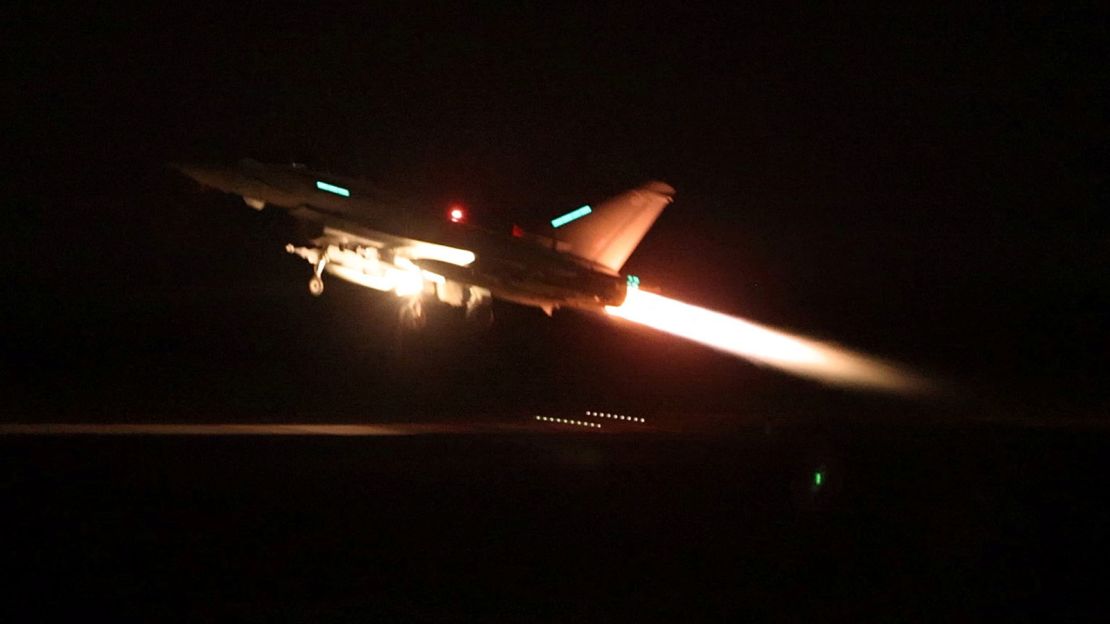
Four British Typhoon jets departed RAF Akrotiri, a major UK airbase in Cyprus, on Thursday evening local time, according to a British government official.

Two Voyager air-to-air refuelling tankers also comprised the mission, UK junior armed forces minister James Heappey told the BBC on Friday, adding that at least 14 targets were successfully hit.

“They flew south, joined up with their US colleagues, and prosecuted two targets in Houth-controlled Yemen, both of which had been used for the launching of drone and missile attacks,” Heappey added. There are no more UK convoys “immediately planned,” he said.

On Thursday, Rear-Admiral Emmanuel Slaars, joint commander of French forces in the Red Sea region, told journalists in Paris that French naval forces were patroling the waters where the Houthis operated.

Slaars said the French navy forces remain “under national command” and were “not subordinated” to the US. However, they are cooperating and sharing intelligence with the US.

A senior US military official told reporters on Thursday evening that he could not provide an exact percentage of Houthi assets that were destroyed in the strikes but that it was “significant.” He added that precision guided munitions were used to destroy the targets “and also to minimize collateral damage.”

“We were absolutely not targeting civilian population centers. We were going after very specific capabilities, in very specific locations, with precision munitions,” the official said.

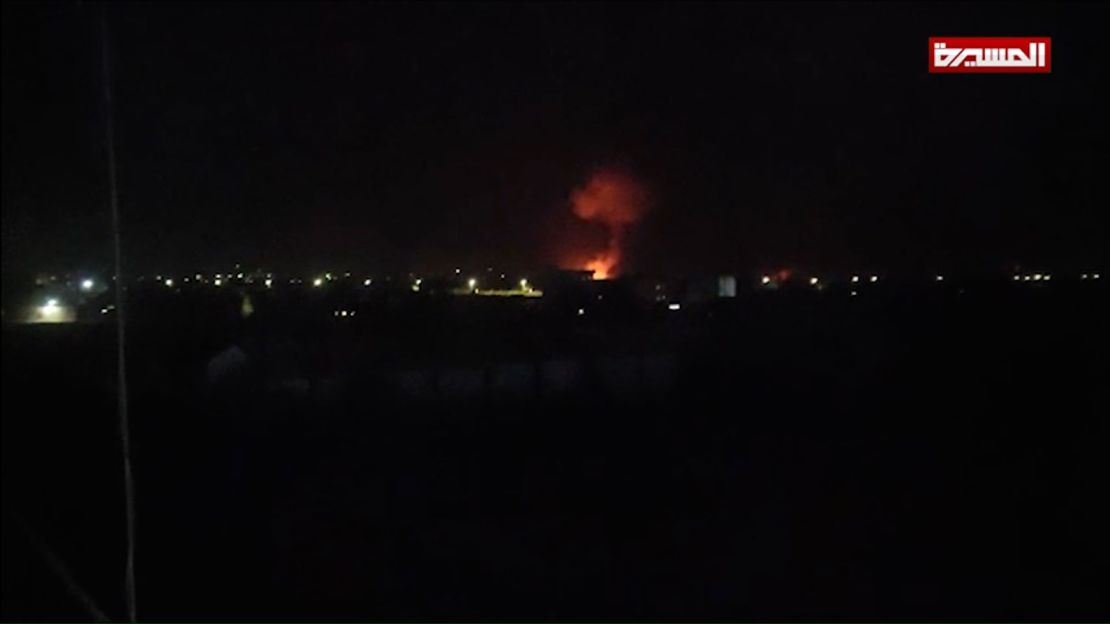
A still from a video released by Houthi-run al-Masira TV allegedly shows the moment of the bombardment in Sanaa, Yemen.

The Houthis — an Iran-backed Shia political and military organization that has been fighting a civil war in Yemen against a coalition backed by Saudi Arabia — have been launching drones and missiles at commercial shipping vessels in the Red Sea for weeks, many of which have been intercepted and shot down by US Navy ships in the area.

The Houthis have said their bombardments are showing solidarity with the Palestinian people, after Israel launched an unrelenting military campaign on Gaza following Hamas’ October 7 terror attacks.

The Houthis have said they will only relent when Israel allows the entry of food and medicine into Gaza; its strikes could be intended to inflict economic pain on Israel’s allies in the hope they will pressure it to cease its military offensive.

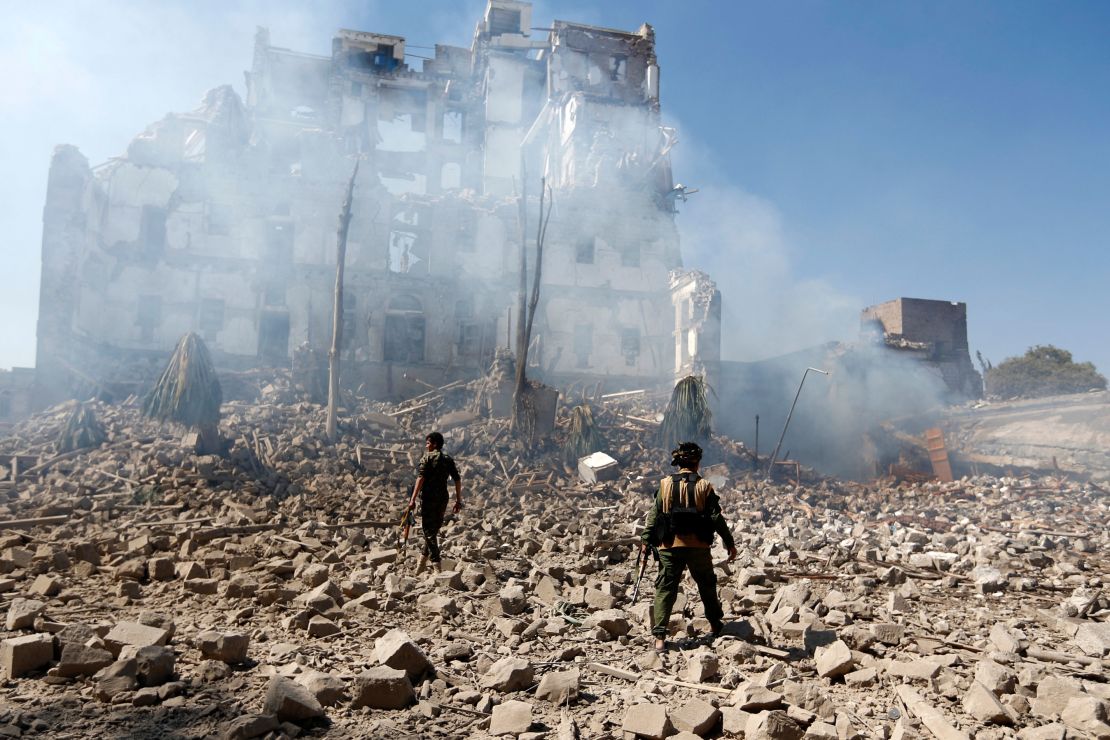
TOPSHOT - Huthi rebel fighters inspect the damage after a reported air strike carried out by the Saudi-led coalition targeted the presidential palace in the Yemeni capital Sanaa on December 5, 2017. Saudi-led warplanes pounded the rebel-held capital before dawn after the rebels killed former president Ali Abdullah Saleh as he fled the city following the collapse of their uneasy alliance, residents said. (Photo by Mohammed HUWAIS / AFP) (Photo by MOHAMMED HUWAIS/AFP via Getty Images)

Within Yemen, a yearslong conflict between Houthi forces and the Saudi-backed coalition has plunged the population into a devastating humanitarian crisis marked by famine, economic turmoil and extreme poverty.

Houthi forces stormed the capital Sanaa in 2014, and toppled the internationally recognized and Saudi-backed government, triggering a civil war. The conflict spiraled into a wider war in 2015 when a Saudi-led coalition intervened in an attempt to beat back the Houthis.

The conflict has killed up to 377,000 people, the United Nations Development Programme (UNDP) reported in 2021. More than half of those died from indirect causes associated with the conflict, such as lack of food, water and healthcare.

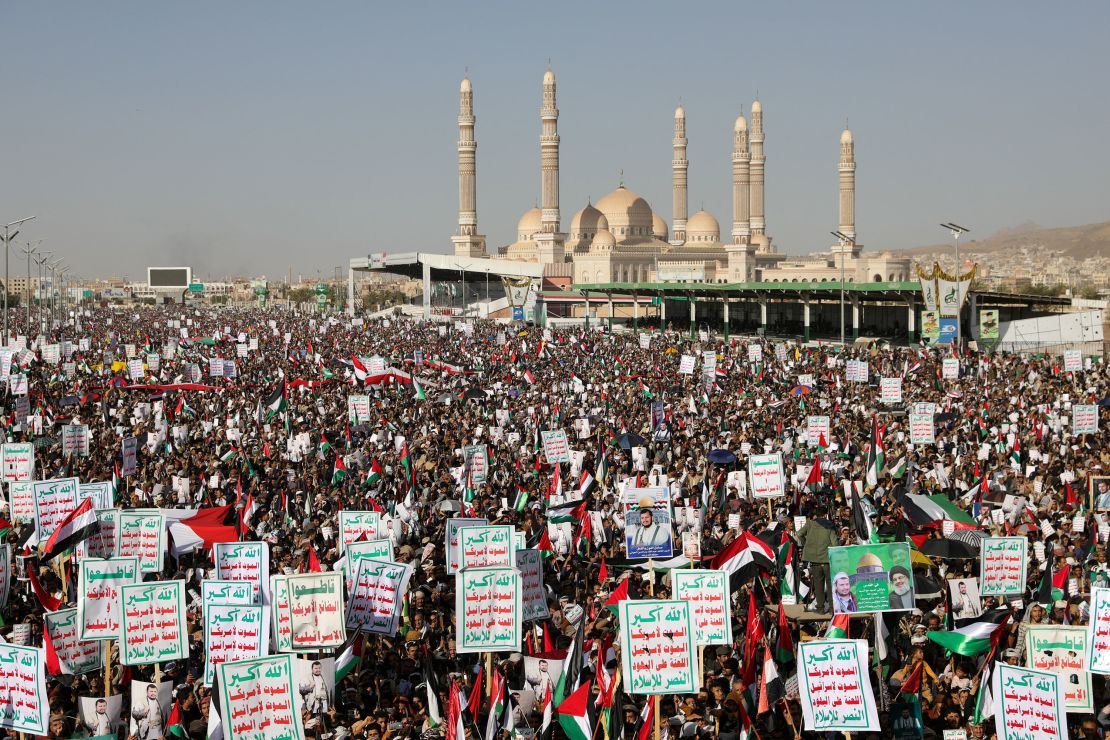
Pro-Houthi demonstrators gathered in Sanaa on Friday, protesting against the US and UK airstrikes. Some chanted, “God is great, death to America, death to Israel, curse the Jews, victory to Islam.”

Supporters of the Houthi movement rally to denounce air strikes launched by the U.S. and Britain on Houthi targets, in Sanaa, Yemen January 12, 2024. REUTERS/Khaled Abdullah

The Houthi attacks on Red Sea shipping on Tuesday marked the final straw that culminated in Biden giving the green light for the US to move forward with Thursday’s strikes, though preparations have been ongoing for some time, a senior US official told CNN.

The strikes come as Secretary of Defense Lloyd Austin remains hospitalized following complications from a surgery for prostate cancer. A senior Defense official said Austin ordered and monitored the strikes in in real-time from the hospital “with a full suite of secure communications.”

Over the course of the past several weeks, Biden has weighed potential strikes against Houthi positions in Yemen against the prospect of an escalating crisis in the Middle East. His underlying hesitancy in ordering direct action has been the potential of getting drawn in more directly to an expanding conflict — a scenario US officials believe could ultimately be Iran’s objective.

But the White House had made clear the repeated Houthi attacks on international shipping lanes in the southern Red Sea were intolerable. The attacks have forced some of the world’s largest shipping companies to avoid the waterway, instead adding thousands of miles to international shipping routes by sailing around the continent of Africa.

Hours before the strike on Thursday, Pentagon spokesman Maj. Gen. Pat Ryder said Iran “has a role to play” in getting the Houthis to stop their “reckless, dangerous, and illegal activity.” If they did not, he said, “there will be consequences.”

The Houthi’s deputy foreign minister, Hussein al-Ezzi, claimed that Yemen was targeted in a “massive aggressive assault.”

In a speech Thursday, Houthi leader Abdul Malek Al-Houthi said that any US attack on Yemen ” will not go unanswered,” cryptically warning that the response will be “much more” than attacking US ships in the sea.

Houthi rebels’ military spokesperson Sare’e on Friday said they would continue their aggression against commercial ships in the Red Sea.

In a statement Friday on social media, Mohammed Ali al-Houthi, the head of the group’s Supreme Revolutionary Committee, said the airstrikes “are barbaric, terrorist, and are a deliberate and unjustified aggression that reflects a brutal psychology.”

SANA'A, YEMEN - MARCH 23: Girls from families affected by eight years of war and blockade receive free meals provided by a charitable kitchen in the Mseek area on March 23, 2022 in Sana'a, Yemen. March 26th marks the 8th anniversary of the military intervention of the coalition led by Saudi Arabia on Yemen, which left the country to be the largest food security crisis in the world, with two-thirds of the population of Yemen in dire need of humanitarian assistance and protection services. Tens of thousands already live in famine-like conditions, with six million more just a step away from it. The war also displaced over 4 million people, and plunged the Arab country to the brink of collapse. (Photo by Mohammed Hamoud/Getty Images)

The senior military official said the Pentagon has thus far not seen any signs of retaliatory action by the Houthis as of Thursday night.

A senior US administration official signaled that there could be more action to come against the Houthis.

New explosions were heard in Yemen’s western port city of Hodeidah on Friday, a resident told CNN.

The airport in Hodeidah had been hit in the initial round of strikes early Friday morning. The resident provided CNN a video that showed smoke rising from the direction of the airport.

CNN has reached out to the US Department of Defense about the explosions, and whether there are new strikes in Yemen.

On Thursday, US Secretary of State Antony Blinken warned while traveling in the region that “if it doesn’t stop, there will have to be consequences. And unfortunately, it hasn’t stopped.”

Blinken also said he doesn’t believe the war in Gaza is escalating into a regional conflict, even as he warned of “a lot of danger points.” While in the region, Blinken visited Bahrain, home to the US Naval Forces Central Command and the Navy’s Fifth Fleet.

An important aspect of Blinken’s trip to the Middle East was to tell regional leaders that if US takes military action against the Houthis, it should be seen as defensive, not escalatory, according to a senior State Department official.

On Wednesday, the United Nations Security Council passed a US- and Japan-led resolution condemning “in the strongest terms the at least two dozen Houthi attacks on merchant and commercial vessels since November 19, 2023” and demanding “that the Houthis immediately cease all such attacks.” Eleven countries voted in favor of the resolution. Four abstained, including China and Russia. A Western diplomat told CNN that the US accommodated some of China’s requests on the language of the resolution.

US strikes in Yemen are not unprecedented; according to the Council on Foreign Relations, the US has conducted nearly 400 airstrikes in Yemen since 2002.

In Yemen, officials say they are concerned at what a strike against the Houthis would portend for the region. Declassified US intelligence shows that Iran has been deeply involved in coordinating the Houthi attacks on commercial and merchant ships, including providing information about shipping vessels passing through the waterway.

Among the US’ concerns about taking direct action inside Yemen is also the risk of upsetting a carefully brokered truce in the war in Yemen between the Houthis and Saudi Arabia, which a US official previously told CNN the Biden administration considers one of its most significant foreign policy achievements.

Some American officials feared a direct attack on the Houthis in Yemen would be precisely what the group craved: drawing the US into direct engagement with the Iranian proxy group and potentially committing its forces to a more prolonged conflict.

An RAF Typhoon aircraft takes off to join the US-led coalition from RAF Akrotiri to conduct air strikes against military targets in Yemen, aimed at the Iran-backed Houthi militia that has been targeting international shipping in the Red Sea, in Cyprus, in this handout picture released on January 12, 2024, local time.

Still, Biden’s attempts at deterrence had done little to prevent the Houthis from continuing their attacks on commercial and merchant ships transiting the Red Sea.

A significant turning point came around New Year’s, when US Navy helicopters shot and sank three Houthi boats in self-defense, killing those aboard. It was the first direct engagement between the US and Houthis since the start of the conflict, and prompted Biden to convene his national security team for a secure briefing call while he was on vacation in the US Virgin Islands.

That joint statement was issued on January 3, saying that the Houthis “will bear the responsibility of the consequences should they continue to threaten lives, the global economy, and free flow of commerce in the region’s critical waterways.”

While not describing the statement as a red line, Biden and his team recognized the language would essentially bind them to a more forceful response should the Houthi attacks continue, which many officials privately believed they would.

Just on Tuesday, the US Navy to shot down 21 missiles and drones fired by the Houthis; culminating on Thursday the fiercest response from the Biden administration since the salvos began.

There have been at least 27 Houthi attacks since November 19. As the US and its allies have been navigating the Houthis’ ongoing attacks, there have also been at least 131 attacks on US and coalition forces in Iraq and Syria since October 17, leading to several strikes on facilities linked to Iran’s Islamic Revolutionary Guard Corps and other proxy forces.

But many of the commercial vessels have had no connection to Israel. Vice Adm. Bradley Cooper, the commander of US Navy Central Command, said last week that the US assesses 55 nations have “direct connections” to the ships that have come under fire.

CNN’s Samantha Waldenberg, Paul W. Murphy, Jonny Hallam, Amy Cassidy, Dalal Mawad and Catherine Nicholls contributed to this report.

CLARIFICATION: This story has been updated to clarify that the USS Florida is a guided-missile submarine.

This story has been updated with additional developments.

Categories
Saved Web Pages - Audio Posts

FBI Finds Evidence Of Israeli Intervention In Trump’s 2016 Campaign

YouTube video

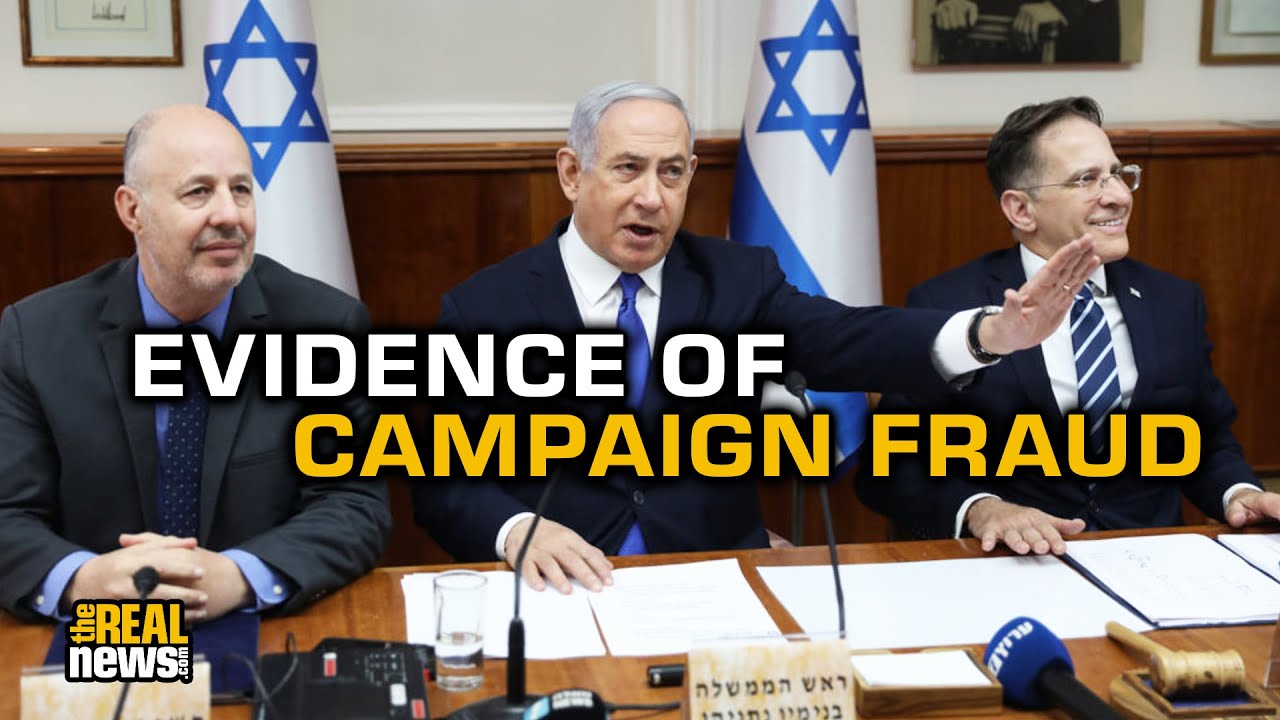
An Israeli minister met with Roger Stone to provide information that may have benefited the Trump campaign. The discovery implicates Netanyahu in an attempt to distort the 2016 US election result.

This is a rush transcript and may contain errors. It will be updated.

Kim Brown: Welcome to The Real News. I’m Kim Brown. The US presidential elections of 2016 had such a profound impact on the world. A few did predict some of the things that happened, but many others did not. Now President Donald Trump’s policies seem to clash so clearly with the interests of the citizens of the US that there is no shortage of speculations, reaching from conspiracy theories to proven facts, about what interests have put him in power and for what purpose.

Here at The Real News, we reported about Russiagate, the Russian involvement with the 2016 election campaign, and also about US involvement in the politics of other countries. But new evidence shows that the Israeli government illegally offered and gave Candidate Trump intelligence which may have contributed to his victory. The FBI released new documents showing that an Israeli minister met with Trump advisor, Roger Stone, who has since been convicted of tampering with justice, and offered him information collected by Israeli intelligence services.

Now this information was reported by Politico. Richard Silverstein, in his blog, Tikun Olam, exposed that the Israeli minister involved is most likely Tzachi Hanegbi, Netanyahu’s lapdog. So indeed, when Trump won the presidential election, one man was not surprised.

Speaker 2: President-elect Trump, my friend, congratulations on being elected president of the United States of America. You are a great friend of Israel. Over the years, you have expressed your support consistently, and I deeply appreciate it. I look forward to working with you to advance security, prosperity and peace. Israel is grateful for the broad support it enjoys among the American people, and I am confident that the two of us, working closely together, will bring the great alliance between our two countries to even greater heights. May God bless America. May God bless Israel. May God bless our enduring alliance.

Kim Brown: Richard Silverstein joins us today. He’s an independent journalist who writes the blog, Tikun Olam, which explores Jewish and Muslim relations and the Israeli-Arab conflict. He joins us today from Seattle. Richard, thank you so much for being here.

Richard Silvers…: I’m glad to do it. Thank you.

Kim Brown: So this, to me, is a very fascinating topic. So let’s start with what has been reported. In your opinion, tell us who is Tzachi Hanegbi and what made you think that he was the unnamed minister from the FBI report.

Richard Silvers…: Well, the FBI documents have redacted the name of this contact, but Israeli media have taken sort of the breadcrumbs in the FBI document and figured out, based on what they said about this person, that it was indeed Tzachi Hanegbi, who is a long-time Likud apparatchik who has sort of risen in the ranks over years to be one of Netanyahu’s closest political confidantes. At the time he was a minister without portfolio specializing in military and foreign affairs, which made him a perfect intermediary in this situation with Roger Stone. Because during this period, which was a couple of months before the 2016 election, Hanegbi made regular visits to the United States, and many of those visits were designed to try to create this meeting with Trump through Roger Stone.

In the documents, Hanegbi is portrayed as telling Stone that it looks like Trump’s candidacy is doomed, but that he needs an October surprise to pull things out and that Israel has just the ticket for him. It doesn’t really go into detail about what the particular intelligence information is, but it does mention that, at one of these meetings at least, Hanegbi, with another colleague of Stone named Jerome Corsi, brought an Israeli IDF lieutenant general to the conference, to the meeting.

So there is this element of Israeli intelligence being used and offered to Trump in order to win the election. I’m trying to figure out, find out what exactly the intelligence information was, but you can imagine that that’s not readily available at this point.

Kim Brown: Well, Richard, let’s imagine, shall we? I mean, you just gave us the facts. Now, let’s venture a bit into speculation. I mean, what do you think was involved or contained in the intelligence report that the Trump administration received from the unnamed Israeli minister? The term quid pro quo has floated around and attached itself to Donald Trump since he’s been president. Let’s speculate here. What do you think he got, and what do you think he was expected to give up?

Richard Silvers…: Well, if we look at what the Russians have done, their style is what’s called kompromat, which is usually trying to morally compromise their enemies. So it is possible that there was some kind of information that was meant to embarrass Hillary Clinton. It’s possible that this was more along the lines of some substantive intelligence trove like Israel and Netanyahu constantly try to present Iranian documents proving that Iran is a nuclear power or wants to get nuclear weapons. So it could be something along those lines.

But I want to just go back a little bit also and say that in the midst of the negotiations and the meetings that we’re talking about, it doesn’t seem, until the very last minute, that Hanegbi actually succeeded in meeting Trump. But there is a point in the document where it says that the last correspondence between Stone and Hanegbi was on October 30, 2016, a few days before the election.

There is a message in the document that says that the person, whose name again is redacted, did meet with Trump on October 30th or actually right before October 30th. That would mean if this was Hanegbi, that he did actually have the meeting with Trump. If he did have this meeting, he did transfer the intelligence information. So that really makes this conspiracy with a lot of substance to it rather than just a conspiracy in which they intended to sabotage the election but didn’t necessarily do it.

Now, in terms of your mention of quid pro quos, there are so many possible quid pro quos here. As you know, as your viewers know, Trump has created this deal of the century with his son-in-law, Jared Kushner. It basically presents on a silver platter everything Israel has ever wanted in a peace agreement and deprives the Palestinians of anything that they’ve ever wanted. So that would be one possible way in which he would repay this Israeli gift to him.

Trump also abrogated the nuclear accord with the Iranians and the European powers. So Netanyahu for years has wanted to destroy the nuclear agreement with Iran and has this narrative that Iran is one of the great satans of world nations and an enemy to US interests and to Israel. So those are two plum gifts that that Trump could be giving back to Netanyahu if this intelligence was transferred.

Kim Brown: Richard, in the United States, it’s illegal for candidates to accept help from a foreign country, but in Israel the law is a little different. Donald Trump and Benjamin Netanyahu have this mutually fawning relationship. Trump supported, I believe, now three presidential campaigns of Netanyahu since 2019. Talk to us about how these two men know each other. The nature of their relationship seems not necessarily transparent, though it appears outwardly that they do like each other quite a bit, and they have a lot of overlapping things as it relates to personality and policy. But how did this relationship get forged initially?

Richard Silvers…: Well, Netanyahu, over the 15 years or so that he’s been prime minister, has tilted Israeli policy from being bipartisan in US context to being solely oriented towards Republicans. So he has, as you said, been fawning over all of the Republican candidates. As you recall, during the Obama administration, he did a address to Congress, and he bypassed Obama, and he attacked US policy before the US Congress on Iran. So that’s where the orientation towards the Republican party comes in terms of Netanyahu.

You would think though that these two men wouldn’t have much in common because Trump, if anything, is an anti-Semite. He supports white supremacists, and he is hostile towards Jews who are liberal or Democratic and has even said that Jews who support Democrats are betraying their own interests and their country by doing so. But when it comes to Israel, Trump and Netanyahu have created this sort of relationship of convenience.

As you mentioned, they’re both sort of deeply narcissistic. They both view themselves as sort of, they’re monomaniacs in terms of seeing themselves as the sole savior of their country and wanting to preserve their power at any cost. They both face huge ethical and legal complications from corruption. In Netanyahu’s case, and of course Trump, we know is riddled with corruption. Netanyahu doesn’t have any sexual peccadilloes that Trump does, but they’re very, very similar in their personality. That has created this really odd couple between them and brought them together in this way, even though Netanyahu really is divorcing himself from the American Jewish community, which is very hostile to Donald Trump and also very hostile to Netanyahu’s political views about the Palestinians.

Kim Brown: If you could, Richard, before we let you go, can you update us on what the status is of the Netanyahu administration? There was a lot of news coming out of Israel regarding the elections, and then there was a lot of maneuvering happening. Can you let us know what the latest is?

Richard Silvers…: Yes, very complicated. But we just had our third election in a year in Israel, and now there is an attempt to form a unity government between one of the opposition parties and Netanyahu’s Likud party. However, because Netanyahu is under indictment on three different corruption charges, good government groups have petitioned the Supreme Court and asked it to exclude Netanyahu as prime minister. There never has been a prime minister who has been indicted serving as prime minister, and so this is testing out new law in Israel.

He will, Netanyahu will be tried under these charges, and if he is convicted, which may take some time, he will not be allowed to be prime minister. But the Supreme Court so far has shown a willingness to let this indicted prime minister continue in that role. Many Israelis who are liberal or centrist in their political views are really aghast at this because it betrays this continuing deterioration of moral values in Israeli politics that has been going on for quite some time.

So if, at some point, Netanyahu is convicted or the coalition falls apart, we will have a fourth election. Again, another unprecedented development in Israeli politics and shows that the country’s politics is quite dysregulated and quite dysfunctional, which I guess is nothing new.

Kim Brown: Well, I’m hoping the United States doesn’t follow that pattern of election dysfunctionality as we approach our election in November, though it is looking like it could head in that direction. But this is certainly a fascinating topic about the relationships and the dynamics between Netanyahu people and Donald Trump’s people and whether or not it played a part in the election of Donald Trump as the 45th president of the United States.

We appreciate you joining us today. We’ve been speaking with Richard Silverstein. He is an independent journalist who writes the blog, Tikun Olam. It explores Jewish-Muslim relations and the Israeli-Arab conflict. Richard, as always, we appreciate your reporting today. Thank you so much.

Richard Silvers…: Thanks for having me. It was fun. I enjoyed it. Thank you.

Kim Brown: Thank you for watching The Real News Network.

Production: Genevieve Montinar, Taylor Hebden, Andrew Corkery
Studio: Taylor Hebden

Creative Commons License

Republish our articles for free, online or in print, under a Creative Commons license.

Categories
Saved Web Pages - Audio Posts

FBI Director: More countries interested in 2024 election interference

The 2024 U.S. elections will be different from any others because more countries are now getting involved in influence operations after seeing Russia, China and Iran’s previous actions, FBI Director Christopher Wray said.

“What we have seen since 2018 is that we’ve seen more foreign actors, more nation-states want to get in the business of trying to interfere or at least influence elections. And we’ve seen the techniques evolve. In that sense, every election cycle presents bigger challenges,” Wray said Tuesday at the 10th International Conference on Cyber Security in New York City this week.

The U.S. has bolstered its defenses, though, especially in the partnerships that connect federal agencies, state election officials and private industry, he said.

“All those partnerships are exponentially more sophisticated and effective than they were in each prior election cycle,” Wray said. “So we are, in that sense, much more on guard than we were in earlier cycles. So the threats are more challenging but the defense is better.”

Wray would not say which new countries are now involved in election interference efforts but noted that in the last election, efforts by hackers in Iran to cause issues were quickly stopped and called out.

Despite the new players, China and Russia are still leading the way in attempts to not only flood the U.S. with disinformation but also launch cyberattacks against election infrastructure, Wray said..

Part of the issue, he noted, is that just the attempt to hack election infrastructure is in itself an effort to cause chaos and diminish confidence in the election results.

“Americans can and should have confidence in our election system. None of the election interference efforts that we’ve seen over the cycles that [Gen.] Paul [Nakasone] and I have been working on together have put at jeopardy the integrity of the vote count itself in any material way,” Wray said.

“So in that sense, people can have confidence. Now the other part though, is the chaos piece. The ability to generate chaos is very much part of the playbook that some of the foreign adversaries engage in and there is a potential, if we’re not all collectively on guard, that chaos can ensue at varying levels.”

When asked about the startling number of Americans who do not believe the 2020 election was legitimate and believe the January 6 terrorist attack on the Capital was an FBI operation, Wray said the American people have to “become more thoughtful and discerning consumers of information.”

AI taking ‘JV’ actors to ‘varsity’

In New York, both Wray and Gen. Paul Nakasone, the leader of U.S. Cyber Command and the NSA, spent extended amounts of time discussing artificial intelligence and its amplifying effect on the power of threat actors.

Wray said the FBI is looking at ways it can use AI “ethically and responsibly to be more effective in going after the bad guys.”

But they are also focused on nation-states stealing AI technology from U.S. companies and how different kinds of threat actors can use AI to make themselves more dangerous and effective.

“America far and away leads the world on AI. How can we protect that innovation from countries, especially China, who want to steal it,” he said.

“We are also seeing AI being used as a tool that takes less sophisticated adversaries and makes them more dangerous.”

Wray said AI has allowed hackers to craft more legitimate spearphishing emails, and agents have seen the tool used in virtual kidnappings and by people trying to hide searches for bomb-making instructions.

Where it is most dangerous, he said, is that it is taking “JV political actors or foreign actors and making them varsity level.

Nakasone echoed Wray’s comments, noting that NSA is seeing other nation-states and adversaries using U.S.-made AI models — leading the agency to believe that the defense of those tools is paramount to U.S. security.

The issue bled into a discussion of the Chinese government’s efforts to steal U.S. intellectual property. Wray said all 56 FBI field offices are dealing with investigations that lead back to the Chinese government, noting that they are attempting to steal “everything from biotech to advanced technologies in healthcare and agriculture.”

Wray repeated his previous statement that if FBI cyber personnel were only to focus on China, they would still be outnumbered 50 to 1.

“And that’s probably a conservative estimate, because the Chinese government has also shown a penchant, like some other countries, to hire cyber criminals,” Wray said. “So that’s additional workforce they can take advantage of that I can assure you we don’t. From a scale perspective, the most sweeping and broad threat to our innovation, our intellectual property, and in the long run our economic and national security, is the People’s Republic of China.”

Nakasone said the U.S. is attempting to combat China’s size advantage through key collaborations with the private sector that allow them to work faster.

The general, who is retiring next month, noted that the government has a cybersecurity collaboration center created in 2020 that allows coordination with more than 850 defense industrial base companies.

Participants can share information about vulnerabilities immediately, and it has become a big advantage in the fight against adversaries seeking to exploit prominent bugs, Nakasone said.

Get more insights with the

Learn more.

Jonathan Greig

Categories
Saved Web Pages - Audio Posts

Houthis warn “all force” will be used to respond to US bombing Yemen

The Iran-aligned Yemeni rebel group waging an ongoing campaign of attacks against commercial vessels in the Red Sea over Israel’s war in Gaza has told Newsweek that it would respond forcefully to the U.S. bombing Yemen.

“Any strike against us will be responded to, absolutely, without the slightest doubt, with all force and determination, and the region will be on the verge of escalation, the end of which no one knows,” Nasreddin Amer, deputy information secretary for Ansar Allah, also known as the Houthis, told Newsweek on Thursday as reports first emerged of up to a dozen strikes being conducted by the United States and the United Kingdom in Yemen.

“Any strike against us has no justification,” Amer added, “as it is only support for Israel to continue killing the oppressed Palestinian people.”

U.S. President Joe Biden later confirmed the operation in a statement issued by the White House, saying that the U.S. and the U.K. jointly operated “with support from Australia, Bahrain, Canada, and the Netherlands” to conduct “strikes against a number of targets in Yemen used by Houthi rebels to endanger freedom of navigation in one of the world’s most vital waterways.”

“These strikes are in direct response to unprecedented Houthi attacks against international maritime vessels in the Red Sea—including the use of anti-ship ballistic missiles for the first time in history,” the U.S. leader added. “These attacks have endangered U.S. personnel, civilian mariners, and our partners, jeopardized trade, and threatened freedom of navigation.”

Biden referred to the strikes as “a clear message that the United States and our partners will not tolerate attacks on our personnel or allow hostile actors to imperil freedom of navigation in one of the world’s most critical commercial routes,” and warned he “will not hesitate to direct further measures to protect our people and the free flow of international commerce as necessary.”

Houthi, protest, against, US, UK, military, threats

Yemeni protesters loyal to Ansar Allah, also known as the Houthi movement, lift their rifles as they participate in a protest against Israel’s ongoing war in Gaza and threats by the United States and United Kingdom amid U.S. Secretary of State Antony Blinken’s warning of a military response to rebel attacks in the Red Sea on Thursday in Sanaa, Yemen.
Mohammed Hamoud/Getty Images

In the aftermath of the strikes, a U.S. defense official told Newsweek that “manned aircraft from the U.S. Navy and the U.S. Air Force were used” in the operation and that “this strike occurred from air, surface, and subsurface platforms.”

“This multilateral action included suppressing air defense by targeting radar systems, UAS [unmanned aerial system] storage and launch sites, cruise missile storage and launch sites, as well as ballistic missile storage and launch sites,” the U.S. defense official said. “Degrading these capabilities hinders the Houthi’s ability to continue their malign behavior in the future.”

A senior U.S. military official speaking to reporters on Thursday evening said that “the aim of these strikes was very clear from the beginning and from the president, and it was to remove the capability for the Houthis to target maritime vessels, whether they be commercial or military, in the Red Sea, Bab al-Mandeb and Gulf of Aden.” The U.K. was said to have provided fighter jets that participated in the operation.

A senior Biden administration official also speaking with reporters Thursday evening said that targets of the joint U.S.-U.K. strikes focused “specifically on Houthi missile, radar and UAV [unmanned aerial vehicle] capabilities, the capabilities that are essential to the Houthis’ campaign against commercial shipping in international waters.”

The senior administration official said that the U.S. was preparing for potential retaliation by the group.

“While we fully expect this action to diminish the Houthis’ capability and, certainly, over time, to reduce their capacity and propensity to conduct these attacks,” the senior administration official said, “we will not be surprised to see some sort of response.”

The senior administration official also dismissed Ansar Allah’s connection between its maritime campaign and the war in Gaza as “completely baseless and illegitimate.”

“The Houthis also claim to be targeting specifically Israeli-owned ships or ships bound for Israel. That is simply not true,” the senior administration official said. “They are firing indiscriminately on vessels with global ties. Most of the ships that have come under attack have nothing whatsoever to do with Israel and even if that were not the case, it is no justification for these illegal attacks in international waterways.”

As the United Nations Security Council passed a resolution Wednesday demanding an immediate end to Ansar Allah’s campaign in the Red Sea, U.S. Secretary of State Antony Blinken warned that “there will be consequences” in response to the largest missile and drone attack to date conducted by Ansar Allah, widely known as the Houthis, against merchant vessels in the Red Sea on Tuesday.

U.S. and U.K. warships deployed to the region responded to the attack, firing down a number of projectiles in line with a mission established last month alongside 10 other coalition partners.

White House National Security Council Strategic Communications Coordinator John Kirby repeated Blinken’s prior to the strikes on Thursday, asserting that “we’re going to do what we have to do to counter and defeat these threats that the Houthis keep throwing up on commercial shipping in the Red Sea.”

Later that same day, reports emerged across news outlets and social media of airstrikes conducted by the U.S. and U.K. in Yemen. Footage that Newsweek was unable to verify appeared to show fires raging at Al-Dilaimi airbase in Sanaa corresponding with reports of airstrikes.

Ansar Allah has long contended with enemy aerial action, mostly from a U.S.-backed, Saudi-led coalition established in March 2015 after the group took control of Sanaa amid a civil war that continues to divide Yemen to this day. While a ceasefire first brokered by the United Nations in April 2022 has managed to halt most hostilities, parties to the conflict and international supporters have so far failed to come up with a lasting peace plan.

Iran has long denied U.S. accusations that it directly provided Ansar Allah with military aid, though the group has managed to amass a sizable arsenal of missiles and drones. These platforms have been directed against both commercial vessels, as well as southern Israel since the war in Gaza began in October with an unprecedented surprise attack led by the Palestinian Hamas movement.

U.S. troops have also come under near-daily attack in Iraq and Syria by militias also aligned with a broader pro-Iran “Axis of Resistance” proclaiming solidarity with Hamas and other Palestinian factions in Gaza.

Hamas issued a statement on Thursday night condemning the U.S.-led strikes in Yemen, calling them “a crime and a blatant aggression against Yemeni sovereignty, and a threat to the security of the region, which is witnessing American and British militarization that came to protect the Nazi-Zionist occupation and to cover up its crimes against the Palestinian people and the entire region.”

“As we highly value the position of brotherly Yemen and its heroic people in standing with our Palestinian people in the Battle of Al-Aqsa Flood,” Hamas said, “we affirm that the brutal aggression against Yemen is an uncalculated act of terrorism, under the influence of the will of the Zionist occupation and its extremist Nazi leadership, and will only increase the stoke the fire and increase the tension in the region. Washington and London bear responsibility for its repercussions.”

Newsweek is committed to challenging conventional wisdom and finding connections in the search for common ground.

Newsweek is committed to challenging conventional wisdom and finding connections in the search for common ground.

Categories
Saved Web Pages - Audio Posts

Highlights: Trump civil fraud trial is over; judge aims for decision by Jan. 31

The past year saw Donald Trump on trial twice, indicted four times and hit with a multimillion-dollar civil verdict while also fighting off other legal challenges and running for president; his 2024 court calendar could be even more chaotic.

The former president faces up to five separate trials in the new year and verdicts in two civil cases that could cost him and his business hundreds of millions of dollars. In the four criminal cases, he faces 91 felony counts, including some on charges that carry maximum prison terms of 20 years.

Only one of the impending trial dates appears to be set in stone: that of the civil damages trial in a defamation case brought by writer E. Jean Carroll, which is scheduled to start Jan. 16. That’s one day after the Iowa caucuses, in which Trump is leading in the polls and has predicted an “epic landslide” victory.

The trial dates for the four pending criminal cases are all in flux thanks to Trump appeals and efforts to delay them until after the election, but it’s possible he could stand trial as early as March in either the federal election interference case in Washington, D.C., or the Manhattan district attorney’s case in New York alleging falsified business records.

Trump has pleaded not guilty in the criminal cases and has denied wrongdoing in the civil cases. He maintains all the cases are “election interference” and has sought to delay the criminal cases until after the 2024 elections.

Here’s a look at the statuses of the biggest pending cases.

Read the full story here.

Here’s what you may have missed since testimony ended in mid-December.

James demanded $370 million in fines against Trump and his companies as well as a lifetime ban on the former president and two former company executives from the state’s real estate industry.

The proposed fines include $168 million in interest allegedly saved through fraud; $152 million from the sale of the Old Post Office building in Washington, D.C., the site of one of Trump’s former hotels; $60 million through the transfer of the contract for Trump’s former Ferry Point golf course in the Bronx borough of New York; and $2.5 million from severance agreements for former Trump Organization chief financial officer Allen Howard Weisselberg and ex-Trump Organization controller Jeff McConney.

A heated exchange ensued between Engoron and Trump’s lawyers after the former president asked to deliver some of the closing arguments himself. Engoron rejected the request yesterday and released an email chain with Trump attorney Chris Kise and James’ office. It showed that Kise first told Engoron of Trump’s request in an email last Thursday, and Andrew Amer of the AG’s office swiftly opposed the idea.

“Allowing Mr. Trump to participate in closing arguments would effectively grant him an opportunity to testify without being subject to cross-examination,” Amer wrote.

Engoron replied the next day, saying he was “inclined” to allow Trump to speak because he was the person with “by far the most at stake” — but Trump must stick to speaking about the evidence and could not “testify,” “comment on irrelevant matters,” “deliver a campaign speech” or “impugn myself, my staff, plaintiff, plaintiff’s staff or the New York State Court System.”

Kise replied Tuesday that Trump could not agree to those conditions and asked Engoron to reconsider. Engoron said Trump would be free to comment “on the arguments of an opposing party or counsel, but may not seek to impugn their character.”

After Kise did not meet the deadline to respond, Engoron denied the request for a delay in the closing arguments. Kise replied that Trump would still attend closing arguments and planned to speak; Engoron then reiterated that Trump could speak only if he agreed to the conditions he outlined, which Kise replied was “very unfair.”

At that point, Engoron seemed to have had enough: “Take it or leave it. Now or never,” he told Kise. Engoron gave Kise seven minutes to agree to his terms, but Kise did not respond, prompting Engoron to say he wouldn’t allow Trump to testify.

James made brief remarks this evening after the trial concluded, saying she was unbothered by Trump’s personal attacks and that the case was only about the law.

“This case has never been about politics or personal vendetta or about name-calling. This case is about the facts and the law, and Mr. Trump violated the law,” James said.

She added that her office had produced evidence showing the scope of the illegality and fraud that she said enriched Trump and his family.

James’ remarks were under two minutes and she did not take questions from reporters.

Trump’s civil fraud trial is over.

Attorneys for the AG’s office finished their closing arguments shortly before 5 p.m. ET.

Engoron said he will try to have a final decision by Jan. 31, adding that there is “no guarantee” on that timing.

Engoron interrupted closing arguments from the prosecution this afternoon to say that their post-trial brief did not show much evidence that Eric and Don Jr. knew there was fraud.

The interruption came as Amer was arguing that Eric and Don Jr. “did not do anything to fulfill their responsibilities,” and that a decision they allegedly made to leave statements of financial condition with Weisselberg and McConney and not Hawthorne demonstrated their intent to defraud and inflate their father’s net worth.

Amer argued for the AG’s office that the “buck stops” with Trump when it comes to the former president’s alleged intent to defraud.

“He was the one responsible for the preparation and the buck stops with him,” Amer said, adding that Trump had personally signed bank certifications “so he clearly knew the statements were being used to satisfy the loan guarantees and was important to make sure net worth was high as possible.”

The closing arguments by the attorney general’s staff have resumed.

The court has taken another break.

In response to a comment from Wallace calling Trump’s witnesses “a murderers’ row” of experts, Kise objected and expressed outrage.

“You talk about me and my client like that? This is outrageous,” Kise said.

Engoron then asked if Wallace was actually accusing them of murder and Wallace said he was making a baseball reference to a good lineup of hitters.

Speaking to reporters in the lobby of his building at 40 Wall St., the former president dismissed New York Attorney General Letitia James’ case against him, his business and his family members who are defendants in the lawsuit.

Trump called James “a political hack” and said the prosecutors “don’t have any facts … they don’t have any evidence against it.” He said that James has “serious Trump derangement syndrome.”

“We won this case already in the Court of Appeals,” Trump said, adding that Engoron “has been very, very slow to accept that opinion because that’s not the opinion that he wants.”

“It’s a witch hunt in the truest sense of the word. It’s election interference,” said Trump, who suggested that it’s a “conspiracy” to get Biden re-elected.

“It’s like we’re a third-world country, a banana republic,” he said.

Taking several questions from reporters at the end, Trump said that he plans to “go to all of my trials,” including the classified documents case. He said he did “nothing wrong” when it came to taking records from the White House back to Mar-a-Lago.

At the end of the press availability, a number of Trump supporters were cheering for him in the lobby of his building.

Trump is speaking now and has already commented on several of the cases that he is facing, lumping the criminal and civil cases together to argue they are politically motivated.

Trump has departed the New York courthouse and is headed to his news conference.

The lawyers are back in the courtroom for the second half of closing arguments.

Trump will hold a news conference at 2:30 p.m. ET at his property at 40 Wall St.

That will mean Trump won’t be in the courtroom while the attorney general’s office gives its closing arguments.

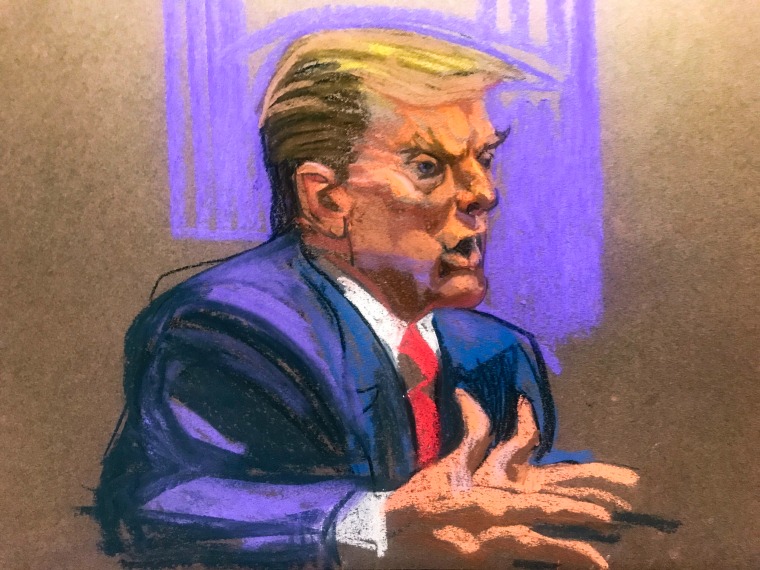
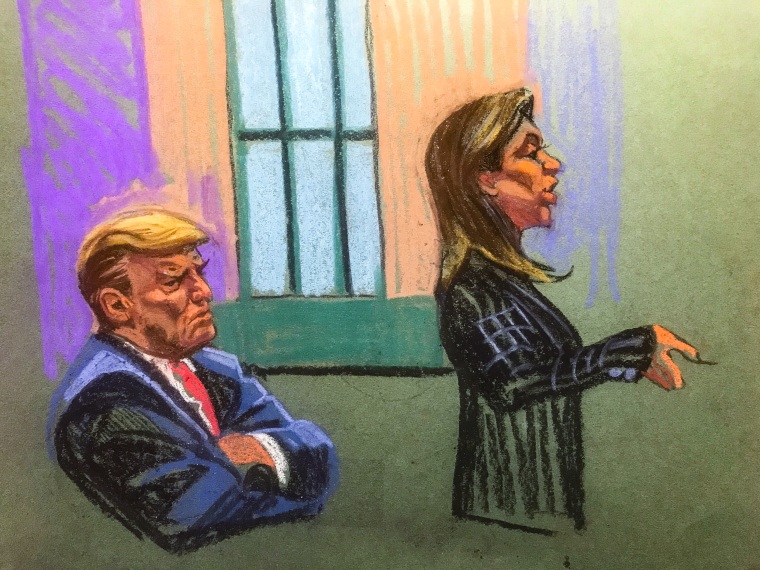
Former U.S. President Donald Trump and his lawyers Christopher Kise and Alina Habba attend the closing arguments in the Trump Organization civil fraud trial at New York State Supreme Court on Jan. 11, 2024.Former President Donald Trump speaks today at the closing arguments in his civil fraud trial.Christine Cornell

Trump went on — without any interruption from Engoron or James’ team — and attacked James, accusing her of election interference.

“You have your own agenda,” Trump angrily said to Engoron. “You can’t listen for more than one minute!”

There may be a reason that James’ staff didn’t interrupt. The AG’s office may have struck gold because some of what Trump said was so damaging to him, especially his explanation of the triplex square footage “error.”

Lawyer Kise asked for permission to have Trump speak.

Engoron replied, “Do you promise to just comment on the facts and the law?”

Trump started talking immediately without agreeing.

Speaking from the table sitting next to his lawyers, Trump denied all wrongdoing while Engoron quietly listened.

Trump maintained that banks “got all their money back” and “they weren’t defrauded” while repeating his call to receive damages “for what we’ve gone through.”

The former president accused James’ office of not providing one document proving her allegations that he had inflated his financial statements and argued that the case presents a “situation where I’m an innocent man.”

“The legal scholars looking at this case find it disgraceful,” he said, adding, “This is a fraud on me.”

Trump continued railing against James, saying, “The person in the room right now hates Trump.”

“They found nothing and now she comes in and says she wants to make a $250 million fine a [$370 million], for what?!” he said, adding that James has her own agenda and “can’t listen for more than one minute.”

Engoron directly asked Trump: “Haven’t you been sued before? Isn’t that a problem?”

“They should pay me for what we’ve gone through — reputation and else,” Trump said.

The attorney general’s office will begin closing arguments when the court resumes at a little after 2 p.m.

Cliff Robert, presenting the defense argument for Trump’s sons, has less than 15 minutes, but he’s focused: No witness has testified to Eric Trump or Donald Trump Jr. having anything more than “peripheral involvement” with the statements of financial condition, he argues.

Robert says his clients should not lose their ability to do business on the basis of those statements of financial condition, which he argues are either accurate or contain non-material, unintended mistakes.

Former U.S. President Donald Trump and his lawyer Alina Habba attend the closing arguments in the Trump Organization civil fraud trial at New York State Supreme Court on Jan. 11, 2024.Former U.S. President Donald Trump and his lawyer Alina Habba attend the closing arguments in the Trump Organization civil fraud trial at New York State Supreme Court on Jan. 11, 2024.Christine Cornell

Alina Habba, pacing the well of the courtroom, says the case started before James was elected and points at the attorney general. Engoron reminds her to stick to the facts, which she says she is trying to do, but that James’ conduct is part of the factual record.

James has not proven her case in the six weeks of trial, Habba argues, and repeats the defense’s allegation that Cohen lied on the stand.

She then focuses on Weisselberg and McConney, whom she represents, and says the attorney general used them as “pawns” because “they can’t get to the president.”

Weisselberg is “one of the saddest stories,” Habba says. “It’s all part of an agenda” to abuse a “faithful employee” by naming him as a defendant. There are no emails to prove what the AG says happened, so they tried to intimidate Weisselberg and McConney, she alleges.

She turns to the claims of insurance fraud. The employee at the insurance company, Zurich, on whose testimony the AG relies, admitted she did not understand the difference between an appraisal and a valuation, Habba says.

Zurich also continues to write bonds to the Trump Organization without statements of financial condition. They wrote seven alone in 2023. How then was this “sophisticated” highly regulated entity defrauded?

If McConney was “overly aggressive in valuations,” why did he independently decide to use more conservative figures at points in time they don’t critique, she asks.

Before we get to the attorney general’s closing argument, Cliff Robert and Alina Habba, who represent other Trump defendants, including Eric and Don Jr., will get limited time to pile on. But after lunch, when we do hear from the AG, these are the issues on which their response matters most to me:

1 — A theme throughout Kise’s presentation is that no one, least of all Deutsche Bank, was hurt by any valuation “discrepancies.” And Kise was right that the Deutsche Bank witnesses here were largely uncomplaining; at best, they helped establish that by 2017, the bank’s risk tolerance had changed and that Trump was no longer a candidate for big-time loans. The statute under which the AG is seeking relief doesn’t require a victim, but this case has consumed serious taxpayer resources as well as the AG’s own attention, as demonstrated by her frequent trial attendance. So how will the AG’s team explain whose interests are served by disabling, or even dismantling, Trump Inc.?

2 — The most compelling back and forth between Judge Engoron, who largely let Kise argue uninterrupted, was about the materiality of the exaggerations in the statements of financial condition. Materiality is a required element of some of the remaining claims, and Kise insisted that the measure of what’s material is what Deutsche Bank itself considered important enough to change its lending decisions. Engoron took umbrage at that, suggesting strongly that as a legal matter, materiality is defined by what an average participant in the market would consider important. Expect the AG to push back and hard on this one.

3 — Lastly, while an appellate court has established that July 2014 is the beginning of the statute of limitations here, what exactly that means in practice is less clear. Kise asserted that the statute of limitations ruling means that no transaction completed before July 2014 can be considered either in terms of the claims themselves or play into the relief granted, but even if they were, those certifications were meaningless in the years rightfully at issue. The AG’s office, for its part, insists that certifications signed by Trump in successive years nonetheless are proof of fraud. How will they respond? Watch this space.

The defense will resume arguments afterward.

In brief remarks to reporters outside of court, Trump maintained that the civil case against him is unfair and bashed James, saying the trial is part of her “publicity to run for office.”

“This is a case that should have never been brought, and I think we should be entitled to damages,” he said.

Kise is arguing that the AG’s disgorgement request would be a “double dip” with respect to the Old Post Office in Washington, D.C. They can’t say the interest rate was too low and seek to claw back Trump’s savings, and then, on the back end, demand his profits from the sale of the lease of that same property — something that occurred to me in reading the briefs.

The amount of money at issue is not inconsequential. Trump’s profits from the sale of that lease was roughly $139 million; the adult children, for their part, each received around $4 million.

As for the $60 million the AG is seeking from Trump’s transfer of the Ferry Point golf course, there was no corresponding loan at issue. The disgorgement sought is based on Trump’s failure to submit a “no material adverse change” letter, for which the contract itself specifies a monetary penalty.

Kise said the attorney general’s proposed fines are based on sheer speculation and argues the banks were satisfied with Trump’s financial statements.

That prompted Engoron to counter, “You’re supposed to disgorge profits” from ill-gotten gains, but there doesn’t have to be evidence of harm to a third person.

Kise disagreed: “They still have to demonstrate some harm, that President Trump got something that he otherwise wouldn’t have received.”

Kise added there was no proof that the loan terms would have been different.

Kise is now arguing that none of the valuation discrepancies was material. The certifications, he notes, advertise that they present a fair reflection of Trump’s financial condition in “all material respects.”

But Kise insists that the AG has gotten materiality wrong. It should be measured by what would have been material to the real-life end user — here, Deutsche Bank — and not what the AG believes should or should not be material.

What counts, he says, is Deutsche Bank’s credit memos, which show that Deutsche Bank adjusted Trump’s net worth even by billions of dollars and must not have considered the difference material because they lent to him anyway.

Engoron interrupts. “Isn’t the standard of materiality based on the normal, average person” or financial institution, not the specific end user of a piece of financial information? (An aside: Engoron is correctly citing the law.)

Kise went on to attack former Trump attorney Michael Cohen, calling him a serial liar who pleaded guilty to lying to Congress.

Trump’s attorney alleged that Cohen said Trump asked Allen Weisselberg to change the statements of financial condition and then admitted that Trump didn’t direct him to inflate the numbers.

Cohen’s testimony about Trump instructing him and Weisselberg to inflate the values in the statements of financial condition — even if Engoron believes it — was never corroborated by other witness or documents.

Kise also said Cohen hates Trump and makes money trashing Trump.

Kise has repeatedly emphasized this morning that certain testimony has been unrebutted. Engoron, during a pause, makes clear that the law does not require him to credit that testimony, even if unrebutted. Kise pushes back, insisting that without a reply, how can Engoron assess the veracity of testimony or credibility of the witness?

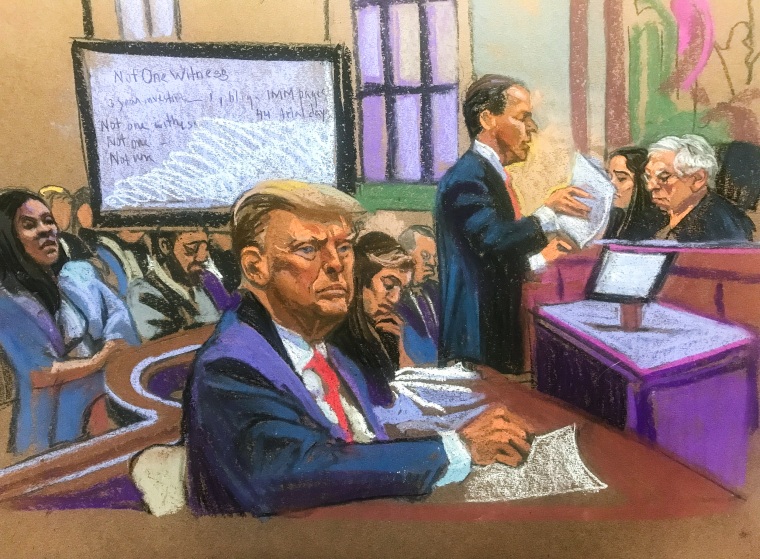
Trump is sitting up in his chair listening intently as his lawyer, Chris Kise, is presenting arguments. Kise is standing at a lectern directly in front of the judge and is using a large computer monitor for his notes. The documents he is referring to are being shown on a large TV screen to the gallery. The big monitor is right in front of the attorney general.

Trump attorney Chris Kise is delivering closing arguments. He lamented the lack of a jury. (His lawyers agreed to a bench trial, but it became a point of contention early in the process.)

Kise said that not a single witness in the trial has testified that Trump and his company committed fraud, that banks lost money or that the certifications affected the loan terms.

The only witness James’ office has cited, Kise argues, is Michael Cohen.

This is “a manufactured claim to pursue a political agenda,” Kise said.

Former U.S. President Donald Trump attends the closing arguments in the Trump Organization civil fraud trial at New York State Supreme Court on Jan. 11, 2024.Former U.S. President Donald Trump attends the closing arguments in the Trump Organization civil fraud trial at New York State Supreme Court on Jan. 11, 2024.Christine Cornell

Moreover, as Kise turns to the purported lack of evidence of intent, he is not citing the testimony of any individual defendants or even Trump Org. employees.

Instead, they are principally relying on the testimony of two accounting experts, Eli Bartov and Jason Flemmons, who essentially testified that the valuations were, to their mind, devoid of indicia of fraud and were compliant with certain accounting standards at issue in the case.

It’s highly instructive that Kise’s first argument in closing is about what transactions and events are properly considered given a prior appellate ruling on the statute of limitations. That’s because they know they’ve lost and their priority is reducing the size of the fines. In fact, that part is so important to them that they argued it before arguing about the alleged lack of proof of the defendants’ intent.

While awaiting the daily parade of news photographers, who come in to take shots of the parties and judge, Engoron joked, “I see the usual mixture of anticipation and dread” on the faces of those assembled.

The judge’s principal law clerk is still seated to his immediate right and within easy arm’s length, as she has been throughout the trial.

Speaking to reporters outside of the courthouse, Trump repeated his accusation that the civil fraud case against him is part of an effort to interfere with his presidential campaign.

“It’s election interference at the highest level,” he said, before alleging without evidence that President Joe Biden and the White House are behind the trial “because he can’t win an election fairly.”

Trump said he will hold a news conference after closing arguments, pointing to Engoron’s rejection of his request to speak because “I will say things he doesn’t want to hear.”

“I am hoping to speak to help my lawyers reveal all the defects of this case,” he said.

“We’ll see whether or not the judge allows me to speak, perhaps he won’t but I certainly would like to.”

Testimony in Trump’s civil fraud trial went for 44 days and featured 25 witnesses for the attorney general’s office, 19 defense witnesses and two rebuttal witnesses — fewer than were originally proposed.

Along the way were plenty of spectacles, with testimony from the former president and his family members, gag orders, fines, angry exchanges and dramatic showdowns.

While James’ office set out to show financial statements Trump used to get favorable loans from banks were steeped in fraud, with grossly inflated values, Trump’s team argued he did nothing wrong, saying the statements were largely accurate and that any mistakes weren’t his fault.

Here’s a look at some key testimony from the trial.

Read the full story here.

Trump is in the courtroom, escorted by his son Eric, who is sitting in the first row of the gallery. Trump adviser Boris Epshteyn is here as well.

Anti-Trump protesters blocked traffic outside the New York City courthouse where closing arguments will be held in the civil fraud trial against the former president.

Trump’s motorcade arrived on Pearl Street on the side of the courthouse. Moments earlier, the former president wrote that he was on his way.

“Heading down to the Unconstitutional Witch Hunt in Lower Manhattan. ELECTION INTERFERENCE!!!” he wrote.

James arrived moments ago at the courthouse in New York for closing arguments, entering by the front steps. She did not answer questions, but waved at the cameras.

Protesters outside of the courthouse were heard chanting, “Thank you, Tish.”

Police on Long Island responded Thursday morning to a bomb threat at the home of Judge Arthur Engoron, who is presiding over former President Donald Trump’s civil fraud case, a source with direct knowledge of the situation told NBC News.

The threat came hours before closing arguments in the trial were scheduled to begin, with those arguments expected to proceed.

A Nassau County bomb squad was called to Engoron’s home and was investigating Thursday morning; it is unclear whether Engoron was home at the time. 

Read the full story here.

Closing arguments will be presented in Trump’s civil fraud case, in which James as contented that the former president used fraudulent tactics to inflate his net worth with the intent of obtaining more favorable loan and insurance rates.

In previous testimony, Trump and executives at the Trump Organization denied the inflation of his financial statements, saying that the judge should rule in their favor because such valuations are subjective. But Engoron had already ruled last month that he did not buy their arguments.

Engoron has said he expects to issue a written decision with his findings in the following weeks.

Trump is likely to appeal the trial verdict.

Categories
Saved Web Pages - Audio Posts

Donald Trump defies judge, gives courtroom speech on tense final day of New York civil fraud trial

NEW YORK (AP) — Barred from giving a formal closing argument, Donald Trump still seized an opportunity to speak in court at the conclusion of his New York civil fraud trial Thursday, unleashing a barrage of attacks in a six-minute diatribe before being cut off by the judge.

Trump spoke as the judge was trying to find out if the former president would follow rules requiring him to keep his remarks focused on matters related to the trial. Asked whether he would comply with the guidelines, Trump defied the judge and simply launched into his speech.

“We have a situation where I am an innocent man,” Trump protested. “I’m being persecuted by someone running for office and I think you have to go outside the bounds.”

Judge Arthur Engoron — who had denied Trump permission earlier to give a closing statement at the trial — let him continue almost entirely uninterrupted for what amounted to a brief personal summation, then cut him off and recessed for lunch.

Trump, the leading contender for the Republican presidential nomination, has repeatedly disparaged Engoron, accusing him in a social media post Wednesday night of working closely with the New York attorney general “to screw me.”

On Wednesday, Engoron had nixed an unusual plan by Trump to deliver his own closing remarks in the courtroom, in addition to summations from his legal team, after lawyers for the former president would not agree to the judge’s demand that he stick to “relevant” matters.”

After two of Trump’s lawyers had delivered traditional closing arguments Thursday, one of them, Christopher Kise, asked the judge again whether Trump could speak. Engoron asked Trump whether he would abide by the guidelines he had laid out earlier, which included not trying to introduce new evidence or making a campaign speech.

Trump then launched into his remarks.

“This is a fraud on me. What’s happened here, sir, is a fraud on me,” Trump said. He later accused the judge of not listening to him. “I know this is boring to you.”

“Control your client,” Engoron warned Kise.

Engoron then told Trump he had a minute left, let him speak a little more, and then adjourned.

Lawyers representing New York state were scheduled to give their closing remarks in the afternoon.

The exchange took place hours after authorities responded to a bomb threat at the judge’s house. Police checked out the threat at Engoron’s Long Island home, which came a day after he denied the former president’s extraordinary request to deliver his own courtroom close, officials said. The proceedings were not delayed.

At 5:30 a.m. on Thursday, hours before the trial’s final day was to begin, Nassau County police said they responded to a “swatting incident” at Engoron’s Great Neck home. Nothing amiss was found at the location, officials said.

The false report came days after a fake emergency call reporting a shooting at the home of the judge in Trump’s Washington, D.C. criminal case. The incidents are among a recent spate of similar false reports at the homes of public officials.

Taking the bench a few minutes late, Engoron made no mention of the incident at his home.

Thursday’s court action featured the start of closing arguments in the trial over allegations that Trump exaggerated his wealth on financial statements he provided to banks, insurance companies and others.

“Forty-four days of trial — not one witness came into this courtroom, your honor, and said there was fraud,” Kise said, contending his client “should get a medal” for his business acumen instead of punishment he deemed the “corporate death penalty.”

New York Attorney General Letitia James, a Democrat, wants the judge to impose $370 million in penalties. Trump says he did nothing wrong. He contends outside accountants that helped prepare the statements should’ve flagged any discrepancies and that the documents came with disclaimers that shield him from liability.

Former President Donald Trump sits in the courtroom before the start of closing arguments in his civil business fraud trial at New York Supreme Court, Thursday, Jan. 11, 2024, in New York. (Curtis Means/Daily Mail via AP, Pool)

Former President Donald Trump sits in the courtroom before the start of closing arguments in his civil business fraud trial at New York Supreme Court, Thursday, Jan. 11, 2024, in New York. (Curtis Means/Daily Mail via AP, Pool)

The former president had hoped to make that argument personally, but the judge — initially open to the idea — said no after a Trump lawyer missed a deadline for agreeing to ground rules. Among them, Engoron warned that Trump couldn’t use his closing remarks to “deliver a campaign speech” or use the opportunity to impugn the judge and his staff.

“This entire case is a manufactured claim to pursue a political agenda,” Kise said in his closing argument. “It has been press releases and posturing but no evidence.”

Lawyers from James’ office were to deliver their closing argument Thursday afternoon.

Trump returned to court as a spectator Thursday despite the death of his mother in-law, Amalija Knavs, and the launch of the presidential primary season Monday with the Iowa caucus.

Since the trial began Oct. 2, Trump has gone to court nine times to observe, testify and complain to TV cameras about the case, which he called a “witch hunt and a disgrace.”

He clashed with Engoron and state lawyers during 3½ hours on the witness stand in November and remains under a limited gag order after making a disparaging and false social media post about the judge’s law clerk.

Thursday’s arguments were part of a busy legal and political stretch for Trump.

Judge Arthur Engoron sits in the courtroom before the start of closing arguments in former President Donald Trump's civil business fraud trial at New York Supreme Court, Thursday, Jan. 11, 2024, in New York. (AP Photo/Seth Wenig, Pool)

Judge Arthur Engoron sits in the courtroom before the start of closing arguments in former President Donald Trump’s civil business fraud trial at New York Supreme Court, Thursday, Jan. 11, 2024, in New York. (AP Photo/Seth Wenig, Pool)

On Tuesday, he was in court in Washington, D.C., to watch appeals court arguments over whether he is immune from prosecution on charges that he plotted to overturn the 2020 election — one of four criminal cases against him. Trump has pleaded not guilty.

In New York, James sued Trump in 2022 under a state law that gives the state attorney general broad power to investigate allegations of persistent fraud in business dealings.

Kise argued the case amounted to the “weaponization” of a consumer protection statute and, urging Engoron to consider his legacy as a judge, warned that a ruling in the state’s favor would have a chilling effect on every company doing business in the state.

Engoron decided some of the key issues before testimony began. In a pretrial ruling, he found that Trump had committed years of fraud by lying about his riches on financial statements with tricks like claiming his Trump Tower penthouse was nearly three times its actual size.

The trial involves six undecided claims, including allegations of conspiracy, insurance fraud and falsifying business records.

Trump’s company and two of his sons, Eric Trump and Donald Trump Jr., are also defendants. Eric Trump was also in court for closing arguments.

Besides monetary damages, James wants Trump and his co-defendants barred from doing business in New York.

Former U.S. President Donald Trump, with lawyers Christopher Kise and Alina Habba, attends the closing arguments in the Trump Organization civil fraud trial at New York State Supreme Court in the Manhattan borough of New York, Thursday, Jan. 11, 2024. (Shannon Stapleton/Pool Photo via AP)

Former U.S. President Donald Trump, with lawyers Christopher Kise and Alina Habba, attends the closing arguments in the Trump Organization civil fraud trial at New York State Supreme Court in the Manhattan borough of New York, Thursday, Jan. 11, 2024. (Shannon Stapleton/Pool Photo via AP)

State lawyers say that by making himself seem richer, Trump qualified for better loan terms from banks, saving him at least $168 million.

Kise acknowledged that some holdings may have been listed “higher by immaterial” amounts, but he added” “there’s plenty of assets that were undervalued by substantial sums.”

Engoron said he is deciding the case because neither side asked for a jury and state law doesn’t allow for juries for this type of lawsuit. He said he hopes to have a decision by the end of the month.

Last month, in a ruling denying a defense bid for an early verdict, the judge signaled he’s inclined to find Trump and his co-defendants liable on at least some claims.

“Valuations, as elucidated ad nauseum in this trial, can be based on different criteria analyzed in different ways,” Engoron wrote in the Dec. 18 ruling. “But a lie is still a lie.”

___

Associated Press reporters Michelle L. Price contributed to this report.

___

Follow Sisak at x.com/mikesisak and send confidential tips by visiting https://www.ap.org/tips