Categories
Saved Web Pages - Audio Posts

Iowa school shooting leaves 2 dead, including 6th grader and 17-year-old gunman, 5 others injured: Full coverage

e7248310-abc9-11ee-b9e7-f21a826587b0

A 17-year-old suspect opened fire at Perry Middle and High School in Iowa on Thursday morning, killing a sixth-grade student and injuring five others, police said.

The shooter — identified as student Dylan Butler — was found dead from a self-inflicted gunshot wound, authorities revealed at an afternoon press conference.

They also said an improvised explosive device was discovered in the school, located around 40 miles northwest of Des Moines. Law enforcement officials added the suspect was armed with a pump action shotgun and a handgun.

Social media posts Butler made around the time of the shooting suggest he acted alone, authorities said.

Among the injured are four students and a school administrator. The shooting comes days before the Iowa caucuses on Jan. 15, which will mark the start of the 2024 Republican primary election.

Our live coverage has now ended.

LIVE COVERAGE IS OVER22 updates
  • U.S. Secretary of Education Miguel Cardona posted a message Thursday evening on the school shooting in Perry, Iowa.

    I’m devastated over the shooting at Perry High School today. ⁰⁰Just last month I visited Perry, Iowa and met the amazing students, teachers, and leaders that make up the community. It’s hard to think of how that community is mourning today.⁰⁰Perry, IA @usedgov is with you.

    — Secretary Miguel Cardona (@SecCardona) January 4, 2024

  • Iowa Gov. Kim Reynolds ordered all flags in the state to be lowered to half-staff on Thursday following the shooting at Perry High School.

    I have ordered all flags to be lowered to half staff in support of the Perry community.

    This senseless tragedy has shaken our entire state to its core. I want this community to know that every Iowan stands with you.https://t.co/gCLpf9idW1

— Gov. Kim Reynolds (@IAGovernor) January 4, 2024

DeSantis speaks during a campaign stop in Waukee, Iowa, Wednesday. (Charlie Neibergall/AP)

Thursday’s deadly school shooting comes less than two weeks before the Iowa caucuses.

Florida Gov. Ron DeSantis, who is hoping for a strong finish in the state, responded to news of the shooting that left a sixth-grade student dead and five other people injured by saying he did not back new federal gun restrictions.

“I think it is more of a local and state issue. But we’ve shown how it’s done in Florida. The things that we’ve done have been very, very effective,” DeSantis said in a Thursday interview with NBC News and the Des Moines Register.

“I don’t support infringing the rights of law-abiding citizens with respect to the ability to exercise their constitutional rights,” DeSantis added.

Read more at NBC News.

Perry High School’s principal, Dan Marburger, was among those injured in Thursday’s shooting, according to reports from ABC and the Des Moines Register.

“This morning our state is grieving after learning of a school shooting that took place at Perry High School,” the Easton Valley Community School District said in a statement posted on Facebook.

“Sadly, we have also received information that one of our former East Central graduates, Dan Marburger, was one of the victims injured in the incident. We have not confirmed the extent of his injuries so we wanted to send out a message asking for thoughts and prayers for him and his family. Dan has served as a principal for the Perry Community School District since 1995.”

In an afternoon joint press conference on Thursday, Mitch Mortvedt, assistant director of the Iowa Division of Criminal Investigation, identified the Perry High School shooter as 17-year-old Perry High School student Dylan Butler.

When police arrived, Butler was found with a self-inflicted gunshot wound, according to Mortvedt. He said Butler was armed with a pump action shot gun and a hand gun. An improvised explosive device, determined by law enforcement to be safe, was also found on the scene. The gunman evidently acted alone.

Mortvedt said that a sixth-grade student at Perry Middle School was killed in the shooting. Four of the surviving victims were students, and another was a school administrator.

Mortvedt added that Butler had made social media posts at and around the time of the shooting. The investigation is ongoing.

Per the Des Moines Register, Polk County Healthcare Systems said in a statement that the Dallas County Sheriff’s Office confirmed that all victims taken to Iowa Methodist Medical Center and MercyOne Des Moines Medical Center, have been reunited with their families.

The Iowa Department of Public Safety has scheduled a joint press conference for 4 p.m. ET/3 p.m. CT to “provide an update on the active shooter event that occurred” on Thursday morning.

Iowa Gov. Kim Reynolds said earlier Thursday that she would join law enforcement agencies at the press conference.

Multiple people were transported to nearby hospitals after the shooting on Thursday morning, according to the Polk County Medical Coordination Center.

Police said at an earlier press conference there were “multiple gunshot victims” at Perry High School. “We’re still unclear exactly how many are injured or what the extent of those are, but we’re working on that right now,” Dallas County, Iowa, Sheriff Adam Infante said.

A man and children leave the McCreary Community Building after being reunited following a shooting at Perry High School, in Perry, Iowa, Thursday. (Charlie Neibergall/AP)

Kris Brown, president of the Brady gun violence prevention organization, released the following statement after the school shooting in Perry, Iowa:

New year, same horror. These students were returning to campus after their holiday break only to be met with gun violence that has uniquely plagued their generation. No child should have to hide in their classrooms fearing for their lives. No teacher should have to stand guard over their students potentially shielding them from bullets. No parent should have to fear that any day they send their child to school could be their last.

2024 should not start this way for the students of Perry High School or any student in our nation. Our hearts are with all the affected students, teachers, school staff, parents, and community members. This year — as with every year — we are resolved to end this deadly epidemic and free America from gun violence.

A police cruiser sits outside Perry Middle School and High School following Thursday’s shooting. (Scott Olson/Getty Images)

Ava Augustus, a senior at Perry High School, told the Associated Press that she was in a counselor’s office when she heard three shots. She and other people in the room barricaded the door.

“And then we hear: ‘He’s down. You can go out,’” Augustus said. ”And I run and you can just see glass everywhere, blood on the floor. I get to my car and they’re taking a girl out of the auditorium who had been shot in her leg.”

Another student, identified as Carlos, told NBC News that he heard “a couple of bangs” and saw fellow students running but “thought it was like a prank.”

White House Press Secretary Karine Jean-Pierre speaks during the daily press briefing at the White House on Thursday. (Saul Loeb/AFP via Getty Images)

At the top of Thursday’s briefing, White House press secretary Karine Jean-Pierre said President Biden is “tracking the shooting at Perry Middle and High School in Iowa.”

“Our hearts break for the families of the victims in yet another act of senseless gun violence,” Jean-Pierre said. “We are grateful for the brave first responders who are on the scene.”

She added: “It’s only the fourth day in the new year and we are already faced with another horrific school shooting, and the question that we ask is, when will enough be enough?”

Iowa Gov. Kim Reynolds addressed Thursday’s school shooting in a post on X, formerly Twitter.

“Our hearts are broken by this senseless tragedy,” Reynolds wrote. “Our prayers are with the students, teachers & families of the Perry Community.”

The governor said she would be joining law enforcement agencies at a press conference later Thursday.

Our hearts are broken by this senseless tragedy. Our prayers are with the students, teachers & families of the Perry Community.

I have been in contact with law enforcement agencies & am continuing to monitor the situation. I will be joining their press conference today.

— Gov. Kim Reynolds (@IAGovernor) January 4, 2024

The Republican senator from Iowa called this morning’s shooting in Perry “appalling” and “heartbreaking.”

“Barbara + I are grateful for quick response by school officials &law enforcement to protect students +restore safety,” he tweeted. “The Perry community is strong& will band 2gether thru hard time.”

Todays appalling violence at Perry HS is heartbreaking Barbara + I are grateful for quick response by school officials &law enforcement to protect students +restore safety. The Perry community is strong& will band 2gether thru hard time Im here 2help if addtl fed resources needed

— Chuck Grassley (@ChuckGrassley) January 4, 2024

The Associated Press, citing a law enforcement source, reported that the school shooter has died from a self-inflicted gunshot wound.

During a news conference this morning, Dallas County, Iowa, Sheriff Adam Infante said the shooter was identified, but he did not release any more information.

According to the Des Moines Register, the Perry Community School District has canceled all classes Friday following the shooting at Perry High School and is offering counseling services today at the Perry Public Library.

Crossroads Church in Perry, Iowa said in a Facebook post that it is planning a prayer vigil for 7 p.m. today, Thursday. The church invited the entire community to gather together in response to the shooting.

Dallas County, Iowa, Sheriff Adam Infante speaks outside Perry High School in Iowa on Thursday. (Andrew Harnik/AP)

At an abbreviated press briefing, Dallas County, Iowa, Sheriff Adam Infante said police received reports of an active shooter at the school at 7:37 a.m. local time. The first officer arrived within minutes, he said, and “located multiple gunshot victims.”

“We’re still unclear exactly how many are injured or what the extent of those are, but we’re working on that right now,” Infante said, adding: “There is no further danger to the public.

The community is safe. We’re just now working backward trying to figure out everything that happened and then make notifications.”

School had not started yet when the shooting occurred, Infante said, “so luckily there [were] very few students and faculty in the building.”

Another briefing is expected later this afternoon.

The Federal Bureau of Investigation’s Des Moines office said Thursday that its agents have responded to the scene of the shooting in Perry, Iowa, to assist the Iowa Division of Criminal Investigation.

An alert posted by the Bureau of Alcohol, Tobacco and Firearms in Kansas City, Mo., said that its agents were assisting police in the response to the shooting at Perry High School.

Police respond at Perry High School in Iowa on Thursday. (Andrew Harnick/AP)

Images captured by Associated Press photographer Andrew Harnick show a massive law enforcement response to Thursday’s shooting at Perry High School.

Kevin Shelley told the Associated Press that his 15-year-old son, Zander Shelly, a student at Perry High School, happened to be in a hallway waiting for classes to start when he heard gunshots. He made it to a nearby classroom but was grazed twice. He then texted his dad.

“It was the most scared I’ve been in my entire life,” Kevin Shelley said after telling his boss he had to run.

Categories
Saved Web Pages - Audio Posts

Opinion What Ukraine can learn from the ‘Israel model’

Save

Israel has played a peculiar role in American debates on the Russia-Ukraine war. After Russia’s invasion started, Jerusalem faced criticism in Washington for its reluctance to send military support to Ukraine — a reluctance influenced by Russia’s military presence on Israel’s border with Syria.

Now, as NATO punts on the question of Ukrainian membership, the “Israel model” is gaining currency in Washington as a way to think about Ukraine’s long-term defense. Before leaving for this week’s NATO summit, President Biden told CNN that while he wasn’t ready to risk direct war with Russia by extending NATO’s mutual-defense guarantee to Kyiv, Ukraine would receive “the security we provide for Israel.”

Translation: Ukraine will get large-scale weapons, logistics and diplomatic support in perpetuity — but no guarantee of U.S. troops to defend its territory. It’s a testament to Israel’s success at defending itself that friends of Ukraine invoke it as a security model. But the analogy should also temper idealistic Western thinking about the war.

The Israel model implies a long conflict with borders that remain unsettled. Israel’s borders changed throughout a series of wars and peace settlements starting with its 1948 war of independence. The United States is the only country to recognize Israel’s control over the Golan Heights, and only a few others treat Jerusalem as its capital. The status of the West Bank is contested both internationally and in Israel’s domestic politics.

Territorial claims in the Arab-Israeli conflict and in the Russia-Ukraine war are not equivalent. But as with territories in the Middle East, the status of parts of Ukraine, especially Crimea, could be contested for decades. In an ideal world, Kyiv could swiftly inflict so decisive a defeat on Russia that Moscow’s claims on Ukraine would end. But growing Western interest in the Israel model reflects a recognition that this is unlikely and that Ukrainian society might need to remain militarized in a way that sets it apart from the rest of Europe.

Follow this authorJason Willick‘s opinions

The Biden administration wants to frame the Russia-Ukraine war as a global clash between democracy and autocracy. Israel is a democracy, but it has formed ties with the Persian Gulf monarchies, including Saudi Arabia, to check its most powerful rival, Iran, and has built a working relationship with Russia to operate militarily in Syria. Countries in dangerous neighborhoods without ironclad U.S. security guarantees don’t have the luxury of conducting foreign policy along the ideological lines favored in rich Western capitals. That calculation will apply to Kyiv as well — witness its plea for cluster munitions, which are banned in Western Europe.

While international institutions and the European Union have rallied to Ukraine in its time of peril, Israel’s long-term experience shows that the West can’t always be depended on. Even as the Biden administration touts the Israel model for Ukraine, it is embroiled in a diplomatic feud with Israel over its right-wing government. And if Donald Trump wins the 2024 presidential election, U.S. policy on Ukraine could change.

One advantage of the Israel model, for decision-makers in Jerusalem, is that they have more freedom to make their own foreign policy decisions than U.S. allies with formal treaties. Israel has a history of acting aggressively and unilaterally to defend its interests, including by destroying nuclear reactors under construction in Iraq in 1981 and Syria in 2007. When countries have the capacity to defend themselves with their own militaries, they have less need to defer to Washington.

One example came during Israel’s 1982 war in Lebanon. According to one account, Biden, a senator at the time, dressed down Israeli Prime Minister Menachem Begin, who replied: “Don’t threaten us with cutting off aid to give up our principles.” Ukraine, armed and autonomous, would pursue its principles independent of U.S. wishes under the Israel model.

One key difference, of course, is nuclear weapons. While Israel has nuclear weapons and (for now) its regional rivals don’t, Ukraine is a nonnuclear state under invasion by a major nuclear power. Perhaps that’s why Henry Kissinger (who, as secretary of state during the 1973 Arab-Israeli War, helped devise the Israel model) fears that too much Ukrainian freedom of action could make long-term peace with Russia more difficult to achieve.

In an April interview with the Economist, Kissinger worried that Ukraine “will be the best-armed country and with the least strategically experienced leadership in Europe.” He added: “It is better to have Ukraine in NATO, where it cannot make national decisions on territorial claims.” While Ukrainian NATO membership would be designed to deter Russia, Kissinger also highlights the need to constrain Ukraine.

The West has calculated that the risk of war with Russia is too great to outline when and how Kyiv can join NATO. The Israel model, broadly defined, is the path of least resistance. But just as the West sometimes tries to restrain Israel — both in its conflict with the Palestinians and in its showdown with Iran — it might also end up trying to restrain an insecure Kyiv amid a volatile security situation that will last for years. If the Israel model is a workable strategy for Ukraine, the West should be clear-eyed about what it means.

Categories
Saved Web Pages - Audio Posts

Rumors That Putin’s Top General Was Killed Are Dismissed By ‘Those Who Know’

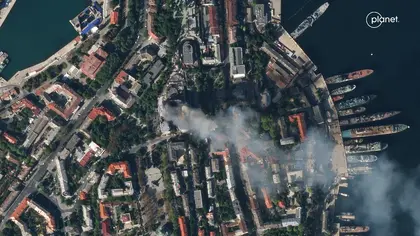
Ukrainian Air Force Commander Mykola Oleshchuk said on Thursday that the Armed Forces of Ukraine (AFU) had carried out two missile strikes against Russian targets in Crimea; a command post, near Sevastopol, was hit at about 3 p.m. and a military unit, believed to be a radar station in Uyutne, near the city of Yevpatoria in the evening.

Oleshchuk thanked the pilots and “everyone who planned the operation for perfect combat work.” The wording of his Telegram post suggested the attacks had likely involved Anglo-French Storm Shadow/SCALP cruise missiles.

A spokesperson for the Russian-appointed authorities in Crimea said its air defenses had intercepted ten missiles and 36 drones during the course of what they called a Ukrainian “terrorist attack” and that only fragments of destroyed projectile fell at the two locations.

However, within a couple of hours of the strike on the command post social media suggested that more than 20 soldiers and several senior Russian officers had been killed.

BREAKING:23 Russian soldiers killed in yesterday’s Ukrainian missile strike against the Russian airbase in Saky, Crimea.

9 of them special forces, 5 high-ranking commanders. pic.twitter.com/hdUiUmfmI6

— Visegrád 24 (@visegrad24) January 5, 2024

This claim was expanded upon shortly thereafter with suggestions that one of those killed had been Russia’s Chief of the General Staff Valery Gerasimov who had been made overall commander of Russia’s “special military operation” last January. Firstly, this appeared on the X (formerly Twitter) account of a user called “WarVehicleTracker” quoting Russian Telegram channel “Ordinary Tsarism.”

Ukraine Strikes Russian Command Post and Military Unit in Crimea

Explosions and air raid sirens were heard in Crimea on Thursday afternoon, and again in the evening.

Gerasimov died?
(Please let it be true, The last competent Russian dying after Surovikin got canceled out🙏) pic.twitter.com/qHi3xlS2ue

— WarVehicleTracker (@WarVehicle) January 4, 2024

It was very quickly picked up by other Ukrainian and Russian social media sites and even the US main stream news outlet Newsweek ran the story, though it was at pains to point out that there was no concrete evidence to suggest that Gerasimov had been killed, or even that he was actually in Crimea at the time of the attack.

While the rumors of Gerasimov’s demise continued to circulate on Friday, the “Insider Ukraine” Telegram channel said in the early afternoon that “media information about the command post in Crimea being hit was true but that the death of the head of the General Staff is 99 percent fake.”

Serhiy Bratchuk, a spokesperson for the Ukrainian Volunteer Army South speaking during an interview with the “Espresso” TV channel on Friday seemed to endorse this view:

“Yesterday in Crimea, an enemy command post was hit” in which there were “several high-ranking officers or generals of the Russian occupation army.” He added “I even heard the famous name Gerasimov. It would be good news, but I think it is unlikely to be true.”

Bratchuk also confirmed the strike on the air defense communication site in Uyutne in south west Crimea, after which he asserted that many ambulances were called to deal with casualties.

The Russian news agency TASS, quoting the New York Times, said on Dec. 17 that Ukraine had allegedly made a failed attempt to assassinate Gerasimov during a visit to the front lines. It went on to say that the attempt had failed because it had been made against Washington’s wishes who in turn withheld the information on the Russian’s movements that were essential to a successful attack.

To suggest a correction or clarification, write to us here
You can also highlight the text and press Ctrl + Enter

Steve Brown

Steve Brown

After a career as a British Army Ammunition Specialist and Bomb Disposal Officer, Steve later worked in the fields of ammunition destruction, demining and explosive ordnance disposal with the UN and NATO. In 2017, after taking early retirement, he moved to Ukraine with his Ukrainian wife and two sons where he became a full-time writer. He now works as an English language editor with the Kyiv Post.

Categories
Saved Web Pages - Audio Posts

Scorpius: A quantum leap in electronic warfare capabilities and performance

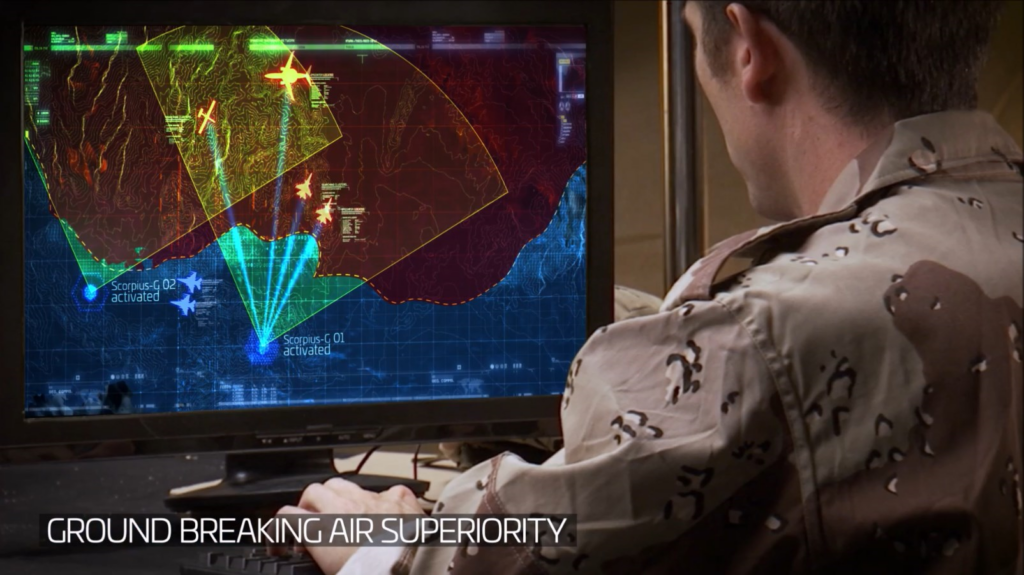
Scourpius_G1

Photo: ELTA IAI.

As technology advances incessantly, so too do the deadly threats appearing on the multi-dimensional electronic battlefield. The challenges to forces on the ground, at sea, and in the air are daunting. Examples include sea skimming missiles, powerful imaging radars deployed from aircraft, and long-range air surveillance and defense radars. The list is virtually endless, and to make matters worse; some of these systems are finding their way into the hands of dangerous, rogue nations and non-state actors.

The stakes are high – the loss of highly trained personnel and costly, difficult to replace platforms and equipment may result in failure or even defeat – so it is imperative that forces be equipped with the tools needed to survive and successfully complete their objectives. To this end, Israel Aerospace Industries’ (IAI) Group and Subsidiary, ELTA Systems Ltd., has leveraged its five-decade rich technological heritage as the country’s radar and electronic warfare house, and its culture of innovation, to field the Scorpius family of cutting-edge Electronic Warfare (EW) systems. Offering unmatched protection on land, at sea, and in the air, the Scorpius family redefines the state of the art in EW and Electronic Attack system performance.

AESA and GaN – Game Changing Technologies

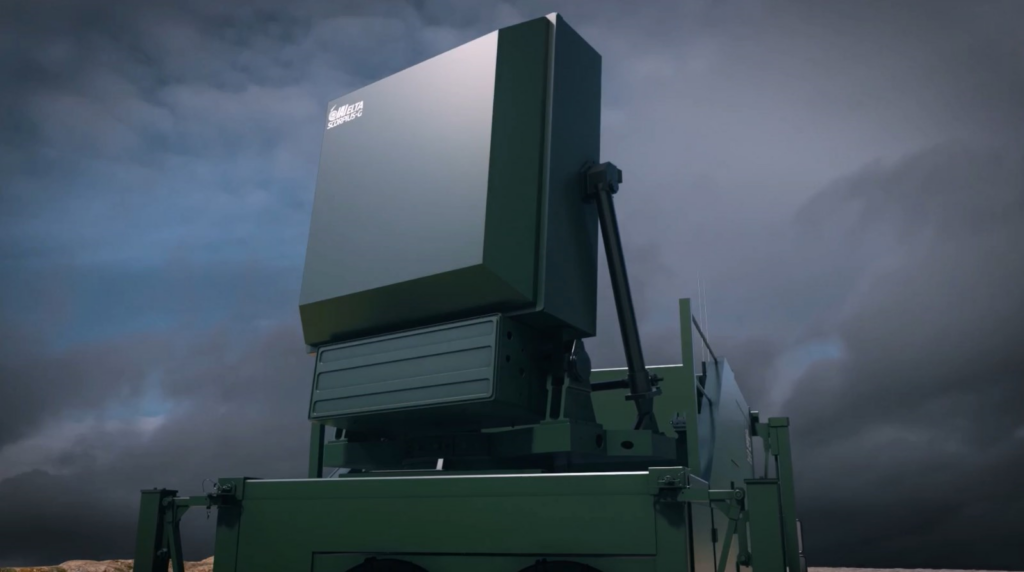
The Scorpius product range is based on ELTA’s Active Electronic Scanning Array (AESA) technology. AESA, built with a staring array of wide-band solid state transceivers, provides a dramatic increase both in receiver sensitivity and in Effective Radiated Power (ERP) – far exceeding legacy EW solutions. Furthermore, AESA technology allows narrow multi-beam operation for reception and transmission, enabling the system to detect and target multiple threats simultaneously, across the entire field of regard.

The Scorpius family also incorporates the latest Gallium Nitrate (GaN) technology, which provides much higher power density and efficiency than previous generation Gallium Arsenide (GaAs) transistors, maximizing power and reducing energy consumption.

Leveraging AESA’s exceptional sensitivity, the Scorpius family is able to detect and track advanced threats such as low probability-of-intercept (LPI) radars and long-range targets. Furthermore, with its superior ERP, Scorpius disrupts and degrades enemy radars with unparalleled effect. Scorpius effectively protects assets against modern airborne, shipborne and land-based threats, including fire-control radars, search radars, active missile seekers, and imaging radars.

Meet the Family

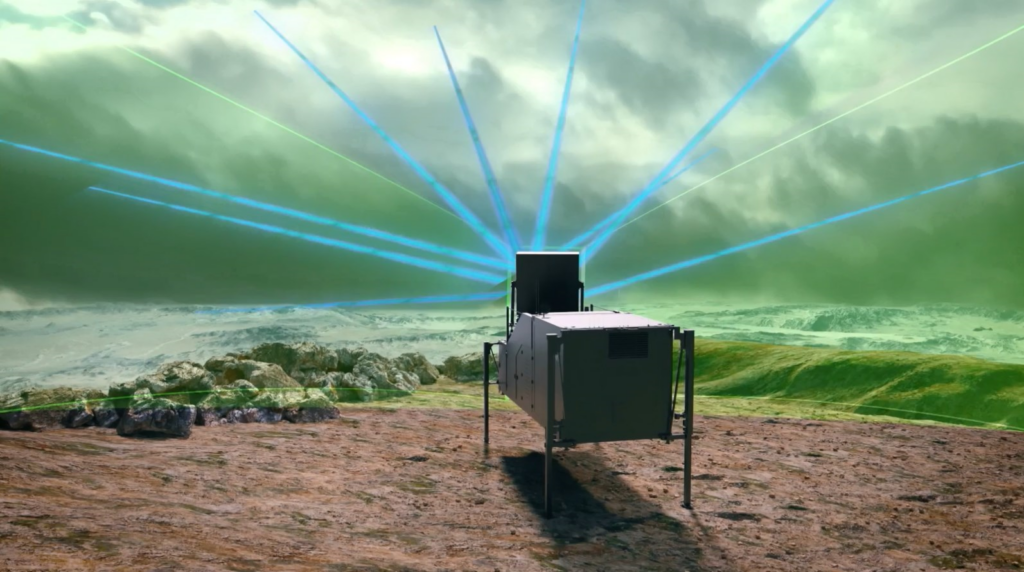
Scorpius-G (ELL-8256SB) Scorpius-G (ELL-8256SB) is a powerful ground-based, state-of-the-art, long-distance RF Electronic Support Measures (ESM) and Electronic Countermeasures (ECM) system. Scorpius-G effectively intercepts, analyzes, locates, tracks and jams a wide variety of airborne and land-based systems including fire control radars, search radars, AEW sensors, and SAR. The system is based on advanced and innovative technology featuring Active Electronically Scanned Array (AESA) with Gallium-Nitride (GaN) Solid State Amplifiers (SSA). The novel design provides exceptional receiver sensitivity and Effective Radiated Power (ERP) transmission, far exceeding those of legacy EW solutions. The enhanced sensitivity and ERP enable Scorpius-G to detect, distort and degrade enemy radars even through their side lobes, greatly increasing the system’s jamming effectiveness.

Scourpius_G2

Photo: ELTA IAI.

The AESA technology allows for narrow, simultaneous multi-beam operation. Digital multibeam forming provides unprecedented sensitivity and the ability to target multiple threats individually. The system can detect very low signals, simultaneously jam numerous emitters over its entire frequency range while covering a wide geographic sector and displays an Electronic Order of Battle (EOB). The system is driven by a pre-programmed Mission Data File (MDF) and can operate automatically.

Scorpius-T (ELL-8257SB) Scorpius-T is a multi-threat Electronic Warfare (EW) emulator for aircrew training and system testing and evaluation, creating unprecedented diverse and effective training scenario – including advanced training scenarios for fourth and fifth-generation fighter aircraft. Scorpius-T trains aircrews and EW operators in handling realistic, signal-dense, multi-threat environments.

The system emulates a wide range of emitters, including modern long-range threats. Using a programmable and updatable threat database, current and future threats are supported – including surface-to-air missile systems, radar systems, and communication links.

With AESA multi-beam capability, the system can simultaneously engage multiple trainee aircraft with different threat patterns.

Scorpius-N (ELL-8256SB) is ELTA’s powerful shipborne EW suite combining advanced Electronic Countermeasures (ECM) and Electronic Support Measures (ESM) capabilities. It comprises four conformal antenna array panels, each housing transceiver arrays that cover a wide frequency range, a control unit for processing and managing operations, and an operator console that includes maintenance and training functions.

Scourpius_G3

Photo: ELTA IAI.

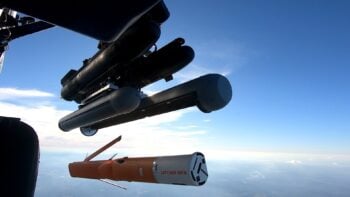
Scorpius Escort Jammer (EJ) is designed to suppress all types of air surveillance and fire control radars, creating a safe corridor along a mission flight path. This flexible system can be installed as a pod on the centerline station of a fighter aircraft. Transport and support aircraft can accommodate the pod on an external mount and a version configured for internal installation is also available.

Scorpius-SP (ELL-8222SB) is designed to provide advanced protection to individual aircraft. Mounted within ELTA’s proven, compact, lightweight, low drag pod configuration, which is similar in contour to an air-to-air missile, the system can be installed on all wing stations.

ELTA offers an extensive portfolio of high-performance and field-proven payloads and systems on a wide range of platforms. System solutions cover integrated EW (ESM/ECM), Radar, EO/IR, IMINT, Launch Detection Systems (LDS), SAR/GMTI, SIGINT, and cyber. This ability to deliver game changing solutions such as the Scorpius EW family, at the strategic and tactical levels to customers worldwide, is a key factor in ELTA’s ability to maintain its position as a trailblazer in advanced defense electronics.

Categories
Saved Web Pages - Audio Posts

Israel Unveils ‘Revolutionary’ New Scorpius Electronic Warfare System

0x0.jpg?format=jpg&crop=1124,632,x237,y0

Israel has recently unveiled a new electronic warfare system called Scorpius that its manufacturer, Israel Aerospace Industries, says has capabilities that will revolutionize electronic warfare.

Asked about the namesake of this system, Gideon Fustick, Marketing VP EW Group at IAI, said it intends to convey “the sense of an innocuous thing that actually has a very powerful sting.” 

“We call it ‘soft protection.’ It’s an offensive weapon that doesn’t send out missiles. It’s not a hard-kill system,” Fustick told me. “And yet it is very effective in engaging and disabling enemy systems.” 

Here’s why IAI thinks this new system is in a league of its own. 

“More and more of the activity in warfare is going into the electromagnetic domain,” Fustick said. “Planes, missiles, UAVs are all using electromagnetic magnetic means, to sense the environment, to navigate, and to communicate.”

Illustration of the training version of Israel’s Scorpius electronic warfare system, the Scorpius T, … [+] developed by Israel Aerospace Industries.

Courtesy of Israel Aerospace Industries.

“The enemy is trying to use the electromagnetic domain for all these activities,” he said. “We are also trying to use them. And we’re each trying to deny the other side from the use of the electromagnetic domain.” 

He added that this domain is quickly becoming a battlefield in its own right.

Effective modern electromagnetic warfare requires the know-how to detect and counter various threats coming from all directions. 

Unlike previous systems, which Fustick says are “inherently limited,” the Scorpius uses active electronically scanned array (AESA) technology to scan the entire sky and can send narrowly targeted beams – “at any wavelength, any frequency, any direction against specific targets without interfering with anybody else” – that disrupt enemy electronic sensors, data communications, navigation and radar.

“It’s the first system that can really detect anything in the sky and address multiple targets in different directions and different frequencies simultaneously,” he said. 

‘A revolution in electronic warfare.’

While prior EW systems can neutralize specific targets, or perhaps a couple of targets, the Scorpius can take out anything in the sky and engage multiple targets simultaneously.

“That is a revolution in electronic warfare,” Fustick said. 

Before the innovation of such narrow beams, operators of EW systems only had two options. They could either aim a single narrow beam around the sky in search of a target, which is very difficult to do, or use a wider beam. 

“If you’re using the wider beam, then you’re definitely catching your target, but you’re also catching a whole lot of other stuff, including friendly forces in the same beam,” Fustick said. 

Scorpius’ combined use of a wide beam, to scan for potential threats in all directions, and narrow beams, to target such threats, gives its operator “wide effect with minimum collateral interference.” 

“We believe this is the revolution. It’s the future of electronic warfare,” Fustick said. 

Illustration of the land-based Scorpius G electronic warfare system built by Israel Aerospace … [+] Industries.

Courtesy of Israel Aerospace Industries

The ground version of the system, the Scorpius G, is designed to defend a battle arena against a variety of threats with complete 360-degree coverage. As a result, Fustick said, the system “becomes not only a tool for taking out a specific target, but it creates an electronic umbrella of defense over a whole region.”

“That’s something that was simply not possible with previous electronic warfare technology,” he added. “So, it’s not only new capabilities. It’s a new product category.” 

Zero price per activation

There are obvious advantages for operators of such a system. The Scorpius’ capability to neutralize targets such as drones by simply targeting them with narrow beams reduces the need to use missiles or other munitions, which can be quite expensive. 

“One of the advantages about electronic or soft defense systems is that the price per activation is virtually zero,” Fustick said. “You don’t run out of ammunition, and there is no question of ‘do I or do I not engage that particular threat.'” 

The training model of the new system, the Scorpius-T, was recently showcased by the Israeli Air Force in the recent multinational Blue Flag exercise in the country, the largest such exercise in Israel’s history. The Scorpius T can simulate newer threats that are relevant for fifth-generation aircraft. 

“It is the only training system that can engage fifth-generation aircraft and was very publicly in view and successful operation during the Blue Flag exercise,” Fustick said. 

Scorpius systems have already been exported to “several prominent customers.” 

Fustick concluded by noting that this new technology has “an extremely broad range of applications.” 

Scorpius SP (self-protection) electronic warfare pod built for combat aircraft built by Israel … [+] Aerospace Industries.

Courtesy of Israel Aerospace Industries.

These include a self-protection pod for combat aircraft, the Scorpius SP, and a standoff jammer, the Scorpius SJ.

The naval version, the Scorpius N, is optimized for defending ships against threats such as drones and over-the-horizon anti-ship cruise missiles and, like its land-based counterpart, can generate huge amounts of very powerful beams.

Categories
Saved Web Pages - Audio Posts

‘They’re also learning’: Russia, Ukraine race to out-innovate each other

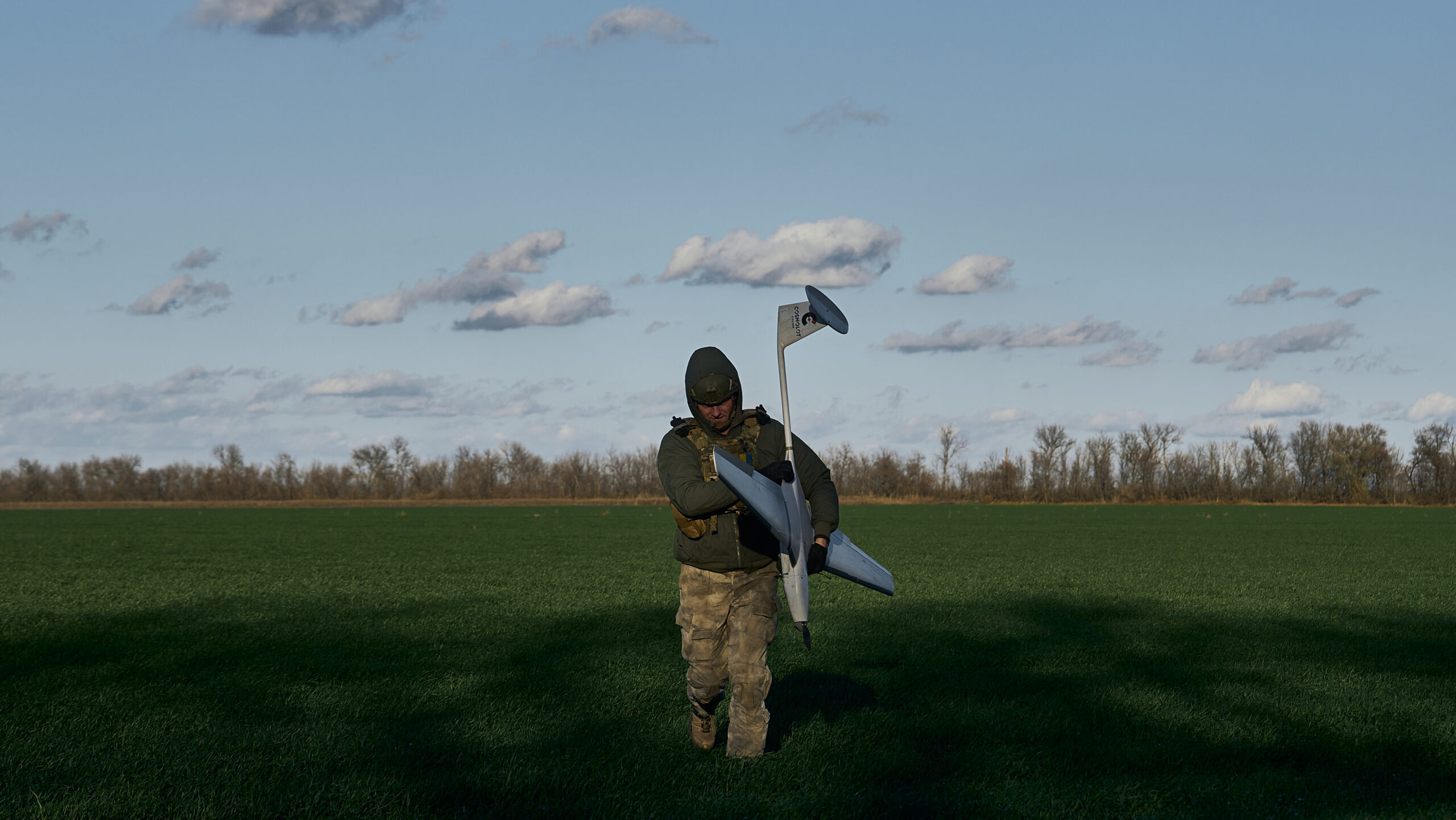
Ukrainian Infantry Operate Near Vuhledar

After that date, image will need to be licensed from the website.) Ukrainian military operate a Punisher drone, a small fixed-wing reusable aircraft used by frontline infantry to strike military targets, on November 7, 2023 near Vuhledar, Ukraine. (Photo by Kostya Liberov/ Libkos via Getty Images)

AOC 2023 — The visible front line has hardly moved in months, but above the trenches and minefields dividing Ukraine, an invisible battle rages back and forth in the airwaves.

Both sides are constantly updating their drones and their anti-drone tactics, which depend above all else on the radio connections used to control the unmanned aircraft and to relay the vital intelligence they collect to commanders, artillery batteries and missile launchers. Both sides have invested heavily in radio-frequency jamming and deception — electronic warfare — to misdirect missiles and bring down drones, with Ukraine alone losing an estimated five to ten thousand every month. And this cat-and-mouse game moves so rapidly, Ukrainian and NATO experts said at the Association of Old Crows’ annual electronic warfare conference, that tech needs to be upgraded about every eight weeks.

RELATED: Amid Ukraine and Israel conflicts, Pentagon acquisition chief sees counter-drone ‘crisis’

“The electromagnetic environment in the eastern Donbas is the most complex in the world,” said Air Commodore Blythe Crawford, commandant of the Royal Air Force’s Air & Space Warfare Centre (ASWC). “If you’re turning out version 1.1, you’ve got eight weeks before you churn out version 1.2.”

A Ukrainian reserve officer and tech entrepreneur, Capt. Iaroslav Kalinin, made the same point more bluntly as he whipped through a presentation of different drone types the two sides had fielded one after another. “Whatever I show you becomes obsolete in the next two months,” Kalinin told the AOC conference.

Big, purpose-built military drones like the Turkish Bayraktar TB2 that were stars at the start of the war have given way to hobbyist mini-drones and, increasingly, racing drones controlled by operators using VR goggles to get a drone’s-eye-view — what’s called “First Person View” (FPV) control.

Both sides have turned the agile, speedy FPV drones into ad hoc smart bombs and, Kalinin said, the Ukrainians are now even using them as interceptors to bring down larger Russian drones. Meanwhile, operators are constantly adjusting control frequencies to bypass jamming, changing how they hide from retaliatory strikes — which prioritize drone operators — and extending range by such tricks as relaying the control signal through a secondary drone.

“The side that prevails will be the side that innovates the quickest,” said Crawford.

But which side is that? While the Russians have a well-earned reputation for rigidity, “they’re also learning,” said Maj. Gen. Borys Kremenetskyi, a Ukrainian air force officer currently serving as defense attaché to the US. “They’re adapting [their] tactics.”

When the war began, Kremenetskyi said, Ukraine was fighting “the big Soviet Army”: long columns of tanks, troop carriers and trucks surged into Ukrainian territory — and often got stuck when resistance proved greater than planned, like the infamous 40-mile “traffic jam” north of Kyiv. As the war ground on, Cold War-era mechanized echelons increasingly gave way to human wave attacks of poorly supported foot troops, straight out of the darkest days of the “Great Patriotic War” against the Nazis. But the Russians also launched relentless missile and drone attacks against Ukrainian cities, and, Kremenetskyi said, there they were careful to vary their flight paths from strike to strike and use recon drones to scout for weak points in Ukraine’s hard-pressed air defenses.

In the cyber/electronic warfare domain, the Russians began the war with a knockout blow against the ViaSat communications network on which Ukrainian troops depended, only for Elon Musk’s Starlink to save the day. Starlink has proved remarkably resilient against hacking and jamming. But, Kremenetskyi warned, the Russians learned to look for areas of “mass internet access” and other signs that Starlink terminals were online, then target them.

Nevertheless, Kremenetskyi expressed confidence that Ukraine’s more Westernized society and military could adapt faster than the authoritarian Russians. “Innovation is one of our advantages,” he said. In particular, since the devastating losses in Crimea and eastern Donbass during the Russian invasion of 2014, Ukraine has reformed its armed forces to allow more initiative among junior frontline troops — the soldiers are actually storming trenches and reconfiguring drones.

“We transferred a lot of authorities to junior officers,” the general said. “We created a very powerful non-commissioned officers corps, which allows us to make decisions in trenches. Our soldiers do not wait for a general somewhere in headquarters. …They can use their own initiative on the battlefield. That is one of our advantages.”

Those tactical and technical reforms made a particular difference in electronic warfare: Russian jamming paralyzed Ukrainian command systems in 2014, but failed to bring them down in 2022.

“The biggest boogeyman in the world was Russian EW,” said Jeff Fischer, a former US Air Force electronic warfare officer. “[People said] ‘they’re light years ahead of us.’ No, they’re not.”

Sure, he told the AOC conference, the technical specifications of Russian systems were impressive, and specimens acquired by intelligence agencies performed magnificently in field tests on US ranges — where they were operated by US-trained crews with top-notch technical support. In the mud and chaos of actual conflict, however, with patchy maintenance and tired, under-trained crews, their combat performance was much worse.

That said, Fischer warned, the brutal natural selection of ongoing combat is forcing even the Russians to get better. “I will say, even though Russia wasn’t great at the beginning, fighting is training, so they might be losing guys but they’re learning,” he said. “Russia’s getting actually relatively good, only because they’re being forced to do so.”

What Russia lacks in bottom-up initiative, it might be able to make up its ability to ruthlessly mobilize all available resources to serve the autocrat’s objectives, argued Crawford.

“Rather than being a question of, ‘are we ahead or are we behind’ … it is a battle of innovation models,” he said. “You have Ukraine, which is slightly more Western in its approach, a bottom-up innovation model … versus a top-down autocratic model … where they have mobilized the nation’s industrial base to support that top-down innovation.”

As the war grinds on and Western resolve wavers, it’s hard to say whether the free world or the autocrats will prevail in the end.

Categories
Saved Web Pages - Audio Posts

Was Putin’s top general Gerasimov killed in Crimea attack? What we know

Rumors are circulating that Russia’s top general, Chief of the General Staff Valery Gerasimov, was killed in an attack on annexed Crimea by Ukrainian forces on Thursday.

Social media users began questioning the whereabouts of the Russian general after Ukraine said it had struck a Russian military command post near Sevastopol and a military unit near the city of Yevpatoria, in separate strikes on the Black Sea peninsula, which was annexed by Russian President Vladimir Putin in 2014.

Russian President Vladimir Putin and Valery Gerasimov

Russian President Vladimir Putin (L) and Chief of the Russian General Staff Valery Gerasimov (R) attend an expanded meeting of the Russian Defense Ministry Board in Moscow, on December 21, 2022. Rumors are swirling that Gerasimov was killed in an attack on annexed Crimea by Ukrainian forces.
MIKHAIL KIREYEV/Sputnik/AFP/Getty Images

Ukrainian Air Force Commander Mykola Oleshchuk thanked the pilots and “everyone who planned the operation for perfect combat work” in a message on Telegram.

Russia said its air defenses shot down 10 guided missiles over Crimea, and that it had prevented an attempt by Ukraine’s forces to carry out a “terrorist attack.” Russia’s defense ministry said it also intercepted 36 Ukrainian drones over the peninsula.

The unverified rumor of Gerasimov’s death appears to have begun circulating after X (formerly Twitter) user WarVehicleTracker, which tracks vehicles and losses in Ukraine, shared an image purporting to show a message published by a Russian Telegram channel called “Ordinary Tsarism,” which has more than 34,000 subscribers.

“Gerasimov died?” wrote WarVehicleTracker.

The message in the image read: “According to preliminary data, Valrey Gerasimov, who was in a command post near Sevastopol at the time of the attack, was killed in the attack on Crimea.”

WarVehicleTracker’s post has been viewed more than 60,000 times at the time of writing, and prompted hundreds of social media users to question whether Gerasimov had been killed in Crimea.

A Newsweek search found that the message purportedly published by the “Ordinary Tsarism” channel didn’t exist at the time of writing. It isn’t clear if the message was deleted, or if it was fabricated by social media users. Newsweek has emailed the author behind the channel for further clarification.

The X user WarVehicleTracker told Newsweek they first saw the image and message on social platform Discord.

Questions asked by X users as rumors swirled include: “Is Gerasimov dead?”; “What happened to Gerasimov?”; “Did they off Gerasimov?”; “Gerasimov died?”; “Did Ukraine really kill Gerasimov?”; and “Gerasimov, where are you?”.

“Until Russia proves that Gerasimov is alive, we should just assume he is dead,” one X user wrote.

Another added: “Not holding my breath but if Gerasimov got iced in the Crimea swarm, that would be… eventful.”

Gerasimov’s Wikipedia page was also temporarily edited to state that he had died on January 4, the day of the Crimea attack.

There is no concrete evidence to suggest that Gerasimov has been killed, nor is there evidence that Gerasimov was in Crimea at the time of the attack. The Kremlin hasn’t commented on the rumors, and Newsweek has contacted Russia’s Defense Ministry via email for comment.

The New York Times reported in December 2022 that Ukrainian authorities attempted to assassinate Gerasimov as he visited the front lines in Ukraine.

Do you have a tip on a world news story that Newsweek should be covering? Do you have a question about the Russia-Ukraine war? Let us know via worldnews@newsweek.com.

Newsweek is committed to challenging conventional wisdom and finding connections in the search for common ground.

Newsweek is committed to challenging conventional wisdom and finding connections in the search for common ground.

Categories
Saved Web Pages - Audio Posts

America has a McGonigal problem

63dc17c60a08ae0018a68a62?width=1200&form

The case of Charles McGonigal is bigger than one corrupt FBI agent.

In fact, it’s bigger than the entire FBI.

The legal case against Charles McGonigal, the FBI’s former New York counterintelligence chief — a scandal that launched a thousand conspiracy theories — is beginning to wind down. Last week, a judge in the Southern District of New York sentenced McGonigal to 50 months in prison; a second judge in Washington, DC, is expected to sentence McGonigal on a different set of charges in February.

But the bigger story — about transnational flows of money, intelligence, and influence, and the weakness of the legal and ethical firewalls that are supposed to constrain them — is just beginning.

The two McGonigal indictments offer a rare glimpse of the inner workings of the Acela corridor, a global bazaar where contacts, secrets, and influence are swapped for millions while the laws that are supposed to protect US national security interests are often ignored.

And now, with McGonigal’s two guilty pleas and first sentencing, that rare window into how things really work inside the steakhouses of Washington and Manhattan is closing. McGonigal was embraced by this clubby world of lobbyists and law enforcement dons even as he brought home bags of cash to fund his secret double life.

In November of last year, BI was first to break the news that prosecutors were scrutinizing McGonigal’s contacts with Albanian officials and a powerful Russian oligarch. When McGonigal was arrested and charged in January, the media and Capitol Hill reacted with shock. How could one of the FBI’s senior-most counter-intelligence officials retire and then illegally take money from a sanctioned Russian oligarch he had been investigating?

But that was before Robert Menendez, who is still a sitting Democratic senator from New Jersey, was indicted for allegedly accepting gold bars and bundles of cash so that military aid could keep flowing to the Egypt’s authoritarian government.

That was before FBI agents seized the phones of Eric Adams, who is still the mayor of New York, as part of a probe into campaign donations from the government of Turkey.

If McGonigal’s corruption was surprising then, it should be less surprising now. Official corruption in America goes beyond one agency, one administration, or one political party. It isn’t political. It’s cultural, the product of a society so obsessed with wealth that even its best-compensated public officials see themselves as middle-class strivers. Despite $850,000 in income and $1.5 million in assets, according to his pre-sentencing report, McGonigal’s attorneys tried to excuse his behavior by saying that he needed “to find a way to earn a living.” “It’s not high society,” his lead attorney, Seth DuCharme, argued in a Manhattan federal court on Thursday. “He has prestige, and he has respect, but he’s not a billionaire.”

Oleg Deripaska, the Russian oligarch who hired McGonigal, is a billionaire, one with longstanding ties to Vladimir Putin and whose alleged involvement with bribery, murder, and organized crime was cited by the US Treasury Department. (Deripaska has denied all wrongdoing, and has publicly distanced himself from Putin since the 2022 invasion of Ukraine.)

Beyond the illegality of McGonigal taking Deripaska’s money in violation of US sanctions, Assistant US Attorney Hagan Scotten made clear in court why their relationship should be so worrying. Pushing back on an argument by McGonigal’s attorneys that his crime was less serious than transferring military equipment, Scotten asked the judge to consider the value to the Kremlin of “having a former counter-intelligence chief on their payroll. What is more valuable to them?”

“How much would Putin ask his oligarchs to pay here?” Scotten went on. “How much would that have been worth to him?”

While the government has never alleged that McGonigal was spying for Russia, Scotten believed that’s where things were likely headed. McGonigal “cannot claim that he was unaware that he was selling his service to a scoundrel working against America’s interests,” the New York prosecutors wrote in their filing on his sentencing. “The investigative skills, contacts, and influence of a former senior American counterintelligence officer are of obvious, and dangerous, value to an agent of Vladimir Putin.”

The entire McGonigal story, as laid out in the government’s filings and BI’s reporting, reads like the opening chapters of a classic spy novel: Operatives spot and then recruit a hapless minion and set about gradually turning his loyalties around to align with theirs. McGonigal was supposed to be one of the FBI’s top grandmasters at this game, and what might be most astonishing about the allegations is the degree to which he apparently allowed his Russian associates to remake him into their pawn.

While he was still working at the FBI, McGonigal was introduced by one former Russian diplomat to another, more senior one, with rumored ties to Russian intelligence who worked with Deripaska. He was, according to the government, asked to do something simple but also, arguably, slightly compromising — arrange for the second diplomat’s daughter to receive VIP treatment from the New York City Police Department. A few months later, after McGonigal’s retirement, he met with Deripaska at two of his residences, in London and Vienna. And then he started accepting Deripaska’s money, surreptitiously. It flowed from a Russian bank to one shell company based in Cyprus to another controlled by a friend.

Judge Jennifer H. Rearden appeared to find Scotten’s argument compelling. Last week, she sentenced McGonigal to 50 months in prison, 3 years probation, and a $40,000 fine. McGonigal’s lawyers, citing his record of service within the FBI, had asked the judge for no additional confinement. Rearden ordered McGonigal to turn himself in on February 26. He will be sentenced in a Washington, DC, district court under a second plea agreement on February 16.

In New York, prosecutors said, McGonigal continued to wield the privileges and leverage the contacts that he’d enjoyed as the FBI’s New York City counter-intelligence chief, even though he no longer held that job. He traveled the world for meetings with foreign ministers, heads of state, and titans of industry — including a London get-together with Deripaska that was so alarming to British intelligence agents that they alerted their US counterparts. And back in New York, according to prosecutors, McGonigal continued to put an FBI placard on the windshield of his car, so he could park wherever he pleased.

This is who the FBI chose to promote to one of its most senior positions and entrust with its most sensitive secrets. In recent testimony before the Senate Judiciary Committee, FBI Director Christopher Wray said the Justice Department’s inspector general is “engaged” in scrutinizing the McGonigal matter. Members of Congress from both parties have also demanded answers of the FBI.

But McGonigal’s two plea agreements mean there is likely a lot about his career that may never be made public. These include his alleged attempts (after retiring) to get paid for arranging meetings with UN officials, and his role in the Trump-Russia investigation, and his time in the FBI’s New York Field Office during the crucial months just before the 2016 election.

“People get caught up in their Bond fantasies, their addiction to money, and their need to maintain their indispensability by offering more and more,” said one Washington insider familiar with the intelligence world. “It’s a very small step from selling services to foreign oligarchs to acting as the agent of a foreign government.”

Nevertheless, foreign oligarchs remain among the core clientele of otherwise respectable lawyers, lobbyists, and former US officials. McGonigal is not the end of this story, but rather, a warning. The US should be most worried about those who are still getting away with it.

Mattathias Schwartz is chief national security correspondent at Business Insider. He can be reached at schwartz79@protonmail.com.

Categories
Saved Web Pages - Audio Posts

Israel’s Military Intelligence Chief: We Can Strike Our Enemies ‘From Gaza to Iran’

70174-2.jpg?precrop=2400,1395,x0,y15&hei

Haaretz | Israel News

Speaking in the wake of the assassination of a senior Hamas official in Beirut in an attack attributed to Israel, Maj. Gen. Aharon Haliva told new graduates from a intelligence officers’ course to ‘always voice your professional opinion. Always, everywhere, addressing any rank or echelon’

Yaniv Kubovich

Jan 4, 2024 10:33 pm IST

Get email notification for articles from Yaniv Kubovich Follow

Jan 4, 2024 10:33 pm IST

Get email notification for articles from Yaniv Kubovich Follow

The head of the Israeli army’s military intelligence branch, Maj. Gen. Aharon Haliva, has said that high-quality and extensive intelligence provided by the military intelligence branch “saves the lives of soldiers risking their lives on the ground every day, enabling us to hit our enemies over a wide area, ranging from Gaza to Iran.”

Paid by Attorney Rakefet Shfaim
Categories
Saved Web Pages - Audio Posts

Claims traders profited from attack inaccurate, says Israel

Person using phone to check stock market dataImage source, Getty Images

There is no evidence some investors profited from knowledge of Hamas’s attack on Israel before it took place on 7 October, the Israel Securities Authority (ISA) has said.

One academic study had suggested investors betting against the Israeli economy made large sums.

It said it found significant short-selling in the run-up to the attacks.

But the report has since been called “inaccurate” and “irresponsible” by the Tel Aviv Stock Exchange (TASE).

The ISA said it was dropping its investigation into the matter.

Short-selling is when investors try to make money on shares, bonds or other financial instruments that they think will fall in price.

They arrange to sell shares they do not yet own at the current price, hoping to buy them later at a cheaper price before the shares change hands, so they can then bank the difference.

“Days before the attack, traders appeared to anticipate the events to come,” researchers Robert Jackson Jr from New York University and Joshua Mitts of Columbia University had stated on Tuesday.

The researchers said they had identified a dramatic increase in investors seeking to sell shares in Israeli companies on the TASE.

But the stock exchange said the claims made in the academic paper since were inaccurate, labelling them “irresponsible”.

TASE said the authors of the report had miscalculated the sums, showing the value of the share prices in agorot, similar to pennies, instead of Israeli shekels.

“Therefore they calculate a profit of NIS 3.2bn (£680m) when in practice the profit was only NIS 32m (£6.8m),” TASE’s head of trade Yaniv Pagot told the publication Globes.

He also said claims of a sudden spike in trading before the attack were “divorced from reality”.

The researchers have corrected the currency mistake in their report, but Mr Mitts on Tuesday said that he stood by the “highly unusual” exchange traded fund (ETF) and short-dated options activity also identified by the researchers.

Correction 7 December: This article updates a previous one that included incorrect currency information provided in the report by Robert Jackson Jr from New York University and Joshua Mitts of Columbia University.