Categories
Saved Web Pages - Audio Posts

Hamas leader visits Egypt amid intensive talks on new ceasefire

559774

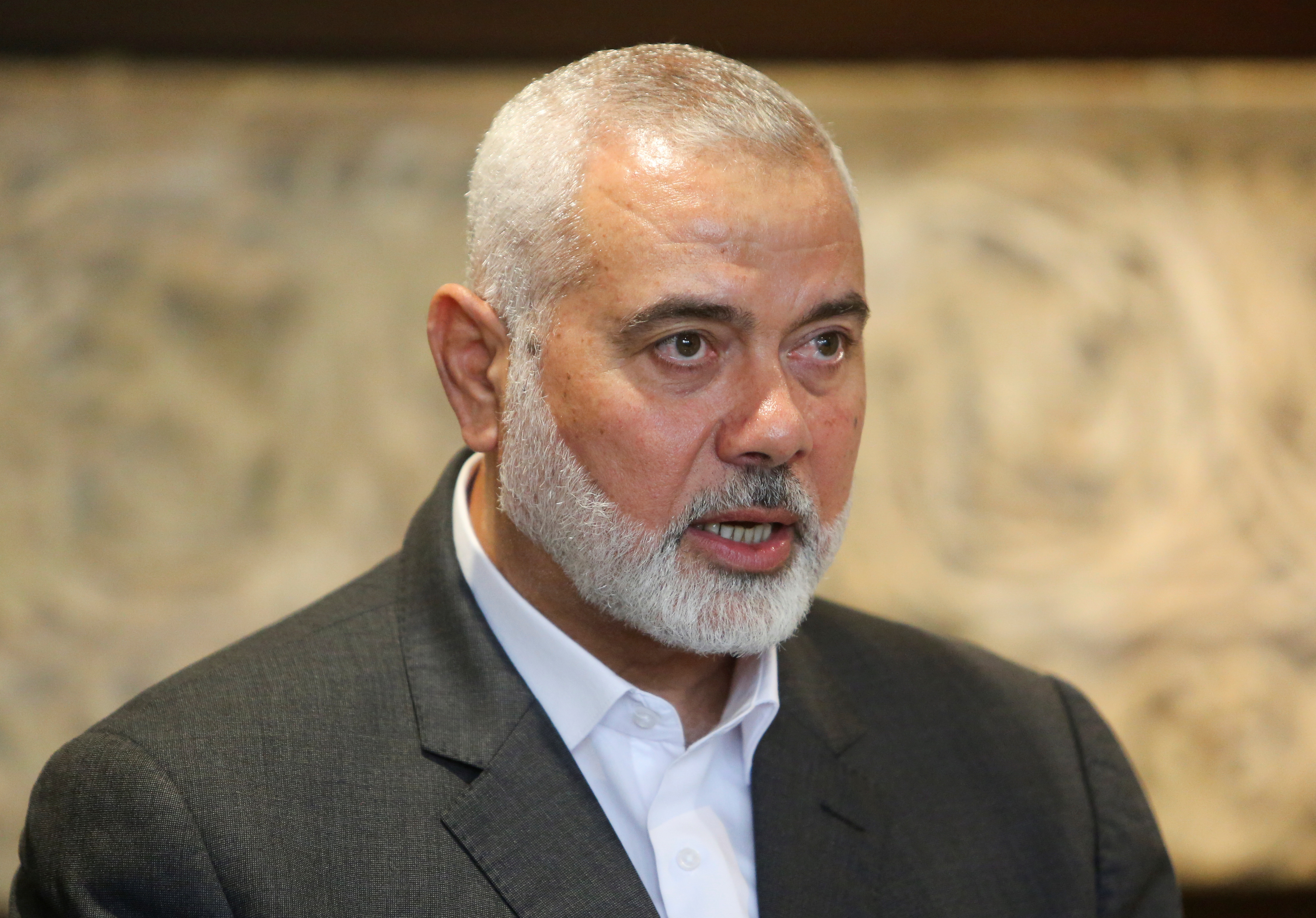
The leader of Hamas made his first visit to Egypt for more than a month on Wednesday, a rare personal intervention in diplomacy amid what a source described as intensive talks on a new ceasefire to let aid reach Gaza and get hostages freed.

Hamas leader Ismail Haniyeh, who normally resides in Qatar, typically intervenes in diplomacy publicly only when progress seems likely. He last traveled to Egypt in early November before the announcement of the only agreement on a ceasefire in the war so far, a week-long pause during which more than 100 hostages were released.

A source briefed on negotiations said envoys were discussing which of the hostages still held by terrorists in Gaza could be freed under a new truce agreement and what prisoners Israel might release in return.

Israel was insisting that all remaining women and infirm men among hostages be released, the source said, declining to be identified. Palestinians convicted of serious offenses could be on the list of prisoners to be freed.

The source described the negotiations as intensive and said a breakthrough could be possible within days.

PHOTO: IRAN’S FOREIGN Minister Hossein Amir-Abdollahian (left) meets with Hamas leader Ismail Haniyeh in Doha, Qatar, last month. (credit: Iran’s Foreign Ministry/West Asia News Agency/Reuters)

A Palestinian official said Haniyeh was keen to listen to Egyptian officials for a possible new approach and noted that the official position of Hamas was to reject any new temporary ceasefire and demand a permanent halt to fighting.

“Hamas’s stance remains they don’t have a desire for humanitarian pauses. Hamas wants a complete end to the Israeli war on Gaza,” the Palestinian official said.

Advertisement

“Haniyeh and Hamas always appreciate the Egyptian effort. He is in Cairo today to listen to whether Israel has made new proposals or whether Cairo has some too. It is early to speak of expectations.”

A senior Israeli official repeated the government position that the war could end only with the release of all hostages and the destruction of Hamas: “As the prime minister has said, the war will end with total victory.”

The negotiations come as Israel has faced increasing pressure from its international allies to curb a campaign in Gaza that has laid waste to much of the coastal enclave in retaliation for a Hamas killing spree on Oct. 7.

Washington, Israel’s closest ally, has publicly called over the past week for it to scale down its all-out war into a more targeted campaign against Hamas leaders and end what US President Joe Biden called “indiscriminate bombing.”

UN vote delayed

At the UN Security Council, where Washington has twice used its veto to shield Israel from international demands for a ceasefire, negotiators put off a vote on the latest resolution for another day in hope of reaching an agreed text.

When asked if they were getting close to an agreement, US Ambassador to the UN Linda Thomas-Greenfield told reporters on Tuesday: “We’re trying, we really are.”

Since the last truce collapsed at the start of this month, the war has entered a more intensive phase, with ground combat previously confined to the northern half of the Gaza Strip now spread across the length of the coastal enclave.

Israel has sworn to defeat Hamas, which rules Gaza, since its fighters killed 1,200 people and captured 240 hostages in the Oct. 7 attacks. Gaza health officials say nearly 20,000 people have since been confirmed killed in Israeli strikes, with thousands more believed lost and buried under rubble.

Israel’s government has faced domestic political pressure to reach a further agreement to free hostages, especially after acknowledging last week that troops mistakenly killed three of those taken. Israel believes 129 hostages remain in Gaza, of whom 21 are feared to have died in captivity.

In the north, where Israeli forces claimed to have achieved most of their military objectives last month, fighting has been more intense than ever. Huge orange balls of flame and towers of black smoke soared into the sky over the northern Gaza Strip as seen from across the fence in Israel, as Israeli warplanes pounded the area at dawn.

The Palestinian Red Crescent said Israeli forces had besieged its ambulance depot in Jabalia, a northern settlement that has been the site of some of the most intensive fighting. There are 127 people in the facility, including workers, displaced people and wounded.

In the south, where most of Gaza’s residents are now sheltering after fleeing other areas, there has been intense fighting around the center of the main southern city Khan Younis, which Israeli forces have partly stormed.

“All the night bombing didn’t stop. Their focus now is Khan Younis. People here have to deal with two wars all the time, bombing and hunger,” said Samir Ali, 45, a father of five from Gaza City in the north now sheltering in Khan Younis.

Israel says it is doing what it can to protect civilians, including warning them in advance of strikes, and blames Hamas for harm to them for operating in their midst, which Hamas denies.

International aid organizations say the enclave’s 2.3 million residents have been driven to the brink of catastrophe by destruction that has forced 90% of them from their homes and a blockade restricting access to food and medical supplies.

Categories
Saved Web Pages - Audio Posts

https://www.nytimes.com/live/2023/12/20/world/israel-hamas-war-gaza-news

Categories
Saved Web Pages - Audio Posts

Hamas leader visits Cairo, a sign talks on another Gaza truce and hostage swap are gathering pace

?url=https%3A%2F%2Fassets.apnews.com%2Ff

By WAFAA SHURAFA and SAMY MAGDY
Updated [hour]:[minute] [AMPM] [timezone], [monthFull] [day], [year]  

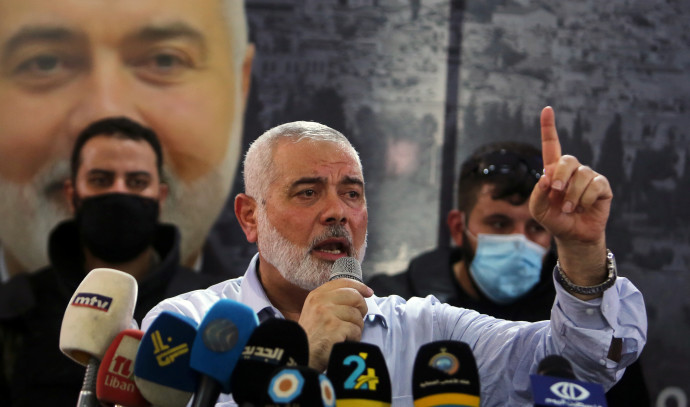
DEIR AL-BALAH, Gaza Strip (AP) — Hamas’ top leader traveled to Cairo on Wednesday for talks on the war in Gaza, part of a flurry of diplomacy aimed at securing another cease-fire and hostage swap at a moment when the militant group is putting up stiff resistance to Israel’s offensive.

Ismail Haniyeh’s visit came a day after Hamas fired rockets that set off air raid sirens in central Israel, a show of strength during a 10-week war that has devastated much of northern Gaza, killed nearly 20,000 Palestinians, and driven some 1.9 million — nearly 85% of the population — from their homes.

Israel has called on the rest of the world to blacklist Hamas as a terrorist organization, saying it must be eradicated in the wake of its Oct. 7 rampage across southern Israel that triggered the war.

But the sides have recently relaunched indirect talks, mediated by Egypt and Qatar, aimed at instituting another cease-fire and freeing more hostages captured in that attack in exchange for Palestinians imprisoned by Israel.

Mobile phone and internet service was down across Gaza again on Wednesday, an outage that could complicate efforts to communicate with Hamas’ leaders inside the territory who went into hiding after Oct. 7.

WIDE GAP REMAINS IN TALKS ON HOSTAGES

Despite a burst of activity by high-level officials in recent days, the two sides appeared to be far from an agreement.

Hamas has said no more hostages will be released until the war ends, and is expected to insist on the release of large numbers of Palestinian prisoners, including high-level militants, for the captives that remain — demands Israel has thus far rejected.

Egypt, along with Qatar, helped mediate a weeklong cease-fire in November in which Hamas freed over 100 hostages in exchange for Israel’s release of 240 Palestinian prisoners. Hamas and other militants are still holding an estimated 129 captives.

Hamas said that Haniyeh — who is believed to be based in Qatar but whose movements are rarely publicized — would discuss the war with Egyptian officials, without providing more details. Egypt, which borders Gaza, is deeply concerned about a potential influx of Palestinian refugees, fearing Israel will not allow them to return.

ISRAEL SAYS ‘FINAL CLEARING’ UNDERWAY IN THE NORTH

At least 46 people were killed and more than 100 wounded early Wednesday as Israel continued to bombard the urban Jabaliya refugee camp near Gaza City, according to Munir al-Bursh, a senior Health Ministry official.

In southern Gaza, several women and children were among those brought into Nasser Hospital in the city of Khan Younis after strikes overnight and into Wednesday. A boy could be seen sobbing next to his wounded mother, who was laid out on a stretcher, before being lifted up and placed on her chest.

Defense Minister Yoav Gallant said Tuesday that Israeli forces were entering Hamas’ tunnel network in northern Gaza as part of a “final clearing” of militants from the region. The densely built urban north — including Gaza City, the territory’s largest — has seen ferocious fighting, with Palestinian health officials reporting dozens of people killed in bombardment in recent days.

Gallant said that in southern Gaza, where the military launched a ground incursion focused on Khan Younis in early December, operations will take “months.”

The Health Ministry in Hamas-run Gaza said Tuesday the death toll since the start of the war had risen to more than 19,600. It does not distinguish between civilian and combatant deaths.

Hamas and other militants killed some 1,200 people, mostly civilians, in the Oct. 7 attack.

Israel’s military says 134 of its soldiers have been killed in the Gaza ground offensive. Israel says it has killed some 7,000 militants, without providing evidence, and blames civilian deaths on Hamas, saying it uses them as human shields when it fights in residential areas.

UN MEMBERS STILL PUSHING US ON AID RESOLUTION

U.N. Security Council members are negotiating an Arab-sponsored resolution to halt the fighting in some way to allow for an increase in desperately needed humanitarian aid deliveries to Gaza. A vote on the resolution, first scheduled for Monday, was pushed back again until Wednesday as talks continued in the hopes of getting the U.S. to abstain or vote “yes” on the resolution after it vetoed an earlier cease-fire call.

France, the United Kingdom and Germany — some of Israel’s closest allies — joined global calls for a cease-fire over the weekend. In Israel, protesters have called for negotiations with Hamas to facilitate the release of scores of hostages still held by the group.

Israel says it will keep fighting until it has removed Hamas from power, dismantled its armed wing and returned all the hostages. U.S. President Joe Biden’s administration has called on Israel to take greater steps to spare civilians but has continued to provide diplomatic and military support for the offensive.

___

Magdy reported from Cairo. Associated Press writer Melanie Lidman in Tel Aviv, Israel contributed.

___

Find more of AP’s coverage at https://apnews.com/hub/israel-hamas-war.

Categories
Saved Web Pages - Audio Posts

Hamas leader Haniyeh arrives in Cairo for talks on Gaza – statement

Palestinian group Hamas' top leader, Ismail Haniyeh talks after meeting with Lebanese Parliament Speaker Nabih Berri in Beirut

Palestinian group Hamas’ top leader, Ismail Haniyeh talks after meeting with Lebanese Parliament Speaker Nabih Berri in Beirut, Lebanon June 28, 2021. REUTERS/Aziz Taher Acquire Licensing Rights

DUBAI, Dec 20 (Reuters) – Hamas leader Ismail Haniyeh arrived in Cairo on Wednesday to hold talks with Egyptian officials, mainly on developments in the war with Israel in the Gaza Strip, the Palestinian group said.

Reporting by Clauda Tanios; Editing by Andrew Heavens

Our Standards: The Thomson Reuters Trust Principles.

Categories
Saved Web Pages - Audio Posts

Medicine: Mouse Fever

time-logo-og.png

At the height of the Korean War in 1951, hundreds of G.I.s were struck by a malady characterized by fever and bleeding from the mouth, nose and internal organs. Nothing medics did seemed to help. Most of the soldiers eventually recovered, and the mysterious ailment was later identified as epidemic hemorrhagic fever. But Army doctors were unable to find either the cause of the disease or how it was transmitted.

Now, after years of patient investigation supported by funds from the U.S. Army, a South Korean medical researcher may have solved the mystery of a disease that last year afflicted thousands of Asians, including at least 800 South Koreans. Dr. Lee Ho Wang says that the dangerous ailment is caused by an elusive virus borne by a tiny Korean field mouse that lives in mountainous areas. If Lee’s discovery is confirmed, it should not only help doctors make a faster diagnosis of the disease but also pave the way for the development of a vaccine against it.

Russian doctors who wrote the first comprehensive reports on the disease —after a 1913 outbreak in Vladivostok —suspected a rodent-borne virus, but neither they nor later researchers were ever able to isolate the culprit. Lee himself made little progress until 1971, when a member of his team assigned to catch rodents for research was suddenly felled by hemorrhagic fever. The lab was immediately quarantined and work interrupted for several months, but the incident made Lee even more certain that the carrier was indeed a rodent. During seven years, the research team collected more than 2,400 mice and other rodents, examined countless human and animal organs and isolated no fewer than 16 unknown viruses.

Disease Agent. Finally, Lee made the crucial connection. He took viral material from a Korean subspecies of the mouse known as Apodemus agrarius and mixed it with blood serum from patients recuperating from hemorrhagic fever. The blood proved to contain antibodies—protective proteins developed by the body’s immune system in response to invading foreign substances —that matched and combined with the viral material from the mouse. There were no such linkups when Lee did the same with the blood of people who had never suffered from hemorrhagic fever. Thus the mouse virus was almost certainly the cause of the disease.

How is the disease transmitted? Because hemorrhagic fever peaks in May and October, the dry seasons in South-Korea, Lee suspects the virus lives in the droppings of Apodemus agrarius and attacks humans when they stir up dust and inhale virus-laden particles.

Categories
Saved Web Pages - Audio Posts

https://www.nytimes.com/2023/12/14/nyregion/mcgonigal-fbi-sentencing.html

Categories
Saved Web Pages - Audio Posts

Ex-FBI counterintelligence chief sentenced to over four years in prison for work with Russian oligarch

gettyimages-1464530706.jpg?c=16x9&q=w_80

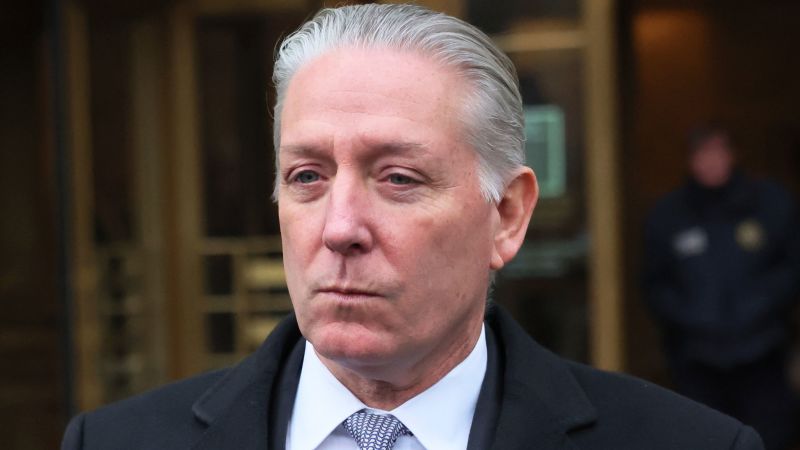
The former head of counterintelligence for the FBI’s New York field office was sentenced to just over four years in prison for working for a sanctioned Russian oligarch after leaving the government.

Charles McGonigal, a 22-year veteran of the FBI, pleaded guilty in August to one count of conspiracy to violate US sanctions and money laundering for working for Oleg Deripaska, a wealthy Russian with close ties to Russian President Vladimir Putin.

Judge Jennifer Rearden sentenced McGonigal to 50 months in prison, just below the statutory maximum of five years. The judge ordered McGonigal to surrender to prison on February 26.

McGonigal, the judge said, “repeatedly flouted and manipulated the sanctions regimes vital” to US national security interests and “the undeniable seriousness of this and the need to respect the law … compels a meaningful custodial sentence.” At the same time, the judge said his actions “do not all together stamp out” his distinguished career and the “profoundly important contributions” he made to the US.

Before the sentencing was handed down, McGonigal told the judge he has a “deep sense of remorse and sorrow for my actions.”

“I, more than anyone, know that I have committed a felony and as a former FBI special agent it causes me extreme mental, emotional and physical pain – not to mention the shame I feel in embarrassing myself and the FBI, the organization I love and respect,” he said while fighting back tears.

“I’m humbly asking for a second chance,” McGonigal told the judge.

Prosecutors argued McGonigal should receive five years in prison, saying his work for Deripaska put US national security at risk, positing that if a foreign government had to choose between military supplies or having the former FBI counterintelligence chief “on their payroll,” it is an easy decision.

“How much would that be worth to them? Our enemies have guns and they know where to buy more. What they do not have is the rule of law. We do. That is what McGonigal tried to sell,” argued Hagan Scotten, a prosecutor. “Poverty did not motivate this crime, your honor. Greed did. It was a betrayal.”

Seth DuCharme, McGonigal’s attorney, asked for a no-prison sentence, citing McGonigal’s decades of public service. He said Deripaska asked McGonigal to dig up dirt on a rival oligarch, which did not seem “particularly nefarious,” but it did break the law.

DuCharme added that McGonigal was lured by the risk and reward, calling it a “terrible decision.”

DuCharme asked the judge to consider a recent seven-hour meeting McGonigal had with seven government agencies, which he said he was not allowed to discuss but was known to the judge under seal, as evidence of his willingness to cooperate.

In September, McGonigal pleaded guilty in a separate case in Washington, DC, to concealing hundreds of thousands of dollars he received from a former Albanian intelligence employee as well as foreign contacts he made with the individual. He is scheduled to be sentenced in that case in February.

DuCharme asked the judge to recommend McGonigal serve his sentence in the New York area.

Categories
Saved Web Pages - Audio Posts

Arizona Man Arrested for Making Online Threats Against Federal Agents and Employees

doj-seal-fb.jpg

Michael Lee Tomasi, 37, of Rio Verde, Arizona, was arrested on Friday after a grand jury indicted him on three counts of threats against a federal official and three counts of making interstate threats.

According to court documents, from May 2021 through November 2023, while living in Colorado and Arizona, Tomasi used a social media platform to express a desire to incite violence and threaten a variety of individuals and groups, including elected officials, a judge, and federal officials and law enforcement officers. The charges against Tomasi relate to threats he made in Arizona to federal law enforcement agents and employees.

“The threats of violence against public officials alleged in this indictment are abhorrent,” said Attorney General Merrick B. Garland. “The defendant is specifically charged with threatening to kill FBI agents and other FBI employees just for doing their jobs. I am deeply proud of the work the FBI does every day; its personnel should not have to deal with threats against themselves as they work to protect the American people. The Justice Department will not stand for such heinous behavior and will prosecute threats against its employees to the fullest extent of the law.”

“In this country, there’s a right way and a wrong way to express your views under the Constitution, and violence or threats of violence is not it,” said FBI Director Christopher Wray. “The men and women of the FBI work tirelessly and selflessly to protect others every day, and we will continue to work with our partners to hold accountable those who make violent threats against them or any of our colleagues in law enforcement.”

“Threats against law enforcement personnel like those alleged in this indictment are not just polemics, they are illegal under federal law and corrosive to civic life and dialogue,” said U.S. Attorney Gary Restaino for the District of Arizona.

If convicted, Tomasi faces a maximum penalty of 10 years in prison and a $250,000 fine for each count of making threats against a federal official, and a maximum penalty of five years in prison and a $250,000 fine for each count of making interstate threats.

The FBI is investigating the case. The U.S. Attorney’s Office for the District of Arizona is handling the prosecution.

An indictment is merely an allegation. All defendants are presumed innocent until proven guilty beyond a reasonable doubt in a court of law.

Categories
Saved Web Pages - Audio Posts

A danger called Donald Trump

Donald Trump can end 2024 with one foot in the White House… or with one foot in jail.

Next year, the former president of the United States has a full agenda, with numerous campaign and court appearances that will attract lots of attention. Depending on the outcome, he may not only be the main protagonist of 2024, but also of 2025. Lately, Trump is giving free rein to some of his more authoritarian impulses. His hypothetical return to the presidency is perceived as a risk for American democracy.

The US presidential elections – scheduled for November 5 – will be the grand finale after a year full of elections around the world. Biden is seeking another four years, but his popularity is very low due to his advanced age (he would begin his new term at 82), rising inflation (with the prices of gasoline and food at the highest they’ve been in four decades) and other internal policy factors, such as rising crime and undocumented immigration. He has also taken a hit thanks to his foreign policy, regarding his position on the wars being waged against Ukraine and Gaza.

While the polls indicate that Biden would likely lose his re-election bid if he were to face a rival with less political baggage, the Republican Party’s base adores Trump. At the same time, the aversion he generates among moderate and independent voters – along with the possible mobilization of progressive voters that he could trigger – means that he’s the Democratic Party’s best bet.
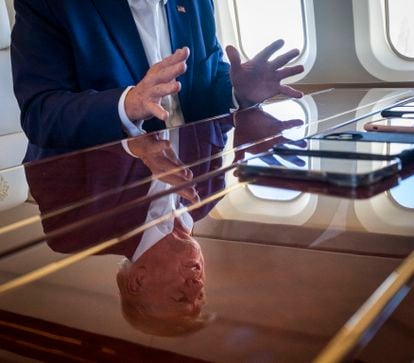
Donald Trump, photographed on his private plane, in June 2023.Donald Trump, photographed on his private plane, in June 2023. Doug Mills (New York Times / Con

The former president is the favorite to clinch the Republican nomination for president, far ahead of Florida Governor Ron DeSantis and former UN Ambassador Nikki Haley. He’s had the luxury of not attending the debates with the rest of the candidates, while still maintaining more support than all of them combined. However, he still needs to formalize this advantage in the actual primaries, which begin on January 15 with the Iowa caucuses. That same day, the civil trial in the defamation lawsuit filed by writer E. Jean Carroll is scheduled to begin. From there, judicial and political commitments alternate and intermingle throughout the year.

In addition to civil lawsuits, the former president is accused in four criminal cases (in Washington, New York, Florida and Georgia), facing charges for a total of 91 crimes. The DC and Georgia cases are regarding his attempts to overturn Joe Biden’s victory in the 2020 elections, which led to the assault on the Capitol on January 6, 2021 by his followers. Trump still maintains the lie that the election was stolen from him, which has allowed him to avoid the image of a loser. No other defeated president who ran for reelection ever made such a claim of election fraud.

That is to say, Trump is going back to the polls without having been made accountable for his actions to subvert the results of the 2020 election, which puts American democracy under a lot of pressure. Former Republican Congresswoman Liz Cheney – the daughter of former Vice President Dick Cheney – writes, in her recently-published book Oath and Honor, that the United States “can endure harmful policies for a four-year term. But we cannot survive a president willing to destroy our Constitution.’” She warns of the risk that the United States could slide into a dictatorial regime for the first time in its history should Trump return to the White House.

Trump’s lawyers will be able to defer some of the trials, but, for now, a March 4 court appearance remains on the agenda. Federal Judge Tanya Chutkan has set that date for the start of Trump’s Washington trial, which will deal with his attempt to alter the results of the 2020 elections. Trump has claimed presidential immunity, arguing that he was exercising the duties of his office. While the judge has rejected his request to dismiss the case, his lawyers have appealed the decision. The prosecutor has asked the Supreme Court to rule on the matter as soon as possible, but the trial is on the verge of being delayed.

“If that happens, voters will go to the polls without knowing whether one of the candidates in the current election is criminally responsible for trying to overturn the last election and subvert the will of the voters,” laments Randall Eliason, a professor of law at George Washington University.

The start of the trial – currently scheduled for Monday, March 4 – is the day before Super Tuesday, when a series of important primaries are held simultaneously. Typically, whoever picks up the greatest number of delegates that day lines up their party’s nomination. The Republican candidate for the general election is set to be approved during the Republican National Convention, from July 15 to July 18, in Milwaukee, Wisconsin.

Trump has another trial scheduled for March, involving hush money payments that he allegedly made to hide scandals that could have ruined his 2016 presidential campaign. The most high-profile scandal was his alleged extramarital affair with pornographic actress Stormy Daniels. This is scheduled before a New York State court, for five weeks, starting on March 25, 2024. Then comes the criminal case for crimes in violation of the Espionage Act, as well as for obstruction of justice, for unlawfully keeping classified materials in his possession following his departure from the White House. The judge for the Southern District of Florida has scheduled a five-week-long trial starting on May 20, 2024, although it’s also likely to be delayed. The trial date that’s still pending is in Georgia, for his attempted electoral theft in that state. This is the case that immortalized Trump in a mugshot.

Between his first and last scheduled court dates, most of the primaries would be held. While some states will vote in June, it’s likely that the Republican presidential nomination will be announced in March or April. For now, even with the court cases, Trump has done well. Despite all the evidence against him, he has managed to present himself to his voters as a victim of the system. For them, he’s a martyr who’s been unjustly politically persecuted in what he calls a “witch hunt,” orchestrated for the purposes of electoral interference.

In an authoritarian drift, Trump has openly promised to persecute his political rivals if he returns to power, as revenge for all the accusations levied against him. “It could certainly happen the other way around,” he said, in an interview with Univision this past November, regarding the possibility of charges being opened against his opponents down the road. “They let the genie out of the bottle,” he continued. “If I happen to be president and I see somebody who’s doing well and beating me very badly, I say, go down and indict them.”

His violent and authoritarian rhetoric has been compared to that of fascist and populist dictators. Examples include the dehumanization of political rivals, whom Trump has referred to as “vermin” that must be “eradicated,” or his claims that undocumented immigrants are “poisoning the blood of the country.” These expressions have echoes of Nazi Germany. At an event in Boston, President Biden said as much, comparing the language to what was heard “in Germany in the 1930s.” Trump has repeatedly attacked judges and prosecutors, while suggesting that his former head of the Joint Chiefs of Staff – General Mark Milley – deserves to be executed. A couple of months ago, he urged for shoplifters to be shot.

Classified documents in a bathroom at Trump's vacation home, Mar-a-Lago, in Florida.Classified documents in a bathroom at Trump’s vacation home, Mar-a-Lago, in Florida. Departamento de Justicia de Esta

In an interview on Fox News, Trump said that, if he were to be re-elected, he would be a “dictator” for a day to take some measures… and then he would stop being one. Biden’s campaign manager – Julie Chávez Rodríguez – reacted immediately: “Donald Trump has been telling us exactly what he will do if he is re-elected and tonight he said that he will be a dictator on day one. Americans should believe him.”

Despite the accusations and verbal excesses (or partly thanks to them), Trump leads the polls not only in his party’s primaries, but in the general election. Trump is ahead in the vast majority of key states where the outcome will be decided: Pennsylvania, Georgia, Wisconsin, Michigan, Nevada and Arizona. President Joe Biden has seen how several voters from traditional Democratic blocs – such as young people, Blacks and Latinos – have turned their backs on him. Biden’s unconditional support for the Israeli government after the Hamas attack and the subsequent bombardment of Gaza has been perceived as far too complicit, resulting in huge drops in support among young people and minorities, especially Arab Americans, who are critical voters in states such as Michigan.

A Trump victory would have enormous consequences for global geopolitics. A hypothetical second Trump presidency would be marked by economic protectionism and political nationalism. The former president has been reluctant to continue supporting Ukraine against the Russian invasion. Not even his commitment to NATO is assured. The potential relationship with China is also unknown, beyond Trump’s musing about tariffs.

The risk of a constitutional crisis is compounded by the prospect that Trump could be elected president, but also found guilty of some of the crimes for which he is accused of. From the presidency, he could try to stop the persecution of cases that affect him, grant pardons to his allies (such as the imprisoned Capitol rioters) and – as he has hinted – persecute his political rivals by weaponizing the Department of Justice.

“If a president can pardon himself for federal crimes — as Trump would likely try to do — then he could write his pardon in advance and shoot White House visitors. For that matter, the vice president could assassinate the president in the Oval Office and then immediately pardon herself,” David Frum scoffs in a recent essay for The Atlantic, which is dedicated to imagining a second Trump presidency.

According to César Martínez – who has been a strategist for getting out the Latino vote in several presidential campaigns – the fact that Trump won in 2016 “was an accident of democracy and the electoral college. But, if he wins in 2024, it would be masochism.” Many political scientists warn that, in a second Trump term, he wouldn’t have to be restrained by a view to re-election.

“The chances of the United States falling into a dictatorship have increased considerably,”according to Robert Kagan, of the Brookings Institution. “In just a few years, we’ve gone from being relatively certain of our democracy, to being just steps away – and in a matter of months – from the possibility of a dictatorship,” he adds. in an article published in The Washington Post.

The presidential elections of November 5, 2024 are the first since the fateful events of January 6, 2021. Depending on whether Trump ends the year closer to prison or the White House, we’ll soon find out if those who stormed the Capitol that day will finally get what they wanted.

Sign up for our weekly newsletter to get more English-language news coverage from EL PAÍS USA Edition

Categories
Saved Web Pages - Audio Posts

https://www.kasparovru.com/material.php?id=65807E0605388