KYIV — Ukraine’s spies aim to intensify intelligence operations and conduct sabotage strikes deep in Russian-controlled territory next year to bring the war as close to the Kremlin as possible, the head of Ukraine’s SBU security service told POLITICO.
“We cannot disclose our plans. They should remain a shocker for the enemy. We prepare surprises,” Major General Vasyl Malyuk said in written responses to questions. “The occupiers must understand that it will not be possible to hide. We will find the enemy everywhere.”
While he dodged specifics, Malyuk did give some hints. Logistics targets and military assets in occupied Ukrainian territory are likely to continue to be a focus. And then there are strikes that hit the enemy across the border.
“We are always looking for new solutions. So, cotton will continue to burn,” Malyuk joked.
Ukrainians use the word “cotton” to describe explosions in Russia and the occupied territories of Ukraine organized by Ukrainian special services. It came from Russian media and officials describing the growing number of such incidents with the word khlopok, which means both “blast” and “cotton” in Russian.
With combat along hundreds of kilometers of front lines essentially stalled for much of this year, the exploits of the SBU both boost Ukrainian morale and also hurt Russia’s war fighting abilities.
“The SBU carries out targeted point strikes. We stab the enemy with a needle right in the heart. Each of our special operations pursues a specific goal and gives its result. All this in a complex complicates the capabilities of the Russian Federation for waging war and brings our victory closer,” Malyuk said.
One area of focus will be Crimea and the Black Sea, building on this year’s operations.
Malyuk’s pet project is the Sea Baby drone, called malyuk in Ukrainian, which means “little guy.” The drone carries about 850 kilograms of explosives and is able to operate in stormy conditions, making it difficult to detect.
“With the help of those little guys we are gradually pushing the Black Sea Fleet of the Russian Federation out of Crimea,” Malyuk said.
It’s been used to attack the Kerch Bridge that links occupied Crimea to mainland Russia in July as well as to hammer Russian ships.
In October 2022 the SBU’s marine drones attacked Sevastopol Bay damaging four Russian warships. This year, the drones hit two missile carriers, a tanker, an amphibious assault ship and also damaged a large military tugboat and Russia’s newest reconnaissance and hydrographic ship.
Malyuk’s pet project is the Sea Baby drone, called malyuk in Ukrainian, which means “little guy.” The drone carries about 850 kilograms of explosives and is able to operate in stormy conditions, making it difficult to detect | Courtesy of the Security Service of Ukraine
That forced Moscow to shift much of the fleet away from its base in occupied Sevastopol in Crimea, leaving the west of the sea free of Russian vessels and allowing Ukraine to resume use of its ports for shipping.
The Kerch Bridge is still standing after a 2022 truck bomb attack and this year’s strike, but is only partially open, Malyuk said.
“It is a legitimate target for us, according to international law and the rules of war. Ukrainian law also allows us to attack this object. And we have to destroy the logistics of our enemy,” Malyuk added.
Malyuk said that Kyiv carefully considers its targets before striking — an effort to stay within the rules of war in contrast with Russia, which has fired missiles, artillery and drones at both military and civilian targets.
“When planning and preparing its special operations, the SBU carefully selects its targets. We work on military facilities or on those that the enemy uses to carry out their military tasks. We act fully by the norms of international law,” Malyuk said.
The SBU conducts most of its operations on Ukraine’s territory — in Donbas, Crimea and the Black Sea.
“This is our land and we will use all possible methods to free it from the occupiers,” Malyuk said.
When it comes to planning something in Russia, SBU says it focuses only on targets used for military purposes like logistical corridors for supplying weapons — like the rail tunnel in Siberia hit with two explosions (the SBU hasn’t claimed responsibility) as well as warships, military bases and similar targets.
“All SBU operations you hear about are exclusively our work and our unique technical development,” Malyuk said. “These operations became possible, in particular, because we develop and implement our technical solutions.”
Trump supporters at a rally in New Hampshire this week
One of the court challenges to Donald Trump’s eligibility to run for president in 2024 has finally struck gold.
The Colorado Supreme Court’s ruling to disqualify the former president from the Republican Party’s upcoming primary ballot is yet another unprecedented moment in US politics.
It’s a decision that further blurs the lines between America’s political and judicial systems, setting up a fresh collision between the election campaign and the courts.
However, this latest legal setback is unlikely to seriously damage Mr Trump’s bid to return to the White House – and he is already using it to his political advantage.
The activists who brought the case in Colorado – a liberal watchdog group and collection of anti-Trump Republican and independent voters – may be celebrating their victory.
But the response so far by Democratic politicians – the ones who will stand before voters next year and are working to defeat Mr Trump at the ballot box – tells a different story.
This isn’t a fight they want.
Colorado Secretary of State Jena Griswold – who had declined to act unilaterally to block Mr Trump from the state’s primary – issued a response to the court’s decision on Wednesday that didn’t exactly drip with enthusiasm.
“This decision may be appealed,” she said. “I will follow the court decision that is in place at the time of ballot certification.”
Part of the reason for her seeming reluctance to weigh in – and the relative silence of other Democrats – is that the ultimate outlook for the Colorado challenge isn’t bright.
Mr Trump’s campaign is already promising to appeal the decision – directly to the US Supreme Court. According to Samuel Issacharoff, a professor of constitutional law at New York University, the appeal will almost certainly be granted, particularly given that other state courts have considered, and rejected, similar lawsuits.
“It cannot be that the national candidacy for presidency is determined on a state by state basis,” he said. “That would be a breakdown of the democratic order.”
The Supreme Court currently has a six-to-three conservative majority. And while the justices, even the three appointed by Mr Trump, have shown a willingness to rule against the former president in previous cases, Mr Issacharoff believed they would be extremely reluctant to be seen as limiting voters’ options at the ballot box.
Democrats may also be concerned that the legal challenges – and the Colorado ruling – plays into one of the central messages of Mr Trump’s campaign, that the ruling elite is threatened by his political movement and are willing to subvert the will of the people to keep him from power.
Media caption,
Watch: What Trump’s Republican rivals are saying about Colorado Supreme Court ruling
Trump Campaign Spokesman Steven Cheung called the Colorado ruling “completely flawed”. He said it was a sign that Democrats had lost faith in President Joe Biden and “are now doing everything they can to stop the American voters from throwing them out of office next November”.
Meanwhile, Mr Trump’s Republican rivals are largely rallying around him, as they have during all of the former president’s legal battles this year.
Florida Governor Ron DeSantis called the Colorado decision an abuse of power. Vivek Ramaswamy said he would remove his own name from the state’s primary ballot. The Republican Party of Colorado has threatened to cancel the primary entirely and pick their choice for a nominee through a caucus process.
“We’re going to win this the right way,” said former South Carolina Governor Nikki Haley, who may be Mr Trump’s closest challenger. “The last thing we want is judges telling us who can and can’t be on the ballot.”
Democrats may be frustrated that, at least so far, Mr Trump seems to have avoided any price – political or legal – for the role he played in the 6 January 2021 attack on the US Capitol.
The former president has been indicted on charges related to his attempts to overturn the 2020 election twice – by federal prosecutors and by a district attorney in Georgia. But those trials, which will be decided by citizen juries and not judges, are still months away, if not longer. And it may be telling that special counsel Jack Smith, who is heading the federal case, has brought narrow charges that don’t rely on directly proving that Mr Trump led an insurrection.
The decision by the Colorado Supreme Court may have offered a dramatic moment of accountability that some Trump critics are craving, but it also is likely to be a temporary one. And, in the end, it may make it more likely the former president returns to power, not less.
Back then, the court’s rush to intervene in the 2000 Florida recount stained its reputation, making it look like just another political actor in effectively awarding the presidency to George W. Bush.
But, unlike Bush v. Gore, the Supreme Court should take this case, which Trump has already announced he will appeal. Yes, once again, whatever the justices do will be interpreted through the distorting lens of partisanship. A decision that allows Trump to remain a candidate despite his role in the Jan. 6, 2021, insurrection — the most likely result, in my view — will be derided as the work of “partisan hacks,” to use Justice Amy Coney Barrett’s resonant phrase, siding with the party that appointed them.
That skepticism would be understandable, given the record of this court’s aggressive conservative majority. But it would also be wrong, because Section 3 of the 14th Amendment should not be used to prevent Americans from voting to elect the candidate of their choice. The best outcome, for the court and the country, would be for a unanimous court — preferably an 8-0 court with Justice Clarence Thomas recusing himself — to clear the way for Trump to run.
Followthis authorRuth Marcus‘s opinions
To back up, Section 3 of the 14th Amendment provides that “no person shall … hold any office, civil or military, under the United States … who, having previously taken an oath, as a member of Congress, or as an officer of the United States … to support the Constitution of the United States, shall have engaged in insurrection or rebellion against the same, or given aid or comfort to the enemies thereof.”
Unlike the rest of the 14th Amendment, this post-Civil War provision, aimed at former Confederate officials, has been little used, then or in subsequent years. But Jan. 6, 2021, revived attention to the once-obscure provision, and challenges under Section 3 have been filed in multiple states.
On Tuesday, the Colorado Supreme Court found that Section 3 applies to Trump and therefore bars him from appearing on the state’s March 5 presidential primary ballot. The court divided 4-3; all seven justices were appointed by Democratic governors.
A lower court had found that Trump engaged in insurrection but was not covered by Section 3 based on an implausible reading under which “officer of the United States” did not include the president. It defies logic to believe that the framers of the amendment meant to exclude former Confederate soldiers from all offices but the most important, and the Colorado Supreme Court was correct to disagree with this interpretation.
“President Trump asks us to hold that Section Three disqualifies every oath-breaking insurrectionist except the most powerful one and that it bars oath-breakers from virtually every office, both state and federal, except the highest one in the land,” the majority wrote. “Both results are inconsistent with the plain language and history of Section Three.”
But the majority agreed with the lower court that Trump’s conduct amounted to engaging in insurrection under Section 3. “President Trump did not merely incite the insurrection,” it said. “Even when the siege on the Capitol was fully underway, he continued to support it by repeatedly demanding that Vice President Pence refuse to perform his constitutional duty and by calling Senators to persuade them to stop the counting of electoral votes. These actions constituted overt, voluntary, and direct participation in the insurrection.”
The three dissenting justices each wrote separately. The most interesting came from Justice Carlos Samour Jr., who said barring Trump from the ballot without legislation from Congress implementing Section 3 violates Trump’s due process rights, especially because Trump has not been charged with insurrection.
“More broadly, I am disturbed about the potential chaos wrought by an imprudent, unconstitutional, and standardless system in which each state gets to adjudicate Section Three disqualification cases on an ad hoc basis,” Samour wrote. “Surely, this enlargement of state power is antithetical to the framers’ intent.”
Chaos indeed, which is why the high court needs to step in. Beyond what I think is the unconvincing avenue of text-parsing arguments about the meanings of “office” and “officer,” the justices have two major potential off-ramps at their disposal.
One — and this would be my preference — involves the question Samour raised: whether Section 3 is self-executing. Here, the justices have the benefit of a decision by Chief Justice Salmon P. Chase in 1869 — the year after the 14th Amendment was ratified — that Section 3 requires enabling legislation.
In that case, from the days when justices rode the circuit, Chase ruled in the case of a formerly enslaved Black man who argued that his conviction for assault was void because the presiding judge had served in the Confederacy and was therefore disqualified from holding judicial office. Chase found that “legislation by Congress is necessary to give effect to the prohibition, by providing for such removal.”
A second, more troubling, avenue would be for the justices to conclude, in opposition to the Colorado Supreme Court, that Trump’s speech is protected by the First Amendment and therefore cannot be punished as insurrection. In the seminal 1969 case, Brandenburg v. Ohio, the court said that “mere advocacy” of violence can’t be punished “except where such advocacy is directed to inciting or producing imminent lawless action and is likely to incite or produce such action.” Trump would surely seize on any such finding as vindication for his appalling behavior, which makes the Chase solution a better alternative.
But there is no world in which the justices are going to empower states to throw Trump off their ballots. Given that, the court should keep in mind: This is a moment it should aspire to be the unanimous court of Brown v. Board of Education, not the splintered, party-line body of Bush v. Gore.
On that score, it was fitting that the Colorado court’s ruling arrived on the day of the memorial service for Justice Sandra Day O’Connor, who was reliably reported to have regretted her vote with the Bush v. Gore majority.
“Probably the Supreme Court added to the problem at the end of the day,” O’Connor told the Chicago Tribune in 2013. That is a good test for the current court. Will its eventual ruling — and one seems unavoidable — add to the problem or help resolve it?
WASHINGTON — The Colorado voters who sought to disqualify Donald Trump from the state’s 2024 Republican primary ballot ran the table on eight distinct legal issues on Tuesday. To ultimately keep him off the ballot, though, they almost certainly will have to do so again — in the U.S. Supreme Court.
In a 4-3 decision that set off a political and legal earthquake, the Colorado Supreme Court said that Trump had engaged in insurrection and therefore was barred by the 14th Amendment from holding federal office.
“This is a major and extraordinary holding from a state supreme court,” Derek Muller, a law professor at the University of Notre Dame, wrote on the Election Law Blog. “Never in history has a presidential candidate been excluded from the ballot under Section 3 of the Fourteenth Amendment. United States Supreme Court review seems inevitable, and it exerts major pressure on the court.”
The majority on Tuesday said every key legal issue came out against Trump.
“The sum of these parts is this: President Trump is disqualified from holding the office of president,” the majority said in an unsigned opinion, saying that his efforts to overturn the 2020 election results amounted to engaging in an insurrection and that Section 3 of the 14th Amendment, ratified after the Civil War, bars insurrectionists from federal office, including the presidency.
The majority added: “We do not reach these conclusions lightly. We are mindful of the magnitude and weight of the questions now before us. We are likewise mindful of our solemn duty to apply the law, without fear or favor, and without being swayed by public reaction to the decisions that the law mandates we reach.”
But the court gave Trump a provisional escape route. It put its ruling on hold through Jan. 4, and if he seeks review in the U.S. Supreme Court, as he said he will, the state court said his name would remain on the primary ballot.
It could take some time for the justices to act, and the Colorado Republican primary, scheduled for March, could proceed unaffected. The justices may have to grapple with the case’s many interlocking legal issues, which are novel, complex and extraordinarily consequential. Indeed, courts in other states have come to differing conclusions on some of the questions.
The justices may also be reluctant to withdraw from the voters the decision of how to assess Trump’s conduct after the 2020 election.
Section 3 of the 14th Amendment bars those who had taken an oath “to support the Constitution of the United States” from holding office if they then “shall have engaged in insurrection or rebellion against the same, or given aid or comfort to the enemies thereof.”
Congress can remove the prohibition, the provision says, but only by a two-thirds vote in each chamber.
Though the provision was devised to address the aftermath of the Civil War, it was written in general terms and, most scholars say, continues to have force. Congress granted broad amnesties in 1872 and 1898. But those acts were retrospective, scholars say, and did not limit Section 3’s prospective force.
A Colorado trial judge had ruled that Trump had engaged in insurrection but accepted his argument that Section 3 did not apply to him, reasoning that Trump had not sworn the right kind of oath that the provision did not apply to the office of the presidency.
The Colorado Supreme Court affirmed the first part of the trial judge’s ruling — that Trump engaged in an insurrection, including by setting out to overturn the result of the 2020 presidential election; trying to alter vote counts; encouraging bogus slates of competing electors; pressuring the vice president to violate the Constitution; and calling for the march on the Capitol.
But the majority reversed the part of the trial judge’s decision that said the Section 3 provision did not bar Trump from seeking reelection.
That view has its critics. In an opinion piece published in The Wall Street Journal in September, Michael B. Mukasey, who served as attorney general under President George W. Bush, wrote that Section 3 is limited to people who had taken an oath to support the Constitution “as a member of Congress, or as an officer of the United States, or as a member of any state legislature, or as an executive or judicial officer of any state.”
The only category that even arguably applies to Trump is “an officer of the United States,” Mukasey wrote. But that phrase, he asserted, “refers only to appointed officials, not to elected ones.”
In a law review article first published in August, William Baude of the University of Chicago and Michael Stokes Paulsen of the University of St. Thomas, disagree with Mukasey.
Their article concluded that “the ordinary sense of the text” of the Constitution, “the structure and logic of its provisions,” “the evident design to be comprehensive,” “the seeming absurdity of the prospect of exclusion of the offices of president and vice president from triggering the disqualification” and other factors “all convince us that the natural conclusion is the correct one: Section 3 includes in its coverage, or ‘triggering’ language, insurrectionists who once served as president and vice president.”
They added that “a reading that renders the document a ‘secret code’ loaded with hidden meanings discernible only by a select priesthood of illuminati is generally an unlikely one.”
Other scholars, notably Josh Blackman of South Texas College of Law Houston and Seth Barrett Tillman of Maynooth University in Ireland, say that Section 3 does not cover Trump. There is, they wrote, “substantial evidence that the president is not an ‘officer of the United States’ for purposes of Section 3.”
The Colorado Supreme Court ruled that the presidency is covered by the provision. “President Trump asks us to hold that Section 3 disqualifies every oath-breaking insurrectionist except the most powerful one and that it bars oath breakers from virtually every office, both state and federal, except the highest one in the land. Both results are inconsistent with the plain language and history of Section 3.”
The state Supreme Court addressed several other issues. Congress does not need to act to disqualify candidates, it said. Trump’s eligibility is not the sort of political question that is outside the competence of courts. The House’s Jan. 6 report was properly admitted into evidence. Trump’s speech that day was not protected by the First Amendment, it said.
The court added that states are authorized under the Constitution to assess the qualifications of presidential candidates. “Were we to adopt President Trump’s view,” the majority wrote, “Colorado could not exclude from the ballot even candidates who plainly do not satisfy the age, residency and citizenship requirements” of the Constitution.
The case reminded some election law scholars of Bush v. Gore, the 2000 decision that handed the presidency to Bush.
“Once again the Supreme Court is being thrust into the center of a U.S. presidential election,” said Richard L. Hasen, a law professor at the University of California, Los Angeles. “But, unlike in 2000, the general political instability in the United States makes the situation now much more precarious.”
It was in early October when Donald Trump first started using anti-immigrant rhetoric that echoed Hitler’s “Mein Kampf.” The former president told a conservative outlet, in reference to migrants entering the United States, “Nobody has any idea where these people are coming from. … It’s poisoning the blood of our country.”
The rhetoric, not surprisingly, sparked immediate pushback, but the Republican front-runner, confident that the GOP base would embrace such rhetoric, quickly added the phrasing to his repertoire. Indeed, he spent the weekend repeating the line, both at rallies and by way of his social media platform.
Trump apparently came to realize that he was echoing notorious fascists, so at his last Iowa rally, the former president offered new reassurances. NBC News reported:
Former President Donald Trump on Tuesday doubled down on his widely criticized comments about immigration by suggesting that people crossing the border illegally into the United States are “destroying the blood of our country.” … Trump brushed off the comparison to Hitler during Tuesday’s event in Iowa, saying that he “never read Mein Kampf,” and that Hitler made the comment “in a much different way.”
The way the candidate delivered the line, he apparently thought his audience would feel better about him using Nazi-like rhetoric if he dismissed the idea that he’d read Hitler’s book.
There are a few angles to this that are worth keeping in mind.
First, it’s very easy to believe that Trump hasn’t read “Mein Kampf,” given that the former president isn’t much of a reader. I’m hard-pressed to imagine him reading any book from cover to cover. But it’s also irrelevant: Nearly a century later, it’s not difficult to know the core elements of the book without having read it.
Indeed, Trump apparently has some familiarity with the text: He told his Iowa audience that when Hitler referenced immigrants poisoning German blood, the monster made the comment “in a much different way” — suggesting some familiarity with the text.
Second, in 1990, Trump told Vanity Fair his “friend Marty Davis from Paramount who gave me a copy of Mein Kampf, and he’s a Jew,” adding that his friend thought he’d find it “interesting.” (For his part, Davis said he wasn’t Jewish and he’d given Trump a book about Hitler, not “Mein Kampf.”)
But even if we put those relevant details aside, let’s not miss the forest for the trees. As 2023 comes to a close, American politics has reached the point at which the Republican Party’s likely presidential nominee echoes Adolf Hitler with such frequency that he felt the need to deny publicly that he’d read “Mein Kampf.”
This is where we find ourselves as a nation. This is what the GOP has come to.
Not to put too fine a point on this, but when an American presidential candidate finds it necessary to tell the public that he hasn’t read Hitler’s book, that ought to be a flashing red light that there’s something fundamentally wrong with his candidacy for national office.
Page 2
It was roughly 24 hours ago when Senate Majority Leader Chuck Schumer spoke on the chamber’s floor about what the final steps members would take before leaving for the holidays. Near the top of the list: Confirming the remaining military nominees who’d been subjected to Republican Sen. Tommy Tuberville’s blockade.
“We’re not quite done yet,” the New York Democrat said. “There are still 11 nominees that are awaiting confirmation. We will not leave town until every last one of these delayed nominees is finally confirmed. I hope we can do so quickly.”
Soon after, the far-right Alabaman, who largely abandoned his radical scheme a couple of weeks ago, suggested to Politico that he was prepared to drop the remainder of his holds. By the end of the day, Tuberville’s blockade was finally and completely over. NBC News reported:
The Senate on Tuesday unanimously confirmed the remaining service members whose promotions had been held up by Sen. Tommy Tuberville as part of his protest against the Defense Department’s abortion policy. “These 11 flag officers have now been approved, joining the rest of their colleagues who we approved a few weeks ago. That’s good news,” said Majority Leader Chuck Schumer, D-N.Y., on the Senate floor.
When the Alabama Republican backed off his blockade earlier this month, he narrowed the focus of his tactic: Tuberville said he would only maintain holds on military officers up for four-star positions. It was never altogether clear why, exactly, he wanted to delay these highly decorated servicemembers, but the GOP senator apparently thought he might be able to leverage their nominations for some kind of concessions.
That didn’t happen.
Indeed, as the entire fiasco comes to an ignominious end, this remains one of the most important takeaways of the unnecessary ordeal: Tuberville spent 10 months undermining his own country’s armed forces, and he has nothing to show for it.
In early December, the Republican was asked whether he had any regrets. “It was pretty much a draw,” Tuberville said. “I mean, they didn’t get what they wanted. We didn’t get what we wanted.”
That didn’t make any sense. The whole point of Tuberville’s tantrum was opposition to the Pentagon providing travel reimbursements to U.S. troops who need reproductive care in red states. The GOP lawmaker said he’d continue to hurt the military until the Pentagon changed its policy.
The Pentagon never changed its policy. On the contrary, the Defense Department refused to pay a ransom, and Tuberville ultimately backed down. “Draw” isn’t the first word that comes to mind.
As the dust settles on the debacle, some might want to see this as an all’s-well-that-ends-well story, but it’s not. For one thing, it’s going to take time for the armed forces to recover from the effects of Tuberville’s blockade.
But reiterating a point we discussed a couple of weeks ago, no one should be surprised if there are lasting effects for Tuberville personally. The Alabama Republican’s reputation on Capitol Hill wasn’t great headed in 2023, and after spending a year hurting the U.S. military during international crises, he shouldn’t expect to end up on any “Most Respected Members of Congress” lists anytime soon.
Indeed, it was just last month when several Senate Republicans decided they’d seen enough of Tuberville’s blockade, and they publicly accused the coach-turned-politician of, among other things, being dishonest, damaging the military during international crises, assisting U.S. adversaries abroad, and relying on tactics that were “ridiculous” and “dumb.”
Or put another way, the Alabaman didn’t just needlessly hurt the military, he also did lasting harm to his own credibility and stature, in exchange for nothing.
For his part, when President Joe Biden issued a written statement celebrating the end of the blockade, the Democrat said, “In the end, this was all pointless. Senator Tuberville, and the Republicans who stood with him, needlessly hurt hundreds of servicemembers and military families and threatened our national security — all to push a partisan agenda. I hope no one forgets what he did.”
DENVER (AP) — A divided Colorado Supreme Court on Tuesday declared former President Donald Trump ineligible for the White House under the U.S. Constitution’s insurrection clause and removed him from the state’s presidential primary ballot, setting up a likely showdown in the nation’s highest court to decide whether the front-runner for the GOP nomination can remain in the race.
The decision from a court whose justices were all appointed by Democratic governors marks the first time in history that Section 3 of the 14th Amendment has been used to disqualify a presidential candidate.
“A majority of the court holds that Trump is disqualified from holding the office of president under Section 3 of the 14th Amendment,” the court wrote in its 4-3 decision.
Colorado’s highest court overturned a ruling from a district court judge who found that Trump incited an insurrection for his role in the Jan. 6, 2021, attack on the Capitol, but said he could not be barred from the ballot because it was unclear that the provision was intended to cover the presidency.
The court stayed its decision until Jan. 4, or until the U.S. Supreme Court rules on the case. Colorado officials say the issue must be settled by Jan. 5, the deadline for the state to print its presidential primary ballots.
“We do not reach these conclusions lightly,” wrote the court’s majority. “We are mindful of the magnitude and weight of the questions now before us. We are likewise mindful of our solemn duty to apply the law, without fear or favor, and without being swayed by public reaction to the decisions that the law mandates we reach.”
Trump’s attorneys had promised to appeal any disqualification immediately to the nation’s highest court, which has the final say about constitutional matters.
Trump’s legal spokeswoman Alina Habba said in a statement Tuesday night: “This ruling, issued by the Colorado Supreme Court, attacks the very heart of this nation’s democracy. It will not stand, and we trust that the Supreme Court will reverse this unconstitutional order.”
Trump didn’t mention the decision during a rally Tuesday evening in Waterloo, Iowa, but his campaign sent out a fundraising email citing what it called a “tyrannical ruling.”
Republican National Committee chairwoman Ronna McDaniel labeled the decision “Election interference” and said the RNC’s legal team intends to help Trump fight the ruling.
Trump lost Colorado by 13 percentage points in 2020 and doesn’t need the state to win next year’s presidential election. But the danger for the former president is that more courts and election officials will follow Colorado’s lead and exclude Trump from must-win states.
Dozens of lawsuits have been filed nationally to disqualify Trump under Section 3, which was designed to keep former Confederates from returning to government after the Civil War. It bars from office anyone who swore an oath to “support” the Constitution and then “engaged in insurrection or rebellion” against it, and has been used only a handful of times since the decade after the Civil War.
“I think it may embolden other state courts or secretaries to act now that the bandage has been ripped off,” Derek Muller, a Notre Dame law professor who has closely followed the Section 3 cases, said after Tuesday’s ruling. “This is a major threat to Trump’s candidacy.”
The Colorado case is the first where the plaintiffs succeeded. After a weeklong hearing in November, District Judge Sarah B. Wallace found that Trump indeed had “engaged in insurrection” by inciting the Jan. 6 attack on the Capitol, and her ruling that kept him on the ballot was a fairly technical one.
Trump’s attorneys convinced Wallace that, because the language in Section 3 refers to “officers of the United States” who take an oath to “support” the Constitution, it must not apply to the president, who is not included as an “officer of the United States” elsewhere in the document and whose oath is to “preserve, protect and defend” the Constitution.
The provision also says offices covered include senator, representative, electors of the president and vice president, and all others “under the United States,” but doesn’t name the presidency.
The state’s highest court didn’t agree, siding with attorneys for six Colorado Republican and unaffiliated voters who argued that it was nonsensical to imagine that the framers of the amendment, fearful of former confederates returning to power, would bar them from low-level offices but not the highest one in the land.
“President Trump asks us to hold that Section 3 disqualifies every oathbreaking insurrectionist except the most powerful one and that it bars oath-breakers from virtually every office, both state and federal, except the highest one in the land,” the court’s majority opinion said. “Both results are inconsistent with the plain language and history of Section 3.”
The left-leaning group that brought the Colorado case, Citizens for Responsibility and Ethics in Washington, hailed the ruling.
“Our Constitution clearly states that those who violate their oath by attacking our democracy are barred from serving in government,” its president, Noah Bookbinder, said in a statement.
Trump’s attorneys also had urged the Colorado high court to reverse Wallace’s ruling that Trump incited the Jan. 6 attack. His lawyers argued the then-president had simply been using his free speech rights and hadn’t called for violence. Trump attorney Scott Gessler also argued the attack was more of a “riot” than an insurrection.
That met skepticism from several of the justices.
“Why isn’t it enough that a violent mob breached the Capitol when Congress was performing a core constitutional function?” Justice William W. Hood III said during the Dec. 6 arguments. “In some ways, that seems like a poster child for insurrection.”
In the ruling issued Tuesday, the court’s majority dismissed the arguments that Trump wasn’t responsible for his supporters’ violent attack, which was intended to halt Congress’ certification of the presidential vote: “President Trump then gave a speech in which he literally exhorted his supporters to fight at the Capitol,” they wrote.
Colorado Supreme Court Justices Richard L. Gabriel, Melissa Hart, Monica Márquez and Hood ruled for the petitioners. Chief Justice Brian D. Boatright dissented, arguing the constitutional questions were too complex to be solved in a state hearing. Justices Maria E. Berkenkotter and Carlos Samour also dissented.
“Our government cannot deprive someone of the right to hold public office without due process of law,” Samour wrote in his dissent. “Even if we are convinced that a candidate committed horrible acts in the past — dare I say, engaged in insurrection — there must be procedural due process before we can declare that individual disqualified from holding public office.”
The Colorado ruling stands in contrast with the Minnesota Supreme Court, which last month decided that the state party can put anyone it wants on its primary ballot. It dismissed a Section 3 lawsuit but said the plaintiffs could try again during the general election.
In another 14th Amendment case, a Michigan judge ruled that Congress, not the judiciary, should decide whether Trump can stay on the ballot. That ruling is being appealed. The liberal group behind those cases, Free Speech For People, also filed another lawsuit in Oregon seeking to bounce Trump from the ballot there.
Both groups are financed by liberal donors who also support President Joe Biden. Trump has blamed the president for the lawsuits against him, even though Biden has no role in them, saying his rival is “defacing the constitution” to try to end his campaign.
Trump’s allies rushed to his defense, slamming the decision as “un-American” and “insane” and part of a politically-motivated effort to destroy his candidacy.
“Four partisan Democrat operatives on the Colorado Supreme Court think they get to decide for all Coloradans and Americans the next presidential election,” House Republican Conference Chair Elise Stefanik said in a statement.
___
Associated Press writer Jill Colvin in New York contributed to this report.
Illustration by Jared Bartman / The Atlantic. Sources: Chip Somodevilla / Getty; U.S. National Archives and Records Administration.
As students of the United States Constitution for many decades—one of us as a U.S. Court of Appeals judge, the other as a professor of constitutional law, and both as constitutional advocates, scholars, and practitioners—we long ago came to the conclusion that the Fourteenth Amendment, the amendment ratified in 1868 that represents our nation’s second founding and a new birth of freedom, contains within it a protection against the dissolution of the republic by a treasonous president.
This protection, embodied in the amendment’s often-overlooked Section 3, automatically excludes from future office and position of power in the United States government—and also from any equivalent office and position of power in the sovereign states and their subdivisions—any person who has taken an oath to support and defend our Constitution and thereafter rebels against that sacred charter, either through overt insurrection or by giving aid or comfort to the Constitution’s enemies.
The historically unprecedented federal and state indictments of former President Donald Trump have prompted many to ask whether his conviction pursuant to any or all of these indictments would be either necessary or sufficient to deny him the office of the presidency in 2024.
Having thought long and deeply about the text, history, and purpose of the Fourteenth Amendment’s disqualification clause for much of our professional careers, both of us concluded some years ago that, in fact, a conviction would be beside the point. The disqualification clause operates independently of any such criminal proceedings and, indeed, also independently of impeachment proceedings and of congressional legislation. The clause was designed to operate directly and immediately upon those who betray their oaths to the Constitution, whether by taking up arms to overturn our government or by waging war on our government by attempting to overturn a presidential election through a bloodless coup.
The former president’s efforts to overturn the 2020 presidential election, and the resulting attack on the U.S. Capitol, place him squarely within the ambit of the disqualification clause, and he is therefore ineligible to serve as president ever again. The most pressing constitutional question facing our country at this moment, then, is whether we will abide by this clear command of the Fourteenth Amendment’s disqualification clause.
We were immensely gratified to see that a richly researched article soon to be published in an academic journal has recently come to the same conclusion that we had and is attracting well-deserved attention outside a small circle of scholars—including Jeffrey Sonnenfeld and Anjani Jain of the Yale School of Management, whose encouragement inspired us to write this piece. The evidence laid out by the legal scholars William Baude and Michael Stokes Paulsen in “The Sweep and Force of Section Three,” available as a preprint, is momentous. Sooner or later, it will influence, if not determine, the course of American constitutional history—and American history itself.
Written with precision and thoroughness, the article makes the compelling case that the relevance of Section 3 did not lapse with the passing of the generation of Confederate rebels, whose treasonous designs for the country inspired the provision; that the provision was not and could not have been repealed by the Amnesty Act of 1872 or by subsequent legislative enactments; and that Section 3 has not been relegated by any judicial precedent to a mere source of potential legislative authority, but continues to this day by its own force to automatically render ineligible for future public office all “former office holders who then participate in insurrection or rebellion,” as Baude and Paulsen put it.
Among the profound conclusions that follow are that all officials who ever swore to support the Constitution—as every officer, state or federal, in every branch of government, must—and who thereafter either “engaged in insurrection or rebellion” against the Constitution or gave “aid and comfort to the enemies” of that Constitution (and not just of the United States as a sovereign nation) are automatically disqualified from holding future office and must therefore be barred from election to any office.
Regardless of partisan leaning or training in the law, all U.S. citizens should read and consider these two simple sentences from Section 3:
No person shall be a Senator or Representative in Congress, or elector of President and Vice President, or hold any office, civil or military, under the United States, or under any State, who, having previously taken an oath, as a member of Congress, or as an officer of the United States, or as a member of any State legislature, or as an executive or judicial officer of any State, to support the Constitution of the United States, shall have engaged in insurrection or rebellion against the same, or given aid or comfort to the enemies thereof. But Congress may by a vote of two-thirds of each House, remove such disability.
The Fourteenth Amendment was promulgated and ratified in the context of postbellum America when, even after losing the Civil War, southern states were sending men to Congress who had held prominent roles in the Confederacy or otherwise supported acts of rebellion or insurrection against the United States.
The two of us have long believed, and Baude and Paulsen have now convincingly demonstrated, that notwithstanding its specific historical origin, Section 3 is no anachronism or relic from the past; rather, it applies with the same force and effect today as it did the day it was ratified—as does every other provision, clause, and word of the Constitution that has not been repealed or revised by amendment.
Baude and Paulsen also conclude that Section 3 requires no legislation, criminal conviction, or other judicial action in order to effectuate its command. That is, Section 3 is “self-executing.” (Other scholars have relied on Chief Justice Salmon P. Chase’s poorly reasoned opinion in an 1869 case called In Re Griffin to support the contrary view. Baude and Paulsen decisively dismantle Griffin as a precedent.)
They conclude further that disqualification pursuant to Section 3 is not a punishment or a deprivation of any “liberty” or “right” inasmuch as one who fails to satisfy the Constitution’s qualifications does not have a constitutional “right” or “entitlement” to serve in a public office, much less the presidency. (For that reason, they argue that the section, although it does not entirely override preexisting limits on governmental power, such as the First Amendment’s ban on abridgments of the freedom of speech, powerfully affects their application.) Finally, the authors conclude that Section 3 is “expansive and encompassing” in what it regards as “insurrection or rebellion” against the constitutional order and “aid and comfort to the enemies” of the United States.
Baude and Paulsen are two of the most prominent conservative constitutional scholars in America, and both are affiliated with the Federalist Society, making it more difficult for them to be dismissed as political partisans. Thus it is all the more significant and sobering that they do not hesitate to draw from their long study of the Fourteenth Amendment’s text and history the shattering conclusion that the attempted overturning of the 2020 presidential election and the attack on the Capitol, intended to prevent the joint session from counting the electoral votes for the presidency, together can be fairly characterized as an “insurrection” or “rebellion.” They write:
The bottom line is that Donald Trump both “engaged in” “insurrection or rebellion” and gave “aid or comfort” to others engaging in such conduct, within the original meaning of those terms as employed in Section Three of the Fourteenth Amendment. If the public record is accurate, the case is not even close. He is no longer eligible to the office of Presidency, or any other state or federal office covered by the Constitution.
At the time of the January 6 attack, most Democrats and key Republicans described it as an insurrection for which Trump bore responsibility. We believe that any disinterested observer who witnessed that bloody assault on the temple of our democracy, and anyone who learns about the many failed schemes to bloodlessly overturn the election before that, would have to come to the same conclusion. The only intellectually honest way to disagree is not to deny that the event is what the Constitution refers to as “insurrection” or “rebellion,” but to deny that the insurrection or rebellion matters. Such is to treat the Constitution of the United States as unworthy of preservation and protection.
Baude and Paulsen embrace the “idea that men and women who swore an oath to support the Constitution as government officials, but who betrayed that oath by engaging in or abetting acts of insurrection or rebellion against the United States, should be disqualified from important positions of government power in the future (unless forgiven by supermajorities of both houses of Congress).” To them, as to us, this will forever “remain a valid, valuable,” and “vital precept” for America.
Section 3’s disqualification clause has by no means outlived its contemplated necessity, nor will it ever, as the post–Civil War Framers presciently foresaw. To the contrary, this provision of our Constitution continues to protect the republic from those bent on its dissolution. Every official who takes an oath to uphold the Constitution, as Article VI provides every public official must, is obligated to enforce this very provision.
The Baude-Paulsen article has already inspired a national debate over its correctness and implications for the former president. The former federal judge and Stanford law professor Michael McConnell cautions that “we are talking about empowering partisan politicians such as state Secretaries of State to disqualify their political opponents from the ballot … If abused, this is profoundly anti-democratic.” He also believes, as we do, that insurrection and rebellion are “demanding terms, connoting only the most serious of uprisings against the government,” and that Section 3 “should not be defined down to include mere riots or civil disturbances.” McConnell worries that broad definitions of insurrection and rebellion, with the “lack of concern about enforcement procedure … could empower partisans to seek disqualification every time a politician supports or speaks in support of the objectives of a political riot.”
We share these concerns, and we concur that the answer to them lies in the wisdom of judicial decisions as to what constitutes “insurrection,” “rebellion,” or “aid or comfort to the enemies” of the Constitution under Section 3.
As a practical matter, the processes of adversary hearing and appeal will be invoked almost immediately upon the execution and enforcement of Section 3 by a responsible election officer—or, for that matter, upon the failure to enforce Section 3 as required. When a secretary of state or other state official charged with the responsibility of approving the placement of a candidate’s name on an official ballot either disqualifies Trump from appearing on a ballot or declares him eligible, that determination will assuredly be challenged in court by someone with the standing to do so, whether another candidate or an eligible voter in the relevant jurisdiction. Given the urgent importance of the question, such a case will inevitably land before the Supreme Court, where it will in turn test the judiciary’s ability to disentangle constitutional interpretation from political temptation. (Additionally, with or without court action, the second sentence of Section 3 contains a protection against abuse of this extraordinary power by these elections officers: Congress’s ability to remove an egregious disqualification by a supermajority of each House.)
The entire process, with all its sometimes frail but thus far essentially effective constitutional guardrails, will frame the effort to determine whether the threshold of “insurrection” or “rebellion” was reached and which officials, executive or legislative, were responsible for the January 6 insurrection and the broader efforts to reverse the election’s results.
The process that will play out over the coming year could give rise to momentary social unrest and even violence. But so could the failure to engage in this constitutionally mandated process. For our part, we would pray for neither unrest nor violence from the American people during a process of faithful application and enforcement of their Constitution.
If Donald Trump were to be reelected, how could any citizen trust that he would uphold the oath of office he would take upon his inauguration? As recently as last December, the former president posted on Truth Social his persistent view that the last presidential election was a “Massive Fraud,” one that “allows for the termination of all rules, regulations, and articles, even those found in the Constitution.”
No person who sought to overthrow our Constitution and thereafter declared that it should be “terminated” and that he be immediately returned to the presidency can in good faith take the oath that Article II, Section 1 demands of any president-elect “before he enter on the Execution of his Office.”
We will not attempt to express this constitutional injunction better than did George Washington himself in his “Farewell Address” to the nation, in 1796:
The basis of our political systems is the right of the people to make and to alter their Constitutions of Government. But the Constitution which at any time exists, till changed by an explicit and authentic act of the whole people, is sacredly obligatory upon all. The very idea of the power and the right of the people to establish Government presupposes the duty of every individual to obey the established Government.
All obstructions to the execution of the Laws, all combinations and associations, under whatever plausible character, with the real design to direct, control, counteract, or awe the regular deliberation and action of the constituted authorities, are destructive of this fundamental principle, and of fatal tendency …
However combinations or associations of the above description may now and then answer popular ends, they are likely, in the course of time and things, to become potent engines, by which cunning, ambitious, and unprincipled men will be enabled to subvert the power of the people, and to usurp for themselves the reins of government; destroying afterwards the very engines which have lifted them to unjust dominion.
Our first president may well have been our most prescient. His fears about “cunning, ambitious, and unprincipled men” have, over the centuries, proved all too well founded. But his even stronger hopes for the republic were not misplaced. Still today, the Constitution, through its Reconstruction Amendments, contains a safeguard that it originally lacked—a safeguard against the undermining of our constitutional democracy and the rule of law at the hands of those whose lust for power knows no bounds.
The men who framed and ratified the Fourteenth Amendment entrusted to us, “the People of the United States,” the means to vigilantly protect against those who would make a mockery of American democracy, the Constitution, the rule of law—and of America itself. It fell to the generations that followed to enforce our hallowed Constitution and ensure that our Union endures. Today, that responsibility falls to us.
Under the Fourteenth Amendment’s Insurrectionist Disqualification Clause, Trump’s incitement of the January 6th insurrection bars him from holding public office.
BOSTON, MA (July 12, 2023) – Free Speech For People (FSFP) and Mi Familia Vota Education Fund (MFVEF) issued letters today to Secretaries of State and chief election officials in nine states, urging them to abide by the US Constitution and bar former President Donald Trump from the ballot. According to Section 3 of the Fourteenth Amendment, also known as the Insurrectionist Disqualification Clause, by swearing an oath to uphold the Constitution and subsequently inciting and facilitating the violent January 6th attack on the Capitol, Trump is ineligible to run for office again.
Free Speech For People and Mi Familia Vota Education Fund sent letters to Oregon Secretary of State LaVonne Griffin-Valade, California Secretary of State Shirley Weber, Massachusetts Secretary of the Commonwealth William Francis Galvin, Colorado Secretary of State Jena Griswold, Michigan Secretary of State Jocelyn Benson, New York State Board of Elections Co-Chairs Peter Kosinski and Douglas Kellner, members of the North Carolina State Board of Elections, Georgia Secretary of State Brad Raffensperger, and Pennsylvania Secretary of the Commonwealth Al Schmidt. The organizations delivered a similar letter to Nevada Secretary of State Cisco Aguilar in early April.
Enacted in the wake of the Civil War, Section 3 of the Fourteenth Amendment disqualifies from public office, regardless of a prior criminal conviction, any individual who has taken an oath to uphold the U.S. Constitution and then engages in insurrection or rebellion against the United States, or gives aid or comfort to its enemies. Trump’s involvement in the violent attack on Congress to prevent the certification of democratic election results disqualifies him from holding any future public office.
“[S]ince 1868, the qualifications for eligibility for the presidency—in addition to natural-born citizenship, age, and residency—have also included not having engaged in insurrection against the United States after having taken an oath to support the Constitution,” the letters read. “And Trump does not meet that qualification.”
FSFP and MFVEF also argue that state election officials have the power to enforce the Insurrectionist Disqualification Clause without express permission from Congress. They note that nothing in the text, original public meaning, or the Reconstruction-era history of Section 3’s implementation suggests that states need authorization from Congress to implement this part of the Constitution. During Reconstruction, states repeatedly enforced Section 3 in exactly that circumstance, and two different states (Georgia and New Mexico) heard Section 3 challenges against those involved in the January 6th insurrection in 2022. These challenges did not need any special federal legislation, relying on standard state legal procedures for challenging a politician’s constitutional eligibility for office.
“While the US Justice Department, along with state and local authorities, must hold Donald Trump accountable for all crimes that he has committed, secretaries of state and chief election officials across the country must carry out their responsibility to follow the mandate of the Constitution and the Insurrectionist Disqualification Clause and bar Trump from any future ballot,” said Free Speech For People President John Bonifaz. “Criminal prosecutions will establish Trump’s liability under the law. But the enforcement of Section 3 of the Fourteenth Amendment against Trump will ensure that our republic is protected and that this insurrectionist-in-chief is forever disqualified from holding any future public office.”
“The evidence is overwhelming that Donald Trump incited and mobilized the insurrection on January 6, 2021 at our nation’s Capitol,” said Alexandra Flores-Quilty, Campaign Director for Free Speech For People. “The US Constitution is clear that anyone who takes an oath of office and then engages in insurrection is forever barred from holding public office again. Election officials must carry out their duty, follow this constitutional mandate, and bar Trump from the ballot.”
Irving Zavaleta, Mi Familia Vota National Programs Manager said: “Secretaries of State and state election officials are well within their authority to bar former President Donald Trump from the ballot. We all know that Donald Trump incited an insurrection to stop the certification of the 2020 election. Under Section Three of the Fourteenth Amendment, anyone who has taken the oath of office to defend the Constitution and then engages in an insurrection is disqualified from holding future public office. Trump is disqualified, and we strongly urge election officials to bar him from the ballot.”
Free Speech For People has called for applying the Insurrectionist Disqualification Clause to Donald Trump since June 2021. The organization, in partnership with Mi Familia Vota Education Fund, launched the Trump is Disqualified campaign following Trump’s announcement of his 2024 presidential bid in November 2022. Click here for more information on the campaign.
A former officer for the Russian military intelligence service GRU who says he fought with the Wagner mercenary group has defected and has vowed to testify in the Hague about alleged Russian war crimes.
Igor Salikov, 60, arrived in the Netherlands on Monday as Russian dissident-in-exile Vladimir Osechkin, who is the head of the Gulagu.net anti-corruption project, a prisoners’ rights group, published an affidavit that he had submitted to the International Criminal Court (ICC), asking for “international protection and political asylum” for himself and his family.
Osechkin told Newsweek that as of Tuesday morning local time, Salikov remained at a hotel in Schiphol airport in Amsterdam, and that he had been working with “[special] services” since his arrival.
Salikov claimed that he served in the Russian military for 25 years and worked for the now-dissolved Wagner Group and the Redut Group, a mercenary unit controlled by the Russian Defense Ministry. He said he was involved in Russia’s initial invasion of Ukraine in 2014, when Putin annexed Crimea, and that he also fought in Ukraine in 2022, after the Russian president launched a full-scale invasion of the country.
Ukainian President Volodymyr Zelensky speaks to the press in the Ukrainian town of Bucha on April 4, 2022. Zelensky said the Russian leadership was responsible for civilian killings in Bucha. RONALDO SCHEMIDT/AFP/Getty Images
He said he has been providing information to Osechkin for more than a year in preparation for testifying at the Hague.
According Salikov, one of the leaders of the Wagner Group, Dmitry Utkin, personally gave orders for executions and reprisals against civilians in Ukraine and Syria, “transmitting orders from [late leader Yevgeny] Prigozhin, who carried out the will of Putin.”
“I wish to cleanse my soul and tell the international investigation and the Court, the facts of corruption, military aggression, and crimes known to me, to reveal the illegal schemes of [Russian President Vladimir Putin] about the invasion of Ukraine in 2014, and to provide detailed information about the facts known to me,” Salikov wrote in his letter to the ICC.
IT BEGINS: Igor Salikov, a 25 year veteran of Russian army intelligence (& then the Wagner Group) defected today in the Netherlands. Colonel Salikov said he’d testify in the International Criminal Court (ICC) as a witness to Russian war crimes in Ukraine. https://t.co/MFbjdx5lFDpic.twitter.com/VCfHAKsL3a
Salikov told the ICC he fully understands the risks that will come with his testimony and his arrival in the Netherlands, “but I consider it fundamentally important to publish this information and my testimony on the Gulagu.net channel and in the media, to expose the criminal schemes of the dictator Vladimir Putin, through whose fault hundreds of thousands of people have already been killed, and millions have been dehumanized.”
Newsweek couldn’t independently verify Salikov’s claims. The ICC confirmed in a statement to Newsweek that Salikov had submitted information on alleged crimes to the ICC prosecutor, but said it is is unable to provide any further information with respect to ongoing investigations in line with the confidentiality of its activities.
“In particular, the office is unable to confirm or deny whether an individual is being engaged with as a potential witness or in any other capacity,” the ICC said.
He said in his letter to the ICC that he witnessed cruelty toward prisoners of war “and their subsequent execution” and the removal of children from Ukraine by Russian Federal Security Service employees to Belarus.
Salikov also said he was ordered by Russia’s Federal Security Service, the FSB, to shoot five individuals in the city of Bucha in Ukraine’s Kyiv region, where dozens of civilians were allegedly massacred in March 2022. Ukrainian President Volodymyr Zelensky said in April 2022 that Ukraine had “conclusive evidence” that Russia committed a massacre in Bucha.
“At the end of March, in the Bucha district, I received an order from counterintelligence officers to shoot five people held prisoner by us, whom the FSB introduced as saboteurs, although they were all residents of nearby villages. I did not carry out the order and released the people, thereby subjecting myself to prosecution under a military warrant,” wrote Salikov.
Putin and his children’s commissioner, Maria Lvova-Belova, are accused by the ICC of the illegal deportation of children from Ukraine to Russia. All ICC states are legally required to arrest Putin if he steps foot on their territory.
Russia has maintained that the ICC’s arrest warrant, issued on March 17, is legally void as it isn’t a member state.
Russia says it has transferred thousands of children out of Ukraine, but has maintained that the measure is to protect them during the ongoing war.
Do you have a tip on a world news story that Newsweek should be covering? Do you have a question about the Russia-Ukraine war? Let us know via worldnews@newsweek.com.
Updated 12/19/23 at 11:15 a.m.: This article was updated with a statement from the ICC.
Newsweek is committed to challenging conventional wisdom and finding connections in the search for common ground.
Newsweek is committed to challenging conventional wisdom and finding connections in the search for common ground.
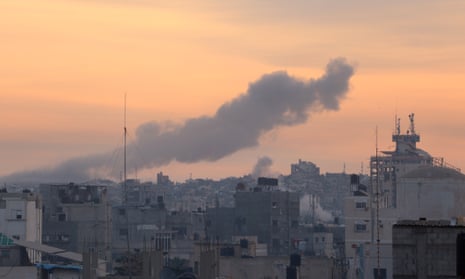
]Smoke rises from different points of the city as Israeli attacks continue on Khan Yunis, Gaza on December 20, 2023. Photograph: Anadolu/Getty Images
TikTok moderators have struggled to assess content related to the Israel-Gaza conflict because the platform removed an internal tool for flagging videos in a foreign language, the Guardian has been told.
The change has meant moderators in Europe cannot flag that they do not understand foreign-language videos, for example, in Arabic and Hebrew, which are understood to be appearing more frequently in video queues.
The Guardian was told that moderators hired to work in English previously had access to a button to state that a video or post was not in their language.
Internal documents seen by the Guardian show the button was called “not my language”, or “foreign language”.
At least 66% of jobs have been lost in Gaza since the Israel-Hamas conflict erupted in October, the International Labour Organization(ILO) said on Wednesday, warning that employment losses could continue to increase in the enclave.
The losses amount to a total of 192,000 jobs in the small Palestinian territory, the ILO said in its second assessment of the impact of Israeli ground and airstrikes on Gaza which began after a deadly cross-border incursion by Hamas.
In a first assessment released in early November, ILO estimated that 182,000 jobs had been lost in Gaza, a figure representing more than 60% of employment.
“Today hardly anybody in Gaza is able to earn income from work,” said Peter Rademaker, ILO deputy regional director for the Arab states.
“It’s clearly a still growing curve,” he said of employment loss. “It might even get worse.”
Greece has advised commercial vessels sailing in the Red Sea and the Gulf of Aden to avoid Yemeni waters, keep only the necessary crew on the bridge and follow alerts issued by maritime authorities to avoid attacks in the area.
Greek ship-owners control about 20% of the world’s commercial vessels in terms of carrying capacity.
A shipping ministry advisory was issued on Saturday, as recent attacks by the Iran-aligned Houthi militant group on vessels have forced leading shipping companies to reroute via the cape of Good Hope to avoid the Suez Canal, the shortest shipping route between Europe and Asia.
According to a document seen by Reuters, vessels should also conduct fire drills for regular checks of their safety equipment before they reach Yemeni shores, and are advised to sail through the southern Red Sea and the Bab-el-Mandeb Strait at night.
The Houthis, who control much of Yemen, say the shipping attacks are a response to Israel’s military campaign in the Hamas-ruled Gaza Strip and have said they will continue until Israel stops the offensive.
The UK foreign secretary, David Cameron, will travel to Jordan and Egypt this week to push for a sustainable ceasefire and further humanitarian pauses in Gaza, the Foreign Office said on Wednesday.
Cameron will travel with Britain’s Middle East minister, Tariq Ahmad, and “progress efforts to secure the release of all hostages, step up aid to Gaza and end Hamas rocket attacks and threats against Israel”.
In Jordan, Cameron will meet his counterpart, Ayman Safadi, and in Egypt, he will travel to Al Arish, near the Egypt-Gaza border, to see the impact of UK aid being sent to Gaza.
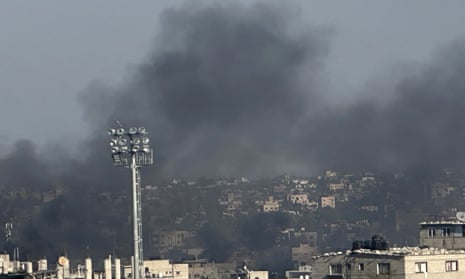
Smoke billows after an Israeli bombardment seen from Khan Younis in the southern Gaza Strip. Photograph: AFP/Getty Images
Intensive Qatari and Egyptian-mediated talks are under way for a possible second Gaza truce under which Hamas would return some hostages in exchange for Israel releasing Palestinian prisoners, a person briefed on the matter told Reuters on Wednesday.
While the number of people slated to go free was still being discussed, Israel is insisting that women and infirm male hostages be included, said the source, adding that Palestinians jailed for serious offences could also be on the roster.
The Hamas leader, Ismail Haniyeh, arrived in Cairo on Wednesday to hold talks with Egyptian officials, mainly on developments in the war with Israel in the Gaza Strip, the Palestinian group said.
In case you missed it last night, the US has announced the creation of an enhanced naval protection force operating in the southern Red Sea in an attempt to ward off mounting attacks from Yemen’s rebel Houthis on merchant shipping.
Britain said it would be among the countries participating but notable absentees were Arab nations Egypt and Saudi Arabia, while analysts speculated that shipping would continue to be disrupted with attacks.
Lloyd Austin, the US defence secretary, said the new effort would be called Operation Prosperity Guardian and was necessary to tackle the “recent escalation in reckless Houthi attacks originating from Yemen”.
Other participants in the effort, Austin said, included Bahrain, Canada, France, Italy, the Netherlands, Norway, Seychelles and Spain.
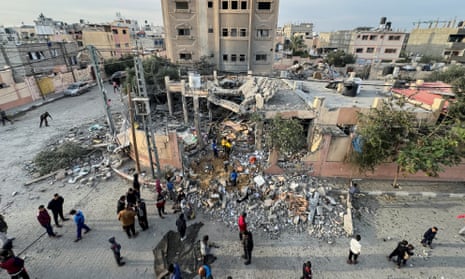
Palestinians gather at the site of an Israeli strike on a house in Khan Younis in the southern Gaza Strip on 20 December. Photograph: Bassam Masoud/Reuters
Israel appears to be nearing the final stages of its clearing operation in the northern Gaza Strip, according to the Institute for the Study of War.
The US-based thinktank said Israel had degraded Hamas’s north Gaza brigade, with the Israel Defense Forces (IDF) announcing on Tuesday that it had completely “dismantled” Hamas’s three battalions operating in Jabaliya, just north of Gaza City.
It said in its update with the Critical Threats Project that about 500 suspected Palestinians fighters had surrendered to Israeli forces in the Jabaliya refugee camp.
Israeli Army Radio reported that the IDF fought “hard battles” in Jabaliya against Palestinian militias for more than two weeks and Israeli forces had killed more than 1,000 fighters, the update said. It added that the IDF estimated there were only a few militia fighters left in the Jabaliya area.
The update also said Palestinian militias were continuing to use the “relative safe haven” of the Gaza Strip’s central governorate to attack Israeli forces south of Gaza City.
Circling back to the latest casualties in Gaza, Israeli missiles hit the southern city of Rafah on Tuesday, killing at least 20 people and wounding dozens as they slept at home, health officials in the Hamas-run territory said.
Hundreds of thousands of refugees have amassed in Rafah in recent weeks.
Reuters also reports that residents said they had to dig in the rubble with bare hands.
Mohammed Zurub, whose family lost 11 people in the attack, said:
This is a barbarian act.
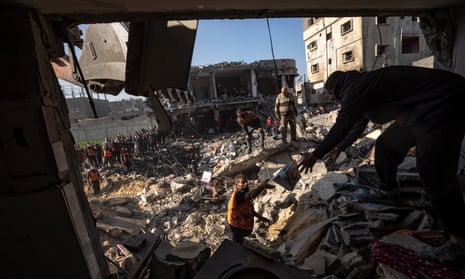
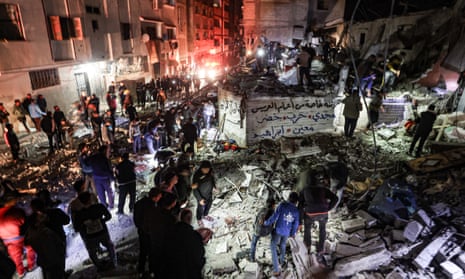
Palestinians search for survivors and bodies in the rubble of a residential building destroyed in an Israeli airstrike in Rafah, southern Gaza. Photograph: Fatima Shbair/AP
In the north, another strike killed 13 people and wounded about 75 in the Jabaliya refugee camp, the health ministry said. Palestinians reported intensifying Israeli aerial and tank bombardment of Jabaliya as darkness descended late on Tuesday.
As reported earlier, Gaza health officials said 12 Palestinians were killed in an Israeli strike on a house in Khan Younis, southern Gaza, while residents reported intensifying gun battles between Hamas fighters and Israeli forces in the city’s central and eastern districts.
Israeli military officials said on Tuesday that heavy civilian casualties were the cost of Israel’s campaign to destroy Hamas and the militants’ urban warfare strategy, despite global alarm at the huge human toll.
Here are some of the latest images coming in from the Gaza Strip and Israel over the newswires, as residents of Khan Younis in southern Gaza reported intensifying gun battles between Hamas militants and Israeli forces on Wednesday.
Smoke rises over the Bani Suheila area of Khan Younis after Israeli strikes. Photograph: Anadolu/Getty Images
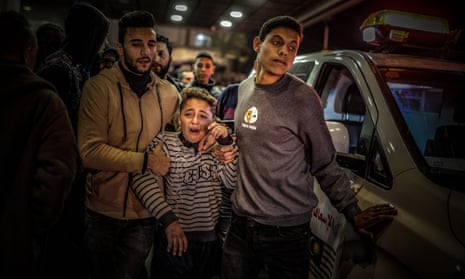
Injured Palestinians including children are brought to Nasser hospital in Khan Younis. Photograph: Anadolu/Getty Images
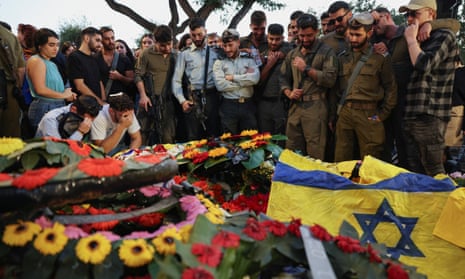
Friends and family mourn Israeli army reservist Capt Rotem Yoseff Levy, 24, who was killed while serving in Gaza, at his funeral in Petah Tikva, Israel. Photograph: Violeta Santos Moura/Reuters
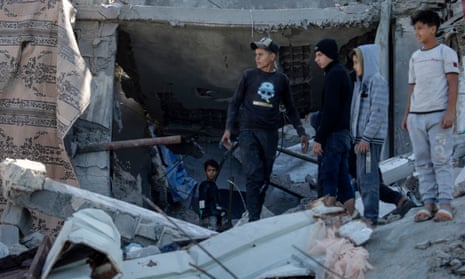
Palestinians inspect a destroyed house after an Israeli airstrike in Deir al Balah, central Gaza. Photograph: Mohammed Saber/EPA
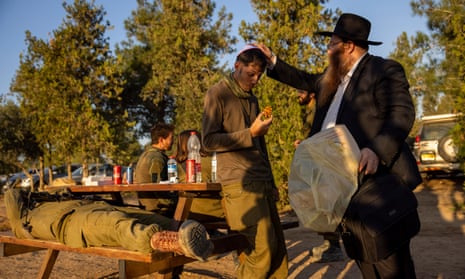
A rabbi brings sweets to Israeli solders in southern Israel. Photograph: Maja Hitij/Getty Images
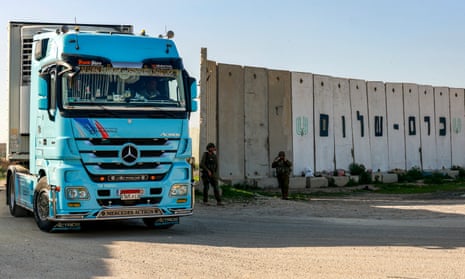
A truck carrying humanitarian aid moves at the Israeli side of the Kerem Shalom border crossing with southern Gaza. Photograph: Menahem Kahana/AFP/Getty Images
In case you missed this report from Julian Borgerin Washington earlier, a vote on a Gaza ceasefire resolution has been postponed for a second time at the UN security council amid reported policy differences inside the Biden administration.
His report says:
The UN draft resolution, drafted by the United Arab Emirates, had been changed on Tuesday in an effort to avoid a third US veto since the conflict began more than two months ago. Instead of calling for an “urgent and sustainable cessation of hostilities,” the amended text referred to “the urgent suspension of hostilities to allow safe and unhindered humanitarian access, and for urgent steps towards a sustainable cessation of hostilities”.
According to diplomatic sources, the US mission in New York believed it had negotiated a text that it could at least abstain on, but when Washington was consulted, new objections were raised, with the White House reportedly taking a more pro-Israel line than the state department.
The full report is here:
The head of Hamas was due in Egypt on Wednesday for talks on a fresh ceasefire in Gaza, after Israel said it was willing to agree to another pause in exchange for more hostages.
Agence France-Presse reports that international pressure is mounting for a new truce that could ramp up aid to the besieged Palestinian territory, with the United Nations security council due to vote Wednesday on calling for a ceasefire.
The Qatar-based Hamas chief, Ismail Haniyeh, was expected to lead a “high-level” delegation to Egypt for talks with the country’s spy chief and others on “stopping the aggression and the war to prepare an agreement for the release of prisoners”, a source close to the group told the news agency.
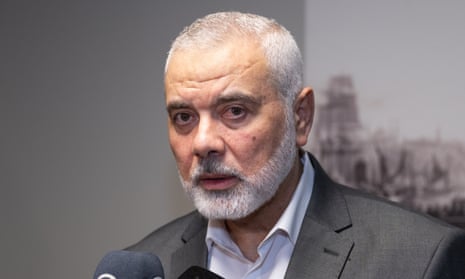
Ismail Haniyeh, Hamas’s most senior political leader. Photograph: Anadolu Agency/Getty Images
Israel’s leaders are facing growing calls to secure the release of 129 hostages they say are being held in Gaza and, on Tuesday, signalled a willingness to return to the negotiating table with Hamas.
The Israeli president, Issac Herzog, said his country was “ready for another humanitarian pause and additional humanitarian aid in order to enable the release of hostages”.
The Israeli prime minister, Benjamin Netanyahu, said he had recently sent his spy chief on two trips to Europe in an effort to “free our hostages”.
US news site Axios reported Monday that David Barnea, head of the Israeli intelligence agency Mossad, met with the Qatari prime minister, Sheikh Mohammed bin Abdulrahman Al Thani, and the CIA director, Bill Burns, in Europe to discuss a potential new deal to free hostages.
Axios also reported on Tuesday that Israel had offered to pause the fighting in Gaza for at least one week in exchange for more than three dozen hostages held by Hamas.
Welcome back to our live coverage of the Israel-Gaza war. This is Adam Fulton and here are the latest developments as it nears 7am in Gaza City and Tel Aviv.
The leader of Hamas is due in Egypt on Wednesday for talks on a fresh ceasefire in Gaza after Israel said it was willing to agree to another pause in exchange for more hostages.
The Qatar-based Hamas chief, Ismail Haniyeh, was expected to lead a “high-level” delegation for talks with the country’s spy chief and others on “stopping the aggression and the war to prepare an agreement for the release of prisoners”, a source close to the Palestinian militant group told Agence France-Presse.
International pressure is growing for a new truce that could ramp up humanitarian aid to the battered Palestinian territory, with the UN security council due to vote on Wednesday on a resolution for an urgent ceasefire after the vote was postponed for a second time amid reported policy differences within the US government.
More on those stories. In other news:
Twelve Palestinians were killed in an Israeli strike on a house in the southern Gaza city of Khan Younis, health officials in the territory said. Residents on Wednesday reported intensifying gun battles between Hamas fighters and Israeli forces in the centre and eastern districts of the city. The Hamas-run Gaza health ministry said on Tuesday that 19,667 Palestinians had been killed and 52,586 wounded in the war.
Residents and civil defense teams carry out search and rescue under the rubble after an Israeli attack on a building in Khan Younis, Gaza. Photograph: Anadolu/Getty Images
The Israeli military attacked a military structure of the Hezbollah militant group after intercepting six rockets launched from Lebanon on Tuesday, the military said. It also attacked a squad that carried out a shooting at a Israeli military post in the Malkia border area which left two reserve soldiers “moderately injured”, Israel Defence Forces spokesman Daniel Hagari said.
Talks between Qatar’s prime minister and the heads of the CIA and Mossad spy agency on Monday were “positive”, a Qatari official said. But no imminent deal for a truce involving hostages releases was expected, he said.
The United States has launched a multinational operation to safeguard commerce in the Red Sea as attacks by Iran-backed Yemeni militants over Israel’s military offensive in Gaza forced major shipping companies to reroute, stoking fears of sustained disruptions to global trade. The US defence secretary, Lloyd Austin, said Britain, Bahrain, Canada, France, Italy, the Netherlands, Norway, Seychelles and Spain were among nations involved in the Red Sea security operation, which would conduct joint patrols in the southern Red Sea and the adjacent Gulf of Aden.
Israeli forces raided one of the last remaining hospitals in northern Gaza, putting it out of action, according to the hospital’s director. The nighttime raid at al-Ahli hospital in Gaza City led to the arrest of doctors, medical staff and patients, according to reports, and damaged the hospital. Israeli forces took control of the facility after surrounding it for 12 days, according to medical charity Médecins Sans Frontières. The hospital still had dozens of patients inside, including 14 children, it said
Israel’s defence minister, Yoav Gallant, said the Israeli ground operation would “expand to additional areas” of the Gaza Strip. It is thought he was referring to the central Gaza Strip or the southern city of Rafah.
An Israeli soldier operating as smoke billows in Gaza. Photograph: Israeli army/AFP/Getty Images
The military wing of the Palestinian Islamic Jihad has released a video it claimed showed two hostages who were taken to Gaza during the 7 October attack on Israel. The video posted by the al-Quds Brigades comes a day after Hamas’s military wing released video footage it claimed showed three elderly Israeli hostages held in Gaza.
The International Committee of the Red Cross president has insisted on the organisation’s neutrality and said criticism was making it increasingly hard to operate in the Israel-Gaza war. The Swiss-based organisation has been accused by both sides in the conflict of not providing adequate help to those being held hostage. ICRC chief Mirjana Spoljaric Egger said in Geneva: “The pressure we experience now in the context of Gaza and Israel is so much more than what we experienced a year ago on Ukraine and Russia.”
The Israeli army has said it is investigating the deaths of Palestinian detainees who were arrested in military operations across Gaza. At least six Palestinians have died in Israeli prisons or Israel Defence Forces (IDF) detention facilities since the start of the war, including “several” held at the Sde Teiman base near the city of Be’er Sheva in southern Israel, according to a report in Israel’s Haaretz newspaper.

 Malyuk’s pet project is the Sea Baby drone, called malyuk in Ukrainian, which means “little guy.” The drone carries about 850 kilograms of explosives and is able to operate in stormy conditions, making it difficult to detect | Courtesy of the Security Service of Ukraine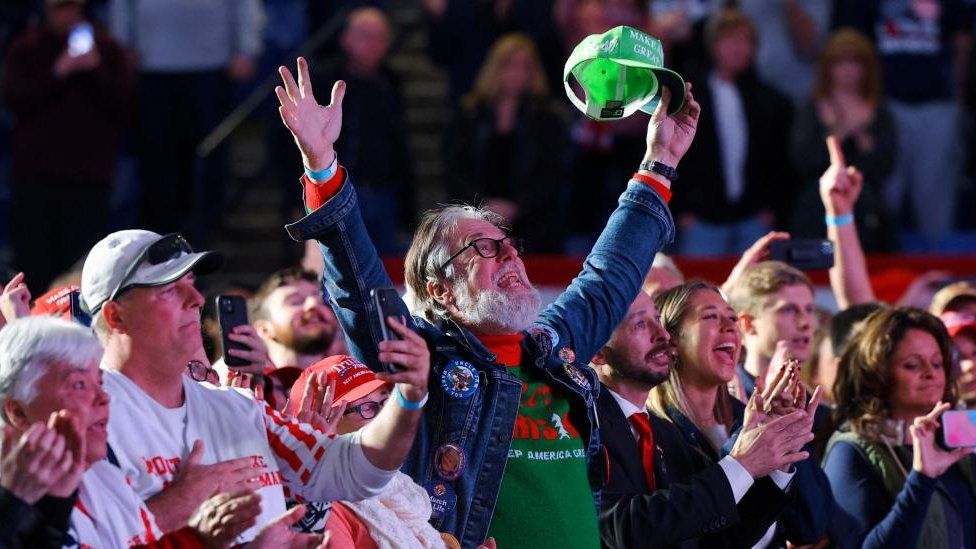
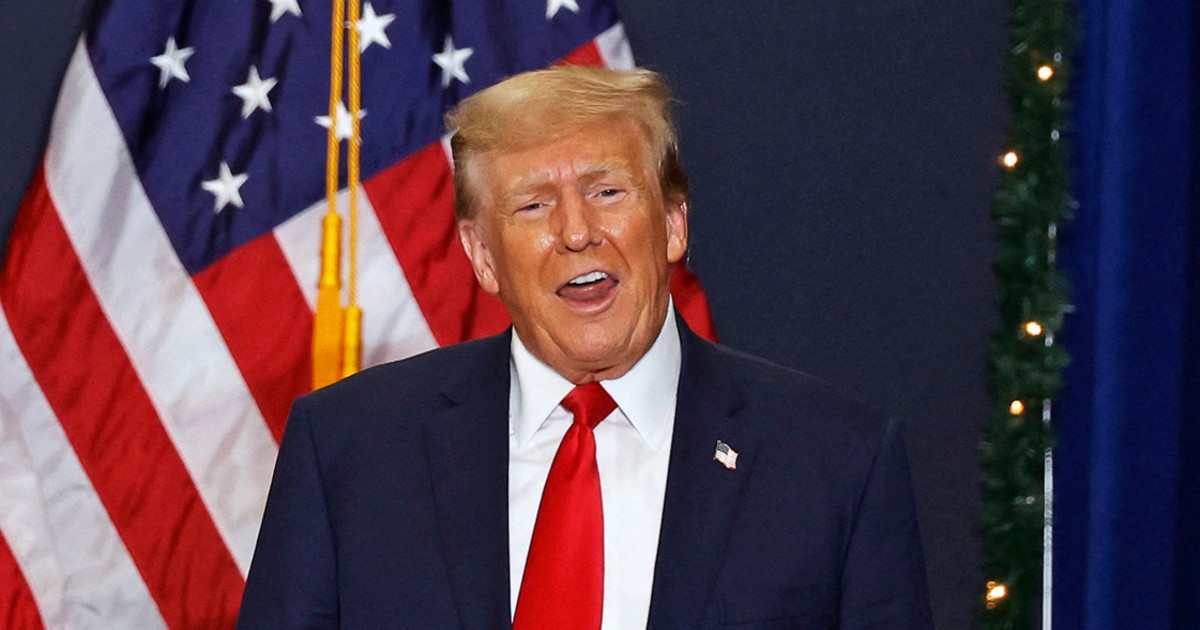
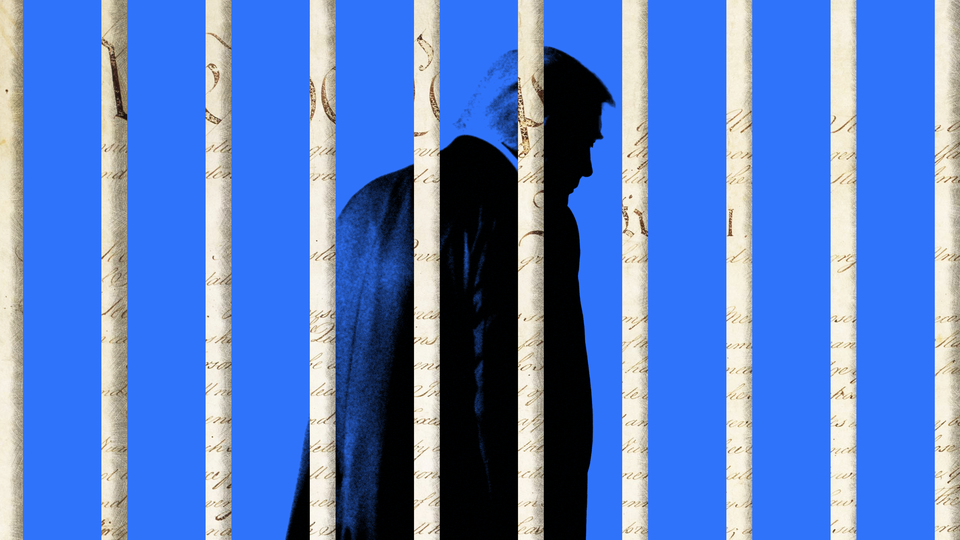
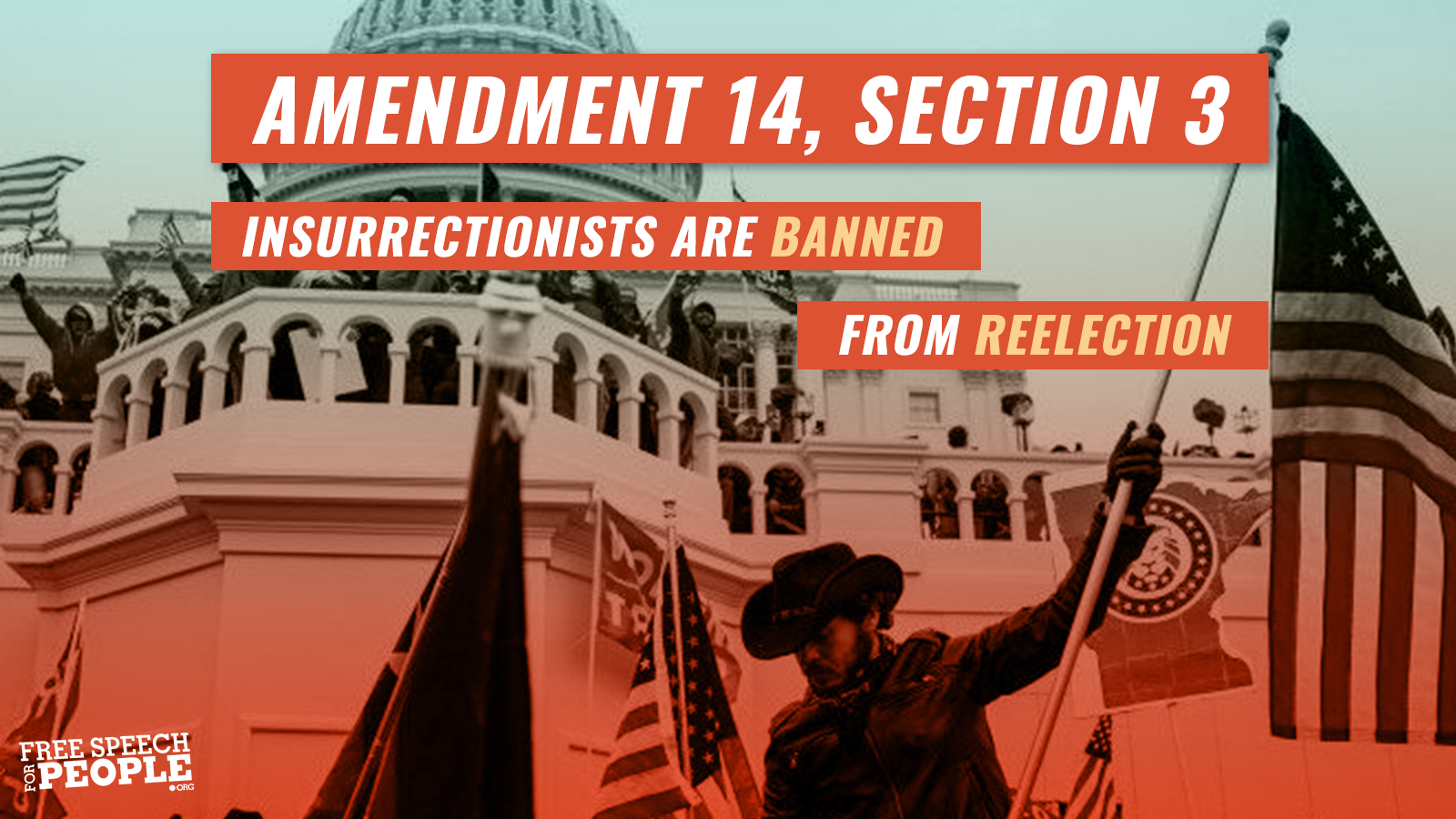
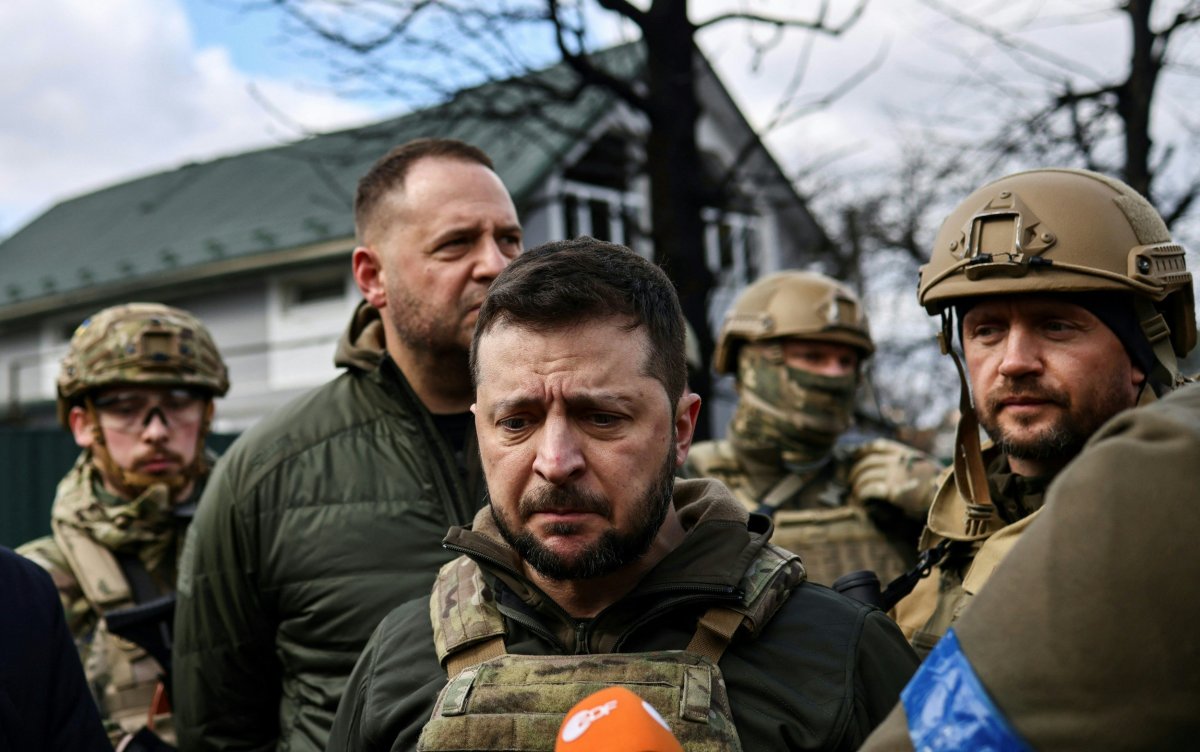
![]Smoke rises from different points of the city as Israeli attacks continue on Khan Yunis, Gaza on December 20, 2023.](https://i.guim.co.uk/img/media/e4dc92f9528279c91a66095c6e0598eb13def42b/0_95_2835_1701/master/2835.jpg?width=465&dpr=1&s=none)