Jack Teixeira, the Massachusetts Air National Guard member charged with leaking classified U.S. intelligence documents on a gaming platform, alarmed fellow members of his unit, who worried that the young computer technician might, in the words of one, “shoot up the place” after he was warned to stop looking at classified information that had nothing to do with his job, according to documents obtained by The Washington Post.
Teixeira often discussed his love of firearms at work and said he wanted to acquire more weapons, including machine guns, suppressors and explosives, and talked about “living off the grid” or on a large piece of land so he could “blow stuff up,” according to an Air Force Inspector General report released through a Freedom of Information Act request filed by The Post.
Investigators who spoke to Teixeira’s colleagues at Otis Air National Guard Base on Cape Cod after his arrest on April 13 found that his disturbing comments prompted one airman to warn a commander that Teixeira, now 22, “exhibited a fringe thinking perspective” that seemed comparable to that of Ted Kaczynski, the domestic terrorist popularly known as the Unabomber, who killed three people and maimed others.
Colleagues were aware, the investigation found, that Teixeira had been suspended in high school for threatening to bring weapons to campus, language that prompted fellow students to report him to school officials and later to local police. Some of Teixeira’s fellow airmen referred to him as “the active shooter kid,” according to the Air Force report.
The Defense Department released an executive summary of the investigation earlier this month that documented widespread failures in Teixeira’s unit at the 102nd Intelligence Wing and cited a “culture of complacency” and “lack of supervision” that allowed him to read and ultimately remove huge amounts of classified information. The Air Force disciplined 15 members and relieved the wing commander.
Teixeira is alleged to have committed one of the largest national security breaches in decades, leaking hundreds of top-secret files detailing the war in Ukraine, U.S. surveillance of allies and enemies, and intelligence and analysis on hot spots across the world.
An Air Force spokeswoman, Ann Stefanek, said Friday that disciplinary actions were taken against personnel in the unit “because they did not take the actions necessary to report the threat nor safeguard classified defense information.” She noted that the unit still has not been cleared to resume its intelligence mission.
But the summary of the report did not include the detailed accounts of Teixeira’s concerned co-workers, who said that as early as the summer of 2021 he exhibited the warning signs they had been trained to look out for in a potential active shooter. The fuller report shows that Guard members who worked with Teixeira him saw him as a security risk, but not for the reasons that ultimately led to his arrest and indictment this year on charges of illegally removing and disseminating classified information.
Yet those two potential threats appeared connected, the investigation found.
One co-worker, whose name is redacted in the report, noted a “personality shift” in Teixeira, who was described as “demoralized and depressed” after he received a warning to stop reading classified information. As a computer technician, Teixeira’s job was to maintain the networks on which classified documents were stored, but not read the information.
Teixeira “seemed like a completely different person” after he was admonished, and the colleague was concerned that Teixeira “might do something drastic,” the investigation found.
That colleague told another of Teixeira’s co-workers to “keep an eye on” the young airman. That second person understood that his superior was “worried [Teixeira] would bring a gun to work that night,” the report said. It also noted that Teixeira had on occasion shown up for work late and failed to attend a scheduled training event. When a supervisor asked Teixeira to explain his absence, he “provided an unprofessional and crass response,” according to the report.
The investigation also found that Teixeira once left his car running for an extended period of time on base, arousing suspicion. A security officer noticednumerous used paper shooting targets and a large military-style backpack in the back seat.Teixeira offered to allow a search of the vehicle, but the officer declined, the investigation found. Authorities determined that Teixeira owned more than a dozen registered firearms.
For all the concerns about Teixeira’s suspicious behavior and potential for violence, no one in the unit reported him to the appropriate security officials, the investigation found. Instead, investigators documented a pattern of buck-passing and downplaying of worries that Teixeira, who one described as simply “a dumb Airman doing dumb things,” was really a danger. The concerns that Teixeira fit the profile of a potential active shooter were only reported to the appropriate Air Force investigators after he was arrested in connection with the document leaks, in April of this year.
Even that event, which was covered by news organizations around the world, failed to register with another member of the unit, who attempted to schedule Teixeira for duty two weeks after his arrest. That action, following “a monumental national news event occurring within the unit,” was a “stark example of [the member’s] lack of situational awareness or appreciation for the gravity of the matter,” the investigation found.
Among those previously punished by the Air Force were Col. Sean Riley, who was commander of the 102nd, and Col. Enrique Dovalo, the former commander of the subordinate 102nd Intelligence, Surveillance and Reconnaissance Group, to which Teixeira reported. Riley was relieved of command Nov. 1. The Air Force did not disclose the nature of Dovalo’s punishment.
Neither officer responded Friday to requests for comment. The Massachusetts Air National Guard also did not respond to requests for comment. Earlier this month, officials with the Guard said in an email that they would not grant interviews or make either officer available for comment.
The inspector general’s investigation did not offer a potential motive for Teixeira’s alleged leaks. A lengthy investigation by The Post and PBS’s “Frontline” found that Teixeira wanted to impress friends he met online in the gaming platform, Discord. Around the time of Russia’s invasion of Ukraine in February 2022, Teixeira began to post classified information about casualty figures, which led to more regular updates on the status of combat, friends said. He eventually shared hundreds of classified documents covering a huge range of topics, according to friends who read the material.
Friends described Teixeira as a conspiracy theorist who thought the government was hiding true information about the war and other security concerns from the public. They said Teixeira seemed to enjoy sharingaccess to secrets that weren’t available to regular people.
Teixeira said as much to a co-worker at the base, the Air Force investigation found. He was asked why he was so interested in a top-secret Defense Department network where he’d been looking at classified documents.
Teixeira replied, “I like knowing things other people don’t.”
The justices brush aside Jack Smith’s apparent concern that Trump could be back in the White House before the case is done.
President Trump steps off his plane at Hartsfield-Jackson Atlanta International Airport, August 24, 2023. AP/Alex Brandon
The decision by the Supreme Court to reject Special Counsel Jack Smith’s extraordinary request for an expedited appeal on whether President Trump is immune from prosecution means that a trial date in March for the election interference charges appears increasingly unlikely.
The unsigned order, issued with no comment, telegraphs that the court prefers that Mr. Trump’s appeal work its way through the regular appellate course. The appeal concerns Judge Tanya Chutkan’s ruling that former presidents are not entitled to the protections of the office they once held.
Mr. Smith asked the court to issue a “judgment before certiorari,” a judgment that was once rarer than hen’s teeth but has become more common in recent years. Even the special counsel, though, acknowledges that such consideration would be an “extraordinary” departure as the Nine generally prefer to let cases mature down below before weighing them on the merits.
The high court’s ruling means that the immunity question now rests with the riders of the United Appeals Circuit for the Columbia District. Mr. Smith is asking that court, too, for an accelerated timeline. Should Mr. Trump lose before an appellate panel, he could request an en banc hearing, and then, potentially, the consideration of the justices. So despite the D.C. Circuit leaning left, the process could stretch for months.
The special counsel, who in a recent filing to the high court called this a “great constitutional moment,” has been emptying his prosecutorial toolbox to ensure that it blurs by. Now, it appears that Judge Chutkan’s trial date of March 4 is in jeopardy. Mr. Smith argues that Mr. Trump’s insistence on the regular course — a position now adopted by the justices — is “misguided” because the “charges here are of the utmost gravity.”
That significance alone, though, does not on its own necessitate moving at an accelerated pace. Every case the court considers is, in its own way, grave. Mr. Trump, though, wrote to the Supreme Court that “importance does not automatically necessitate speed.” He added that “If anything, the opposite is usually true. Novel, complex, sensitive and historic issues — such as the existence of presidential immunity from criminal prosecution for official acts — call for more careful deliberation, not less.”
In seeking a “resolution by conviction or acquittal, without undue delay,” Mr. Smith is telegraphing his focus on bringing the case to a verdict. Unsaid — but, at least to this correspondent, strongly implied — is the special counsel’s concern that should Mr. Trump be returned to the White House, and to assume the power of the executive branch, his case will be closed.
That concern appears to have been rejected — at least for now — by the justices declining to bestir themselves to accommodate Mr. Smith. Once the court of appeals rules, Mr. Trump will have 90 days to apply for the Supreme Court to reconsider his case. Mr. Smith hoped to short circuit this process, but now he must abide by a court-ordered more normal pace.
In his failed bid, Mr. Smith reminded the court that in a case from 1982, Nixon v. Fitzgerald, the Nine found that claims involving presidential immunity were deserving of “special solicitude” because of the implications for the presidency and, by extension, the entire architecture of separated powers. For the justices, that solicitude will now march to the beat of the tortoise rather than the sprint of the hare.
Vladimir Putin was annoyed – or maybe just bored. The Russian leader had been patiently fielding questions from a small group of international journalists in the restaurant of a modest hotel in Davos. Then one of the queries seemed to irritate him. He stared back at the questioner, an American, and said slowly, through an interpreter: “I’ll answer that question in a minute. But first let me ask you about the extraordinary ring you have on your finger.”
All heads in the room swivelled. “Why is the stone so large?” Putin continued. A few of the audience began to giggle and the journalist looked uncomfortable. Putin took on a tone of mock sympathy and continued: “You surely don’t mind me asking, because you wouldn’t be wearing something like that unless you were trying to draw attention to yourself?” There was more laughter. By now, the original question had been forgotten. It was a masterclass in distraction and bullying.
Sign up to our Inside Saturday newsletter for an exclusive behind-the-scenes look at the making of the magazine’s biggest features, as well as a curated list of our weekly highlights.
The year was 2009, and Putin had already been in power for almost a decade. But this was my first encounter with him in the flesh, during his visit to the World Economic Forum. Putin’s ability to radiate menace, without raising his voice, was striking. But so was the laughter of his audience. Despite the violence of his Russian government – as demonstrated in Chechnya and Georgia – western opinion-formers were still inclined to treat him as a pantomime villain.
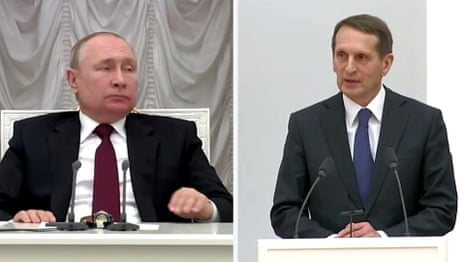
I was reminded of this just before Russia’s invasion of Ukraine. In a televised meeting at the Kremlin with his closest advisers, Putin toyed with Sergei Naryshkin, the head of his foreign intelligence service – making the feared securocrat look like a stuttering fool. The pleasure he took in humiliating somebody in front of an audience was once again on display. But this time, nobody was laughing. Putin was about to plunge Europe into its biggest land war since 1945. Russian troops launched a full-scale invasion on 24 February. Within a month, more than 10 million Ukrainians had fled their homes, thousands of troops and civilians had been killed and the coastal city of Mariupol had been destroyed.
Even though western intelligence services had warned for months that Russia was poised to attack, many experienced Putin-watchers, both in Russia and the west, refused to believe it. After more than 20 years of his leadership, they felt that they understood Putin. He was ruthless and violent, no doubt, but he was also believed to be rational, calculating and committed to Russia’s integration into the world economy. Few believed he was capable of such a reckless gamble.
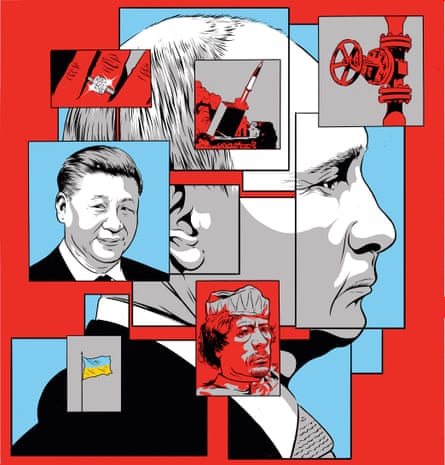
Looking back, however, it is clear that the outside world has consistently misread him. From the moment he took power, outsiders too often saw what they wanted and played down the darkest sides of Putinism.
‘Speak plainly!’: Putin has tense exchange with his spy chief – video
In fact, the outside world’s indulgence of Putin went much further than simply turning a blind eye to his excesses. For a rising generation of strongman leaders and cultural conservatives outside Russia, Putin became something of a hero and a role model. As his admirers saw it, the Russian leader had inherited a country humiliated by the breakup of the Soviet Union. Through strength and cunning, he had restored its status and global power, and even regained some of the territory lost when the USSR broke up. And he had delighted nationalists and populists the world over by successfully defying self-righteous American liberals such as Hillary Clinton and Barack Obama. Dmitry Peskov, Putin’s spokesman, was not simply spouting propaganda when he said in 2018: “There’s a demand in the world for special, sovereign leaders, for decisive ones … Putin’s Russia was the starting point.”
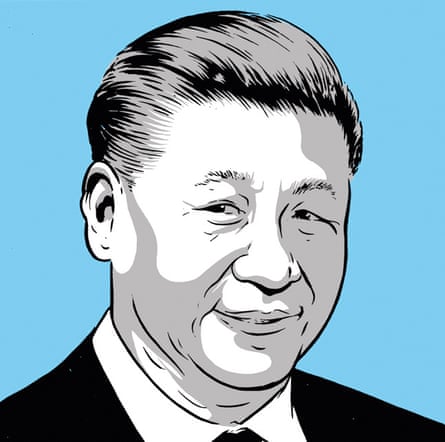
Xi Jinping admires Putin’s strongman leadership style
The Putin fanclub has had numerous members in the west over the years. Rudy Giuliani, President Trump’s close adviser and lawyer, expressed admiration for Putin’s annexation of Crimea, remarking: “He makes a decision and he executes it, quickly. That’s what you call a leader.” Nigel Farage, the former leader of Ukip and the Brexit party, and a friend of Donald Trump, once named Putin the world leader he most admired, adding: “The way he played the whole Syria thing. Brilliant. Not that I approve of him politically.” Matteo Salvini, the leader of the populist right Northern League party and a former deputy prime minister of Italy, flaunted his admiration for the Russian leader by being photographed in a Putin T-shirt in Red Square. Rodrigo Duterte, the president of the Philippines, has said, “My favourite hero is Putin.”
Most important of all, Xi Jinping is also a confirmed admirer. A week after being appointed as president of China in early 2013, Xi made his first state visit overseas – choosing to visit Putin in Moscow. On 4 February 2022, just 20 days before the invasion of Ukraine, Putin met Xi in Beijing for their 38th summit meeting. Shortly afterwards, Russia and China announced a “no limits” partnership. As the joint Russian-Chinese statement made clear, the two leaders are united in their hostility to American global power and to the pro-democracy “colour revolutions” they accuse Washington of stirring up around the world – from Ukraine to Hong Kong. Putin and Xi are both strongman rulers who have centralised power around themselves and encouraged a cult of personality. They are, as Alexander Gabuev, a Russian academic, puts it, “the tsar and the emperor”. Whether this partnership of strongmen will survive the Russian invasion of Ukraine is now one of the most important questions in international politics.
Putin was sworn into office as president of Russia on 31 December 1999. But at first it was not obvious that he would last very long in the job, let alone that he would emerge as the most aggressive challenger to the western liberal order and the pioneer of a new model of authoritarian leadership. As the chaotic Yeltsin era of the 1990s drew to a close, Putin’s ascent to the top job was eased by his former colleagues in the KGB. But he also had the approval of Russia’s richest and most powerful people, the oligarchs, who saw him as a capable administrator and “safe pair of hands” who would not threaten established interests.
Viewed from the west, Putin looked relatively reassuring. In his first televised speech from the Kremlin, given on New Year’s Eve 1999, just a few hours after taking over from Yeltsin, Putin promised to “protect freedom of speech, freedom of conscience, freedom of the mass media, ownership rights, these fundamental elements of a civilised society”. In March 2000, he won his first presidential election and proudly asserted: “We have proved that Russia is becoming a modern democratic state.” When Bill Clinton met Putin in the Kremlin for the first time, in June 2000, he declared his Russian counterpart “fully capable of building a prosperous, strong Russia, while preserving freedom and pluralism and the rule of law”.
In his first year in office, he moved to assert the authority of the state and to use warfare to bolster his personal position
Yet while Putin may initially have found it convenient to use the rhetoric of liberal democracy, his early actions as president told a different story. In his first year in office, he moved immediately to rein in independent sources of power, to assert the central authority of the state and to use warfare to bolster his own personal position – all actions that were to become hallmarks of Putinism. The escalation of the war in Chechnya made Putin seem like a nationalist hero, standing up for Russian interests and protecting the ordinary citizen from terrorism. In an early move that alarmed liberals, the new president reinstated the old Soviet national anthem. His promises to protect media freedom turned out to be empty: Russia’s few independent television networks were brought under government control.
As Putin established himself in office, the image-makers got to work crafting a strongman persona for him. Gleb Pavlovsky, one of Putin’s first spin doctors, later described him as a “quick learner” and a “talented actor”. Key images were placed in the Russian media and around the world: Putin on horseback, Putin practising judo, Putin arm-wrestling or strolling bare-chested by a river in Siberia. These photographs attracted mockery from intellectuals and cynics. But the president’s handlers were clear-eyed. As Pavlovsky later told the Washington Post, the goal was to ensure that “Putin corresponds ideally to the Hollywood image of a saviour-hero”.
In any case, Russians were more than ready for a strongman to ride to their rescue. The collapse of the Soviet system in 1991 had allowed for the emergence of democracy and freedom of speech. But as the economy atrophied and then fell apart, many experienced a severe drop in living standards and personal security. By 1999, life expectancy for Russian men had fallen by three and a half years to below 60. A UN report attributed this to a “rise in self-destructive behaviour”, which it linked to “rising poverty rates, unemployment and financial insecurity”.Under those circumstances, a decisive leader who promised to turn back the clock had real appeal.
Long before Trump promised to “make America great again”, Putin was promising to bring back the stability and pride of the Soviet era to those Russians who had lost out in the 1990s. But his nostalgia was not restricted to the social cohesion of Soviet times. Putin also yearned to restore some of the USSR’s lost international clout. In a speech in 2005, Putin labelled the collapse of the Soviet Union “the greatest geopolitical catastrophe of the 20th century”. As the years have passed, he has become increasingly preoccupied by Russian history. In the summer of 2021, he published a long essay entitled On the Historical Unity of Russians and Ukrainians – which, even at the time, some saw as a manifesto for invasion. Delving through centuries of history, Putin attempted to prove that Ukraine was an artificial state and that “Russia was robbed, indeed” when Ukraine gained independence in 1991.
Fyodor Lukyanov, an academic who is close to the Russian leader, told me in 2019 that one of Putin’s enduring fears was the loss of Russia’s status as one of the world’s great powers for the first time in centuries. His resentment at what he regarded as American slights and betrayals set Putin on a collision course with the west. A landmark moment came with a speech he gave at the Munich Security Conference in 2007.
The Russian president had put the west on notice that he intended to fight back against the US-led world order
That speech was a direct challenge to the west and an expression of cold fury. He accused the US of an “almost uncontained hyper use of force – military force – in international relations, force that is plunging the world into an abyss of permanent conflicts”. The Putin of 2000, who had expressed pride at Russia’s transformation into a modern democracy, had given way to a man who denounced western talk of freedom and democracy as a hypocritical front for power politics.
The Munich speech was not just an angry reflection on the past. It also pointed the way to the future. The Russian president had put the west on notice that he intended to fight back against the US-led world order. It foreshadowed a lot of what was to come: Russia’s military intervention in Georgia in 2008, its annexation of Crimea in 2014, its dispatch of troops to Syria in 2015, its meddling in the US presidential election of 2016. All of these actions burnished Putin’s reputation as a nationalist and a strong leader. They also made him an icon for strongmen throughout the world who rejected western leadership and the “liberal international order”.
This indictment of the west goes back to the 1990s. It is argued repeatedly in Moscow that the expansion of Nato to take in countries of the former Soviet empire (including Poland and the Baltic states) was a direct contradiction of promises made after the end of the cold war. Nato’s intervention in the Kosovo war of 1998‑9 added to the list of grievances proving, in the Kremlin’s eyes, both that Nato is an aggressor and that western talk of respecting sovereignty and state borders was nothing but hypocrisy. Russians were not reassured by the western riposte that Nato was acting in response to ethnic cleansing and human rights abuses by Serbia. As one liberal Russian politician put it to me in 2008, in a moment of frankness: “We know we have committed human rights abuses in Chechnya. If Nato can bomb Belgrade for that, why could they not bomb Moscow?”
Putin’s case against Nato also takes in the Iraq war launched by the US and many of its allies in 2003. For him, the massive bloodshed in Iraq was proof that the west’s self-proclaimed pursuit of “democracy and freedom” only brings instability and suffering in its wake. If you mention the brutal behaviour of Russian forces in Chechnya or Syria in Moscow, you will always have the Iraq war thrown back in your face.
Crucially, the west’s promotion of democracy has posed a direct threat to Putin’s own political and personal survival. From 2003 to 2005, pro-democracy “colour revolutions” broke out in many of the states of the former Soviet Union – including Ukraine, Georgia and Kyrgyzstan. If demonstrators in Independence Square in Kyiv could bring down an autocratic government in Ukraine, what was to stop the same happening in Red Square? In Russia, many believed it was a “fairytale” that these were spontaneous uprisings. As a former intelligence operative whose entire professional career had involved running “black operations”, Putin was particularly inclined to see the CIA as pulling the strings. The goal, as the Kremlin saw it, was to install pro-western puppet regimes. Russia itself could be next.
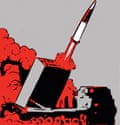
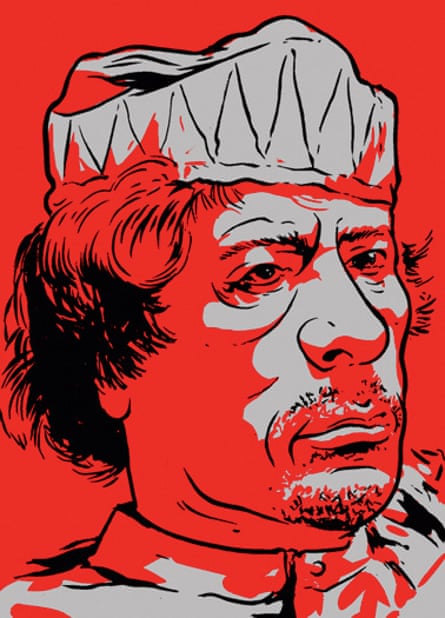
The shock of the Iraq war and the colour revolutions were the recent experiences that informed Putin’s Munich speech in 2007. And, as the Kremlin saw it, this pattern of western misdeeds continued. Putin points to the western powers’ 2011 intervention in Libya that resulted in the overthrow of Muammar Gaddafi – something he believes they had promised they would not do.
The overthrow of Muammar Gaddafi is a particularly sore point for Putin
That episode is a particularly sore spot for Putin, since it took place during the four years from 2008 to 2012 when he was serving in the lesser job of prime minister, having stepped aside as president in favour of his acolyte Dmitry Medvedev. As Putin’s supporters see it, a naive Medvedev was duped into supporting a UN resolution that allowed for a limited intervention, only for western powers to exceed their mandate in order to overthrow and kill Gaddafi. They have no time for the response that the Libyan intervention was made on human rights grounds, but that events then took on a life of their own, as the Libyan rebellion gained steam.
Medvedev’s alleged naivety in allowing the Libyan intervention proved useful for Putin, however: it established the idea that he was indispensable as Russia’s leader. Any substitute, even one chosen by Putin, would leave the country vulnerable to a scheming and ruthless west. In 2011, Putin announced that he intended to return as president, after the potential presidential term had been extended to two consecutive periods of six years. This announcement provoked rare public demonstrations in Moscow and other cities, which again fanned Putin’s fears about western schemes to undermine his power. I was in Moscow in January 2012 and witnessed the marches and banners, some of which carried pointed references to Gaddafi’s fate. Putin understood the parallels. He commented publicly about how disgusted he had been by the footage of Gaddafi’s murder – which perhaps reflected a certain concern about his own potential fate. The fact that Hillary Clinton, then America’s Secretary of State, expressed public support for the 2012 demonstrations was deeply resented by Putin and may have justified, in his mind, Russia’s efforts to undermine Clinton’s presidential campaign in 2016.
Putin secured his re-election, but his sense that the west remained a threat to Russia was further stoked by events in Ukraine in 2013-14. The prospect of that country signing an association agreement with the European Union was seen as a serious threat in the Kremlin, since it would pull Russia’s most important neighbour – once an integral part of the USSR – into the west’s sphere of influence. Under pressure from Moscow, the Ukrainian government of President Viktor Yanukovych reversed course. But this provoked another popular uprising in Kyiv, forcing Yanukovych to flee. The loss of a compliant ally in Kyiv was a major geopolitical reverse for the Kremlin.
Putin’s response was to dramatically raise the stakes, by crossing the line into the use of military force. In February 2014, Russia invaded and annexed Crimea, a region that was part of Ukraine but had belonged to Russia until 1954 and was populated largely by Russian-speakers. It was also, by agreement with the Ukrainians, the home of Russia’s Black Sea fleet. In the west, the annexation of Crimea, along with Russian military intervention in eastern Ukraine, was seen as a flagrant violation of international law that many feared could be the prelude to further acts of aggression.
But in Russia, the annexation was widely greeted as a triumph – it represented the nation’s fightback. Putin’s approval ratings in independent opinion polls soared to over 80%. In the immediate afterglow, he came closer to achieving the ultimate goal of the strongman ruler: the complete identification of the nation with the leader. Vyacheslav Volodin, the speaker of the Russian parliament, exulted: “If there’s Putin, there’s Russia. If there’s no Putin, there’s no Russia.” Putin himself crowed that Crimea had been taken without a shot being fired.
The west’s response was to slap economic sanctions on Russia. But western indignation did not last long. Four years later, Russia hosted a successful World Cup. At the final, Putin sat with the presidents of France and Croatia, two EU nations, in the VIP box in Moscow.
The ease with which Putin annexed Crimea – and the swiftness with which the west seemed prepared to forgive – may have laid the ground for an unjustified confidence that led to the invasion of Ukraine. His overreach is also a reminder of the flaws in the strongman model of leadership. Decades in office can cause a leader to succumb to megalomania or paranoia. The elimination of checks and balances, the centralisation of power and the promotion of a cult of personality make it more likely that a leader will make a disastrous mistake. For all these reasons, strongman rule is an inherently flawed and dangerous model of government.
Tragically, that lesson is being learned all over again – in Russia and Ukraine. An invasion that was meant to secure Russia’s place as a great power and Putin’s place in history has clearly gone wrong. Putin is now involved in a brutal war of attrition. Western sanctions will see the Russian economy shrink dramatically this year, and the Russian middle-class is witnessing the disappearance of many of the consumer goods and travel opportunities that emerged with the end of the cold war.
The unofficial goal of western policy is clearly to force Putin from power. But the endgame may not come as swiftly as we would like. Deeply entrenched in his decades-long mission, Putin is now even less likely to give up power voluntarily, since his successors might repudiate his policies, or even put him on trial.
The prospects for popular uprising are equally poor, despite the many brave Russians who have indicated their disgust over the war. Any protests are likely to be swiftly crushed with violence and imprisonment, as they were in neighbouring Belarus in 2020 and 2021. A third scenario – the possibility of an enlightened group within the elite seizing power – seems out of reach, too. Organising a palace coup against Putin will be very difficult: all dissenters were purged from the Kremlin long ago. Putin also takes his personal security very seriously: several of his former bodyguards have become rich in their own right. While there will be many within Russia who are dismayed by the course that events have taken, orchestrating that diffuse discontent into a coherent plot looks like a formidable challenge.
The difficult truth is that Putin’s strongman style has defined his rule over Russia – and despite his many crimes and misdemeanours, those same strongman tactics may preserve him in power for years to come.
Gideon Rachman is chief foreign affairs commentator for the Financial Times. His new book, The Age of the Strongman, is published by Vintage (£20). To support The Guardian and Observer, order your copy at guardianbookshop.com. Delivery charges may apply.
Armenia’s National Commission on Television and Radio has suspended the license of Tospa, the broadcaster of Sputnik Armenia radio, for thirty days days following remarks by Russian TV personality Tigran Keosayan in November deemed “offensive” to Armenia.
The Russian embassy in Yerevan criticized yesterday’s decision, arguing the measure was taken to push Armenia further from Russia.
Sputnik Armenia is a subsidiary of the Russian state-owned Sputnik news agency.
The Commission writes that Keosyan, during a November 17, 2023 radio program, referred to Armenia and its people in “mocking and derogatory terms”, adding that Keosyan, a foreign commentator, has no moral right to make such assessments.
The Commission writes that Keosyan’s claims and opinions were false and caused “panic” in Armenia.
Sputnik Armenia has hit back, calling the suspension decision unfounded.
While Sputnik Armenia acknowledges that Keosyan voiced harsh criticism of Armenian PM Nikol Pashinyan, accusing him of betraying the country, the station disagrees that this was a call for violence.
“Does Pashinyan really think that he will remain alive after this betrayal?”, Keosyan asked during the program.
Keosyan is married to Margarita Simonyan, editor in chief of the international channel Russia Today and a loyal supporter of President Vladimir Putin.
The Commission also fined Tospa 500,000 drams (US$1,200).
If you found a typo you can notify us by selecting the text area and pressing CTRL+Enter
The conflict with Armenia is over – Hikmet Hajiyev
Baku/21.12.23/Turan: Azerbaijan sees no serious obstacles to concluding a lasting peace treaty with Armenia and believes that the issue of defining their borders can be resolved separately, Hikmet Hajiyev, Assistant to the President for Foreign Policy, said this on December 19 in London.
“The 35-year conflict is over,” Hajiyev told reporters in London. “Azerbaijan’s strategy now is to achieve peace and this requires steps from both sides. There are no more obstacles on the way to a peace agreement for Azerbaijan,” he said.
Hikmet Hajiyev visited London this week, where he held meetings at the British Foreign Ministry and gave interviews to British media. -02D-
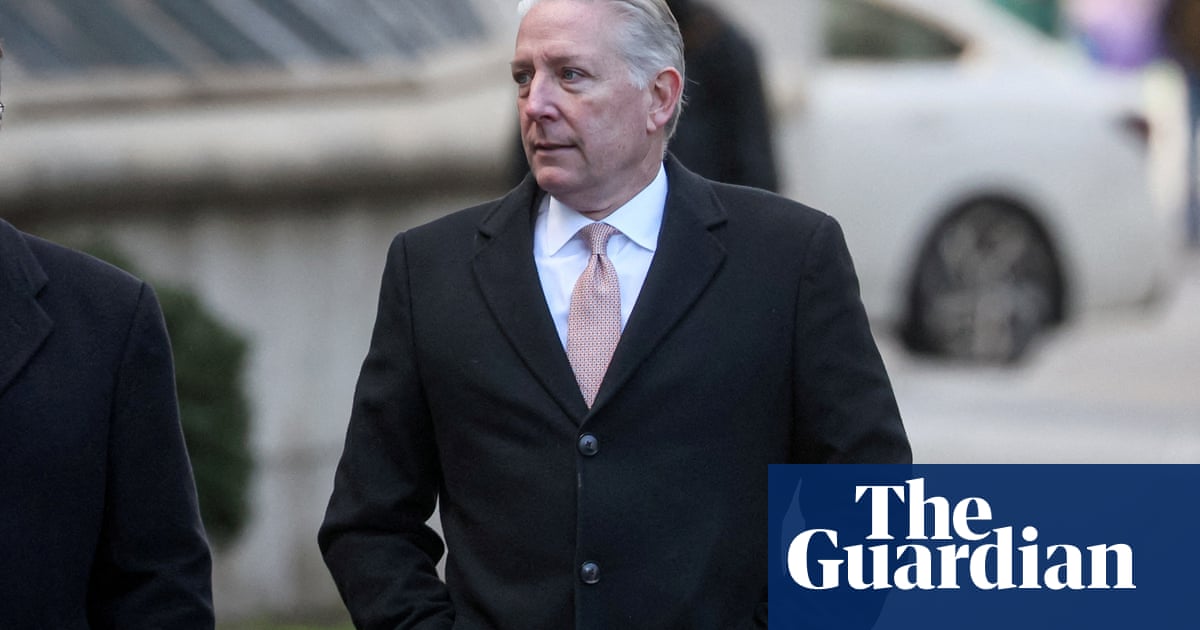
A former FBI special agent who led a counterintelligence division was sentenced to more than four years in prison on Thursday for providing information to a Russian oligarch, in violation of US sanctions.
Charles McGonigal, 55, is one of the highest-ranking FBI officials to ever be convicted of a crime. He spent 22 years at the FBI before retiring in September 2018, leading investigations into the 2010 release of state department classified cables by WikiLeaks, and a hunt for a suspected Chinese spy working as a mole in the CIA.
But in 2021, after he had retired, McGonigal supplied information to the Russian oligarch Oleg Deripaska to help him sink a business rival. Deripaska had been placed on a US sanctions list in 2018, and was attempting to gather information to get a competitor placed on the sanctions list as well.
McGonigal received a payment of $17,500 for doing so, laundered from a Russian bank to Cyprus to a business bank account in New Jersey and then to McGonigal’s private account.
McGonigal was arrested in January 2023 and indicted on nine charges. In August, he pleaded guilty to one charge to avoid the other eight – namely, conspiring to violate US sanctions and laundering payments.
On Thursday he was sentenced to 50 months in prison and fined $40,000. The judge for the southern district of New York, Jennifer H Rearden, said her sentence was meant to balance McGonigal’s 22 years of FBI service with the “extremely serious” nature of his crimes, which she said imperiled national security.
“Charles McGonigal violated the trust his country placed in him by using his high-level position at the FBI to prepare for his future in business. Once he left public service, he jeopardized our national security by providing services to Oleg Deripaska, a Russian tycoon who acts as Vladimir Putin’s agent,” said Damian Williams, a US attorney, in a statement on the sentencing.
“Today’s sentence is a reminder that anyone who violates United States sanctions – particularly those in whom this country has placed its trust – will pay a heavy penalty.”
McGonigal also faces a second sentencing in Washington DC early next year, after he also pleaded guilty to hiding $225,000 in payments from a former Albanian intelligence officer.
The United States said on Wednesday it will continue to unite countries around the world to support Ukraine’s freedom and independence, and ensure that Russian aggression remains a strategic failure, as the top U.S. diplomat put it, TURAN’s Washington correspondent reports from the State Department.
“Putin is betting that our divisions will prevent us from coming through for Ukraine. We have proven him wrong before; we will prove him wrong again,” Secretary of State Antony Blinken told reporters at a year-end press conference.
Putin, he explained, “thinks his strategy of waiting us out while sending wave after wave of young Russians into a meat grinder of his own making will pay off.”
“On one and only one point, I agree with Putin: America’s ongoing support is critical to enabling Ukraine’s brave soldiers and citizens to keep up their fight, to ensure that Russia’s war remains a strategic failure, and to continue helping Ukraine move toward standing strongly on its own two feet militarily, economically, and democratically,” Blinken added.
As the world heads into 2024, Blinken said the U.S. will continue to stand shoulder-to-shoulder with “those who share our vision” for a free, open, prosperous and secure world, “because that’s what delivering for the American people demands.”
He went on to elaborate: “Putin has already failed to achieve his principal objective in Ukraine: erasing it from the map, subsuming it into Russia… It’s been a hard year on the battlefield, but, once again, Ukrainians have done what no one thought was possible: They stood toe to toe with one of the world’s biggest militaries, they conceded no territory despite multiple Russian offensives, and they pushed Russia’s navy back in the Black Sea and opened a corridor to allow them to export their grain and other products to the world.”
Russia, Blinken said, is weaker militarily, economically, diplomatically. NATO is bigger and stronger and more united than at any point in its nearly 75-year history.
“This year, we added our 31st member of NATO – Finland. And Sweden will join soon, bringing even greater potency and capability to our defensive alliance,” he reminded.
Blinken devoted much of his time on the podium to rallying the Congress and countries around the world to continue supporting Ukraine’s freedom and independence, and underscoring the importance of ending the Israel-Hamas war as quickly as possible.
“Here’s who benefits if Congress passes this supplemental: our fellow citizens, our businesses, our workers, our allies and partners, people around the world who are looking to the United States to lead. Here’s who cheers if we fail: Moscow, Tehran, Beijing. If we come up short, it won’t be our adversaries and competitors who stopped us. It will be ourselves,” he said.
On the war in the Middle East that erupted in October. Blinken said, “We continue to believe that Israel does not have to choose between removing the threat of Hamas and minimizing the toll on civilians in Gaza.”
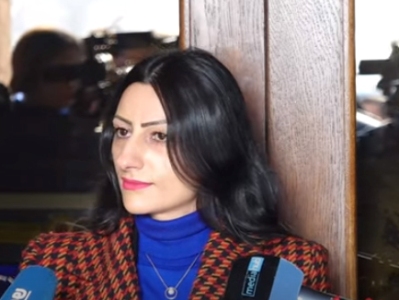
When this information was disseminated in the press, I immediately contacted the law enforcement agencies, focusing on human rights related issues. Anahit Manasyan, the Human Rights Defender (ombudsperson) of Armenia, told this to reporters after Thursday’s Cabinet meeting of the government—and regarding the incident that happened a day ago, when, according to human rights organizations, the military police of the Russian 102nd Military Base in Gyumri, Armenia arrested Russian citizen Dmitry Setrakov and then transferred him to Russia.
To the question whether these Russian policemen’s arresting of people in Armenia is a violation of human rights, Manasyan responded: “At the moment, I have not yet received complete information regarding the matter. For example, was the person transferred to Russia? Under what process did this happen? But if a matter related to human rights is recorded, in a specific context, we will certainly intervene.”
The Vanadzor office of the Helsinki Civil Assembly had reported on December 8 that the representatives of the Russian 102nd Military Base had arrested Russian citizen Dmitri Setrakov, living in Gyumri, on a street. And later it became known that he was transferred to Russia, where he is accused of desertion.
In turn, the Prosecutor General’s Office of Armenia had stated that it did not receive, discuss, and ranted a petition to detain, arrest, and hand over Setrakov to the respective authorities of Russia. It added that it does not have information regarding the search for Dmitry Setrakov by the relevant authorities of Russia, as well as his detection in Armenia.
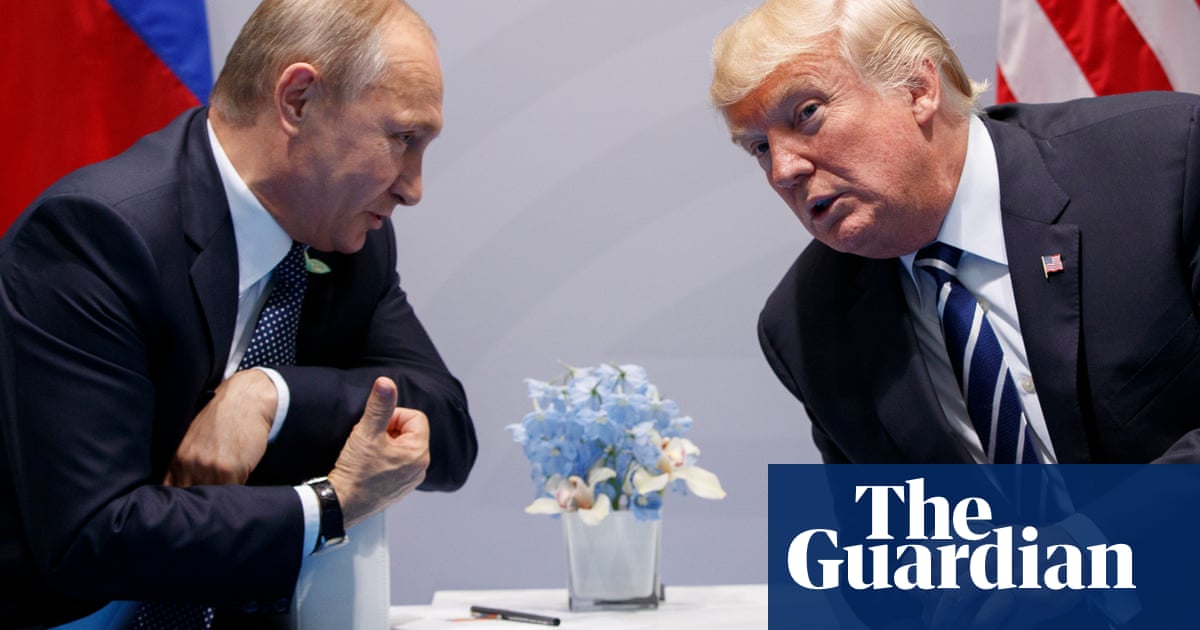
Vladimir Putin has had Donald Trump’s “number for some time … knows how to manipulate him” and still sees him “as an asset”, the former White House Russia expert Fiona Hill said, discussing the Russian leader and the Republican presidential frontrunner.
“That’s literally [Putin’s] trump card,” Hill told the One Decision Podcast, hosted by the reporter Jane Ferguson and Sir Richard Dearlove, a former head of MI6, when asked if she thought the Russian president, bogged down in war in Ukraine, was betting on Trump beating Joe Biden next year and returning to power.
Hill added: “The anticipation that Trump’s going to come back is something for Putin of a boon … he can play with that. He can use it as kind of a warning … scare the Ukrainians, the Europeans, the rest of the world. Putin is pretty confident, given his experiences with Trump in the past, that Trump will be quick to try to resolve the … war in Ukraine in his favor.
“And, you know, obviously, Putin has had Trump’s number for some time, he knows how to manipulate him … he has been very good at the art of flattery with Trump. He sees Trump as an asset in many respects.”
From 2017 to 2019 Hill was a senior national security aide in the Trump White House, eventually coming under the spotlight as a witness in Trump’s first impeachment, for seeking to blackmail Ukraine for dirt on political rivals. In 2013, she published Mr Putin: Operative in the Kremlin, a widely praised study.
Though Hill made her name in Washington foreign policy circles she was born and raised in the north-east of England, attending St Andrews University in Scotland before studying at Harvard.
Joe Biden has led a global coalition in support of Ukraine but US funding for Kyiv is currently held up in Congress, Republicans loyal to Trump demanding hardline immigration measures in return for more aid. On Wednesday Punchbowl News, which reports on Capitol Hill, noted the “growing isolationist wing” of the Republican party, notably including the installation of a Trump ally, Mike Johnson, as House speaker.
“Washington has cooled on Ukraine,” it said.
Hill said Putin increasingly sensed a chance to end the war in his favour.
“Myself and many other colleagues are already getting little feelers being sent out to see whether the United States and the west are ready to negotiate,” Hill said, adding that this “suggests that Russia would like to see this ended, but … completely on Putin’s terms: no return of territory, the opportunity to put pressure on Ukraine over the longer term and certainly no reparations.”
Now chancellor of Durham University, Hill is also a member of the board of overseers at Harvard and a senior fellow at the Brookings Institution in Washington. On the One Decision Podcast, she also discussed her well-received memoir, There Is Nothing For You Here, which was published two years ago, famously prompting Trump to call her “a deep state stiff with a nice accent”.
Trump and Putin have been entangled on the world stage ever since Trump entered US politics in 2015, amid warnings of Russian interference in American elections. In 2018, Trump was widely criticised for a subservient display at a summit with Putin in Helsinki. In 2019 a special counsel investigation of Russian election interference and links between Trump and Moscow ended with multiple indictments and extensive evidence of attempted obstruction by Trump but no proof of collusion.
Widely seen as an aspiring autocrat, Trump regularly praises Putin and other authoritarian leaders.
In New Hampshire last week, Trump told supporters: “Putin of Russia says that Biden’s … ‘politically motivated persecution of his political rival’ is very good for Russia because it shows the rottenness of the American political system, which cannot pretend to teach others about democracy.’ So we talk about democracy, but the whole world is watching the persecution of a political opponent that’s kicking [Biden’s] ass.”
Trump has pleaded not guilty to 91 criminal charges under four indictments and also faces assorted civil cases and a ruling in Colorado kicking him off the ballot for inciting the January 6 insurrection. Regardless, he leads Republican polling by vast margins and is competitive or leads Biden in general election polls.
Hill told One Decision that because Trump “can be extraordinary, unpredictable … Putin probably has to tread very carefully, in fact, not to insult him, and not to kind of cross lines [because] Trump … lives for himself”.
But, she said, “Putin is pretty confident that he can stoke up the culture wars here, there and everywhere. And just with a little bit of deft use of political influence operations and propaganda, he can keep things that are moving in his direction already, moving in his direction.
“In any case, everything that Trump surrogates or Trump himself says about Nato [he has threatened to withdraw the US], about Europe and European security, about world and global affairs, about Ukraine, everything that’s happening on Capitol Hill … for Putin, this is just for him a sign that again, everything is going to rapidly switch in in his direction, his favor.”



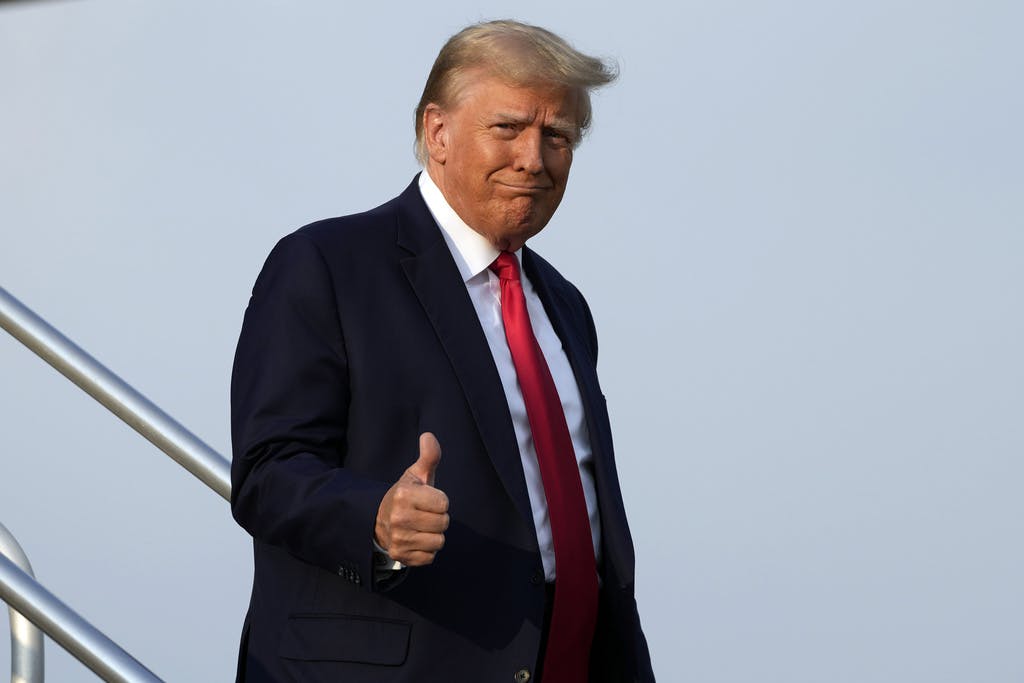 President Trump steps off his plane at Hartsfield-Jackson Atlanta International Airport, August 24, 2023. AP/Alex Brandon