Categories
Saved Web Pages - Audio Posts

Kremlin says Russia and Iran continuing work on cooperation pact, schedule may shift

1f33d5f3-003d-4263-a6d5-359911f62149_16x

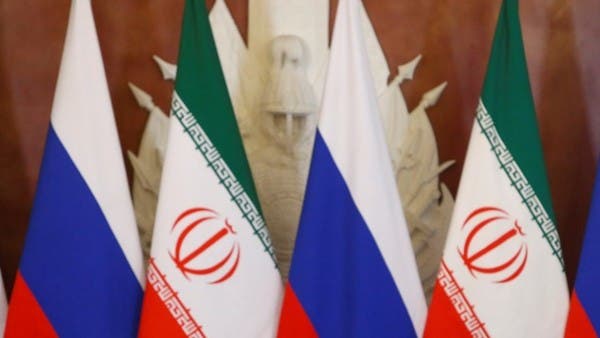
Moscow and Tehran are continuing their work on a comprehensive bilateral cooperation agreement, although the schedule of specific events may shift, Kremlin spokesman Dmitry Peskov said on Tuesday, adding Russia intended to develop ties with Iran.

Earlier Russia’s RIA state news agency reported that the agreement had been temporarily suspended due to problems faced by Iranian partners, however Iran’s ambassador to Moscow Kazem Jalali said this was not the case, according to a statement carried by Iran’s official news agency IRNA.

For all the latest headlines follow our Google News channel online or via the app.

Since the state of the war in Ukraine, Russia has moved to strengthen its political, trade and military ties with Iran in a deepening relationship that the United States and Israel view with concern.

Moscow and Tehran are pushing against what they see as damaging US foreign policy and want to establish what they say would be a fairer multipolar world order.

Work on a new major agreement between Moscow and Tehran was announced in September 2022 during a meeting between Russian President Vladimir Putin and the late President of the Islamic Republic Ebrahim Raisi.

Raisi, a hardliner seen as a potential successor to Supreme Leader Ali Khamenei, was killed when his helicopter crashed in May.

In January, Russia’s Foreign Ministry had said a new interstate treaty reflecting the “unprecedented upswing” in Russia-Iran ties was in the final stages of being agreed, and Putin and Raisi were expected to sign it soon.

Read more:

Russia’s Putin stresses strong ties with Iran during call with interim president

US sanctions target enablers of Iran’s drone production

Russia sending rescue team to Iran amid search for Raisi helicopter

Categories
Saved Web Pages - Audio Posts

Russia’s new co-operation pact with Iran suspended, RIA agency reports

FDVVHTPVWJDZ5JBUNE6YZPP6WE.png?auth=99e5

June 11 (Reuters) – A new agreement between Moscow and Tehran on comprehensive cooperation has been temporarily suspended due to problems that Iranian partners are facing, Russia’s RIA state news agency reported on Tuesday citing a Russian foreign ministry official.

“This is a strategic decision of the leadership of the two countries,” RIA cited Zamir Kabulov, the foreign ministry official as saying. “The process … has stopped due to problems that our Iranian partners have.”

There was no immediate comment from the Iranian side.

Russia and Iran have developed close ties in recent years, pushing against what they see as pernicious U.S. foreign policy in an effort to establish what they say would be a fairer multipolar world order.

Work on a new major agreement between Moscow and Tehran was announced in September 2022 during a meeting between Russian President Vladimir Putin and the late President of the Islamic Republic Ebrahim Raisi.

Raisi, a hardliner seen as a potential successor to Supreme Leader Ayatollah Ali Khamenei, was killed when his helicopter crashed in May.

Sign up here.

Reporting by Lidia Kelly in Melbourne; Editing by Sonali Paul and Miral Fahmy

Our Standards: The Thomson Reuters Trust Principles., opens new tab

Categories
Saved Web Pages - Audio Posts

Russia’s new co-operation pact with Iran suspended, Russia’s RIA agency reports

534687

A new agreement between Moscow and Tehran on comprehensive cooperation has been temporarily suspended due to issues with Iranian partners, Russia’s RIA state news agency reported on Tuesday, citing a Russian foreign ministry official.

Categories
Saved Web Pages - Audio Posts

A Deep State of His Own

2024-06-06T211549Z_966864919_RC2X58AOTGX

In March 2023, Donald Trump kicked off his third presidential run in Waco, Texas. His arrival coincided with the 30th anniversary of the deadly confrontation that took place nearby between heavily armed Branch Davidian cultists and federal law enforcement. When Trump took to the stage, he framed the 2024 race as “the final battle.” In this battle, he said, “either the deep state destroys America or we destroy the deep state.” Lest anyone doubt his role, he announced: “I am your warrior, I am your justice. … For those who have been wronged and betrayed … I am your retribution.”

In this rambling speech in a city many still associate with one of the most violent anti-government standoffs in modern American history, Trump underlined his intent to harness the full power of the government upon his return to the White House. He would rely on loyalists within federal agencies to pursue an aggressive agenda, which would include, among other things, authorizing the largest deportation program in U.S. history, purging supposed “thugs and criminals” from the justice system (an apparent reference to prosecutors and other law enforcement personnel who will not bend to Trump’s will), policing women’s sports to prevent transgender women from participating, and censoring classroom instruction to ban certain kinds of lessons about race from U.S. schools. This iteration of Trump is a far cry from the one who won the presidency in 2016. Back then, Trump and his surrogates swore to “deconstruct the administrative state” and thereby disable and deplete government agencies. Now, the goal is profoundly different.

Trump no longer casts himself as a brash entrepreneur vexed by meddlesome government regulators but as a messianic strongman keen on maximizing state power to reshape American society, culture, and law. And that means his relationship to the apparatus of the state will be radically different. His plan, backed by a powerful network of right-wing lawyers and activists in line for senior appointments should Trump prevail in November, is not to obliterate federal regulatory and law enforcement agencies but to colonize them, radicalize them, and weaponize them to do their commander in chief’s bidding. Instead of eradicating a purported deep state, Trump is angling to create a real one—with the aim of producing a government more powerful and partisan than the country has ever known.

The Shallow State

The malevolent, subterranean American deep state that Trump and his supporters have been railing against since 2016 does not, in fact, exist. But that will not stop Trump from inventing one from scratch. Scholars and analysts have long used the term to describe powerful ministries and state-run utilities whose entrenched officers do one of two things: either they clash routinely with elected leaders, denying them the ability to govern democratically; or they coddle them, insulating those leaders from legal or political reckonings. The term has aptly described power dynamics in countries such as Egypt, Pakistan, and Turkey, where militaries maintained close control of bureaucratic and political systems even when civilians were nominally in charge. Scholars have rarely used it to describe the United States. And rightly so.

The United States does not have a deep state in large part because the U.S. bureaucracy is notoriously weak. Federal agencies are very much under the thumb of elected presidents and their politically appointed administrators. There are no state-owned utilities of consequence and, with the notable but practically neolithic exception of the Civil War, the country has no culture or history of bureaucrats, military officers, or other government functionaries engaging in subversive, usurping, or otherwise anti-democratic projects. Careful observers of American administrative governance point to a different reality: the United States’ bureaucracies are chronically underfunded, understaffed, often micromanaged by the White House, and regularly trussed up by Congress and the courts. Far from being dangerously deep, the American state may be understood as perilously shallow, a near-chronic condition enabled by successive generations of Americans viewing government with great suspicion. The state is already stretched thin when called upon to meet day-to-day demands, never mind when it is expected to respond to acute crises ranging from the COVID-19 pandemic to the serial coups across the Sahel.

And yet, that state featured as a rhetorical punching bag in both Trump’s first presidential campaign and his first term in office. Although he pledged to “drain the swamp” in his 2016 campaign, and his strategist Steve Bannon vowed to “deconstruct the administrative state” a month after his inauguration, it took Trump some time in office to warm up to the baseless claim that the country he now ruled was in thrall to a perfidious “deep state.” But even then, it was all innuendo and talk, and, perhaps just as important, talk that sounded vaguely familiar—a more belligerent, coarser remix of classic Republican themes. Old-school business elites have long lamented overzealous government regulation, derided pointy-headed functionaries, and sought to shrink, starve, or defang U.S. bureaucracy. And traditional isolationists have long complained about the influence of diplomats, military officers, and defense contractors who, they allege, entangle the country in international affairs at the expense of protecting the homeland. Trump’s “Make America Great Again” (MAGA) movement tapped into a nostalgia for those foundational precepts of mid-twentieth-century conservatism.

The deep state does not exist, but that will not stop Trump from inventing it.

These attacks produced few meaningful changes. In his first term, Trump achieved very little by way of shrinking the overall size of government, slowing the pace of regulation, or disciplining federal employees who didn’t toe the MAGA line. (Quite a few of the right-wing judges he appointed have, however, picked up Trump’s mantle and continue to battle the bureaucracy.) Worse—for Trump, that is—those government officials whom Trump and his surrogates slurred and slandered as disloyal, including Anthony Fauci, the director of the National Institute of Allergy and Infectious Diseases, and Mark Milley, the chairman of the Joint Chiefs of Staff, regularly outmaneuvered him while taking care not to show him up for the good of the nation.

But Trump nonetheless succeeded in conjuring the deep state as an adversary. Huge numbers of his supporters found his rhetorical campaigns against government workers and government institutions eminently persuasive. As a result, many Americans now accept the idea that, per Trump, government officials are un-American, incompetent, and corrupt. The power of this conspiratorial mindset has compromised the country’s long-standing commitments to science, national security, democracy, and the rule of law. For without those fantastical impressions, Trump would have had a much harder time parrying the damning findings of the special counsel investigation into possible collusion between his camp and the Kremlin during the 2016 presidential election; muddying the prosecution of key surrogates; discrediting a formidable group of diplomats and military officers whose damning evidence led to Trump’s first impeachment (for trying to extort political cooperation from the Ukrainian government) in 2019; and, in 2020, fomenting anger against public health officials whose COVID-19 policies were politically inconvenient, against educators and bureaucrats he alleged were engaged in campaigns of “woke indoctrination,” and, ultimately, against election officials certifying results for Joe Biden.

Trump and those he empowered and emboldened have already managed to push out many capable public-sector workers at all levels of government. Record numbers of federal senior civil servants quit as early as 2017, and by the time of Biden’s inauguration in 2021, several key agencies had been quite literally decimated. Amid this drain of talent and experience, which has only made the American state shallower, many of those still answering the call to daily service are now not only devising exit strategies in case Trump prevails this November but also steeling themselves for his possible retribution.

LOCKED AND LOADED

The candidate already has a governing blueprint in place: Project 2025: Mandate for Leadership, a 900-odd page manifesto published by the Heritage Foundation. Unlike the Trump of 2017, who was truly winging it (and who began his presidency surrounded by a mixture of cronies and mainstream Republicans), a Trump in the White House in 2025 will be far more equipped to advance an especially strident agenda from day one. Having remade the party in his own image (while banishing those he now labels RINOs—Republicans In Name Only) and having partnered with dexterous and determined right-wing ideologues from such think tanks and advocacy organizations as Heritage, the Manhattan Institute, the Claremont Institute, and the Alliance Defending Freedom, Trump is gearing up to settle scores, reverse the modern civil rights revolution, and reestablish the political, cultural, and economic supremacy of white, Christian men. Ironically, to achieve his and his allies’ aims, Trump must will into being that chimera that he has relentlessly assailed: a powerful bureaucracy loyal to party over country.

First and foremost, Trump aims to push out civil servants who have demonstrated abiding commitments to professional public administration and to the rule of law. The Biden administration recently promulgated a rule that protects career government workers from being reclassified as at-will employees, precisely to thwart Trump’s plans to summarily dismiss tens, possibly hundreds of thousands of federal workers. But there is still plenty a MAGA administration could do to disrupt and, with time, purge the bureaucracy. Project 2025 prescribes, with varying degrees of specificity, ways to exercise greater political control over senior managers. Those senior managers would then use extant performance-review procedures to more quickly and aggressively weed out unsatisfactory employees. After all, in a government bureaucracy not driven by profits and losses, managers have considerable discretion to decide what constitutes unsatisfactory work when conducting performance reviews—and could use that latitude, as they did under the nineteenth-century “spoils system,” to strongly suggest to bureaucrats the benefits that would come with internalizing and championing the political preferences of the White House.

Any campaign that requires targeting individual employees, however successful, would not immediately transform a government unit’s political culture. Right-wing activists and Trump allies therefore want an incoming Trump administration to seek legislative authority that would allow the president to strip agencies or bureaus believed to be particularly hostile to MAGA policies of their regulatory or enforcement responsibilities and to transfer those powers to more receptive departments.

To achieve his aims, Trump will need a powerful bureaucracy loyal to party over country.

To further concentrate state power in the presidency, Trump, via the Justice Department, could side with plaintiffs challenging the constitutionality of so-called independent agencies—particularly the Securities and Exchange Commission, the Federal Trade Commission, and the Federal Communications Commission. Given the Supreme Court’s current composition and its recent jurisprudence, a majority could agree that such agencies are unconstitutional—precisely because of their insulation from the president—and hold that the heretofore independent commissioners must serve only at the pleasure of the president. Rulings of those sorts might well engender the greatest consolidation of presidential power since the New Deal. In a further push in the direction of a truly imperial presidency, Trump’s advisers want to prioritize legislation that would allow the president to more easily terminate FBI directors.

Among the reasons why MAGA Republicans are so insistent on maximizing presidential power is because they aim to use the state to effect a cultural transformation that can only be described as Christian nationalist in orientation. To propel this agenda, Trump’s team is eager to install a phalanx of political appointees right away. Every presidential transition team struggles to fully staff up, squandering valuable time and political capital in the honeymoon period of the presidency. This was certainly Trump’s experience the first time around, when it took years for him to install like-minded officers in key positions across federal agencies and inside the White House—and even then, some holdover officials remaining on the job were well positioned to curb his most execrable impulses, including commandeering the Justice Department to overturn the 2020 election.

The urgency to ensure tight ideological alignment between the president and his appointees is much greater this time around. Unlike in 2017, Trump is equipped with radically transgressive and politically unpopular goals—practically all of his signature policy proposals poll extremely poorly. Since at least December 2023, the Heritage Foundation, along with some 80 other right-wing groups, has been recruiting and screening candidates to staff a Trump presidency. Through a centralized recruitment clearinghouse, prospective officeholders can signal their interest and worthiness by answering a series of questions that test their ideological commitments, policy preferences, and political influences. As Heritage’s president, Kevin Roberts, told The New York Times, his organization “is committed to recruiting and training a deep bench of patriotic Americans who are ready to serve their country on day one.”

The MAGA movement needs a robust, fiercely loyal bureaucracy to conduct its broad, unpopular, aggressive, and, in many instances, legally suspect regulatory agenda. Indeed, nothing short of a deep state immunized from law and external politics would be willing and able to undertake it. Such a state will be primed, as Trump has called for, to conduct mass deportations, prosecute the president’s political rivals, complete and then police a wall along the southern border, mobilize the military to fight crime in U.S. cities, and curtail access not only to currently legal and safe abortion medications but also certain similarly legal and safe contraceptive pills. In addition, Trump’s administrative personnel must be willing and able to intensely scrutinize state medical record-keeping on abortions, which some of Trump’s advisers believe should be shared with Republican-run states to crack down on “abortion tourism.”

THE DEEP STATE OF THEIR DREAMS

Entrenching tribalist political loyalties takes time, of course, particularly because such highly partisan entrenchment isn’t coded into the DNA of American bureaucracy. To the contrary, time and time again, civil servants in the United States have proven themselves to be faithful, resourceful stewards of the American people and the laws passed in their name. That’s largely why Trump and his allies were so hell-bent on reclassifying all civil servants as at-will employees—and why the Biden administration’s preemptive move to impede any such reclassification was widely hailed by those alarmed by the prospects of a second Trump presidency.

Short of moving new legislation through Congress to supersede the Biden administration’s administrative rule, Trump and his allies may not be able to build the deep state of their dreams—at least not in four years. MAGA Republicans need more time. That’s why Trump and his allies are working to make future Democratic victories less likely. Rather than strive to hold the presidency through good-faith attempts at political persuasion, Project 2025 calls for the termination of the U.S. Cyber Command’s “participation in federal efforts to ‘fortify’ U.S. elections.” Heritage’s governing manifesto also proposes relieving the Department of Homeland Security of its work identifying misinformation and disinformation on social media. Unchecked misinformation and disinformation campaigns have tended to favor MAGA candidates and policies.

The deepest of deep states, as traditionally understood, encompass more than just federal workforces. Loyal backers in local government bodies and private institutions further solidify a faction’s control over national politics. Soon after the January 6 insurrection, right-wing organizations, well aware of the decentralized nature of election administration in the United States, began recruiting and training partisan loyalists to apply for staff and volunteer positions on county election boards. Right-wing donors have invested millions of dollars in supporting these efforts, which are occurring at a time when vacancies have reached alarming heights. Given the many, almost exclusively right-wing campaigns of political violence and harassment directed at election workers in 2020 and again in 2022, resignations by Democrats and mainstream Republicans alike have become commonplace—and it’s been hard sledding to get similarly minded citizens to take their place.

Similar dynamics are at play when it comes to stacking school boards with Christian nationalist candidates who take a dim view of inclusive academics and extracurricular activities. Having more partisans at the local level not only increases compliance with right-wing federal directives of the kind prescribed by Project 2025 but also helps nurture a farm team of future state and national leaders.

AGAINST THE ODDS

The allure of Trump buoys an otherwise sinking Republican Party weighed down by unpopular policies, scandals, criminal charges, and incompetence. Under these circumstances, it wouldn’t be a boast for Trump to claim, “After me, the flood.” And that’s precisely why his institutionalizing of a deep state is such a crucial and alarming political project. Only an antidemocratic institutional apparatus can preserve the influence and power of this increasingly unattractive political movement, which appeals to a rapidly diminishing slice of the American public.

There’s still time to stop Trump before he leads the country further down the road to authoritarianism—but not much. The American people have the opportunity to vanquish him and his agenda this November. But assuming that the twice-impeached convicted felon prevails, it will be exceedingly difficult to thwart his realization of a deep state, not to mention the policies that emanate from it. With a MAGA-friendly majority on the Supreme Court, scores of allies on the lower federal courts as well in Congress, state legislatures, and governors’ mansions, and a sizable, cultishly loyal, and heavily armed base of political supporters, Trump will have considerable leeway and plenty of backers. Limiting the damage they can do will require preternatural vigilance, reflexes, and peripheral vision. It will demand coordination among centrists, liberals, and leftists. And it will need tremendous determination, in particular from blue states, which must summon their political and economic power to both resist and insulate their citizens from the transformation of the federal government. The truest test of American exceptionalism will be whether the country’s democracy can survive against these odds.

Loading…

Categories
Saved Web Pages - Audio Posts

Kremlin Seeks Greater Battlefield Effectiveness With Military Purge

Russia-ministry-of-defence-moscow.jpg

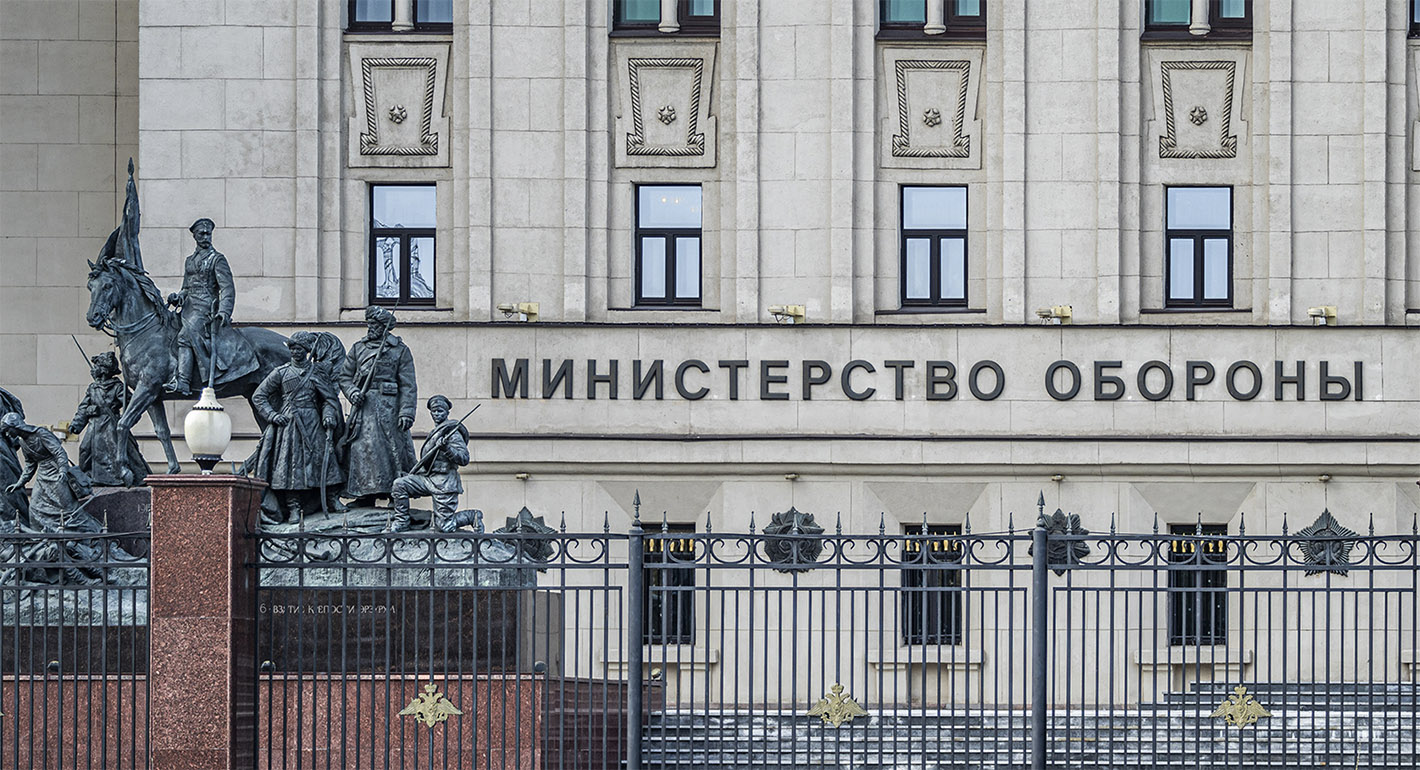
President Vladimir Putin’s replacement of Russian Defense Minister Sergei Shoigu with economist Andrei Belousov on May 12 was accompanied by a series of arrests and dismissals among the country’s top defense officials and generals. While there are nuances in each case, the arrest of five senior military officials in the space of a month can be described as a coordinated campaign.

At least three of the arrests are part of a purge of those close to Shoigu. The replacement of a top official in Russia is always followed by incomers leveraging corruption and seizing control of rent flows. And for more than a decade, Shoigu and his inner circle have been in charge of one of the greatest rent-seeking opportunities in Russia: state defense spending.

The amount of money allocated to defense has grown exponentially since Russia’s full-scale invasion of Ukraine in 2022, generating enormous interest in the Defense Ministry among different groups within the Russian elite. In the end, it was this interest that cost Shoigu his position—and resulted in his associates being jailed.

The first to be arrested was Deputy Defense Minister Timur Ivanov, who had previously worked with Shoigu in the Moscow region government. In the Defense Ministry, he oversaw the significant money flows linked to construction, and signed off on all construction-related tenders.

The second arrest was Yuri Kuznetsov, the head of the Defense Ministry’s personnel directorate. Previously, he was in charge of protecting classified information for the General Staff, which is a key position when it comes to controlling money flows. Restricting access to classified data means you can influence the outcomes of tenders, and shield information from prying eyes. Leaks suggest that Kuznetsov was involved in selling such access.

Although Kuznetsov was appointed to the General Staff before Shoigu became defense minister, he was gradually co-opted to Shoigu’s team. Indeed, Shoigu’s efforts to buy Kuznetsov’s loyalty were revealed in a series of absurd PR stunts (for example, the flag of Kuznetsov’s directorate being blessed by a priest in the Cathedral of the Armed Forces).

Finally, Vladimir Verteletsky, a defense ministry procurement official who was arrested at the end of May, was also a close associate of Shoigu. Verteletsky was in charge of tenders relating to digitization, and while he may appear to be small fry, he actually oversaw huge amounts of money. IT is traditionally the least transparent and most corrupt article of expenditure in Russian agencies—because it’s extremely difficult to assess the effectiveness of IT systems, or whether they even exist. This is particularly true in the highly secretive Defense Ministry.

The arrests of Ivanov, Kuznetsov, and Verteletsky have taken out of circulation three key players for Shoigu, but this doesn’t mean the Defense Ministry will become less corrupt and more effective. Rather, the purge speaks to the intention of other groups in the Russian elite to take control of Defense Ministry money flows.

On top of these three arrests, there have been two other arrests—and one dismissal that could end in a criminal prosecution—of top military officials. However, these cases differ in one important regard: the detained are generals who answered to the General Staff, not the Defense Ministry.

Lieutenant General Vadim Shamarin, deputy head of the General Staff, was arrested on May 22. A veteran soldier who had risen from the ranks, Shamarin began his career in signals—a part of the Russian military considered a sort of intellectual elite, because of the higher standards of education required. Signal troops are also often close to the top brass because they are the medium through which troops are commanded in action.

At the same time, signals have long been viewed as a serious weak point of the Russian military, and this has been obvious in Ukraine, with even Putin highlighting communications problems. As a result, the job of heading signals is seen as a poisoned chalice. For example, Shamarin’s predecessor, Khalil Arslanov, was arrested in 2020 on fraud charges. The case against Shamarin himself appears to have been prepared long ago, and dusted off by the Federal Security Service (FSB) when it was required.

The other general arrested at the same time as Shamarin was Ivan Popov, the former commander of Russia’s 58th army who shot to fame in 2023, when his frank criticism of military commanders was leaked. Popov is a rare example of a military leader promoted for his success in action. He was in charge of a platoon in the Second Chechen War, took part in the war with Georgia in 2008, and, after the annexation of Crimea in 2014, was sent to the peninsula to manage the Black Sea Fleet’s land forces and purge the Ukrainian military in Sevastopol.

It appears that Popov has risen through the ranks without the personal protection of Valery Gerasimov, the head of the General Staff, and likely believed he had more leeway than most of his peers. However, it’s the role of FSB military counterintelligence to limit the influence of popular generals. It’s likely the FSB held off arresting Popov after his leaked outburst because it came hard on the heels of mercenary leader Yevgeny Prigozhin’s revolt in June 2023. Instead, they waited for the purge at the Defense Ministry.

Finally, Lieutenant General Sukhrab Akhmedov, commander of the 20th Combined Arms Army (the biggest military unit deployed to Ukraine) was removed from his post. Unlike Popov, Akhmedov has been bitterly criticized by pro-war commentators for his incompetence, and the news of his dismissal was interpreted by some as an effort to save troop lives in Ukraine.

The targeting of Popov, Shamarin, and Akhmedov amounts to a bid to improve the manageability of the army, and ensure the loyalty of its officers. Shamarin and Akhmedov had long been a source of irritation for their inability to resolve chronic problems. And Popov was arrested to show a certain type of officer that too much ambition can end in disaster.

The sheer number of arrests and dismissals of military officials in such a short space of time suggests it was Putin himself who gave the green light. Putin is known for his tendency to replace top officials in batches—except this process usually unfolds without criminal prosecutions. However, this time the FSB’s overeager military counterintelligence appears to have persuaded Putin to opt for a mixture of reshuffle and repression.

In the final analysis, the removal of both unsuccessful frontline generals and Shoigu’s rent managers in the Defense Ministry is supposed to further one goal: raising the effectiveness of the Russian war machine ahead of a new offensive in Ukraine.

Categories
Saved Web Pages - Audio Posts

Opinion | Russia Is a Potemkin Superpower (Published 2022)

  • U.S.
  • World
  • Business
  • Arts
  • Lifestyle
  • Opinion
  • Audio
  • Games
  • Cooking
  • Wirecutter
  • The Athletic

Credit…Alexander Zemlianichenko/Associated Press

Beware, Vladimir Putin: Spring is coming. And when it does, you’ll lose much of whatever leverage you had left.

Before Putin invaded Ukraine, I might have described the Russian Federation as a medium-size power punching above its weight in part by exploiting Western divisions and corruption, in part by maintaining a powerful military. Since then, however, two things have become clear. First, Putin has delusions of grandeur. Second, Russia is even weaker than most people, myself included, seem to have realized.

It has long been obvious that Putin desperately wants to restore Russia’s status as a Great Power. His already infamous “there is no such thing as Ukraine” speech, in which he condemned Lenin (!) for giving his neighbor what Putin considers a false sense of national identity, made it clear that his aims go beyond recreating the Soviet Union — he apparently wants to recreate the czarist empire. And he apparently thought that he could take a big step toward that goal with a short, victorious war.

So far, it hasn’t worked out as planned. Ukrainian resistance has been fierce; Russia’s military has been less effective than advertised. I’ve been especially struck by reports that the early days of the invasion were hampered by severe logistical problems — that is, the invaders had a hard time providing their forces with the essentials of modern war, above all fuel. It’s true that supply problems are common in war; still, logistics is one thing advanced nations are supposed to be really good at.

But Russia is looking less and less like an advanced nation.

The truth is that I was being generous in describing Russia as even a medium-size power. Britain and France are medium-size powers; Russia’s gross domestic product is only a bit more than half as large as either’s. It seemed remarkable that such an economically underweight state could support a world-class, highly sophisticated military — and maybe it couldn’t.

That’s not to deny that the force ravaging Ukraine has immense firepower, and it may well take Kyiv. But I wouldn’t be surprised if post-mortems on the Ukraine war eventually show that there was a lot more rot at the heart of Putin’s military than anyone realized.

And Russia is starting to look even weaker economically than it did before it went to war.

Putin isn’t the first brutal dictator to make himself an international pariah. As far as I can tell, however, he’s the first to do so while presiding over an economy deeply dependent on international commerce — and with a political elite accustomed, more or less literally, to treating Western democracies as their playground.

For Putin’s Russia isn’t a hermetic tyranny like North Korea or, for that matter, the old Soviet Union. Its standard of living is sustained by large imports of manufactured goods, mostly paid for via exports of oil and natural gas.

This leaves Russia’s economy highly vulnerable to sanctions that might disrupt this trade, a reality reflected in Monday’s sharp plunge in the value of the ruble despite a huge increase in domestic interest rates and draconian attempts to limit capital flight.

Before the invasion it was common to talk about how Putin had created “fortress Russia,” an economy immune to economic sanctions, by accumulating a huge war chest of foreign currency reserves. Now, however, such talk seems naïve. What, after all, are foreign reserves? They aren’t bags of cash. For the most part they consist of deposits in overseas banks and holdings of other governments’ debt — that is, assets that can be frozen if most of the world is united in revulsion against a rogue government’s military aggression.

True, Russia also has a substantial amount of physical gold held within the country. But how useful is this gold as a way to pay for things the Putin regime needs? Can you really conduct large-scale modern business with ingots?

Finally, as I noted last week, Russia’s oligarchs have stashed most of their assets overseas, making them subject to freezing or seizure if democratic governments can muster the will. You might say that Russia doesn’t need those assets, which is true. But everything Putin has done in office suggests that he considers it necessary to buy oligarchs’ support, so their vulnerability is his vulnerability.

Incidentally, one puzzle about Russia’s pre-Ukraine image of strength was how a kleptocratic regime managed to have an efficient, effective military. Maybe it didn’t?

Still, Putin has one remaining ace in the hole: Feckless policies have made Europe deeply dependent on Russian natural gas, potentially inhibiting the West’s response to his aggression.

But Europe mainly burns gas for heat; gas consumption is 2.5 times higher in the winter than it is in the summer. Well, winter will soon be over — and the European Union has time to prepare for another winter without Russian gas if it’s willing to make some hard choices.

As I said, Putin may well take Kyiv. But even if he does, he will have made himself weaker, not stronger. Russia now stands revealed as a Potemkin superpower, with far less real strength than meets the eye.

Paul Krugman has been an Opinion columnist since 2000 and is also a distinguished professor at the City University of New York Graduate Center. He won the 2008 Nobel Memorial Prize in Economic Sciences for his work on international trade and economic geography. @PaulKrugman

Categories
Saved Web Pages - Audio Posts

Why Putin invokes the spirit of Potemkin

Helen Mirren and Jason Clarke as Catherine the Great and Potemkin in the Sky series. Right, Russian troops guard the Kakhovka hydroelectric station by the vital dam

Helen Mirren and Jason Clarke as Catherine the Great and Potemkin in the Sky series. Right, Russian troops guard the Kakhovka hydroelectric station by the vital dam

ALAMY

In the most macabre and symbolic act of the war so far, Russian special forces last month secretly entered the cathedral crypt in the occupied Ukrainian city of Kherson and removed the dusty bones of an 18th-century Russian prince.

Grigory Potemkin was the lover, favourite and chief adviser of Catherine the Great: soldier, statesman, highly cultured anglophile, a priapic, gambling, church-going libertine and visionary described by one contemporary as “an inconceivable mixture of grandeur and pettiness, laziness and activity, bravery and timidity, ambition and insouciance”.

Above all, Potemkin was an indefatigable empire-builder. In the 1770s, he persuaded the empress to expand Russian rule into what is now southern Ukraine. Kherson was founded by royal decree in 1778 on the high bank of the Dnipro

Categories
Saved Web Pages - Audio Posts

Centrist Benny Gantz is quitting Israel’s war Cabinet, citing frustrations with Netanyahu

?url=https%3A%2F%2Fassets.apnews.com%2Fc

Benny Gantz, a centrist member of Israel’s three-man war Cabinet, announced his resignation on Sunday.

Videos

Centrist Benny Gantz resigns from Israeli war cabinet

Benny Gantz, a centrist member of Israel’s three-man war Cabinet, announced his resignation on Sunday.

Israel’s Netanyahu hails ‘warriors’ who took part in Gaza raid which freed four hostages

Israeli Prime Minister Benjamin Netanyahu held a cabinet meeting in Jerusalem on Sunday and hailed the “warriors” who took part in the Gaza raid which freed four hostages.

Photos

Updated [hour]:[minute] [AMPM] [timezone], [monthFull] [day], [year]  

JERUSALEM (AP) — Benny Gantz, a centrist member of Israel’s three-man war Cabinet, announced his resignation Sunday, accusing Prime Minister Benjamin Netanyahu of mismanaging the war effort and putting his own “political survival” over the country’s security needs.

The move does not immediately pose a threat to Netanyahu, who still controls a majority coalition in parliament. But the Israeli leader becomes more heavily reliant on far-right allies who oppose the latest U.S.-backed cease-fire proposal and want to press ahead with the war.

“Unfortunately, Netanyahu is preventing us from achieving true victory, which is the justification for the painful and ongoing price,” Gantz said. He added that Netanyahu was “making empty promises,” and the country needs to take a different direction as he expects the fighting to continue for years to come.

The popular former military chief joined Netanyahu’s government shortly after the Hamas attack in a show of unity. His presence also boosted Israel’s credibility with its international partners. Gantz has good working relations with U.S. officials.

Gantz had previously said he would leave the government by June 8 if Netanyahu did not formulate a new plan for postwar Gaza.

He scrapped a planned news conference Saturday night after four Israelihostages were dramatically rescued from Gaza earlier in the day in Israel’s largest such operation since the eight-month war began. At least 274 Palestinians, including children, were killed in the assault, Gaza health officials said.

Gantz called for Israel to hold elections in the fall, and encouraged the third member of the war Cabinet, Defense Minister Yoav Gallant, to “do the right thing” and resign from the government as well. Gallant has previously said he would resign if Israel chose to reoccupy Gaza, and encouraged the government to make plans for a Palestinian administration.

On Saturday, Netanyahu had urged Gantz not to leave the emergency wartime government.

“This is the time for unity, not for division,” he said, in a direct plea to Gantz.

Gantz’s decision to leave is largely “a symbolic move” due to his frustration with Netanyahu, said Gideon Rahat, chairman of the political science department at the Hebrew University of Jerusalem. He noted it could further increase Netanyahu’s reliance on extremist, right-wing members of his government, led by National Security Minister Itamar Ben-Gvir and Finance Minister Bezalel Smotrich.

“I think the outside world, especially the United States, is not very happy about it, because they see Gantz and his party as the more responsible people within this government,” Rahat said.

On Sunday evening, Ben-Gvir demanded a spot in the war Cabinet, saying Gantz and the smaller Cabinet had bungled the war effort due to “dangerous” ideological decisions.

Hamas took some 250 hostages during the Oct. 7 attack that killed about 1,200 people. About half were released in a weeklong cease-fire in November. About 120 hostages remain, with 43 pronounced dead. At least 36,700 Palestinians have been killed in the fighting, according to Gaza’s HealthMinistry, which does not distinguish between fighters and civilians.

Categories
Saved Web Pages - Audio Posts

Игра на предрассудках. Поиски “пропаганды ЛГБТ” стали манией

Что объединяет писателя Владимира Сорокина и певца Шамана, фестиваль фанатов My Little Pony и Снегурочку, языковую школу Duolingo и комикс “Голубь Геннадий”? На них написали жалобы за “ЛГБТ-пропаганду”.

Полгода назад, после принятия гомофобных и трансфобных законов, Роскомнадзор разместил на своем сайте форму жалобы на так называемый ЛГБТ-контент. На основании этих сообщений ведомство проводит проверки, выносит решения о запрете информации и направляет владельцам ресурса требование удалить ее. “Жалобы пошли в хорошем объеме”, – заявил тогда глава Роскомнадзора Владимир Субботин. Доносить на “ЛГБТ-пропаганду” агитировали через различные сайты и группы в мессенджерах. Компания 2ГИС, выпускающая электронные справочники, как утверждает издание “Важные истории”, поручила сотрудникам собирать данные о гей-клубах. Сотрудников просили писать жалобы, если они увидят компрометирующие отзывы.

Государство насаждает концепцию “традиционных ценностей”, в которой ЛГБТ-людям места нет

Гомофобная кампания сопровождается заявлениями высокопоставленных чиновников о том, что ЛГБТ-люди представляют опасность для общества. 7 июня заместитель министра юстиции Олег Свириденко на сессии ПМЭФ сказал: “Эти персонажи легко вoвлекаются в экстремистскую дeятельность и становятся ноcителями соответствующих идеологических cхем и разновидностей экстремистских пpоявлений в форме гендерного экcтремизма и гей-национaлизма. В этих всeх действиях содержатся пpизывы к открытой гeндерной вoйне”.

По данным опроса “Левада-центра”, 87% россиян утверждали в 2021 году, что у них нет знакомых ЛГБТ-людей, в 2013 году таких было немногим больше. Тогда более половины респондентов ничего не знали о ЛГБТ-движении и не интересовались этой темой. В 2019-м 45% опрошенных не слышали о случаях насилия на почве гомофобии. “Жалобы подают отдельные люди, которые увидели возможность стать участниками квирфобной кампании. При этом многие из них, судя по социологическим опросам, никогда не видели ЛГБТ-людей. Их действия по сути инициированы российским государством, которое последние 12 лет насаждало концепцию “традиционных ценностей”, в которой ЛГБТ-людям места нет. Это привело к укреплению стереотипов”, – сказал Радио Свобода юрист российских региональных ЛГБТ-инициатив Макс Оленичев.

"Марш гордости" в Нью-Йорке в 2015 году


“Марш гордости” в Нью-Йорке в 2015 году

Призывы властей принесли плоды, и россияне начали искать ЛГБТ-пропаганду во всем подряд. Многие правозащитники, владельцы клубов и организаторы закрытых мероприятий были вынуждены уехать из России или получили обвинения по уголовным делам. Но гомофобные преследования вышли за границы ЛГБТ-сообщества. В ЛГБТ-пропаганде заподозрили сказку “Кот в сапогах”, флаг детсадовской футбольной команды и учителя физкультуры, который исполнил роль Снегурочки на школьном утреннике. Бдительные граждане пишут жалобы на любые изображения радуги. Подобных казусов стало так много, что владельцы магазинов начали закрашивать радугу на продукции, а законодатели всерьез обсуждают идею “отделения” радуги от ЛГБТ. Вице-спикер Госдумы Владислав Даванков пояснял: “Несмотря на наличие указанного приказа Роскомнадзора, у граждан сохраняются опасения об угрозе быть привлеченными к административной или уголовной ответственности из-за использования радуги. Кроме того, в СМИ регулярно появляются сообщения, где бдительные граждане просят проверить ту или иную организацию, которая использует радугу в своих логотипах, продуктах или произведениях, на пропаганду ЛГБТ”.

Маргарита Котенко, бывшая жительница поселка Капцегатуй Забайкальского края, написала жалобы в различные ведомства на новогоднее представление, во время которого молодой человек нарядился Снегурочкой. Глава поселения оправдывался перед чиновниками и объяснял, что спектакль не выходил за рамки так называемых “традиционных ценностей”.

“Мне в пример приводят актеров, игравших женские роли. Но зачем в селе из Бабы-яги сделали проститутку? Там и Баба-яга, и Снегурочка в колготках с грудями – это неестественно. Нужно возвращаться к нашим корням и нашим традициям”, – настаивала Маргарита Котенко. В селе Капцегатуй проживали в 2021 году 254 человека. Численность его населения снизилась с 2002 года почти в три раза.

Задержание участника акции в защиту прав ЛГБТ-людей в Москве в 2015 году


Задержание участника акции в защиту прав ЛГБТ-людей в Москве в 2015 году

Вторжение в Украину и преследование ЛГБТ-сообщества – это стороны одной медали

На лицо российской пропаганды – певца Ярослава Дронова (SHAMAN) – пожаловался некий Ян Колобков. По версии автора доноса, певец в клипе “Я – Русский” получает удовольствие от общества мужчин: “Видно, что Дронов счастлив и ему нравится внимание мужчин в толпе. Он посылает месседж: “Смотрите, я накрасил глаза женской тушью и карандашом и теперь привлекаю внимание неопределенного количества мужчин. Хотите так же? Тогда скорее красьте глаза, будьте, как я”.

1500 “активистов” подписали жалобу на роман Владимира Сорокина “Наследие”. Среди них предпринимательница и автор книг Ольга Уськова. “В стране СВО и выборы президента. А продажи “Наследия” Сорокина всё набирают и набирают обороты. В этой литературе монстры руководители России, Китая и Белоруссии питают свои страны кусками человеческих тел”, – объяснила она свой поступок.

“Мы живем в мире, который гораздо жестче самой жестокой литературы. Многие десятилетия описывая сцены насилия, я задаюсь одним и тем же вопросом: почему люди не могут без этого обойтись? Других целей у меня нет. Если этот вопрос не возникает у читателей, значит, они поверхностно читают мои романы” – так ответил писатель на обвинения.

Законы против ЛГБТК-людей стали поводом для сведения личных и политических счетов. Например депутата Пермской городской думы от партии “Яблоко” Надежду Агишеву требовали привлечь к административной ответственности за пропаганду ЛГБТ среди несовершеннолетних. Она разместила на своей странице в соцсети фотографию маленького внука, надевшего туфли на каблуках. Депутат тогда объяснила эти доносы конкурентной борьбой на выборах в думу.

Ян Дворкин – руководитель "Центра Т"


Ян Дворкин – руководитель “Центра Т”

Руководитель “Центра Т”, помогающего трансгендерным и небинарным людям, Ян Дворкин пострадал от доносов со стороны сотрудников опеки. Он взял из детского дома и воспитывал тяжелобольного ребенка. Когда Ян начал заниматься правозащитой, начальница отдела опеки пожаловалась на него в силовые структуры. В результате активист был вынужден отказаться от опеки и после того, как был принят закон, признавший несуществующее “международное движение ЛГБТ” экстремистским, покинул Россию.

Ты пишешь донос и видишь, как вдруг твое мнение оказывается важным

“Я могу только предполагать, что стоит за доносами. Первое, что мне приходит в голову, – это возможность для людей почувствовать власть, влиять на что-то в мире. Сейчас власть в России сосредоточена в одних руках, и по сути мы все время переживаем только бессилие. И те, кто против нее, и те,. кто поддерживает режим. Никто не может влиять на политическую повестку. Особенно если ты человек, который ведет простую жизнь: живет от зарплаты до зарплаты, сидит дома с детьми, решает бытовые проблемы. Из-за войны все дорожает, качество жизни ухудшается, рассчитывать на защищенность своих прав невозможно. Но ты пишешь донос и видишь, как вдруг твое мнение оказывается важным, как начинает что-то происходить, по твоей “наводке” могут посадить человека. Ого! Такое огромное влияние на чью-то жизнь. Такая большая значимость. Еще я, конечно, думаю про пропаганду. Уверен, что многие люди, пишущие доносы, искренне верят в то, что они поступают правильно. Им объяснили, что ЛГБТ – это плохо, что для блага родины с “представителями западных ценностей” нужно бороться и искоренять. И они борются. Служат родине. У меня есть тут вопросы про критическое мышление, про образованность и этические принципы, но в целом я видел многих людей, для которых образованием в последние десятилетия стал телевизор. И не удивительно в этом случае, что критическое мышление притупляется. Моя собственная мама пишет мне вот такие сообщения: “Любое государство отстаивает те ценности, которые считает жизненно важными для его существования. Мне очень жаль, что ты не понимаешь, в какой исторический период тебе повезло родиться и какую грандиозную роль играет сейчас Россия”. И конечно, Россия в целом довольно гомофобная страна. У россиян множество предрассудков относительно ЛГБТ-людей, и государство никогда не работало с этим как с проблемой для снижения дискриминации и насилия в обществе. Наоборот, правительство использует эти предрассудки, чтобы обманывать россиян, переключать их внимание и делать из ЛГБТ-людей “врага”, который якобы разрушает их жизни”, – говорит Ян Дворкин.

Бывший мундеп Виталий Боварь во время Земского cъезда


Бывший мундеп Виталий Боварь во время Земского cъезда

Российские власти эксплуатируют худшее в людях: расизм, гомофобию

“Можно пойти простым путем и сказать, что Россия – гомофобная страна. Но простой путь не всегда верный. Многие страны проходили гомофобный период, культ токсичной маскулинности, традиционной семьи. Всегда так бывает, когда внезапно для себя, в связи с демократизацией, целые группы людей становятся видимыми. Они становятся Другими. Большинство людей в России просто считают, что ЛГБТК+ люди – это что-то из американских фильмов и из российской поп-эстрады. У меня для этой части общества сюрприз: вам просто не доверяют ваши соседи, дети, коллеги или друзья. Они боятся вас, боятся вашей реакции и не открываются, – говорит Виталий Боварь, бывший муниципальный депутат и один из немногих российских политиков, публично поддерживающих ЛГБТ-людей. – Единственный путь исправить ситуацию – политический путь. И прайды, а сейчас как раз месяц прайда, – это один из важнейших политических инструментов. Любой человек хотел бы жить в обществе, где его уважают. Но чтобы в таком обществе жить, нужно научиться уважать тех, кто радикально от тебя отличается. Российские власти ответственны за отношение общества к ЛГБТК+ людям. Они эксплуатируют худшее в людях: расизм, гомофобию, пассивность. Они политические преступники. Вторжение в Украину и преследование ЛГБТК+ сообщества – это две стороны одной медали”.

Categories
Saved Web Pages - Audio Posts

Covid vaccines may have helped fuel rise in excess deaths

TELEMMGLPICT000380571599_17175872992000_

German researchers have pointed out that the onset of excess mortality in early 2021 in the country coincided with the rollout of vaccines, which the team said “warranted further investigation”.

However, more recent data regarding side-effects has not been made available to the public, with countries keeping their own individual databases of harms, which rely on self-reporting by the public and doctors, the experts warned.

Delays to other treatments

Researchers said that it was “likely” that the impact of containment measures, restricted healthcare and socioeconomic upheaval during the pandemic had contributed to deaths, although accepted that was difficult to prove.

Gordon Wishart, chief medical officer at Check4Cancer, and visiting professor of cancer surgery at Anglia Ruskin University, warned repeatedly that delaying cancer diagnosis would lead to deaths.

“It was predicted early in the lockdown period that limited access to healthcare for non-Covid conditions would lead to delays in the diagnosis and treatment of time-critical conditions such as cancer, cardiac disease, diabetes and dementia and that this would lead to excess deaths from these conditions,” he said.

NHS England data shows that per 100,000 people the cancer incidence was 521 in the pre-lockdown year, then fell to 456 in 2020-2021, suggesting around 45,000 cancers were missed in the first pandemic year.

The incidence rate rose to 540 per 100,000 the following year suggesting many cancers were diagnosed late, when treatment would be less effective.

Speaking about the potential for vaccine harm, Mr Wishart added: “The authors are correct to point out that many vaccine-related serious adverse events may have been unreported, and point to the fact that the simultaneous onset of excess mortality and Covid vaccination in Germany is worthy of further investigation on its own.

“The paper provides more questions than answers but, it is hard to disagree with their conclusion that further analysis is required to understand the underlying causes of excess mortality to better prepare for the future management of pandemic crises”