Categories
Saved Web Pages - Audio Posts

Iran helicopter crash: What we know about how Ebrahim Raisi died

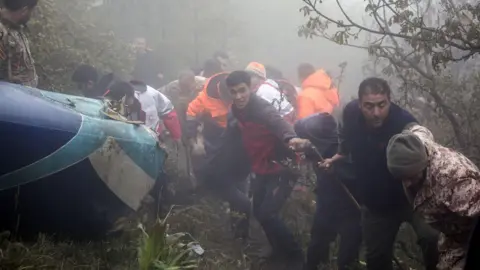
grey-placeholder.pngEPA Iranian rescuers assist each other on a mountainside, next to the tail of a helictopter that crashed (20 May 2024)EPA

Rescuers found the crash site after daybreak on Monday

President Ebrahim Raisi and seven other people were killed on Sunday when the helicopter they were travelling in came down near the border with Azerbaijan, Iranian authorities have confirmed.

This is what we know so far about the crash.

Why was the president flying in a helicopter?

Raisi flew to the far north-western province of East Azerbaijan on Sunday morning for the inauguration of the Qiz Qalasi and Khoda Afarin dams, a joint hydroelectric power project with neighbouring Azerbaijan on the Aras river.

He was joined at the ceremony by Azerbaijan’s President, Ilham Aliyev, who said he had bid a “friendly farewell” before the helicopter departed the dam area and flew towards the city of Tabriz, about 130km (80 miles) to the south.

Raisi had been scheduled to inaugurate a project at the Tabriz oil refinery.

Who else was on board the aircraft?

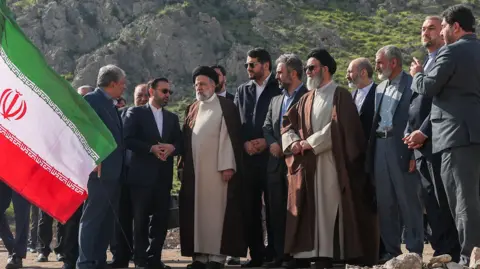
grey-placeholder.pngEPA President Ebrahim Raisi (3rd L) and Foreign Minister Hossein Amir-Abdollahian (2nd R) attend the inauguration of the Qiz-Qalasi Dam (19 May 2024)EPA

President Ebrahim Raisi (3rd L) was in north-western Iran for the inauguration of a dam, along with Foreign Minister Hossein Amir-Abdollahian (2nd R), East Azerbaijan Governor Malek Rahmati (2nd L) and Ayatollah Mohammad Ali Al-e Hashem (5th R)

There were seven people accompanying the president who also died in the crash, according to the commander-in-chief of the Islamic Revolution Guard Corps (IRGC), Major General Hossein Salami.

They included Iran’s Foreign Minister, Hossein Amir-Abdollahian, as well as the governor of East Azerbaijan province, Malek Rahmati, and Tabriz’s Friday prayer leader, Ayatollah Mohammad Ali Al-e Hashem, a senior Shia cleric who was also Supreme Leader Ali Khamenei’s official representative in East Azerbaijan.

Gen Salami identified the others as IRGC Brig-Gen Mohammad Mehdi Mousavi, the head of the president’s security team, pilots Col Mohsen Daryanush and Col Seyyed Taher Mostafavi, and technician Maj Behrouz Qadimi.

Where did the helicopter crash?

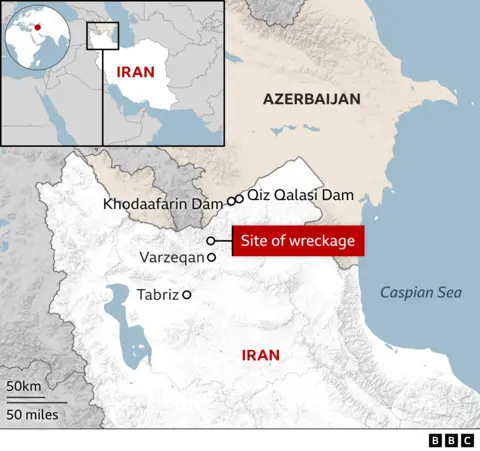
grey-placeholder.pngMap of Iran showing where Iranian President Ebrahim Raisi's helicopter crashed

The incident occurred at around 13:30 local time (10:00 GMT) in a remote, mountainous area about 58km (36 miles) south of the Qiz-Qalasi Dam and 2km south-west of the village of Uzi, according to Iranian officials and photographs published by state media.

But it was not until after 16:00 local time (12:45 GMT) that Iranian state TV reported that the helicopter carrying the president had experienced what it called a “hard landing” while flying to Tabriz in heavy fog and rain.

Interior Minister Ahmad Vahidi later confirmed that the president’s delegation had been travelling in a convoy of three helicopters and that his aircraft was “forced to make a hard landing due to bad weather conditions and fog in the area”.

He said multiple rescue teams were heading to the area but that fog, snow and rain and the local terrain were hampering the search operation.

As for the other two helicopters that were flying alongside the president’s helicopter, they had initiated a search for 15 to 20 minutes after communication was lost. They were then forced to make emergency landings, an official told state TV as the operation continued into the night.

Vice President for Executive Affairs Mohsen Mansouri also said contacts had been made with two people on the president’s helicopter – a flight crew member and one other individual.

“This indicates that the severity of the incident was not very high, as two of the individuals inside the helicopter managed to communicate with our team multiple times,” he added, without providing further details.

However, any hopes that Raisi and his entourage had survived were dashed after daybreak on Monday.

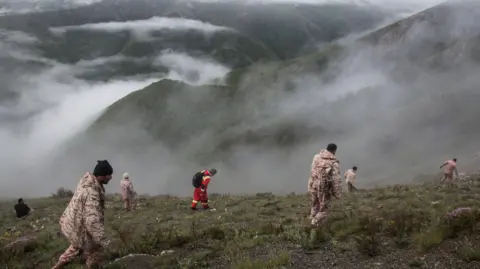
grey-placeholder.pngReuters Iranian rescue teams search for the wreckage of President Ebrahim Raisi's helicopter (19 May 2024)Reuters

Photographs from the scene on Monday showed rescuers climbing a steep mountainside, shrouded in fog

What was found at the scene?

At about 05:00 (01:30 GMT), rescuers spotted the wreckage from a distance from about 2km (1.2 miles) and then took about an hour to reach it, according to the head of the Iranian Red Crescent, Pirhossein Kolivand.

Once at the crash site, which was at an altitude of around 2,200m (7,200ft), they found “no signs of life”, Mr Kolivand told state TV.

State TV also broadcast grainy footage of the crash site on a mountainside, as seen from across a valley. It appeared to show the blue-and-white tail of a helicopter next to a number of burnt shrubs.

Later, after the death of President Raisi and the others on board had been announced, state TV broadcast footage showing a correspondent standing in front of the tail and what appeared to be other parts of the wreckage.

State news agency Irna also posted video showing rescuers carrying a body wrapped in a blanket in a stretcher.

The bodies were recovered and transferred to a cemetery in Tabriz, state TV said.

The head of Iran’s crisis management agency, Mohammad Nami, told the semi-official Tasnim news agency that all of the bodies were identifiable, with “no need for DNA examinations”.

He also said Ayatollah Al-e Hashem was alive for an hour after the crash and that he made contact with the head of the president’s office before he died.

How Iranian state TV broke news of President Ebrahim Raisi’s death

What was the cause of the crash?

Iranian authorities have so far not given a cause.

However, government ministers have described how the helicopter crashed after getting into difficulties in heavy fog and rain.

What do we know about the helicopter?

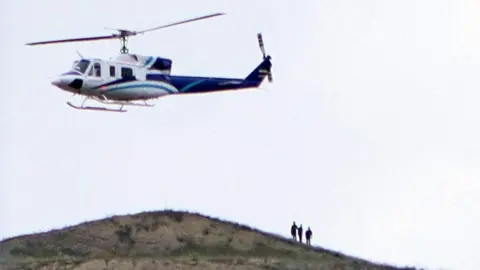
grey-placeholder.pngReuters A Iranian government Bell 212 carrying President Ebrahim Raisi takes off from the Qiz-Qalasi Dam (19 May 2024)Reuters

The Bell 212 carrying President Raisi was filmed taking off from the Qiz-Qalasi Dam before the crash

State media identified it as Bell 212, a model which was developed by a US company for the Canadian military in the 1960s.

Iran’s navy and air force have a total of 10, according to FlightGlobal’s 2024 World Air Forces directory, but it is unclear how many the Iranian government operates.

State-run IRNA news agency says the helicopter carrying the president could carry six passengers and two crew.

According to the Flight Safety Foundation, the last fatal incident in Iran involving a Bell 212 before Sunday happened during a medical evacuation in April 2018.

What has been the reaction in Iran?

Iran’s Supreme Leader Ayatollah Ali Khamenei – who has ultimate authority in the Islamic Republic – expressed his condolences over what he called the “bitter tragedy” and declared five days of public mourning.

“With deep sorrow and regret, I have received the bitter news of the martyrdom of the people’s president, the competent, hard-working Hajj Sayyed Ebrahim Raisi, and his esteemed entourage,” he said.

A statement issued by Iran’s cabinet said the president had “made the ultimate sacrifice on the path of serving his nation”.

Ministers also promised Iranians that they would follow Raisi’s path and there would “be no problem with management of the country”.

Raisi’s moderate rival and predecessor, Hassan Rouhani, expressed his condolences and said “a bitter page has turned in the Islamic Revolution’s book”.

Former foreign minister Mohammad Javad Zarif told state TV that the US was indirectly to blame for the crash because it had maintained years of sanctions that prevented Iran from buying new aircraft.

Who has succeeded Raisi as president?

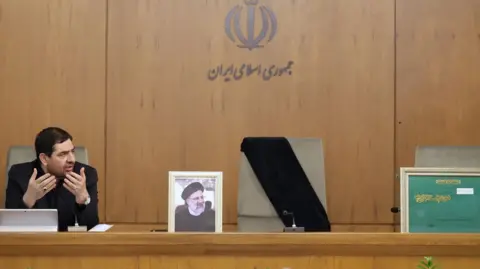
grey-placeholder.pngReuters Mohammad Mokhber chairs a cabinet meeting in Tehran following the death of Ebrahim Raisi (20 May 2024)Reuters

Mohammad Mokhber, Ebrahim Raisi’s deputy, has been named acting president

Ayatollah Khamenei confirmed that Vice-President Mohammad Mokhber had been appointed acting president, in line with Article 131 of Iran’s constitution.

The constitution states that the acting president will then jointly with the heads of parliament and the judiciary oversee an election for a new president within a maximum of 50 days.

Iran’s veteran nuclear negotiator and deputy foreign minister, Ali Baqeri Kani, was also named as the acting foreign minister, a government spokesman said.

He can serve in the post for a maximum of three months before a permanent replacement must be nominated and approved by parliament.

Categories
Saved Web Pages - Audio Posts

Israel seizes entirety of Gaza–Egypt border

f7ab22a8-1e64-11ef-bcee-00163e02c055.jpe

Categories
Saved Web Pages - Audio Posts

Israel seizes ‘Philadelphi Corridor’ buffer zone along Gaza and Egypt border

TELEMMGLPICT000379872310_17170604024670_

Palestinian health officials said 19 civilians had been killed in Israeli airstrikes and shelling across Gaza. Israel accuses Hamas militants of hiding among civilians, something Gaza’s ruling Islamist group denies.

Majed Abu Raman, the health minister, urged Washington to pressure Israel to open the Rafah crossing to aid, saying there was no indication that Israeli authorities would do so soon and that patients in besieged Gaza were dying for lack of treatment.

Fighting in Gaza will continue throughout 2024 at least, said Tzachi Hanegbi, Israel’s national security adviser, signalling Israel was not ready to end the war as Hamas has demanded as part of a deal to exchange its hostages for Palestinian prisoners.

“The fighting in Rafah is not a pointless war,” Mr Hanegbi said, reiterating that Israel aimed to end Hamas rule in Gaza and stop it and its allies attacking Israel.

Antony Blinken, US secretary of state, said Israel needed to craft a post-war plan for Gaza or risk lawlessness, chaos and a Hamas comeback in the enclave.

The US, Israel’s closest ally, reiterated its opposition to a major ground offensive in Rafah on Tuesday while saying it did not believe such an operation was under way.

More than 36,000 Palestinians have been killed in Israel’s Gaza offensive, the enclave’s health ministry said.

Israel launched its war after Hamas-led militants attacked southern Israeli communities on Oct 7, killing around 1,200 people and seizing more than 250 hostages, according to Israeli tallies.

Hostage release talks

There was no word on Wednesday on developments in the ceasefire and hostage release talks. Hamas has said talks are pointless unless Israel ends its offensive on Rafah.

The armed wing of Hamas, and that of allies Islamic Jihad, said they confronted invading forces in Rafah with anti-tank rockets and mortar bombs. They said they blew up explosive devices that had been planted, resulting in numerous successful hits.

The Israeli military said three Israeli soldiers were killed and three badly wounded. Public broadcaster Kan radio said an explosive device had been set off in a Rafah building.

Palestinian health officials said several people were wounded by Israeli fire. They said stores of aid were set ablaze in eastern Rafah, where residents said Israeli bombardment had destroyed many homes in an area Israel has ordered to be evacuated.

Around a million Palestinians who had taken shelter in Rafah at the southern end of the Gaza Strip have now fled after Israeli orders to evacuate, UNRWA, the UN agency for Palestinian refugees reported on Tuesday.

The Palestine Red Crescent Society (PRCS) said it had evacuated its medical teams from its field hospital in the Al-Mawasi area, a designated civilian evacuation zone, because of continued bombardments.

PRCS said two of its staff were killed when an ambulance was struck while on a mission to rescue people in Rafah. In another Israeli air strike on a house in Gaza City, medics said five other Palestinians were killed.

In the nearby city of Khan Younis, an Israeli air strike killed three people overnight, including Salama Baraka, a former senior Hamas police officer, medics and Hamas media said. Another killed four people, including two children, medics reported.

In northern Gaza, Israeli forces shelled Gaza City neighbourhoods and moved deeper into Jabalia, where residents said large residential districts were destroyed.

Malnutrition has become widespread in Gaza as aid deliveries have slowed to a trickle. The UN, which has warned of famine, said on Wednesday the amount of humanitarian aid entering the enclave has dropped by two-thirds since Israel began its assault on the Rafah region this month.

Categories
Featured Posts Saved Web Pages - Audio Posts

Russian Intelligence and Western Counterintelligence

“It is a disaster”, says Bruno Kahl, Head of the German Intelligence Service (BND), about one of these cases, where a much-trusted BND officer now stands accused of having handed information to the Russians.

The conflict between Russia and the west, gaining in intensity after Russia’s aggression against Ukraine in 2014 and even more so after Russia’s full-scale invasion in 2022, has only increased the Russian demand for everything intelligence. The appetite in Moscow for insights into the political thinking and decision-making in the west as this relates, for instance, to sanctions against Russia and military support for Ukraine, is now much greater than before 2014. The same is true for the need to mobilise and recruit various assets. And it is also true for the need to think creatively and cynically about how to achieve a rapidly increasing catalogue of desired effects.

The term “intelligence” is traditionally viewed as a type of knowledge, organisation, and activity. At its core, the Russian intelligence community produces knowledge, through cyber espionage targeting the communications systems of state institutions or the recruitment of individuals to supply classified information on military affairs or advanced technologies. The purpose is to reduce the level of uncertainty relating to the future, thereby preparing decision-makers to respond or to allow Russian industries to achieve breakthroughs by illegally copying the work of others.

However, it is usually not so much the knowledge production as the character of the wider Russian intelligence organisation and the activities pursued by it that demands our attention. To counteract, we need to understand the unconventional nature of both, which inevitably entails confronting dilemmas relating to our interests and the set-up of our free and open societies.

A Seamless Intelligence Web

The Russian intelligence community is usually associated with its main organisations such as the Federal Security Service (FSB), the Military Intelligence Service (GU, previously the GRU), and the Foreign Intelligence Service (SVR) — listed here in order of importance. However, the approach of the Russian intelligence community is very comprehensive, meaning that it is much wider than institutional designations and organigrams would otherwise suggest. The approach may, in fact, be so comprehensive and the contours of the Russian intelligence organisations, therefore, so blurred as to make it highly problematic to focus too one-sidedly on the main organisations. Centres of gravity do exist within the wider intelligence community, exercising both formal and real leadership and setting directions with little or no consultation and external involvement, but it is instructive to view it as a seamless web of actors. These actors, found at the levels of both organisations and individuals, are all employed in support of the overall goals identified in the Kremlin.

Rossotrudnichestvo provides an example at the level of organisations. Self-defined as an agency with the mission “to strengthen Russia’s humanitarian influence in the world,” its internationally deployed staff act simultaneously as organisers of literature readings and piano concerts and recruiters and influence agents. “Never let an intelligence opportunity go to waste” seems to be the undeclared motto behind the comprehensive thinking, which has led Rossotrudnichestvo staff to reach out to attendees, when hosting events at a local Russia House, and to students, when visiting universities. The European Union in 2022 placed Rossotrudnichestvo on the sanctions list for doing exactly that — intelligence work under the much more innocuous cover of promoting culture. It operates under the instruction of and in close liaison with intelligence officers posing as diplomatic staff at the local Russian embassies.

The level of individuals is represented by Russian citizens, current or former, living in the west. Hugely controversial, the issue is very real and needs to be addressed. One should understand just how problematic it is to cast such a large and diverse group as a monolith and that the overwhelming majority of these Russian citizens do not in any way represent nodes in a seamless intelligence web. However, many western states have had recent experiences of espionage conducted by Russian citizens, residing there on a (semi-) permanent basis, on behalf of the main Russian intelligence organisations.

An individual’s rationale for engaging in such illegal activities will vary, and it will be somewhere on a continuum ranging from the purely ideological to the purely material. Most of the cases known remain somewhat shrouded in mystery, making it difficult to assess what has really happened. To illustrate, in 2020, the Danish Security Service (PET) arrested a Russian citizen, Alexey Nikiforov, living and working in Denmark. He was later convicted of espionage, sentenced to a prison term, and deported. Nikiforov operated under the instructions of an intelligence officer and handler at the Russian embassy in Copenhagen. It was to this individual that Nikiforov handed over sensitive information from the Green Tech company, which had offered him a position after his doctoral studies at the Technical University of Denmark. For his efforts, Nikiforov was paid in cash by his handler, but he was also active at the Russia House, playing the balalaika in a small band with other Russians, and socialised with openly pro-Kremlin individuals in the Russian expat community in Denmark. It is unknown to which extent he was driven by ideology and/or by material interests.

A material interest includes avoiding harm, to oneself or to close ones. One of the most remarkable aspects of the community of Russian citizens living in the west is the near-total absence within this community of any kind of opposition to the war in Ukraine. This silence stands in stark contrast to the loud condemnation of the war — a genocidal war of aggression filled with atrocities — often expressed by the surrounding society as a whole and by other sub-segments across this society. The community of Russian citizens living in the west has generally remained passive. This fact, undoubtedly, is explained partly by the approval of the war (including its nature) and partly by fear of the consequences of expressing opposition to the war (for oneself or relatives in Russia). Both are reasons for concern from a counter-intelligence perspective as they may relatively easily lead to increased recruitment, either on a voluntary basis or through the use of threats. The continued radicalisation of the Putinist regime suggests that the authorities will be willing to go even further to force Russian citizens living in the west to support Russian intelligence interests.

Pigeons walking in front of the Russian Foreign Ministry in April 2024. EPA/Scanpix

Three Domains

This wider Russian intelligence community conducts activities across three domains: physical, cyber, and cognitive. Starting with the latter, (dis-) information operations against western societies have become routine and are executed on a large scale every single day. All three main agencies engage in this, but so do supposedly “independent” organisations and individuals. It is an aggressive form of manipulation directed at various target populations. This is not new — Soviet intelligence also tried to manipulate public opinion in the west. Yet, the scale, speed, and, potentially, the level of penetration and effect have changed dramatically. Russian officials now brazenly announce that Russia interferes in elections in western states.

Next is the cyber domain where, again, all three main agencies are active. Their activities range from cyber espionage to highly destructive cyber operations designed to create data havoc and systems breakdowns. Russian cyber actors are routinely called out by western authorities — while individuals are put on sanctions lists and indicted — but their cyber activities continue unabated. The west has largely failed to deter the Russian agencies, which take full advantage of the attribution problem and outsource operations so that they are said to be unconnected to the Russian state.

Finally, the physical domain. The threat is well-known — as it explains why we have been guarding the perimeters of certain facilities for decades — but has gained a new urgency. From railway cables over to antennas and seabed pipelines, the list of critical infrastructure is almost endless in light of the increase in tensions between Russia and the west, as well as the Russian interest in causing disruptions. The new urgency stems from the fact that the cyber domain — a relatively new and rapidly growing one — also has a physical component. In April 2024, the German authorities arrested two Russian-German men, who have reportedly identified, in coordination with a Russian intelligence officer, military and industrial targets for sabotage. Our focus on the cognitive and cyber domains has probably led us to neglect, to some extent, the physical domain, where disruptions may be achieved at a relatively low cost and a catalogue of Russian intelligence’s targets is easy to compile.

Dilemmas

The development is fraught with dilemmas, which threaten to become more acute and of which I will just mention three. The first and very immediate dilemma relates to the expulsion of Russian spies disguised as diplomatic staff. A conservative estimate would hold that two-thirds of Russian embassy staff in western states are members of the Russian intelligence community. Given the comprehensive thinking within the Russian system, all diplomatic staff operating outside the gates of the embassy compounds may, in fact, be performing intelligence activities. The costs of their expulsion are felt at the western diplomatic missions in Russia. These states wish to maintain a presence there — at least to be able to support their own citizens. The relatively uncompromising expulsion of Russian intelligence staff from the west, following Russia’s full-scale invasion of Ukraine in 2022, has led many western embassies in Moscow to reduce their work to a bare minimum as personnel have been forced to leave. This obviously harms their interests.

The second dilemma relates to the Russian citizens living in western states. The 2017 Intelligence Law of China famously required its citizens to support their country’s intelligence efforts — a stipulation that raised concerns about “everyday espionage” conducted by Chinese citizens both in China and abroad. The Russian authorities have not (yet) passed a similar law, but there is good reason to believe that they have moved quite close to it. The continued radicalisation of the regime — with its aggressive talk of “patriots” and “traitors” — will easily lead to a situation where Russian citizens in the west will find themselves under pressure from the authorities to support the state’s intelligence efforts. This is likely to encourage western governments to introduce a more scrupulous vetting of Russian nationals before allowing them into critical sectors in, for instance, academia or industry.

The final dilemma concerns prioritisation. What to prioritise given the scope and nature of Russian intelligence activities across the three domains? We are far beyond intelligence as a type of knowledge, produced by traditional spies, in our dealings with the wider Russian intelligence community. A keyword for a very diverse range of intelligence activities is “destruction” — in the cognitive, cyber, and physical domains. And it is carried out by a very diverse range of actors in a seamless web. It is a monumental challenge, which will require dedicated work and careful prioritisation on the part of western counterintelligence as long as the current conflict between Russia and the west continues.

This article was written for the Lennart Meri Conference special issue of ICDS Diplomaatia magazine. Views expressed in ICDS publications are those of the author(s).

Categories
Saved Web Pages - Audio Posts

Putin’s Tactical Nuclear Exercises: Old Wine in New Bottles?

Russian_ICBM_SS.jpg

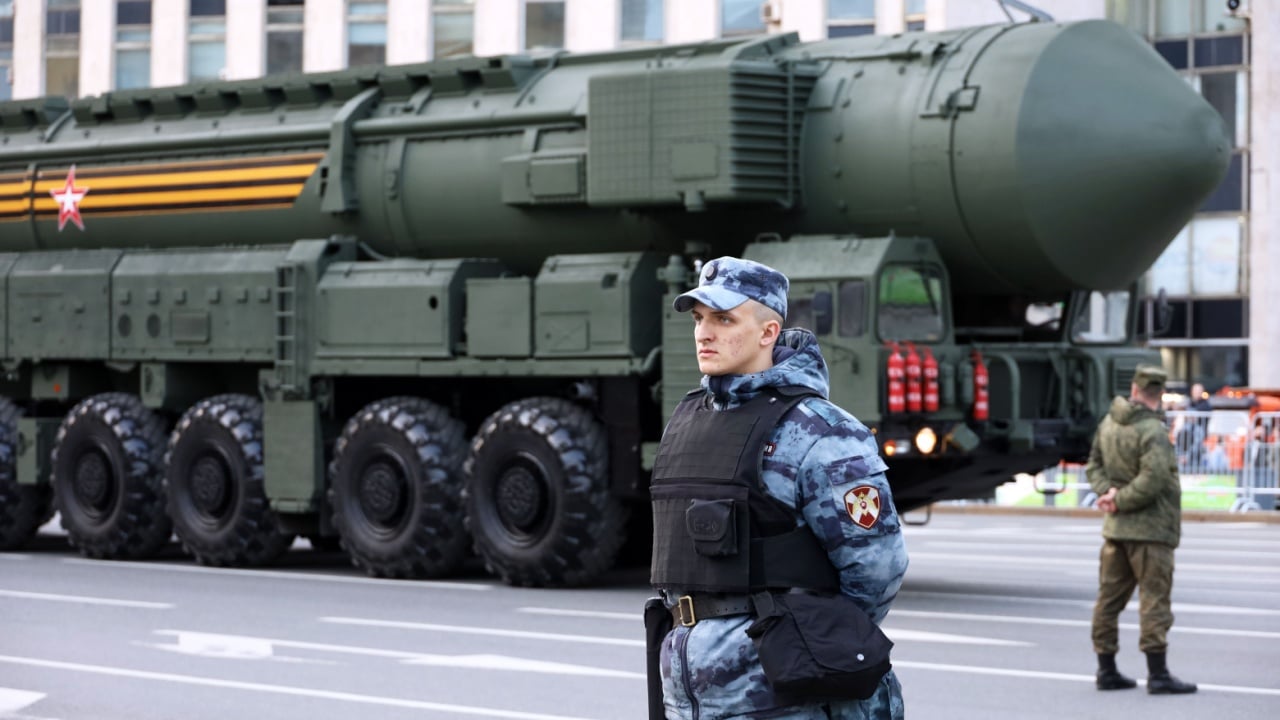
In response to what he termed “threats” from the West, Russian president Vladimir Putin ordered into effect rehearsals for the deployment of tactical nuclear weapons on May 6. According to the Russian defense ministry, during the exercises, “a set of measures will be carried out to practice the issues of preparation and use of non-strategic nuclear weapons.” The same day, Russia also summoned the British ambassador to the Russian Foreign Ministry, warning that Ukrainian strikes on Russian territory with British-supplied weapons could result in retaliatory attacks on British targets in Ukraine or elsewhere. The Russian so-called snap exercises were scheduled to take place in the Southern Military District headquarters in Rostov-on-Don, which borders Ukraine.  

Russian diplomatic exertions and military maneuvers have also been exacerbated by French president Emmanuel Macron, who has said more than once that he does not exclude the option of sending French troops to Ukraine. Some sources have reported that French Foreign Legionnaires have already been deployed there, though the French government has denied this. It would be safe to assume that other North Atlantic Treaty Organization (NATO) countries have also deployed operatives of various sorts in Ukraine or in neighboring countries, but not military forces in publicly acknowledged roles.

In addition, Congressman Hakeem Jeffries (D-NY), Democratic Minority Leader in the U.S. House of Representatives, stated in an interview with CBS News, “We can’t let Ukraine fall because if it does, then there’s a significant likelihood that America will have to get into the conflict—not simply with our money, but with our servicewomen and our servicemen.” With regard to comments made by Macron and by British foreign secretary David Cameron, former Russian president and deputy head of Russia’s security council Dmitri Medvedev warned of a possible “global catastrophe” if Western escalation continued. On the other hand, a spokesman for the Military Intelligence Agency of Ukraine commented on national television: “Nuclear blackmail is a usual practice of Putin’s regime; it does not constitute major news.” Nuclear arms control expert Pavel Podvig assessed that the Russian nuclear drills are “of course, a signal,” and urged the international community to avoid “getting sucked into this.” According to Podvig, the correct response is to “double down on ‘nuclear threats are inadmissible’ and rally everyone around that.”

Non-Strategic Nuclear Weapons 

Russia’s non-strategic or tactical nuclear weapons are distinguished from their strategic nuclear weapons by their respective missions, assigned launchers, and destructive power. Strategic nuclear weapons are assigned to U.S. and Russian land-based intercontinental ballistic missiles (ICBMs), submarine-launched ballistic missiles (SLBMs), or heavy bombers of intercontinental or transoceanic range. Tactical nuclear weapons are designed for battlefield use over shorter ranges and have less destructive power compared to strategic weapons. In Russia’s case, five to fifty-kiloton tactical nuclear warheads can be mounted on 9M723-1 ballistic missiles or 9M728 cruise missiles. Warheads of similar yield can also be assigned to the air-launched Kh-47M2 Kinzhal ballistic missiles and the Kh-32 cruise missiles carried by Russian bombers. Tactical nuclear warheads with yields of two to two-and-a-half kilotons can also be delivered by a number of artillery systems. Experts have estimated the total number of Russian non-strategic or tactical nuclear weapons to be approximately 1,558. Still, estimates are complicated by the fact that many launchers are capable of firing both conventional and nuclear-armed weapons.

The assumption that tactical nuclear weapons are usable on the modern battlefield has been contested since the early days of the Cold War. U.S. tactical nuclear weapons were deployed in Europe during the Cold War due to the assumed superiority of Soviet conventional forces located in Eastern Europe compared to those available to NATO. Even then, it was not entirely clear whether these NATO tactical nuclear weapons would be seen as tripwires that could automatically escalate a conventional war into Armageddon or as firebreaks between limited and total nuclear war. 

Since the end of the Cold War, the situation with respect to conventional military power has reversed. NATO now holds the high cards with respect to capabilities for technologically advanced, high-end conventional warfare, and Russia’s tactical nukes are considered to be compensation for its inferiority in conventional forces. The United States currently deploys roughly 100 air-delivered nuclear weapons in five NATO member states: Belgium, Germany, Italy, the Netherlands, and Turkey. In addition, the United Kingdom and France have their own independent nuclear retaliatory forces deployed on various platforms. Nuclear release authority for U.S. weapons deployed abroad would presumably have to come from the American president after having consulted with NATO allies.

U.S. non-strategic nuclear weapons deployed in Europe are deterrents until one moves close to the immediate threshold of a decision by Moscow for nuclear first use, at which point those weapons also become potential hostages. Russian intelligence will be on the lookout for telltale signs that NATO decided to raise its alert levels and initiate preparatory moves to upload munitions from storage sites onto delivery systems. Assuming that NATO can do so in a timely and coordinated manner, Russia will be under pressure to initiate strike plans for preemption against assumed NATO plans to do the same. 

Russia will know that it can destabilize, if not fully destroy, NATO’s tactical nuclear deterrent by taking out the six air bases with conventional weapons, presumably long-range missiles or aircraft. Russia can also strike military headquarters, as well as other targets in NATO-Europe, with conventional long-range precision fires and with a pre-established array of special operations for sabotage and destruction that have been prepared and continuously rehearsed since the Cold War era. What this means is that, in the middle of a crisis in which nuclear first use is a possibility but not a certainty, Russia might gain significant tactical advantages from the military threat or execution of conventional preemption against vital NATO forces and infrastructure supported by a capability for nuclear first use as a tool for political coercion.

Would this recipe for pre-nuclear deterrence by Russia, consisting of a credible threat of conventional preemption supported by a capability for nuclear first use, work under the circumstances of highly alerted NATO and Russian forces and tightly wound political leadership? No one can say for sure: outcomes in war and crisis management are dependent upon the particular circumstances of the moment. Some might argue that NATO, with its overall conventional forces superior to those of Russia, could execute the preceding recipe to its advantage. But that argument falls flat due to NATO’s deficiencies relative to Russia in the numbers of available tactical nuclear weapons based in theater for war in Europe. How significant is this gap for deterrence or defense, if need be? Some argue that Russia’s advantage in theater nuclear forces gives them a more convincing deterrent because flexible options for tactical nuclear first use are more believable than the threat of jumping directly from a conventional war to a strategic nuclear first strike. According to the Final Report of the Congressional Commission on the Strategic Posture of the United States:

Russian strategy and doctrine as written envisions limited first use of theater nuclear weapons to, inter alia, coerce war termination on terms acceptable to Russia, and larger scale use of theater nuclear forces to defeat NATO conventional forces if Russia is decisively losing a war with NATO. Russian strategy and doctrine rely on strategic nuclear forces to deter a large-scale U.S. nuclear response against the Russian homeland while Russia can escalate to limited nuclear war in theater if it chooses.

On the other hand, the deterrent effect of tactical nuclear weapons lies, at least partly, in the possible expansion of tactical into strategic nuclear warfare. The assumption that so-called theater nuclear warfare in Europe would take place in a sealed compartment, against further escalation into mutually assured destruction, is hopeful but challenging in the face of much military history. Obviously aware of this, Biden administration officials in 2022 and 2023 messaged Russia to the effect that, in case of any Russian nuclear first use against Ukraine, the United States and its allies “would for the first time engage Russian forces in Ukraine directly, targeting those forces with a devastating campaign of air strikes and missiles.” The presumption was that this “devastating” response was to be accomplished with conventional forces, although nuclear responses were not necessarily precluded. In addition to American allies, the United States also enlisted nontraditional partners and competing great powers (e.g., India and China) to come out with declaratory policies against nuclear first use by Russia. 

Going Forward

Instead of navigating the slippery slope of fightable and winnable limited nuclear wars, the United States and Russia (and perhaps eventually China) could attempt to re-energize a serious nuclear arms control dialogue. Russia has stated that it has temporarily suspended its participation in the discussions about New START and possible successor regimes. But Russia has stopped short of formal withdrawal from the treaty and has decided, for the time being, to abide by agreed-upon New START limits on the numbers of operationally deployed warheads and launchers for strategic nuclear forces. 

Categories
Saved Web Pages - Audio Posts

Former Putin Bodyguard, Kremlin Aide Dyumin Elevated To Key Position

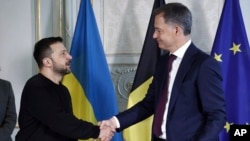
Ukrainian President Volodymyr Zelenskiy (left) and Belgian Prime Minister Alexander De Croo shake hands after signing a bilateral security agreement in Brussels on May 28.

Ukrainian President Volodymyr Zelenskiy (left) and Belgian Prime Minister Alexander De Croo shake hands after signing a bilateral security agreement in Brussels on May 28.

Belgium will deliver 977 million euros ($1 billion) in military aid and 30 F-16 fighter jets for Ukraine under a 10-year bilateral security agreement signed by President Volodymyr Zelenskiy and Belgian Prime Minister Alexander De Croo on May 28 in Brussels.

The agreement is the second of its kind signed by Zelenskiy in as many days as he continues a whirlwind tour to secure more military aid for Ukraine’s outgunned and outmanned troops as they struggle to fend off a Russian offensive and relentless strikes on civilian targets in the northeastern region of Kharkiv.

“For the first time, such an agreement specifies the exact number of F-16 fighter jets — 30 — that will be delivered to Ukraine until 2028, with the first arriving already this year,” Zelenskiy wrote on X, formerly Twitter. De Croo said at a joint news conference that Brussels will do “everything possible” to deliver the first fighter jets by the end of the year.

Asked by RFE/RL to specify how many warplanes will be delivered this year, De Croo did not answer, saying just that efforts of the aircraft coalition for Ukraine were ongoing.

De Croo stressed that the planes are to be used only above the territory of Ukraine. “The security agreement stipulates that military equipment will be used by the armed forces of Ukraine and on the territory of Ukraine,” he said. The Belgian prime minister added that training was already under way for Ukrainian pilots on Belgian F-16s.

“Today, our planes are used to train new Ukrainian pilots. Our technical teams are used to provide technical support to keep aircraft in the air. Our teams are training Ukrainian technicians how to perform [technical support],” he said.

WATCH: Zelenskiy Visits Belgian Military Base As Brussels Pledges F16s

Zelenskiy, asked by RFE/RL about the progress of negotiations with partners on obtaining permission to strike targets on the territory of Russia, replied that he was “confident of a positive result both from some partners and from our production.”

Ukraine has been frustrated by the lack of permission from some of its allies, mainly the United States and Germany, to hit military targets inside Russia with Western weapons systems.

The European Union’s top diplomat, Josep Borrell, has backed Kyiv’s request. “According with the law of war, it is perfectly possible and there is no contradiction. I could retaliate or I could fight against the one who fights against me from his territory,” Borrell told journalists ahead of a meeting with EU defense ministers.

“You have to balance the risk of escalation and the need for Ukrainians to defend,” he said.


RFE/RL’s Live Briefing gives you all of the latest developments on Russia’s full-scale invasion, Kyiv’s counteroffensive, Western military aid, global reaction, and the plight of civilians. For all of RFE/RL’s coverage of the war in Ukraine, click here.

NATO Secretary-General Jens Stoltenberg has also thrown his weight behind Ukraine’s plea, saying concerns that the use of Western weapons inside Russia would implicate the alliance in the war are unfounded.

“Ukraine’s use of weapons supplied by its Western allies against targets inside Russia would not make NATO and its members part of the conflict,” Stoltenberg said in Brussels on May 28.

French President Emmanuel Macron added his voice, saying on May 28 that Kyiv should be allowed to “neutralize” Russian military bases from which Moscow troops have fired missiles into Ukraine.

“We think that we should allow them to neutralize military sites where missiles are fired,” Macron said on a state visit to Germany.

He stressed, however, that Ukraine should not be allowed to hit other targets in Russia or civilian facilities.

But the White House on May 28 again rejected ending restrictions on Kyiv using U.S.-supplied arms to strike Russian territory.

“There’s no change to our policy at this point. We don’t encourage or enable the use of U.S.-supplied weapons to strike inside Russia,” White House National Security Council spokesman John Kirby told a briefing.

Russian President Vladimir Putin warned earlier on May 28 that hitting Russian soil with Western-supplied long-range weapons could set the war on a dangerous new path.

Speaking to reporters while on a trip to Uzbekistan, Putin said the use of such weapons would rely on Western intelligence data and imply the involvement of NATO military personnel.

“Representatives of countries that are NATO members, particularly in Europe, should be aware of what they are playing with,” Putin said, adding that “countries with small territory and dense populations” should be particularly careful.

With reporting by AP and AFP
Categories
Saved Web Pages - Audio Posts

By attacking and undermining the ICC, Israel has proved again it is a state gone rogue | Simon Tisdall

3118.jpg?width=1200&height=630&quality=8

Israel’s international isolation, triggered by revulsion over the large-scale illegal killing of Palestinian civilians in Gaza, will only deepen following new, detailed and credible allegations that leading politicians and intelligence agencies conspired – with help from Donald Trump’s administration – to spy on, undermine, “improperly influence” and threaten the work and officials of the international criminal court (ICC).

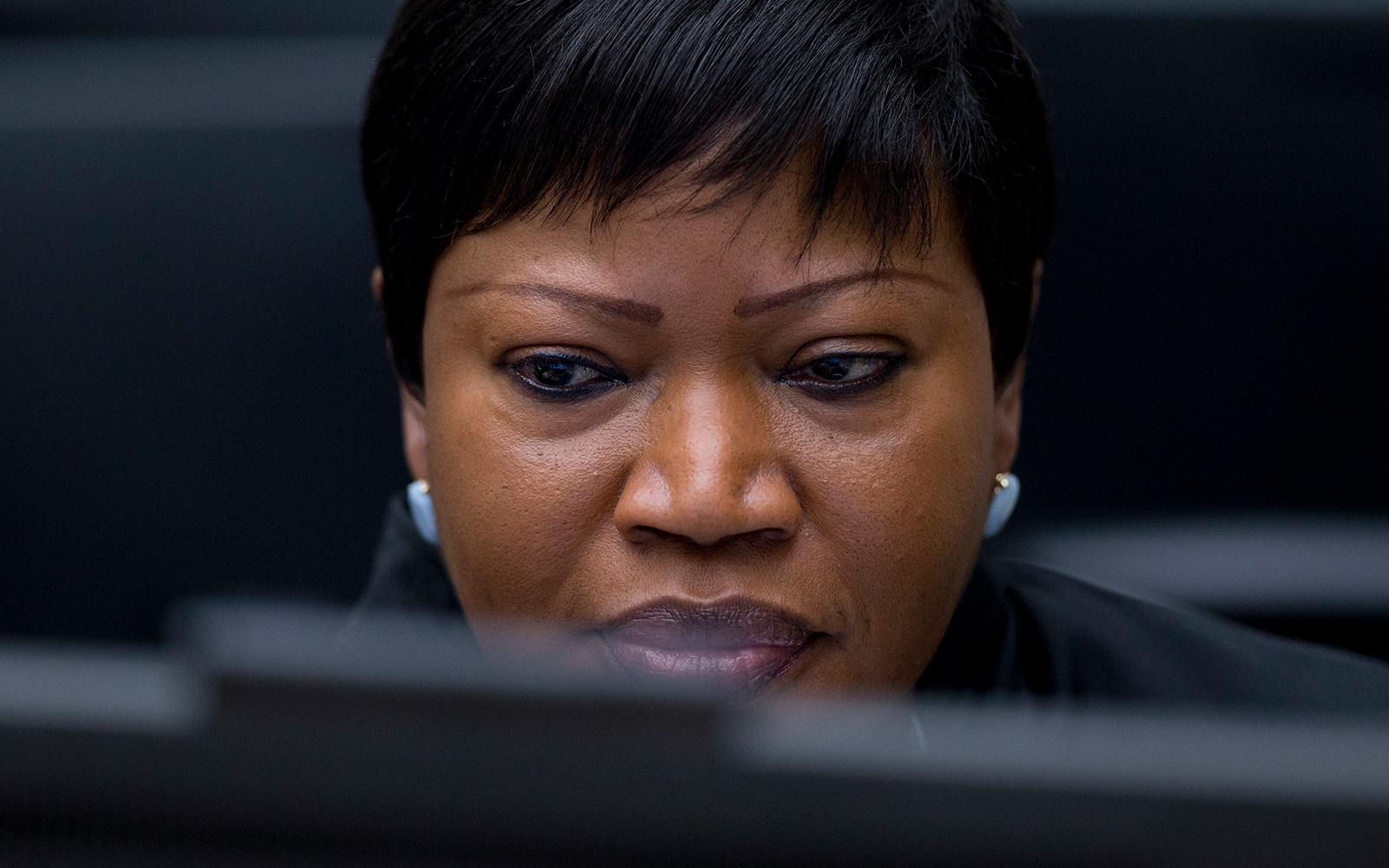
Those allegedly targeted include the court’s former chief prosecutor, Fatou Bensouda, and the present incumbent, Karim Khan, possibly still the subject of covert operations. If so, this must cease immediately. Once again, the world is confronted by dismaying evidence that the state of Israel under the destructive leadership of its rightwing prime minister, Benjamin Netanyahu, has gone rogue.

Once again, Netanyahu has crossed a line. Once again, his contempt for global opinion, for the values of the western democracies which too unquestioningly sustain and arm his country, and for the most basic principles of international law is on galling display. For all those who have previously supported Israel, and especially after Hamas’s appalling 7 October attacks, this is, once again, a deep disappointment.

The allegations are the product of a joint investigation published this week by the Guardian, the Israeli-Palestinian publication +972 Magazine and the Hebrew-language outlet Local Call. They have been officially denied by the prime minister’s office as “false and unfounded” and intended to cause harm to Israel. But none of the specific claims has so far been addressed. That is now an urgent necessity.

Netanyahu’s hard-right coalition already faced unprecedented diplomatic censure and criticism from friends and enemies alike. The UN security council and general assembly, the EU, Arab states, numerous aid agencies and even, belatedly, the Biden administration have all demanded a halt to its assault on Gaza, which Israel invaded after the October massacres of 1,200 people.

All appeals have been flatly rejected by Netanyahu and his ultra-nationalist allies, whose militarily and politically unrealistic aim is to totally destroy Hamas. The latest result of this defiant, self-harming refusal to end the slaughter is the decision by Ireland, Spain and Norway to join a majority of countries in recognising Palestinian statehood.

More pressure has come from the UN’s international court of justice (ICJ), which ordered Israel to halt its Rafah attacks, allow unrestricted aid supplies, and open Gaza to UN-led investigations. Yet the most dramatic recent development is from the ICC, with Khan’s decision to seek arrest warrants for Netanyahu and defence minister Yoav Gallant on charges of Gaza-related war crimes and crimes against humanity.

This is exactly the outcome Israel’s leaders sought to avoid, and was, presumably, the prime motivation for their alleged subversion of the ICC. Their reaction has been furious. Netanyahu, prime minister for nearly all of the period in question, denounced the move as blatant antisemitism and urged all “civilised” countries to reject it. And veiled threats have been made against Khan.

This latest crisis in Israel’s relationship with international justice – always fraught, given its long-established practice of ignoring UN security council resolutions relating to the post-1967 occupation – has been brewing since 2015. That was when Bensouda, Khan’s predecessor at the ICC, decided to examine possible crimes in the Palestinian territories committed by Israeli occupying forces and Palestinian groups.

It is hardly surprising that Israel’s intelligence services, acting under political direction, interested themselves in the ICC’s activities. Naturally, they wanted to know what actions might ensue. But the Guardian’s investigation raises a key question: did Mossad, Shin Bet and agencies of the Israel Defense Forces (IDF) resort to improper, unlawful and, indeed, criminal means in their hunt for information?

If the secret tapping and recording of Bensouda’s and other ICC officials’ phone and email conversations, alleged attempts to compromise her and smear her family, and personally threatening behaviour by a senior figure in Israeli intelligence constitute unlawful means – and reasonable people might conclude they do – then Netanyahu and his confederates have some very serious questions to answer.

So, too, does Trump, who shares with Netanyahu the rare distinction of being a currently active national leader facing criminal charges. The investigation found that Israeli and Trump administration officials met in Washington in 2020 and allegedly discussed ways to thwart ICC inquiries into possible criminality both in Palestine and by US forces in Afghanistan.

One apparent upshot was a decision by Trump to impose arbitrary sanctions on ICC officials, including Bensouda (which Joe Biden, his successor as president, has since rescinded). Following Khan’s decision to seek the arrest of Netanyahu and Gallant (as well as Hamas leaders), Trump has again gone on the attack while, shamefully, a group of Republican senators has told Khan they plan to target him personally if he pursues the matter.

By attacking the ICC, Netanyahu, nothing if not predictable, has again confused his own personal interests with Israel’s by claiming the court poses a danger to the entire country.

In sharp contrast, Bensouda and Khan have displayed courage and dignity in facing down overt and covert threats from some of the most prominent and unscrupulous actors on today’s international stage – including, for example, Russia’s Vladimir Putin, indicted last year over alleged war crimes in Ukraine. Having dared to do his duty and speak truth to power, Khan should be able to count on the firm support of all 124 state parties to the court.

The fact that he cannot is a disgrace, particularly for Britain, which was instrumental in creating the ICC when Labour’s Robin Cook was foreign secretary. Rishi Sunak described Khan’s move against Netanyahu as “deeply unhelpful”. Biden called it “outrageous”. Putin and Xi Jinping in China, sworn enemies of the global rules-based order, must be laughing their socks off as they watch the democratic west pull itself apart over Israel’s outlaw behaviour.

The onus is now on Netanyahu and his associates to show some respect for international opinion and common decency by answering, line by line, these well-founded allegations of an almost decade-long Israeli vendetta against the ICC. If they fail to do so, it’s probably because, in all truth, they cannot.

Trump-like, they will double down on lies. Yet the world will know the truth, just as it has slowly come to know the truth of Gaza. The truth is, Israel under Netanyahu’s leadership, at a moment of truly dreadful national trauma, has gone rogue. It will not begin to heal until he, like the leaders of Hamas, is made to answer for his actions in a court of law.

  • Simon Tisdall is the Observer’s foreign affairs commentator

  • Do you have an opinion on the issues raised in this article? If you would like to submit a response of up to 300 words by email to be considered for publication in our letters section, please click here.

Categories
Saved Web Pages - Audio Posts

Spying, hacking and intimidation: Israel’s nine-year ‘war’ on the ICC exposed

When the chief prosecutor of the international criminal court (ICC) announced he was seeking arrest warrants against Israeli and Hamas leaders, he issued a cryptic warning: “I insist that all attempts to impede, intimidate or improperly influence the officials of this court must cease immediately.”

Karim Khan did not provide specific details of attempts to interfere in the ICC’s work, but he noted a clause in the court’s foundational treaty that made any such interference a criminal offence. If the conduct continued, he added, “my office will not hesitate to act”.

The prosecutor did not say who had attempted to intervene in the administration of justice, or how exactly they had done so.

Now, an investigation by the Guardian and the Israeli-based magazines +972 and Local Call can reveal how Israel has run an almost decade-long secret “war” against the court. The country deployed its intelligence agencies to surveil, hack, pressure, smear and allegedly threaten senior ICC staff in an effort to derail the court’s inquiries.

Israeli intelligence captured the communications of numerous ICC officials, including Khan and his predecessor as prosecutor, Fatou Bensouda, intercepting phone calls, messages, emails and documents.

The surveillance was ongoing in recent months, providing Israel’s prime minister, Benjamin Netanyahu, with advance knowledge of the prosecutor’s intentions. A recent intercepted communication suggested that Khan wanted to issue arrest warrants against Israelis but was under “tremendous pressure from the United States”, according to a source familiar with its contents.

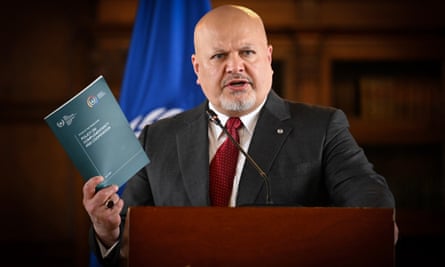
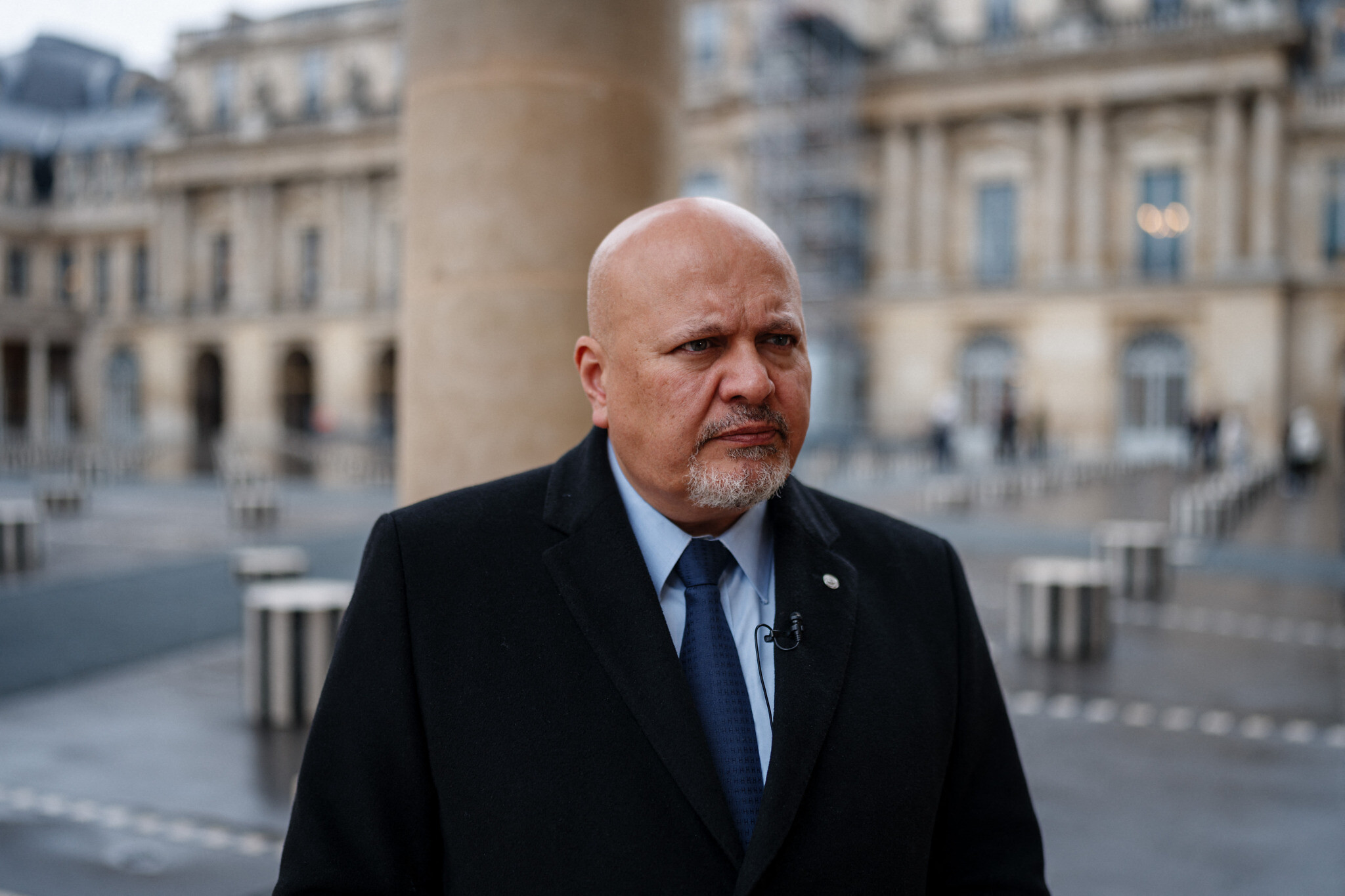
Karim Khan standing at a lectern holding a book titled Policy on Complementarity and Cooperation

Karim Khan. The surveillance was ongoing in recent months, providing Netanyahu with advance knowledge of Khan’s intentions. Photograph: Luis Acosta/AFP/Getty Images

Bensouda, who as chief prosecutor opened the ICC’s investigation in 2021, paving the way for last week’s announcement, was also spied on and allegedly threatened.

Netanyahu has taken a close interest in the intelligence operations against the ICC, and was described by one intelligence source as being “obsessed” with intercepts about the case. Overseen by his national security advisers, the efforts involved the domestic spy agency, the Shin Bet, as well as the military’s intelligence directorate, Aman, and cyber-intelligence division, Unit 8200. Intelligence gleaned from intercepts was, sources said, disseminated to government ministries of justice, foreign affairs and strategic affairs.

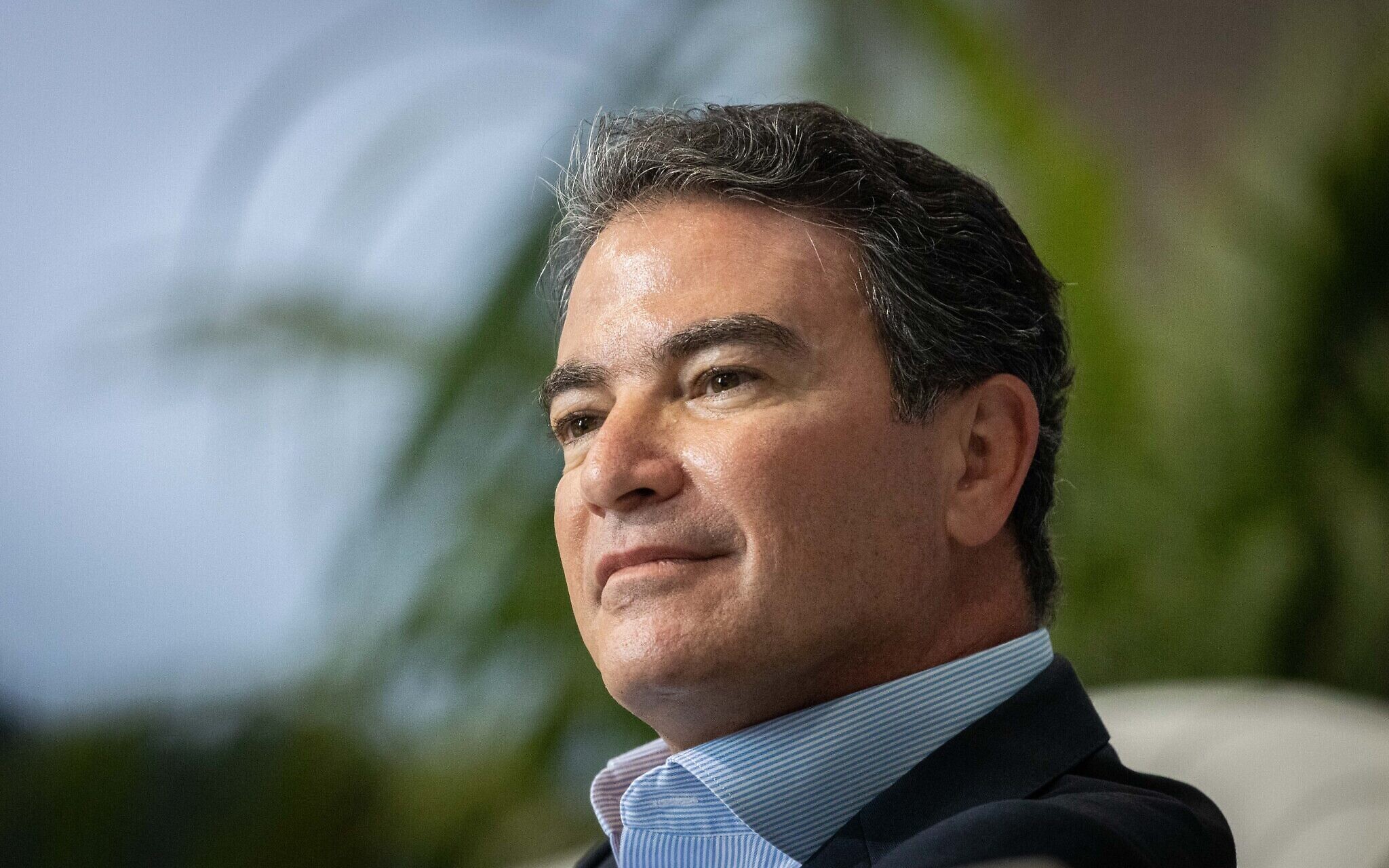
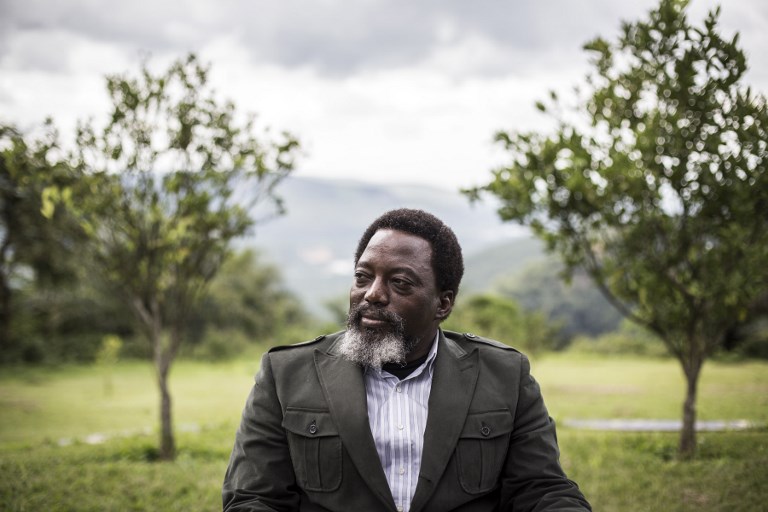
A covert operation against Bensouda, revealed on Tuesday by the Guardian, was run personally by Netanyahu’s close ally Yossi Cohen, who was at the time the director of Israel’s foreign intelligence agency, the Mossad. At one stage, the spy chief even enlisted the help of the then president of the Democratic Republic of the Congo, Joseph Kabila.

Details of Israel’s nine-year campaign to thwart the ICC’s inquiry have been uncovered by the Guardian, an Israeli-Palestinian publication +972 Magazine and Local Call, a Hebrew-language outlet.

The joint investigation draws on interviews with more than two dozen current and former Israeli intelligence officers and government officials, senior ICC figures, diplomats and lawyers familiar with the ICC case and Israel’s efforts to undermine it.

Contacted by the Guardian, a spokesperson for the ICC said it was aware of “proactive intelligence-gathering activities being undertaken by a number of national agencies hostile towards the court”. They said the ICC was continually implementing countermeasures against such activity, and that “none of the recent attacks against it by national intelligence agencies” had penetrated the court’s core evidence holdings, which had remained secure.

A spokesperson for Israel’s prime minister’s office said: “The questions forwarded to us are replete with many false and unfounded allegations meant to hurt the state of Israel.” A military spokesperson added: “The IDF [Israel Defense Forces] did not and does not conduct surveillance or other intelligence operations against the ICC.”

Since it was established in 2002, the ICC has served as a permanent court of last resort for the prosecution of individuals accused of some of the world’s worst atrocities. It has charged the former Sudanese president Omar al-Bashir, the late Libyan president Muammar Gaddafi and most recently, the Russian president, Vladimir Putin.

Khan’s decision to seek warrants against Netanyahu and his defence minister, Yoav Gallant, along with Hamas leaders implicated in the 7 October attack, marks the first time an ICC prosecutor has sought arrest warrants against the leader of a close western ally.

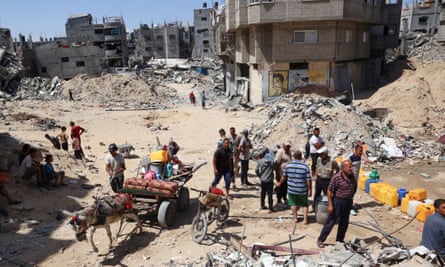
Displaced Palestinians collect water in containers, surrounded by rubble and destroyed buildings, with a donkey pulling a loaded cart

Displaced Palestinians collecting water in a neighbourhood in Khan Younis, southern Gaza, that has been devastated by Israeli airstrikes. Photograph: Eyad Baba/AFP/Getty Images

The allegations of war crimes and crimes against humanity that Khan has levelled against Netanyahu and Gallant all relate to Israel’s eight-month war in Gaza, which according to the territory’s health authority has killed more than 35,000 people.

But the ICC case has been a decade in the making, inching forward amid rising alarm among Israeli officials at the possibility of arrest warrants, which would prevent those accused from travelling to any of the court’s 124 member states for fear of arrest.

It is this spectre of prosecutions in The Hague that one former Israeli intelligence official said had led the “entire military and political establishment” to regard the counteroffensive against the ICC “as a war that had to be waged, and one that Israel needed to be defended against. It was described in military terms.”

That “war” commenced in January 2015, when it was confirmed that Palestine would join the court after it was recognised as a state by the UN general assembly. Its accession was condemned by Israeli officials as a form of “diplomatic terrorism”.

One former defence official familiar with Israel’s counter-ICC effort said joining the court had been “perceived as the crossing of a red line” and “perhaps the most aggressive” diplomatic move taken by the Palestinian Authority, which governs the West Bank. “To be recognised as a state in the UN is nice,” they added. “But the ICC is a mechanism with teeth.”

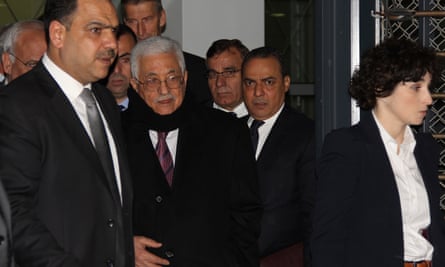
Mahmoud Abbas wearing a suit and a scarf, photographed in a group of people leaving a building

Mahmoud Abbas (second from left), the president of the Palestinian Authority, after a meeting with Bensouda in The Hague in October 2015. Photograph: Anadolu/Getty Images

A hand-delivered threat

For Fatou Bensouda, a respected Gambian lawyer who was elected the ICC’s chief prosecutor in 2012, the accession of Palestine to the court brought with it a momentous decision. Under the Rome statute, the treaty that established the court, the ICC can exercise its jurisdiction only over crimes within member states or by nationals of those states.

Israel, like the US, Russia and China, is not a member. After Palestine’s acceptance as an ICC member, any alleged war crimes – committed by those of any nationality – in occupied Palestinian territories now fell under Bensouda’s jurisdiction.

On 16 January 2015, within weeks of Palestine joining, Bensouda opened a preliminary examination into what in the legalese of the court was called “the situation in Palestine”. The following month, two men who had managed to obtain the prosecutor’s private address turned up at her home in The Hague.

Sources familiar with the incident said the men declined to identify themselves when they arrived, but said they wanted to hand-deliver a letter to Bensouda on behalf of an unknown German woman who wanted to thank her. The envelope contained hundreds of dollars in cash and a note with an Israeli phone number.

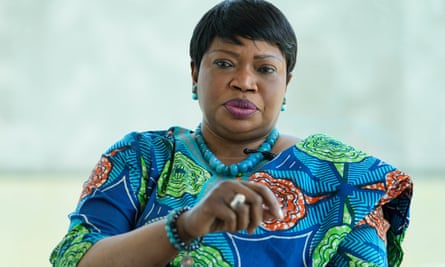
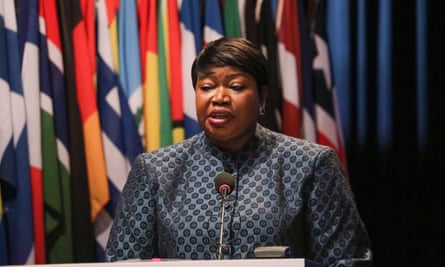
Fatou Bensouda

Fatou Bensouda’s caseload also included nine full investigations, including into events in the Democratic Republic of the Congo. Photograph: Peter Dejong/AP

Sources with knowledge of an ICC review into the incident said that while it was not possible to identify the men, or fully establish their motives, it was concluded that Israel was likely to be signalling to the prosecutor that it knew where she lived. The ICC reported the incident to Dutch authorities and put in place additional security, installing CCTV cameras at her home.

The ICC’s preliminary inquiry in the Palestinian territories was one of several such fact-finding exercises the court was undertaking at the time, as a precursor to a possible full investigation. Bensouda’s caseload also included nine full investigations, including into events in DRC, Kenya and the Darfur region of Sudan.

Officials in the prosecutor’s office believed the court was vulnerable to espionage activity and introduced countersurveillance measures to protect their confidential inquiries.

In Israel, the prime minister’s national security council (NSC) had mobilised a response involving its intelligence agencies. Netanyahu and some of the generals and spy chiefs who authorised the operation had a personal stake in its outcome.

Unlike the international court of justice (ICJ), a UN body that deals with the legal responsibility of nation states, the ICC is a criminal court that prosecutes individuals, targeting those deemed most responsible for atrocities.

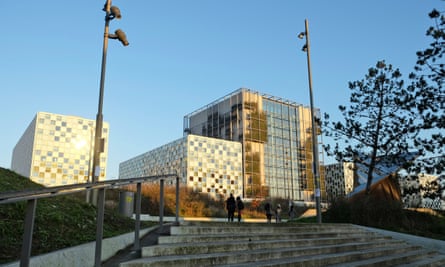
Facade and steps of the building

The international criminal court in The Hague, the Netherlands. Photograph: Mike Corder/AP

Multiple Israeli sources said the leadership of the IDF wanted military intelligence to join the effort, which was being led by other spy agencies, to ensure senior officers could be protected from charges. “We were told that senior officers are afraid to accept positions in the West Bank because they are afraid of being prosecuted in The Hague,” one source recalled.

Two intelligence officials involved in procuring intercepts about the ICC said the prime minister’s office took a keen interest in their work. Netanyahu’s office, one said, would send “areas of interests” and “instructions” in relation to the monitoring of court officials. Another described the prime minister as “obsessed” with intercepts shedding light on the activities of the ICC.

Hacked emails and monitored calls

Five sources familiar with Israel’s intelligence activities said it routinely spied on the phone calls made by Bensouda and her staff with Palestinians. Blocked by Israel from accessing Gaza and the West Bank, including East Jerusalem, the ICC was forced to conduct much of its research by telephone, which made it more susceptible to surveillance.

Thanks to their comprehensive access to Palestinian telecoms infrastructure, the sources said, intelligence operatives could capture the calls without installing spyware on the ICC official’s devices.

“If Fatou Bensouda spoke to any person in the West Bank or Gaza, then that phone call would enter [intercept] systems,” one source said. Another said there was no hesitation internally over spying on the prosecutor, adding: “With Bensouda, she’s black and African, so who cares?”

The surveillance system did not capture calls between ICC officials and anyone outside Palestine. However, multiple sources said the system required the active selection of the overseas phone numbers of ICC officials whose calls Israeli intelligence agencies decided to listen to.

According to one Israeli source, a large whiteboard in an Israeli intelligence department contained the names of about 60 people under surveillance – half of them Palestinians and half from other countries, including UN officials and ICC personnel.

In The Hague, Bensouda and her senior staff were alerted by security advisers and via diplomatic channels that Israel was monitoring their work. A former senior ICC official recalled: “We were made aware they were trying to get information on where we were with the preliminary examination.”

Officials also became aware of specific threats against a prominent Palestinian NGO, Al-Haq, which was one of several Palestinian human rights groups that frequently submitted information to the ICC inquiry, often in lengthy documents detailing incidents it wanted the prosecutor to consider. The Palestinian Authority submitted similar dossiers.

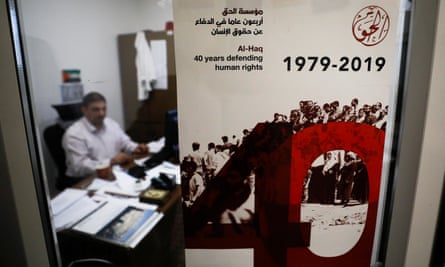
Photo of a glass door with a poster on it reading: ‘Al Haq: 40 years of defending human rights” in English and Arabic. Behind the glass door and out of focus, a man sits at a desk covered in papers

The Al-Haq office in Ramallah, in the Israeli-occupied West Bank, in 2021. Photograph: Mohamad Torokman/Reuters

Such documents often contained sensitive information such as testimony from potential witnesses. Al-Haq’s submissions are also understood to have linked specific allegations of Rome statute crimes to senior officials, including chiefs of the IDF, directors of the Shin Bet, and defence ministers such as Benny Gantz.

Years later, after the ICC had opened a full investigation into the Palestine case, Gantz designated Al-Haq and five other Palestinian rights groups as “terrorist organisations”, a label that was rejected by multiple European states and later found by the CIA to be unsupported by evidence. The organisations said the designations were a “targeted assault” against those most actively engaging with the ICC.

According to multiple current and former intelligence officials, military cyber-offensive teams and the Shin Bet both systematically monitored the employees of Palestinian NGOs and the Palestinian Authority who were engaging with the ICC. Two intelligence sources described how Israeli operatives hacked into the emails of Al-Haq and other groups communicating with Bensouda’s office.

One of the sources said the Shin Bet even installed Pegasus spyware, developed by the private-sector NSO Group, on the phones of multiple Palestinian NGO employees, as well as two senior Palestinian Authority officials.

Keeping tabs on the Palestinian submissions to the ICC’s inquiry was viewed as part of the Shin Bet’s mandate, but some army officials were concerned that spying on a foreign civilian entity crossed a line, as it had little to do with military operations.

“It has nothing to do with Hamas, it has nothing to do with stability in the West Bank,” one military source said of the ICC surveillance. Another added: “We used our resources to spy on Fatou Bensouda – this isn’t something legitimate to do as military intelligence.”

Secret meetings with the ICC

Legitimate or otherwise, the surveillance of the ICC and Palestinians making the case for prosecutions against Israelis provided the Israeli government with an advantage in a secret back channel it had opened with the prosecutor’s office.

Israel’s meetings with the ICC were highly sensitive: if made public, they had the potential to undermine the government’s official position that it did not recognise the court’s authority.

According to six sources familiar with the meetings, they consisted of a delegation of top government lawyers and diplomats who travelled to The Hague. Two of the sources said the meetings were authorised by Netanyahu.

The Israeli delegation was drawn from the justice ministry, foreign ministry and the military advocate general’s office. The meetings took place between 2017 and 2019, and were led by the prominent Israeli lawyer and diplomat Tal Becker.

“In the beginning it was tense,” recalled a former ICC official. “We would get into details of specific incidents. We’d say: ‘We’re receiving allegations about these attacks, these killings,’ and they would provide us with information.”

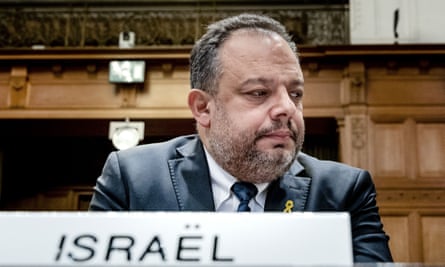
Tal Becker sitting behind a sign reading: ‘Israël’

Tal Becker at the ICJ in January. Photograph: Hollandse Hoogte/REX/Shutterstock

A person with direct knowledge of Israel’s preparation for the back-channel meetings said officials in the justice ministry were furnished with intelligence that had been gleaned from Israeli surveillance intercepts before delegations arrived at The Hague. “The lawyers who dealt with the issue at the justice ministry had a big thirst for intelligence information,” they said.

For the Israelis, the back-channel meetings, while sensitive, presented a unique opportunity to directly present legal arguments challenging the prosecutor’s jurisdiction over the Palestinian territories.

They also sought to convince the prosecutor that, despite the Israeli military’s highly questionable record of investigating wrongdoing in its ranks, it had robust procedures for holding its armed forces to account.

This was a critical issue for Israel. A core ICC principle, known as complementarity, prevents the prosecutor from investigating or trying individuals if they are the subject of credible state-level investigations or criminal proceedings.

Israeli surveillance operatives were asked to find out which specific incidents might form part of a future ICC prosecution, multiple sources said, in order to enable Israeli investigative bodies to “open investigations retroactively” in the same cases.

“If materials were transferred to the ICC, we had to understand exactly what they were, to ensure that the IDF investigated them independently and sufficiently so that they could claim complementarity,” one source explained.

Israel’s back-channel meetings with the ICC ended in December 2019, when Bensouda, announcing the end of her preliminary examination, said she believed there was a “reasonable basis” to conclude that Israel and Palestinian armed groups had both committed war crimes in the occupied territories.

Bensouda speaking in The Hague in December 2019, with numerous national flags behind her.

Bensouda made clear in December 2019 she was minded to open a full investigation. Photograph: Anadolu Agency/Getty Images

It was a significant setback for Israel’s leaders, although it could have been worse. In a move that some in the government regarded as a partial vindication of Israel’s lobbying efforts, Bensouda stopped short of launching a formal investigation.

Instead, she announced she would ask a panel of ICC judges to rule on the contentious question of the court’s jurisdiction over the Palestinian territories, due to “unique and highly contested legal and factual issues”.

Yet Bensouda had made clear she was minded to open a full investigation if the judges gave her the green light. It was against this backdrop that Israel ramped up its campaign against the ICC and turned to its top spy chief to turn up the heat on Bensouda personally.

Personal threats and a ‘smear campaign’

Between late 2019 and early 2021, as the pre-trial chamber considered the jurisdictional questions, the director of the Mossad, Yossi Cohen, intensified his efforts to persuade Bensouda not to proceed with the investigation.

Cohen’s contacts with Bensouda – which were described to the Guardian by four people familiar with the prosecutor’s contemporaneous accounts of the interactions, as well as sources briefed on the Mossad operation – had begun several years earlier.

In one of the earliest encounters, Cohen surprised Bensouda when he made an unexpected appearance at an official meeting the prosecutor was holding with the then DRC president, Joseph Kabila, in a New York hotel suite.

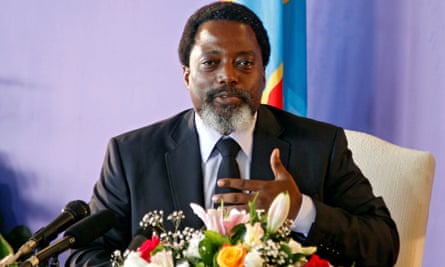
Joseph Kabila speaking to the camera, sitting down at a table behind a bouquet of flowers

Joseph Kabila at a news conference in Kinshasa in 2018. Photograph: Kenny-Katombe Butunka/Reuters

Sources familiar with the meeting said that after Bensouda’s staff were asked to leave the room, the director of the Mossad suddenly appeared from behind a door in a carefully choreographed “ambush”.

After the incident in New York, Cohen persisted in contacting the prosecutor, turning up unannounced and subjecting her to unwanted calls. While initially amicable, the sources said, Cohen’s behaviour became increasingly threatening and intimidating.

A close ally of Netanyahu at the time, Cohen was a veteran Mossad spymaster and had gained a reputation within the service as a skilled recruiter of agents with experience cultivating high-level officials in foreign governments.

Accounts of his secret meetings with Bensouda paint a picture in which he sought to “build a relationship” with the prosecutor as he attempted to dissuade her from pursuing an investigation that, if it went ahead, could embroil senior Israeli officials.

Three sources briefed on Cohen’s activities said they understood the spy chief had tried to recruit Bensouda into complying with Israel’s demands during the period in which she was waiting for a ruling from the pre-trial chamber.

They said he became more threatening after he began to realise the prosecutor would not be persuaded to abandon the investigation. At one stage, Cohen is said to have made comments about Bensouda’s security and thinly veiled threats about the consequences for her career if she proceeded. Contacted by the Guardian, Cohen and Kabila did not respond to requests for comment. Bensouda declined to comment.

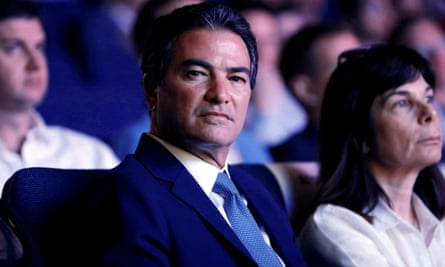
Yossi Cohen looking at the camera while sitting in an audience

Cohen was seen as trying to ‘build a relationship’ with the prosecutor as he attempted to dissuade her from pursuing the investigation. Photograph: Corinna Kern/Reuters

When she was prosecutor, Bensouda formally disclosed her encounters with Cohen to a small group within the ICC, with the intention of putting on record her belief that she had been “personally threatened”, sources familiar with the disclosures said.

This was not the only way Israel sought to place pressure on the prosecutor. At around the same time, ICC officials discovered details of what sources described as a diplomatic “smear campaign”, relating in part to a close family member.

According to multiple sources, the Mossad had obtained a cache of material including transcripts of an apparent sting operation against Bensouda’s husband. The origins of the material – and whether it was genuine – remain unclear.

However, elements of the information were circulated by Israel among western diplomatic officials, sources said, in a failed attempt to discredit the chief prosecutor. A person briefed on the campaign said it gained little traction among diplomats and amounted to a desperate attempt to “besmirch” Bensouda’s reputation.

Trump’s campaign against the ICC

In March 2020, three months after Bensouda referred the Palestine case to the pre-trial chamber, an Israeli government delegation reportedly held discussions in Washington with senior US officials about “a joint Israeli-American struggle” against the ICC.

One Israeli intelligence official said they regarded Donald Trump’s administration as more cooperative than that of his Democratic predecessor. The Israelis felt sufficiently comfortable to ask for information from US intelligence about Bensouda, a request the source said would have been “impossible” during Barack Obama’s tenure.

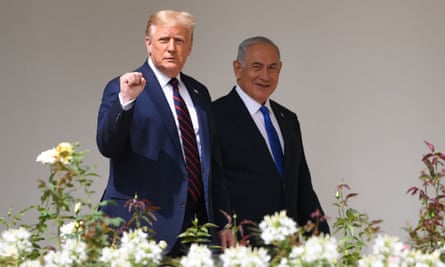
Donald Trump and Benjamin Netanyahu walking together past some flowers. Trump is holding his hand up in a fist, and Netanyahu is smiling

Trump and Netanyahu before the signing of the Abraham accords at the White House in 2020. Photograph: Saul Loeb/AFP/Getty Images

Days before the meetings in Washington, Bensouda had received authorisation from the ICC’s judges to pursue a separate investigation into war crimes in Afghanistan committed by the Taliban and both Afghan and US military personnel.

Fearing US armed forces would be prosecuted, the Trump administration was engaged in its own aggressive campaign against the ICC, culminating in the summer of 2020 with the imposition of US economic sanctions on Bensouda and one of her top officials.

Among ICC officials, the US-led financial and visa restrictions on court personnel were believed to relate as much to the Palestine investigation as to the Afghanistan case. Two former ICC officials said senior Israeli officials had expressly indicated to them that Israel and the US were working together.

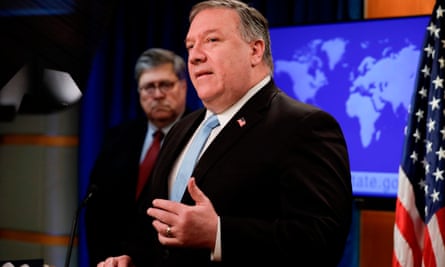
At a press conference in June that year, senior Trump administration figures signalled their intention to impose sanctions on ICC officials, announcing they had received unspecified information about “financial corruption and malfeasance at the highest levels of the office of the prosecutor”.

As well as referring to the Afghanistan case, Mike Pompeo, Trump’s secretary of state, linked the US measures to the Palestine case. “It’s clear the ICC is only putting Israel in [its] crosshairs for nakedly political purposes,” he said. Months later, Pompeo accused Bensouda of having “engaged in corrupt acts for her personal benefit”.

The US has never publicly provided any information to substantiate that charge, and Joe Biden lifted the sanctions months after he entered the White House.

Mike Pompeo at a joint news conference on the ICC sanctions in June 2020.

Mike Pompeo at a joint news conference on the ICC sanctions in June 2020. Photograph: Yuri Gripas/AFP/Getty Images

But at the time Bensouda faced increasing pressure from an apparently concerted effort behind the scenes by the two powerful allies. As a Gambian national, she did not enjoy the political protection that other ICC colleagues from western countries had by virtue of their citizenship. A former ICC source said this left her “vulnerable and isolated”.

Cohen’s activities, sources said, were particularly concerning for the prosecutor and led her to fear for her personal safety. When the pre-trial chamber finally confirmed the ICC had jurisdiction in Palestine in February 2021, some at the ICC even believed Bensouda should leave the final decision to open a full investigation to her successor.

On 3 March, however, months before the end of her nine-year term, Bensouda announced a full investigation in the Palestine case, setting in motion a process that could lead to criminal charges, though she cautioned the next phase could take time.

“Any investigation undertaken by the office will be conducted independently, impartially and objectively, without fear or favour,” she said. “To both Palestinian and Israeli victims and affected communities, we urge patience.”

Do you have information about this story? Email harry.davies@theguardian.com, or (using a non-work phone) use Signal or WhatsApp to message +44 7721 857348. For the most secure communications, use SecureDrop or see our guide.

Khan announces arrest warrants

When Khan took the helm at the ICC prosecutor’s office in June 2021, he inherited an investigation he later said “lies on the San Andreas fault of international politics and strategic interests”.

As he took office, other investigations – including on events in the Philippines, DRC, Afghanistan and Bangladesh – competed for his attention, and in March 2022, days after Russia launched its invasion of Ukraine, he opened a high-profile investigation into alleged Russian war crimes.

Initially, the politically sensitive Palestine inquiry was not treated as a priority by the British prosecutor’s team, sources familiar with the case said. One said it was in effect “on the shelf” – but Khan’s office disputes this and says it established a dedicated investigative team to take the inquiry forward.

In Israel, the government’s top lawyers regarded Khan – who had previously defended warlords such as the former Liberian president Charles Taylor – as a more cautious prosecutor than Bensouda. One former senior Israeli official said there was “lots of respect” for Khan, unlike for his predecessor. His appointment to the court was viewed as a “reason for optimism”, they said, but they added that the 7 October attack “changed that reality”.

The Hamas assault on southern Israel, in which Palestinian militants killed nearly 1,200 Israelis and kidnapped about 250 people, clearly involved brazen war crimes. So, too, in the view of many legal experts, has Israel’s subsequent onslaught on Gaza, which is estimated to have killed more than 35,000 people and brought the territory to the brink of famine through Israel’s obstruction of humanitarian aid.

By the end of the third week of Israel’s bombardment of Gaza, Khan was on the ground at the Rafah border crossing. He subsequently made visits to the West Bank and southern Israel, where he was invited to meet survivors of the 7 October attack and the relatives of people who had been killed.

In February 2024, Khan issued a strongly worded statement that Netanyahu’s legal advisers interpreted as an ominous sign. In the post on X, he in effect warned Israel against launching an assault on Rafah, Gaza’s southernmost city, where more than 1 million displaced people were sheltering at the time.

“I am deeply concerned by the reported bombardment and potential ground incursion by Israeli forces in Rafah,” he wrote. “Those who do not comply with the law should not complain later when my office takes action.”

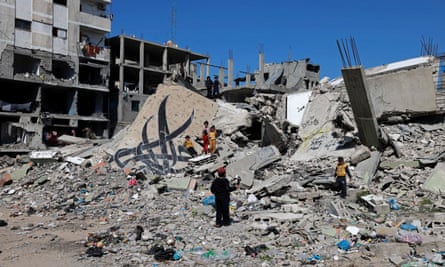
Children standing amid the rubble of a building

Children standing amid the rubble of a building in Rafah that was destroyed by Israeli airstrikes in February. Photograph: Mohammed Abed/AFP/Getty Images

The comments stirred alarm within the Israeli government as they appeared to deviate from his previous statements about the war, which officials had viewed as reassuringly cautious. “That tweet surprised us a lot,” a senior official said.

Concerns in Israel over Khan’s intentions escalated last month when the government briefed the media that it believed the prosecutor was contemplating arrest warrants against Netanyahu and other senior officials such as Yoav Gallant.

Israeli intelligence had intercepted emails, attachments and text messages from Khan and other officials in his office. “The subject of the ICC climbed the ladder of priorities for Israeli intelligence,” one intelligence source said.

It was via intercepted communications that Israel established that Khan was at one stage considering entering Gaza through Egypt and wanted urgent assistance doing so “without Israel’s permission”.

Another Israeli intelligence assessment, circulated widely in the intelligence community, drew on surveillance of a call between two Palestinian politicians. One of them said Khan had indicated that a request for arrest warrants of Israeli leaders could be imminent, but warned he was “under tremendous pressure from the United States”.

It was against this backdrop that Netanyahu made a series of public statements warning a request for arrest warrants could be imminent. He called on “the leaders of the free world to stand firmly against the ICC” and “use all the means at their disposal to stop this dangerous move”.

He added: “Branding Israel’s leaders and soldiers as war criminals will pour jet fuel on the fires of antisemitism.” In Washington, a group of senior US Republican senators had already sent a threatening letter to Khan with a clear warning: “Target Israel and we will target you.”

Netanyahu (left) and Gallant sitting side by side at a table with microphones, with Israeli flags in the background

Netanyahu (left) and Yoav Gallant during a press conference in Tel Aviv in October. Photograph: Reuters

The ICC, meanwhile, has strengthened its security with regular sweeps of the prosecutor’s offices, security checks on devices, phone-free areas, weekly threat assessments and the introduction of specialist equipment. An ICC spokesperson said Khan’s office had been subjected to “several forms of threats and communications that could be viewed as attempts to unduly influence its activities”.

Khan recently disclosed in an interview with CNN that some elected leaders had been “very blunt” with him as he prepared to issue arrest warrants. “‘This court is built for Africa and for thugs like Putin,’ is was what a senior leader told me.”

Despite the pressure, Khan, like his predecessor in the prosecutor’s office, chose to press ahead. Last week, Khan announced he was seeking arrest warrants for Netanyahu and Gallant alongside three Hamas leaders for war crimes and crimes against humanity.

He said Israel’s prime minister and defence minister stood accused of responsibility for extermination, starvation, the denial of humanitarian relief supplies and deliberate targeting of civilians.

Standing at a lectern with two of his top prosecutors – one American, the other British – at his side, Khan said he had repeatedly told Israel to take urgent action to comply with humanitarian law.

“I specifically underlined that starvation as a method of war and the denial of humanitarian relief constitute Rome statute offences. I could not have been clearer,” he said. “As I also repeatedly underlined in my public statements, those who do not comply with the law should not complain later when my office takes action. That day has come.”

Categories
Saved Web Pages - Audio Posts

Former Mossad chief threatened ICC prosecutor over probe into Israel, report claims

Former Mossad chief Yossi Cohen allegedly engaged in “threats and intimidation” in an attempt to stop former International Criminal Court chief prosecutor Fatou Bensouda from opening a war crimes investigation into Israel, according to a report published by The Guardian on Tuesday.

Citing a slew of unnamed Israeli and ICC officials, the report claimed Cohen, who led the Mossad in 2016-2021, had frequent and increasingly threatening communications with Bensouda between 2017 and 2021 that amounted to “stalking,” in which he tried to persuade her not to investigate Israel.

Three unnamed Israeli sources familiar with the matter told The Guardian that Cohen was allegedly approved “at a high level” to act as Prime Minister Benjamin Netanyahu’s “unofficial messenger” and that the objective was to compromise Bensouda or get her to comply with Israel’s demands.

The Guardian said the allegations come from part of a forthcoming investigation by the Guardian, the Israeli-Palestinian publication +972 Magazine and the Hebrew-language outlet Local Call, revealing how multiple Israel intelligence agencies ran a covert “war” against the ICC for almost a decade.

The report placed Cohen’s and Bensouda’s first meeting in 2017 when the former Mossad chief introduced himself to the then-prosecutor at a security conference in Munich.

Get The Times of Israel’s Daily Edition
by email and never miss our top stories
By signing up, you agree to the terms

The next meeting, the report continued, came in 2018 when Cohen allegedly teamed up with the Democratic Republic of the Congo’s then-president Joseph Kabila to ambush Bensouda in a hotel room in New York.

According to the report, Bensouda was meant to meet with Kabila but found herself in a surprise meeting with Cohen after her staff was told to leave the room, which sources said left her “alarmed.”

ICC Chief Prosecutor Fatou Bensouda at the International Criminal Court in The Hague, Netherlands, January 28, 2016. (AP Photo/Peter Dejong)

Three unnamed sources told The Guardian that after the surprise meeting, Cohen repeatedly called Bensouda on her phone and sought meetings with her, asking her “Did you forget what I do for a living?” when she inquired how he got her number.

The sources said Cohen initially “played good cop,” trying to build a relationship with Bensouda, but eventually resorted to “threats and manipulation” when that did not work.

They added that after Bensouda announced in 2019 that she was ready to open an investigation into Israel, she and Cohen had three meetings until she left her role in 2021.

Former Mossad chief Yossi Cohen at a Jerusalem Post Conference on October 12, 2021. (Yonatan Sindel/Flash90)

Cohen allegedly initiated all three meetings, two of which led Bensouda to believe he was threatening her and her family after he showed her covert photos of her husband and told her an investigation would be detrimental to her career.

An unspecified number of unnamed ICC officials claimed they were told that Cohen had said to Bensouda, “You should help us and let us take care of you. You don’t want to be getting into things that could compromise your security or that of your family.”

The report claimed Israel then launched a smear campaign against Bensouda that was allegedly coordinated with then-US president Donald Trump, who imposed visa restrictions and sanctions on her. President Joe Biden canceled the sanctions when he took office in 2021.

Then-president of the Democratic Republic of the Congo Joseph Kabila sits in a garden at his ranch on December 10, 2018 in Kinshasa. (John WESSELS / AFP)

Responding to a request for comment, the Prime Minister’s Office told The Guardian, “The questions forwarded to us are replete with many false and unfounded allegations meant to hurt the State of Israel.”

The publication added that Cohen did not respond to a request for comment and that Bensouda declined to comment.

Bensouda announced in December 2019 that her office had grounds to open an investigation into Israeli actions in the West Bank, the Gaza Strip, and East Jerusalem but that she was seeking a ruling on whether the ICC had jurisdiction.

In the report she published at the time, she accused Israel of at least three disproportionate attacks, willfully killing and injuring civilians, and intentionally attacking Red Cross personnel and institutions during Operation Protective Edge in Gaza in 2014.

In the same report, she accused Hamas and other terrorist organizations of a string of charges including intentionally attacking Israeli civilians, using Palestinian civilians as human shields, and torture and inhumane treatment.

At the time of her announcement, Bensouda was accused of bias against Israel. Israeli observers noted the significance of the timing of the investigation’s span: On June 12, 2014, Hamas terrorists kidnapped and murdered three Israeli teenagers in the Gush Etzion area of the West Bank. Bensouda’s investigation was set to focus on events beginning only from the following day.

More than a year later, in February, 2021, the pre-trial chamber ruled that “Palestine” was enough of a state to fall under the ICC’s jurisdiction, and Bensouda began her investigation before stepping down that same month and being replaced with the current chief prosecutor, Karim Khan.

“The fact they chose the head of Mossad to be the prime minister’s unofficial messenger to [Bensouda] was to intimidate, by definition,” one of the unnamed sources told the Guardian. “It failed.”

International Criminal Court Prosecutor Karim Khan looks on during an interview with AFP at the Cour d’Honneur of the Palais Royal in Paris on February 7, 2024. (Dimitar DILKOFF / AFP)

Khan did not close the investigation, but it largely lost prominence until the Israel-Hamas war broke out on October 7 with Hamas’s unprecedented onslaught on southern Israel in which terrorists murdered some 1,200 people and seized 252 hostages.

Over more than seven months of the war, Khan investigated both Hamas’s actions during the attack and Israeli actions throughout its ground invasion in the Gaza Strip.

Last week, Khan announced that following his investigation, he was seeking arrest warrants for three Hamas leaders as well as Netanyahu and Defense Minister Gallant. The warrants for the latter two, he said, were being sought on charges of starvation as a method of warfare, willfully causing great suffering or cruel treatment, willfully killing, intentional attacks against civilians, extermination, and persecution.

Khan has never commented directly on Cohen’s alleged behavior toward Bensouda but has recently said that he would “not hesitate to prosecute attempts to impede, intimidate or improperly influence” ICC officials.

Categories
Saved Web Pages - Audio Posts

Israeli intel said to have tapped ICC’s communications for years to hinder its probe


CRM

  • Those we have lost
  • Those We Have Lost
  • Those we have lost
  • Those we have lost
  • Those we have lost
  • Those we have lost
  • Those we have lost
  • Those we have lost
  • Those we have lost
  • Those we have lost
  • Those we have lost
  • Those we have lost
  • Those we have lost
  • Those We Have Lost
  • Those we have lost
  • Those We Have Lost
  • Those we have lost
  • Those we have lost
  • Those we have lost
  • Those we have lost
  • Those we are missing
  • Those we are missing
  • Those we are missing
  • Those we are missing
  • Those we are missing
  • Those we are missing
  • Those we are missing
  • Those we are missing
  • Those we are missing
  • Those we are missing
  • Those we are missing
  • Those we are missing
  • Those we are missing
  • Those we are missing
  • Those we are missing
  • Those we are missing
  • Those we are missing
  • Those we are missing
  • Those we are missing
  • Those we are missing