Categories
Saved Web Pages - Audio Posts

Ukraine handed F-16 stipulation from NATO ally

Belgium’s promise to deliver dozens of F-16 fighter jets to Ukraine amid its ongoing war with Russia has arrived with an important stipulation that may limit the use of the aircraft.

Last year, Belgium became one of four NATO ally countries, along with Denmark, Norway, and the Netherlands, to announce that it would be sending Ukraine an unspecified number of donated U.S.-made jets.

Belgian Foreign Minister Hadja Lahbib said on Tuesday that 30 of the aircraft were headed to Kyiv, with delivery of the first batch expected “by the end of the year.” Belgian Prime Minister Alexander De Croo later mandated that the jets only be used within Ukrainian territory.

Ukraine Belgium F-16s NATO Ally Mandate War

Belgian Prime Minister Alexander De Croo, Ukrainian President Volodymyr Zelensky and Belgian Defense Minister Ludivine Dedonde are pictured during a meeting with F-16 pilots, instructors and technical staff at a military base near Brussels on…
Belgian Prime Minister Alexander De Croo, Ukrainian President Volodymyr Zelensky and Belgian Defense Minister Ludivine Dedonde are pictured during a meeting with F-16 pilots, instructors and technical staff at a military base near Brussels on May 28, 2024. De Croo stipulated on Tuesday that the 30 F-16 jets that Belgium has pledged to Ukraine are only to be used within “Ukraine territory.” SIMON WOHLFAHRT/AFP

“Everything which is covered by this agreement is very clear: it is for utilization by the Ukrainian defense forces on Ukraine territory,” De Croo said during a joint press conference announcing a $1 billion, 10-year military aid commitment with Ukrainian President Volodymyr Zelensky on Tuesday.

De Croo’s remarks were made “in response to a journalist’s question about whether Ukraine will be able to use Belgian F-16 jets to down Russian planes in Russian airspace,” according to The Kyiv Independent.

It was unclear whether or not the Belgian policy allows for the jets to be used in occupied Ukrainian territory that Russia claims to have annexed, such as the Crimean peninsula.

Newsweek reached out for comment to the Ukrainian military via email on Tuesday night.

Over the course of the Russia-Ukraine war, Zelensky and his government have repeatedly lobbied western allies to supply F-16 jets as a much-needed update to Kyiv’s aging air fleet, which has largely operated Soviet-era MiG aircraft that are no match for the more modern jets that Russia is currently using.

Zelensky said earlier this month that the Ukrainian Air Force, which has taken heavy damages during the more than two-year war, needed allies to supply between 120 and 130 F-16s to fend off Russia’s fleet. A far smaller number of jets has been promised so far.

Deliveries of the jets from the Netherlands and other donor countries have been delayed multiple times. The first batch of Dutch jets was initially expected early this year. Ukrainian pilots have also required extensive training on the jets, with only some of the pilots having completed the training in recent weeks.

Experts told Newsweek earlier this month that Ukraine may ultimately receive the F-16s too late to make a real difference in the war, suggesting that relying on NATO allies to supply the jets may have been a strategic blunder.

Guy McCardle, managing editor of military news outlet SOFREP, said that Ukraine would have been better off boosting its “ongoing operations and defensive measures” with more readily available MiG aircraft in a shorter timeframe.

“A MiG in the sky is worth two F-16s on their way, for Ukrainians,” McCardle said. “The F-16 is a fine aircraft, and may benefit the Ukrainian effort in the long run, but if I were a Ukrainian general, I’d prefer MiGs on hand ASAP. Why? MiGs can be deployed immediately, providing an urgent boost to Ukraine’s air capabilities.”

“Ukrainian pilots are already familiar with MiG aircraft, reducing the need for extensive retraining,” he continued. “MiGs would allow for easier integration with Ukraine’s existing fleet of aircraft and logistics systems, which are already set up for the Soviet-era aircraft. The Ukrainians need immediate air support.”

Newsweek is committed to challenging conventional wisdom and finding connections in the search for common ground.

Newsweek is committed to challenging conventional wisdom and finding connections in the search for common ground.

Categories
Saved Web Pages - Audio Posts

Why the State Department’s intelligence agency may be the best in DC

Every American knows what the CIA is. I would guess that maybe 1 in 1,000 have ever heard of INR — the State Department’s Bureau of Intelligence and Research, American diplomats’ in-house intelligence agency.

But if you do know about INR, you probably know two things:

  1. It has gotten big stuff right when the CIA and others screwed up.
  2. When it got that big stuff right, no one listened to it.

INR is the Cassandra of American intelligence, and it earned that reputation the hard way.

As early as 1961, INR analysts were warning that South Vietnam’s battle against the North and the Viet Cong insurgency was failing, and would ultimately fail because the Viet Cong had the support of villagers in the South. Their analyses prompted furious rebukes from the likes of then-Defense Secretary Robert McNamara. But they were right.

In 2002, it happened again. The CIA, the Defense Intelligence Agency (DIA), and the rest of the intelligence community had concluded that Iraq’s Saddam Hussein was trying to build nuclear weapons, which became one of the ostensible motivations for the US invasion. INR thought their evidence was nonsense. It was right.

In 2022, it happened again. The intelligence community predicted that Russia would win its war on Ukraine easily, cruising into Kyiv in a matter of days. INR dissented, arguing that Ukraine would put up a spirited fight and prevent Russia from getting anywhere near the capital. It was right. (Brett Holmgren, INR’s current chief, took pains to tell me that INR was not the only dissenter but confirmed that the bureau thought Ukraine would put up a strong fight.)

“You can get other intel agencies really upset about this when you point this out,” says Ellen McCarthy, who led the bureau from 2019 to 2021 after many years in other parts of the intelligence community. “But I’ve got to tell you, INR is almost always right.”

The bureau’s stellar track record seems, on paper, inexplicable. INR is tiny, with fewer than 500 employees total. The DIA has over 16,500, and while the CIA’s headcount is classified, it was 21,575 in 2013, when Edward Snowden leaked it. 

You could fit over 47 INRs in the CIA, and even if you exclude the non-analysts on the CIA’s payroll, Langley’s analytic headcount is far greater than INR’s. Tom Fingar, who led the bureau from 2000 to 2001 and 2004 to 2005, once told a reporter its budget was “decimal dust.” In 2023, it came to only $83.5 million, or 0.1 percent of overall US intelligence spending.

On top of that, INR has no spies abroad, no satellites in the sky, no bugs on any laptops. But it reads the same raw intel as everyone else, and in at least a few cases, was the only agency to get some key questions right.

Saying “INR does a better job than DIA or CIA,” as a general matter, would go too far, not least because making a judgment like that in a responsible way would require access to classified information that the press and public can’t read. But it clearly is doing something different, which in a few key cases has paid off. And at least some policymakers have noticed. Bill Clinton told the 9/11 Commission he found memos by INR more helpful than the President’s Daily Brief, then prepared by the CIA.

I spoke to 10 veterans of the bureau, including six former assistant secretaries who led it. While no single ingredient seems to explain its relative success, a few ingredients together might:

  1. INR analysts are true experts. They are heavily recruited from PhD programs and even professorships, and have been on their subject matter (a set of countries, or a thematic specialty like trade flows or terrorism) for an average of 14 years. CIA analysts typically switch assignments every two to three years.
  2. INR’s small size means that analyses are written by individuals, not by committee, and analysts have fewer editors and managers separating them from the policymakers they’re advising. That means less groupthink, and clearer individual perspectives.
  3. INR staff work alongside State Department policymakers, meaning they get regular feedback on what kind of information is most useful to them.

Intelligence analysis is a notoriously difficult craft. Practitioners have to make predictions and assessments with limited information, under huge time pressure, on issues where the stakes involve millions of lives and the fates of nations. If this small bureau tucked in the State Department’s Foggy Bottom headquarters has figured out some tricks for doing it better, those insights may not just matter for intelligence, but for any job that requires making hard decisions under uncertainty.

INR began life as the research and analysis (R&A) section of the Office of Strategic Services, the US’s World War II-era spy agency. When its parent office was dissolved after the war, the R&A section was given to the State Department. 

It was not an easy marriage at first. “They were distrusted by the [State] Department’s regulars who considered the newcomers too liberal in their views and unable to offer anything that could not be provided through traditional diplomatic methods,” historian Lawrence Freedman wrote in 1977. The division was then disbanded in 1946, before being reconstituted in 1947 as the bureau that still exists today. INR vets note with pride that its founding predates that of the CIA.

“The unit is handicapped by its small size,” Freedman noted of INR, “and has only made an impact through the quality of its personnel.” Indeed, early in the Vietnam war there was only one analyst at INR for North Vietnam and another analyst for the South; by 1968, at the war’s apex, that grew to four South Vietnam and two North Vietnam analysts. Six people, for a war that was tearing a whole region and, increasingly, American society itself, apart.

Luckily, the quality of that personnel was very high. The key analyst on North Vietnam was a woman named Dorothy Avery, a former CIA analyst who had a master’s degree in Far Eastern Studies from Harvard University. Fingar, the former INR chief, overlapped with Avery at the bureau when she was a senior presence, and he a very junior one. “We joked about Dottie Avery — she didn’t like it — but that Dottie Avery started doing Vietnam when Ho Chi Minh wore short pants,” he recalls. 

Almost as soon as Avery arrived at INR in 1962, she and her supervisor Allen Whiting proved their mettle by predicting that China and India would engage in border clashes, then pause, then resume hostilities, then halt. All of that happened.

But INR also had messages that the Kennedy and Johnson administrations of the time didn’t want to hear. In 1963, the bureau prepared a report of statistics on the war effort: the number of Viet Cong attacks and the number of prisoners, weapons, and defectors collected by the South. All of the trendlines were negative. The report prompted a furious protest from the Joint Chiefs of Staff, who argued that the South Vietnamese were succeeding. Defense Secretary McNamara echoed their protest.

But INR stayed pessimistic, and because of that, stayed accurate. Avery pushed back on the military’s assessment that “the application of force would induce Hanoi to make concessions,” arguing instead that “Hanoi felt it was on a roll and held the advantage in South Vietnam,” historian John Prados writes. That led her and INR to “predict accurately that North Vietnam would up the ante in the South, increase its support to the NLF [the National Liberation Front, the political arm of the Viet Cong] and perhaps send its own troops to fight.” 

The bureau accurately predicted that in 1965, China would send thousands of troops to North Vietnam to support its ally; they insisted that bombing could not break North Vietnamese supply lines, and were right about that too.

In 1969, after over 30,000 American troops had died — along with hundreds of thousands, if not more, Vietnamese soldiers and civilians had died — INR commissioned an internal review by Avery and two colleagues documenting, in clinical detail, that they had seen this all coming.

Decades later, as the US began preparations for the Iraq war, INR would see arguably its finest moment. Its leader was Carl Ford, a veteran of the CIA and DIA who hadn’t previously served at INR. But he was fiercely loyal to his team, and his team had an unusual perspective on Saddam Hussein and nuclear weapons.

The evidence that Hussein was reconstituting Iraq’s nuclear program — a contention that fueled Bush administration officials’ arguments for war, like national security adviser Condoleezza Rice’s famous quip, “We don’t want the smoking gun to be a mushroom cloud” — had two primary components. One was a finding that the Iraqi military had been purchasing a number of high-strength aluminum tubes, which the CIA and DIA thought could be used to build centrifuges for enriching uranium.

On September 6, 2001, five days before the 9/11 attacks, INR issued a report disagreeing with that finding. For one thing, scientists at the Department of Energy had looked into the matter and found that Iraq had already disclosed in the past that it used aluminum tubes of the same specifications to manufacture artillery rockets, going back over a decade. Moreover, the new tubes were to be “anodized,” a treatment that renders them much less usable for centrifuges.

“You can make a centrifuge out of these things, but no one in his right mind would,” as Ford explained to me.

The other major evidence offered for the claim that Iraq was pursuing nukes was an allegation that they had tried to buy “yellowcake” uranium from Niger; this is a partially processed form of mined uranium that could in theory be processed further and used for a bomb. When the claim first emerged in late 2001, INR was immediately skeptical, per an ensuing Senate investigation. 

INR found the claim “highly suspect” because French businesses controlled the Nigerien uranium sector, and the French government was unlikely to actively assist Iraq in getting uranium. As more information came in, the CIA and DIA “were more impressed,” while INR “continued to doubt the accuracy of the reporting” given that Iraq was “bound to be caught” if it followed through.

About a year later, an Italian journalist leaked to the US Embassy in Rome a purported Nigerien government document detailing the purchase. Fingar showed the document to an INR analyst who had served as a foreign service officer in Niger. “He looked at the putative document and he says, ‘That’s a forgery. It’s an obvious forgery,’” Fingar says. “How do you know it’s an obvious forgery? ‘In Niger, when they sign, the line is on a diagonal. This is horizontal. It’s obviously not an official document.’”

In 2004, a Senate committee reviewing the colossal intelligence failure behind the Iraq war concluded that “only INR disagreed with the assessment that Iraq had begun reconstituting its nuclear program.” It was perhaps the biggest success in the bureau’s history, and it managed to become publicly known, winning the bureau glowing profiles from the Washington Monthly’s Justin Rood and the Washington Post’s David Ignatius.

For their part, INR veterans tend to be less triumphalist, preferring to say they were merely “less wrong” than other agencies. They agreed with other agencies that Iraq still had biological and chemical weapons, and they got that wrong.

And INR’s broader track record is far from spotless. To name one since-declassified example, a 1977 report on Iran predicting “the prospects are good that Iran will have relatively clear sailing until at least the mid-1980s” has not aged well, coming just two years before the Shah was deposed in a mass popular uprising and three years before the beginning of the devastating Iran-Iraq war. INR also got egg on its face in 2009 when longtime analyst Kendall Myers was revealed to have been spying for Cuba for decades (though INR was far from the only agency penetrated by spies). 

But the successes appear to outweigh the misses. Even on Iran, INR was earlier than the CIA or DIA in warning amid 1978’s protests that there was a real chance the Shah would be forced out. In May 1973, INR analyst Roger Merrick argued that there was a “better than even bet” that Egypt would start a war with Israel “by autumn.” Egypt launched the Yom Kippur War in October. 

Rood noted in 2000 and 2001, the CIA thought North Korea would soon test an intercontinental ballistic missile. INR doubted they’d get there in the next decade. As it happens, the first North Korea ICBM test was in 2017, sixteen years later.

Philip Goldberg, who ran INR from 2010 and 2013 and now serves as US ambassador to South Korea, recalls the bureau’s terrorism section being able to tell him, in real time, the ideological motivation behind the 2011 Norway massacres and the perpetrators of the 2012 attack on a US compound in Benghazi. In the former case, there was widespread speculation that al-Qaeda was responsible — but the INR team correctly identified it as a neo-Nazi attack.

Fingar told me yet another favorite win. “The specific issue was, would Argentina send troops to the multinational force in Haiti?” in 1994, as the US assembled a coalition of nations, under the banner of the UN, to invade and restore Haiti’s democratically elected president to office. “Our embassy had reported they’d be there. Argentine embassy in Washington: they’ll be there. The State Department, the Argentine desk: they’ll be there. [The CIA]: they’ll be there.” But, “INR said, no, they won’t.” The undersecretary running the meeting, Peter Tarnoff, asked which analyst at INR believed this. He was told it was Jim Buchanan.

At that point, as Fingar remembers it, Tarnoff ended the meeting, because Buchanan’s opinion settled the matter. That’s how good Buchanan’s, and INR’s, reputation was. And sure enough, Argentina backed out on its promise to send troops.

INR veterans describe their bureau in glowing terms, and some outsiders tend to agree. In one essay, the veteran CIA analyst John A. Gentry went so far as to recommend as a reform measure for the rest of the intelligence community to “model strategic, all-source analysts after the stereotypical INR analyst.”

But the agency’s reputation as contrarian sticks out too. “Gadflies of the intelligence community” is how Stephen Coulthart, a professor at the University at Albany and one of the few academics to study INR, puts it. “We had this reputation of being kind of … I guess they called this the red-haired stepchild. Being kind of snitty,” recalls Bowman Miller, former Europe chief at INR.

They’re informal; one alum told me you’d “put your coat and tie on” if you had to meet with the Secretary of State, but not otherwise. They’re the only intelligence agency that does not require polygraph tests — which private sector employers are banned from using for the simple reason that they do not work at all — in hiring.

Rod Schoonover, who worked in the bureau analyzing climate change and related issues from 2009 to 2019, told me about a commemorative “challenge coin” made for INR that he received. It depicts a tiny numeral 1 in superscript above the R, designating a footnote. 

In intelligence argot, “footnote” has another meaning: It means a dissent or a major disagreement with a broader assessment made by colleagues. INR dissented so much that it threw a joke about it onto its coin. “They’re proud of dissent and particularly proud of dissent when they get it right,” he recalls.

The most important factor in building this culture, every veteran I spoke to stated, is the unusual way that INR selects and uses analysts. The CIA and DIA tend to favor generalists. Analysts rotate between roles every two to three years, often changing countries or even regions. At INR, the average analyst has been on their topic for over 14 years. “At most of the other intel organizations you rotate out of your portfolio every two to three years,” McCarthy says. “At INR, they die at their desks.”

INR, like the rest of the State Department, employs many foreign service officers, who do rotate between roles every three years. That helps the bureau stay current on particular countries’ cultures, enabling victories like their Niger analyst recognizing the yellowcake documents as a forgery. A past FSO working as a Russia analyst, John Evans, came to the role after a job at the US consulate in St. Petersburg in the 1990s, where he talked regularly with the office of mayor Anatoly Sobchak. His contact was Sobchak’s deputy, Vladimir Putin. Once Putin moved into a somewhat bigger job, that background came in handy.

Sixty-nine percent of INR employees are in the civil service, not the foreign service. That means no rotation. They are hired specifically for INR, and are meant to stay there for a long time. Many of them are recruited from academia. Miller came after earning his doctorate in Germanic languages and literatures at Georgetown. Tom Fingar was a political scientist at Stanford researching China when he joined. Schoonover was a tenured professor of chemistry at Cal Poly.

McCarthy notes that INR analysts tended to earn less than their CIA analogues, but Fingar argues that retention was no problem. “I asked my admin people, why do people leave? What’s the number one reason people leave? Retirement. Number two, death.”

Once hired, analysts enjoyed a quite flat organization. There weren’t many layers of hierarchy, and even managers made time to work on their own analyses. That could sort out some particularly ambitious people; Mark Stout, a former analyst, says he left for the CIA in part because there was little room for promotion and advancement within INR. It was a somewhat more staid place, whereas the CIA felt more fast-paced and dynamic. “The problem with [INR] bureaucratically is people don’t get promoted,” Miller says. Daniel Bennett Smith, who led the bureau from 2014 to 2018, told me he fought to create a new senior analyst role that would be paid at GS-15 scale (minimum $164,000 a year) rather than GS-13 (minimum $118,000), so longtimers had some means of promotion.

But the flat structure, combined with the agency’s tiny size, means analysts get a great deal of freedom. Vic Raphael, who retired in 2022 as INR’s deputy in charge of analysis, notes that analysts’ work “would only go through three or four layers before we released it. The analyst, his peers, the office director, the analytic review staff, I’d look at it, and boom it went.” Very little separates a rank-and-file analyst from their ultimate consumer, whether that’s an assistant secretary or even the secretary of state. 

By contrast, CIA and DIA analysts have to deal not only with more hierarchy above them, but a greater number of fellow analysts working on their topic. They have to coordinate with their fellow analysts before moving forward. At INR, however, most countries have only one analyst assigned to them, and that analyst probably has other countries in their portfolio too. As a result, that analyst gets a lot of influence.

This helps explain why INR has sometimes been able to stake out positions at odds with the rest of the intelligence community: its writing process emphasizes individuality rather than groupthink.

The bureau also stands out as unusually embedded with policymakers. Analysts at other agencies aren’t working side by side with diplomats actually implementing foreign policy; INR analysts are in the same building as their colleagues in State Department bureaus managing policy toward specific countries, or on nonproliferation or drug trafficking, or on human rights and democracy. Goldberg, who led INR under Secretary of State Hillary Clinton, notes that “we could respond much more quickly than farming it out to another part of the intelligence community, because on a day-to-day basis, we had an idea of what was on her mind.”

INR has another key tool in its kit: polling. Its Office of Opinion Research (INR/OPN) conducts public polls of populations around the world to gauge public sentiment. Raphael notes that Pew Research Center has recruited from OPN because “it’s like Pew on steroids.” 

INR’s successful call on the 2022 Ukraine invasion reportedly came because OPN’s polling found that residents of eastern Ukraine were more anti-Russian and more eager to fight an invasion than previously suspected. The polling, Assistant Secretary Brett Holmgren says, has “allowed us to observe consistently, quarter over quarter, overwhelming Ukrainian will to fight across the board and willingness to continue to defend their territory and to take up arms against Russian aggression.”

INR alums are incredibly proud of their history, of their record of dissent and vindication on Vietnam, Iraq, and so much more.

But the bureau is also evolving. When McCarthy came in as assistant secretary in 2019, she recalls that the group had fallen behind on IT.  “There was this thing called the internet,” she said. “And INR was not necessarily a big user of it.” 

INR had also shrunk to a size where, as much as its nimbleness could be an asset, it was struggling “to keep up with requirements,” as McCarthy put it. She pushed to grow the bureau, and its staff of federal employees (excluding contractors) rose from 315 to 336 between 2019 and 2020.

“We were so used to getting onesies and twosies each year,” Raphael recalls, referring to hiring one or two more analysts. “With her we got maybe up to 10, and for us that was like, holy cow!”

Holmgren, who has led the bureau under President Biden and Secretary Antony Blinken, has invested heavily in IT improvements, and created a new product called the “Secretary’s Intelligence Brief,” modeled on the President’s Daily Brief but more targeted for what Blinken, or any future Secretary, needs to know. His vision is for the bureau to serve an analogous role for diplomats to that served by military intelligence for soldiers, a “diplomatic support agency” providing granular knowledge that ambassadors and foreign service officers need.

But he also wants the bureau to retain the spirit it’s had since 1947. “There’s a handwritten note that is framed in INR’s front office, from Secretary [Madeleine] Albright,” he says. “She wrote it on January 20th of 2001, her last day as secretary of state. I want to read you the quote because it’s something that’s resonated with me since I joined INR. It says, ‘This is my last summary from INR. And I cannot imagine how I will have any idea about what is really going on without you.’”

You’ve read 1 article in the last month

Here at Vox, we believe in helping everyone understand our complicated world, so that we can all help to shape it. Our mission is to create clear, accessible journalism to empower understanding and action.

If you share our vision, please consider supporting our work by becoming a Vox Member. Your support ensures Vox a stable, independent source of funding to underpin our journalism. If you are not ready to become a Member, even small contributions are meaningful in supporting a sustainable model for journalism.

Thank you for being part of our community.

Swati Sharma

Swati Sharma

Vox Editor-in-Chief

Join for $5/month

We accept credit card, Apple Pay, and Google Pay.
You can also contribute via

Categories
Featured Posts Saved Web Pages - Audio Posts

Revealed: Israeli spy chief ‘threatened’ ICC prosecutor over war crimes inquiry


–
The former head of the Mossad, Israel’s foreign intelligence agency, allegedly threatened a chief prosecutor of the international criminal court in a series of secret meetings in which he tried to pressure her into abandoning a war crimes investigation, the Guardian can reveal.

Yossi Cohen’s covert contacts with the ICC’s then prosecutor, Fatou Bensouda, took place in the years leading up to her decision to open a formal investigation into alleged war crimes and crimes against humanity in occupied Palestinian territories.

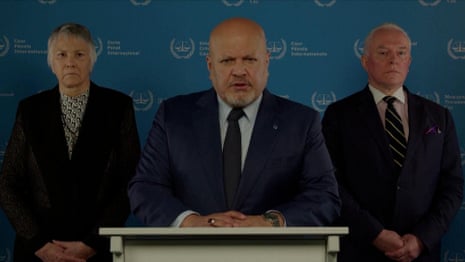
That investigation, launched in 2021, culminated last week when Bensouda’s successor, Karim Khan, announced that he was seeking an arrest warrant for the Israeli prime minister, Benjamin Netanyahu, over the country’s conduct in its war in Gaza.

The prosecutor’s decision to apply to the ICC’s pre-trial chamber for arrest warrants for Netanyahu and his defence minister, Yoav Gallant, alongside three Hamas leaders, is an outcome Israel’s military and political establishment has long feared.

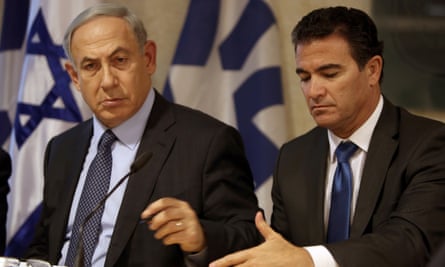
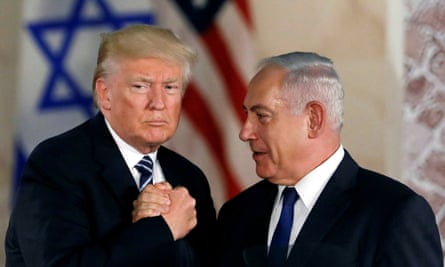
Netanyahu and Cohen

Cohen (right) was appointed as director of the Mossad by Netanyahu in 2016 after working for several years as his national security adviser. Photograph: Gali Tibbon/AFP/Getty Images

Cohen’s personal involvement in the operation against the ICC took place when he was the director of the Mossad. His activities were authorised at a high level and justified on the basis the court posed a threat of prosecutions against military personnel, according to a senior Israeli official.

Another Israeli source briefed on the operation against Bensouda said the Mossad’s objective was to compromise the prosecutor or enlist her as someone who would cooperate with Israel’s demands.

A third source familiar with the operation said Cohen was acting as Netanyahu’s “unofficial messenger”.

Cohen, who was one of Netanyahu’s closest allies at the time and is emerging as a political force in his own right in Israel, personally led the Mossad’s involvement in an almost decade-long campaign by the country to undermine the court.

Four sources confirmed that Bensouda had briefed a small group of senior ICC officials about Cohen’s attempts to sway her, amid concerns about the increasingly persistent and threatening nature of his behaviour.

ICC prosecutor requests arrest warrants for Netanyahu, Gallant and three Hamas leaders – video

ICC prosecutor requests arrest warrants for Netanyahu, Gallant and three Hamas leaders – video

Three of those sources were familiar with Bensouda’s formal disclosures to the ICC about the matter. They said she revealed Cohen had put pressure on her on several occasions not to proceed with a criminal investigation in the ICC’s Palestine case.

According to accounts shared with ICC officials, he is alleged to have told her: “You should help us and let us take care of you. You don’t want to be getting into things that could compromise your security or that of your family.”

One individual briefed on Cohen’s activities said he had used “despicable tactics” against Bensouda as part of an ultimately unsuccessful effort to intimidate and influence her. They likened his behaviour to “stalking”.

The Mossad also took a keen interest in Bensouda’s family members and obtained transcripts of secret recordings of her husband, according to two sources with direct knowledge of the situation. Israeli officials then attempted to use the material to discredit the prosecutor.

The revelations about Cohen’s operation form part of a forthcoming investigation by the Guardian, the Israeli-Palestinian publication +972 Magazine and the Hebrew-language outlet Local Call, revealing how multiple Israel intelligence agencies ran a covert “war” against the ICC for almost a decade.

Contacted by the Guardian, a spokesperson for Israel’s prime minister’s office said: “The questions forwarded to us are replete with many false and unfounded allegations meant to hurt the state of Israel.” Cohen did not respond to a request for comment. Bensouda declined to comment.

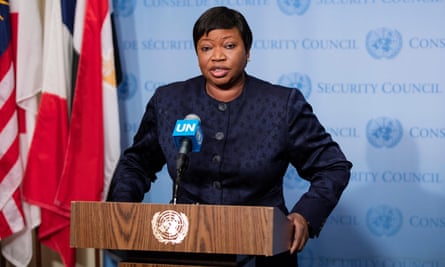
Fatou Bensouda stands next to various national flags at a lectern that features the UN logo.

The ICC case dates back to 2015, when Fatou Bensouda decided to open a preliminary examination into the situation in Palestine. Photograph: Pacific Press Media Production Corp/Alamy

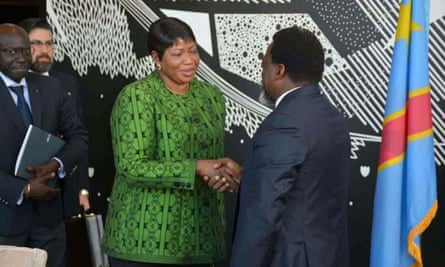
In the Mossad’s efforts to influence Bensouda, Israel received support from an unlikely ally: Joseph Kabila, the former president of the Democratic Republic of the Congo, who played a supporting role in the plot.

Revelations about the Mossad’s efforts to influence Bensouda come as the current chief prosecutor, Khan, warned in recent days that he would not hesitate to prosecute “attempts to impede, intimidate or improperly influence” ICC officials.

According to legal experts and former ICC officials, efforts by the Mossad to threaten or put pressure on Bensouda could amount to offences against the administration of justice under article 70 of the Rome statute, the treaty that established the court.

A spokesperson for the ICC would not say whether Khan had reviewed his predecessor’s disclosures about her contacts with Cohen, but said Khan had never met or spoken to the head of the Mossad.

While the spokesperson declined to comment on specific allegations, they said Khan’s office had been subjected to “several forms of threats and communications that could be viewed as attempts to unduly influence its activities”.

Bensouda sparks ire of Israel

Khan’s decision to seek arrest warrants against Netanyahu and Gallant last week marked the first time the court had taken action against leaders of a country closely allied with the US and Europe. Their alleged crimes – which include directing attacks on civilians and using starvation as a method of warfare – relate to the eight-month war in Gaza.

The ICC case, however, dates back to 2015, when Bensouda decided to open a preliminary examination into the situation in Palestine. Short of a full investigation, her inquiry was tasked with making an initial assessment of allegations of crimes by individuals in Gaza, the West Bank and East Jerusalem.

Bensouda’s decision sparked the ire of Israel, which feared its citizens could be prosecuted for their involvement in operations in Palestinian territories. Israel had long been open about its opposition to the ICC, refusing to recognise its authority. Israeli ministers intensified their attacks on the court and even vowed to try to dismantle it.

Soon after commencing the preliminary examination, Bensouda and her senior prosecutors began to receive warnings that Israeli intelligence was taking a close interest in their work.

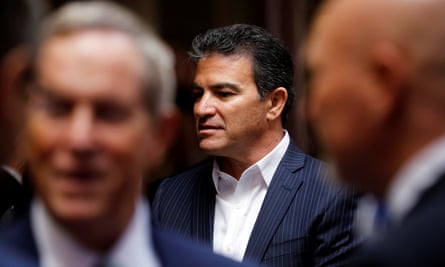
Differential focus image that centres Yossi Cohen among a crowd of suited men

Yossi Cohen during a reception held at the Israeli foreign ministry in Jerusalem, in May 2018. Photograph: Amir Cohen/Reuters

According to two sources, there were even suspicions among senior ICC officials that Israel had cultivated sources within the court’s prosecution division, known as the office of the prosecutor. Another later recalled that although the Mossad “didn’t leave its signature”, it was an assumption the agency was behind some of the activity officials had been made aware of.

Only a small group of senior figures at the ICC, however, were informed that the director of the Mossad had personally approached the chief prosecutor.

A career spy, Cohen enjoys a reputation in Israel’s intelligence community as an effective recruiter of foreign agents. He was a loyal and powerful ally of the prime minister at the time, having been appointed as director of the Mossad by Netanyahu in 2016 after working for several years at his side as his national security adviser.

As the head of the national security council between 2013 and 2016, Cohen oversaw the body that, according to multiple sources, began to coordinate a multiagency effort against the ICC once Bensouda opened the preliminary inquiry in 2015.

Cohen’s first interaction with Bensouda appears to have taken place at the Munich security conference in 2017, when the Mossad director introduced himself to the prosecutor in a brief exchange. After this encounter, Cohen subsequently “ambushed” Bensouda in a bizarre episode in a Manhattan hotel suite, according to multiple sources familiar with the incident.

Bensouda shaking hands with a bearded Joseph Kabila

Bensouda with Joseph Kabila in New York. Sources claim the then DRC leader played an important supporting role in the Mossad’s plot against the ICC’s chief prosecutor. Photograph: ICC

Bensouda was in New York in 2018 on an official visit, and was meeting Kabila, then the president of the DRC, at his hotel. The pair had met several times before in relation to the ICC’s ongoing investigation into alleged crimes committed in his country.

The meeting, however, appears to have been a setup. At a certain point, after Bensouda’s staff were asked to leave the room, Cohen entered, according to three sources familiar with the meeting. The surprise appearance, they said, caused alarm to Bensouda and a group of ICC officials travelling with her.

Why Kabila helped Cohen is unclear, but ties between the two men were revealed in 2022 by the Israeli publication TheMarker, which reported on a series of secretive trips the Mossad director made to the DRC throughout 2019.

Do you have information about this story? Email harry.davies@theguardian.com, or (using a non-work phone) use Signal or WhatsApp to message +44 7721 857348.

According to the publication, Cohen’s trips, during which he sought Kabila’s advice “on an issue of interest to Israel”, and which were almost certainly approved by Netanyahu, were highly unusual and had astonished senior figures within the intelligence community.

Reporting on the DRC meetings in 2022, the Israeli broadcaster Kan 11 said Cohen’s trips related to an “extremely controversial plan” and cited official sources who described it as “one of Israel’s most sensitive secrets”.

Multiple sources have confirmed to the Guardian the trips were partly related to the ICC operation, and Kabila, who left office in January 2019, played an important supporting role in the Mossad’s plot against Bensouda. Kabila did not respond to a request for comment.

‘Threats and manipulation’

After the surprise meeting with Kabila and Bensouda in New York, Cohen repeatedly phoned the chief prosecutor and sought meetings with her, three sources recalled. According to two people familiar with the situation, at one stage Bensouda asked Cohen how he had obtained her phone number, to which he replied: “Did you forget what I do for a living?”

Initially, the sources explained, the intelligence chief “tried to build a relationship” with the prosecutor and played “good cop” in an attempt to charm her. The initial objective, they said, appeared to have been to enlist Bensouda into cooperating with Israel.

Over time, however, the tone of Cohen’s contact changed and he began to use a range of tactics, including “threats and manipulation”, an individual briefed on the meetings said. This prompted Bensouda to inform a small group of senior ICC officials about his behaviour.

In December 2019, the prosecutor announced that she had grounds to open a full criminal investigation into allegations of war crimes in Gaza, the West Bank and East Jerusalem. However, she held off launching it, deciding first to request a ruling from the ICC’s pre-trial chamber to confirm the court did indeed have jurisdiction over Palestine.

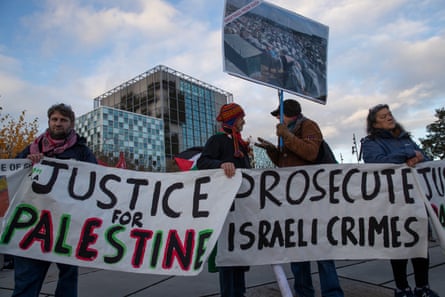
Demonstrators carry banners outside the ICC

Protesters gather outside the ICC to call for the court to prosecute Israel for war crimes. Photograph: Peter Dejong/AP

Multiple sources said it was at this stage, as the judges considered the case, that Cohen escalated his attempts to persuade Bensouda not to pursue a full investigation in the event the judges gave her the green light.

Between late 2019 and early 2021, the sources said, there were at least three encounters between Cohen and Bensouda, all initiated by the spy chief. His behaviour is said to have become increasingly concerning to ICC officials.

A source familiar with Bensouda’s accounts of the final two meetings with Cohen said he had raised questions about her security, and that of her family, in a manner that led her to believe he was threatening her.

On one occasion, Cohen is said to have shown Bensouda copies of photographs of her husband, which were taken covertly when the couple were visiting London. On another, according to sources, Cohen suggested to the prosecutor that a decision to open a full investigation would be detrimental to her career.

Four sources familiar with the situation said it was around the same time that Bensouda and other ICC officials discovered that information was circulating among diplomatic channels relating to her husband, who worked as an international affairs consultant.

Between 2019 and 2020, the Mossad had been actively seeking compromising information on the prosecutor and took an interest in her family members.

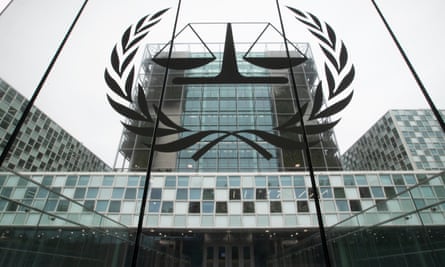
The international criminal court in The Hague

In February 2021, it was confirmed that the ICC had jurisdiction in occupied Palestinian territories. Photograph: Peter Dejong/AP

The spy agency obtained a cache of material, including transcripts of an apparent sting operation against her husband.

It is unclear who conducted the operation, or precisely what he is alleged to have said in the recordings. One possibility is that he had been targeted by the intelligence agency or by private actors of another country that wanted leverage over the ICC. Another possibility is the information was fabricated.

Once in the possession of Israel, however, the material was used by its diplomats in an unsuccessful attempt to undermine the chief prosecutor. But according to multiple sources, Israel failed to convince its allies of the significance of the material.

Three sources briefed on the information shared by Israel at a diplomatic level described the efforts as part of an unsuccessful “smear campaign” against Bensouda. “They went after Fatou,” one source said, but it had “no impact” on the prosecutor’s work.

Trump and Netanyahu shake hands

Trump and Netanyahu. The Trump administration imposed visa restrictions and sanctions on Bensouda in 2019-20. Photograph: Ronen Zvulun/Reuters

The diplomatic efforts were part of a coordinated effort by the governments of Netanyahu and Donald Trump in the US to place public and private pressure on the prosecutor and her staff.

Between 2019 and 2020, in an unprecedented decision, the Trump administration imposed visa restrictions and sanctions on the chief prosecutor. The move was in retaliation to Bensouda’s pursuit of a separate investigation into war crimes in Afghanistan, allegedly committed by the Taliban and both Afghan and US military personnel.

However, Mike Pompeo, then US secretary of state, linked the sanctions package to the Palestine case. “It’s clear the ICC is only putting Israel in [its] crosshairs for nakedly political purposes,” he said.

Months later, he accused Bensouda, without citing any evidence, of having “engaged in corrupt acts for her personal benefit”.

The US sanctions were rescinded after President Joe Biden entered the White House.

In February 2021, the ICC’s pre-trial chamber issued a ruling confirming the ICC had jurisdiction in occupied Palestinian territories. The following month, Bensouda announced the opening of the criminal investigation.

“In the end, our central concern must be for the victims of crimes, both Palestinian and Israeli, arising from the long cycle of violence and insecurity that has caused deep suffering and despair on all sides,” she said at the time.

Bensouda completed her nine-year term at the ICC three months later, leaving it to her successor, Khan, to take up the investigation. It was only after the Hamas attacks on Israel on 7 October and the ensuing war on Gaza that the ICC’s investigation gained renewed urgency, culminating in last week’s request for arrest warrants.

It was the conclusion Israel’s political, military and intelligence establishment had feared. “The fact they chose the head of Mossad to be the prime minister’s unofficial messenger to [Bensouda] was to intimidate, by definition,” said a source briefed on Cohen’s operation. “It failed.”

Original: https://www.theguardian.com/world/article/2024/may/28/israeli-spy-chief-icc-prosecutor-war-crimes-inquiry?CMP=twt_b-gdnnews
–

Categories
Saved Web Pages - Audio Posts

In Trump’s hush money trial, prosecutors and defense lawyers are poised to make final pitch to jury

NEW YORK (AP) — Prosecutors and defense lawyers in Donald Trump’s hush money trial are set to deliver closing arguments to the jury Tuesday, each side looking to score final points with the panel before it starts deliberating the fate of the first former American president to be charged with felony crimes.

The arguments, expected to last the entire day, will give the attorneys one last chance to address the Manhattan jury hearing the landmark case. After more than four weeks of testimony, the summations tee up a momentous and historically unprecedented task for the jury as it decides whether to convict the presumptive Republican presidential nominee in connection with payments during the 2016 election to prevent a porn actor from going public with her claims of a sexual encounter with Trump.

Prosecutors will tell jurors that they have heard enough testimony to convict Trump of all charges while defense attorneys will aim to create doubts about the strength of evidence by targeting the credibility of Michael Cohen, Trump’s former lawyer and personal fixer who pleaded guilty to federal charges for his role in the hush money payments and who served as the star prosecution witness in the trial.

After the closing arguments are given, the judge will instruct the jury, likely Wednesday, on the law governing the case and the factors it can take into account during deliberations. The deliberations will then proceed in secret, though some clues as to the jury’s thinking may arrive through any notes it sends to the judge with questions.

Trump faces 34 felony counts of falsifying business records, charges punishable by up to four years in prison. He has pleaded not guilty and denied any wrongdoing. It’s unclear whether prosecutors would seek imprisonment in the event of a conviction, or if the judge would impose that punishment if asked.

The case centers on a $130,000 payment Cohen made to porn actor Stormy Daniels in the final days of the 2016 election to prevent her from going public with her story of a sexual encounter she says she had with Trump 10 years earlier in a Lake Tahoe hotel suite. Trump has denied Daniels’ account, and his attorney, during hours of questioning in the trial, accused her of making it up.

When Trump reimbursed Cohen, the payments were logged as being for legal services, which prosecutors say was designed to conceal the true purpose of the transaction with Daniels and to illegally interfere in the 2016 election, in which Trump defeated Democrat Hillary Clinton.

FILE - Former President Donald Trump speaks to reporters at Manhattan Criminal Court, May 21, 2024 in New York. Trump has spent the majority of his time as a criminal defendant sitting nearly motionless for hours, leaning back in his chair with his eyes closed. It is in part a strategy in response to warnings that behaving like he has in past trials could backfire. Trump has also been able to speak several times a day to a gaggle of media camped outside the courtroom, giving him an outlet to vent his frustrations. (Michael M. Santiago/Pool Photo via AP, File)

Former President Donald Trump speaks to reporters at Manhattan Criminal Court, May 21, 2024 in New York. (Michael M. Santiago/Pool Photo via AP, File)

Trump’s lawyers contend they were legitimate payments for actual legal services, and they say that his celebrity status, particularly during the campaign, made him a target for extortion, points they are expected to revisit during their closing arguments Tuesday.

The nearly two dozen witnesses included Daniels, who described in sometimes vivid detail the encounter she says she had with Trump; David Pecker, the former publisher of the National Enquirer, who testified that he used his media enterprise to protect Trump by squelching stories that could harm his campaign, including by paying $150,000 to a former Playboy model to keep her from going public with a claim that she had had a yearlong affair with Trump; and Cohen, who testified that Trump was intimately involved in the hush money discussions — “Just pay it,” the now-disbarred lawyer quoted Trump as saying.

Prosecutors are expected to remind jurors of the bank statements, emails and other documentary evidence they have viewed, as well as an audio recording in which Cohen and Trump can be heard discussing the deal involving the Playboy model, Karen McDougal.

Defense lawyers called two witnesses — neither of them Trump. They focused much of their energy on discrediting Cohen, pressing him on his own criminal history, his past lies and his recollection of key details.

Jurors take notes as Stormy Daniels testifies in Manhattan criminal court, Tuesday, May 7, 2024, in New York. The testimony in Donald Trump's hush money trial is all wrapped up after more than four weeks and nearly two dozen witnesses, meaning the case heads into the pivotal final stretch of closing arguments, jury deliberations and possibly a verdict. The deliberations will proceed in secret, in a room reserved specifically for jurors and in an process that's intentionally opaque. (Elizabeth Williams via AP)

Jurors take notes as Stormy Daniels testifies in Manhattan criminal court, Tuesday, May 7, 2024, in New York. (Elizabeth Williams via AP)

On cross-examination, for instance, Cohen admitted stealing tens of thousands of dollars from Trump’s company by asking to be reimbursed for money he had not spent. Cohen acknowledged once telling a prosecutor he felt that Daniels and her lawyer were extorting Trump.

Though jurors witnessed numerous memorable moments, they won’t be told during closing arguments about exchanges and rulings that occurred outside their presence — and there were many. Judge Juan M. Merchan, for instance, fined Trump $10,000 for violating a gag order barring incendiary out-of-court comments and threatened to jail him if it continued.

The New York prosecution is one of four criminal cases Trump is confronting as he seeks to reclaim the White House from Democrat Joe Biden.

The three other state and federal cases center on charges of illegally hoarding classified documents at his estate in Palm Beach, Florida, and conspiring to overturn the 2020 presidential election. But it’s unclear that any of them will reach trial before the November election.

___

Follow the AP’s coverage of former President Donald Trump at https://apnews.com/hub/donald-trump.

Categories
Saved Web Pages - Audio Posts

Russia’s Military Shaken as Top-Level Purge Unfolds

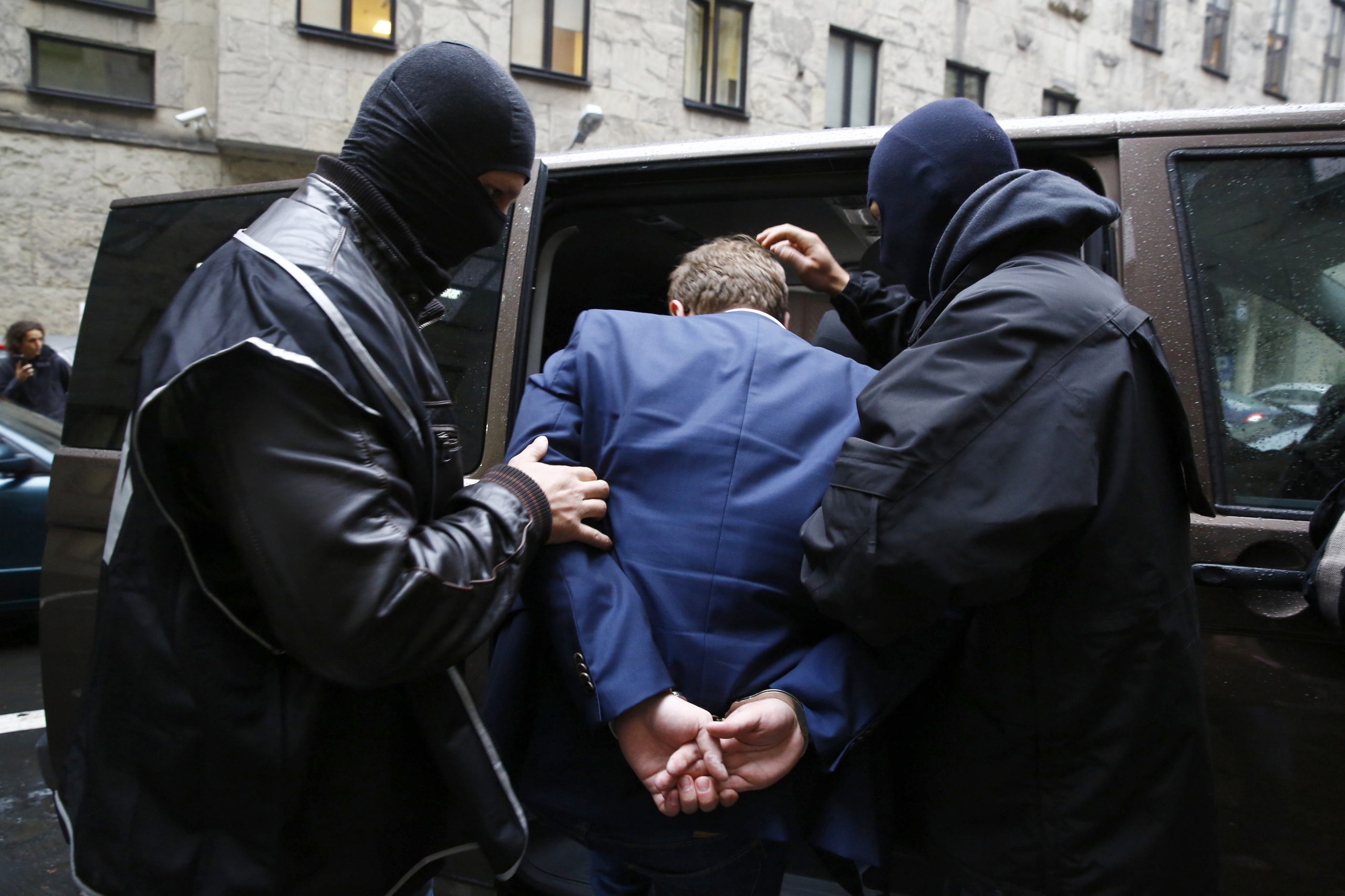
2014-10-17T000000Z_2114901080_GM1EAAH1SH

Taken together, the arrests of at least four senior officers amount to the most serious attack on the Russian military in close to 25 years of Putin’s rule.

One by one, military officials are being thrown into jail. With the situation on the battlefield in Ukraine looking more favorable for the Kremlin than for some time, Putin appears to think this an appropriate moment to punish the army for the failures of 2022.

His repressive instrument of choice is, as always, his security service the FSB.

The campaign started within the Ministry of Defense, taking as its first victim Deputy Minister Timur Ivanov on April 23. This did not raise many eyebrows — Ivanov was famous for his lavishly luxurious lifestyle, which had long suggested possible corruption.

Three weeks later, Lt-Gen Yuri Kuznetsov, head of the personnel department at the ministry, was arrested on allegations that he was found with more than $1m in cash and valuables.

Like Ivanov’s detention, this could be waved away as not especially significant and was not thought likely to have any immediate implications for the Russian war in Ukraine. More probable, it was said, the move was just a follow-up to Sergey Shoigu losing his job as head of the ministry and moving to a new role as Secretary of the Security Council.

Then, suddenly in the week of May 20, the purge claimed two new victims, and this time it involved generals actually conducting the war — a former commander of the 58th army Maj-Gen Ivan Popov, and Lt-Gen Vadim Shamarin, deputy head of the general staff in charge of army communications.

It is notable that none of the charges relate to the conduct of Russia’s war in Ukraine. All are corruption-related, alleging massive fraud and large-scale bribe-taking.

In all cases the scheme of an attack is identical — while the criminal case is examined by the Investigative Committee, a sort of Russian FBI, the Committee uses the materials provided by the Military Counterintelligence department of the FSB (DVKR – Department Voeinnoi Konttrazvedki.)

The DVKR’s name suggests it aims to identify foreign spies in the Russian army, but that’s not exactly the case: the department has been always considered a tool to keep the military obedient, a way to secure the army’s loyalty to the existing regime. 

Putin realized the need for such an organization almost immediately after he came to power in 2000. As early as February of that year, he signed into law the “Regulations for FSB Directorates in the Armed Forces,” which expanded the functions of military counterintelligence and gave it the power to fight organized crime.

Get the Latest

Sign up to receive regular emails and stay informed about CEPA’s work.

His 2000 decree broadened the role of FSB officers in the army to include the uncovering of possible threats to the regime. Added to their professional responsibilities was the fight against “illegal armed formations, criminal groups, and individuals and public associations which have set as their goal a violent change of the political system of the Russian Federation and the violent seizure or violent retention of power.” Thus Putin reinstated the FSB’s military counterintelligence department as the watchdog of army morale and also charged the agency with scenting out potential mutiny.

The army, which had hated and feared military counterintelligence since Soviet times (they were referred to as Osobists, from the Osoby Otdel, a special department, or as Major Molchi-Molchi meaning a Shush-Shush Major), took the hint.

Curiously, the huge powers given by Putin to this department didn’t make the FSB’s military counterintelligence department a political actor.

In fact, the department, by far the biggest within FSB, proved to be the least ambitious among the departments of the security service. Throughout the 2000s and 2010s the departmental heads (in 25 years there were only three) kept a low profile and always steered clear of political games.

There have been temptations. Most recently, the late mercenary leader Evgeny Prigozhin attempted to lure the head of the department into his intrigues, sending a letter to the head of the DVKR Nikolay Yuriev. Fighting to save his Wagner Group and (as it turned out) his life, he never received a reply from the intelligence officer.

The department was more focused on a systematic effort to improve its public image — sponsoring historical research, and helping with war movies set in the Great Patriotic War. It was such a large-scale propaganda effort that by the end of the 2010s one could easily think that it was the smart and heroic military counterintelligence officers of Smersh (Stalin’s military counterintelligence agency) who won the war, rather than the ordinary soldier.

But that unwavering loyalty, together with the department’s public relations campaign, has paid off now in the time of war.

The DVKR has been constantly expanding its operations since February 2022. The department took charge of the processing of PoWs in filtration camps, harassing Ukrainian civilians in the occupied territories, and acting against Ukrainian underground groups. The department set up new ad-hoc teams to supervise troops on the battlefield.

Confirmation of the department’s rising star can be seen in several ways. DVKR officers are now involved in more and more investigations in Russia, which had nothing to do with the military, and politicians are calling for the regime to reinstate Smersh and give more powers to the DVKR.

Russian officers understand that “compromising materials” collected by the DVKR, which form the pretext for the arrests, are likely available on almost anyone in the army and can be swiftly presented when needed.

The message doesn’t need too much elaboration — Vladimir Putin is cold-blooded enough to take his revenge at any moment of his choosing. No one is safe.

Andrei Soldatov and Irina Borogan are Non-resident Senior Fellows with the Center for European Policy Analysis (CEPA.) They are Russian investigative journalists, and co-founders of Agentura.ru, a watchdog of Russian secret service activities.

Europe’s Edge is CEPA’s online journal covering critical topics on the foreign policy docket across Europe and North America. All opinions are those of the author and do not necessarily represent the position or views of the institutions they represent or the Center for European Policy Analysis.

Europe’s Edge

CEPA’s online journal covering critical topics on the foreign policy docket across Europe and North America.

Read More

Categories
Saved Web Pages - Audio Posts

FSB Launches Sweeping Purge of Military Elites With Kremlin’s Approval

The recent arrests of five top Russian military officers are likely just the first of dozens of military figures who will be jailed in a sweeping purge by the security services, Russian government officials and sources close to the Kremlin and the Defense Ministry told The Moscow Times.

Ostensibly an effort to stamp out military corruption, the Federal Security Service (FSB) is going after high-ranking generals in hopes of pinning the blame for the botched 2022 invasion of Ukraine on the military’s top brass and taking control of the distribution of the army’s vast budget — all with the Kremlin’s tacit approval.

But the arrests risk throwing the army into disorder at a time when Moscow is seeking to capitalize on Kyiv’s weapons shortages and press further into Ukrainian territory.

All of The Moscow Times’ sources requested anonymity in order to discuss a sensitive matter involving both the military and the FSB.

“There is a fierce cleanup underway. The FSB is mopping up [former Defense Minister Sergei] Shoigu’s team. It’s to be expected. This kind of operation can only be carried out with approval at the very top [of the country’s leadership],” a source close to the Kremlin told The Moscow Times.

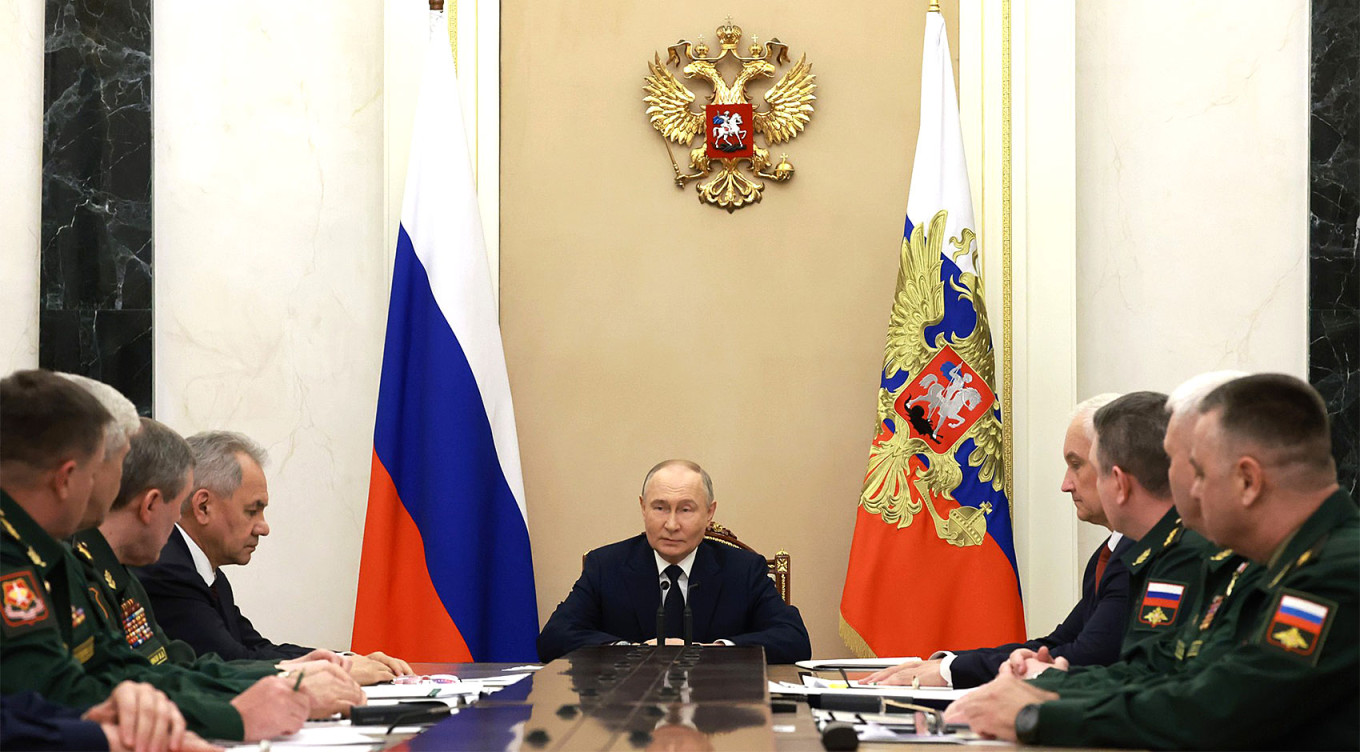
A meeting with commanders of troops of military districts. kremlin.ru A meeting with commanders of troops of military districts. kremlin.ru

The purge appears to be the culmination of wartime infighting and competition for resources between the security services and the Defense Ministry — and marks a victory for the FSB, the successor to the Soviet KGB, in currying ex-KGB agent President Vladimir Putin’s favor.

“There is still a long way to go before the purges are finished. More arrests await us,” he added. 

In the two weeks since longtime defense chief Shoigu’s surprise ouster, four high-ranking officers have been arrested on charges ranging from bribery to abuse of power, the latest of which came late Thursday evening. 

As these arrests gain momentum, they could widen into the “largest purges” in modern Russian history, an acting Russian government official told The Moscow Times. 

“I think by the end of the year, dozens, maybe hundreds of people of different ranks will be arrested in all Defense Ministry units,” the Russian government official said.

Security service officers handling corruption investigations had visited the Defense Ministry’s headquarters on Frunzenskaya Embankment even before Deputy Defense Minister Timur Ivanov’s arrest went public in late April, a source close to the ministry told The Moscow Times.

“There are more Chekists there [in the Defense Ministry building] now than military personnel, it seems to me,” the source said with sarcasm, using the Soviet-era term for security officials.

The Kremlin was quick to assert that the arrests were nothing more than the result of ongoing work to root out corruption at every level of the government.

“This is constant and consistent work to fight corruption, not a campaign,” Putin’s spokesman Dmitry Peskov said Thursday.

But even though independent media, the opposition and international observers have reported on the army’s rampant corruption for years — and pro-war bloggers have criticized military graft throughout the war in Ukraine — the arrests of generals only started once it became clear that Shoigu would lose his job. 

Following Ivanov’s arrest, investigators said the probe into his affairs had been underway for over five years, underscoring the fact that the authorities knew about the military’s corruption long before the latest arrests.

“There has been loads of information about corruption schemes in the Defense Ministry, criminal cases have been piled up. But while Shoigu was a minister and had enormous influence, investigators were not allowed to pursue them,” a second government official told The Moscow Times.

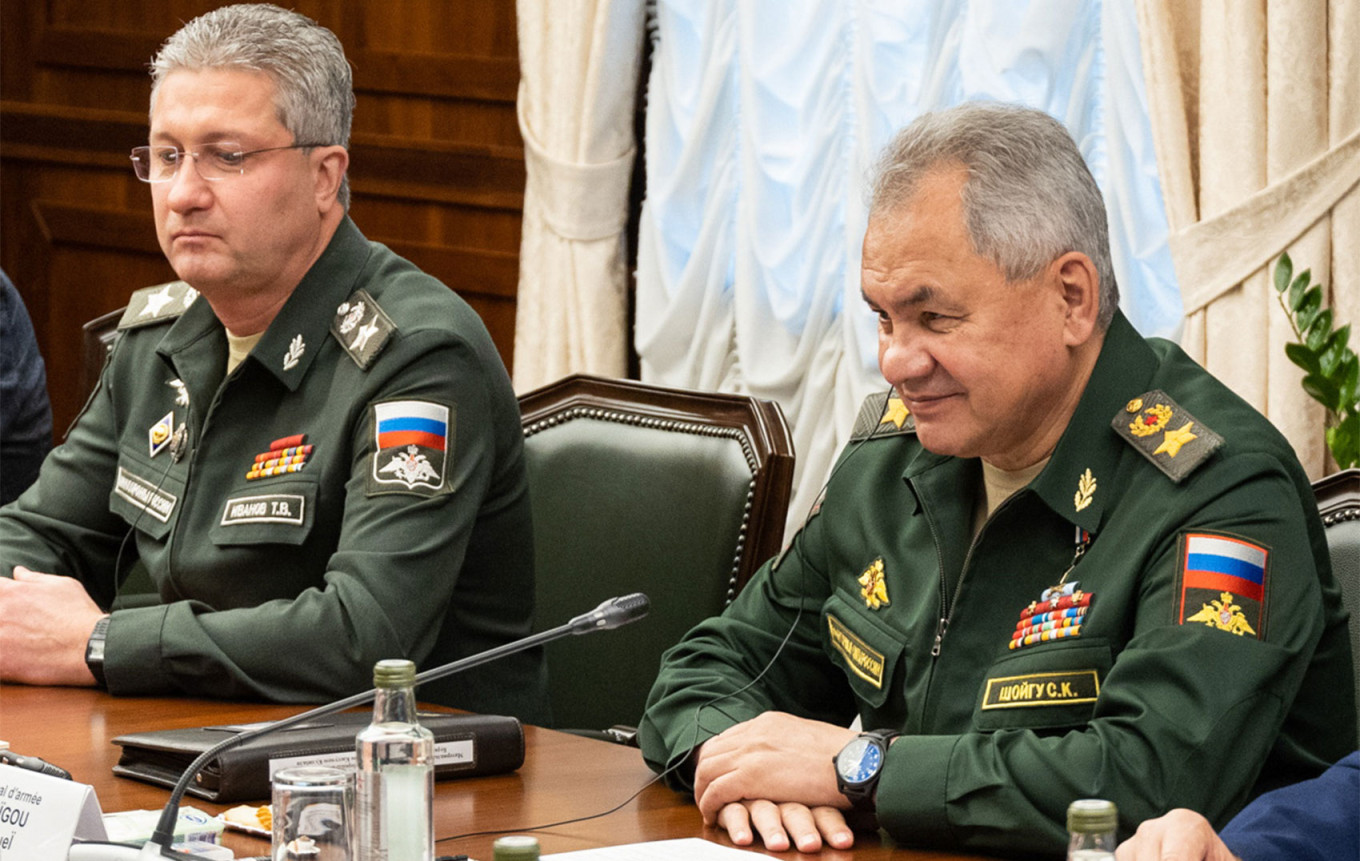
Former Russian Defense Minister Sergei Shoigu and his deputy Timur Ivanov in 2023. Russian Defense Ministry / TASS Former Russian Defense Minister Sergei Shoigu and his deputy Timur Ivanov in 2023. Russian Defense Ministry / TASS

The FSB’s Kremlin-authorized campaign shows that the security services are “triumphing” in the confrontation between the two leading wartime security agencies — the army and the FSB — a source close to the Kremlin told The Moscow Times.

“There must be one single party to blame for the failure of the invasion,” the source said.

“It is either the special services, which were engaged in intelligence and analytical preparations for the war and promised Putin a triumphant operation and a quick victory but failed,” he said, “or the ‘second army of the world’ under PR-czar Shoigu which was supposed to ensure Putin’s victory — but turned out to be a paper tiger and failed miserably.”

And although last week’s post-inauguration reshuffle saw the removal of both Security Council chief Nikolai Patrushev, the coordinator of the security services, and Shoigu, the head of the military, the FSB has nonetheless won in this standoff.

In addition, FSB officials could receive promotions and awards for their “fight against corruption” in the halls of power.

“The FSB’s task, at most, is to install its own people and control the tastiest things: those areas where there are big budgets,” a second acting government official told The Moscow Times.

When asked whether the purges could hinder the war effort by throwing the military leadership into disarray at a time when Russia is seeking to take advantage of Kyiv’s munitions shortages, the source said: “Do you really think that any of them [the FSB] at this moment are worried about the success of the special operation?”

… we have a small favor to ask. As you may have heard, The Moscow Times, an independent news source for over 30 years, has been unjustly branded as a “foreign agent” by the Russian government. This blatant attempt to silence our voice is a direct assault on the integrity of journalism and the values we hold dear.

We, the journalists of The Moscow Times, refuse to be silenced. Our commitment to providing accurate and unbiased reporting on Russia remains unshaken. But we need your help to continue our critical mission.

Your support, no matter how small, makes a world of difference. If you can, please support us monthly starting from just $2. It’s quick to set up, and you can be confident that you’re making a significant impact every month by supporting open, independent journalism. Thank you.

Not ready to support today? Remind me later.

Categories
Saved Web Pages - Audio Posts

‘Putin’s patience snapped’: Insiders marvel at Russia’s military purge

In the weeks since Vladimir Putin sacked his longtime defence minister Sergei Shoigu, Russia’s FSB security service has pursued a series of high-level corruption cases against a deputy minister and department heads in what many insiders are now calling a purge in the defence ministry.

Andrei Belousov, the technocrat economist appointed to replace Shoigu, has a mandate to reduce corruption in the defence ministry and streamline military production for a long war against Ukraine that could largely be decided by industrial output.

But former defence and Kremlin officials, ex-officers and foreign observers have said it was likely the exit of Shoigu and loss of his protection that has allowed the FSB, the Russian security department responsible for internal investigations, to take down powerful officials in a power struggle that could have knock-on effects for how Russia fights the war in Ukraine.

“The FSB finally got their teeth in the defence ministry and general staff,” said Capt John Foreman, the UK’s former defence attache to Moscow, who said he believed the arrests could continue after “Putin’s patience had finally snapped”.

“Shoigu and Gerasimov provided a buffer, but now Putin decided he had to do something,” he said. “Shoigu kept the FSB largely away from the ministry throughout his tenure, there were very few arrests. Once the FSB has their teeth in you, who knows how far they will go.”

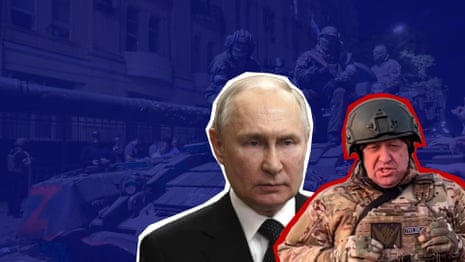
Throughout the war in Ukraine, Shoigu and Gerasimov have come under fire from pro-war advocates for the military’s setbacks and their failure to eradicate pervasive corruption within the armed forces. Last summer, this dissatisfaction reached its peak when Yevgeny Prigozhin, the founder of the Wagner paramilitary group, initiated an unsuccessful rebellion against the military’s leaders.

Will the Wagner mutiny cost Putin power in Russia? – video explainer

Will the Wagner mutiny cost Putin power in Russia? – video explainer

Interagency rivalries run deep in Russia, and Shoigu’s ouster may have given investigators in the FSB and investigative committee an opportunity to dust off criminal cases against the top brass in an effort to seek promotions and praise.

“It’s the dream of any investigator to put a real live deputy minister of defence in prison, it’s cool, it’s the dream of a lifetime,” said one former Kremlin official. “You get new epaulettes for that, a promotion, some kind of award. You can earn a reputation for that.”

In the case of high-level prosecutions, the official said, Putin would probably be informed before an arrest was sought. But, the official added, he said it was unlikely the corruption cases were being initiated by the Kremlin itself.

In the span of a month, four top defence officials were arrested on corruption charges, marking the most significant crackdown in the defence ministry in years. The purge began on 23 April with the shock arrest of the veteran deputy defence minister Timur Ivanov for suspected bribe-taking.

Addressing the recent series of arrests, the Kremlin on Thursday denied any suggestion of a crackdown within the defence ministry.

“The fight against corruption is consistent work,” the Kremlin spokesperson Dmitry Peskov told reporters on Thursday. “It is not a campaign, it is constantly ongoing work.” Ivanov was a long-term confidant and protege of Sergei Shoigu. His detention is believed to have laid the groundwork for Shoigu’s dismissal, who was subsequently replaced as defence minister by Belousov.

In the weeks that followed, additional high-ranking officials were detained. These included Yuri Kuznetsov, the head of the ministry’s personnel department, and Vadim Shamarin, the head of the communications department of the Russian general staff. Hours after Shamarin’s arrest on Thursday, Russia’s investigative committee also reported detaining another defence ministry official – Vladimir Verteletsky, who headed a division in the state defence procurement department of the ministry.

While the Kremlin announced earlier this month that Russia’s top general, Valery Gerasimov, the chief of the general staff, would retain his position, the arrest of Shamarin, a direct deputy of Gerasimov, could weaken the general’s standing within the military hierarchy.

“The probability of Gerasimov’s dismissal has gone up. I would sell my shares in him right now,” said Foreman.

A former defence official said the arrests showed that the balance of power had swung in favour of Russia’s security services, while its military appears in disarray.

“The FSB’s department of counterintelligence operations (1st division) is becoming increasingly powerful. They currently hold all the cards and are tightening the screws,” said the official, who worked closely with Ivanov and Shoigu.

“It is not that Belousov’s arrival led to the purges, but the departure of Shoigu and his strongmen resource that enabled the arrest,” the official continued. “Shoigu in the end was a silovik [member of the security elite] and had their backing.”

Russian prosecutors have also gone after a senior general best known for his criticism of Shoigu and Gerasimov.

Maj Gen Ivan Popov, who commanded the 58th Combined Arms force, said last summer that he had been fired after he brought up problems on the battlefield, including the lack of counter-battery fire, and deaths and injuries the army was suffering from Ukrainian attacks. Popov, who Russian media said stood accused of stealing 100m roubles (£868,569) of metal, was arrested on Tuesday and placed in a pre-detention facility.

Gleb Irisov, a former Russian air force lieutenant who left the military in 2020, said he had spoken with an FSB source before the arrests who told him that the purge in the defence ministry would be prompted mainly by its failures in Ukraine.

“Under Sergei Shoigu, the defence ministry became heavily influenced by his personal network,” said Irisov. “From senior commanders to lower staff, key positions were filled with Shoigu’s picks – friends or friends of friends. He even created numerous deputy positions specifically for his allies.”

Those have included a reported mistress of Sergei Shoigu’s who headed companies that earned millions of pounds from contracts with the defence ministry.

Irisov said he regularly discovered substandard equipment in the military, including lightbulbs that melted at supersonic speeds while flying Russia’s modern Su-35 air-defence fighter, as well as shoddy trucks and air defence systems unable to shoot down modern drones. He said in part their deficiencies were the result of corruption under Shoigu.

“The overall quality of the military suffered because funds were routinely embezzled,” he said. “Military exercises often existed only on paper, as the allocated money was siphoned off.”

Categories
Saved Web Pages - Audio Posts

VIDEO: Big Intel—An Interview with J. Michael Waller by National Association of Scholars | NAS

Most Commented

The mobs desecrating the American flag, smashing windows, chanting genocidal slogans—this always was the end game of the advocates of the right to protest, action civics, student activ……

Claireve Grandjouan, when I knew her, was Head of the Classics Department at Hunter College, and that year gave a three-hour Friday evening class in Egyptian archaeology….

By all means, pursue your noble dream of improving the condition of humanity through your research and teaching. Could I do it all again, I would, but I would do things very differently….

Most Read

A look at the double standard that has arisen regarding racism, illustrated recently by the reaction to a black professor’s biased comments on Twitter….

What does it mean to be Latino? Are only Latin American people Latino, or does the term apply to anyone whose language derived from Latin?…

A reader asks, “If Elohim refers to multiple ‘gods,’ then Yhwh Elohim really means Lord of Gods…the one of many, right?” A Hebrew expert answers….

Categories
FBI Featured Posts Saved Web Pages - Audio Posts

To Fix the FBI, Abolish It

shutterstock_612694196-scaled-e171649611

Big Intel: How the CIA and FBI Went from Cold War Heroes to Deep State Villains, by J. Michael Waller, Regnery, 256 pages

Your perspective on the FBI depends a lot on when you grew up. If you are a reader of The American Conservative today and old enough to remember the classic television series The FBI starring the memorable actor Efrem Zimbalist Jr., you almost certainly still hold, somewhere hidden deep inside, a positive image of J. Edgar Hoover and the bureau.

The 1965–74 TV series was one of Hoover’s most brilliant PR successes. It burnished the FBI’s reputation in turbulent times, putting the bureau squarely on the side of millions of law-and-order Americans (many of us kids), who believed, rightly, that many radicals of that era were at war with our country.

As violent political insurgency and thousands of random bombings rocked the nation, we were reassured that a professional and patriotic FBI, personified by Zimbalist, was out there working the cases. It was always only a question of time, we believed, before Hoover’s G-men nailed dangerous radicals like the notorious Weather Underground, who planted bombs in public buildings, and the Symbionese Liberation Army (SLA), who could ruthlessly kidnap prominent citizens like Patty Hearst. 

We had no way of anticipating that the FBI’s failure to close down these violent radicals shrouded an even greater weakness: the bureau’s inability to protect American institutions from the Fabian revolutionaries who were subverting them from inside.

In an open society, it is a classically difficult mission for any undercover police or counter-intelligence service to counter a dedicated, home-grown enemy. The Weimar republic famously failed to prevent a repackaged Hitler from emerging as a “democrat.” In The Open Society and Its Enemies, Karl Popper should have added a chapter on the deviousness of Weathermen Bill Ayers and Bernardine Dohrn, who papered over their Marxist–Leninist past to reappear as counselors to a young politician named Barack Obama.

In his ambitious new book Big Intel, J. Michael Waller takes on these large questions, examining the historic performance of U.S. federal law enforcement and intelligence agencies, most significantly the FBI and CIA, in battling the subtle forces that have for decades eaten away at the country’s institutions and traditional values.  

Waller’s central thesis—no surprise—is that the subversives won out. The book argues that the revolutionary left not only outlasted the FBI and CIA, but ultimately unleashed the same destructive ideology inside the federal security agencies themselves. Big Intel is the disturbing story of how Marxist-inspired “critical theory” turned Zimbalist’s noble G-man into the infamous Peter Strzok. 

Waller knows his stuff. He is not only an academic with more than 40 years examining intelligence matters, but he also dabbled in espionage tradecraft himself back in the early 1980s Central America wars. The author argues that today’s problems inside the FBI and CIA are more fundamental than these agencies have become highly politicized. He believes the left has succeeded in remaking the core professional values that motivate today’s career FBI agents, CIA case officers, and the analysts who support their work. 

Waller argues that critical theory priorities, such as embracing identity politics and social justice activism, have remade the “institutional culture” in the national security agencies. Reshaped by their university experiences and today’s prevailing norms, today’s young FBI agent and CIA officer are self-absorbed and disinclined to sacrifice for their country. Their idea of patriotism is to think globally and fight climate change. Their sworn oath to the Constitution is about protecting the government from conservatives who challenge a woke agenda.  

A skeptic might accuse Waller of having interviewed too many grumpy old federal agents with nostalgia for the higher standards of a bygone era. But the argument of Big Intel is that America’s enemies intentionally sowed, a century ago, the seeds of Marxist-inspired critical theory radicalism in universities and influential intellectual circles in America and Europe. It was a long-term strategy of subversion. Waller writes: 

Marxism’s permanent warfare would ravage the [West’s] culture, starting with education and family and spreading through the arts, deeply held religious beliefs and values, ethnicity, sexuality, patriotism, and law. We can trace the rise of cultural Marxism from its beginnings in early Soviet Russia, through interwar Germany, during World War II when it first penetrated American foreign intelligence, through the Cold War when the FBI led the country against such subversion, right up to the present when the CIA and then the FBI embraced it, wrapped it in lovely packaging called diversity, equity, and inclusion, and placed it at the core of their missions. The term “cultural Marxism” was too inflammatory to use in government and always denied. But the agencies internalized the train of thought to induce people to think and behave as cultural Marxists, usually without even realizing it. That intellectual construct or thought process is called critical theory.

Waller makes his case by examining the history of the FBI and the CIA, starting with Langley’s Second World War predecessor, the Office of Strategic Services (OSS). These compelling historical narratives alone make the book worth the read.

Before the 20th century, Washington had no significant federal law enforcement or civilian intelligence service. As foreign threats emerged, presidents turned to the Department of Justice, which responded with a hybrid of federal police and proto-intelligence activities. One early milestone was the 1919–20 Palmer Raids, carried out against revolutionary foreign radicals who were a genuine peril. Washington’s handling of the raids would set a pattern: federal authorities overreaching in a necessary crackdown, while rounding up many innocents. 

The key DOJ official to emerge in this early period is, of course, a young John Edgar Hoover, who would stay on to run the FBI an incredible 48 years. The fact that, in such an ad hoc manner, a security service developed and would keep the same man in charge for almost half a century indicated the difficulty for Washington policymakers of finding the formula for running a professional and non-political federal police. That challenge is still largely unmet today.

Nevertheless, Big Intel provides an even-handed assessment of the controversial Hoover, who today is routinely vilified by liberal historians and rarely defended by modern conservatives. No apologist for the FBI director, the author still makes a convincing case that, on balance over his (too) long career, Hoover undertook a professional approach that realistically perceived the sub rosa dangers America faced. Today, it is hard to assert that Hoover did more good than harm, but there is a case to be made. 

The author writes,

[Hoover] was right in identifying the institutional, individual, and ideological drivers of destructive change in America. He fairly predicted the social trends at work to fundamentally transform the country. History may have reviled him. So has the FBI itself. But the twenty-first-century FBI, as with the CIA, became a greater threat to the constitutional system and American society than the surprisingly restrained Hoover ever could have been.

Waller contrasts the record of the FBI and Hoover with that of the OSS, the CIA’s forerunner, and its director “Wild Bill” Donovan. For the author, Donovan represents the dominant liberal forces in the American establishment that crucially overlooked or downplayed the cultural Marxist threat. 

Waller argues that the OSS, and later the CIA, would never fully comprehend the subtle, termite-like ideological dangers loose in American society. While Langley would go on to play an important role, perhaps even a crucial one, in countering Soviet political power and conventional espionage, the CIA never grappled, according to the author, with the forces of cultural Marxism, the more subtle enemies of open American society. 

The book devotes considerable space to the Institute for Social Research, examining its role in nurturing and spreading cultural Marxism in Europe and America. Launched in 1923 by the Comintern in Frankfurt, Germany, the institute was, as Dr. Waller clearly documents, a Soviet-funded influence project. Today, commonly remembered as the Frankfurt School, the institute’s Marxist academics would escape Nazi Germany and establish themselves in the United States, several ending up in Donovan’s OSS.

The Frankfurt School became a phenomenally successful Soviet intelligence operation with much more long-term significance than, say, Moscow’s espionage networks in Western countries. The Frankfurt School’s academic Marxists, like Franz Neumann, Otto Kirchheimer, and Herbert Marcuse, not only served in the OSS, but more importantly were crucial in advancing critical theory into the modern university mainstream.  

Particularly influential, Herbert Marcuse (1898–1979) motivated a generation of university students who went revolutionary en masse in the 1960s, giving us everything from Tom Hayden’s New Left to terrorists like the Weather Underground and Germany’s Baader–Meinhof fanatics. Marcuse and his colleagues were so successful that the tens of thousands of intellectual Marxists on American and European universities became, decades ago, the dominant intellectual force in Western social sciences. The FBI could root out deep-cover Soviet agents like Alger Hiss, but proved useless against Marcuse and his Marxist academics. 

Big Intel is not just about how things went wrong. The author does suggest ways to fight back, starting by disbanding today’s FBI. Waller argues that a domestic intelligence service like the FBI that also exercises federal police powers is “incompatible with our constitutional form of government.” In point of fact, the bureau was never established in U.S. law by an act of Congress. It was created by bureaucratic legerdemain: a one-page DOJ memo from the year 1908. 

“Since the FBI,” Waller writes, “was founded with a short memo by an attorney general, it can be dissolved with a short memo from a future attorney general.” The author recommends as a first step transferring and dividing the FBI’s functions to other, already existing, national security and law enforcement federal agencies. Waller writes: “[The FBI] has serially abused its authority and the public trust. It has become too politicized to function legally. It is a rogue organization that resists congressional oversight. And it is populating itself with a new, politicized cadre who will make tomorrow’s FBI far worse.”

Indeed, conservatives of all stripes must admit our memory of the patriotic and professional FBI agent is never coming back; some may even argue that he never even existed, but I would join Waller in demurring on that. In any event, our national challenge today is to keep the very real, flesh and blood, Peter Strzok and his ilk out of federal service. It is time for the FBI to go the way of the OSS.  

Categories
Saved Web Pages - Audio Posts

TV station duped into reporting Mossad agent ‘Eli Copter’ was pilot on doomed Iranian prez Raisi’s flight

A talking head for an Israeli TV network in France had oeuf on his face after mistakenly reporting an internet meme about Ebrahim Raisi’s deadly helicopter crash as actual news.

One of the many dark jokes that sling-shotted around social media in the wake of the crash is that an agent for Mossad — Israel’s spy agency — was actually piloting the doomed whirly-bird that went down, killing the Iranian president and everyone on board.

That phantom Mossad agent’s name? “Eli Copter.”

Screengrab of a TV news broadcast showing a man wearing glasses and wearing a suit.Political analyst Daniel Haik quoted a telegram channel during a live i24 Francais broadcast, saying, “The pilot was a Mossad agent with the name ‘Eli Copter,’” a fictitious name being spread on the internet as a joke. i24

Unfortunately, the groan-worthy play on words sailed over the head of veteran political analyst Daniel Haik, who quoted a Telegram channel during a live i24 Francais broadcast, saying, “The pilot was a Mossad agent with the name ‘Eli Copter,’ it’s not currently clear whether this is true or not, but that’s the rumor going around.”

Particularly cringe-inducing is that the “Eli Copter” joke also works in French, in which the word for helicopter is the near homophonic hélicoptère.

Haik’s slip-up birthed a slew of new memes taking the joke even further, one X poster using AI to create a Mossad ID card bearing the fictitious agent’s name — complete with photograph — along with the text “A new national hero.”

The gallows humor gag even reached the darkest corners of the internet, apparently even tricking members of Al Qassem Brigades, Hamas’ armed wing, who posted references to Eli Copter in a Telegram channel, screenshots posted on X by Israeli-American journalist Emily Schrader show.

The incident brought to mind another time news anchors caught up in the race to report the latest details of a disaster fell for a prank based on made-up pilots’ names.

In July 2013, after Asiana Airlines Flight 214 crashed during its final approach into San Francisco International Airport, killing three passengers, local station KTVU fell for a prank in which they were told the pilots on the flight had been identified as “Captain Sum Ting Wong,” “Wi Tu Lo,” “Ho Lee Fuk” and “Bang Ding Ow.”

A man in a turban staring out the window of a helicopter.Within hours of news that the helicopter carrying Raisi and other high-ranking state officials had crashed, dark jokes about the incident had already begun circulating online. IRINN/AFP via Getty Images

The prank, deemed offensive, led to the firing of three news anchors.

There is no indication of any foul play in Friday’s fiery helicopter crash. However that hasn’t stopped Iran from pointing fingers.

Former Iranian Foreign Minister Mohammad Javad blamed the US for embargoes that restrict aviation parts from flowing into Iran, which has been on the State Department’s State Sponsors of Terrorism list for since 1984.

“One of the main culprits for yesterday’s tragedy is the United States , which … embargoed the sale of aircraft and aviation parts to Iran and does not allow the people of Iran to enjoy good aviation facilities,” according to an interview he gave on state TV.

The crashed helicopter was reportedly a US-made Bell 212, a version of the famed Huey choppers.

Javad claimed that Raisi’s death would be added to the list of crimes America has perpetrated against Iran.