Adult film producer Michael Lucas, known for his pro-Israel stance, faces a career blow after tweeting an image of an Israeli Defense Force missile signed with his name. Lucas tweeted, “Hahaha I actually asked to write my name” on Dec. 17.
Iranian-American porn star Shahrokh Mosavinejad leads boycott against Michael Lucas for being an ‘accessory to murder and genocide'(X)
The response from the adult film industry was quick, with Iranian-American porn star Shahrokh Mosavinejad leading the charge. He accused Lucas of being an “accessory to murder and genocide,” sparking a wave of #boycottmichaellucas and #boycottLucasEntertainment hashtags. “Anyone who thinks writing notes on missiles is some kind of sick flex is an accessory to murder and genocide of innocent #Palestinian civilians in my book,” he wrote.
Wrap up the year gone by & gear up for 2024 with HT! Click here
Michael Lucas’s Tweet on X.
Other porn stars, such as Kyle Overton (aka Sean Xavier), joined the boycott. Overton announced, “I don’t want to draw more attention to the post; I find it both saddening and reprehensible. For those that are inquiring, I will no longer be promoting my work with that studio, nor accepting future offers to work with them,” reflecting a growing sentiment against Lucas.
Lucas, defiant in the face of criticism, labelled those trying to cancel him as “vile antisemites.” He remains unapologetic, stating, “The people trying to cancel me are nothing but vile antisemites. There is no other explanation for such hate for Israelis and such support for people who would murder Jews and gays in the most barbaric ways. I am not intimidated by this and I won’t delete the tweet no matter how many threats I continue to receive,” from his current location in Tel Aviv.
Lucas, producer of films like “Michael Lucas’ La Dolce Vita,” has a history of being an outspoken supporter of Israel. His “Men Of Israel” made headlines as the first major adult film with an all-Jewish cast.
Despite the uproar, Lucas continues to be a generous donor to Israeli causes, even during the country’s conflicts. A video shared by Lucas on Instagram shows Israeli Defense Force soldiers expressing gratitude for his generosity. “Michael Lucas, thank you very much for the amazing night we had last night and you for your generosity. We love you. Thank you very much,” soldiers said.
The year had a rocky start as Israel’s controversial newly appointed minister of national security, Itamar Ben-Gvir, visited the Temple Mount, also known as Haram al-Sharif (Noble Sanctuary). Since Israel won the holy sites in the 1967 war, it granted the administrative authority of al-Aqsa Mosque, the Temple Mount, and the surrounding complex to the Jordanian Islamic Waqf. Under the status quo, the site is open to Muslim worshipers while Jewish visitors are allowed only at certain times and are not permitted to pray there.
“Ben Gvir, who is the leader of the extreme-right Otzma Yehudit party, has previously been convicted for supporting terrorism and inciting racism,” highlighted senior fellow Ksenia Svetlova. Given his background, Ben-Gvir’s January 1 visit—and subsequent visits later in the year—angered Palestinians, Arab-Israelis, and the wider Arab and Muslim world, as he has previously voiced discontent with the status quo, making his visit appear threatening to Muslim rights at the holy sites in Jerusalem.
Since the 2011 uprising against Libyan dictator Muammar Gaddafi, the country has faced violence, uncertainty, and division, resulting in two parallel governments. In January, after more than a decade of conflict and failed attempts at unity, the two governments of Libya—the Government of National Unity in the west and the Government of National Stability in the east—entered into negotiations to find a constitutional basis to end the conflict and hold elections for a single, unity government.
The talks took place in Cairo after Egypt volunteered to host. Aguila Saleh, the speaker of the Libyan House of Representatives, represented Tobruk and eastern Libya. In contrast, Tripoli and western Libya were represented by Khaled Al-Mishri, the head of Libya’s Higher Council of State. The representatives agreed to create a roadmap for the election process in the talks. The prime ministers of both governments also passed along the country’s constitutional document for approval from their respective legislatures.
On February 6, a devastating 7.8 magnitude earthquake struck southern Turkey and northwest Syria, killing over 55,000 people and affecting 15.7 million more. The damage was widespread; homes, schools, and hospitals were destroyed as the earthquake left entire cities and villages in ruin. While it was known that war-torn Syria would not have the capacity to respond to disaster, the earthquake exposed the inadequacy of Turkey’s response system.
Despite international aid, rescue and rebuilding efforts in Turkey were insufficient, with help slow to reach many areas. The earthquake has also had detrimental economic effects. The rebuilding efforts are expected to cost upward of $130 billion—over one-eighth of Turkey’s GDP—while many industries and livelihoods have also been destroyed. But as one Syrian told senior fellow Arwa Damon hours after the earthquake struck: “It did what the Assad regime and Russians wanted to do to us all along.”
An Iranian diaspora opposition coalition known as the Alliance for Freedom and Democracy in Iran (AFDI) officially came together at an event hosted by the Georgetown Institute for Women, Peace, and Security months after anti-establishment protests kicked off in September 2022.
Although the conference’s scope was limited and pushed important issues like the type and makeup of a future government down the road, it was a successful first gathering, resulting in the release of the Mahsa Charter a month later. Unfortunately, several months later, in May, the AFDI collapsed.
“The spirit of solidarity evident in the Women, Life, Freedom movement seems to be miles away from the acrimonious scene witnessed around the Iranian opposition abroad or on social media,” noted writer Arash Azizi.
As part of the ongoing anti-regime protests, twenty trade unions, activist groups, and student organizations signed and released a manifesto for fundamental change in Iran that was quickly endorsed by other parts of civil society. The revolutionary document covered several different issues ranging from the prohibition of torture to gender equality to the privatization of religion.
The manifesto “offer[s] an articulate and elaborate meaning to the slogan ‘woman, life, freedom,’ aiming to end the formation of any power from above and to establish a society free of oppression, discrimination, tyranny, and dictatorship,” said Shadi Sadr, a human rights lawyer. Read the manifesto text here.
President Ebrahim Raisi made a telling visit to Beijing, marking the first time an Iranian leader has made an official state visit to China in over twenty years. This visit was geopolitically significant, as it displayed the consolidation of the China-Russia-Iran axis, which could effectively counter US sanctions and diplomatic pressure.
During the three-day visit, President Raisi and his Chinese counterpart Xi Jinping signed twenty documents and agreements on topics ranging from trade to information technology to transportation. The projects and agreements could be worth billions of dollars. But as senior fellow Jonathan Fulton rightfully asked, “Does a visit from Iran’s president help with any of this? In material terms, probably not. China is a lifeline to Iran, while Tehran is of marginal importance to Beijing.”
Under the 2015 nuclear agreement known as the Joint Comprehensive Plan of Action (JCPOA), Iran was to eliminate its medium-enriched uranium, reduce its stockpile of low-enriched uranium by 98 percent, and, for the next fifteen years, only enrich uranium to 3.67 percent. After the United States pulled out of the JCPOA in 2018 and reimposed unilateral sanctions, Iran incrementally stopped following the terms of the agreement.
In February, the International Atomic Energy Agency (IAEA) revealed it had found uranium particles enriched at 84 percent—not far away from 90 percent, weapons-grade uranium. As Kelsey Davenport, director for nonproliferation policy at the Arms Control Association, spelled out, “Regardless of whether the 84 percent enriched particles were the accidental product of Iran reconfiguring its centrifuges or produced by design, this incident underscores the increased challenge in discerning Tehran’s nuclear intentions and the growing proliferation risk of Iran’s rapidly expanding nuclear program.”
On September 15, 2020, the United Arab Emirates (UAE) signed the Abraham Accords, becoming one of six Arab countries to normalize relations with Israel formally. Since then, the UAE and Israel have significantly benefited from their newfound cooperation in sectors from trade and tourism to security and diplomacy.
The opening of the Abrahamic Family House in Abu Dhabi—a place of worship for all the Abrahamic faiths, containing a synagogue, a mosque, and a church—symbolized the prosperity to be gained through peace and cooperation. The House represents the hopeful future of co-existence and respect between Judaism, Christianity, and Islam. As senior fellow Marcy Grossman wrote, “It is also a beacon of light at a time when western antisemitism is at an all-time high. Perhaps, most significantly, it is a beacon of peace in the Middle East.”
Seven years after severing diplomatic ties following the storming of Saudi missions in Iran in response to the execution of Shia cleric Nimr al-Nimr, Saudi Arabia and Iran restored relations in a deal brokered by China. This event was geopolitically significant on both a regional and global level.
Regionally, Saudi Arabia and Iran have been leaders of opposing sects of the Arab world, taking different sides in practically every war and conflict since 1979. Despite housing the holy cities and sites of Islam, in recent years, Saudi Arabia has increasingly secularized in contrast to Iran. Saudi Arabia has also been opposed to the expansion of Iranian regional influence, even exploring normalization with Israel. It has yet to be seen whether restoring diplomatic ties is more than an empty nicety.
Globally, China’s role as a mediator demonstrated its aspirations to challenge America’s role in the Middle East and to present itself as a serious player. However, as fellow Ahmed Aboudouh pointed out, the deal “is beset by Saudi-Iranian mutual distrust that runs deep in their strategic thinking and a wide range of regional conflicts—Yemen, Iraq, Lebanon, and Syria—that serve as a battleground for their competition.”
On the morning of March 13, a roadside bomb went off in Megiddo, seriously injuring an Israeli Arab. The location of the bombing, the Megiddo Junction, was just thirty-seven miles from the Lebanese border. Based on shrapnel and remains of the bomb, Israeli officials did not believe the attack to be from a Palestinian group. According to the Israel Defense Forces (IDF), the suspected terrorist crossed into Israel from Lebanon and was found hitchhiking following the attack.
“If Hezbollah was behind the Megiddo bombing,” argued senior fellow Nicholas Blanford, “it likely came within the context of supporting the growing popular unrest in the West Bank.”
For Israelis, the incident reinforced the necessity of the wall currently being built on the border with Lebanon to replace an ineffective fence.
Following the 2013 coup d’etat in Egypt that ousted Islamist President Mohamed Morsi, current Egyptian President Abdel Fattah el-Sisi banned the Muslim Brotherhood, a radical Islamist group that Turkey supported. The incident brought a rift in ties. Now that Ankara has abandoned its critical approach to Sisi, the two countries have tried to mend their relationship.
At the 2022 World Cup in Qatar, President Sisi and his Turkish counterpart Recep Tayyip Erdogan were photographed shaking hands. In March, Turkish Foreign Minister Mevlut Cavusoglu visited Egypt and met with his Egyptian counterpart Sameh Shoukry. This encounter led to the first official meeting of the two presidents in over a decade on the sidelines of the September G20 summit in New Delhi.
In the case of Certain Iranian Assets, Iran challenged its responsibility to issue payments to families of victims of Iranian state-sponsored terrorism based on the now-terminated 1955 Treaty of Amity. The United States had frozen $1.8 billion from the Central Bank of Iran (Bank Markazi) in 2012. Iran brought the case to the International Court of Justice in 2016, which issued a mixed ruling on March 30. Families of terror victims will receive compensation, but the funds and assets from which the compensation money may be obtained have been found to be narrower in scope than the United States had aimed.
In the face of mass anti-regime protests across Iran following the death of Mahsa Jina Amini in September 2022, mandatory hijab laws were laxed. However, after announcements in March and April, Tehran reversed this trend with even harsher enforcement than before the protests began.
Punishments for evading the law and servicing women without mandatory hijab now include up to $60,000 in fines, deprivation of social and public services, revocation of documents, ban of internet access, and the confiscation of property and forced closing of businesses. The clerical establishment is enforcing the hijab law by installing cameras and facial recognition technology. However, as former Young Global Professional Mahnaz Vahdati argued, “Despite all these brutal actions by the clerical establishment, many Iranian women are taking a prominent role at the forefront of the non-violent opposition to the gender apartheid system in Iran by defying the mandatory hijab.”
On April 5, Israeli police forces and Palestinians clashed at the al-Aqsa Mosque in Jerusalem. Palestinian and Arab media and governments claimed Israel was “storming” the mosque and had assaulted worshippers. At the same time, Israeli police justified their force with reports of masked young people barricading themselves inside the al-Aqsa Mosque with fireworks, clubs, and rocks after evening prayers. Following reports of the clashes, rockets and projectiles were allegedly launched by Hamas from the Gaza Strip into Israel. Hamas reported that the IDF then struck targets in Gaza. The next day, on April 6, thirty-four rockets were shot at Israel from Lebanon, presumably launched by Hezbollah.
The escalation of violence in early April overlapped with Hamas Political Chief Ismael Haniyeh’s visit to Lebanon to discuss the Resistance Axis, which is made up of Hamas, Hezbollah, Palestinian Islamic Jihad, and the Islamic Revolutionary Guard Corps (IRGC). As program assistant Nour Dabboussi explained, it was a reminder of “how Hezbollah continues to act as a separate military and political entity in the country—considering itself entitled to maneuver partnerships that fall outside of the official realm of the Lebanese government—with external militia groups holding goals and ideologies that further Iran’s regional endeavors.”
On April 15, another round of fighting broke out in Sudan’s capital, Khartoum, between the two factions that made up Sudan’s government. In 2021, the Sudanese Armed Forces (SAF) and the Rapid Support Forces (RSF) overthrew Sudan’s transitional government, which was created after the 2019 military coup. For the past two years, the SAF and RSF ruled Sudan together, but now the leader of each group wants to rule Sudan independently.
“As with previous civil wars in Sudan, the collapse of security and the displacement of the population will have broad transregional impacts beyond immediate neighboring states,” underscored senior fellow R. Clarke Cooper.
The conflict has displaced over six million people and has created over 1.2 million refugees.
May 7: Arab League normalizes with the Bashar al-Assad regime
In 2011, the Arab League voted to suspend Syria from its membership based on the Bashar al-Assad regime’s violent suppression of peaceful protests. The decision to readmit Syria in May also called for a resolution of the Syrian Civil War and its spillover effects, which have impacted its neighbors and the region through the refugee crisis and drug trade. The readmission of Syria to the Arab League was controversial. Some Arab countries already have relations with Syria while others still will not be persuaded to normalize.
“Not much will change in Syria or across the region for now, but keeping Assad isolated would not be as easy as before, especially as he eyes recognition from the West followed by the removal of sanctions and funding for reconstruction,” emphasized Qutaiba Idlibi, head of the Atlantic Council’s Syria Project.
On May 2, a prominent member of the terrorist organization Palestinian Islamic Jihad (PIJ), Khader Adnan, died after an eighty-seven-day hunger strike while in Israeli prison. Following Adnan’s death, PIJ launched 102 rockets from the Gaza Strip into southern Israel, injuring seven people. The IDF responded to the rocket attack on May 9 with Operation Shield and Arrow. During the three-day operation, seven PIJ commanders were killed in targeted assassinations, approximately 938 rockets were fired into Israel by PIJ, and a total of thirty-four Palestinians (including the targeted commanders and members of PIJ) and one Israeli were killed. A ceasefire was signed on May 13, negotiated by the Egyptian government.
Operation Shield and Arrow was just one of the many escalations around the Israeli-Palestinian conflict this year. “It seems that the next Israeli operation in Gaza is inevitable,” predicted senior fellow Ksenia Svetlova. “Everyone in Israel, Gaza, and Egypt knows how it will look and how many days it might take. The only unknown factor is the operation’s future name.”
The Helmand River, a major water source for Iran and Afghanistan, has been a point of contention between the two countries for centuries. The river, which flows through Afghanistan and ends in eastern Iran, is essential for farmers in both countries. Since a 1973 treaty, Iran will receive 820 million cubic meters of the river each year.
On May 18, tensions over the river and water access flared up again when Iranian President Raisi warned the Taliban to respect Iran’s water rights. Then, on May 27, fighting broke out when alleged armed drug smugglers attempted to cross the border into Iran. Iranian security forces fired at the drug smugglers, but Afghan forces, unaware of the drug smugglers, believed that Iranian forces were shooting at them unprovoked. Afghan forces then attempted to attack Iranian border villages. Each side reported that the other began shooting first. But as the Middle East Institute’s Fatemeh Aman emphasized, “Several factors have contributed to the current situation, including the impact of climate change.”
On June 23, the Wagner Group, a Russian-funded private paramilitary organization, staged a rebellion against the Russian military and defense ministry. Wagner forces attacked and took control of Rostov-on-Don and the headquarters of the Southern Military District before continuing their offensive towards the Russian capital, Moscow. Belarusian President Alexander Lukashenko brokered a deal between Wagner and Russia before the rebellion reached the capital. Wagner’s leader, Yevgeny Prigozhin, claimed the uprising was in response to the defense ministry’s attacks on his forces and demanded Defense Minister Sergei Shoigu and Chief of the General Staff Valery Gerasimov be turned over to the group. Russian President Vladimir Putin called the rebellion treasonous. Two months later, Prigozhin died in a plane crash.
“It must be noted that the recent Wagner crisis affects not just those Middle Eastern countries with a Wagner presence, but all Middle Eastern countries cooperating with Russia—which is basically all Middle Eastern governments,” said senior fellow Mark Katz.
Though the issue of the illicit captagon trade has not been covered much, its impact threatens the stability of the Middle East and has the potential to propagate the drug crisis worldwide. On June 29, the Joe Biden administration announced an inter-agency plan to counter the captagon trade. The plan includes the provision of diplomatic and intelligence resources to law enforcement agencies; applying financial pressure and economic sanctions on the Assad regime and other groups involved in the illicit captagon trade; the provision of counternarcotics training to affected countries; and diplomatic engagement and strategies to hold Syria accountable.
Since 2009, Iran has held observer status at the Shanghai Cooperation Organization (SCO), a group started in 1996 largely to manage territorial disputes that arose from the collapse of the Soviet Union. The SCO originally had just five members: China, Kazakhstan, Kyrgyzstan, Russia, and Tajikistan, adding Uzbekistan in 2001 and India and Pakistan in 2017. Iran was admitted as a full member in July. Although the group is largely ineffective, having been stalled by the rivalry between China and India, Tehran’s membership signals the failure of the United States to effectively isolate the country and the growth of an illiberal alliance.
Iran and the UAE have had a decades-long territorial dispute over the islands of Abu Musa and the Greater and Lesser Tunbs in the Strait of Hormuz. Both countries claim historical ties to the islands, dating back centuries. For a large part of the twentieth century, the British controlled the islands. When they left in 1971, Iran immediately seized control of the islands and has effectively, if not legally, administered them ever since. The UAE’s efforts to diplomatically regain control of the islands have not ceased for the past fifty years. Most recently, Russia has surprised the world by voicing support for Abu Dhabi’s territorial claims despite the former’s strong relationship with Tehran.
As senior fellow Mark Katz explained, “The Russia-GCC joint statement does nothing to alter the fact that Iran remains in control of the three islands and is likely to remain so.”
Despite a decades-long friendship, the Joe Biden-Benjamin Netanyahu relationship has been strained by the current right-wing government in Israel—the most extreme in the country’s history. In July, Israeli President Isaac Herzog, whose role is largely ceremonial, was welcomed to the Oval Office. During the meeting, President Biden reaffirmed the “unbreakable” friendship between the United States and Israel and strengthened his commitment to preventing Iran from obtaining a nuclear weapon. Biden also stated that a meeting between himself and Netanyahu in Washington was in the works for the coming months.
While in the United States, Herzog addressed Congress and met with American Jewish leaders. However, as senior fellow Shalom Lipner highlighted, “Israel and the United States have some tough decisions to make if they harbor any hopes of refreshing the trifecta—shared values, shared interests, and broad-based support—which has kept them famously on the same page.”
After months of negotiations, the United States and Iran reached a deal to exchange prisoners. In September, five Iranian-Americans held hostage in Iran on unsubstantiated charges were released in exchange for five Iranians imprisoned in the United States on charges of sanction violations. “Many have criticized the deal as constituting a ransom payment, incentivizing Tehran’s hostage-taking model,” said staff lawyer Celeste Kmiotek. The United States also released $6 billion of frozen Iranian funds held in South Korean banks, which was transferred to Qatari banks for humanitarian purposes but may be re-frozen by Congress. After the American hostages returned home, the Biden administration introduced new sanctions against Iran.
The Islamic Republic is holding at least three other hostages who may be considered nationals under the Levinson Act: Green Card holder Shahab Dalili; US permanent resident Afshin Sheikholeslami Vatani; and US resident Jamshid Sharmahd.
In August, the pan-Syrian August 10 movement was founded by Syrian opposition leaders to end poor economic conditions, violence, and sectarianism in Syria. Simultaneously, the Free Alawite Officers published a declaration expressing demands of the Assad regime, including an end to Iranian influence in the country and the creation of accountability methods. Both groups appealed to the Alawite community of Syria. Just days later, small-scale protests began.
On August 17, a general strike was called in Sweida—a predominantly Druze area—and hundreds of protesters gathered near police headquarters and the governor’s office, chanting anti-Assad regime slogans. Protesters participated in mass demonstrations, causing road closures, boycotts, and destruction of Baath party property. As the protests continued throughout August and into September, the movement became more explicitly anti-government, calling out the crimes of the Assad regime and demanding his overthrow, and even spread to areas that traditionally supported the dictator. The government responded to the protests violently, killing many demonstrators.
Despite this, it seems the regime has been unable to stop the protests thus far. “It may be unexpected to witness this scene after all the suppression and war crimes committed by the Assad regime in Syria,” emphasized writer Rima Flihan. “However, it signifies that the desire for change in Syria still exists within the Syrian people.”
During the BRICS (Brazil, Russia, India, China, and South Africa) summit in South Africa in August, the group—which is a geopolitical rival to the G7—announced the admittance of six new countries to the bloc, including four Middle Eastern countries: Egypt, Iran, Saudi Arabia, and the UAE. This move was made to give a greater voice to the Global South and to grow BRICS’s share of the global economy.
However, the divide that the G7 and BRICS represent between the Global North and Global South is unclear. BRICS contains important American strategic allies like India and Saudi Arabia, and there are significant geopolitical tensions between BRICS members India and China. Senior fellow Mark Katz pointed out that “For Egypt, Saudi Arabia, and the UAE in particular, joining BRICS is a statement that while they cooperate with the United States and the West, they also cooperate with Russia and China and that the West will just have to accept this.”
In September, the Memorandum of Understanding for the India-Middle East-Europe Economic Corridor (IMEC) was signed at the G20 summit in New Delhi. The project, seen as an American alternative to China’s Belt and Road Initiative, aims to promote economic development, integration, and connectivity throughout Asia, Europe, and the Middle East. The rail and shipping networks are to include many strategic American allies and will travel through India, Europe, Greece, Israel, Jordan, Saudi Arabia, and the UAE.
“The project serves primarily as a US diplomatic tool to counter China’s influence in the Middle East. In fact, IMEC should be considered in the same light as Xi Jinping’s Belt and Road Initiative (BRI): an ambitious foreign policy project that captures the world’s attention, even though it is unlikely to deliver on its lofty promises,” claimed senior fellow Jean-Loup Saman.
The IMEC is just the latest initiative in the growing global competition between the United States and China.
Tropical Storm Daniel hit Libya on September 10, becoming the deadliest storm recorded in the Mediterranean. The storm caused the failure of two dams in the city of Derna, releasing 30 million cubic meters of water, which flooded the city and resulted in an estimated 5,300-20,000 deaths. While Libyans were grieving and rescue efforts were still underway, it was revealed that the dams burst because of decades of neglect.
After Libyan dictator Muammar Gaddafi was overthrown in 2011, the city changed hands four times and was a battleground in the Libyan civil war. As North Africa director Karim Mezran explained, “the tragedy of the dam collapse results from neglected dam maintenance, city infrastructure, and civil services, such as inadequately trained and equipped firefighters and medical personnel, the absence of a warning system, and numerous other issues.”
On September 16, 2022, twenty-two-year-old Kurdish-Iranian Mahsa Jina Amini died while in custody of the so-called morality police. Amini was arrested for “violating” mandatory hijab law. In the year since her murder, mass anti-regime protests erupted across Iran. #Mahsa_Amini reportedly broke the X (formerly known as Twitter) hashtag record, as the cause was taken up globally. Amini’s death also united the Iranian diaspora, which mirrored and amplified the voices of the people of Iran.
“I strongly believe that the Woman, Life, Freedom uprising is the beginning of the end for the Islamic Republic… By no means are we going to stand back and surrender. We will be victorious,” said one Gen Z Iranian protester on the anniversary of the protest movement.
United States Senator and Chair of the Senate Committee on Foreign Relations Bob Menendez (D-NJ) was indicted on federal corruption charges. The charges allege that Menendez, his wife, and three New Jersey businessmen participated in a years-long bribery scheme where Menendez and his wife received hundreds of thousands of dollars in exchange for Menendez’s agreement to use his official position to benefit the businessmen and the Egyptian government. At least one of the businessmen had close connections with Egyptian government officials.
Menendez was introduced to Egyptian intelligence and military officials through the businessmen and provided them with sensitive, non-public US government information, including information on employees in the US Embassy in Cairo. Menendez also used his position to influence foreign military financing and sales of military equipment for the benefit of Egypt. Senior fellow Shahira Amin noted, “Despite the low-key coverage of the shocking corruption scheme by the mainstream Egyptian media, the bribery case stirred controversy on Egyptian social media platforms.”
On October 7, the fiftieth anniversary of the Yom Kippur war, Hamas carried out a brutal terror attack in southern Israel, killing between 1,200-1,400 people, injuring hundreds more, and kidnapping approximately 240 people (primarily civilians) before holding them hostage in the Gaza Strip. The attack, which saw the largest number of Jews killed in a single day since the Holocaust, included reports of torture, mutilation, decapitation, sexual violence, and immolation. Simultaneous to the ground attack, Hamas launched a rocket barrage at Israel consisting of at least three thousand rockets. Israel declared war on Hamas the same day, launching its offensive to destroy “the military and governmental capabilities of Hamas and Palestinian Islamic Jihad.”
On October 27, Israel began its ground invasion, attempting to destroy Hamas’s infrastructure and tunnels and clear northern Gaza of its operatives. Since Israel began its bombardment of Gaza, a massive humanitarian crisis has erupted. Approximately 18,400 Gazans, primarily women and children, have been killed, according to the Hamas-run Gaza Health Ministry. 1.9 million Gazans have been internally displaced, and essential resources, such as food, water, and fuel, are scarce. After weeks of negotiations between Israel and Hamas, orchestrated by Qatar, Egypt, and the United States, the parties reached a ceasefire deal that lasted from November 24 to December 1. The deal saw the release of 105 hostages in exchange for over 230 Palestinian prisoners and up to two hundred trucks of aid delivered to Gaza daily.
The Israel-Hamas war also has the potential to expand into a regional war. Iran’s Resistance Axis has already been active. The border between Israel and Lebanon has seen an escalation of small-scale attacks, and the Houthis have launched missiles and unmanned aerial vehicles at Israel from Yemen. The war has also paused previous diplomatic efforts in the region, like the potential normalization between Israel and Saudi Arabia. The effects of the war will be widespread.
Since the outbreak of the Israel-Hamas war, US troops and military personnel in Iraq and Syria have endured drone and rocket attacks launched by various Iran-backed militias and terrorist organizations. 3,400 US troops are stationed in the two countries to assist local forces in preventing the resurgence of the Islamic State of Iraq and al-Sham (ISIS). In the more than forty attacks in the last two months, forty-five US troops have been injured. The United States has responded to the attacks, carrying out a number of air strikes against military targets and strongholds of the militias and terror groups.
Iran’s proxies justify their attacks by asserting that the United States shares the blame for Israel’s declaration of war against Hamas. Since October 7, the United States has bolstered its military presence in the region, sending aircraft carriers and troops and increasing drone surveillance.
In November, Iraq’s Federal Supreme Court revoked the parliamentary membership of its speaker, Mohammed al-Halbousi, along with member Laith al-Dulaimi. Although the court did not disclose its reasoning, the decision was released following an argument between Halbousi and Dulaimi over allegations that the speaker forged Dulaimi’s signature. In reaction to the ruling, members of the speaker’s party, Takadum, resigned from parliament. Critics of the decision say it has the potential to set a dangerous, anti-constitutional precedent, as decisions from the highest court cannot be appealed.
“The timing of this development is particularly crucial, given that Iraq, like the rest of the region, is entangled in the escalating Israel-Hamas war,” explained Abbas Kadhim, director of the Iraq Initiative. “Additionally, the country is in the midst of an election campaign to reinstate provincial councils.”
The United Nations Climate Change Conference, also known as COP, convened 197 member countries in Dubai to discuss progress and plan measures to combat climate change. The decision to host this year’s conference in the UAE has caused some controversy, as the country is a major oil producer.
Just days before the conference began, news leaked alleging that the UAE planned on using its proximity to the summit as a forum to discuss oil and gas deals. Major topics of COP28 included responses to the Global Stocktake synthesis report, which revealed the failure to reduce the rise in global temperatures, the shift away from fossil fuels, and the impacts of climate change on cities.
As Egyptians headed to the polls for presidential elections, it was all but certain that President Abdel Fattah El-Sisi would serve a third term, but the election came at a challenging time: Egypt’s economy is suffering with inflation at an all-time high; its neighbors are fighting a brutal war that poses risks to Egypt’s border and security; and the country continues to experience international and domestic pressure regarding its human rights record. Despite these conditions, there was no question about Sisi’s victory.
Though there were three other candidates formally in the race, the only serious competitor, Ahmed El-Tantawy, was forced to end his campaign, and his supporters were harassed, intimidated, and arrested. The election formalized six more years of Sisi’s reign. “Be that as it may, Sisi still needs to win over the hearts and minds of disgruntled Egyptians, which may prove to be his biggest challenge during his third term in office,” highlighted senior fellow Shahira Amin.
Rachel Friedman is a Young Global Professional with the Middle East Programs at the Atlantic Council.
Image: Mostafa Elsheikh sits on the rubble of his destroyed home, where he lost several family members, following fatal floods in Derna, Libya, September 19, 2023. Photographer Amr Alfiky was embedded with rescue teams from the United Arab Emirates after torrential rains in Libya in September caused two dams to burst, sweeping parts of the city of Derna into the Mediterranean Sea. “On the fourth day of crossing one of the few dirt roads that go through Derna’s valley into the port, where many international rescue teams worked to retrieve dead bodies, sunken vehicles and boats, and debris, I noticed a man always sitting on the remains of a destroyed building,” recalls the photographer. REUTERS/Amr Alfiky
Azerbaijan’s official statements have in recent months taken a new turn, using anti-colonial rhetoric to criticise Western countries for their involvement in the region. In doing so, discourse that originated in criticism of the oppressive use of power is being used to justify the country’s move towards even greater authoritarianism.
Azerbaijan’s relationship with the West has long been unstable, with its occasional advances uneasily alternating with denouncements of Western criticism of Azerbaijan’s actions. France and the USA have been particularly demonised, the former for its close allyship with Armenia, the latter for its perceived attempts to constrain Azerbaijan’s human rights abuses.
Of late, the framework in which that criticism is situated has shifted, with Azerbaijan following a trend modelled by right-wing populists and idealogues internationally: using anti-colonial rhetoric as a means to reject Western liberalism and democracy.
In Hungary, the ruling Fidesz party deploys anti-colonial rhetoric to present its anti-queer agenda as if LGBTQ+ rights were an invention of the West. In Turkey, the ruling AK party, arguably a significant source of inspiration for Azerbaijan’s ruling party, frequently uses post-colonial narratives to suggest that an anti-Western turn and increasing repression are a form of anti-colonial struggle.
Such ties are also on occasion more implicit — the afterword to the Russian translation of Edward Said’s Orientalism, a foundational text in post-colonial theory, was written by Russian nationalist intellectual Konstantin Krylov. Krylov and other Russian nationalists embraced Said’s work for its problematisation of Western views on the Orient, and use its post-colonial framework to present Russians as a nation oppressed by the West.
Similarly, Russian far-right political philosopher Alexander Dugin often talks about decolonisation in his rejection of Western democracy, using a postcolonial framework to widen the scope of interest and reach audiences in China and India.
Such an approach has recently been enthusiastically taken up in Azerbaijan, adding to the country’s existing anti-Western arsenal.
‘Against French colonialism’
In Azerbaijan, anti-colonial rhetoric has been developed together with nations with similar agendas.
A significant factor in this has been Azerbaijan’s membership of the Non-Aligned Movement, a foreign policy forum established in 1961 for developing countries that refused to align with or against any major power bloc. However, autocrats quickly took leading positions in the movement: the list of previous chairs includes Zimbabwe’s Robert Mugabe, Cuba’s Fidel and Raul Castro, Indonesia’s Suharto, Egypt’s Hosni Mubarak, and Iran’s Mahmoud Ahmadinejad and Hassan Rouhani. Azerbaijan’s President Ilham Aliyev became the movement’s chair in 2019, taking the post from Venezuelan autocrat Nicolas Maduro.
While the movement emerged after World War II with such values as self-determination and rejection of all forms of imperialism and colonialism in favour of ‘positive and constructive neutrality’, the leading countries in the movement have themselves rarely shown any commitment to democracy and human rights within their borders. Instead, despite formally declared pro-peace and anti-imperial stances, left- and right-wing authoritarian statehood models have united the member states in recent years.
Azerbaijan’s increased activity in the Non-Aligned Movement has gone hand-in-hand with Baku’s adoption of selective anti-colonialism, especially after the Second Nagorno-Karabakh War.
Its main target has been France, due to the combination of its explicitly critical stance towards Baku’s authoritarian conflict management strategies, such as the Lachin Corridor blockade and September 2023 attack on Nagorno-Karabakh, and the country’s strong support for Armenia.
In July 2023, a ‘Baku initiative group against French colonialism’ was established based on a discussion that took place at a Ministerial Meeting of the Coordinating Bureau of the Non-Aligned Movement. The group’s stated aim is ‘to take the necessary steps to eradicate de facto slavery on the African continent and in various regions of the world’.
Aliyev, in his opening speech, embraced Comoros’ claim over Mayotte, an island in the Indian Ocean under French control, and the independence movement in New Caledonia, a French territory in the South Pacific, as well as highlighting France’s colonial-era crimes in Algeria.
References to Algeria are not new: in May 2021, Aliyev highlighted the presence of Algerian skulls in a French museum as an argument against critics of the dehumanisingMilitary Trophies Park in Baku. On fact-checking, it became evident that Aliyev’s claims did not entirely match up to reality, as the skulls in question had either been returned to Algeria or were under restricted access.
On 20 October 2023, Baku hosted another anti-neocolonial conference, this time targeting France’s ‘gross interference in the internal affairs of states in its former colonies’ and ‘gross violation of human rights in its current colonies’. Aliyev demanded that France apologise for the crimes of the colonial past, accusing France of xenophobic and Islamophobic state policies.
The fact that Azerbaijan targets only France’s colonial history, leaving aside, for example, Great Britain, not to mention Turkey, makes the case a characteristic example of the selective, instrumentalised use of ‘anti-colonialism’ to pursue right-wing political goals. Ironically, Great Britain, Azerbaijan’s economic partner whose companies helped Azerbaijan to win the Second Nagorno-Karabakh War, was among the countries invited to the ‘neocolonialism’ conference.
An ‘ideological war’
Other, less friendly countries do, however, also get swept into Azerbaijan’s selective anti-Western agenda.
In a 2019 speech, Aliyev used a typical homophobic trope, warning that a move towards Europe would mean integrating with ‘a place where there is no difference made between men and women’.
Such criticism is also directed towards the US, with Azerbaijan accusing the country of attempting to interfere in its internal affairs.
On 15 November, US Assistant Secretary of State for European and Eurasian Affairs James O’Brien made comments about the events of September 2023 in Nagorno-Karabakh in which he condemned Azerbaijan’s use of force ‘to summarily assert control over the region’, and added that there could be no more ‘business as usual’ in America’s relationship with Azerbaijan. On the same day, the US Senate voted in favour of a bill restricting foreign aid to Baku in 2024 and 2025.
Following this decision and O’Brien’s statement, Azerbaijan responded as it could: publicly rejecting peace talks on American soil, but also targeting its anti-Western angle specifically at the US.
Three days after O’Brien’s statement, Azerbaijani state-controlled AzTV released a video report on the US’s ‘dirty games’ in Azerbaijan, accusing the US of sending spies, ‘spreading the LGBT system’, and harming national-conservative values — all ideas congruent with broader anti-colonial and anti-Western rhetoric.
The report, called ‘US secrets in Azerbaijan are exposed: will “spy hunting” begin in the country?’, presented Afghanistan, Iraq, Syria, and Libya as countries destroyed by the United States’ actions, with Russia’s invasion of Ukraine also presented as an outcome of US policy. Current US policies in the South Caucasus were referred to as an ‘ideological war against Azerbaijan’, with the report calling for an investigation into USAID activities in the country.
Days after the broadcast, the arrests of a number of prominent journalists and civil society figures began. A majority of those detained were employees of AbzasMedia — one of the last independent media outlets operating from within Azerbaijan — whom state media accused of ‘destabilising the country’ for US interests.
Amplifying the idea that the crackdown was targeting Western intervention in the country, Azerbaijan summoned the French, German, and American ambassadors to the Foreign Ministry in relation to their funding of AbzasMedia. In the same days, Azerbaijan reportedly also terminated a number of joint projects with the European Union.
While the US’s James O’Brien visited Baku at the beginning of December with little incident, leaving with promises of imminent Armenia-Azerbaijan peace talks in Washington, the nature of the collaboration remains uneasy, as those detained have still not been released.
Selective anti-Western shifts serve only one goal — to legitimise the regime and clamp down on any democratic voices in the country. As reclaiming Nagorno-Karabakh is no longer an argument that can be used to silence dissent, anti-Westernism has been taken up as a new tool to discredit and oppress those who seek to question the established order.
As the country moves towards what appears set to be another Aliyev victory in February’s snap presidential elections, it seems clear that things are only set to get darker for Azerbaijani civil society.
The opinions expressed in this article are the author’s alone, and do not necessarily reflect the views of OC Media’s editorial board.
YEREVAN, DECEMBER 27, ARMENPRESS. The Armenian government is making every effort to bring the peace process to its logical conclusion, but there is hardly a state that is able to sign a peace treaty unilaterally. So in addition to the constructive approach taken by the Armenian side, there is a need for a corresponding constructive approach from the Azerbaijani side. Armenian Minister of Foreign Affairs Ararat Mirzoyan expressed such an opinion during Wednesday’s joint press conference with his Iranian counterpart.
“We have repeatedly emphasized the Republic of Armenia’s commitment to engaging in conscientious and constructive negotiations with Azerbaijan. The ultimate goal of these negotiations is the settlement of relations and the establishment of peace. We have consistently reaffirmed our dedication to the peace process and the establishment of lasting peace in our region.
We have had negotiations with Azerbaijan in several directions and several phases; we are working on a concrete draft of the peace treaty. Recently, we have received new proposals from the Azerbaijani side, which we will thoroughly study and respond appropriately, submitting our own proposals,” said Mirzoyan.
“There is a real possibility to achieve peace; there is a window to bring the process to a logical end. We do have a chance for peace despite the many obstacles and difficulties we have faced. Despite even the forced displacement of the Armenian population of Nagorno-Karabakh, the hate speech from Azerbaijan, the aggressive rhetoric, we really see that opportunity,’’ said the Armenian Foreign Minister, noting that the government of the Republic of Armenia is doing its utmost to ensure that the process leading to peace reaches its logical conclusion.
Mirzoyan expressed hope that Azerbaijan would show such constructiveness. He added that positive signals are visible, such as the agreements reached due to the recent contacts, leading to the release prisoners of war and detainees. In turn, Armenia supported the bid of the Republic of Azerbaijan to host the 29th Session of the Conference of Parties (COP29) to the UN Framework Convention on Climate Change (UNFCCC).
“On the other hand, we observe negative signals, given the aggressive statements and calls from Azerbaijan, and the avoidance of high-level meetings. Although there are proposals, the meetings have not taken place recently. We hope that in the near future, we will have the opportunity to sign a long-term peace agreement,” concluded Mirzoyan.
Mr. Putin’s economic counterstrikes have helped to fortify support among the elites profiting from the war and to blunt the effects of Western isolation. While Ukraine is preoccupied with short-term imperatives like shoring up international support, the relative resilience of the Russian economy has enabled Mr. Putin to play a long game.
Previously undisclosed documents, financial statements and interviews with dozens of deal makers in Russia and across Europe — many of whom spoke on condition of anonymity for fear of retribution — show that Moscow now micromanages practically every exit. Companies must navigate an opaque system to win approval to sell. In some cases, Mr. Putin’s friends have appealed directly to him to intervene.
“Those who are leaving are losing their position,” Dmitri S. Peskov, the Kremlin spokesman, told The Times. “And of course, their property is being bought at a serious discount and taken over by our companies, which are doing it with pleasure.”
Still, the wave of departing companies has stung. It has sent a global signal that Russia is a business pariah. The economy is strained and at risk of overheating. Mr. Putin’s handling of Western departures has only reinforced Russia’s image as a dangerous place to do business. Even some top Russian officials admit that decreased competition and foreign investment will hurt everyday Russians and the economy in the long term.
The Kremlin says it prefers that companies remain in Russia. But Mr. Putin scoffs at the notion that leaving will hurt. “Did they think everything would collapse here? Well, nothing of the kind happened,” he said this month. “Russian companies took over and moved on.”
“Zamestim,” Russian for “We will replace,” made out of the logos of Western companies on a display in St. Petersburg, Russia, in April 2022.Aleksey Smagin/Kommersant, via Alamy
Not every deal is a windfall. Some buyers will face steep obstacles to make their new businesses profitable.
Hanging over the exit process for Western firms is the threat of intimidation and force. The Russian authorities have investigated departing companies, interrogated workers and arrested local executives.
Last summer, Mr. Putin seized the Russian arm of the Danish brewer Carlsberg, along with roughly half a billion dollars in cash, and put them under the temporary control of one of his friends.
At least four other companies have similarly lost control of their operations this year to effective state seizures.
Today, Mr. Putin is at the helm of a fraught exit process that works to Russia’s advantage. But it began in the early days of the war with the urgent goal of simply keeping the Russian economy alive.
Blocking the Exits
Speaking from the White House two weeks after the invasion, President Biden boasted that the West was crushing the Russian economy. “The list of businesses and international corporations leaving Russia is growing by the day,” he said.
Things looked bleak for Mr. Putin. The stock exchange in Moscow was closed and the ruble had crashed. If Russia lost all the jobs, production and cash of Western companies, the effects would be devastating.
But Mr. Putin was preparing his financial rejoinder. He restricted the movement of money abroad and required that companies from “unfriendly nations” win approval before selling their businesses.
Mr. Putin was putting the brakes on just as Western executives faced pressure to accelerate. In the United States, there was perhaps no more vocal figure than the Yale University management professor Jeffrey Sonnenfeld. He appeared on cable news programs, criticizing companies that remained in Russia.
Jeffrey Sonnenfeld, a Yale University management professor, testifying in 2022 before the U.S. House Committee on Financial Services.U.S. House Committee on Financial Services
Professor Sonnenfeld recalled that it was corporate boycotts — more than sanctions — that helped abolish apartheid in South Africa. He transformed his office into a sort of war room, with a Yale team grading companies on their efforts to sever Russian ties.
The question of who would end up with those companies was of little concern.
“If Putin thinks he can do better at the deep fryer, let him have at it,” he said in an interview. “We really don’t care. The important thing is to not have the endorsement of a renowned global brand.”
Professor Sonnenfeld’s list and others like it added to pressure from shareholders, Ukrainian activists and everyday consumers.
Some executives worried what would happen to their Russian employees, factories and technology if they walked away. Others were reluctant to abandon their investments over a war that might prove short-lived.
But some quickly announced intentions to go. Heineken and Carlsberg said that they would leave once they found buyers. The Canadian gold mining company Kinross did the same, and within days announced a deal for $680 million to sell its Russian operation to a local buyer.
OBI, a German hardware store chain, went a step further, saying that it would close all 27 stores in Russia until it found a buyer.
Mr. Putin’s government, though, was already erecting hurdles.
On March 17, 2022, the Russian Trade Ministry sent a letter to local OBI managers. The letter, reviewed by The Times, urged managers to defy the company and keep the stores open, citing consumer-protection laws. There was no “economic reason” for closing, the ministry wrote.
OBI, the ministry warned, needed to fulfill “obligations to its consumers, workers and counterparties, including suppliers.” That prompted a days-long cat-and-mouse game as local employees tried to reopen stores and executives in Germany tried to stop them.
The Russian authorities also demanded that OBI officials testify about their plans. Prosecutors visited a store and inspected its computer system, the company told The Times.
OBI struck a deal that spring, ultimately selling for the symbolic price of a few dollars.
A shuttered OBI store in Moscow in 2022. The company’s Russian business was ultimately sold for the symbolic price of a few dollars.Maxim Shemetov/Reuters
The buyer, a businessman named Josef Liokumovich, passed the company’s background checks and was not on any financial blacklists. But as OBI soon learned, Western companies have no control over who ultimately takes over their operations.
In less than a year, OBI’s Russia operation changed owners four times, ultimately landing with associates of the Russian senator Arsen B. Kanokov, who is under U.S. Treasury sanctions. At one point, an ally of the Chechen strongman Ramzan Kadyrov appeared in the ownership register.
Such redirection is why diplomats and experts say it is too early to understand the changing landscape. The true new owners of some businesses might not be known for years, if ever.
“These guys,” Urszula Nartowska, OBI’s top lawyer, said, “they have the power of what they want to take. And you have to accept that.”
In June, the Kremlin demonstrated what companies could expect: Moscow approved the Kinross gold mine sale, but with a stunning alteration. The sale price had been cut in half, to $340 million.
A complex at a gold mine in far-eastern Russia in 2012, when it was owned by the Canadian company Kinross.Elena Chernyshova/Panos Pictures, via Redux
The buyer, Highland Gold, would later be blacklisted by British officials who said that gold provided a “significant income stream for Russia’s war effort.”
“The government realized they could dictate who buys, and maybe use that power to reward connected buyers,” said Alan Kartashkin, a lawyer for Debevoise & Plimpton who spent decades in Moscow and has negotiated the exits of Western companies.
“I remember thinking,” Mr. Kartashkin added, “once they feel they have the power to control entirely private transactions, where the government has no equity interest, they’re not going to stop.”
‘This Business Is Already Russian’
The mood was celebratory in July when the Russian minister of industry and trade, Denis V. Manturov, appeared at a St. Petersburg elevator factory.
The plant had recently belonged to the world’s largest elevator company, the Connecticut-based Otis Worldwide. Now it belonged to a firm controlled by Armen M. Sarkisyan, who had made a fortune running the Russian lottery in part thanks to government connections.
Mr. Manturov bragged that Moscow had brokered special arrangements for the sale. He gushed about a new production line and robust demand for elevators in Russian high-rises. “This business is already Russian,” he said. It was now known as Meteor.
From left: Armen M. Sarkisyan of S8 Capital; the St. Petersburg governor, Alexander D. Beglov; and Denis V. Manturov, Russia’s trade minister, visiting an elevator factory in 2022, in a photograph released by Russian state media.Alexander Demianchuk/TASS, via Imago Images
Mr. Sarkisyan is an example of a unique creation of the war: a businessman who was politically connected enough to win such a prize and rich enough to close the deal — but not so closely linked to the Kremlin that he was subject to international sanctions.
Mr. Sarkisyan and others, almost overnight, absorbed huge corners of their markets.
When the Finnish elevator giant Kone tried to sell to its employees, the authorities rejected the deal. Once again, Mr. Sarkisyan’s holding company, S8 Capital, became the buyer.
S8 Capital also moved into the tire business, snapping up the Russian operation of the German company Continental, before buying the top Russian tire maker, Cordiant, and entering talks to purchase the Russian factory of the Japanese tire maker Bridgestone.
S8 Capital did not respond to requests for comment.
The elevator factory in St. Petersburg had belonged to Otis Worldwide, but firms linked to S8 Capital bought the business. It is now called Meteor.Aleksey Smagin/Kommersant, via Associated Press
By the summer of 2022, Russia’s economy had stabilized, the ruble had rebounded and Mr. Putin’s strategy shifted.
While early in the war, companies like McDonald’s had sold to local managers or local business associates, with an option to return to Russia later, such deals soon became more difficult.
Having climbed out of crisis, the government wanted to do more than just keep the doors open. It increasingly wanted to dictate the terms of every deal.
In August of that year, Mr. Putin issued a decree requiring that companies in key industries obtain his signature before selling their Russian assets. Scores of businesses, including divisions of Siemens and Caterpillar, were suddenly subject to the whims of Mr. Putin himself.
“The government was beginning to tighten up the process, and it was becoming a lot more challenging,” said Laura Brank, a lawyer at Dechert helping Western companies to exit. “I was telling clients we’d better get moving quickly.”
The Subcommission
For most companies trying to leave Russia, the gatekeepers operate out of a gray government building near Red Square. Eleven days after the war began, Mr. Putin empaneled a special “subcommission” there to review requests to sell.
Mr. Putin’s longtime finance minister, Anton G. Siluanov, leads the subcommission, which includes officials from the Kremlin, the central bank and key ministries.
They decide whether companies can leave and under what terms.
Once a company has struck a deal with a buyer, the negotiations often begin again — this time in secret, between the buyer and one of the Russian government ministries. The seller is largely excluded. That process, lawyers say, often ends with a lower sale price and at times a new buyer. The deal then goes to the subcommission. Sometimes, deals fall through after months of silence.
Internal minutes, reviewed by The Times, show that the subcommission scrutinizes even the smallest details. In one meeting last year, the panel approved the $59,000 sale of a tiny apartment owned by the Finnish tire company Nokian.
The subcommission wields enormous power. Minutes show that it rejected a proposal by the American electronics company Honeywell to sell its factories until an assessment proved that the Russian buyer was getting a 50 percent discount.
Despite the bureaucracy, businesspeople have jockeyed behind the scenes for the most lucrative assets, often appealing directly to Mr. Putin.
Such was the case in the summer of 2022, when Mondi, a British-Austrian paper company, found a buyer for one of Russia’s largest mills and sought government approval to sell.
As the deal came together, one of Mr. Putin’s old K.G.B. buddies, Sergei V. Chemezov, appeared. He wrote a letter asking that the president steer the mill toward a group of investors, including the state-owned firm he runs. He even suggested a way to structure the deal to get around Western sanctions. The Times reviewed a copy of the letter.
Neither Mr. Chemezov nor the state-owned company responded to requests for comment.
Mr. Chemezov’s deal never happened, but neither did Mondi’s original agreement. The subcommission put the mill in the hands of a Moscow property developer for significantly less than the original price.
Abroad, Professor Sonnenfeld and others kept up the pressure. More than 200 companies had earned “F” grades on his list. Professor Sonnenfeld testified before Congress in November 2022. Remaining in Russia, he said, was tantamount to supporting the government.
Sometimes, political reporters without a background in business journalism make egregious errors in their coverage of the business exodus from Vladimir Putin’s Russia–and even fall for the strongman’s Potemkin Village-like economic façade. A recent article, entitled How Putin Turned a Western Boycott Into a Bonanza, wrongly suggested that the historic business exits of over 1,000 multinational companies from Russia have somehow been a huge win for the Russian war effort, while paradoxically suggesting that multinational firms did not really exit. Nothing could be further from the truth.
We write not as mere spectators but as some of the leaders who helped catalyze this unprecedented business exodus from Russia. (Although the New York Times article names the first author extensively and egregiously omits the prominent role played by the Kyiv School of Economics (KSE) in chronicling the business exodus and continuing to encourage companies to exit today).
If the business exodus was so helpful to Putin, we would like to know why all four of us have been placed on Putin’s sanctions list, with the first author ranked #6 on that enemies list (even higher than Senator Mitch McConnell).
In addition to helping catalyze the business exodus, our research collaboration has helped counter Putin’s propaganda by showing the economic devastation wrought by his war. Russia is no longer remotely an economic power and has suppressed the minimum reporting of transparent national income statistics that is required to retain IMF membership. With industrial might below that of Chile, Putin’s Russia survives merely by seizing assets. The increasingly state-dominated economy is cannibalizing its own companies to maintain Putin’s war machine.
In reality, the exits of over 1,000 global enterprises from Russia (out of 1,400 major global enterprises before the war) have had a crippling effect on business confidence, foreign investment, and the overall Russian economy. Even the Kremlin admits that “it prefers that companies remain in Russia,” as the article duly notes.
To support their erroneous thesis that the business retreats have paradoxically only helped Putin, the reporters focus on the costs incurred by multinational companies in leaving Russia, pointing to billions in asset write-downs and lost revenues. But this fails to capture the full picture.
The companies that exited Russia outperformed those that remained, according to our analysis of market data. As we noted last year, the increase in market capitalization of the exiting companies was more than double the value of asset write-downs–hardly surprising considering that for most companies, Russia represented no more than ~1-2% of their global revenues. Plainly put, exiting Russia was value additive, not value destructive, for global multinational companies. Looking only at the value of Russian asset write-downs ignores the financial and reputational benefits reaped across the rest of the world by the companies that exited Russia.
As further evidence that the business retreats are helping Putin, The reporters focus on how the Kremlin is mandating companies sell their Russian assets for at least a 50% markdown as supposed evidence that Russian buyers are getting “good deals”–but conveniently ignore how the valuations of Russian assets have plummetedacross the board since Putin’s invasion.
In fact, the total enterprise value of leading Russian state-owned companies has plummeted even lower. For example, Gazprom’s enterprise value shrank by 75%, far in excess of the valuation markdowns incurred by most foreign companies. The Times characterizes the Russian asset divestitures of global multinationals as a “huge transfer of wealth” to Putin’s cronies, but with valuations of even Russia’s top state-owned companies down so much, the real story is one of massive, unprecedented wealth destruction as Russian assets plummet, whether they’re owned by Russians or foreigners.
It seems that to the reporters, businesses can do nothing right. In the same breath, they attack companies that have exited Russia for enabling a transfer of wealth to Putin cronies, they falsely claim “most foreign companies remain in Russia, unwilling to lose the billions they’ve invested there over decades.” The reporters note that companies leaving Russia were forced to pay $1.25 billion in taxes to fund Putin’s war effort–and ignore the 75% decline in the annual amount of taxes Putin received from foreign companies before the war as demonstrated by KSE.
The wave of nationalizations and asset seizures raised in the article reflect Putin’s weakness, not strength, as we’ve noted before. Russia is becoming a kleptocracy, with Putin cannibalizing the entire productive economy to fund his whims. The state is commandeering more of the economy to add to its cookie jar to fund the war. Business activity needs continuous investment in capital, people, technology, and ideas to sustain itself. Putin can pad his coffers in the short-term with thuggish asset seizures and nationalizations, but he is setting the Russian economy on the path to ruin. Thanks to Putin’s seizures, no multinational firm can justify returning to, or increasing investment in, Russia as long as he remains in power.
As the reporters should have noted, only Putin cronies are buying discarded Russian assets from exiting multinationals because nobody outside of Russia wants to invest a penny into the country. Even the Chinese are hardly rushing to snatch up discounted Russian assets. If Russian assets are really such a “good deal,” why is it that even Russia’s allies refuse to buy in?
Although the Russian economy is struggling by any measure, with several sectors of the economy down by at least 90%, and energy export revenues down by half, it is fair to say that the initial potential of the Russian business retreats, paired with economic sanctions, to completely cripple the Russian economy is not being fully realized at the moment, with escalatory economic measures put on the back burner in favor of fighting it out militarily on the battlefields of eastern Ukraine. But to say that the Russian business retreats are somehow helping Putin is false.
Simply put, when businesses pull out of Russia, Putin loses, no ifs, ands, or buts. The transfer of defunct or imploding assets to Putin’s cronies does not enrich Russia. There are no lines of eager diners around Moscow’s former McDonalds. And even as they stumble onwards in the short term, few Russian companies have a future without Western technology. In aviation, for example, the number of aircraft failures in Russia increased by 320% this year, and domestic commercial airlines have stopped offering many routes, with the S7 airline unable to operate at least 20% of its fleet due to difficulties in servicing Airbus planes.
With U.S. funding for Ukraine potentially running out amidst our domestic political dysfunction and military setbacks on the battlefield in Ukraine, this may be the most perilous moment for Ukraine since Putin’s initial assault on Kyiv.
Journalists have a responsibility to get their facts straight without parroting Vladimir Putin’s propaganda. Already, Putin has kidnapped the courageous young Wall Street Journal reporter Evan Gershkovich, who has spent the last nine months in a Russian prison. Gershkovish’s only “crime” was to document the unraveling of Russia’s economy due to sanctions and mass business exits through his field research in Russia.
Days after publishing the evidence of shuttered factories, mass talent flight, and the halt of investment in Russia, the Russian authorities arrested that brave American reporter. But Putin cannot hijack the truth–unless we let him.
Jeffrey Sonnenfeld is the Lester Crown Professor in Management Practice at the Yale School of Management. Tymofiy Mylovanov is the President of the Kyiv School of Economics and a former minister in the cabinet of President Volodymyr Zelenskyy of Ukraine. Nataliia Shapoval is the Vice President for Policy Research at the Kyiv School of Economics and Chair of the KSE Institute. Steven Tian is Research Director at the Yale Chief Executive Leadership Institute.
Economic pessimists’ bet on a 2023 recession failed. Why are they doubling down in 2024?
COVID-19 v. Flu: A ‘much more serious threat,’ new study into long-term risks concludes
Access to modern stoves could be a game-changer for Africa’s economic development–and help cut the equivalent of the carbon dioxide emitted by the world’s planes and ships
The U.S.-led digital trade world order is under attack–by the U.S.
The opinions expressed in Fortune.com commentary pieces are solely the views of their authors and do not necessarily reflect the opinions and beliefs of Fortune.
A screenshot appearing as a New York Times headline about Russian President Vladimir Putin having “conquered” Ukraine is fake. The headline image has been altered from an authentic Times opinion piece published in late December on Ukraine not needing “all its territory to defeat Putin”.
The screenshot is dated Dec. 27, with The New York Times logo printed across the top of the image. The headline reads: “Putin May Have ‘Conquered’ Ukraine But All Its Women And Children Have Gone. Without The Financial Backing Of Prostitution And Child Porn Production, The Country Is Doomed, And Therefore His ‘Victory’ Meaningless. And That’s A Good Thing. Here’s Why.”
One user shared the image on X with a caption that reads: “ Sooo………Ukraines economy was built on prostitution and child pornography ? That’s what Biden has been funding to protect? Make it make sense !!!!!”
Another said: “American press admitting Ukraines child porn production!! And these are the good guys??”
The headline in the image is not authentic, however. A spokesperson for The New York Times said in an email that the “headline is fabricated” and sent Reuters the authentic article published by the same author on Dec. 27.
The real headline reads: “Ukraine Doesn’t Need All Its Territory to Defeat Putin.”
There is no record of the inauthentic headline in archives of the New York Times’ homepage or opinion page saved on Dec. 27, nor is there a record of it published on the outlet’s social mediachannels.
The earliest iteration Reuters found of the fabricated headline image was posted by an X account titled “Tired Meme Clown”.
False. The image is altered from a real New York Times headline published by the same author on Dec. 27, titled “Ukraine Doesn’t Need All Its Territory to Defeat Putin”.
This article was produced by the Reuters Fact Check team. Read more about our fact-checking work.
Igor Salikov was a Russian GRU officer and former Wagner PMC fighter who defected after witnessing war crimes in Ukraine. Since 2014, he participated in Russia’s covert takeover of eastern Ukraine under the direction of Vladislav Surkov.
In a bombshell interview with Russian human rights activist, Gulagu.net founder Vladimir Osechkin, Salikov described how Surkov carefully crafted the narrative of a separatist uprising led by locals.
Russian proxies like Salikov were restricted to Soviet-era equipment to mask their involvement. Salikov even witnessed how forces under Aleksandr Zakharchenko deliberately shelled Russian-held areas like Donetsk cemetery, blaming Ukraine to manufacture pretexts for escalation.
Salikov realized no true “liberation” was underway – residents were pawns in a larger geopolitical scheme. Through propaganda, isolated incidents were exaggerated into fables of Ukrainian brutality used to justify further bloodshed. But on the ground, most citizens prioritized stability over external manipulation sold as “liberation.”
Salikov’s insider perspectives expose the lies and hybrid warfare tactics that enabled Russia’s long-term campaign. The interview will likely be used within the framework of an international investigation, and in the work of the Office of the Prosecutor of the International Criminal Court, which has issued an arrest warrant for Russian President Vladimir Putin.
How Russian army officer Igor Salikov ended up in private military companies
Vladimir Osechkin: I present to you for the first time on our channel Igor Salikov, an officer of the Russian armed forces and Russian special forces. We have been in touch behind the scenes for almost a year. I welcome you and thank you for agreeing to speak on video for the channel. Please tell us about yourself, your service record, your experience.
Igor Salikov: I enrolled in military school, then was expelled and later went to serve in the army. I took part in military operations in the territory of the Democratic Republic of Afghanistan and the Turkestan Military District. After the collapse of the Soviet Union, I finished my service already on the territory of the Russian Federation. And then, I went rogue, became a mercenary. I also went through the criminal structures. Because at that time, the beginning of the mid-90s, where could a poor peasant go.
Vladimir Osechkin: When did you take part in military operations in Ukraine, what was your relationship with the so-called Wagner PMC, and when did you personally meet Dmitry Utkin, what brigade did you serve in, what brigade did he serve in, and when did you find out that there is such a person?
Igor Salikov: I met Dmitry Utkin somewhere around in 2010 or 2011. He was interested specifically in working in such private military structures, and we were already doing this, we were working in Iraq at the time. Dmitry Utkin was from the second brigade, and I was from the 15th. After I had already gone on to officer positions, after compulsory service when I served then in an airborne assault brigade, I ended up in the 15th brigade, which was based in the Turkestan Military District, not far from Tashkent.
I met Dmitry Utkin from the second brigade through our mutual acquaintance, with whom they served in Chechnya together. So we started communicating with him, and then we had one joint operation there related to returning property to a businessman… I think he was a foreign citizen, bandits in the Moscow Oblast took away his plane, and some other assets, and the man needed help with this issue. The difference here is working for money, and Utkin was recommended to me. He he conflicted with my colleagues from Alpha, and our mutual work ended.
How Russian special services created PMC Wagner to fight in Ukraine
Vladimir Osechkin: When you mentioned Alpha, are you referring to the Alpha Group, the FSB spetsnaz unit?
Igor Salikov: Yes, that’s how Group A of the FSB of Russia is called now. So that was our first meeting, then our paths diverged. In 2013, Utikin signed up for detachments to guard towers in Syria a project led by Gusev and Evgeny Sidorov from the airborne special designation regiment of the 45th brigade. It was a scandalous project, they were deceived and after two combat encounters were evacuated and flown into St. Petersburg by charter.
Gusev and Sidorov were arrested and the others went through a filtration process, their passports were taken away, the FSB interrogated them, compiled all the data, assigned personal numbers to the cases. Gusev and Sidorov were convicted, initially charged with Article 358, 359 and served three years each, and then everyone went and started fighting in Ukraine.
Vladimir Osechkin: what was the name of this group deployed in Syria and which returned and was arrested?
Igor Salikov: It was the Slavic Corps, it was a legal entity registered in Singapore. They operated, according to our scheme, because Gusev was there, an experienced guy.
The precursor was the Moran group, a structure working for several years before. Moran, then the Slavic Corps, then detention by FSB officers upon returning to Russia, filtration and then formation under control.
In February 2014, the Revolution of Dignity was happening in Kyiv. [Russian media] presented it as a witch’s sabbath. I contacted my long-time friend in the field, a public figure appearing on TV who was invited to give interviews everywhere, because private military companies were discussed in media since 2007 when there was a Kremlin order to study them.
We were still working in Northern Iraq, correspondents came to interview us about private military work. And there was a certain Sladkov who was a pro-government person with his own program on Rossiya-2. He had a list of questions that interested the official structures. This surprised me because we essentially worked for Russia but were at risk of being considered a mercenary. We worked legally under state structures like Northern Iraq government, Kurdistan, in Afghanistan escorting convoys for ISAF. Internationally legal but in Russia we were illegal as mercenaries so people kept away from media.
From him, I learned that a meeting in St. Petersburg addressed forming units according to a similar plan and who would be in charge. I first heard the surname of Prigozhin and his nickname “cook.” I learned that Dmitry Utkin was offered to form a group and show himself in some real action, and then decisions will be made from there.
Based on 50% of my own analytics and 50% of data I have from various sources, meetings took place during April-May when the powers of the future [Wagner] PMC were transferred to a certain person who financed them, then the question arose of who will head it from the military standpoint, and of course, the [FSB] agency reviewed all these lists, called people in and told them that Prigozhin himself will not go to capture the airport in Luhansk.
Utkin was called in given an offer. Knowing him, he didn’t need to be blackmailed, he agreed: this was his line of work. But some were indeed blackmailed and had second thoughts but ended up there in such a spectrum on the edge. A group was formed, there were about 30-40 people who entered Luhansk, and their main task was to crush the units that were defending the airport.
At that time, both in Donetsk and Luhansk, the [Ukrainian] special forces remained in these key [airfields], which provided air logistics. Capturing them was significant in every respect, in military and political terms. And Utkin successfully coped with this, especially while decisions on who would be the military commander of this structure had not been made.
And I have such insider information from a person who communicated with Prigozhin. He said that what Prigozhin especially liked about Dmitry Utkin was excessive cruelty, the execution of all these things without sentimentality. That is, practically no one was taken prisoner, everything was destroyed, and Utkin himself gave the order.
Core of Wagner made from GRU officers; criminals involved
Vladimir Osechkin: Summarizing what you talked about, it turns out that the very creation of this Wagner group, the tactical battalion group, was de facto under the control of the special services, who had dossiers on former GRU officers, and whom the state itself, the FSB, assembled, formed, and connected with the person who was entrusted, through whom the financing of this activity and the execution of such geopolitical and military special tasks, assignments on the territory of Ukraine.
Igor Salikov: In general, as you put it, yes, absolutely correct. The core of the entire unit consisted of GRU officers, but there were also paratrooper guys. The core, which was part of the Slavic corps, fell into this dossier conducted by FSB upon the arrival of the charter flight. Tt was then analyzed, there were special instructions, these people were selected, and everyone was made an offer. Someone accepted with joy, someone, probably, had second thoughts but could no longer refuse.
Vladimir Osechkin: I will just make a small factual insertion here. That is, on the well-known photograph, which can be easily found on the internet, where Vladimir Putin stands with a whole row of people, who have Heroes of Russia on their chests, on the left hand from Vladimir Putin.
Russian president Vladimir Putin (C) pictured with head of PMC “Wagner” Dmitry Utkin (L). This image is believed to date from December 2016.
This is none other than Kuznetsov Alexander Sergeevich, now known under the call sign Rotibor, commander of the first assault unit, respectively, personal number M-0271. In 2008, Alexander Kuznetsov, as a major, served in the special forces, later he was arrested on suspicion of kidnapping and robbery. In 2010, he was convicted and served a sentence in the correctional colony in the Nizhny Novgorod Oblast. By the decision of the Borsky City Court, his sentence was reduced, and in April 2013, he was released on parole. Shortly after, he took command of the first reconnaissance-assault company in Dmitry Utkin’s group, known as the Wagner PMC.
This is one of the small sketches to what we talked about. The person was in the special forces, then was arrested and convicted for committed crimes, then the authorities released him in 2013. And already in 2014, we see that this person who should have still been in a penal colony becomes a commander of the Wagner group. I just mention this so that those who will watch and analyze us understand how the military machine, which gained worldwide notoriety as the Wagner PMC, was formed.
Let’s then turn to the question of how you ended up in Ukraine in 2014. Under what circumstances did this happen? Who controlled it? Whose orders or instructions were you following?
Salikov supports Russia’s sham “referendum” as part of Borodai’s group
Igor Salikov: Despite living and working abroad, I belong to the Soviet generation of people. The spirit of passionarity — compassion for your own and others, international assistance, no matter what kind – was instilled in me from family relations and school. While much proved false, it remained with my generation.
Witnessing events unfold in Russia from 2000-2010, over time it became clear the state leaders and authorities had failed and betrayed the people, as too many villains and corrupt figures had risen up the ranks. However, I believed the core institutions that prevent total villainous rule were still intact. I naively hoped that eventually some hero will stand up and say “enough,” call the warriors into his army and say, come on, comrades, let’s bring order, after all, this is our home there. I also fell for this bait.
[So when the Ukrainian crisis first erupted, I will admit I retained some of that inherent sympathetic mindset. During the Euromaidan revolution, the idea spread that] “our Ukrainian brothers are heading the wrong way.” In particular, the city of Donetsk ]holds a personal connection because] a cousin of mine who had fought all the way to Berlin in WW2 is buried there. All the propaganda portrayed the shocking events, such as the 2 May 2014 clashes in Odesa, in a negative light.
Then, the Crimean Spring [occupation of Crimea, 2014] influenced me in a historical sense; my memories of childhood days joyfully spent with grandparents in Crimea by the seaside still lingered.
And so I ended up in a unit that entered [Ukraine] under the leadership of Aleksandr Borodai [Russian national appointed as the first “Prime Minister of the “Donetsk People’s Republic -ed]. We initially went to Sloviansk to assist a friend from Iraq, who ended up surrounded there as part of Strelkov’s unit.
But after that, I was assigned to lead a reconnaissance squad in a unit under Borodai who had a task from Strelkov and Russian special services.
Throughout this period, the FSB and counterintelligence were managing numerous operational aspects on the Donetsk side, while the GRU conducted similar functions on the Luhansk side. Putin’s aide Surkov supervised through the FSB line, with the orthodox oligarch Malofeev, who funded Borodai.
Our first major operation was providing armed support for the “referendum,” followed by the founding of the so-called DNR.
My first entry into Donetsk was to support the referendum by force. The second time I entered as the commander of a reconnaissance unit to prevent the Ukrainian-Russian border along the Mius river from being cut off.
Vladimir Osechkin: To talk in chronological order, let’s devote time to the “referendum” and this special operation and then move on to the military part, where you were the commander of reconnaissance. You mentioned the word “curator.” Am I right in understanding that for such professional fighters, special forces officers, having experience in the GRU, other special units, participating in many combat operations in many countries of the world, an institution of curatorship existed in Russia, when the FSB controlled, supervised and formed them for some specific state task?
Igor Salikov: Of course. How else could we move armed around Russia, with ammunition, grenade launchers, in combat vehicles, escorted by police?
In Moscow I saw the rotten side of officers, unlike the honorable ones in Soviet movies. Defending someone legally, they framed me with planted bullets and grenades, even tried to pin two corpses on me. The city police ruined my life and career. But for this operation, such charges disappeared and ammunition appeared.
Vladimir Osechkin: Let’s discuss the formation of the initial group in chronological order, starting with the referendum operation. Which service formed this group? How and where did the physical grouping and arming take place? Can you provide dates or timeframes for your first entry into Ukraine?
Igor Salikov: So, a complex composite question.
The FSB’s second counterintelligence service supervised. They operated through the FSB border service’s reconnaissance office. I don’t recall if it was during the border troops or border services. These details aren’t important. Like the GRU, the specifics aren’t significant. It was through the border service’s intelligence and counterintelligence formations, training, and arming. Weapons came from warehouses, the newest models. In the FSB, the storage facilities were more or less from the army. The machine guns were in good condition, greased, boxes and all. The grenade launchers fired properly. Everything was managed well, with documentation and signatures. But still, it was for for free, nobody really cared about the paperwork. So even machine guns disappeared. Nobody really bothered about it.
The military structure handled operations, while the special services remained curators. In training camps, officer groups resolved all issues – equipment, ammunition, supplies, communication procedures, primary and secondary tasks. We had contact agents and avoided others. There was a lepton, a laptop with secret communication, which connected directly to the operational department that supervised our tasks.
Surkov’s role in creating the “DNR” and “LNR”
Vladimir Osechkin: So, in essence, there was direct management of these special operations?
Igor Salikov: Absolutely correct. Surkov supervised all of Borodai’s group.
At that time, he headed the presidential administration and Putin’s personal aide. He decided all issues, who lives, who doesn’t, what to do. Even in these training camps, everything was coordinated with him. Even all the operational officers were coordinated by Surkov.
Vladimir Putin’s personal advisor Vladislav Surkov (R) photographed talking to Aleksandr Zakharchenko, the assassinated head of the so-called “DNR” in 2017. Ex-PM of the “DNR” Aleksandr Borodai stands to the left of Zakharchenko closer to the camera. (Photo: 161.ru)
Vladislav Surkov Head of the Government Office of the Russian Federation: 2012-2013 First deputy head of the presidential administration of the Russian Federation: 2008-2011. 20 September 2013 – 18 February 2020: assistant to the President of the Russian Federation.
He supervised Russian affairs in Abkhazia, South Ossetia, the “DNR,” “LNR.” Surkov remained Putin’s assistant until February 2020. He had constant contact with Putin, the administration head, FSB Director, overseeing Putin’s geopolitical projects.
Vladimir Osechkin: Please elaborate on the role of Putin’s administration, about Vladislav Surkov, and about the structure they built to control what was happening in the occupied territories that later began to be called the so-called “DNR” and “LNR.” Did you have any official status in those events? If yes, what was your position called and within which structure? And what can you tell about the interrelation of these structures with the administration of the President of the Russian Federation Vladimir Putin, who is subject to arrest based on the warrant of the International Criminal Court?
Igor Salikov: Initially I had no official status. Parallel units were being formed from soldiers discharged retroactively from their previous units. This was to avoid directly involving personnel from army or special services at that time.
In April-May 2014, groups were recruited this way. After units were pre-formed, they were then “legitimized” by the May 11 referendum. Structures were then established based on the newly declared republics, including law enforcement agencies modeled after Russia.
I entered the Special Operations Management under the General Prosecutor’s Office of the Donetsk People’s Republic. Previously this unit worked directly with Borodai under Surkov’s direct leadership. Officials who directly entered the territory of Ukraine starting in May were appointed to head these new structures, including the Attorney General, the military prosecutor, and all the authorities. In June, they started creating some additional structures.
Our unit re-entered in early June after these events, when combat participation was needed to prevent border isolation and the “Voentorg” [military trade] from being cut off. At this stage we were directly managed by the Russian FSB. I have described how units were pre-formed under Surkov and the entry process – people appointed to leadership knew their positions in advance.
How Russia maintained plausible deniability in occupied Donbas
Vladimir Osechkin: What was your role, position, how much was it connected to the presidential administration? What was the relationship, if any, with Surkov, with those who work in the presidential administration, with those who were in the occupied territories?
Igor Salikov: I already told that Donbas was taken into Russian “embraces” directly under the presidential administration, or Surkov. At least I myself heard, it was all secret, but [there were] people who managed the units who already knew they would be appointed to some positions. A unit was formed in Russia’s Rostov Oblast, then it split: a part went to Sloviansk and another to Donetsk.
Some entered Luhansk, others Donetsk. These appointed people received operational commands and clarifications directly from Surkov by phone. Before entering, Surkov worked directly with Borodai and Sergey, a young man with a Georgian surname, to coordinate actions and formations.
Surkov then managed the administration of all appointed officials. For example, he appointed the Attorney General position. Surkov approved the Vostok battalion and communicated directly with [its leader] Khodakovsky in my presence. I heard Khodakovsky speaking to Surkov on the phone.
Borodai as well – he was appointed Prime Minister, holding the role until July/August 2014. This is what I know from personal experience of the structured coordination. Complete consistency was impossible because Donbas was a living organism with many independent currents.
Orders came directly from Moscow to Borodai’s team, who were responsible for coordination. Some like [current “DNR” head] Pushilin got involved, others resisted or served [Ukrainian oligarch] Akhmetov’s interests – many complex dynamics.
Moscow orders to capture Donetsk airport
By 26 May 2014, when the Ukrainian presidential [post-Euromaidan] elections were confirmed, the decision came to capture Donetsk airport, staged for victims and evidence of rebellion.
Then, clashes were taking place on the outskirts, mainly in Sloviansk and Donetsk. The Ukrainian side was building up there, military planes were landing at the airport, it was operational, civilian planes flew from there.
By the end of May, Moscow decided to put an end to all this, signaled to “come on guys, earn your money” as nothing was progressing. It was decided to stage a battle at the Donetsk airport involving Vostok, Oplot and Borodai’s unit and an “Interbrigade number one” created as fodder. Victims were needed, evidence that people were fighting for their freedom, to show that protest sentiments grew to such a degree that fights began. All this was disguised as internal problems of Donbas, with no supposed Russian intervention. Everything was disguised. Weaponry and personnel were meant to appear Ukrainian. The group that entered there should not have been distinguishable from Ukrainians. That was being monitored at the time. Because it was ordered from above.
Everything had to appear organic. Surkov is such a pragmatist, a man of forms. He demanded precision – old Ukrainian weapons and equipment, no visible Russian intervention. The ammunition and rifles had to be from within Ukraine.
Only Ukrainian equipment was used to disguise Russian intervention
Vladimir Osechkin: What kind of equipment was supposed to be used? What kind of ammunition was needed? What was all this for, how was it organized?
Igor Salikov: I don’t know specifics, only that Surkov organized purchases in Russia using financing from Malofeev. They chose groups knowledgeably, as in Chechnya. Surkov still supported Strelkov in Sloviansk then, sending vehicles and ammunition.
When units were being formed at bases in Russia’s Rostov Oblast like at Kazachyi Lageri based on the 22nd brigade, a roster was made and weapons selected. Everything had to be old Soviet models common in Ukraine, like machine guns. Newer weapons unavailable in Ukraine at the time were not used.
Vladimir Osechkin: In your understanding, why was this done? And possibly any instructions that were given from Surkov and subordinates. In what moments did you hear this being discussed?
Igor Salikov: So that this particular regulation was followed – at first, to use a limited amount of weapons that are also available to the Ukrainian side. But I was not privy to insider information during the formation of units that entered. One could only guess and then analyze.
During the “people’s referendum,” last minute issues nearly disrupted the orchestrated plans. Roman Lyalin, the savings bank director, demanded higher pay for his role. Failure loomed without urgent coordination. I witnessed a phone call to the boss while sitting in a car. From the tones and phrases, I realized it was Surkov, though he was not named explicitly. With a good connection and in sufficient silence, you can hear what is being said on the phone.
But nobody introduced me to Surkov, I didn’t have the authority, it’s not done that way there. Everyone was in their place: Borodai received tasks, assigned them to us, if something didn’t work out, reported it below and up.
Credit must be given to Borodai, and his assistants. They adhered to all these laws of theater. Apparently, that was the directive from Surkov, and the presidential administration, to play by the rules, down the smallest details. They really were meticulous in following them.
The initial attempt was to simulate acting forces as supposedly Ukrainian with Ukrainian weapons, without direct Russian invasion from the Russian special services, soldiers, officers, mercenaries. Everything was disguised as rebel patriot self-defense groups opposing Euromaidan who expressed their civil position, took up arms found locally in response to Ukrainian government pressure and the ATO [anti-terrorist operation] declaration. It was like that the people, having the right to revolt, took up arms which they scavenged in warehouses, in mines, etc. But this obscured the real supply line (“Voentorg”) opened from Russia transporting equipment unavailable in Ukraine.
Voentorg: flow of Russian weapons to its proxies over the Ukrainian border
Vladimir Osechkin: What do you mean by the term Voentorg?
Igor Salikov: Briefly, “Voentorg” referred to the covert military assistance in weapons and materiel established between Russia and the groups in southeast Ukraine. It’s slang invented as convenient shorthand in conversations for cross-border arms transfers, like call signs for units. Local people who lived there were used for Voentorg, with FSB and GRU. Some eventually received assignments. Particularly, Bezler [Lieutenant Colonel of the FSB of the Russian Federation who headed a “self defense” group in the “DNR” accused of war crimes]. He was pumped up with weapons. Voentorg went to Girkin and to him, to Horlivka. And they were told to do whatever they want. There was no accountability for them. They were like bandits. The groups were independent. That’s why later there were killings, showdowns. Petty criminal elements.
A new system to pocket Russian money after Minsk-2, “Russian world” enthusiasts discarded
Vladimir Osechkin: Were any special operations carried out under a false flag — terrorist acts, sabotage, attacks while pretending to be representatives of the Ukrainian Armed Forces? Or
Igor Salikov: Yes, but in 2015, not 2014. It was after the battles for Debaltseve ended and the formation of the Debaltseve pocket [of Ukrainian troops surrounded in 2015 during the signing of the Minsk-2 agreement].
An era of economic uncertainty and confusion began at this time. Many volunteers from units that had entered from Russia started being expelled, even those who had endured the entire conflict up to this point and through whose resources much of the campaign was resourced.
After 2012-2013, a large number of former military personnel who were left without purpose or excluded from service made up a sizable part of the fighting forces in Donbas. These included many patriotic individuals who were no longer needed by the Russian armed forces since the conflict in Chechnya ended in an unclear manner under the leadership of Ramzan Kadyrov. Additionally, many were pushed out of the military due to the reforms instituted by Russian Defense Minister Anatoly Serdyukov, which dismantled many existing structures. As a result, a significant population of marginalized and dissatisfied former soldiers remained.
Events like the [2014 Sochi] Olympics also played a role, everyone saw how they were stealing the Olympics. All of these marginalized groups urgently needed direction, which is part of what made the events in Crimea and Donbas so appealing to them. And all this marginal crowd which I belonged to turned out to be in demand. There was a patriotic boom at last. The boss began to put things in order. The cookies that were distributed by America and the West [referring to the alleged American backing of the Euromaidan revolution, epitomized by snacks distributed by Victoria Nuland in Kyiv] played a role. And we finally rose up to recreate [the Russian world] anew.
After the massive “northern wind” Russian troop offensives, when they again led [Russian] troops to break frontline Ukrainian army units during the Debaltseve cauldron [in 2015], downsizing and removal of resistors began. Some committed suicide. Units started being renamed as corps.
Zakharchenko had been appointed prime minister before this, returning as hero of all cauldrons. A combative officer with experience and saber at his side, he began establishing order by dispersing volunteers who led the “revolution.”
Killings, disappearances and departures occurred, leaving those who could serve the formed system. The new system relied on large cash flows from Russia. Zakharchenko in particular was said to pocket $2-3 millions of dollars each week from some undisclosed funding source. This generated conflicts as figures like Khodakovsky challenged how the spoils were divided up locally.
Conflicts arose over dividing it, like Khodakovsky and him. Money goes where there is ongoing low-level war with results, needing victims and shelling. When Minsk-2 was concluded, everyone was withdrawn for some reason, and now they want to use the same scheme. At the time, we were already in Novoazovsk near Mariupol, and at that moment it was possible to reach Odesa. Realistically in Ukrainian cities at the time, no one knew where the situation was heading. In Mariupol, Ukrainian forces were no longer present – we could have entered the city unimpeded and continued on to Kherson. But political and economic motives prevented this.
The authorities thought about their [bank] accounts, they thought [the West’s anger] would pass quickly, the West would wipe itself again and that the frog had to be boiled slowly. Therefore, they decided: now we will not anger the elder brother [the West], look, we’re conceding, so don’t block anything please; they portrayed the separatist movement as a local uprising by residents rebelling against the new Kyiv government. Foreign Minister Lavrov [skillfully framed Russia’s role as non-involvement in the conflict]. And then Minsk-2 appeared, such a harmful thing.
After over a year fighting to purportedly “liberate” the Donbas region, I came to realize that there [is nothing] to liberate and it is unclear who we were liberating. The local population was being used as pawns by outside forces. The situation on the ground grew increasingly tragic, though the crisis had not yet escalated to a global scale.
Russian proxies shelled their own to keep money flowing for a protracted war
Vladimir Osechkin: In your role in 2014-2015, did you directly witness any examples of foreign proxies, sabotage or other covert activities? Because many people write that [the Ukrainians] for 8 years “bombed Donbas,” and when the war started, one of the main slogans of those who justify the full-scale war was that for eight years before that [Ukrainians] allegedly arranged genocide in Donbas and tortured the local population. Russian propaganda then concealed, covered, hid, kept secret the reasons behind Russia’s involvement, Russian special services, Russian soldiers, officers, mercenaries, security forces in what happened there. If you can, at least one, two, three specific examples, about which you are ready to testify.
Igor Salikov: Well, the “foreign flags” are conditional, at the time there was no need to change uniforms, Then I was called to one committee, where they asked whether I know a comrade with the callsign “Spear.” I was reluctant to disclose information as a rule, though in this case I couldn’t deny knowing the person from the photos shown since we served together in 2014.
By this point, I held the position of head of the special operations department. They disclosed that mortars shelling areas of Donetsk like Petrovsky and Kyiv districts were connected to military forces shifting under Zakharchenko’s control through various designations like Guard, Army Corps, and National Guard.
During this time, even our own units found themselves accidentally shelled near the Trudovska mine, believing the fire originated from Ukrainians on the opposite riverbank. However, analysis of munition evidence and blast trajectories indicated the mortars actually emerged from within our territory practically in Donetsk, launched from Petrovsky cemetery and striking buildings housing mine workers – five-story apartments and rooftops.
Vehicles departed openly from the launch site, with an obligatory observation post also stationed near the road as required, though an undetected disguised post in the area covertly monitored and provided my colleagues information that vehicles from the site proceeded to a location housing one battalion under the command of “Spear.” Further intelligence work confirmed these incidents entailed internal affairs conducted according to Zakharchenko’s directives.
Why? I’ll explain. First, it’s money. Maintaining the war generates constant financing flows needed for social welfare and military expenditures. Here, you didn’t need to shoot by yourself. You could just place a mortar, say, in such, in neutral zones and such unclear areas that nobody controlled, or were ostensibly under the control of the “DNR,” but neither Ukrainians nor our people went there.
The text not include the final part where Salikov tells about his thoughts on modern Russia and motivation for leaving the system; you can view this on the video with the subtitles.
Related:
You could close this page. Or you could join our community and help us produce more materials like this. We keep our reporting open and accessible to everyone because we believe in the power of free information. This is why our small, cost-effective team depends on the support of readers like you to bring deliver timely news, quality analysis, and on-the-ground reports about Russia’s war against Ukraine and Ukraine’s struggle to build a democratic society. A little bit goes a long way: for as little as the cost of one cup of coffee a month, you can help build bridges between Ukraine and the rest of the world, plus become a co-creator and vote for topics we should cover next. Become a patron or see other ways to support. Become a Patron!
At the 20th edition of the Doha Forum, held in March 2022, Ukraine’s President Volodymyr Zelenskyy addressed the event.
The embattled leader spoke of his country’s struggle amid war with Russia and its plight under occupation. Zelensky attempted to appeal to a largely Arab-Islamic audience by focusing on Ukraine’s Muslim minority.
But it was notable how Russia’s Foreign Minister Sergey Lavrov, and not Zelensky, spoke earlier this month at the 21st edition of the Doha Forum. Rather than focusing on Ukraine, the December 2023 Doha Forum was largely consumed by the US-backed Israeli war on Gaza, which has killed nearly 20,000 Palestinians since October.
It is remarkable how much global attention has shifted from Ukraine to the Gaza crisis since 7 October. For President Vladimir Putin’s government, this shift in international focus toward Gaza is extremely convenient.
As the Ukraine war grinds on with less global attention paid to the 22-month-old war in Eastern Europe, Moscow is attempting to secure its influence and advance its interests in the Middle East while taking advantage of soaring anti-American sentiment in the region as the nightmarish crisis in Gaza worsens by the minute.
Within this context, Putin paid a one-day visit to the United Arab Emirates (UAE) and Saudi Arabia on 6 December, marking his first trip to the Arab world since his country’s full-fledged invasion of Ukraine in February 2022.
“Russia is seeking greater influence in the [Middle East]. It is hard to predict its success; if the Gaza campaign gets worse and the US does nothing, Russia benefits”
Given the extent to which Putin has become close to the President of the UAE Mohammed bin Zayed (MbZ) and the Crown Prince and Prime Minister of Saudi Arabia Mohammed bin Salman (MbS), it made sense that Abu Dhabi and Riyadh were the first two Arab capitals visited by Russia’s leader post-February 2022.
While in Abu Dhabi, Putin met with MbZ and praised the state of Russia-UAE relations and congratulated the Gulf Arab country for hosting COP28, which kicked off six days before Putin’s visit.
The UAE’s Foreign Minister Sheikh Abdullah bin Zayed Al Nahyan greeted Putin at the airport after his Ilyushin-96, which was escorted from Russia by four Su-35 fighter jets, landed in Abu Dhabi. Upon arriving at Qasr al-Watan palace in Abu Dhabi, a 21-gun salute greeted the Russian leader, as did Emirati military jets whose trailing smoke was the red, white, and blue colours of Russia’s flag.
After discussing a host of issues – from Gaza to oil production and Ukraine to Sudan – MbZ released a statement about how the two leaders addressed “the importance of strengthening dialogue and cooperation to ensure stability and progress”.
That same day, Putin visited Saudi Arabia and met with MbS in Riyadh. The Russian president declared that his country’s relations with Saudi Arabia have “reached a level they never saw before” and emphasised that “it’s very important to exchange information and assessments of what’s going on in the region”.
MbS stated that Riyadh’s cooperation with Moscow has bolstered security across the Middle East and he said that “our future political interaction and cooperation will undoubtedly have a positive impact on the global situation”. Additionally, MbS and Putin also discussed Israel’s war on Gaza and “other sensitive issues on the international agenda”.
Jets fly through the sky as incumbent UAE President Mohamed bin Zayed Al Nahyan welcomes Russian President Vladimir Putin with an official ceremony at Qasr Al Watan in Abu Dhabi, United Arab Emirates on 6 December 2023. [Getty]
Russian calculations in the Middle East
Russia’s relationship with Israel over the years has been strong, with Putin and Prime Minister Benjamin Netanyahu having worked to bring the two countries closer.
In Syria there has been Russian-Israeli coordination, which has, to certain extents, fuelled some tension between Moscow and Tehran.
Yet, in terms of the Israeli-Palestinian conflict, Moscow has long maintained a balanced position, which contrasts with Washington’s all-out support for the Israeli side. While enjoying positive ties with Israel, Moscow has also emphasised its position in favour of Palestinian statehood and engaged Hamas as a legitimate Palestinian political actor, not a terrorist organisation.
Since the Israeli war on Gaza erupted in October, Moscow has capitalised on the US’s isolation within the United Nations when it comes to the ceasefire debate and the Biden administration’s iron-clad support for Israeli actions in the besieged enclave.
“Putin’s short visits to the UAE and Saudi Arabia were not so much aimed at gaining influence as not losing influence as a result of Russia growing closer to Iran”
The message from Putin’s government to the wider Arab-Islamic world is that when it comes to Palestine, Russia is very different from the US because Moscow joins the international community in supporting a ceasefire and believes that the Palestinian issue must be resolved in a manner consistent with international law, and not buried or dismissed.
“Russia is seeking greater influence in the [Middle East],” Patrick Theros, the former US ambassador to Qatar, said in an interview with The New Arab. “It is hard to predict its success; if the Gaza campaign gets worse and the US does nothing, Russia benefits. How much I cannot guess.”
Although neither the UAE nor Saudi Arabia will be able to replace the US with Russia as their security guarantor in the foreseeable future, both MbZ and MbS will continue viewing their relationships with Putin’s government as a means of asserting more autonomy from Washington.
This is nothing new and it’s entirely consistent with how Abu Dhabi and Riyadh have been balancing their partnerships with global powers in an increasingly less West-centric international order that grows more multipolar by the day.
Iran
The UAE and Saudi Arabia will not see eye-to-eye with the Kremlin on all issues. Different perspectives concerning Iran are a case in point. Although Abu Dhabi and Riyadh are in periods of détente with Tehran, the Emirati and Saudi leaders continue to view Iran suspiciously.
It would be naïve to suggest that the renormalisation of diplomatic relations between these Gulf Arab states and the Islamic Republic has completely erased the UAE and Saudi Arabia’s threat perceptions of Tehran.
Russia, however, has come closer to Iran since February 2022. With Iran’s government being one of the few in the world to endorse Russia’s narratives about the situation in Ukraine and the perceived NATO threat to Moscow, there is no denying that the war in Ukraine has served to bring Russia and Iran closer.
The delivery of Iranian drones to Moscow and the role of military advisers from the Islamic Revolutionary Guard Corps in Russian-occupied Crimea speak volumes about the extent to which Tehran has made itself increasingly valuable from Moscow’s perspective.
Since the Israeli war on Gaza erupted in October, Moscow has capitalised on the US’ isolation within the United Nations. [Getty]
According to some experts, the deepening of Russian-Iranian defence and security relations in the wake of the war in Ukraine was probably relevant to Putin’s decision to visit Abu Dhabi and Riyadh earlier this month.
“I feel that Putin’s short visits to the UAE and Saudi Arabia were not so much aimed at gaining influence as not losing influence as a result of Russia growing closer to Iran and selling it weapons such as the Su-35 that the Gulf Arabs undoubtedly see as threatening,” Dr Mark Katz, a professor at George Mason University’s Schar School of Policy and Government, told TNA.
Iran-related issues will likely continue highlighting some differences between Russia and some of its partners in the Gulf. But it is safe to bet that the UAE and Saudi Arabia will remain close to Moscow throughout the future.
“The United States is really not in a position to pull the UAE and Saudi Arabia from Russia. If they do pull away from Moscow, it is because Riyadh and Abu Dhabi realise that they cannot pull Russia away from Iran”
Moving past a US-dominated order
The symbolism of Putin arriving in Abu Dhabi and Riyadh on 6 December and being greeted as a friend and global leader worthy of much respect was powerful. The message from the UAE and Saudi Arabia to Washington and other Western capitals is that the Arab region does not see Russia as a rogue or pariah state.
For Putin, it was significant to show up in two Gulf Arab countries under the US security umbrella and be so welcome. This visit gave Russia a chance to remind the Americans that Abu Dhabi and Riyadh don’t take orders from Washington as they did in previous periods of modern history.
Put simply, despite Abu Dhabi and Riyadh depending on the US for security, they have no problem going their own way and pursuing foreign policy agendas at odds with those of Washington. MbZ and MbS are approaching Russia based on how they understand the UAE and Saudi Arabia’s long-term national interests.
The Biden administration has major concerns about the extent to which the UAE and Saudi Arabia have grown closer to Russia in recent years. Pulling the Saudis away from Russia and China and bringing the Kingdom back into closer alignment with the West was one of President Joe Biden’s motivations for visiting Jeddah in mid-2022.
The US, UK, and EU have also sought to put pressure on the UAE to be less of a facilitator of Russia’s sanctions evasion in the aftermath of its full-scale invasion of Ukraine. Just earlier this month, the US Department of Treasury imposed sanctions on some UAE-based firms for allegedly aiding Russia’s procurement.
Nonetheless, the ability of the US and its Western allies to create distance between the Gulf Cooperation Council (GCC)’s most Russia-friendly members and Moscow is questionable. Thus far, the results of the Biden administration’s efforts to do so have not been particularly successful.
“The United States is really not in a position to pull the UAE and Saudi Arabia from Russia. If they do pull away from Moscow, it is because Riyadh and Abu Dhabi realise that they cannot pull Russia away from Iran,” Dr Katz told TNA.
Although the GCC states are far wealthier than the rest of the Global South, they do belong to the Global South. They pursue foreign policies that are increasingly multi-aligned while refusing to permanently sit in one geopolitical camp. The UAE and Saudi Arabia’s relationships with Russia and their responses to Moscow’s 2022 invasion of Ukraine are consistent with essentially the rest of the Arab region and the Global South at large.
At times, Abu Dhabi and Riyadh align with Western powers, but sometimes they side with Russia and China. Their decades-old partnerships with the US by no means prevent them from working with Washington’s adversaries and rivals, underscored by their preparation to join the BRICS bloc.
Welcome to a multipolar world with new realities. It is here to stay.
Giorgio Cafiero is the CEO of Gulf State Analytics.


 Michael Lucas’s Tweet on X.
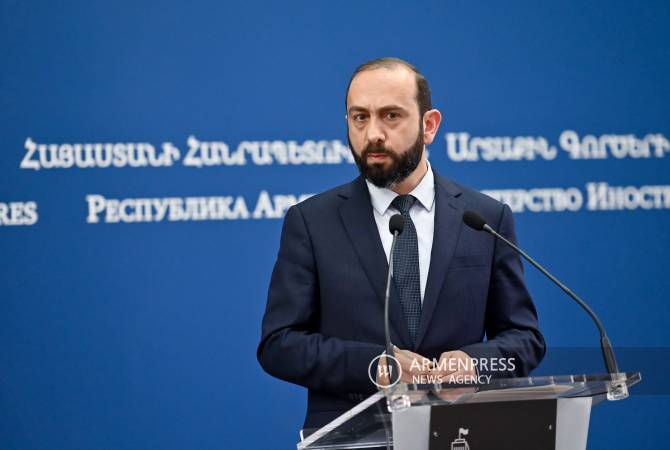


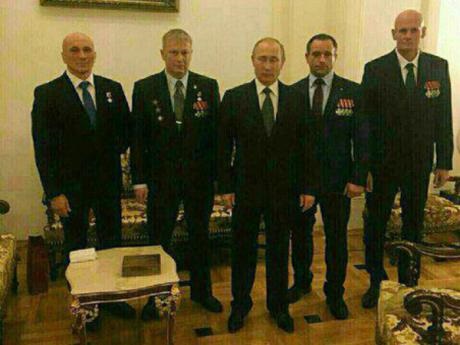 Russian president Vladimir Putin (C) pictured with head of PMC “Wagner” Dmitry Utkin (L). This image is believed to date from December 2016.
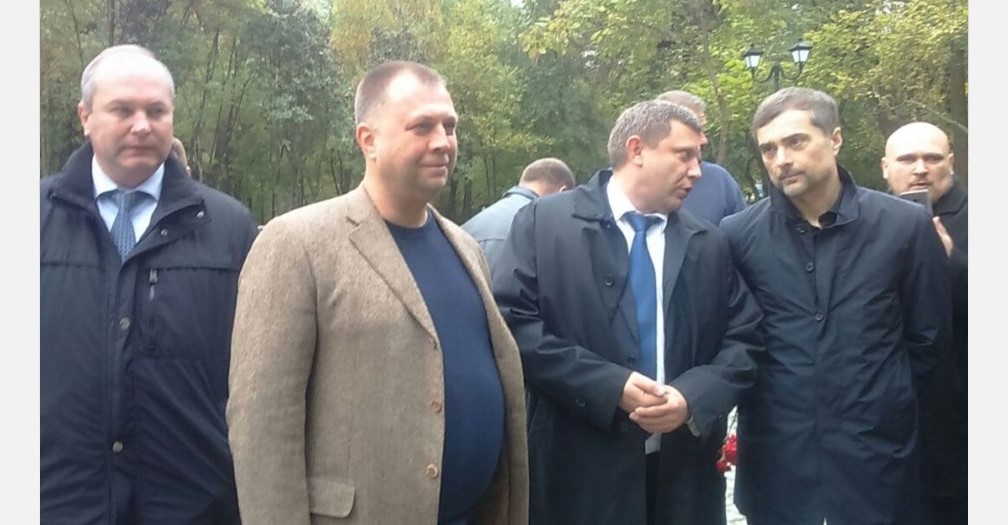 Vladimir Putin’s personal advisor Vladislav Surkov (R) photographed talking to Aleksandr Zakharchenko, the assassinated head of the so-called “DNR” in 2017. Ex-PM of the “DNR” Aleksandr Borodai stands to the left of Zakharchenko closer to the camera. (Photo: 161.ru)
